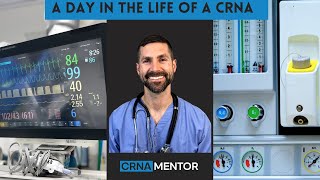
The video presents a first‑person walkthrough of a typical workday for a Certified Registered Nurse Anesthetist (CRNA). It begins with the early‑morning equipment check in the operating room, using an aviation metaphor to frame the critical phases of “takeoff” (induction) and “landing” (emergence). The speaker reviews pre‑operative responsibilities: reviewing the patient’s chart, labs, cardiac studies, and confirming consents. In the pre‑op area the CRNA interviews the patient, verifies health history, and tailors the anesthetic plan. Back in the OR, the CRNA places monitors, induces anesthesia by delivering a large dose of drugs to achieve unconsciousness and neuromuscular blockade, secures the airway with a breathing tube, and then administers maintenance gases and analgesics while managing blood pressure and preventing nausea. Throughout surgery the CRNA continuously monitors vital signs in real time. During emergence, the anesthetic gases are turned off, muscle relaxants are reversed, pain and nausea are addressed, and the patient is extubated when criteria are met, after which care is handed off to the PACU nurse. The speaker notes that daily case volume varies widely—from a few long cases to dozens of short endoscopic procedures—depending on the surgical schedule and surgeon. Finally, the video invites viewers to join a Facebook CRNA Mentor Community or schedule a phone call for personalized mentorship toward becoming a CRNA.
Chapters
All right, so what is the day like in the life of a nurse anesthetist? Typically it starts around 7:00 AM, and the first thing that we do when we get into the operating room is we go and check our machine. There's a lot of comparisons between aviation and anesthesia in that the critical times are takeoff and landing, and that's when we're getting the patient off to sleep and when we're waking them up. And prior to doing that, we have to make sure that we have all the equipment that we need before we get this patient on this journey by themselves. Now, as we do that, we check our, our ventilator, we check our, our anesthetic gases, we make sure that everything is working as it should before we get a patient there and get them off to sleep. We check our monitors, we draw up our medications, we'll briefly look at the patient's chart and see what their health history is, what types of medicines are they taking, do they have any recent lab work. Mm-hmm. Cardiac studies, EKGs, echocardiograms. We'll look at that complete picture for these patients before we go out to see them in pre-op. Now fast forward, we're going out to pre-op, we're going to get the patient, we'll interview them, we'll make sure that their health history, what they had offered and what we pulled from the chart, is, is current and they don't have any major cardiac issues or any major respiratory issues that could impact their anesthetic. And we will tailor the anesthetic to each specific patient. Now, um, At this point, we'll get report from the pre-op nurse. We'll check consents, and then we assume care of that patient. We take them back to the operating room. We help them scoot over to the operating room table and then put all the different monitors on, EKG, pulse ox, blood pressure, cuff, and we're making sure all of our vitals are good, have them take nice deep breaths and get them off to sleep. And that is called induction of anesthesia. And essentially what induction is, it's like most amount of medicine you'll receive at one time in your life. And our goals of induction, or takeoff as I compare it with aviation, is to completely get them to stop breathing, actually chemically paralyze them so they couldn't move if they wanted to. This allows for ease of placement of a breathing tube if it is a general anesthetic. Then we'll place a breathing tube and secure their airway. After that, we will adjust the anesthetic gases, which is what keeps them asleep, and then give them medicines for pain depending depending on the pain, how painful the procedure is. We'll give them medicines to prevent nausea. Nausea is common with general anesthesia. And then different medicines throughout the case to keep their blood pressure, their heart rate as close to normal as we possibly can. All right, so we are with these patients from start to finish of the surgical procedure. We monitor their vital signs in live time, second to second, heartbeat to heartbeat, and we will monitor them for the duration of the surgery, whatever surgery that may be. Okay. Now, the landing or the wake-up can be the challenging part. This is where we are turning off the anesthetic gases, which is what is keeping them asleep. We are also making sure that their pain is adequately controlled. We're reversing our muscle relaxant or the medicine that was chemically paralyzing them, and then oftentimes working in some drugs to prevent nausea. All right, so as we wake this patient up, we're gonna want to make sure that it's a safe point to take out that breathing tube. Once we determine it's safe and they meet the criteria for extubation, we'll take out the breathing tube and then take them to the recovery room. And at that point, we're giving report to the, uh, PACU room nurse. We're making sure all their vital signs are stable, that their pain is under control. And at that point, we sign off that patient to that recovery room nurse. So that is a snapshot of one case at the beginning of the day. Now, depending what type of case you're doing, you can have that on repeat for 3, 4 cases a day. Or if you're doing like an endoscopy room where you're doing upper scopes and colonoscopies, You could be doing 15 cases a day, not general anesthesia, but rapid pace. Or you could be doing a big long back surgery for 10 hours. It really all depends on the day, all depends on the, the surgeon that you're working with and the surgeries that you're doing for that day. But that is on repeat, and there is variation obviously between different anesthetics, different patient populations that we're working with. But that is a day in the life of a nurse anesthetist. If you want to learn more about being a nurse anesthetist, how to achieve this goal, you can join my Facebook page, the CRNA RNA Mentor Community. If you search that on Facebook, it will come up. Alternatively, you could book a phone call with me. I talk to somebody every single day after work and help them tailor their, their goals to become a nurse anesthetist.