From NAR to National Voice: When Should You Get Involved in AANA?
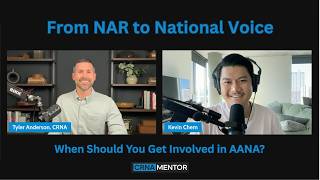
In this episode of the CRNA Mentor Podcast, host Tyler interviews recent CRNA graduate Dr. Kevin Chem about his unconventional journey into nurse anesthesia and his early, active involvement with the American Association of Nurse Anesthetists (AANA). Kevin shares his refugee family background, early exposure to nursing through a minor surgery, and a path that began with an associate’s degree, followed by med‑surg and ICU work before entering CRNA school. He explains how he leveraged personal passions—ultra‑marathon running and mental‑health advocacy—to secure a spot on the AANA Wellness Committee, and how mentorship from Augusta University faculty facilitated his entry into national committees and the Grade 1 View podcast. The conversation covers practical advice for residents (apply despite fear, build a short‑term nest egg, adopt a “less is more” clinical mindset, maintain professionalism on social media), insights into the structured, staff‑supported AANA organization, and Kevin’s future interests in aerospace anesthesia, international outreach, and leadership within AZANA. Throughout, Kevin emphasizes authenticity, community building, and the importance of early engagement with professional organizations to shape both personal career trajectories and the broader profession.
Chapters
Most CRNAs don't get involved in state or national organizations until years into practice, but if you decide to get involved during your training, it can completely change the trajectory of your CRNA career and how you see this profession. Today I'm joined by Dr. Kevin Chem, a new graduate CRNA from Augusta University, who got involved in the profession early and has continued to build momentum. Kevin was one of the original podcast hosts of Grade 1 View, the sister podcast of Beyond the Mask. He has been actively involved with the ANA through committee work focused on membership and wellness. You may also recognize him as the face of the mid-year assembly promotional video that was shared within the CRNA Mentor community. In today's episode, we're gonna talk about how he got started, what it actually looks like to get involved at a national level, and how he plans to impact the profession in the future. Welcome to the CRNA Mentor Podcast here, Kevin.
Hey Tyler, thanks for having me. Happy to be on.
Absolutely. You know, before we, uh, went on air here, you're talking about dusting off the microphone here, and, uh, I'm happy to have a, a fellow podcast host, uh, for the first time on the CRNA Mentor Podcast.
Absolutely. We both have our fancy setups here. We're, we're gonna have a great episode. I'm excited.
I don't know, you, you're the expert. I'm the novice here trying to figure this out, so I'm gonna— we're lean on you a little bit during this episode to kind of carry the momentum here through. And both of us learned that we say absolutely too much. So let's count it here and see how many times we say that.
Turn your absolutely counters on, everybody. Let's see how this goes.
Oh, Kevin, so I wanna kick this off, you know, first, congratulations on passing boards, on, you know, becoming a CRNA.
Thank you.
And especially for all your work within the ANA here. But I wanna take us back kind of early in your journey. When did you first decide that being a CRNA was the career for you?
Yeah, man, I had a weird upbringing growing up. You know, my family's of— family, I'm the son of refugees from Cambodia. And it's, you know, I grew up with not that many role models in academia. You know, my cousins all kind of, you know, found jobs that were more meeting odds and ends, if that makes sense. My parents both just worked minimum wage jobs. And I kind of knew like, all right, I gotta— we gotta figure this out, you know, like I'm not— I'm not doing this again. And my parents were really instrumental in making sure that it happened too, you know. But in high school, I was still kind of all over the place. I would run a lot, but not in track and field, like not with the high school. It was just me in the woods with myself. And, you know, I met a few friends out there and I ran ultra marathons and I was— I was doing a lot of like—
Yeah.
I was doing a lot of like fun stuff on the side. And, and through those ultra marathons, I started volunteering at aid stations. So, you know, you're 25 miles in, in the middle of the forest, there's this like tent, and it's like us volunteers, we can help you, you know, you need a Band-Aid, you need some electrolytes, that kind of thing. So I kind of had an inkling that I was going to be a nurse eventually.
Mm-hmm.
When I was 15, I had to have a very minor surgery and That was the first time I ever was involved with a CRNA. So this guy, I was very nervous, and this guy came in with a stature that was just calming. I felt confident in his arms, if that, his metaphorical arms, not his real arms. I felt confident under his care.
Sure.
He kneeled down to me, he talked to me at eye level. I couldn't see him because I didn't have my contacts in, and my, it was just like, I'm a -7 or something, and I just can't see. But he really made me feel like it was gonna be okay. And beyond that, he did things he probably didn't have to do. Like he took my IV bag and walked me to the bathroom and walked me back. And, you know, even in my verseted state, it's something that I remember. So, you know, I knew that, you know, once I became like 16, 17, I started to realize that, you know, I needed some insurance for my career. You know, I needed a meal ticket to kind of get out of the whole, you know, the family curse of working minimum wage jobs. And that meal ticket was going to be an associate's degree of nursing from a community community college. So, you know, I hunted for that associate's degree. I— right out of high school, I went to community college. I got it right away. Um, and, and once I had that associate's degree, it was kind of a, uh, it was a sigh of relief, like, okay, we're not gonna make minimum wage for the rest of our lives, you know? And I still to this day advocate for the fact that, you know, an entry-level nursing degree is like so pivotal, and, and it can be so life-changing for a lot of people, for anybody really. Um, and, and during that process, uh, CRNA was in the back of my mind. And once I graduated, I was like, I— we're gonna go full steam ahead with this. Uh, so, you know, I worked as a nurse and I, I took some general chemistry classes and, and, uh, I got there pretty quickly, uh, too, just because I— again, I knew it's what I wanted to do. Um, and, uh, you know, very happy with my career. I'm a man who kind of analyzes all different career paths and, uh You know, from what I understand, this one is a pretty good one. So I'm very happy I'm here.
Yep. No, and at what point, Kevin, did you, were you in a kind of geographic location where you, with your associate's degree, you could go into the ICU or did you have to get your BSN first or when did you make your way into the ICU?
Yeah, so actually no. So I grew up in Minnesota. This was like very pre-COVID. Like I think I graduated 2019. When all the cool kids were still in the ICU and they didn't have an outpouring of shortage. So, you know, I wanted to live life a little bit. Even getting like a hospital job in the cities was terrifyingly hard. So I ended up driving 2 hours north to Duluth, Minnesota on the shores of Lake Superior. And I got like an entry-level, it was a general medicine unit, which I really, to this day, swear to God, don't really know what that means. I think it's med-surg without the surg. But really it was mostly just like, psych patients, infections, that sort of thing.
Gotcha.
So I did that for like a year. And after that year, that kind of gained me enough momentum to get into this like progressive care ICU mentorship program back in St. Paul, Minnesota. So, you know, my real experience was like a year med surg and then like probably a year and a half before I got into CRNA school of ICU and then 2 by the time I was an actual, a registered resident, registered nurse anesthetist. So that, that was kind of my outlook. But then again, I still was one of the younger in the class just because you can get that ADN sooner than somebody get a BSN. So, you know, while my colleagues were still, you know, just out of regular college years, I had already been a nurse for a year. So it kind of gave me that leg up. Not that it's a competition, but it's a fun hack.
Yeah.
Looking back, I probably would've just moved states and found an ICU job somewhere. But, you know, hindsight's 50/50 and I enjoyed all the experiences that I had.
Sure. And that's something, you know, as I talk to mentees, they offer kind of a similar perspective is like, I can't get into the ICU. I'm like, well, do you have to stay where you're at or can you, you know, go somewhere else and kind of leverage those opportunities that you can find maybe in an area that's not as desirable to live?
Yeah.
Those places, you know, you can get jobs there a bit easier, you know, so.
Absolutely. You're gonna have to bite the bullet a little bit sometimes, you know, If you really want this, you're just, you're gonna have to move. I, you know, that's just something that's a stark reality of the job and how things go.
Now, Kevin, one of the big reasons, you know, I wanted to bring you on the podcast aside from, you know, all your work with Grade 1 View and speaking with you at annual congress, but was there a moment where you had this kind of mindset shift from just getting accepted to CRNA school to be really one that contributes to this profession, you know, specifically with everything you've been involved with, uh, within the ANA, Grade 1 View, uh, everything on a national level.
Yeah, man. So, you know, for me it was like, um, it's, it's really hard how schools do this. And I know my professors are going to listen, I would say this to their face, but like, it's hard how we do, um, the whole like, let's volunteer a committee member, you know, because it really is only one classmate. And we elected our people like 2 days in, so we didn't even know each other. So I did not even really get a chance to be a, uh, Ghana rep. And I was like, well, I'm still gonna do something even if I have to do it by myself. So I sort of meandered over to the AANA committees. And, you know, it didn't— I knew at the time it didn't have to be like a political thing. It just had to be something I was passionate about. Mental health, wellness, that's something that I've always been a part of. I actually, when I was a trail runner and I really had a kind of a following back there, you know, as a kid, I started a podcast about mental health and, you know, breaking the stigma. Wow. Of mental health, you know. So I was like 17, uh, yeah, you know, 16, 17, and I was interviewing trail runners, uh, especially ultra marathon runners. There's usually something going on there. It's a, it's a running joke in the, the— no pun intended— the running community that there's, there's some kind of addiction or something like that, you know. So, you know, I got to interview a lot of people and talk to a lot of people about mental health and trail running, you know, substance use disorders, uh, that sort of thing, and how people have pivoted from you know, recovering from, you know, some sort of addiction to now being like world-renowned trail runners. So, you know, I saw the wellness committee and I was like, that's, that's what I'm gonna do because I'm actually passionate about it. And I can actually sort of make a dent and I will be present in that committee. So that's sort of where I started. And the rest, honestly, the rest just kind of came. So, you know, yeah, that's, that's sort of the story there.
I love that. And that's something that is so critical that I tell people to kind of key in on is find something that you're passionate about, whatever that may be. You know, to try and draw a straight line from trail running to being on the wellness committee in the ANA at a national level does not seem like a super straight line, but here you are. And that's something that I think the more people that can dial in and get exposed to these different things, that they can be passionate about. That's half the battle. And, you know, I love that part of your story. That's really cool.
Yeah, man. It's just like, and I always tell people too, you can tell, I'm in committees, you know, I've been in a few committees with different, you know, I guess organizations and such. And you can tell when even a full-fledged CRNA is just kind of there to be there. And it's weird. And we can all tell. So don't do that. You know, find something that actually, find something that actually piques your interest.
Sure, sure. Now, Kevin, you mentioned seeking out this committee membership with the AANA. Did you have any help doing that? Or is that just something you set out on your own? You're like, I'm just gonna do this. I'm just gonna be part of the AANA Wellness Committee.
Yeah, that's a good question. You know, I'll kind of throw it back to my professors at Augusta. Again, I think most of them there are, I mean, one, all of them almost got elected to be fellowships of the, fellows of the AANA. You know, they're very committed folks.
That's great.
You know, we got Reed Halterman who does a lot of political stuff. My professor Louisa Martin, now, you know, after me, she's on this year's wellness committee and as well as Dr. Elizabeth Gay. But we had Dr. Laura Yates actually start a wellness committee for our class. You know, just with all the mental health issues that, you know, resident registered nurse anesthetists go through, I think she sort of realized that it would be helpful for the class. So, you know, we would put things together, little get-togethers. I did study sessions for classmates to, so we could kind of bounce ideas off of each other and study, obviously. And that's what sort of kind of pointed me in that direction. You know, another thing is that none of my faculty had any problem with me doing anything extracurricular. They were very excited. And they, they got me, you know, they wrote any letter of recommendation, any permission slip they needed to write, they were there for it. And, you know, from my experience, from what I've heard, that's not always the case. So I—
Yeah.
I have to give kudos to my professors.. And, you know, where I came from, Augusta University, again, very, very happy that I went there.
That's excellent. Now, Kevin, what was kind of the first step for you? Did you go to a conference in terms of the ANA? Did you get like go to one of the conferences? Was it this wellness committee? What was kind of your first touchpoint with the national association?
Yeah, you know, I like going to committees, but I like going to them even more when I have some kind of job job. You know, there's definitely a sense of belonging there with the committees when you first get in. The first meeting, I'm sure as you know, is at Annual Congress. So, you know, it was very exciting to be like, all right, yeah, I'm going to Annual Congress because I have a meeting with the Wellness Committee. So that really, that was my first thing. So I, you know, I signed up for the committee and then I went to Annual Congress. And it was just, it was just nice to have like a job there. And, you know, I mean, I saw you, I met you last year at the booth over there.
Yeah.
So yeah, that was my first time going to committee meetings. And of sort. And yeah, I go like every year now. So I won't be making mid-year, but I'll be going to annual in Boston. And in like 5 weeks, I'm going to the Brisbane for the International Federation of Brazilian Jiu-Jitsu.
Oh man, that's great.
Yeah, yeah, very exciting.
I was trying to sell my wife on that one. She's like, "Eh." We have 4 young kids and going all the way out to Brisbane.
Yeah, that's—
Not exactly doable at this stage of our lives, but—
Yeah, I'm still living the single income, no kids life right now. So it was very, again, even for me, it was like, It was kind of a big trip. So I can't imagine what you had to go through trying to sell that.
Yeah, no, it didn't go very far. Didn't go far. Kevin, what would you say to someone who feels like they're not ready to get involved? Not just speaking on a national level, but even a state level. What would you tell these people, especially those who are in school?
Yeah, so there's not ready and not wanting to. And just, again, like I was saying, there's not ready. Because you want to and you just feel nervous, uh, and then there's not ready because you just don't want to do it. Uh, if you just don't want to do it or you're not actually interested, don't steal a spot from somebody else, if that makes sense. Uh, but if you're not ready and you just like, you're, you're scared, my kind of mantra going through life is to just apply and see what happens. Yeah, to be honest with you, I mean, I, you know, I, I have applied, you know, do things scared, just, I just do them though. Uh, applying to nursing school, you know, applying to committees, taking the GRE, taking the CCRN, applying to the Wellness Committee. You know, I was very scared. I did not think I was going to get anything, but I just did it anyways, and I just saw what was going to happen. You know, it's serious, but it really is not that serious. Just try. Just see what happens. You know, just get the ball rolling. If you need mentorship, reach out. There's— I've never, like— I'm sure it's out there. I'm sure it's happened. But, you know, I've never had someone not want to help me when I've asked them for help in terms of mentorship and that kind of thing, because it's a micro— it's a micro organization within a huge organization, and we're excited to have people on our committees.
Kevin, how about— I want to talk a little bit about Grade 1 View, that podcast. It's something I've turned into quite, you know, the podcast listener. I absolutely love Beyond the Mask. And then when, you know, you guys came out with Grade 1 View, I was like, this is perfect. I mean, this is, you know, so many of my mentees, I'm directing them towards that podcast because you guys had so much insight. And quite honestly, I published an episode this week that is, uh, it was a nurse anesthesia resident that I, I said right in the intro that, you know, I'm bringing in all these leaders within the ANA, people that I really are huge inspirations to me. But I know that many aspiring CRNAs, they look to our nurse anesthesia residents, our SRNAs, and they're like, that is the next step here for me, and that is who I want to be like. And when you guys had that podcast, I'm like, this is perfect because it's, you know, these individuals that you can connect and, and really share kind of the same pains. Um, so Tell me a little bit about Grade 1 View and how you became, you know, part of that original cast.
Yeah, so I mean, this is really where like, I guess connections and going, joining committees, it's really where it starts to pay dividends. You know, we had some of the AANA staff, Alyssa Rojo, Becky, and Becky as well. They sort of emailed us like, hey, do you guys, as, you know, as sort of the,, you know, NAR residents of the committees. They were like, can you guys spread the word about this podcast? Or this is a good opportunity. I don't think they meant for me to apply, but I just did. Uh, and, uh, yeah, and, you know, I already had— you know, I was telling you earlier, I'm a nerd. I already had the podcast stuff.
Yeah.
Um, so, you know, it was, uh, I just— I applied. I had the background, I had the connections already. Uh, and, uh, you know, we did our little mini interview with, uh, Sharon Pierce Jeremy as well, and it went well and I got it. And again, that, you know, it was never a connection of like they got me into it, but it's like they steered me this certain way because I'm part of the committee. And yeah, I just, I got it and I made it, and they, you know, they enjoyed it, I enjoyed it, and it was a very sort of seamless transition for me. You know, I know my peers though, they got emails from the AANA that was going to happen, that it was going to happen though. Mm-hmm. So, you know, if you're a member of the ANA and you're checking your emails, there's always little opportunities in those emails. They have a great staff out there kind of showing people like what you could be doing to get involved if you need ideas as well. So yeah, that was my way. It was a fun thing. I think they were a little concerned that I was doing too much, but I wasn't. It was great. I had fun.
That is my problem. I do too much. And my wife is the one that's like, all right, That's, I was asking, you know, getting involved at the ANA, that's why I said to Michelle Canale after we went off air, I'm like, Michelle, I'm like, I really wanna get involved with the ANA. I'm just finding the right time with my 4 kids and all these different hats that I wear. But yeah, there's certainly something to be said about too much, especially while you're in school. You know, you wanna ensure that you're not, you know, taking away too much of your efforts for studying and passing boards, right?
So.
Yeah. Kevin, how about, you know, one of the big things that you got to experience, you know, I had just recently interviewed Matt Thaxton and you said, oh yeah, I interviewed him too. You meet so many great people and you got to meet so many great people through, you know, this podcast. What did you learn about, you know, some of these conversations from some of these major leaders in our field?
Yeah, you know, it really does, like, the thing about a podcast is it sort of gives you an opportunity to ask someone to have a conversation with you. Uh, in a non-weird way too.
Yes.
And they're usually gonna say yes, you know. So it's like, oh, I've always wanted to meet, you know, my boss, like Joe Rodriguez or whomever, you know. It's like, oh, why don't we just ask him to be on our podcast and then he'll talk to us? And it's, you know, it's a connection made. And, you know, we did a lot of episodes, we made a lot of connections. Uh, what I, what I learned, uh, was that all of these people are just humans. And I know that's so weird, but like, you know, I, I think folks don't realize when we see you at the annual Congress, sometimes it's like seeing a cartoon character, you know. So actually just having an opportunity to have honest conversations with these people was very, it was very refreshing and it made it seem like it was possible to be in whatever role that they do, you know, A&A president, you know, member committee, whatever have you. It made it feel like it was possible and it kind of brought a an air of, uh, humility, as you will, uh, to my opinions, uh, of our, our profession and the people within it. Um, you know, now there are kind of flip sides too, um, because as Grade 1 View gained traction, uh, we were being watched, uh, kind of under a microscope by people. Um, and, you know, I, I think, uh, you know, you see these CRNA Facebook pages and some folks, uh, say some crazy stuff. Uh, you know, it kind of hurts your feelings, honestly. It kind of hurts your feelings. Um, you know, so it sort of realizes that, like, not everybody shares the same opinion with you, um, as well.
Right. And that's— I mean, doing social media now for like my CRNA Mentor platform has been around for a little over 3 years, and, and same thing, you know, you experience some, some people saying some things that are not super kind. But I, I like to frame everything as, you know, is it— is this in the best interest of our profession? Is this in the best interest of the AANA? And, and I, you know, when I set out to, to build this platform I really wasn't super connected with the ANA. You know, I had this idea of what I wanted to do and try and improve this profession and make it more accessible, make, you know, kind of break the barriers of talking to CRNAs. And yeah, as I learned more about the ANA, I'm like, this organization is incredible. Like, this— they're doing all the things that I want to do. And like, trying to align my values with, with the ANA's values, you know, I, I think so long as you can approach it as, you know, with this perspective is like, this is for the collective good. And that is where I want to operate from. I think the haters are— they're going to hate, right?
Yeah, that's absolutely it. Yeah. And yeah, my challenge was, I think as a young person coming up, it was like just reading every comment and being like, man, I hate this, you know? And then as you grow, it gets better.
Here's a word of the wise is don't read the comments. Don't do that. I stopped reading the comments, especially on TikTok. Talk a while ago, and it's one of those things that, yeah, I felt obligated to answer some of them. But, you know, it hurts though when it's coming from, you know, colleagues, right?
Yes, absolutely.
Um, Kevin, did podcasting change how you see your role as a CRNA?
I, I kind of would say so. I mean, in, in sort of a personal level, I think, you know, folks, you know, you, you move— I moved to a new city, I moved to Arizona And it's people connect with you, they follow you on social media, all of a sudden they wanna ask about your podcast and you sort of feel like a representation of the profession. 'Cause I'm working with like surgeons who have heard from circulators about it and that sort of thing. So it adds a little bit of pressure to it.
Sure.
You know, outside of that, I think really like after having talked to all these people, it's, you realize it's being a nurse anesthetist is a lot more than a clock in, clock out job. You know, there's just like we've been talking about advocacy to be had. So my role as a CRNA is bigger than just the OR or pre-op or PACU.
Yep.
It keeps going, you know, really, I mean, as public figure, I don't wanna call myself a public figure, but someone who's a CRNA on the internet, there's a level of responsibility that you have to keep with yourself and professionalism to maintain because we really as CRNAs are representing our organization and our profession in itself. And unfortunately, with TikTok and Instagram, or fortunately, it's bigger out there.
And that's, I guess, going back to my original point about, you know, ensuring that your perspectives, that you're aligning certain ways. One of the things that I tell everyone is you always, always have to be professional. Because especially kind of being on this online stage is anything you say could be taken out of context. And if, as long as you mean it, professionally, you know, you don't have anything to worry about. So yeah, that's a good teaching point for anybody out there making content. But—
Yeah, it's a crazy world out there, man.
Yeah. Kevin, you mentioned a couple times about some of this committee work that you've been involved with between wellness, the membership committee. What kind of surprised you the most once you got inside ANA leadership? I know we touched on this a little bit about, you know, people being accessible and kind of, you know, they're not these caricatures that you see at these conferences, but rather like real people. But is there anything else that kind of stood out to you?
I don't think I realized how organized our organization was, no pun intended. But you know, there's a, there's a whole office in Chicago for our organization full of a bunch of people that are, that are here for us and making sure that things are staying aligned with the goals of the organization. I don't think I realized how, like, um, structured everything is, right? All these committees have, you know, workers, staff, uh, that are making sure things are flowing correctly. There's always something going on in the background. They have people monitoring stuff. Um, you know, you just interviewed Matt. Had no idea that that was happening at all, uh, that there are people boots on the ground. We have a Washington office as well, again, looking for the best of our interests. Like, this is a, um, you know, there's levels to this organization. Not only like again at a state level, but at a, at a national level. They are completely advocating for us in a very structured way. So your donations and your organizations are not, you know, falling on deaf ears or wallets or whatever you want to say. It's, it's very much so that, you know, these are our livelihoods and there are many people that know that and are advocating for us. So I just, I guess I didn't realize the inner workings, the inner guts of the AANA and all that goes into it. Mm-hmm. So, you know, you see it a little bit at conferences, a little bit on the website, but when you're really involved, you start to notice how serious it is and you want to, you want to be a part of it.
That's a good perspective. Yeah. Kevin, why, why should nurse anesthesia residents or CRNAs be concerned about, or at least care about, you know, being involved within the ANA? You know, I always tell people, even if you can't, you know, get involved at all, you can't go to the conferences, you can't be part of committees, in the very least, be a member of the association and pay your dues. Do's. But why should even people that are in school, why should they care?
Yeah, you know, I think, you know, going to mid-year especially, you start to realize our profession can change basically with the stroke of a pen, you know. And I hate to operate out of fear. I think that's really not a great way to live life. But like, when it comes to advocacy and stuff, it's like, you don't realize until you see these yearly bills come in and all the infighting that goes behind them. You know, if you're not paying attention, things can get snuck in. You know, things can change immediately, and it can drastically change your day-to-day life. Whether we like to admit it or not, that's just the way things work in, I guess, our country and in our world. So, you know, advocating and being involved isn't just for you. It's for everybody else too, which I guess directly will involve you eventually and could change your practice. I think that's sort of my, that's always been my elevator speech about that. You know, I mean, here in Arizona, things did not look the way they did even 5 to 10 years ago from what I've heard. And now we're out here, you know, anesthesia groups owned by CRNAs practicing independently within the confines of Metro Phoenix. Unheard of.
Kevin, I wanna talk a little bit about, and this is not, doesn't have to be written in concrete, but I wanna see like, where do you see yourself in this profession as you continue to evolve as a CRNA? I mean, you're, you're making big waves now and you're just getting started. So where do you see kind of your role evolving, uh, in this profession?
Yeah, you know, right now it's like having the humility as a new grad to realize I just need to sit down and go to work for a little bit, I think, has been, uh, very pivotal for me. I'm really trying to make sure that I can kind of, uh, walk the talk, if that makes sense. So I'm making sure that I'm, at least in the first year or two, that I'm just focusing on being a good CRNA. At the same time though, I am involved with AZANA, the association here in Arizona.
Right.
Just a little bit. It doesn't have to be too much, right? I show up to the meetings every month. That being said, even outside of, I guess, the political landscape, There's just kind of fun things that I've been looking into, you know, with the Artemis II launch. It's like, what is aerospace anesthesia looking like, you know? And we just, we as an association, we've not looked at that, you know, but I tell you, the other anesthesia associations have. So that's something I'm kind of want to delving into. The international landscape, you know, I'm going to IFNA. That's something too that I do want to kind of get involved with as well. You know, I'm going on vacations now. I've never done it before. And it's just cool. Whenever I go there, I'm like, can I be a CRNA here? What does anesthesia look like here? I'm just, I'm very curious. So there's, there's some inner workings happening, uh, while of course staying involved with Wellness Committee, uh, and the, the Membership Committee, uh, in particular. Um, so yeah.
How about let's take that out 5, 10 years from now? I know we're talking big. I mean, you're already talking big with—
yeah, aerospace stuff, aerospace stuff. But, but yeah, it's kind of— yeah, I, I guess kind of same, same idea, you know. I'd like to be You know, again, we talk about national, international, but, you know, at a local level, I think I'm gonna— I'm gonna— I'm sick of traveling. I'm sick of moving for school and work. I want to stay here in Arizona and grow some roots, or roots, however you say it where you're from. And, you know, I could see myself doing some kind of leadership position. You know, it's sort of the natural progression. But, you know, again, for now, I just want to make sure that I'm good at what I do and I can sort of back it up before I start doing all that stuff. But yeah, eventually that, you know, I want to look into other stuff that our profession might not be tapping into yet. And then that international level too. I mentioned being from Cambodia, not me, my parents being from Cambodia. And there's, there's many a CRNA out there. You know, I think it's the main provider out there too. And Richard Henker with HVO, he goes out there. So I'm looking to do that eventually. Again, once I have the experience to back up what I want to do. Okay.
Yeah, and that's something that I've had this, you know, blessing of talking to many aspiring CRNAs that are international nurses, and, and that has been a really special part of CRNA Mentor for me, and trying to help these individuals navigate from all over the world, trying to, to immigrate here to, to pursue this career. And, um, that's certainly something in the future I would love to get involved with, with some sort of mission trip or some sort of international level. There's so many opportunities to learn about all these, these things that are out there that can really— everything's interconnected. And you start talking to people within the ANA. Jackie Rolls is the founder of that organization. And when I was doing a podcast with Sharon Pierce, she was texting on her phone and all of a sudden, poof, Jackie Rolls showed up in the chair next to me. And we were talking about, you know, some of these aspiring CRNAs from, you know, internationally. And so we had a little conversation. But there's so much out there that you can get involved with. And yeah, that's really cool that you're interested in some of that international help as well. Um, Kevin, I want to get into some, some rapid-fire questions here. All right, so— All right, let's get fun before we kind of wrap this up. So, uh, one thing that every nurse anesthesia resident should do before graduating?
Yes, so, okay, I've been telling this more because it's not talked about a lot. Um, you're gonna have a few months before you actually have a job after you graduate, so have a nest egg. That's what I would say. You know, I think I graduated August, and I wasn't working until late September, early October. And we were, we were feeling it. We were definitely feeling that financially. And, you know, you don't get the student loan money anymore. Um, so, you know, put aside a little nest egg for after your, you know, that, that little in-between period.
No, that's good insight. And, and that's something that, you know, I, I talk to my nurse anesthesia residents and they're like, yeah, I'm getting ready to graduate and, and my, my money's almost out.
Yeah, you start to feel it at the end. It does hurt at the end.
Yes. Most underrated way to stand out in this profession?
You know, I guess the way I did it was just sort of being yourself and just getting involved and just continuously showing up without doing too much. You can be in the background and just sort of be there and you'll make friends, you'll talk to people, and it'll usually come naturally from what I've spoken with with other people, that's their experience.
Yep, yep, be genuine. Yeah, I agree with that. Um, best advice you've received in anesthesia? This could be clinically, this could be, you know, academically, uh, you know, professionally as you're out working. Uh, best advice?
You know, I think through clinical, the one thing I was told, um, by multiple preceptors, I think just because I can be an anxious guy in the OR, was, uh, Sometimes less is more. You know, I think a lot of times we keep adding on therapies and going nowhere, or even causing— I don't want to say harm, but even causing, you know, adverse effects by doing too much. You know, you're doing—
Riding the roller coaster treat—
Exactly. You're riding the roller coaster treatment. If you stop and thought about this for a little bit, you might be able to make this a little more consistent and not as just, you know, crazy. So sometimes if you just, if you feel like you're a little distracted, back up. Sometimes less is more. How can we make microchanges to ensure that this anesthetic stays stable?
Yeah, and that's something personally, you know, I really operate from this perspective as less is more. You know, even looking at the amount of geriatric patients that we take care of and the amount of polypharmacy that they come to us with, you know, couple that with days of being in the hospital, you know, that's something that I think there's a lot to learn from that perspective. Reactive and just being patient in this profession. It's easy to react, but just being patient as you're taking care of these patients. Yeah, that's great advice.
I agree. I agree.
I know the answer to this question, but I'm gonna ask it anyway. AANNA involvement, start early or wait until later?
Yes, depends on you, depends on how you feel. For me, it was start early, but for you, it could be different. So, you know, look in the mirror, tell yourself if you're actually going to be committed or if this is just like a resume boost or something. Um, you know, I think most folks, you know, once you're— once you're an NAR, it's like, what, what do you— why do you need a resume? But, you know, you're already almost there, so it's, uh, you know, so it usually isn't that. Um, but, you know, make sure that you're actually committed and interested before you do something like that. Yeah.
Um, one word to describe the future of CRNAs. This is a complex one, but Sugamidex. Sugamidex. Sugamidex is a great drug.
GlideScope and Sugamidex. But honestly though, honestly though, it's just, I think revolutionary, right? We're in a time in anesthesia where, you know, for me it was like Neu and Glyco were out of vogue, Sugamidex is coming in, you know? Like I personally, I'm gonna be honest with you, Tyler, you might not agree, I VL every single patient. I just think it's first-pass success is important to me. I'm not messing around. If it was my mom, you're going to use a VL on her. So I video laryngoscope just about everybody. People have their arguments for the Miller and how fast they are and how good the view is.
I was at the presentation at Annual Congress. There's good literature to support that, you know, from a cost perspective, from a first-time pass, you know, perspective. Yeah. So no, I think to challenge those conventional, you know, how we approach things. Even, you know, the conversation of utilization of ultrasound. That's something within my hospital right now. You know, why are we placing A-lines on palpation? I'm like, it's faster because I can do it.
Yeah.
But, you know, that conversation's there and I think we need to continue to challenge that. And I think that's good perspective. Now you mentioned sugammadex. Now you haven't been practicing long enough to know that there used to be kind of an art to dosing your paralytics.
Oh yeah.
Especially for like aneurysm coilings and stuff. And now it's just like, well, I got sugammadex.
Yeah, let's push the— yeah, exactly. And you know, it's so funny, you know, one of our sites, you know, some of the surgery centers, they still— the standard is Neo and Glyco, right? But there's Sugamadex available if you have good reason to use it. And I'm finding more and more that I have good reason to use it, to be honest with you. And you know, I would say it to my boss too. Like, I just— it's what we're doing and what we have now is so like, I mean, it's revolutionary and, you know, but I still find humility in seeing how they did it back in the day too, I suppose.
But— Anesthesia in general, we're very, you know, resistant to change.
Yes.
And I think we need, you know, individuals like yourself to challenge that.
Absolutely.
And I hope that more, you know, as nurse anesthesia residents graduate, they continue to do the same and not kind of take things as, oh, this is the way that we do it. You know, just because that's what we've always done, right?
A little, little rant, but like, I've definitely heard of preceptors being like, I don't believe in Sugammadex, or, you know, I— it's like, what do you mean? It's right here. How do you not believe in it? It's right there. Uh, or like, you know, the Miller's superior to everything, and if you can't use a Miller, you're not a good anesthetist, etc., etc. It's like, okay, well, go palpate for Settellot's triangle and do a block. I don't know what to tell you. Yeah, just— we got to be humble and we got to realize it's not like You know, this is not people's life. It's not to be messed with. Use the best technology you have. I'm going to want it.
Uh, Kevin, I'm going to throw you for a curveball, and I don't know if you listen to any of my other episodes. This wasn't on the outline I gave to you, but I've been asking everybody, and it— and when it— when I ask it organically, you get an organic answer. Um, but Kevin, what, what is, uh, special about you? What do you, as a new CRNA, uh, or, you know, a, a graduated, uh, nurse anesthesia resident, what do you bring to the table, um, that maybe some other CRNAs don't?
Yeah, so, okay, for me, man, like, I know that I'm not like a whiz CRNA, you know. I'm just not. I know I'm pretty good, uh, and I'm really safe. I just kind of have that about me where it's like I realize that I'm not the best, but I, I do things that kind of bring the community together. Uh, I'm doing— I'm hosting a happy hour for the new grads, uh, in, in a few, in a few days here, and that's that's, you know, that's not needed, but I'm, I'm doing it because I want to. I talk to people. Everyone in the OR loves me. Very personable. And it makes the day go faster, and people are more likely to say their concerns because they know it's a safe environment. Um, so I, you know, I would, I would say that I'm very personable. I'm very honest. Um, even though I might not be, again, the most skilled or impressive CRNA out there.
I, I absolutely love that, and I— that resonates with me as well. Like, I, I feel the Like, I'm not, I'm not the absolute, you know, top-notch CRNA in the country, but, but I can connect with people. And the same, you know, I, I think there's, there's so much value to that. And we talk time and time again about emotional intelligence and reading the room and connecting with people. And, and, you know, even the best surgeons, the best CRNAs, the best anesthesiologists, if they're, they're missing that piece—
Yeah.
You know, how, how good is the team, right? And, and I think there's something to be said about that. It's the complete, you know, having the complete package here in terms of you know, doing what's best for the patient and helping to navigate care. So don't, don't discount yourself here, my friend. That, that is, uh, I love that, and then that certainly resonates with me as well. Uh, you know, for everyone listening, you know, this episode isn't about just doing more. It's about getting closer to this profession and understanding it at a deeper level, because the more that you immerse yourself, the more clearly you start to see yourself in this role in being a CRNA. And, and, and Kevin, I, I can't thank you enough for, for, you know, being here today for everything that you do within the ANA and, and just continue to grow as a CRNA and keep, you know, keep sharing that, that special part about yourself because that is, you know, what, what draws everybody to, you know, this profession and makes people feel, oh, you know, I want to be like Kevin, you know, that, that guy in the, in the operating room that, you know, treated me kind, that, you know, recognized me there and, and advocated for the patient, you know.
So— Yeah, yeah, for sure. It's always about the patient. And, you know, I always say I think about me when I was 15 in that hospital gurney, uh, and I treat every patient that same way, as well as all my colleagues. You know, this should be— this should be a safe, fun, relaxed environment. And I'm happy— I'm so happy to be a CRNA because we have such a role in that.
Absolutely. Well, Kevin, uh, thank you so much. And I'm sad to be missing you at, uh, Mid-Year Assembly, but we'll have to connect at Annual Congress here.
Yes, absolutely. So we both just said absolutely, like, within 2 seconds. That's awesome.
All right, man. Well, thank you very much and take care.
Yeah, thanks, Tyler.
More from Tyler


How to Make the Most of AANA Annual Congress as an RN | Advice for Aspiring CRNAs

Professionalism Starts Before CRNA School - The Kind of Applicant You're Becoming


Locums, 1099, and W-2 CRNA Practice Explained: What Every Future CRNA Should Know

From Penn to Solo CRNA Practice - The Unexpected Growth of Independent Practice





The Most Unique CRNA Role in America? Shock Trauma Go Team & Austere Medicine