Inside CRNA School: What Life Is Really Like as a SRNA
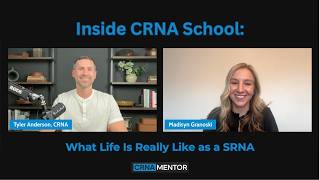
Madison Gronowski, a nurse-anesthesia resident at the University of Scranton, walks through CRNA school life: the shift from bedside nursing to independent drug and airway decisions, how her program front-loads didactics then moves to clinical rotations, and why getting certifications like CCRN and trauma matters more than GPA for applicants.
Chapters
Most aspiring CRNAs think that getting accepted is the hardest part, but what actually happens once you're in and how you show up during that time matters even more. Today, we're hearing directly from someone who's living it right now. Today's guest is Madison Gronowski. She is a nurse anesthesia resident at the University of Scranton's anesthesia program. She is also a student trustee with the Pennsylvania Association of Nurse Anesthetists, or PANA. She has attended multiple conferences, and today we're gonna talk about what happens after acceptance and how to maximize that experience. So today, let's welcome Maddie to the CRNA Mentor Podcast.
Hello everyone.
Welcome Madison. Thanks for joining us at the CRNA Mentor Podcast today. I'm happy to have you. You are one of our few nurse anesthesia residents or SRNAs that have been on the podcast. And you know, I've been bringing in all these leaders within the ANA from program directors to board members, but I know well myself that many of these aspiring nurse anesthetists they see somebody like yourself and they say, that is exactly who I wanna be, maybe later this year, maybe next year, maybe in a couple years, but you are the person that they most connect to. And that's exactly why I wanna bring you on today. So thanks for joining us.
Yes, I'm happy to be here. Thank you.
So Maddie, tell me a little bit about, you know, I talked, you know, where you're going to school. You're currently at the University of Scranton's anesthesia program. You're actually the first student I've ever had that in the class and on the podcast. So I'm super excited about that. But tell me a little bit about your background, you know, a little bit about maybe even the ICU that you started in.
Yeah. So I started at a very local ICU to this area in a medical surgical ICU. So we would take a very wide array of patients, which I actually really liked. So we would take cardiac patients, neuro patients, trauma patients. And I think that as an ICU nurse, when I was applying for school, I was personally a little nervous that I didn't have that like heart specialty or the neuro specialty. Now, yes, I did like take open heart heart class and started the process to take the post-op open hearts. But I would really only take them when they were like out of that window of being a fresh post-op. So I'd maybe take them like day 3, day 4. But I think being able to learn about each specialty actually helped me when I went to school. Now, some of my friends had a little bit of advantage of me when they were like CTICU nurses, like true CTICU nurses. I think they understood the heart a lot better and the medications a little bit made more sense. to them rather than me. I had to work a little bit harder in that department, but I like that I took different patients because then I did, I think, a little bit better with neuro, the IV, you know, um, maybe getting IVs even more because we would go to the traumas and we would, you know, take those septic patients where you'd have to learn those things. So I think that was a better opportunity for me because I was able to take care of ARDS patients too, like during COVID And I was able to see the different types of populations of patients. And I think working at a level 1 trauma center also helped me because we did take the sickest of the sick.
Sure, sure. Yeah, your, your experience differed a little bit from mine in that I came from like a cardiothoracic cardiovascular ICU, but we did get overflow as well. And, and I, you know, I often describe to my mentees, uh, you know, there's, there's different units and you hear from time to time, well, this is a better unit, that's a better unit. I've kind of coined the term, uh, like a unicorn unit where you have a heart program, but then you get a mix of everything else. And, you know, I think the heart program there certainly could be a little bit more robust from where you trained, but overall getting, you know, that mix of experience, I think there's a lot of value to that. And I think, you know, certainly it brings a different perspective to the table as you take care of different types of populations here. So yeah, that's great. Now, how many years were you in the ICU before you went to school?
So the way that Scranton does it is that like, I think my application was due by like September or October. I forget when. So I applied with 2 years and I stayed working until like I found out I got in and the interview process and all that. So I technically was a nurse for 3 years, like in the ICU, but I applied with 2.
Nice. And, and that's about the national average is about 3 years experience before starting your program. So, um, that's great. Uh, Maddie, what was the biggest mindset shift that you had to make early on? You got into your anesthesia program?
I think the biggest thing that shocked me when I started the program was just how in-depth the classes can truly go. For example, like, I would know my pressors, and I knew when I was hanging them, and I knew I was like increasing the blood pressure and the MAP. But I think when I got to school, it was like learning it on a cellular level that really, really challenged me. I wasn't just studying like, okay, what's the function of the kidney and the liver? I had to know it all the way down to the minute level. And then when pharmacology came around, I was like, Oh, I'm great with my drugs. Like I know all my doses and my titrations. And then we would take pharm and I would be like, oh my gosh, this is way more in depth than I thought. So I think that's something that at DNP level you're just not ready for is that yes, nursing school, you had to learn all the systems of the body. Nursing school is very challenging, but when you go back for an advanced practice role, I don't think you understand how in depth it could get and the different levels you can get into it.
Certainly, certainly. And that's, that's all part of it. I know a lot of people, you know, as they're going through the application process, you know, they're focused, they hear, Oh, you need to know the mechanism of action of some of these drugs. And, you know, I think there's a right way of going about learning that and a wrong way. And you are certainly gonna, like you said, learn all those minute details as you get into school. And what I tell mentees as they're kind of going through the process is, yes, it's good to get to know like the mechanism of action, but, you know, when you're in your interview, don't just regurgitate what you, you know, looked up on ChatGPT and not really understanding what you're actually saying here. This is actually a post recently in the Facebook community. But yes, certainly. Now, Mattie, what would you say what would you say, uh, kind of, um, surprised you the most, uh, when you went into the program, like clinically or, uh, in the classroom?
So I think the biggest thing clinically for me was that I kind of like took some time off work or like, you know, you're really focused on school. When you go back clinically, you kind of have to have that mindset shift where you're not the nurse anymore, you are the provider. I think the first couple days of clinical, my CRNA, like they weren't yelling at me. I know what the word is to use, but they were like telling me like, hey, you know, you don't have to, that's not your responsibility anymore. Yes, you're there for the patient as a whole. But I think my first day I was like helping them like with the Foley and I was doing other things. My surgeon's like, that's great. She's like, that's great that you wanna help. She's like, but you gotta come up here now and you have to tell me the doses of the drugs you're giving. You don't have an order anymore, or you don't have an order set you can follow. You're making the orders. So I think that was the biggest thing for me, was like, I really had to step into the provider role. And yes, you're still a nurse at heart, you can still do all those skills, and it's great to help, but you have a different job now. And I think that was really hard for me to get out of that, where I'm like, wow, I'm at the airway now and I'm the provider, I'm not the nurse anymore, and it's a totally different role.
I, I absolutely love that. And that's something that I preach, is, is, you know, making this, this shift and this mindset shift to be the provider. And, and it's something that I've I've heard program directors in the past say, you know, sometimes we have to work the nurse out of you a little bit.
Yes.
And I think that's exactly what you're referring to. Not that we're not proud to be nurses and proud of our roots, but it is a different approach to nursing. And it's not something that you see or get in the ICU. So I agree with you 100%, great answer there. Now, I guess kind of going hand in hand with that, Maddie, when did it start to kind of click that you're becoming a CRNA and not just a student?
I think one of the biggest things for me, and like, I want to tell all the people that are like in school or trying to be in school, is like, it's okay to make mistakes and mess up, but it really humbles you. Like, I think my— probably my first week, I just think I could not get intubation down. Like, in— like, induction to me was like foreign. I could not understand it, and I kept missing my tubes, and I would be like so upset with myself because it clicked to me in that moment that like Now you're the one intubating. You're not handing it to the provider and being like, oh, get the tube. So I think it clicked to me when I was like, I could like not hurt someone, but this really matters now. Like when I'm missing the tube and I'm taking my time and fumbling, now that makes it harder for my CRNA to get the tube. And now maybe the patient's desatting and I have to bag them up a little bit. And it's okay, it's normal, everybody does it. But I think it really hit me when you had to be in that role and the person, you know, your first day of clinical, they basically just give you the blade and they're like, okay, tell me what you see. And I think it really hit me in that moment cuz we've only only like intubated the mannequins or practiced airway skill on mannequin. It's nothing like a real person. So it kind of hit me my first day when my CRNA is like, how much prop you wanna give? How much rock you wanna give? Here's the blade. And I was like, wow, I'm really responsible for this patient's life. And it really humbles you in the way too that you're like, you know what, if I miss the tube, like that's on me. Or if I give too much of this, it's on me. And it humbles you in the beginning, but it also makes you proud. You're like, I can get there one day. It's just, it's really hard right now. And that was hard for me because I was so Type A in the ICU and I wanted to be the best nurse I could be. And then I got to clinical and I was like, I feel like I just don't know anything. And I feel like I'm not there. And like, you get there, you do, but it's very, very, very scary in the beginning.
Yes. And I think just to kind of pull a little segment out of what you said there, you know, that this is a humbling profession and it's not just at the start of it, it's throughout. And you really have to approach this with, you know, being humbled from time to time, not being able to get a tube, not being able to get an IV, an arterial line, epidural. It's one of those things that, you know, in healthcare, anesthesia most certainly is humbling. Now, Maddie, tell me a little bit about your, your day-to-day. Uh, what I guess, what part of the program are you in right now?
Um, yeah, so University of Scranton does it a little differently than some other programs. We mostly do like a front-loaded kind of didactic, and then we go to clinical. So I'm now a junior. I'm going to a senior in basically a month. So I'm right now— Monday is kind of a free day, or it could be like an M&M day. So that's like a morbidity and mortality. For people that don't know, um, seniors and juniors will present a topic that happened to them. We find evidence about it and we present it to the class to hopefully help people not make the same mistakes, or an event that we witnessed, how to make it better. So Mondays will sometimes be an M&M, or they're even sometimes like lunches where like, um, employers will come in and talk to us about their benefits and tell, you know, why they want us to work there with their recruiting strategies are. Um, but when we don't have that going on, Monday's a study day for me. So I made like 2 really best friends in the program. We study together every Monday that we could. So Monday's our big get-together, understand the PowerPoints if we don't have a prior engagement. Tuesday for me is all my classes. So they— now that I'm in the part of the program where you mix in clinical and didactic, I only have classes 1 day a week, but then the rest of the week I'm at clinical. So I will take my DNP leadership class on Tuesday and then I'll take a nurse anesthesia principles class class as well. That's usually from like 8:30 to like 11:00 is my first class. They'll give us a break for lunch. We come back for the next class and we usually get out around like maybe 2 or 3, depending on the lecture and how heavy it is. And then Wednesday, Thursday, Friday for me is all clinical. So I'm only 8-hour shifts right now. I go Wednesday, Thursday, Friday. Um, usually I try to get there as early as I could around 5:30, 6:00, and then I'll try to usually leave around 3:00, 3:30, depending on if the case is finished before or after. And then the weekends for me, Saturday's a big study day again, so usually my my friends and I will get together, study on the weekend. Sunday I try to leave free, but day to day is mostly really hard for me on Tuesday, Wednesday, Thursday, Friday because I come home and I'm exhausted. But you still have to study after clinical, and I think that's the hardest part is you're learning all day at clinical and you're getting asked questions. You have to come home and keep doing that. And it's very hard to get into a cycle where you wanna come home and just be done for the day.
Mm-hmm.
But you have to keep working even when you're done with clinical.
I, I hear a lot of study days— Monday, Wednesday, Thursday, Friday, Saturday, uh, you know, that, that's, that's all part of this, and, and you're certainly approaching it the right way. Now, how do you balance all of that? How do you balance, you know, personal life, didactic, clinical?
So for me, I think the big thing that, like, my mom was even big on growing up is, like, balance. I think that in life you have to have balance no matter what you do. Something that scared me was when I applied, I heard, like, you're not gonna have a life in CRNA school, and you're not gonna be able to do anything. And yes, it is a full-time commitment. Like, you, those 3 years should be focused on school. But it's okay to make time for yourself and your family and your friends. And a lot of people in the program, like, I'm getting married this August, my best friend has a child. So it's okay, like, you can balance it. It's just you have to have that mindset of how you're gonna balance it. So what I do is, um, when we're studying, I'm with my friends. So it doesn't even feel like I'm sometimes like studying. We're just there talking through concepts, making sure everybody understands it. But what I do that really helped me is Sunday is my family day.
Nice.
So every Sunday I go up, I see my nana, I see my aunt, my mom. We have like a Sunday dinner. If we get up there early enough, we all try to go to mass. So that to me is very big, is like carve out that one day where you don't open a book, you don't do a practice question, you just go and you spend time with your family. That's, we have family dinner, I get to talk about my week. I kind of get my head off school for a while. And then when it comes to friends, the big thing I try to do is make plans around breaks. 'Right now I'm on Easter break. My friend and I yesterday hung out.' So really try to look forward in your schedule where you have gaps or breaks and try to make time for your friends and family on those because it is kind of hard during the week. But if you carve out time ahead of time, you'll stick to it.
Yeah, that's perfect. And I 100% agree with you in terms of this, you know, balance of everything and planning, you know, even like you said, planning when you can spend time with your friends, when you can spend time with your family and having it kind of rigid and structured. So, you know, that's— That's what I've— that's what worked for me personally. I did not have kids. I had kids at the very latter part of school, right before I was getting ready to study for boards, which it made boards a little bit challenging, but I didn't have any other commitments aside from, you know, being married and stuff going like in school. Now, Maddie, what was the most challenging part of your training so far?
I think my friends and I talk about this a lot. I was very, I guess you can say scheduled as a nurse. I would like come in, do everything the way I kind of did it if the shift like didn't change. But something that's really hard for me as a student is each CRNA does something differently.
Yes.
So you can be in like a robotic Coley case and you can be running the whole case and your CRNA is like, okay, I would've done everything this way. That's great. Then the next day you go on another case, maybe a different case, different surgeon, different CRNA, and they're like, oh, I wake up on nitrous. And you're like, ooh, um, this whole week I've been turning down my gas. And they're like, yeah, you could do that, but I wake up on nitrous. And that's what's really hard is that every CRNA has a different like cocktail or way of giving anesthesia. And I think that's what I like about Scranton is that we do go to a lot of different sites.
Mm-hmm.
So you're not kind of seeing like a textbook way of anesthesia. Each site may like a drug more than the other site. And that's what's been really challenging for me is like I I think I'll be starting to understand emergence and when to turn the gas down, when to reverse, when to do this. And then I go with a different preceptor and they're like, oh, I actually turn my gas down really early and I give probe. And it really throws you into like kind— I don't wanna say a spiral, but it really locks you up as a student cuz you're like, oh, I've never woken up that way.
Mm-hmm.
And they do teach you your way. All the CRNAs have been great. They're like, let me show you how I wake up. But then you don't know your own practice cuz you see something different every day.
Mm-hmm. And, and I agree with you. Like, for me, that was the same. That was the most challenging part, is really trying to navigate that, because sometimes you're— especially as you get into the latter part of it, you're like, okay, this is what works for me. But then we have such Type A personalities, some of the CRNAs, that, you know, it's almost like you're trying to navigate personalities, which is, is frustrating, I think, especially as you get into your senior year. But, you know, the good part about it is you get to see what works and what doesn't. There's sometimes you're like, wow, that worked perfect, or then it's like I'm never doing that again. That was a terrible wake-up, right? So you get to see lots of different pieces and take what you like and leave what you don't. So Maddie, you know, one of the reasons I really want to have you on is your commitment to, you know, attending some conferences and kind of getting engaged in the anesthesia profession. Last year you attended the RN meet and greet, the part of Mid-Year Assembly, the presentation that I'm doing. I'm doing it again this year. And At Midyear last year, what made you decide to attend that conference? Because I know your school specifically, you're not required to attend Midyear specifically.
Yeah, so when I was starting in my program, my former program director actually emailed me and she was like, hello, good morning, Madison. I think you would be great to attend like Midyear. And if I'm being honest with you, I was like, what's Midyear? So I started looking it up and it seemed so amazing. It was like this trip in DC and you get to advocate for your profession. And I immediately emailed our program director back, I was like, I would be honored to go. Like, that sounds amazing to me. And I don't think I knew what it entailed until I truly got there. And I've been to medical conferences before, like, um, my fiancé is a nurse practitioner, so he attends them as well. And I've kind of knew the vibe of a medical conference, but I've never actually, like, partaken in one and been super active in one. So when I got there, it It was just truly moving how passionate people across the country are for our profession. And I told my friends, like, I went back and I was like, you all have to go. It's just such a great experience because you don't even know what's going on behind the scenes. You're so focused on clinical and get my tubes, get my lines, you know, keep my patients safe. Then when you go to midyear, it's a total 360. It's like, this is what bills in the House, this is what bills in the Senate, this is what we're advocating for. This is how you should address your local representatives. And that really helped me because I love getting involved on the political level. But I didn't even know how, or I didn't even know why they'd want to hear from a student. And then when I went to Midyear, everybody was so welcoming, and everybody was so accepting of me. And even my fiancé, who's a nurse practitioner, he's like, this is so different from the conferences I've attended. And he loved how passionate everybody was and how welcoming that they were. And he's actually attending CRNA school this fall because he applied and he got in.
So—
No kidding. It really shows you, yeah, like how moving that conference is. It shows you that he felt like we all just felt so welcome. People would see him and be like, oh, nice to meet you. Everyone there is so nice and so welcoming, and you really get to learn what our profession is doing and where we're going in the future.
So, so let me, I guess, clarify. So he was in attendance with you, like kind of in the hotel uh, saying—
So he was like, I'll come with you. My school, um, sent me in a mail, so like we couldn't like room together. So they were like, oh, like it's last minute, you know, blah blah blah, you'll get to go to the room. And I was like, okay, great. I was like, I can't drive to DC by myself, I was so nervous. He's like, I'll go with you and I'll kind of just explore DC while you go to all your conferences. And I was like, that sounds great. So I went there and I was like like just so taken aback. And he was like, everybody's so nice here. He's like, everybody is so welcoming. And he would like look around and see all the posters, and he's like, this is such a great profession. He's like, sometimes at other conferences, people kind of just pop in and out, and maybe you'll attend like the meet— the morning meeting but not the afternoon one. The thing about ANA is like, that room is packed all day. I didn't even want to— I didn't even want to leave. I stayed like me and my other student that was picked. We stayed in the room probably from like 8 AM to like 3 PM. We just kept wanting to hear all the speakers, and everybody had a different perspective, and it was so engaging to be there and be a member. He didn't actually like go to the conference because at that time he was just there to take me, but he was like, this is so great how amazing this is. And he's like, I, you know, kind of caught the bug to apply to school.
Wow. So, so was that his kind of first touchpoint with the profession in terms of interaction?
Yeah. So he, um, he like talked to me about it when I applied. He's like, I'm already a nurse practitioner. So like, you go back, you have your time. And then I would tell him like how much I loved class and how much I love the profession and how much I loved the conferences. And when the DC one came around, he really started to like realize how awesome the role was. And I think I may have persuaded him a little bit. Yeah, just a little bit. Maybe I'm biased. Um, but now that like he's starting his journey, it's really amazing to see how much welcoming pe— how many, how welcoming people are, I guess you can say, to new students in the profession. I think as a nursing student, I didn't really feel like connected to like the nursing body or the nursing demographics. I didn't even really know about the conferences.
Mm-hmm.
But when you step into the CRNA role, you can really see there's a huge community behind you.
To do. Sure. No, absolutely. Would you say that was like probably one of the biggest things that, that stood out to you about that meeting specifically?
Yeah, I think the biggest thing that stuck out to me too was like just how, um, like uneducated I was. And that's okay. Like, they're very welcoming there. They'll be like, hey, do you know what bills we have proposed right now? And there's like, um, I don't know what the name of them is, but there's like political directors that help you obviously through it all. But I didn't know that we had this many resources. Like, I didn't know we political directors and lobbyists, and I didn't know that we donated to, um, like political campaigns. That was very eye-opening to me.
Yeah, there's, there's so much to learn. And, and as you said, in school you're just so focused on that clinical side of being a CRNA, but there are multiple different domains out there to, to learn about, to, to, to really see kind of where you fit in. And that's why I preach, you know, conferences, conferences, conferences, because there are some conferences— obviously Midyear is all focused on advocacy But, you know, our annual congress, you can find whatever it is you're looking for in terms of anesthesia there. So, um, what would you say, Maddie, was a moment where things kind of clicked for you about this profession? Was it at the conference? Was it in school, attending other conferences?
I think a moment that really clicked for me is at this, um, site where I'm at right now, very CRNA-driven. The docs are in there for induction, emergency and they do bop in when you need them, but they get the consent in the morning and they kind of talk to our patients. The CRNAs— I'm— my clinical site's in New York, so their scope of practice is a little bit different that they had to teach me about, but they work as a very team model. So I was shocked when I went in the room in the morning, and I think when I stress to my patients, like, I'm the one that's gonna be with you the whole time, it really started to click to me and them what our role meant. I think when the doc comes in and they're like, we're gonna be there to put you to sleep, they're like, They're like, okay. But then when you explain to them that everybody in the OR has a role— like, my spiel when I see my patients and I, I feel they're nervous is I could say to them, like, the tech is in charge of the count and handing, you know, the supplies to the surgeon. The circulating nurse is in charge of updating the family or getting things for the tech and the surgeon. I said, but my only job is you, and I'm gonna be there with you the whole time. I'm going to be watching you like a hawk. And I think that is when it clicked to me of how much we mean to them. I think they don't understand our role, and that's okay. I think that they just think that maybe there's nurses and techs and surgeons all over the place. They don't really know what our role is. And it clicked to me when I've had those scared patients be like, okay, I feel a little bit better now. Like, you're not gonna leave me, right? And I'm like, no, one of us is always back there with you. We are watching you. We are giving you anything you I think that's when it dawned on me of how important our role really is.
Absolutely. And I've had patients tell me, sometimes in the presence of the surgeon, looking at me and saying, "You have the most important job in the room. Your job's to keep me alive." So that, yeah, there are varying degrees of what our patients grasp in terms of our role. And then we give them Versed and they forget what we said anyway. But no, no, certainly. No, that's great. Now, Maddie, I wanna talk a little bit about your role within PANA or the Pennsylvania Association of Nurse Anesthetists. You are currently a student trustee with PANA. Uh, can you explain that role to me a little bit?
Yeah, so I think that our PANA board and our president, Jodi Schlechter, does an amazing job of actually wanting our opinion and wanting our input. So when you join the board, basically each of our schools will send a student rep for the state of Pennsylvania. So obviously, as many of our viewers may know, Pennsylvania is a huge state for CRNAs and CRNA schools, so they try to like rotate when they're picking representatives and who sits on the board with all the different schools. So I got picked this year and I will stay on until I graduate. And what my job is, is I attend meetings and conferences and I basically give my opinion of the things we're talking about, or I give my advice when things come up. So something that we'll talk about is I am not per se a voting member. So yes, my voice is heard, but I won't be, um, like voting for the president or the vice president. That's not really my role just 'cause I'm not a CRNA yet.
Mm-hmm.
But we weigh in on very important issues. Like this year we just changed the fall symposium. It was all hands-on. So we did, um, gastric ultrasound, retrograde intubations, difficult intubations, nasal intubations. Um, we even saw some like lung sliding. People would walk us through what to look for. And I think they really wanted our opinion on that. They were like, tell us what they think CRNAs and SRNAs need out of these. Do you want a sit-down podium speaker, or do you want someone coming in teaching you a skill? That's where I think we come in, where we could help them and say, hey, a lot of students don't even know about this resource. The last meeting, we even talked about that PANDA offers a lot of, like, wellness things and mental health resources.
Mm-hmm.
We didn't even know they were offering that. So it's part of our job, too, to go back to our school and relay what we're talking to about these meetings. The one thing that they were offering really recently is Block Buddy. It's like an app. App or like a device that you can put on your device, goes over a lot of regional. So that's a really helpful thing that I could bring back to my school and say, hey, we really weren't incorporating BlockBuddy, but other Pennsylvania schools were. Do we want to go down that path? And I recently did that for our school, and we are now talking to PANA and gonna get BlockBuddy for the University of Scranton.
Nice.
So it's really nice to be that middle person. We help a lot with the PANA Bowl. Like, we will help facilitate facilitate speakers, will help with the students that got picked to participate. And then they also include us with decisions when it comes to even the budget and where we're putting our money. Again, we're not voting, but they love to hear from us and say, do you guys think we should pour more money into the Spring Symposium? Or do you think we should maybe do more— Guess, like they ask us our opinions, which I really like. And then they ask us how students could get involved, which I really liked this year. We had a signup recently that went out PANA's letting us help with the stations. You can assist the CRNA, you can maybe like do the gastric ultrasound, you can volunteer to be like the mannequin per se. Um, but we're doing a lot of volunteer opportunities. So PANA will sponsor you if you like, like to come in and volunteer and help. You can work the registration desk. And that's something that we all chimed in on. All the students were like, hey, if we want to make PANA more towards CRNAs and giving back to our CRNA members, because registration does sometimes fill up very quickly, if we can incorporate incorporate the SRNAs maybe at the stations, they're still learning and getting all of it, that material and information, but we're not technically like taking more spots from the CRNAs. So I like how they incorporated us in that aspect.
Yeah, no, that's, that's great. And it's amazing that you're able to, you know, network amongst the state and, and, and bring stuff back to the, your, um, your schools. Uh, I, I, I know one of the, the students I was precepting and shout out to TD, TD Carney. He does a lot of nasal intubations. And she goes, I wanna do TD's approach for this nasal intubation. She's like, can you go with me tomorrow? I'm like, I'm actually not there, but I'll put you with a CRNA who will definitely try that.
Yeah.
So bringing back these components from these spring conferences and fall conferences is amazing. And I might be wrong with this, but one of the perks of your role Um, your conferences are paid for, is that right?
Yes. So I am sponsored for, um, like every conference and meeting. So basically we also do like a Chiefs Forum meeting, which will have it, um, either Bedford or sometimes at the Hershey one, where you can go and stay the night and meet all the chiefs from the local hospitals, talk to them, see what their recruiting process is like. They even like to get our opinion sometimes, like what could we do different for clinical? How do we make you feel more welcome? Those are also sponsored as well. So it really is a great thing if you get selected for it. I don't think I knew the weight of the role when Dr. Culp emailed me. I am so grateful that she did pick me, but I didn't really know what it entailed. I thought I would maybe just like go to a conference once in a while and say I'm from Scranton. But I think it's all what you make of it too, and I've loved getting involved. I even made so many great friends from across the state. Um, even the Bloomsburg student rep and I became very close. So it's nice to network within your own community too, because sometimes CRNAs may not know what we're going through, but an SRNA would. So I really like that they bring all the schools together as well. We get to see what each are doing differently.
That's great. Maddie, why should SRNAs or even RNs care about these state associations?
So I think I was one of those people too who didn't know I wasn't caring. I just didn't know it was out there. But I think it's really important to care because strength is in numbers. I think that even as an RN, again, if you're trying to become an SRNA or a CRNA, you should meet up with your local representatives and you should know what's going on at the state level because they also like a familiar face. And I know that sounds kind of hard, but if you're voting for them, it may give them the incentive to hear you out a little bit more.
Mm-hmm.
Because when you have local people who are in your district that care about these topics, they'll wanna hear from you and they wanna know your perspective. So keeping that relationship relationship. If you go to them when you're an RN and then you come to them when you're an SRNA, they will really have respect for that and know that you're truly passionate about this topic.
Yeah, no, that's, that's very important. I want to kind of pivot and talk a little bit about, you know, what aspiring CRNAs don't really see, uh, when, when talking about CRNA school. So, you know, what did you wish you knew before starting CRNA school?
I think one of the big things that I wish I knew was how much of a commitment it truly is. I think now we're moving to the doctorate level, I think mostly across the board, it's a lot of extra work too that I don't think I knew about. Um, your school is a lot the way it is. The nurse anesthesia principal classes, the pharmacology classes, they are very, very heavy. But then you also have to time manage for your DNP classes. You have projects, you have papers, you have assignments, you have discussion boards. And I think somebody— I think I wish somebody would have told me It's kind of a 6 to 7 day a week commitment. I know that's really hard to swallow, and it's really hard to say to, like, prospective students, but it really is a full-time job. It is not something that you could do from 5 to 9 o'clock at night and think you can get all your work done. It is really a 24/7 type of commitment, and it's a good thing. It's— you do have time for family and friends, like I talked about before, but you really have to commit most of your week to your studies, which is very hard for for some people.
Sure, certainly. And I think it's, you know, this mindset going into the program and understanding that that's important. And that's one of the reasons I want to bring people on like yourself to kind of uncover some of these things that people, you know, are kicking back and forth. Well, can I work when I'm in school? Can I do this? It's like, that should not be your priority. Your priority should always be school because at the end of the day, you know, you need to pass boards, you need to pass your program in order to be a CRNA. Right. So that's why this is also important. And that's why, you know, your studies take the front seat. Maddie, what would you say? What do applicants kind of overfocus on?
So I don't know. Sometimes I think from my perspective now, I don't know from like a faculty advisor perspective because you hear so many different opinions, but something that I think people overfocus on is their GPA. And I know that may be a little bit of a gray area, But I know that GPA almost maybe gets you in the door. Like, I know if you apply with a lower GPA, people think you may be like thrown to the side or thrown out. And I, I don't think that's true. Personally, I applied with a 3.5, and I think some people may look at that and say, oh, that's, that's on the lower end. That's a, it's a great GPA. But a lot of my classmates and people that I know are those 3. 3.9s, 4.0s, and that's great. A great GPA does show that you're very dedicated and you know how to study and you know what works for you. But something I wouldn't overfocus on is, oh, I have a little bit of a lower GPA, I shouldn't apply, or they're, they're not gonna look at me. I think your extracurriculars and who you are as a person could get you there if you're falling behind on the GPA a little bit. Yeah.
No, I love that. And that's something I encourage as well. You know, there's certainly things that you can do to kind of boost your GPA, whether it's taking grad classes or, you know, getting, uh, you know, even certifications I think are helpful in terms of, you know, really ensuring that you are a strong applicant from a clinical perspective and, and really kind of putting the puzzle together, you know, in the ICU. But, you know, I, I agree with you, the GPA is part of it, and you're going to see see, you know, the people who are listening, that there's varying degrees of emphasis that these programs will put on GPA. Um, but, but at the same time, you know, I certainly agree with you. Now, what actually matters more than people realize in terms of, you know, being a nurse anesthesia resident?
I think one thing for the application that I would really like to send home is try to get as many certifications and training classes as possible. So I know that may sound like weird, but as an SRNA, no matter what class you take, you're investing in yourself. So even if you think it's for the application, it actually is going to make you a better student no matter what. Even if you don't get in, or you do get in, you're still investing in yourself. And that's something that will always pay off. So I personally did like the burn certification. I think it helped me because I got to learn a lot about burn patients. I didn't take them at GWV where I worked, but I learned a lot about singed airways and difficult airways, and that helped me then as an SRNA. The CCRN is a great certification to take. It's hard, don't get me wrong, but it shows that you're very committed to your profession, and it also shows that you could take a standardized test and kind of navigate your way around that. And then the other thing I would say is definitely do a lot of outside certifications. So like a trauma nurse Certification's a great thing to do. I know the big one now is like the sedation certification. It's like nurses could take it and you could become like certified in sedation. I did not do that, but I've heard it's very big on the rise. Um, even like maybe a neonatal resuscitation program, like take an NRP class. It just helps you look better. And even if it's not gonna quote unquote get you into school, if it gets you into another school, it helped you become a better SRNA.
Sure, certainly. And there, there's two, uh, one, one kind of subtle thing that I I think most people don't realize taking a certification, it's a testament to your self-study. And there is so much self-study that takes place, as you mentioned, all of your study days throughout the course of the week. You know, you need to be able to, you know, sit down, go through content, figure out what, you know, methods work for you to retain information. And I want to take, you know, certifications, I think, one step further. And this is something that I I teach is that, you know, the goal, especially say like the CCRN certification, the goal is not just to pass it, but the goal really is to try and incorporate that content into your patients on a daily basis. You know, trying to bridge that gap and connect it clinically is really gonna be the most beneficial for you. And it's gonna help you. You know, there are some programs out there, there are interviews, they're gonna be hitting you me with these different CCRN questions. You know, I know a program director will open a CCRN book and pick a question out. And when I heard that, I'm like, wow, that's pretty tough. He's like, well, you know, they have their CCRN, so they should be able to answer these questions.
Yeah.
But, you know, the goal here is really connecting it clinically as well. And it's not just about, you know, getting that piece of paper, but, you know, trying to strive to incorporate it on a daily basis. Maddie, I wanna get into some, do something fun here and get some rapid fire questions. Questions. In one word, describe CRNA school.
Oh, that's tough. Um, I think common one is probably like challenging, stressful. But when I really think about it, I think my word, and maybe it's because I come from like a very competitive sports kind of background, I think it's more like endurance or like almost like stamina. Um, it's really— it's a marathon, not a sprint. I know that sounds a little like maybe corny, but it's true. You may take a test. Yeah, you may take a test and you may not do great, and you want to be down and you want to be upset. Well, guess what? You have another test next week. So it is a real mentally challenging, I want to say, program because it's very hard on your mental health. It's, it's something that you have to have that endurance to say, you know what, what, I didn't do well last week, but I'm going to do really well next week. And I'm going to do great on my next case. Or when I take the lung case, I'm going to remember to do X, Y, and Z this time, and I'm not going to forget this. I think it's all about that endurance. You're going to have really hard weeks, but you have to push through. And you're going to have family stuff that comes up, or even life stuff that comes up, and you have to be strong, mentally and physically to get through those tough times.
I love that. Hardest adjustment, didactic or clinical?
Clinical for sure. I think it's so humbling, like we talked about, and it is just a whole new world. Didactic, I like studying in a way, like I love learning new things. I think there's less pressure when you're at your kitchen table just studying, but then you're at clinical and you have all these things coming at you at once and it's very hard to time manage that. That. I think as a nurse you kind of had more time maybe to do your tasks. Induction is maybe like 2 to 3 minutes and you got to get going. So clinical is very hard for me to adapt to that fast-paced environment.
Uh, most underrated skill for success?
I think something that's really helped me, maybe like two things, are being very kind and talkative. I don't want to— you can be quiet, I'm not saying talkative but introduce yourself at clinical. Um, go up to the pre-op nurses and say, hi, my name's Maddie, I'm an, you know, an SRNA or nurse anesthesia resident here. I'll be here till, you know, X, Y, and Z. If you need IVs, let me know. Or go up to the docs in the morning and say, hi, Dr. So-and-so, my name's Maddie. If you have anything that comes up, will you let me know? You'll be very surprised how much introducing yourself and telling people that you're there to they'll even come get you. I've had cases where I'm in the middle of a case and they'll like knock on the door and they'll be like, does Maddie want to come see this? And my CRNA is like, no, go, like, go see it. Or they'll be like, we have a trauma coming in. Do you want to see what our role is in the trauma? You don't have to do anything, but come see what we do and see what we bring with us. That goes a really long way. Um, I think people respect you more when you come up and shake their hand and tell them what your needs are, maybe your cases that you may need there. They'll feel way more inclined to include you in things. And then something I think that's really good that you could get better at before you may become— that's such an— a skill that's different is assessment. I think as a nurse, you kind of have your assessment down. You come in, you listen to heart, lung sounds, you know, bowel sounds, you do your charting. I think your pre-op assessment is so different that if you can become really good at that, you're gonna get a lot better at making making your anesthetic plan. Yes, it's still important to do a head-to-toe assessment, but I think doing an airway assessment is something I like really didn't know how to do until I got there. And my CRNA would be asking all these different questions, and then I would see the response that they would get, and they'd be like, oh, we definitely have to use the glide on this guy. Like, did you see when he turned his head this way? I'm like, I didn't even know to look for that in the pre-op assessment. So I think that getting a good pre-op assessment down really does help you because you won't struggle as much when you get back there. You'll be like, oh, this patient looks like they could use a little bit less propofol, or this patient may need more, this patient I should just go to a video, maybe not even try to DL. And I think that's something I haven't really started comprehending till this clinical assessment— the assignment, sorry— was how important your pre-op assessment is.
Sure, certainly. Yeah, Maddie, one thing you stopped doing once you started CRNA Um, hmm.
I think I really stopped worrying about the small stuff. I know that sounds weird, but I would come home every day and like do a load of laundry and make sure the dishes were done, and I would vacuum and put my laundry away. And I think my biggest advice would be that stuff's gonna be there no matter what. You're never gonna fully catch up on housework. So really just prioritize yourself and your studies and don't get so caught up caught up in the small things. Like, oh, I, you know, I should have went grocery shopping yesterday. It's okay, you can figure it out. You'll get that stuff done. It's hard to change your schedule because as a nurse we only work 3 days a week, so we would have those 4 days off maybe to get all those things done. And now, like I said, every day of mine's kind of booked, so I would struggle coming home and being like, oh, I didn't do X, Y, and Z. And that's okay. Give yourself grace and leeway. Like, you're not just not gonna have time to prioritize those things.
Anymore. Yep, yep. How about one thing that you started doing, uh, that made a big difference in CRNA school?
One thing that my friend really got me on was having a planner and really doing like maybe each class is a different color and then booking your weeks out. I think that helped me a lot because I was always kind of like, oh, I'll— that's a next week thing, or I'll figure it out. But when you're in CRNA school, you have to time manage, and that really helped me because when we have spring spring break or Easter break, I will look ahead in my calendar and maybe make doctor's appointments or even see family and friends because if I have it written out, I'll stick to it. And it also helps when I go through and I write on Saturday, like studying in the library. I know it's already there, it's written down, so I feel more committed to do it. So I think that really having a calendar, even if you do it on your phone, I like to have it like handheld, but I think making a calendar for yourself and sticking to a schedule is the most important thing that'll help you get through the classes and all the time management.
Yep. Perfect. Um, how about biggest misconception about SRNAs or nurse anesthesia residents?
I think something I've experienced is people kind of think you're like shadowing. I don't know, that sounds weird, but they'll, they'll think you're like a helper in the OR that day and they'll be like, oh, well the student can go do this.
And you're like, no, no, no.
Like, she's with me, she's running the case, right? People— I don't think people think that you— I mean, you guys as CRNAs let us do so much. I think they forget that sometimes, that they'll forget that we're there to be a provider. They kind of think like, oh, you're a student, or, you know, you're shadowing. And it's like, no, I'm the one inducing, I'm the one intubating, I'm the one doing the vent settings, you know, I'm the one titrating the gas. So I think that's something I've ran into, is they'll be like, oh, well, Oh, there's a student here today. And it's like, no, you're in a graduate level program, so it's a little different. You already became a nurse, you know all this stuff. Now you're training to be a CRNA. So that's something I think is really different is that we now have to step into this role and people sometimes just don't know what we're there for. So we have to tell them like, oh, my CRNA's here, but I'm the one that's running the case. Or if you have a question, like ask me. Or if you wanna give, you know, stress those steroids or something, try to ask my student and not me, because I want them to get used to making the calls.
Sure, absolutely. Um, Maddie, how about, um, best advice for someone applying this year?
I think this year, I like— whenever people ask me for advice, I really stress the certifications that we talked about. One thing I also stress is like cardiac medicine, cardiac surgery. I never became certified in those, but I really wish I would have. But I think this year and last year are a little different because, and I know you're very passionate about it too, like the AANA is letting RNs become a member and have a voice and attend those conferences that you're hosting. So I think that goes a long way in your application process to say, hey, I am interested at the political level. I am interested in our job outside of the OR. It kind of shows that you're very committed and you're going to— Mm-hmm. You want to partake in CRNA type of activities, because when you're applying, I know sometimes programs will ask you like, what is going on right now at the state and political level? And you may not know how to answer. So it's also really good to go to those conferences so you're educated in that moment where a question does come up, you're not blank in an interview.
Yep. No, absolutely. Um, Maddie, as we wrap this up, you know, looking at giving advice for our future CRNAs that are listening. You know, if someone feels overwhelmed by this process, what would you tell them?
I would tell them that it's totally normal. I think sometimes we try to hide what's going on. I don't know if it's because we're very stoic in our role as a profession. We don't want to show people. People always say, well, if anesthesia's freaking out, then it must be something real. But I think something to know is that it's normal and everyone is feeling how you're feeling, and your mental health really does matter. I would tell people that if you're feeling bogged down, that's a sign that you maybe need to carve out that Sunday per se just for you. Maybe you and your significant other need to go out to dinner. Maybe you need to go see your friends. Maybe if you used to like taking your dog for a walk, start doing that again. Um, I think it's very important for me that I have my friends. I also would say find your people. Yeah. I think it's really important that you find that group that will get you through school and they'll pick you up when you're down. There's a lot of times where I tell my two best friends, like, I don't wanna study today. And they're like, well, you're coming. And I think that helps because you have those people that have your back no matter what. They're gonna get you through it. Your wife, husband, significant other. Yeah, you can come home and talk to them and they're there for you, but they may not not understand on the level that you need. So my biggest advice would be find people in the program that will truly stick with you no matter what, and they're gonna bring you up on those days where you're really down. I had the privilege to meet two of my best friends in school, and they're gonna be in my wedding in August, and it just shows you how much they mean to me, and they get me through the hard days. My family's great, and they're always there for me, and my friends are great, but the friends I've made in school, I think they understand me at another level. Mm-hmm. Level because they're going through it too.
I love that. And, and that's amazing for you to have, you know, found somebody that, that you can really confide in and help you through those hard times. Uh, Maddie, one of the, the questions that, you know, I didn't have on the outline and I forgot it a couple episodes, I was afraid to ask it a couple other episodes, but for you, Maddie, what makes you special as a nurse anesthesia resident, as an SRNA? What do you bring, or what do you hope to bring this profession, um, that maybe some others don't?
I think something about me is that I have a very positive mindset, and that's just how I was maybe raised or grew up. And I think I'm very welcoming. I think something I would like to change maybe when I become a CRNA is how I maybe talk to my students and how I make them feel. I think that sometimes when you walk into clinicals I think something I want to really hold myself accountable is, is don't forget where you came from. I think that some CRNAs don't mean to do it, they've just been doing this forever that it becomes— I don't want to say easy to them, but they don't have those days where they blank on the dose of propofol. They don't have those days where their preceptor's like, what do you see? And you have to be like, oh, I don't know. Or they don't have those days where they, you know, tube the esophagus and they feel awful. So I I think my big thing is that I'm always gonna be kind to my students and I'm always gonna hold their hand or give them more space. I'm gonna see where they're at. I think something that's really hard as a student is you'll go to a site and they'll be like, okay, I'll be in the corner. Let me know if you need me. And you're like, oh no, no, I'm not there yet. And then sometimes you do want that preceptor that's like, you run the case. I'm right here if you need me. So I think something that makes me special is that I'm never gonna forget where I came from. I'm always gonna be there for my anesthesia residents, and I'm always gonna be welcoming. I'm always gonna let them know they can come with me whenever they want. And I think the environment that I hope to create is just very understanding and very welcoming. And I don't want them to feel like they don't know what they're doing. I don't want them to feel lost. I want them to feel like I was here too, and it's okay that you feel this way. I was there. You're gonna get there.
I love that. And, and that's a perfect example. And, and I think, you know, I see that getting you as, you know, precepting you clinically, that you're just warm and welcoming and you want to—
Oh, thank you.
To kind of, you know, work together. And I think that is what makes you special. And Madison, I, I can't thank you enough for joining us today on the CRNA Mentor podcast. You know, I really wanted to convey in this episode that it's not just about it getting accepted to school, you know, it's about becoming someone who belongs in this profession and somebody who contributes. And, and that's exactly what you are doing in this you know, getting involved with PANA, going to the conferences, you know, being a voice in, you know, this space as a CRNA, as a nurse anesthesia resident. And just keep doing what you're doing. You're doing great things. And I hope, you know, people see this episode and get inspired by what you're doing. So thank you for joining us today. And I'll be seeing you around here in clinical here shortly, I think, right?
No, yes, thank you for having me. It was great. And I just wanna tell everyone out there Like, it's so worth it. I think it's something that we don't talk about enough is just how amazing you feel when you can truly look at someone on one of the scariest days of their life and just make them feel a little bit more comfortable. It really is the greatest feeling in the world. So I really hope that everybody watching that's applying does get the opportunity to be an SRNA. And even if you don't get in the first time, just keep trying because, you know, your time will come hopefully. And don't feel bad if you just don't get in the first time. You know, your, your time will come.
Yeah, absolutely. Um, if anybody out there, you know, watching this episode, if this helped you kind of see what this journey looks like as a nurse anesthesia resident, as an SRNA, uh, we are having these conversations on a daily basis in the CRNA Mentor Community, uh, the Facebook group that I created. There will be links for that in the show notes. So if you're interested in joining and learning more, uh, please check in there and connect. Thank you, Maddie.
Thank you.
More from Tyler


How to Make the Most of AANA Annual Congress as an RN | Advice for Aspiring CRNAs

Professionalism Starts Before CRNA School - The Kind of Applicant You're Becoming


Locums, 1099, and W-2 CRNA Practice Explained: What Every Future CRNA Should Know

From Penn to Solo CRNA Practice - The Unexpected Growth of Independent Practice





The Most Unique CRNA Role in America? Shock Trauma Go Team & Austere Medicine