Networking for CRNA School: What Most Applicants Overlook
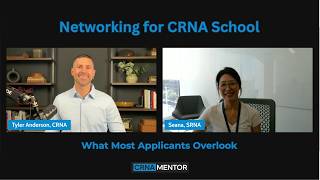
Senna Lee, a first-year SRNA, shares how she stood out as a CRNA applicant through intentional networking at the AANA Mid-Year Assembly. She prepared a 30-second introduction, researched legislative issues, followed up with speakers within 24-48 hours, and attended a Capitol Hill advocacy visit that led to a shadowing opportunity. She emphasizes viewing applicants as future colleagues and proactively reaching out to program directors.
Chapters
Most applicants think networking is just introducing yourself at conferences, but what if the relationships you build before you even apply could completely change the trajectory of your CRNA journey? In this episode, Senna Lee shares how intentional networking, mentorship, and positioning helped turn opportunities into acceptance, and why the strongest applicants often build connections long before they submit their applications. Welcome back to the CRNA Mentor Podcast. In this episode, I'm joined by Senna Lee, a first-year SRNA at Virginia Commonwealth University. What makes this conversation unique is that Senna didn't just attend Midyear Assembly last year. She used it strategically to build relationships, gain mentorship, and ultimately strengthen her application in a way that led to acceptance. This episode is really about networking, but not just surface-level networking. This is about how you position yourself, build real relationships, and create opportunities that most applicants completely miss. Welcome to the podcast, Senna.
Hi Tyler, thanks for having me and thanks for the introduction. Hi everyone, I am Senna. I'm a first-year SRNA at Virginia Commonwealth University.
Well yeah, thanks for joining us today, Senna. You know, the very interesting thing about this specific episode is I had this big idea, and you were certainly prepared for it, of actually shooting this episode live at Midyear Assembly this year, which would've been really cool because we met first at Midyear Assembly last year. And I thought, wow, why don't we just kind of find like an offshoot of the room, even of the, you know, the main area, and we could record this episode. And, you know, when we got to the point of where we had this kind of planned out, I didn't talk to 1,000 people, but it felt that way. And my voice was pretty much nearly gone. And among other things, we were unable to pull it off. So maybe, maybe next year we could do an episode here at Midyear Assembly.
But—
Yeah. Um, that's one of the reasons we had a little gap in our scheduling here with the CRNA Mentor Podcast is we were, you know, trying to make this happen all natural. And, uh, Senna, we're here today and we're going to talk about all about networking, which is, you know, what Mid-Year Assembly is all about. And like I said, that's where I first met you. And, you know, before we get into Mid-Year Assembly and networking, um, let's talk about what initially drew you towards the path of CRNA.
Sure. Um, I'm originally from South Korea. I moved here about 15 years ago. I wanted to pursue my education and support my family. So my path to anesthesia wasn't exactly a straight line like other people. Before CRNA school, I was actually working as a nurse practitioner in a pre-anesthesia clinic, and before that, I spent most of my time in ICU, mostly in CVICU, and I work in the emergency room. I really enjoyed being a nurse practitioner and appreciated training I got, but I kind of missed that. I realized I missed that being, uh, in the thick of it. I missed that high-stakes one-on-one critical care settings and hands-on skills. There's a kind of, uh, split-second precision and calm that CRNAs bring to emergency and, and a team. I just knew that that's, that was exactly what I want to belong, that I want to do. So I decide to pursue my passion and go back to school.
That's great. You know, I, I talked to a lot of mentees that, uh, were nurse practitioners before, and we had a couple episodes ago, we talked about, uh, the dual certification, you know, acute care nurse practitioner and CRNA in one. And, and I think, you know, what, what I'm trying to encourage my nurse anesthesia residents to do is to think like a provider. And that's exactly where you were before you started CRNA school. So I, you know, this perspective, I always tell people all these roles and jobs in healthcare are all additive to being a CRNA and offering this perspective, but especially, you know, your background working in a pre-op clinic. I mean, that's when we're going through charts at our ambulatory surgery center and approving patients, you know, do they, are they a good candidate for coming to this center? Uh, you know, you already have that experience. Senna, prior to, uh, coming online, we, uh, we're talking about networking and, and becoming a CRNA, and you said something that was very powerful. You said opportunities are everywhere like the wind, but you need a sail to catch them. What does that mean in the context of becoming a CRNA?
Yeah, um, I really do believe that opportunities are everywhere just like wind, but you can control when it blows or where it comes from. What you can control is your preparation. So to me, that preparation is your sail. So if you don't build it ahead of time, the opportunities just passes you by. You might just miss it. You don't even know you actually missed it. So the example of sailing for me was a lot of quiet, intentional work behind the scenes before anyone was watching. Mm-hmm. That was actually before conference.
That's great. And, and, you know, this, this preparation before the conference, you know, it looks different for many people, but, but one of the big reasons I wanted to bring you on, aside from your, your extreme, uh, ability to network at Midyear and, and as we connected last year, is the preparation that you put into it. And this is really the focus of this entire episode because preparation for all things, especially CRNA, are critical. Even networking. Now, before you showed up to Midyear Assembly last year, you were already preparing. What does this preparation actually look like?
I say it was a little bit of my homework and also being intentional. I crafted very short, impactful, maybe 30-second introduction about myself and who I am and why I'm doing this path. And I updated my resume. And update my LinkedIn profile and even a profile on the conference, like specific conference app. I also made sure I actually understood the current legislative issues before I walk into the door because I wanted to be ready for any types of conversation I want to belong there. So I did my homework.
That's incredible. Even it's this attention to detail. You mentioned even making sure that the, you're referring to the meetings app that we have for the conference, you have the ability to put, you know, your information in there. You never know who's going to see that. And that's just that attention to detail is really also what networking is about. You said you got your LinkedIn ready. You had, you know, all these things ready to go, you know, to capitalize, you know, if these opportunities came. And they certainly came for you in terms of, you know, meeting people and networking. You talked about this creating this kind of brief introduction. How did you go about crafting that? And why is that so important?
When you are in a high-energy environment like media assembly, you only have a few seconds to make an impression. I want to keep it simple, concise, but also personal because everybody has their own stories. And sure enough, I got hit with several questions, several times with the questions, why do you want to do this? And why don't you stay in a nurse practitioner? It sounds like a very simple, icebreaker, but it's actually major task. If you just say, oh, I want to help people, I think it's way too vague. And faculties and CRNAs, they, they want to know how serious you are and that you actually understand what you're signing up for. Because the reality is, you know, that stress is high, um, the liability is massive. And then I prep for it like real interview. So I actually kind of choked myself first few times, but talking over and over again, I feel more comfortable talking about myself. And I also use that as a chance to ask some sort of genuine feedback, um, on my unique background as a nurse practitioner moving to anesthesia.
That's perfect. And, uh, you know, this is in a sense like a mini interview, and I think that's a great way to approach this, is, you know, you are at all times at these meetings trying to remain professional, but also having these kind of soundbites of what you can offer as an applicant. And, you know, kudos to the AANA this past year at Mid-Year Assembly. They had interviews with program faculty that offered to sign up for some of our RNs, APRNs that were in attendance. And that's what I, you know, I keep telling members of the AANA is that, you know, we need to provide more and more value to these RNs and APRNs as they continue to make up, you know, a good portion of our attendees at these conferences. But, you know, approaching Midyear Assembly, any interaction, even these hallway conversations are like mini interviews, right? Senna, when you got to Midyear Assembly, what was your mindset walking in? Are you somebody that's like super outgoing that you're, you know, I'm here, I'm ready to talk to everybody, I'm ready to shake hands, or, you know, how did you approach this?
I would say I'm an outgoing person, but internally I am not. So I think this time around, or even last year, I just really found myself that I could be different and I could train myself to be different than I want to be. I consciously choose to carry the mindset of future colleagues and future profession, not just applicant looking for a name. In my mind, I think I was almost manifesting it. I kind of think like, act like I was already an SRNA or a CRNA, and I attended Literally most of workshops, workshops, meeting, except the residents one, um, but I attended this year. It's all about showing up and offering genuine interests and sharing your experience.
So, Sanna, one of the things that really impressed me with your networking last year was, uh, you, you were, you know, kind of omnipresent. You're talking to all these different people, and I was blown away by our interaction. And later at the PAC event, I had a CRNA that came up to me that specifically mentioned your name and had the, you know, the same than I did. Um, let's talk a little bit about— you precepted someone who later became your mentor. Um, how did that relationship evolve and impact your path as a CRNA?
So years ago, I was a senior nurse in CVICU. I got to train many newly hired nurses in our units, which was my favorite, um, part of my career. And one of them was Jacob Bonoma. He was an excellent, he was a fast learner. He's now a CRNA and an advocate leader. Over time, our relationship, our professional dynamics naturally evolved. And I started, as I started thinking, looking toward anesthesia, he became my crucial mentor. He challenged my perspectives and pushed me think even bigger. He really helped me navigate whole path together. He actually introduced me to the Midyear Assembly last year, and I volunteered to come again because it's so amazing. And I didn't train him years ago thinking that he would do a favor for me one day, but by doing that, I built the reputation and he became the wind in my sail. So you never know. The person you teach today might be the person you, uh, person who guides your tomorrow. Mentorship is not just one way straight. I think it's just mutual respect.
I love that. And, you know, going from, you know, you're his preceptor to he is your mentor, uh, that, that is, that is nursing. That is nurse anesthesia. And, and that is really what fuels me as I go through this path and and try and, you know, bring out all the best in people if I can and kind of harness that energy. If I, you know, one of the reasons I'm having you on the episode today, Senna, is because I see something special in you and I know that you're going to impact this profession.
Thank you.
And honestly, that's how all these things work. I know Jake, he really made an impact early on and shout out to Jake, you know, we're gonna have you on the CRNA Mentor podcast here shortly to talk about all of his work with advocacy. But it's one of those things that, you know, mentorship, you're not asking for anything in return. You're just genuinely trying to help. One of the things, Senna, that I wanted to talk about, and you had attended my RN meet and greet at mid-year assembly last year, is this theme that I keyed in on, which is All In. And this is, you know, the mid-year assembly theme that you said really resonates with you. What did going all in actually look like in your journey?
For me, going all in is not just checking boxes for an application. It was about being proactive and really immersing yourself, myself, in a community. I really took that mid-year assembly theme to my heart. I showed up early and prepared and fully engaged. I attended most of the workshops, as I mentioned, and meetings. And I even attended a Capitol Hill visit as a nurse status. I remember dragging myself 7 in the morning wellness lecture. And I was exhausted. It was third day. Usually by third day of conference, people are drained. But when a speaker sees you there early in the morning, I believe they know that you got discipline. We have about less than 8 people, about 8 people. And— The wellness is one of my favorite topic as well. We ended up having a real great organic conversations. And it happened to be the speaker was one of my top choice of school. And it really taught me that sometimes just showing up early is the best way to advocate yourself without saying any single word.
So one of the things that you mentioned there, Sena, is attending the Capitol Hill visits and talking to the legislators as a nurse. Actually turned into a powerful part of your application. Can you, can you walk me through that? Because I feel like last year there really wasn't a whole lot of nurses that attended this. This year, I think the attendance was a little bit better from our nurses, but tell me about your experience as a nurse going to Capitol Hill.
As a nurse and as a current student, I think it really means a lot to me. And then I learned so much about advocacy at the conference, but I realized if I don't speak up. If I don't raise my voice, someone else is actually make a rule or policy for you. Last year, on the second day of Hill visits, all of the residents had to head back to school. So it ended up being just me and Illinois PAC federal director. So instead of stepping back, I stepped up. So we spent entire day hitting all the meetings together. She was so inspiring, inspiring. And she actually gave me the floor to speak directly with Reggie Slater's staff. I didn't think that I'm gonna speak. But again, I prepared just in case. So I was able to share my experience, my firsthand stories, what it was like as a nurse and nurse practitioner in South Side of Chicago. When I got home, I made sure to follow up with her. And the one connection opened massive door. She, she set up the opportunity for me to shadow outpatient surgical center because I want to see different practice setting as a CRNA, and I could observe the pediatric cases, which I loved it. And it was just— it was a 3-hour drive each way, but I didn't hesitate for a second. I just got in a car and made it happen. That relationship eventually led to direct line to a local program director, even though I found that my specific qualifications weren't really matching for that program. But that clarity just saved me months of second-guessing. And it just let me pivot fast and put my energy exactly where it's supposed to be.
I love that. That's so powerful. You know, this, this idea of putting yourself out there, first off, going to Capitol Hill, You know, and, and I just wanna touch on that a little bit is that, you know, when you go there, you will see that not all CRNAs are super, super comfortable talking to these legislators. And it's often, you know, these, these team leads that are going to, you know, carry the bulk of the conversation. But when you get an opportunity to speak, just as you did, you speak from your stories, from your personal experience. And that's what you learn in midyear. Like that's, that's what you should be sharing with the legislators. But there's certainly nerves to it, you know, myself included, you know, talking to these legislators, it can be intimidating, but, but you're putting put yourself out there, and all these doors opened up because you did that, and you didn't shy away from that 3-hour drive. It's like, wow, you know, the, the more that I can do, uh, to, to kind of facilitate my growth, I'm going to do whatever it takes. And that's the mentality that really allows you to, to explore all these opportunities. And I will tell you, you know, as a CRNA, as, as, you know, a mentor to many, the individuals that, that put forth that extra effort Those are the ones that I, you know, I tell them, here's my network, right? Here's all these relationships that I'm building nationally, regionally, and I want to help you explore all these opportunities. Because the more that we can have this connectivity and this ability to network and boost each other up, you know, I'm going to help pretty much anybody that reaches out to me. But those individuals that I see something special in, I'm going to do even more to, you know, allow them to grow and really make an impact in this profession. Yeah. How did you, Sana, go about identifying people to approach as you went about networking? Did you have kind of obviously maybe your target programs, but how did you identify these people and seek them out in these conferences?
Yeah, I completely agree. Just wandering around a conference, just passing out your resume doesn't really work. For me, It had to be, again, intentional. Before the event even started, I kind of like reviewed all the conference contents, and that specific conference app is so handy. It has a lot of good information about speakers and content. So I picked topics I was genuinely interested in, and I mapped out my schedule because some classrooms are overlapping between different rooms. And it just gave me real talking points because I'm just speaking intentionally about the topic and speakers. In fact, during one of the conversation I had about clinical aspects, ideas, a speaker point out that my concept would be— would make a perfect doctoral project. So I thought it was kind of— Yeah. Lightbulb moment. Yeah, this year, some nurses actually brought the creative, printed out the business cards and putting a QR code in the back. And I thought it was creative. It's something unique about it. And it shows that you're prepared.
Now, Senna, when you meet these individuals, you talked to me before we went on air about this 24-hour follow-up goal. What is that, and why is that so important to networking?
So the work, the relationship you build, it doesn't stop when the conference ends. I made it a point to send a thank you email or LinkedIn invite within maybe 24 to 48 hours while the conversation is still fresh. I always mention the specific details that we talk about, It turns out 5-minute chat into a lasting connection. That is how it worked exactly with Illinois PAC, a veteran director back home. And also I got several great feedbacks from that relationship and continuing that conversation through follow-up from programs.
That's excellent. One of the things I want to kind of pivot into talk about here, Sena, you have a little bit of a different mentality than, than some other applicants that I talked to. And I just want to highlight that a little bit as in regards to CRNA school. Um, you had mentioned that, you know, a lot of other applicants saw each other as competition. You saw them as future classmates. Why did you— why do you have this perspective, and how has that helped you, uh, in where you're at right now as a first-year nurse anesthesia resident?
Honestly, I actually want to shout out to Ana and Tyler organizing RN and our meet and greet, which was absolutely great from whole conference. And the vibe was really so encouraging. And for the first time, it feels like I am really belong to that community. I get to talk to residents and chat with the faculty members. It just made whole process feel more like human. And I met— Hi, incredible group of nurses there. We all have the same goals and we just clicked. And it's funny because on the paper, technically we're, we're, we're all competing each other.
Right.
But we all know that getting to school is stressful. It's challenging. And it's easy to fall in the trap that seeing everyone as a threat. But the mindset actually might hold you back because when things get intense in the OR, you need to know your team has your back instantly. We started talking, we started acting like a team right there. We send supportive messages each other, and we're all from different states and celebrating each other's win. For example, getting an interview opportunities and we're so happy for each other. I even introduced a nurse, who was eyeing on my exact program in my state to a coworker of mine who had just been accepted to that program. And we are fighting for the same dream. So why not support each other now? She eventually, she later, she shared so many, so much study materials and ended up actually getting more help from her. The best part, actually, 3 of us in our group ended up choosing the same program. So we are all classmates. Oh, that's great. Yes. And I just really think that helping each other doesn't really take away from your opportunities. It actually creates them. The kind of collaboration is the best part of anesthesia. And that's exactly what I love this profession.
I love that, Sana. That's amazing. And the fact that you're classmates now makes it even better. This kind of goes hand in hand with what we had talked about before we went on air. You talked about this pay it forward loop. You kind of alluded to that in that response, but can you tell me a little bit more about that?
Sure. To me, the pay forward loop means that the help you receive during your toughest moments shouldn't just stop with you. It's your responsibility to pass it on to the next person. So my program at VCU allows us to work a bit during the first, second semester. So I took a part-time position as a clinical instructor in nursing program at Marymount University. It actually became the most rewarding part of my life. I still remember when I was completely overwhelmed and I got so much support— overwhelmed and I got rejections and I got so much support and I had a over 2 hours. It was a 2-hour mock interview with you. It was intense, but it was so helpful. And honestly, I wish that my interviewer in a real interview asked me more questions because I prepared so much with you. People invested their time in me and when, when they didn't have to. Now when I see my own nursing students getting anxious about clinicals, I get to be the one to lift them up. And that's what the loop is all about.
Yep, 100%. One of the things that I wanted to talk about, Sana, is you had this opportunity to participate in, in a class at your top choice program. What did that experience give you that others might be missing out on?
So I actually took things a step further and reached out to the program manager at my top choice school. To see if I could sit on a table, sit on a class and meet those current students. And I wanted to see the reality of the program for myself and get a genuine feel for the culture, which is important. That kind of validation is so, I think it's crucial because you're just choosing a school, you are choosing your life for next 3 years.
Mm-hmm.
So I flew from Chicago to Virginia and You, you got to make sure that the environment matches for your expectation before you dive in. And getting to know student dynamics firsthand really gave me a level of confidence. Um, those information you can't get it from the website. And I also managed to shadow CRNAs over 40 hours in all different hospitals. And that experience, just along the journey, I made so many mentors and basically their teachers, their guidance, and just really getting to know profession and really like solidify my decision.
Wow, Sana, it's so impressive all the different things that you've done. And really, it seems like at the drop of a hat, it's like this door opens, I'm going there, whether it means jumping on a plane and flying just to attend a class. But the subtle thing here, and you are probably aware of this, is For these programs, you know, that you are interested in, that this is your top program, and you're asking, hey, can I come to class? You know, I live in Illinois, but I'm going to get on a plane and I'm going to go and attend this class. That says volumes about your commitment to that program, right? Obviously, you know, if you had 5, 10 programs, you're not doing that all around the country.
No.
But, but, you know, it really should— no, it really shows how important this program is to you. And I'm sure, you know, the program faculty and directors really appreciate that when they have individuals like yourself that, you know, door opens, drop of hat, okay, I'm going, I'm going to class here. That's amazing. And great job on making that experience happen for yourself here. Senna, at any point, you know, you're doing so much, right? You're attending these conferences, you're flying to attend these classes, you know, you're networking. At any point, did this feel like it was too much? And if so, what kind of kept you going?
So I, I think that the relationship really kept me going. I realized this process wasn't just fighting for a seat in a classroom. It was about becoming a part of real community, um, seeing how these CRNAs and residents and generally they really care about the profession and each other. And that was my fuel. And when you realize that you aren't just competing but you are joining a legacy, it starts to feel like an investment. I learned something valuable from every single experience, and I met great people along the way, and I get to know about myself even more. And I, I'm just so grateful for every process.
Couldn't say it better myself. I mean, this, this idea of shifting from this competition to, you know, this is a collective effort, and that's largely what I'm trying to do with CRNA Mentors is really harness this energy. And, and you certainly have done that. Uh, Senna, as we wrap this up, if somebody is listening to this right now, and they feel intimidated by networking, what would you tell them?
I completely get it. For a long time, especially coming from traditional Asian background, I was naturally more passive and shy. I feel like asking for help was just a sign of weakness, or that I was being a burden to someone else. But through mentors, reading and a podcast, my perspective completely shifted. When you try to navigate this path alone, I think you limit your own growth. Being vulnerable and asking for help is actually proactive strength. I think it gives actually other people the opportunities to invest in you and help you. So don't take it away, that opportunity from other people.
Thank you.
I know you also mentor high school students. They don't have Quakers like Jake yet, but they have platforms like TikTok or Facebook where leaders like you have built global mentorship network. The connection matters actually everywhere, especially for them, whether it could be through their neighbors or volunteering. Shadowing or workshop. I actually had volunteered to give local high school students a feel for the CRNA profession through VCU, and that was really good experience. And more than anything, I wanted to see that asking for help isn't— isn't— is not a burden. It's how you build your sail to catch the wind, which is future opportunities.
Yeah, I love that. And, you know, this idea of networking, it's all around us. And I think that there's going to be more and more plentiful opportunities to do that. It's just something, as you mentioned, you have to embrace, right? And look, you know, explore what is out there to learn about this profession. You mentioned, you know, the social media platforms, but I think more than anything, you know, attending these conferences, getting in front of people, shaking hands, introducing yourself, Putting yourself out there, that's how all these doors open for you. And I would encourage to, you know, any of our listeners today who are, you know, unsure about how to do this, it really starts with you just putting yourself out there and showing up. This episode, for everyone who's listening, this episode isn't just about networking. It's about how you position yourself in this journey. And Senna, she didn't just check boxes. She built relationships, she sought mentorship, and she created opportunities before she even applied to school. And, and that's really the big difference, uh, from being eligible to being competitive as an applicant. Senna, I really want to thank you for, for sharing all of your experience and your network strategy with everybody who is listening today. And as always, if you found value in this episode, share this with somebody who may need some encouragement, maybe somebody who's struggling with networking. And thank you for listening to the CRNA Mentor Podcast. And thank you again, Senna, for joining us today. It was such a pleasure to have you. Thank you.
Thank you so much for letting me speak. I appreciate it.
Absolutely. Take care, Sana.
Bye.
More from Tyler


How to Make the Most of AANA Annual Congress as an RN | Advice for Aspiring CRNAs

Professionalism Starts Before CRNA School - The Kind of Applicant You're Becoming


Locums, 1099, and W-2 CRNA Practice Explained: What Every Future CRNA Should Know

From Penn to Solo CRNA Practice - The Unexpected Growth of Independent Practice





The Most Unique CRNA Role in America? Shock Trauma Go Team & Austere Medicine