RN’s Guide to AANA Mid-Year Assembly: What to Attend & How to Prepare
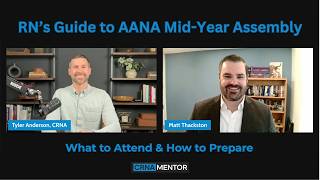
Matthew Thaxton, AANA's Senior Director of Congressional Affairs, walks nurses through the Mid-Year Assembly schedule and Capitol Hill days. He covers key policy talking points like Title VIII nursing workforce funding and the One Big Beautiful Bill student-loan rule, plus practical tips on meeting with legislators and telling patient-centered stories that move policy.
Chapters
If you're attending Midyear Assembly as an RN or APRN, it can feel like a lot. A full schedule, unfamiliar terminology, and a big question: where do I even start? In this episode, I'm sitting down with the ANA's lead lobbyist to help you understand exactly what matters, what presentations to attend, and how to walk into Midyear Assembly confident and prepared. Today I'm joined by Matthew Thaxton. He is the Senior Director of Congressional Affairs for for the American Association of Nurse Anesthesiology. Matt plays a critical role in leading federal advocacy efforts for CRNAs, working directly on Capitol Hill to help shape policy, protect our profession, and expand access to anesthesia across the country. His impact has not gone unnoticed. Matt has been recognized multiple years in a row as the Hill's top lobbyist. This is an honor awarded to the most influential and effective advocates in Washington, DC. Welcome to the podcast, Matt.
Thank you, Tyler. I'm excited to be here.
Yeah, I'm happy to have you. And this has been a burning question for all of our RNs, APRNs that, you know, have been trying to follow, you know, in attending Video Assembly, what does it look like? What presentations should I attend? And how do I make the most of my time here? And I think you are the perfect person to talk to. I know I made a joke to you last, this past annual Congress, I saw you and I said, said, you spoke at the Rn meet and greet last year at Midyear Assembly. And I said, Matt, I said, I apologize. I didn't realize how big of a deal you were at Midyear Assembly in that you are on stage more often than you are not. So you're exactly the right person to talk to here.
Well, that is— that's very nice of you to say. I think I'm like a very medium-sized deal at best. But you are right. I do spend a lot of time on stage. Luckily, a lot of that is also with other very smart people who help me with these presentations, but it's, it's a really fun opportunity. Midyear is great. And I think to your point, like there are a lot of sessions and if it's, especially if you're a first timer, like it is kind of hard to navigate because there's so much going on in midyear.
Absolutely. And, and, and one of the things, like I said, I really want to key on key in on like during this presentation is, is talking about what to attend. And I think we'll, we'll, we'll dive into it. But first, Matt, I, I want to talk, you know, can you walk us through as a senior director of congressional affairs with the ANA, what does that entail?
Uh, the, the very short answer is a lot of meetings. So, um, we have a lot of, you know, there, there's different groupings of meetings. So there's a lot of internal meetings, right? With not just our legislative team. So I oversee a team of 4 lobbyists in total, myself included, but we also work with a regulatory team of 4 folks and a political team of 3 folks. And the work that we do in our department, we also coordinate with state government affairs. We coordinate with research to make sure that when we go to the Hill and do our advocacy, we have the, the most recent and best data. We work with PR to make sure that we're getting our message out. So there's a lot of internal meetings that go on to make sure that everyone is coordinated. And we also have a lot of coalition meetings. So we work a lot with the Nursing Community Coalition, which is 65 National. Nursing organizations— AANA sits on the steering committee for that, so we do a lot of meetings with other groups. And then the, the main part of my, my workday is meeting with legislative staff up on the Hill to talk about our issues, their issues, how we can work together to advance our advocacy priorities at AANA.
So Matt, why, why should CRNAs or even RNs care about what is happening in Washington, DC?
The short answer is that what happens in DC affects everybody, right? The policy choices that are being made today on Capitol Hill, whether that's in Congress or through the administration, are going to affect you, are gonna affect nurses, are gonna affect their practice down the lines, are gonna affect patients down the line. So you need to care because it's going to affect you. And I know a lot of folks sort of have this feeling of like, I don't want to get involved in politics. You know, I understand that we're at a time where there's a lot of division, but you can ignore politics. Politics is not going to ignore you. Those policies are going to move regardless. So it's really important that you're engaged, that you have a seat at the table to make sure that you can articulate your concerns or your support for what those policies could do to your career, to your patients, to healthcare down the line, because it's gonna affect you one way or another.
Absolutely. And, and, you know, building off of that, you know, and that you kind of answered this question, but, but what happens when we don't engage? What happens when we don't have, you know, these aspiring nurse anesthetists that want to get involved in politics in the future? I mean, obviously we have, you know, people like yourself that, that have their, you know, ear and, and, and, you know, their voice in, in Washington, But what happens if we kind of get lost in the shuffle?
So there's a phrase that we always use here. We literally just had some healthcare students from Florida International University here last week. And one of the things that we told them is there's this old adage, "If you're not at the table, you're on the menu." And that is so true in everything advocacy related. If you're not here utilizing your voice to talk about what you care about and policies that you support, those decisions are gonna be made without you. And one of the things that we see, especially now, right, is everyone wants to cut spending, cut costs, make things more efficient. There are good ways to do that, and there are ways that are maybe a little bit more detrimental. Either way, those decisions are gonna be made. Though there's gonna be cuts that happen. There's gonna be, you know, efforts to make the budget better, right? And they're always looking for where can we cut, where can we take things from, what don't we need anymore. And if you're not there to advocate for that— and Title VIII nursing workforce funding is a great example, uh, they tried to cut this last year. Both the House, the Senate, and the White House all proposed different levels of cuts to nursing workforce funding. We worked with our nursing colleagues and ended up protecting all of our funding, so we didn't get any cuts. Right. But we can't do that unless nurses, students speak up about why these programs are important to them. And constituent outreach in particular is really important and really effective. Your lawmakers can hear from me all day. I can help give them details of policy, but at the end of the day, they answer to constituents. They answer to the people who can vote for them or vote them out of office. And that's you guys, not me. Yeah.
Right, yeah, and that's a good point. I do want to kind of key in on, you know, this coordination, uh, not just with the ANA but, you know, other nursing associations as well. And, you know, this collective voice that we have together and in coordination is very important. Um, Matt, I want to get into kind of the breakdown of the Mid-Year Assembly, and this is, I think, what many of the nurses and APRNs are super, super interested in, uh, just the flow of the conference itself. So I wanna kind of walk through each day, what are some of the presentations that our RNs could attend and maybe get something from. And I wanna start with Saturday. Now Saturday really doesn't kind of start for, there's some workshops early on, but it really doesn't start till after lunch for many of the, you know, general people attending this. The regional breakout sessions, can you speak a little bit about that? I know that's something that, nurses who attended last year really found a lot of value in.
Yeah, so these are really important. This is not only a really great networking opportunity to meet other attendees who live in the same area that you do, the same state, but also to talk about what's going on in your region, what's going on in your state, what you can do to help affect that in positive ways. It's just a really good learning opportunity, a really good networking opportunity, and a way to sort of get into the conference and meet other people, start to sort of get your bearings, hear what folks have to talk about, what issues are top of mind for different regions. So it's a little bit more of like a relaxed setting where it's just a conversation about what's going on and what's important to folks in your region.
Yeah, absolutely. And I think, you know, in talking to the nurses that attended these sessions last year, It really, you know, you hear from the presidents of the state associations, you hear from your regional directors. Now this year, I don't know if it was this way last year, but it's kind of broken up into two halves here where we have, I don't know if it's like 1 through 4 are speaking and then, you know, 5 through 8, I think, are speaking. So if you can actually, you know, do two of these if you'd like and hear from some of these, you know, regional directors, which, you know, are very, very insightful, very, very, you know, have their finger on the pulse in everything in their region. And then getting to hear from, you know, the state presidents as well is very insightful. And oftentimes, you know, these people who are the, you know, the heads of the state associations could be program faculty, could be program directors. So you have that opportunity to see them as well. Later on Saturday, Matt, we have the welcome reception. And this is, this was something really cool that I really enjoyed last year. I got to kind of, I had a list of people that I wanted to meet. And one of them was Tracy Young, who I got to speak with him and his wife last year at that. But it's just kind of an open mingle of everybody that's, that's at that. Can you elaborate on that a little bit?
Yeah, it is, you know, again, like, and also really easy, relaxed opportunity for networking. It's literally just, you go in, grab a beer, talk to somebody. It's relaxed. There's not really like a ton of programming, which is really nice. Because as You know, somebody who attends congressional fundraisers, the worst part of a congressional fundraiser is when the glasses get dinged and somebody's gonna go up and give a 20-minute speech that no one really cares that much about. So it is really just like a great opportunity. Every, like, there's so many folks there. There's also staff there. So it's also a great opportunity not only to meet, you know, CRNAs, other RNs, APRNs who are there, but also staff is there. So if you have questions about the conference, we're around, come ask us. We want to be a resource. We want to be helpful. We can also help you meet up with certain people. If you're like, hey, I haven't had the opportunity to meet the federal political director from my state, like, can you help me find them? We're happy to do that as well. So it's just a really fun and like relaxing opportunity to just kind of meet new people and find your way around a little bit.
Yep. Yeah. And that's, uh, last year I had a mentee that's an RN now. He was kind of had piled up with me. We were going around and he met Daniel King, and that was actually the first time I met Daniel King as well. And this nurse, his name's Alec, he said he was blown away at how Daniel put all of his attention and really wanted to hear his story. And, and this is what networking is all about, you know, trying to make some of these connections. And, and there's so many people that are out there that are going to be in attendance that are CRNAs, that are, you know, these regional directors that want to hear from you as RNs. So this is a great opportunity on Saturday. Now Sunday, this is kind of really the foundation of the conference. And one of the things that we spoke about briefly here before we got started, Matt, is how this conference really builds off of itself. I think you said in kind of like a cadence, you know, each day builds onto something until, you know, you have this foundational work here on Sunday, and then it kind of builds into strategy on Monday, and then gets, you know, builds into the Capitol Hill meetings on Tuesday and Wednesday. Can you mention a little bit, I guess, about what we discussed in terms of what Sunday is for this conference?
Yeah. So Sunday's when we start sort of the meat and potatoes portion of the programming. We do a lot of very sort of basic— there's even a session 101, like introductory. Okay, if I'm gonna go talk to my legislator, how do I do that? And it's not just You know, we really try and start at square one, which is we generally assume that you don't actually have any knowledge of how Capitol Hill works, what an office looks like, any of that stuff that we in DC sort of take for granted is like general knowledge, right? So we really do start with laying the groundwork of like, here's how Congress operates. This is what an office looks like. Here's who you would talk to in an office. Here's the engagement. We will talk a little bit about issues and sort of set a general foundation of knowledge of what our CRNAs are gonna go talk to their legislators about on Capitol Hill, what our top issues are. We really try to keep that focus cuz we don't wanna overwhelm anybody. So we usually have 3 major asks that we have every mid-year, uh, that are your top things you're gonna go talk to lawmakers about. So Saturday is really about building up that sort of general base of knowledge of What does it look like when I go do this meeting? How do I interact with lawmakers? How do I interact with staff? What are the main things that I'm going to be talking about?
Mm-hmm. Yep. And this was the CRNA Advocacy 101, that, that kind of session you were talking about. I just want to kind of briefly look at kind of the sequence of, of what Sunday looks like. Um, now I did already did a podcast on, um, the RN meet and greet, so feel free to check that out. Uh, you will be in attendance there, Matt, which I was pleasantly surprised. The unfortunate thing this year about the RN meet and greet is that it is occurring concurrently with, you know, the opening ceremony. So last year was on Saturday, not a lot going on besides some of the workshops, but you're able to sneak away a little bit. So we're happy to hear from you again, you know, at the RN meet and greet. That's the first thing in the morning on Sunday. So if you're planning to attend that, great session to kind of meet some of the program directors that are gonna be there. Matt will be there as well. And then this CRNA Advocacy 101. So there's a little bit of a, of an overlap associated with that. But you know, that's, that, that's the next thing that I would be attending and that's something specifically that Matt had recommended. How about, you know, the, the CRNA Advocacy Regulatory Policy and Advocacy session?
Yeah, so that is a really like interesting, good one to go to. I would say if you're an RN or an APRN, it may not be the most applicable to you. It's still That's really interesting because I think what sort of gets lost outside of DC is like, we talk a lot about going to the Hill, meeting with lawmakers, getting certain laws passed and how important that is. But there's an equally important part of that process where after laws are passed, they go to agencies and the agencies have to figure out how to implement and enforce those laws. And that's really where the more detailed work happens of, you know, specific, specific mechanisms for enforcement, uh, specific, you know, rules here in there that get sort of flushed out in the regulatory process. So it's a really good complement to understanding what happens after legislation passes. It's definitely gonna be a little bit more detail-oriented. And the reason that I would say maybe, you know, certainly go, like, absolutely, it's a great learning opportunity. The, the difference I think between the Legislative 101 and our regulatory one is We aren't gonna send you to go speak to HRSA or HHS while you're here in DC, right? That's still really important knowledge for you to have and to understand, but like, we're not gonna send you to the agencies. You don't need to prepare yourself to go meet with some HHS administrator while you're here, but it is still stuff that affects your practice. So it's good to know about.
Certainly. And, and, and I think that's an important thing to point out, you know, a, as our RNs, as our APRNs, as our, you know, new, new CRNAs or, or SRNAs are in attendance at Midyear Assembly. You know, there's going to be many topics that are over my head, but this, a lot of this is just about getting that exposure and don't expect to completely understand it. But the more you get exposed to it, the more you'll start to kind of piece this puzzle together and understand it kind of at a deeper level. And that's something I think is really the main takeaway for, you know, going into these presentations with that in the back of your mind that, you know, it may well be over, you know, the CRNA's head that's sitting next to you like myself.
Right.
But don't shy away from these opportunities to learn about this. Some of this stuff. Another session, Matt, that you had mentioned that, that you recommend our RNs going to is this mentor— mentoring for state advocacy. Um, can you touch on that a little bit?
Yeah, absolutely. So when we're at Midyear, we get a lot of focus on what's going on at the federal level, um, and that's obviously because we're here at DC and we're about to send you to Capitol Hill. But getting involved at the state level is really sort of like the ground level that you want to get involved at advocacy with, because What happens at the state level has usually a little bit more of a direct impact on practice, right? That's where scope of practice laws go into effect. So that is really— getting involved with your state association is really important. It's also a great entrance opportunity, right? Like to get in, do some work with the state folks, get to learn, get connected with folks in your state. Doesn't require you to travel and book a hotel, which is nice. You can just you know, do it right where you live. Uh, so it's a really good opportunity to meet folks, to get involved in mentorship. And one of the great things about Mid-Year Assembly is we have so many amazing CRNAs who have been coming for years, who have been leaders in the advocacy space for, for a long time, who really understand this, who have spent years building relationships with lawmakers both the state level and at the federal level. They are a wealth of knowledge. They are a great resource. If this is something that you're interested in, do you want to get more involved in advocacy? Learn from those folks. They not only are they a wealth of knowledge, but they also want to spread that knowledge, right? They care about the next generation of leaders. So that's just a really great opportunity to learn more about your state, learn more about what's going on locally that's really going to affect you, but also to, to meet these— Yeah. Folks who know how to advocate. They've done it for a long time and who can be a really great resource for you.
That's perfect. Yeah, and, and as you said, you know, this is the perfect place to start with these estate advocacy here. Now, as we look at, at Monday, Matt, uh, the schedule, like we said, it builds on itself. This is kind of taking this foundational stuff that you're learning on, on Sunday, and then as you go into Monday, it's really applying what you've learned and kind of talking more about strategy. Uh, one of the sessions to start out on, on Monday is this Quiz Pro Quo. Can you talk a little bit about what that would look like?
Yeah, so, you know, one of the things that we really try and do is make these sessions engaging because we know it is a lot of people just talking at you, and after a while that can get a little bit dry. So what we do for Quiz Pro Quo is we actually turn it into a game show. So everyone downloads an app on your phone, you can play along, you can form teams if you want, And we have a, it's a little bit like Jeopardy. We have different categories of questions, different values, and we go through and we'll just ask you questions related to some of the content that we've gone through already to sort of, you know, refresh it in your mind, but also do it in a way that's, you know, fun and easy, particularly because Sunday night is our pack event. So that goes kind of late. So we try and make our Monday morning a little bit easier for folks knowing that some folks are still in recovery mode after the pack event.
That's good strategy. So yeah, no, that's excellent. That's, that's good forethought there, Matt. That's good. How about the Mythbusters section talking about handling misinformation? I believe this is— is it yourself and Dr. Jeffrey Darna that are doing this one?
Yeah, yeah. This is actually a new session that we've never done before. So, you know, we occasionally change some programming up, and this year we are doing this Mythbusters. There's sort of twofold reason that we're doing this. One is this is a little bit of a deeper dive into, you know, the studies and the data that's out there that's going to help you as you're doing your advocacy meetings, but is also going to inform you a little bit deeper on what some of the challenges you might hear in a meeting are, right? Because we know that as much as we come in, we talk to our lawmakers, we present our side, We also know that there are folks out there who are presenting a different story, right? And part of what we're really focused on is making sure that our story is data-driven, backed by science, that you have a good handle on these studies. Particularly, there's one that just came out that, that Jeff worked on through the University of Vanderbilt that looked at patient satisfaction in the VA for anesthesiologist versus a team model versus a CRNA-only model of care. Um, the results are great for CRNAs, uh, which is awesome, but it's a really good opportunity for folks to learn about that themselves, but also find out how do I talk about this when I'm going to meet with a lawmaker, right? Because we are not all researchers. For a lot of us, we're like, this is a very long article in some health journal that I maybe don't really understand. So we wanna break it down into a way that's not only digestible digestible for attendees, but also for Hill staffers, because I think folks sometimes forget when you go to meet with a Hill staffer, they aren't just dealing with CRNA issues, they're dealing with all of healthcare. They're also probably dealing with agriculture issues, and they're probably also dealing with defense issues. So they also have a lot on their plates, and the more that you can make that information easier for them to understand, the better it is for you.
Yeah, I'm excited for that Mythbusters. I thought that was new. Jeff Darna is such an awesome guy. I attended his actual, his presentation at annual Congress talking about this research topic. And I spoke with him after the presentation about it. And it's fascinating. And I think how it's going, you know, applicable to really, you know, this legislative conversation and what we bring as CRNAs, you know, is all in that study there. So that satisfaction at the VA is excellent. And I'm really happy for them. Excited for that one. How about, um, the, uh, the Leading Voices, uh, CRNAs in elected, in elected office, uh, presentation? Um, that, that's something that is of interest of, uh, for me too, but can you tell me a little bit about that?
Yeah. So one of the things that AANA does is help support CRNAs who are running for elected office. And we have a couple, uh, in South Dakota. Uh, we have a CRNA who's in elected office in Illinois. Really great. We also won in Ohio, Kelly Dieter. So it's an opportunity to learn from them because some people down the line, you may want to run for office. We fully encourage that. One of the things that's really important is not only as a constituent, making sure that your voice is heard, but it's really important to have lawmakers who understand these issues at a really deep level. And, you know, Kelly Dieter, I think, is such a great example. She helped to usher in the supervision removal bill in Ohio that just got signed by the governor, which my understanding is that supervision has been on the books for over 100 years. Right.
And I've been following her work there. I'm hopeful, uh, to meet her, um, you know, at mid-year assembly because her work I've been following, I'm like, wow, this is truly incredible. And I think, you know, for our— all of our aspiring CRNAs, if, you know, this, this idea of politics in the future, you know, for them is, is of interest, she is a perfect person to learn from. And, and, you know, somebody that's helped to kind of pioneer this space as a CRNA.
Yeah, absolutely. And one of the things that I really appreciate as a lobbyist up on Capitol Hill is our nurses who are in Congress. And last year we did a panel with them. They sort of talked about the importance of the advocacy that, that we do, but they get these issues, uh, and, and our, our nurses in Congress— we have nurses at both on the Democratic and Republican parties— are our biggest advocates because they understand how important these issues are and they're personally invested in these issues. So we are all about having CRNAs and nurses run for Congress, run for your state legislator. Uh, it's, it's a really amazing way to get involved. And this is, uh, just a great opportunity to hear from folks who have done that and have done it very successfully.
Matt, one of the, the sessions that you had recommended on Monday was the, uh, Nursing Caucus session. Uh, can you tell me a little bit about that?
Yeah. So this is where we have invited staffers who work for Nursing Caucus co-chairs to come and just have a conversation about the work that they do. So in Congress, there's committees which are, you know, predefined, and people get assigned to those. But there's also what we call caucuses, and this is where members can choose to form a caucus and join a caucus about an issue that they care about. And in Congress, we have our Nursing Caucus, this. There are 6 co-chairs, so Senator Merkley and Senator Wicker on the Senate side. In the House, it is Dave Joyce, uh, Jen Kiggins, Lauren Underwood, and Suzanne Bonamici. So they really are the folks that we go to, the folks that the rest of our nursing friends go to when we need help, because they not only care a lot about these issues, but they understand these issues. They've worked on these issues for years. So We've invited staffers who work for those 6 members to come and talk about what it's like to advocate the work that their bosses are doing as the biggest champions for nursing. And the nice thing, especially for our RN and APRN members, is they don't just work on CRNA issues, right? Like, these folks tackle all of nursing. So we've been working, you know, hand in glove with all these members on the Department of Ed's loan rulemaking issue that has been really a a concern for us. And these are the folks who've been leading that. And these staffers, you know, it's always wonderful to hear from members of Congress. They're great, but the staffers are gonna give you like the true inside. This is how it works.
Yeah.
This is what you should be do. This is why it's really important to be nice to our scheduler because they're the gatekeeper. Like they're gonna give you like the real story and they're the ones who do all of the work and make the recommendations to their boss for what to do. So at that, that panel I'm really, really excited about. These, The staffers are absolutely wonderful. They work incredibly hard on all of our issues. Um, so I think hearing from them is just gonna be an awesome opportunity to learn about what they do and what their life is like and what their bosses care about and, and how to be a better advocate for nursing.
Yep. Yeah, that sounds like a, a perfect, uh, presentation to attend here. Uh, that, that pretty much wraps up Monday. Now looking at Tuesday and Wednesday, uh, again, building off of, you know, the previous days, this is where really kind of executing this strategy, right? Um, this is where we do the Capitol Hill day on Tuesday and Wednesday. Now, can you walk us through, you know, if you— if, you know, individuals looking at the schedule, they see, you know, breakfast with state strategy, uh, what, what does that mean specifically?
Yeah, so when we do Capitol Hill visits, every state has an elected role that we call the federal political director, and for mid-year, they are charged with of organizing all of the meetings with your congressional members. So if you're, you know, from Vermont, they have set up 3 meetings, pretty fairly easy. If you're from California, they have 56 members of Congress. They probably are gonna have to pick and choose which meetings to do, but they work with us to coordinate those meetings, get them on the schedule, and they're gonna help lead your meetings. They'll, you know, divide up your delegation into teams to make sure that You're going to your specific congressional member, and also we'll sit down and be like, hey, as we're looking at these federal issues that we're about to go advocate on, like, who wants to talk about this issue? Who wants to talk about this issue? And part of the reason they do that is anyone can go in and say, we want you to support this bill and here's why, but it's really important for you to be able to connect it to your own experience, right? So they're gonna take that into account of, you know, if we're talking about Title Title VIII nursing workforce funding and the Department of Ed loans, who is a student who has maybe gotten funding from that, or a, you know, a professor who has gotten funding through Title VIII who can talk about the actual impact of that funding and that legislation. So they're really going to help you navigate where you need to be, when you need to be, what the speaking roles are going to be, because they're, they're, they have their, you know, hands in all the meetings and sort of understand what's going on and can help point you in the right direction.
And then it kind of builds into the rally. Can you talk a little bit about the rally before we go to Capitol Hill?
Yeah. So we will walk down from the hotel, we will stand outside the Capitol, and we have a stage and a podium, and our president, Jeff Molter, will get up, he'll give some remarks. We usually present our National Health Leadership Awards at the Hill rally. So every year AANA gives awards to federal lawmakers who have been really good champions for nursing in the last year. We invite them to come and speak. Uh, we're also inviting our nurses in Congress to come and speak. So it's just a really great opportunity, weather permitting. We've had good luck the last few years. It's been really nice out. Let's hope that trend continues.
Yes.
Um, but go outside, uh, have this rally. You're there with hundreds of other CRNAs, RNs, APRNs, gets you fired up. And then the nice part is we'll do a huge photo in front of the Capitol with everyone who's at the rally. I don't know if they're gonna find a lens that's like wide enough at this point to fit everybody in, because I feel like every year it just gets bigger and bigger. And I think, I think we're probably on track to have the most number of attendees at Midyear this year that we've ever had, which is incredibly exciting.
Yes.
Um, but so we'll rally We'll take some photos and then it's really nice because you're right there. Uh, so walk over to the Hill buildings, walk over to the Senate buildings. You're right there to head to your meetings.
Perfect. Now this is, this is the intimidating part, you know, for, for the, you know, SRNAs, nurse anesthesia residents, uh, CRNAs that have never been here before. And I know last year we had a number of RNs that attended these rallies as well. Uh, one of, one of my mentees actually was rallying right next to her target program director. And I know that individual was blowing away. They're like, wait, you're a nurse that's, you know, rallying and, and, and at these meetings, and you're not even in this profession yet. So, you know, that, that, that's something that I think is truly amazing. But, but tell me, you know, what, what should somebody expect when they're walking into their first meeting?
Yeah, so we'll walk through like the quickly through the whole process. So one, you're gonna find whatever office building you need to go to, you're gonna have that way. One of the things that we tell all of our attendees is build in extra time because you're gonna have to go through security to get into any of these buildings.
Mm-hmm.
During April in particular, the lines can get kind of long cuz there's a lot of people in town for meetings. So just make sure that you've built in some extra time before your meeting so you aren't scrambling to run through security at the last minute. Similar to an airport, not as restrictive though. You go through metal detector, You can bring beverages. It's not verboten in these buildings. And then once you get through, you're gonna look, see where your meeting is, find that room. Some of these office buildings can be a little bit confusing. Some of them are squares, which is awesome.
Yeah.
But also some of those squares, like only half of the square exists on one floor and then the other half only exists on a different floor. Some of them are just absolutely ridiculous. Like MC Escher designed these buildings and you're gonna get lost. So look for the signs. There are a lot of signs that point to you which room you need to go to. The signs are super important because you might think, oh, if I'm looking for room 451, then room 450 should be next to it. But it might turn out that room 450 and 451 are on opposite ends of the building and it doesn't make any sense.
Mm-hmm.
So make sure you're looking for your sign.
Lines. Uh-huh.
You're gonna go in, you open the door, there's almost always a staff assistant, scheduler, receptionist who's sitting there who's gonna say, hey, how can I help you? And you'll say, hey, I'm here with AAMA and I have a meeting with Bob, your healthcare staffer. They may ask you for a card, they may not. They'll say, great, I'll let Bob know that you're here. Take a seat. Can I offer you water or coffee? Eventually Bob will come out, he'll have his little notebook, look, this is where things sort of deviate. You'll either be brought into a really small conference room, or in some cases they'll take you out into the hallway because they don't have a ton of space.
Right.
And you should not— don't be offended. No matter where they're meeting with you at, they're taking the time to meet with you. It's just a question of like, do we have enough conference space right now? So don't be offended if they're like, do you mind if we just step out in the hallway? That's all they've got.
Mm-hmm.
So they'll take you out and you'll have a folder. It's gonna have one-pagers of all of our issues, data on our studies. You can share that with the staffer and be like, hey, we just wanna talk to you about some of our main legislative issues that we're advocating for. You'll have hopefully worked out with your federal political director sort of who's gonna speak on what issues. You go issue by issue. You just talk about what you learned in the sessions, talk about your personal experience. That is key.
Mm-hmm.
Me and the rest of the lobbying team, we can go into these offices. We can talk about the nitty-gritty of legislation and what the committees of jurisdiction are and what the CBO score is and all that insider stuff that you guys don't need to know. But I can't tell your story. I can't talk about what it's like to be a CRNA working in a rural facility. I can't talk about what it's like to be an RN who wants to go and get my CRNA degree because I've never done that. But you guys can, and that is really the important part of this advocacy. So you'll sit there, you'll talk about the issues, talk about your personal experience. Any way you can connect it back to the state or the district is always really important because they care about their constituents. Mm-hmm. Constituents. So whenever you can make that tie back, whether you're in a, a program in the district, whether you work at a facility in the district, always make that connection. They'll ask you some questions. One of the golden rules that we have is if a congressional staffer asks you a question and you don't know the answer to it, that's fine. They are absolutely gonna understand that you won't know the answer to every question. What we really encourage you not to do is try and make up an answer that you might think is maybe right. The easiest thing to do is say, "Oh, that's a really good question. You know, I don't know that off the top of my head, but I'll have AANA staff get back to you with an answer." It's as simple as that. They're not going to be offended. They're not going to think any less of you. They're totally going to understand because it happens all the time. So—
Yeah.
Don't answer questions you don't know the answer to.
This applies to all of our listeners who are in their interviews for school. Don't make up an answer. Tell them what you do know and get back to them. But yes, that's excellent. And I really, you know, the takeaway here of telling your story, you know, that the story is so important. It's something that I harp on throughout this entire journey. And the same thing, you know, goes when you go to these meetings as well. Matt, I was talking with Daniel King a little while ago and we were talking about, you know, the mid-year assembly. I believe it's probably gonna be touched on with the student loan situation with the One Big Beautiful Bill Act. Is that something, you know, if our nurses are in attendance, is a talking point or should we shy away from that?
I don't— No, do not shy away from that. So we are, we're in a sort of a weird spot right now, right? Where the bill has passed, it went to the regulatory side, they drafted a rule, they put it out, they asked for public comment. We're now at that period where the public comment period has ended, but the final rule has not come out. So this is still an issue that not only should we be talking about, um, but Congress knows that this is something that we're upset about, right? They are hearing a lot from constituents about this. The department's hearing a lot from constituents. So So until that rule is final, and even after the rule is final, we're, you know, depending on what's in the rule, we may ask for some other changes. We may look at legislation. This is not the end-all be-all. So it absolutely raised that issue. I can tell you they're gonna expect it because we've made so much noise about this.
Sure.
And this is one of those areas where we have worked so closely with the rest of the Nursing Community Coalition all 65 national nursing organizations. Uh, Rachel Minahan, who is the executive director, works at the Colleges of Nursing. Absolutely amazing the amount of work that she has done to sort of herd all the nursing groups so that we're singing from the, the same hymnal on this issue has been amazing. So absolutely bring it up. This issue is not over. We don't know what's gonna be in the final rule. There's still opportunity opportunities for your member of Congress to reach out to their contacts in the administration and say, hey, I just met with a bunch of nurses, they're really unhappy about this, can we fix it? So absolutely talk about that issue.
Because, yeah, because as I'm thinking of it, you know, if these nurses are in attendance, you know, go to these meetings, they don't really have experience to kind of pull from in terms of, you know, it's the being a CRNA or being in school, but rather the future of what this, you know, even what is tangible for them. And oftentimes, you know, this discussion has been, yes, there could be There might be other options to fund this certainly, but these federal loans are very important for many people. And I think, you know, as I'm thinking of it from a nurse's perspective, that might be something that they could really key in on. But to say it, you know, have some forethought into what you might be saying if that opportunity arises to ensure that it's delivered in a way that makes sense and is not just kind of, oh, woe is me, but rather something that's constructive. And yeah, that's— And I'm sure we're gonna learn more at mid-year assembly about, you know, the developments of this as well.
Yeah, it's definitely going to be one of our, our main issues that we talk about. It, you know, we're also in this, like we talked about, we're sort of post-comment period but pre-final rule coming out. We don't know when that final rule is going to come out. It may come out before midyear assembly happens. If it does, we'll probably change a little bit our messaging based on what's in that final rule, but we will absolutely be talking about this. Uh, we'll probably talk about it in the 101 session. I think our regulatory folks are gonna talk about it in the regulatory session. Quiz pro quo, we'll probably talk about it in there and ask you some questions about it. So it's definitely gonna be a, a very big topic of discussion at midyear this year. Great.
Great. And I'm sure many nurses are excited to hear that because that's been one of the things I've been trying to convey. And, and Daniel King and I did an episode when this was kind of evolving, uh, you know, several months ago. Which has, you know, has drawn a lot of interest. But yeah, that's great that we're continuing working on it. You know, Matt, we've kind of demystified quite a bit about these Capitol Hill meetings. What is really the main goal of these meetings, of meeting with legislators, with staffers?
Yeah, so the big goal is really to make sure that as a constituent, they know what you're concerned about and that you can talk about the things that are gonna affect your education, that are gonna affect your practice, that are gonna affect your patients. The one big piece of advice that I give to everybody who attends midyear, if you're an RN, an APRN, or CRNA, it can be really intimidating to go in and meet with a Hill staffer, right? Especially if you've never done it before, it can be a little bit nerve-wracking.
Mm-hmm.
But one thing that I will tell you is when you walk into that meeting and you're meeting with a Hill staffer or a member of Congress, Chris, you are the expert. Nobody in that meeting is going to know more about what it's like to be a nurse, what it's like to be a CRNA, than you. So as intimidating as it is, just know that you know what's going on in your practice, you know what's going on in your education, in your career, more than these people ever will, because they— that's not the experience that they have. So walk in with that confidence. Sure. That, you know, you are the expert. You are the expert in anesthesia because I can guarantee you no Hill staffer has ever given anyone anesthesia. They may have put people to sleep, but that was unintentional. But you're gonna walk in knowing more than they ever will because that's just not what they do, right? They may know more about, you know, parliamentary procedure and committee markups, But when it comes to your practice and the issues that you're facing, you are gonna know more than they will. Mm-hmm.
Now, in these meetings, Matt, you, you touched on it a bit, but who is it? Is it mostly the staffers that, that we'd be speaking to? Um, is it, you know, Senator, who, who, who would we be speaking with in these meetings?
So usually these meetings are gonna be with the staffer. They are the ones who make decisions and recommendations to their member. What bills they should co-sponsor, what bills they shouldn't, what issues they should weigh in on. And I know a lot of folks love to meet directly with your member, and you may have that opportunity, whether it's a member pops in between meetings just to say hi and get a quick photo. Sometimes the member will sit in for the whole meeting.
Mm-hmm.
If you're lucky enough. One thing that, you know, I think was a really important bit of wisdom that Congresswoman Underwood gave at last year's mid-year assembly was was the photo is great, it's fun, it's awesome to share on social media. That's not why you're there. That interaction that you're having with the staffer is why you are there. And I know some people might feel disappointed if their member of Congress isn't there. That staffer is the reason you're there. That they are the ones who are going to understand what you're talking about, who are gonna know the ins and outs of healthcare policy. That's really the key part of the meeting is the meeting with that staffer. If your member comes in, that's awesome, wonderful. Try and do it. It's never guaranteed. But just know, if your member of Congress does not come in, it is not a big deal.
And I know last year, you know, the discussion was that, you know, that staffer, you know, they're constantly potentially moving up, right? So that who you're talking to now may be in a higher role, you know, next year or the next time when things come around.
Always want to be really nice to staffers, even if they don't necessarily seem like they're super supportive of the issues. You don't ever want to burn bridges because you never know where they're going to go next.
Right.
So building those relationships is really important. We have a great example. There's a staffer who used to work for Dave Joyce, who was one of our Nursing Caucus co-chairs, and this staffer helped us write and introduce the Improving Care and Access to Nurses Act a couple Congresses ago. Great ally to nursing. He now works for the Republican Study Committee, which is a really like influential group of multiple members of the Republican Congress. And he is, you know, trying to help us get a briefing done so that we can talk about these issues with those groups. So he is still an ally and now is just in a different spot.
Mm-hmm.
So that's just an example of why that's why building and maintaining these relationships is so important down the line.
Mm-hmm, certainly. And one of the things that, you know, I know we talk about it at Mid-Year Assembly, and I've said in multiple podcasts in the past, but one of the things with the ANA and Mid-Year Assembly and talking politics, you know, as you've mentioned, things can get politically charged in the current landscape, but the important thing that the ANA does is it's pro-CRNA. That could be Democrat, that could be Republican. And to frame these issues, and I feel like oftentimes we have CRNAs across the country that get frustrated with something with the ANA that they don't agree with because it doesn't align with their political stance. But to know that everything that the ANA is doing, everything that you're doing is in the focus of what is best for CRNAs. And I think we have to navigate these things and we have to ensure you know, that everything is pro-CRNA, that what we are doing. So, um, you know, I think that's important to point out.
Yeah, absolutely. And everything that we do, we are bipartisan, nonpartisan, however you want to label it. You know, we are there to support members who support CRNAs, and our focus is on, uh, policies that affect CRNAs and healthcare. Um, everyone in this office, we all have our own personal political beliefs and ideas, and all of us take take that personal hat off and set it aside to do this work. And I think that's a really important part of coming to Midyear Assembly is you may meet with a member of Congress that you disagree with vehemently. That doesn't mean you can't find common ground on CRNA issues, right?
That's right.
And that's what we're here for. That's the focus of this meeting. And when you go back home, you do whatever you want. I'm not, I am absolutely not telling anybody to pull in a voting booth. That is not our job. Our job is to advocate for CRNAs, to give you that information related to where they stand on our issues so that you can advocate for those. And then what you do on your personal politics is totally up to you.
Yep. No, that's perfect. Um, Matt, let's, let's start wrapping this up a little bit. I want to get into some rapid-fire questions here, okay? Make this fun as we wrap this up.
Okay, one thing to do before Capitol Hill Uh, well, obviously attend the sessions because that's gonna be really important. But I also think if you are an RN, an APRN, a first-timer or a student, try and find someone who can help mentor you. Find somebody who has done these visits multiple times before, who is an expert on advocacy, uh, and just pick their brain a little bit. It doesn't have to be a huge hour-long discussion. And just ask them, you know, hey, you, I know you've done like a bunch of hill visits in your time. What are your recommendations? What has your experience been? There are so many folks who want to help you and who have this knowledge, just make use of it.
Yep. Perfect. How about one mindset shift attendees should have?
Ooh, that's a good one. I don't wanna like keep going back to it, but again, Again, you are an expert more than you think you are. You're gonna go into this meeting knowing more than that staffer is gonna know. Just keep that in mind, uh, that, you know, your experience is the most important part of this meeting. Talking about that experience, we can always fill in the details on legislation later. I can't fill in details on your personal experience and how these policies affect you and your patients. Um, and also, So really keep it patient-centered, right? Uh, when we talk about Title VIII, the, the loans, it's easy to talk about, oh, this is really bad for me. And we get it. It is, it is a huge struggle to not have access to these loans, but it's also gonna affect patients when we don't have enough CRNAs, enough APRNs. It's the patients who are ultimately gonna suffer for that. So always make sure that you're bringing it back to patients and to what's going on in the state or in the district.
And that's— I want to key in on that. That's, I think, a perfect way to frame this, you know, not, oh, woe is me, or this is hard for me, but bringing it back to the patients is exactly the right approach, you know, if you are to talk about the student loans. Um, Matt, last question for you here, you know, as our lead lobbyist, what do you hope aspiring CRNAs take away from attending Mid-Year Assembly this year?
Um, a couple things. One, I hope that you have a good time. Time. Like, as much as the work that we do is really important, it's also just a great opportunity to meet people, to learn about this. It should be fun. Like, I want to make sure that you're having a good time. Two, I also want you to know that AA&AG staff, the Federal Government Affairs team, we're here for you. Like, our job is to help CRNAs in advocacy, and I want folks to know that, like, you can always reach out to us. We are a resource that's here for you. And we are always happy to engage. We present at different programs. We talk about our advocacy work all the time. Like, if you're ever in DC, come by the office. We are a resource that's here for you. And then lastly, and probably most importantly, is I hope you have fun. I hope you see us as a resource. I hope you walk away feeling like advocacy is an important thing, but also a thing that you can do, that it is not— [FOREIGN LANGUAGE] It's not a huge mountain to climb for you to engage in advocacy and to understand that there are different levels of advocacy. You don't have to go to your state capitol every year, come to DC every year. You can do our Grassroots Alerts, right?
Mm-hmm.
Like, we help you reach out to lawmakers on specific issues that we care about in a way that's easy, that's just, you know, you filling out some details in an email that we help you send. Event, you know, getting involved in your association, meeting mentors, that there are a lot of ways to get involved in advocacy that work for your schedule and for your level of engagement, but make sure that you are engaged at least at some level.
Perfect. Yeah, I love that. And as you mentioned, there's many different kind of approaches to advocacy, but, you know, attending Midyear Assembly is a great first step in understanding what that means. And for all of our listeners listening today, you know, my goal with this episode was to help you understand this entire experience and really to kind of keep it simple so you feel prepared, that you feel welcomed, and you feel confident, you know, walking into Midyear Assembly without all these unknowns. And I really want to point out that you don't have to have it all figured out. You just need to show up. You need to stay engaged. And start immersing yourself in this profession. Matt, I want to thank you for, for joining us today, for all of your insights and expertise, uh, in all things advocacy for CRNAs. And I can't thank you enough for your work in Washington, DC. And we'll see you at Mid-Year Assembly in April here at the end of this month.
Awesome. Well, thank you for having me, Tyler. I hope that this was, uh, helpful and engaging for your listeners, and look forward to seeing you in just a few weeks here DC.
Yep. And we'll see you at that RN meet and greet.
All right. Yeah, I'm looking forward to it.
All right. Take care, Matt.
All right.
More from Tyler


How to Make the Most of AANA Annual Congress as an RN | Advice for Aspiring CRNAs

Professionalism Starts Before CRNA School - The Kind of Applicant You're Becoming


Locums, 1099, and W-2 CRNA Practice Explained: What Every Future CRNA Should Know

From Penn to Solo CRNA Practice - The Unexpected Growth of Independent Practice





The Most Unique CRNA Role in America? Shock Trauma Go Team & Austere Medicine