What Is CRNA Mentor? A Podcast Built for Aspiring CRNAs
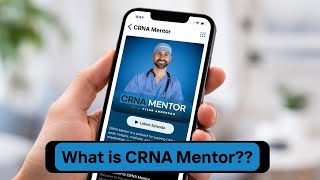
In the inaugural episode of the CRNA Mentor podcast, host Tyler—a staff CRNA with nearly a decade of experience, lead clinical at a level‑1 trauma center, preceptor, and university instructor—explains why he created the CRNA Mentor platform and outlines its evolution, philosophy, and future direction. He describes the platform’s origins in 2023 as a series of TikTok videos and free, nationwide phone‑call mentorship sessions (over 280 hours logged), leading to the launch of a Facebook community in May 2024. Tyler differentiates mentorship from coaching, emphasizing personalized guidance, self‑reflection, and the importance of extensive ICU experience and leadership before applying to CRNA school. He details his multiple professional hats, the diverse makeup of the CRNA Mentor Community (high‑school students, nursing students, ICU nurses, CRNAs, program directors, and ANA leaders), and his active involvement with the American Association of Nurse Anesthetists (ANA) as a social‑media ambassador, including organizing RN/APRN meet‑and‑greets at ANA conferences. The episode concludes with Tyler’s goals: to streamline the applicant journey, cultivate future leaders, raise the overall quality of CRNA candidates, and use the podcast to connect listeners with role models and resources. Weekly episodes will feature guest experts and continue to build the mentorship ecosystem.
Chapters
CRNA Mentor isn't just about helping people navigate this journey to become nurse anesthetists. It's about planting the seed of, of what's special about them, of how they can impact this profession in the future. And, and together we are going to move this entire profession forward. Welcome everyone to the first episode of CRNA Mentor. This podcast is a part of the CRNA Mentor brand, and it's meant to serve as yet another resource to help aspiring CRNAs navigate their journey. Now, in this episode, you know, we're going to talk a lot about CRNA Mentor, you know, why I built this platform. We'll talk about the history of this mentorship program, some of my personal background, as well as some of the resources I build out for CRNA Mentor and my overall goals for where I want CRNA Mentor to go in the future. So let's start with why I built this platform in the first place. I really thought that there was a space for this where we needed to inspire, to motivate, and to mentor the future of this profession. And from looking at the inspirational side of things, I really saw on social media this opportunity to maybe touch base with people and be the first person that these individuals are interacting with that is a CRNA, that is part of this profession. So I got this idea of making TikTok videos, just short little clips about, you know, how to improve your chances of getting into school, what parts of this journey you should value. And I started posting clips and catered them really for anybody who maybe is graduating high school and not sure about where they wanna go in terms of a profession, to nursing students who are exploring the field of nursing and seeing what resonates with them. And then finally, maybe to nurses that are looking maybe to pivot into anesthesia. So that inspirational side of things is a big focus of CRNA Mentor, is kind of being that first touchpoint with this profession. Mm-hmm. I go around to local colleges and talk I talk to nursing schools. Overall, with CRNA Mentor, I'm really aiming at bringing awareness to this profession. Now, in terms of motivating, this journey is long, this journey is hard, and I always frame it as a journey and not a race to the finish line. I really focus on different parts of this, and I feel that there are many times there's going to be obstacles. There's many times you're going to get knocked down, and there should be somebody there to pick you up and dust you off and say, listen, You know, oftentimes this is just par for the course, and you're going to have these obstacles. And in fact, these obstacles are what are going to make you stronger as you move forward and a better clinician moving forward. Sometimes, you know, in these mentorship phone calls that I do, people just need to be told that they're doing the right things and kind of confirm that everything is going as it should, because there's a lot of self-doubt and there's a lot of, you know, questions as, "Is this the right path for me? I saw this online." But you need to have a conversation and specifically tailor this journey to these individuals as they navigate everything. And finally, the role of CRNA Mentor, as stated in the name, is mentorship. And I really do my best to differentiate my mentorship from coaching. There's a lot of coaching programs out there that are telling people, "This is exactly what you have to do to get into CRNA school." And I try and stay away from that because I feel like when you approach it that way, you just get an identical product and everybody looks the same, everybody sounds the same. And the mentorship, what I really try and do is, again, tailor this journey specifically to these applicants and these aspiring CRNAs, also to ask them to look inward and see, you know, what's special about me? What can I— what are my strengths? How can I enrich this profession moving forward? And when I had this idea to start CRNA Mentor, I really was a big advocate and still am of more clinical experience. Mm-hmm. You know, I see on social media, so many people are just interested in racing to the finish line and applying with 1 year of experience. And I, you know, the pillars of my teaching is experience, experience, experience. And that's how I think we're going to move forward, not just with the competitive nature of CRNA school, but what is in the best interest of these applicants. I also have a big emphasis on the ICU is a foundation of the CRNA career. This is something I say all day, every day, and I truly believe that it is not a stepping stone, which so many people believe it is. And my goal is to try and help you get the best experience possible by empowering you to, you know, be outspoken, to advocate for your own experience. All right, so mentorship is a huge part of CRNA Mentor. Now let's talk a little bit about the history of CRNA Mentor. I started this whole platform back in 2023, and as I mentioned, it all just started doing TikTok videos and, and offering this advice to people and dialoguing with them, you know, answering DMs and messages. And then one day I had this idea of how about I do free phone calls? You know, I'm always looking into how to optimize and find little pockets of time for self-improvement. And now to give back to the aspiring CRNAs. I drive about 35 minutes, 40 minutes back and forth to work every day. I saw this as an opportunity to offer free phone calls for anybody across the country and even around the globe who are interested in becoming nurse anesthetists. And so I put that out there, kind of put this call to action to give me a, you know, book a phone call with me if you'd like. And my first mentee officially was Justin Nicholas. And Justin, he found me on TikTok. He was in his junior year of nursing school and— Um. I talked to him on the phone and I was so like invigorated after I got off the call with him. I know I made a TikTok video right afterwards and it was something for me was very powerful because it proved the concept of, you know, this connectivity across the nation and the ability to impact somebody who I otherwise wouldn't have had a conversation with. So it really put this thing into motion, CRNA Mentor. And now, you know, that was back in, I believe, July of 2023. Mm-hmm. And since then, every single day, 5 days a week, I have phone calls after work. And like I said, it's people across the country in various stages of this journey from high school graduates to nursing students, ICU nurses, as well as nurse anesthesia residents who are trying to navigate a part of their journey. And this is something that's super special to me. I look forward to these phone calls every day, but to date, I've logged over 280 hours just in free phone calls on my way home from work over the last 3 years. And— You know, I look at this role at CRNA Mentor as, again, being like the point person for these individuals to interact with. I really don't feel that there should be a paywall to talk to CRNAs to get advice on their journey. And this is something that, you know, these phone calls are very special to me and I do them sometimes even when I'm on vacation here because I feel like it's so important to empower these individuals with knowledge as they're navigating this journey. Now, just a little bit about me. As you gathered from the intro, I've been a staff CRNA now for nearly 10 years. I've worked in a variety of settings from ambulatory surgery center to a smaller kind of community hospital. And I'm primarily at this level 1 trauma center where I'm the lead clinical CRNA, the clinical coordinator at that trauma center. So I've worked in multiple different settings. I also precept for 2 different anesthesia programs, and I love interacting with my SRNAs or nurse anesthesia residents. And it's good to see two different programs and kind of compare and contrast what the experiences are of these nurse anesthesia residents. I also am a professor at the University of Scranton's anesthesia program. I love teaching in the classroom, interacting with students, and I'm actually approaching now— they're seniors, my first class, so I'm into my third year of teaching. And they are— it's cool to see them from being kind of baby SRNAs in the classroom to now really some of them doing exceptional things as students. And I really see a future for many of them in terms of really shaping this profession. But I really love wearing all these different hats. And quite honestly, all these steps that I've done and all these different hats that I have have been intentional. I identified it when I started CRNA Mentor, how can I best serve these aspiring CRNAs? And my perspective is I need to have multiple different looks at this profession. I need to see it from academia. I need to see it from clinical and being a lead clinical CRNA. I need to see it from the management side of things, you know, what that looks like. And finally, in networking with everybody within our association and CRNAs across the country. And that's something that I really feel like I provide value to my mentees is, yes, a lot of this advice that I offer is from my perspective as I navigate this journey myself. Mm-hmm. But also it's from operating from all these different perspectives that I have and that are continuing to evolve. And that's how I can best serve individuals who are trying to achieve great things in this profession and help navigate certain parts of this. Now, as CRNA Mentor continued to evolve, I started building out more resources and I'm in the midst of building out some big resources right now. But one of the things that I'm most proud of with this entire platform is the CRNA Mentor Community. And this is a Facebook group that I started back in, May of 2024. And my goal with the CRNA Mentor Community was to have a warm welcoming space where, you know, these aspiring nurse anesthetists would feel comfortable to ask questions, to share their wins and their losses, and to grow all together. You know, this is also an opportunity that I found for people to network, that, you know, networking is so important in trying to pursue this career path. And— I saw this as an excellent opportunity to do this, not only amongst the ICU nurses, but with people who are making that transition that got into school that are within that Facebook group, as well as the CRNAs that are in this group. And one of the central teachings of the CRNA Mentor Community that I've really focused hard on to instill is that you don't have to be a CRNA or even a nurse anesthesia resident to offer value to somebody who is earlier in your journey. You know, some of our biggest contributors are ICU nurses who are in pursuit of getting accepted to school, and they are, you know, answering questions, offering their experience. And that's really what I try and elicit, is get people to share, you know, what worked for them, what didn't work for them, and to collectively— and that's the key word here, is this collective effort. Um, I constantly say, you know, I'm the face of CRNA Mentor and this whole platform, but it is very much a collective effort. You know, any CRNAs that want to get involved, any nurse anesthesia residents who see value in mentorship, that's what this community is all about. You know, kind of to bring out the best in people and help each other pull each other forward in this profession. The very unique part about this entire group is that it is very much an eclectic group. We have people from, you know, high school graduates, again, that are just kind of toying with this idea. Maybe they saw one of my TikTok videos and they joined the group, or they heard about it and they found the group. We have nursing students who are navigating this, who are just, you know, learning what a nurse is. And then our seasoned ICU nurses, we have a number of clinical CRNAs, as well as program directors, faculty. We have many members of the ANA board, as well as the president of the ANA, Jeff Molter. And I'm so proud as to what this has become, that we've got so many, especially influential people in this field. But that has also kind of posed a challenge within that group and trying to make people feel welcome, that nursing students can ask questions and not feel stupid because of the stage that this has created. And I think they've really done a really wonderful job doing that. And that's something that I'm super proud of. Mm-hmm. I also, with this group, I feel it's an excellent opportunity and I encourage any of the listeners today that if you find value in mentorship, if you enjoy that in the ICU, now is your opportunity to join this group and to model what you see from, you know, maybe some of the advice from CRNAs, from the advice of seasoned ICU nurses, nurse anesthesia residents. And it gets, you know, a little sense of what that could be like for you in the future if you really value mentoring. All right. You know, this group, I really, I encourage not just, you know, surface answers and blanket statements, but rather thoughtful dialogue. And that's something that I enjoy the most about this group. When I get a good question, I'm like, "Oh, this is a perfect question." I see all the comments back and forth. And then oftentimes I make a TikTok video on that and kind of feed it into, you know, drawing more people into the community to answer that question. But the CRNA Mentor Community has been a very special place and continues to be. So if you're interested in joining, you can find it find in the show notes below a link for that. Now, with this focus to build out CRNA Mentor, I, I made a big emphasis last year in 2025 about networking. I feel networking is so crucial for our aspiring CRNAs, and I want to practice what I preach. So I really got involved with CRNAs across the country with our national association at the AANA, and I had this opportunity— it was late October 2024 And there was this opportunity to join the ANA through the social media ambassador program that they started. And for me, I'm like, wow, this is an excellent opportunity to not only know more about this association, but to amplify my platform and amplify the ANA at the same time. So, as I got accepted with that first cohort of the social media ambassadors with the ANA, I really felt that it was my duty to understand more about this association. Now, I've been part of the ANA since 2016. 2014 when I started anesthesia school, but I really didn't— I only had a surface understanding, I think, of the association. And as I started to network more with many of the ANA members and people on the board and stuff like that, and I made an effort to attend our conferences, and that was, like I said, a huge focus of 2025 for me. But one of the things that I saw prior to that was they started this RN-APRN membership. Mm-hmm. And as I learned more about the ANA and I saw how similar the ANA and their values and what they're trying to do for the future of anesthesia is exactly what I'm trying to do, you know, improve, you know, through education, research, and leadership. I want to identify the people that are going to make a splash and make a big impact within, you know, our profession. And that's exactly what the ANA is doing. So when I saw this RN membership come about, I'm like, I caught wind of this, I think a little bit before it dropped. So, I was telling people, my phone calls, I'm like, "Listen, there's gonna be an incredible opportunity for you to become a member of the AANA and learn what anesthesia is all about. You're gonna get to attend the conferences. It's gonna be a great experience." And I said this time and time again on my phone calls, and occasionally I get people who are offering thoughtful dialogue and they're like, "Well, Tyler, you know, I—" Yeah. I understand you want me to join your association. I think it will be a great opportunity, but in terms of attending the conferences, I'm gonna feel like a fish out of water being a nurse at an anesthesia conference. And enough people said that, I'm like, I gotta do something about this. I gotta help, right? And so I reached out to the ANA, and at this point I was one of the social media ambassadors. And I said, listen, I relayed all these things that these nurses are saying. And I said, if it will be okay with you, would I be able to do an RN/APRN meet and greet at the Midyear Assembly in DC to kind of smooth things over, kind of offer this welcoming space, kind of an extension of the CRNA Mentor community where, you know, you can have this thoughtful dialogue, you can kind of learn what the meeting is all about. And so I pitched this to the ANA and shout out to Jen Varhalla. I appreciate you allowing me to do that. And actually I'm doing it again this year. And so long as we're timely, it sounds like it's gonna be built into the Midyear Assembly midyear assembly's schedule, if we can kind of be timely with our room there. But the midyear assembly, it was an awesome experience in 2025 when I got to do this RN meet and greet. And I brought in, you know, Program Director Debbie Manzola. I brought in Assistant Program Director Dr. Richard Wilson, who's with Somnia Anesthesia, and also Matthew Thaxton, the lead lobbyist with the ANA. Each of those individuals were kind of baked into and got to speak at this RN meet and greet, which offered even more perspective. And I'm planning on doing some more things this year at Mid-Year Assembly. That's in April. So, if you are an RN interested in going, here's my little plug for that. You can join us at our RN meet and greet, and there's gonna be more for you to learn there. But, you know, my association with the ANA and the networking component was huge and continues to be huge. And I think the more that I can align myself and kind of share this, all these similar values, which to me, I'm like, I was like, this is so amazing. As I learned more and more about the ANA, there are so many things that I didn't know. The ANA Foundation, I didn't really know what that was about. The PAC committee, I had a general understanding, but the degree at which they influence the legislation and having Matt Thaxton with his ear to the ground in DC all the time, there's so much to learn about this association. And that's really what I'm trying to do with CRNA Mentor is to push these nurses to learn about this, value it and understand what this organization is all about because it has profoundly impacted me and CRNA Mentor as well. At Midyear Assembly, again, I had Richard Wilson speak and we have really became friends here. And he had told me when we were talking at Midyear, he's like, "Tyler, once you come to these conferences, you're gonna catch that bug." And I have, I absolutely love it. Went to Annual Congress down in Nashville this past year. And I've been relaying this all back to the CRNA Mentor community. And as part of CRNA Mentor and helping nurses to understand this too. And the fun part is that nurses are echoing the same sentiments. They're saying, "I felt so welcomed at Annual Congress. I felt like I belonged. Like all the CRNAs are so welcoming and I just felt like this was such a special place and I wanna be part of it." Some nurses have said, "I felt more welcomed at Annual Congress than I did attending some critical care conferences." and they're like, that is where I want to be. And that's what this is all about, you know, kind of connecting the dots and helping people get inspired, get motivated, uh, through the ANA. So what are my goals for CRNA? So the most obvious one here is helping aspiring nurse anesthetists navigate this journey by offering insights, by helping to kind of streamline their journey to maybe shave off months to years as people navigate this. Because for many individuals, this is not a linear path, and you may have some hiccups along along the way, and quite honestly, expect to. And, and that's what I'm here for, is to help you navigate all these different parts of it. I really teach people, as I am approaching CRNA Mentor, to be intentional. You know, each step of this journey should be intentional, and, and the earlier that you can identify that this is the career path for you, the better. And I tell people all the time, you know, you don't have to take my advice, and, and, and if you hear conflicting advice, I'm welcome to, you know, criticism, and, and I would love to hear about it. But the more you can be intentional about each step of this process, the more likely you you will be to succeed. Um, you know, my advice, it stems from a lot of my personal experience. My goal to become a CRNA started in high school, so I've been working towards this goal of being a CRNA for virtually my entire adult life. So a lot of this is coming from my personal journey, uh, from all the multiple hats that I wear, as I mentioned earlier. But also what I really try and do, like I said, is be thoughtful about this process, and I try and reverse engineer a lot of what I see now in all these different roles that I'm in, and apply it to various parts of this journey, to, you know, even high school, to nursing school. And I think if you— as I come up with more frameworks and different ways to kind of reverse engineer this, I think there's only better ways to eventually position yourself to succeed in this journey if you keep these things in the forefront of your mind. And again, to streamline this entire process. Now, as I've built out these resources within CRNA Mentor, like the CRNA Mentor Community, I've gotten feedback. And one of the statements that I got, and questions rather, was, "Tyler, I really appreciate what you're doing for aspiring nurse anesthetists, but aren't you making CRNA school more competitive?" I go, "Ding, ding, ding. Yes, you're exactly right. I am making CRNA school more competitive." And I get it. Each year it gets more and more competitive. But I started out with this vision to make applicants better by valuing their critical care experience, by not applying to CRNA school with 1 year of experience. I operate from this perspective that I truly believe that nobody should get accepted to CRNA school with just 1 year of experience. I don't care if you have over maybe 160 IQ, it doesn't matter. It's a matter of getting the reps in the ICU, of being put in certain situations, of making mistakes, of developing into a leader. Now, sometimes when I say this on my phone calls, I have people say, "Well, I'm doing charge nurse with a year of experience." And I say to those people, "Well, what does that tell me about your unit? Does that mean you were precepted by somebody who had 6 months experience?" So, I think that there's lots of parts of this journey that you can build on. And so long as you don't frame it as a race, but rather a journey, that mentality is really going to help you. But I try and improve this applicant pool by valuing experience. I also, the leadership Leadership component, I think, goes without saying. It is crucial to be a leader in the ICU before you apply to CRNA school. And another goal of the CRNA Mentor platform is to identify the future leaders of our profession, the leaders that are going to lead in education, advocacy, research. You know, this is something that I feel like I can identify these individuals early, maybe even as nurses, you know, all these things that they're trying to do, maybe to build their resume. And I, I see As they offer what is unique about them, I really dial into that. And I encourage them to explore those avenues and attend the meetings and really find these individuals within the ANA that are the leaders that then they can model and they can find these role models. And that's what's so special about this is really how are they going to impact the CRNA profession? And that's oftentimes what I ask. I had this light bulb moment when I was writing my presentation for idea assembly, I was in my office and I was really kind of stewing over the details. And all of a sudden, I'm like, that's it. I come running out of my office and go to my wife. I said, Sue, I said, CRNA Mentor isn't just about helping people navigate this journey to become nurse anesthetists. It's about planting the seed of what's special about them, of how they can impact this profession in the future. And together, we are going to move this entire profession forward together. And so now CRNA has morphed not only into helping people, but to really questioning, you know, it doesn't have to be written in concrete, but what are your goals after being a CRNA? And sometimes, especially if I'm talking to nursing students, if I'm talking to, you know, ICU nurses who are still on orientation, it seems like so far out, but now is the time to explore those things. Now is the time to put yourself in the position to learn. And if something kind of catches your eye, if you go to one of these conferences and you just get that spark, spark from many of the leaders within our association, then you can really dial it in. And, and that, in my opinion, makes you special as an applicant because you keyed into that specific detail of what your strengths is and how you can improve this profession in the future. And finally, one of the big goals of CRNA Mentor is to impact the nurse anesthesia profession. You know, this profession has given so much to me, and I'm at the stage of my career, the stage of my life, where I want to pour everything back into making this profession better and brighter for the future. You know, I mentioned multiple times about all the different hats that I wear, and I love academia, I love clinicals, I love, you know, this mentorship. But as I frame things and try and look to where I'm going in the future and where CRNA Mentor is going in the future, I look at each of these things and I look at, okay, this hat, how is this making an impact? How many lives am I going to touch? How am I going to impact the nurse anesthesia profession? In this profession. And that has really keyed me in on what is the most important thing here, which is you, which is CRNA mentorship. That is how I'm going to make the biggest impact in this profession by bringing in good clinicians as applicants, by inspiring people to go into this field, by forming this ability to network and connect people with my role models within the ANA that have done so many amazing things and need to be kind of more on the stage in the eyes of these aspiring nurse anesthetists That is my role, and that is largely what I want to do with the CRNA Mentor Podcast, is to bring these individuals that I've connected with that can serve you, that are going to be that spark that you need. Maybe it's going to be something that really resonates with you, and you're like, I want to be like Tracy Young, I want to be like Sharon Pierce or Drew Riddle. Those are the people that I want to be like, right? And, and that's what this podcast is all about, is connecting you with those people that, that are, are doing such great things for this profession, and then you can see yourself in them. That and move forward with it and make an impact yourself. All right, so that's what this podcast is all about. Um, I want to thank you all for, for tuning in today. For, you know, I hope you enjoyed the first episode of the CRNA Mentor Podcast. Um, we're going to have some, some, uh, other individuals come on to offer perspective through various parts of this journey. Um, we're going to bring in some leaders within the ANA and, and offer different resources that you might not be thinking about that could actually really help you in this journey. Again, I want to thank you for tuning into this week's episode, and I want to help you start your week off right with CRNA Mentor Monday. See how I did that? That way it'll stick in your mind a little bit. But every week on Monday, I'll be dropping a brand new episode to help you navigate your journey and become a nurse anesthetist. See you next week.
More from Tyler


How to Make the Most of AANA Annual Congress as an RN | Advice for Aspiring CRNAs

Professionalism Starts Before CRNA School - The Kind of Applicant You're Becoming


Locums, 1099, and W-2 CRNA Practice Explained: What Every Future CRNA Should Know

From Penn to Solo CRNA Practice - The Unexpected Growth of Independent Practice





The Most Unique CRNA Role in America? Shock Trauma Go Team & Austere Medicine