Why He Got Into CRNA School
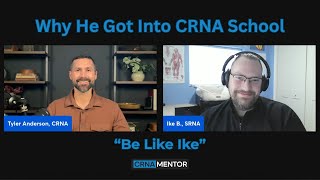
Isaiah Bartell shares how he got into CRNA school after early burnout, a rejected application, and a low GPA. He credits mentorship, networking, and study techniques like the Pomodoro method and interleaving for his success, and emphasizes the value of community through the CRNA Mentor Facebook group.
Chapters
If you've ever been told no by a CRNA program, this episode's for you. If your GPA wasn't perfect, this episode's for you. If your CRNA journey has not been linear, this episode is for you. This episode of CRNA Mentor, Be Like Ike, isn't about being perfect. It's about persistence, preparation, and purpose. All right, I'd like to welcome, uh, Isaiah Bartell. He goes by Ike. He is just finishing up his first year as an SRNA. Welcome to CRNA Mentor Podcast here, Ike.
Good morning, Ty. Thanks for having me on.
Yeah, absolutely. I'm happy to have you. You know, you have a deep history here with CRNA Mentor, and it only made sense to have you as our first guest with this podcast. You know, before we get into some of the, you know, transition from being a bedside nurse and being an RN to being, you know, an SRNA, I wanna go back to 2014. I wanna go back to kind of the beginning of your journey, kind of formally here. You graduated in 2014 and started in the emergency department, right?
Yeah, that's correct. Little rural critical access hospital. We stabilized and shipped most of everything. We saw a lot, but yeah, a lot of those lessons of working in low resource areas They've stuck with me.
Yeah, great. So at what point did you transition then to critical care? How many years were you in the ICU or in the emergency department?
I worked a full year in the critical access hospital in the ER and then transitioned to a private open heart ICU in a nearby town.
Okay.
Worked there for about a year as well.
Okay, great. So then what you said you were there for a year, what you pivoted out of the ICU?
Yeah, that's correct. I went in not understanding the full weight of critical care. And unfortunately I burned out pretty rapidly that first time. Since then I've learned a lot of techniques and tools to build resilience, but I did not expect the weight of critical care. Especially end-of-life care. It took a big toll on my morale and I decided to look elsewhere.
Yeah, no, I get that. And quite honestly, like a lot of my mentees, they, especially the ones that were in the ICU during COVID they saw this firsthand and burnout. So many people pivoted out of the ICU at that point because it's, as you said, it takes a big toll on you mentally, emotionally, and especially during the pandemic, that was such a, —wild time to be taking care of, you know, these super, super sick patients when nobody knew what was going on. And I think, you know, one of the big reasons also I wanted to have you on is, you know, as I mentioned earlier that, you know, you didn't have necessarily a linear journey. This wasn't even a first degree for you, right? That's correct.
Yeah. I had a degree in exercise prescription, exercise testing.
Okay. Gotcha. So now you pivoted outta the ICU and we were joking beforehand that you pretty much had every single role in the perioperative space, right? So tell me a little bit about that.
Yeah, absolutely. So I had always been fascinated by hearts coming from an open heart ICU. So I sought out open heart surgery role as a circulator at a level 1 trauma center. And enjoyed it thoroughly, uh, and wound up becoming the charge nurse for one of the shifts. And I enjoyed the managerial role, uh, coordinating, uh, with the anesthesiology team and the surgery team and the surgeons. I continued doing that for, uh, a couple years actually, uh, and then, uh, offered to work as the manager of a pre-op department in a— in another Level 1 trauma center. and enjoyed that as well. I got to see the ins and outs of preparation for surgery and how the anesthesia personnel and the, the surgical staff establish a rapport with patients extremely quickly. So, oh yeah, go ahead. Sorry, you spent a lot of time around CRNAs, obviously.
You said working with the anesthesia team, kind of coordinating stuff. Uh, you know, and in our hospital, we, you know, we refer to it as the front desk. Oh, did you talk to the front desk? You were basically the front desk, right, as you're coordinating cases to the operating room. Yeah. All right. So at what point, like, did you decide that CRNA was the right path for you?
Yeah, uh, so in that, uh, pre-op role, I, I worked closely with the anesthesia team who ultimately recruited to, uh, work with their group. As one of their RNs on the floor. Uh, so I assisted them in setting up rooms. And while I was doing a room setup for an emergency case, the CRNA I was working with said, hey, you should be doing this like for real. You've got what it takes. Uh, you, you need to really think about CRNA school. And I, I had my, my excuses. Um, my GPA is not that great. I've got a family. Uh, and I'm, I'm really thinking hard about, uh, nurse practitioner. Uh, he, he basically walked through every excuse I had and I was, I was left with, well, maybe I really should consider this.
That's, that's awesome. So this was coming from a CRNA, is that right?
That's correct. Yeah.
Okay. And just to kind of flesh that, uh, you know, that role out a little bit. So that, um, you kind of termed it when we were talking before as an anesthesia nurse, and I just wanna clarify. So, uh, so in my hospital system, in, in the northeast of my hospital system, I'm the manager for our anesthesia techs and, and in, in northeast Pennsylvania, like it doesn't, we don't require, uh,, you know, associate's degree to be a certified anesthesia tech, uh, but rather just a high school diploma and it's kind of on-the-job training. This, uh, anesthesia RN, uh, role is what you're kind of referring to, which is different than the anesthesia tech role, correct?
Correct. It's, it's like an anesthesia tech but with a nursing license. So the, the scope of practice is a little different. We can handle medications, uh, with, uh, strict supervision, of course. Um, place, uh, IVs, uh, in In my state, I can place arterial lines, assist with difficult intubations, crash airways. So it's an incredible experience being able to see the role up close and personal.
Yeah, no, I mean, the insight that you gather from that role, especially with the hands-on, that's incredible. I know you said that, you know, you're kind of the, if nobody else can get an IV, it's call Lake in the pre-op area. So, you know, even that in and of itself is excellent experience, but to be, at this closer role because our anesthesia techs, you know, as I'm hiring for this position, I describe it, you know, you are the right-hand man or gal for, for the CRNAs that are in the room that because they can't leave. But you're— it's even more evolved of a role with that, you know, anesthesia, uh, RN role. So that's, that's excellent. So how long then were you an anesthesia RN, and then when, when did you go back to the ICU, or how did that kind of play out?
Um, Yeah, absolutely. I was in that role for almost 2 years, and then it kind of came to a head. I had been accepted into a nurse practitioner program, hadn't started yet, and my main driver was to work in trauma resuscitation. And it was kind of like a final discussion with this one CRNA who had been mentoring me towards CRNA, and I was like, I really don't want to give up the possibility of working on the trauma resuscitation team. He looked at me like Dude, what do you think we do here? Yep, yep, yep. So I was like, yeah, all right, it's going to be all in from here. I, so I, I decided to go ahead and turn in my notice, go back to that Open Heart ICU I started at, um, and just go hard for CRNA.
Mhm. So you, I mean, in that role, uh, as an anesthesia nurse, you had you know, these CRNAs, these mentors in your ear all the time, really guiding you and, and showing you the way. And, and, you know, I want to pivot a little bit here and, and talk about, um, you know, the CRNA Mentor Community, which, you know, you— we crossed paths and it was kind of, um, I want to, I want to get into that a little bit because that was intentional on my part. I— how I kind of found you, uh, there's another Facebook group called the Aspiring CRNA Facebook group, and shout out to Jasmine and Eric, the moderators of that group. Um, but I saw your responses in that group. And you were responding to these messages before I was, and, and it was very much in a similar, uh, tone and, and how I would approach, you know, helping people and helping to mentor people. And I saw that and I'm like, wow, I said, I, I have to have this Isaiah guy in my group. And I reached out to you and we connected, and, and shortly thereafter you joined the Facebook group. And, you know, this, this group itself is, is, uh, it's a very wide spectrum of people in this journey, which I think requires a unique person to help assist in guidance and mentorship for these individuals, because this is people that have just graduated high school and are considering going into nursing and then subsequently nurse anesthesia up into, you know, SRNAs and nurse anesthesia residents that are, you know, trying to figure out maybe the beginning of school or some, you know, troubleshooting some part of school. So this takes a lot of patience. It takes a lot of kindness and thoughtful discussion. And that's something that I really identified in you and you were beating me to the punch, you know, within the CRNA, into our community. I'm starting to type and all of a sudden your answer comes up. I'm like, oh man, like you're saying what I would say, but you're doing it faster than me. And so that— you were just a very natural leader in that sense and a big advocate for, you know, this profession of nurse anesthesia, which is really what I'm trying to do with CRNA Mentor. So I appreciate that. And, you know, tell me a little bit about your role. I mean, you were like Johnny on the spot with responding to so many people. How did that kind of serve in your journey to be a CRNA, you know, functioning as the moderator of that group?
You're very kind, Tyler. Thank you. Really, it was all about gratitude. I've had so much mentorship given to me. It's something I want to give back. And really, the way that I wanted to characterize myself as someone who gives back. And during my applications, there was a lot of twiddling of the thumbs, so to speak. Okay. Where there's really nothing you can do to influence the trajectory of your application. So what do you do with that time? And I decided to put that nervous energy towards monitoring and encouraging people who were posting in the group.
Yeah, you said a nervous energy there, and that's something that I know, you know, in prior discussions, uh, we did a Facebook Live back in that group kind of talking about some of your, your trials and tribulations of getting into CRNA school. Um, but that nervous energy, you know, some people shy away from it, some people don't know what to do with it, but you really made it productive. And I think that one of the big things that kind of stuck with me and what I really want to instill in people within that CRNA Mentor community is is, you know, you can help others while you're applying. And, and you were very much, you know, lifting others up and moving others forward, seeing others get into CRNA school before you did. But you were really kind of championing, championing this like idea that let's all work together. Um, and, and I absolutely love that, and I really appreciate all your help within that, the community, to kind of instill that, those, uh, ideals. So, uh, You're welcome. Um, you know, one of the things that you did within the, uh, CRNA Mentor community, and I absolutely loved and actually drew my interest in podcasts— uh, here we are today on a podcast, and you know, you've been quite, you know, the inspiration not only for others but for myself. You know, this, this idea of this platform of podcast to have this conversation and really help others in this, this platform, that's really what the goal is. And you started within the CRNA Mentor Community by posting podcasts on a daily basis. Uh, tell me a little bit about that, some of your inspiration for, for doing that.
Absolutely. Yeah. Uh, I always thought of myself as an auditory learner, uh, so podcast was kind of how I spent my time, uh, when I was, uh, not doing anything in particular. So I, I made a goal of listening to 2 podcasts a day and I kind of quizzed myself to see if I retained, uh, the knowledge that, uh, came out of those. So I started with ACRCC, which is the Anesthesia Critical Care Reviews and Commentary with Dr. Jed Wilpaw to learn kind of the basics of anesthesia, anesthesia deconstructed, Beyond the Mask for sure. A lot of that was to kind of acquaint myself with both the industry and what the expectations are of anesthesia providers. So that was incredibly helpful. I don't know if you're familiar with the term pod crawl, but every time a host or a guest would recommend a podcast, I'd try and explore that. And so it introduced me to Depths of Anesthesia, uh, Fresh Flow Podcast, Atomic Anesthesia, uh, the list goes on and on. And, uh, ultimately I decided to treat that as kind of my curriculum, uh, getting into, uh, CRNA school, starting, starting out. Um, treated it as coursework. And I quiz myself on different aspects of the podcast to make sure it stuck.
Yep. Yeah, that's great. And I think that, you know, one of the takeaways I had from that is you're actually quizzing yourself on these podcasts on the information and treating it like curriculum. And I think that's great because there's so much out there, as you mentioned, and this pod crawl, I've never heard of that term before, but I guess to utilize that term, you know, with Beyond the Mask. That was something that you opened my eyes to and shout out to Sharon Pierce. You know, that podcast has blown up over the last year, especially with all their kind of spinoffs with Grade 1 View, with Airway Exchange. There's so much insight there on so many different levels. And Sharon was a huge inspiration for me to start this podcast as well. Tell me a little bit about, because you're pretty aware of this podcast as you were, featured in it. Uh, tell me about that episode with Beyond the Mask.
That was, that was a great episode to be a part of. Dr. Pierce really, really has been a strong mentor for me, as well as the co-host on the show, Tracy Castleman. Um, the reason I was invited to that podcast was I had the, the vision of creating an AACN chapter local to me as kind of a mentoring opportunity for aspiring ICU nurses and ICU nurses wanting to master their skills, expand their skills, and explore advanced practice opportunities. And really, they were able to talk me through the finer points of mentoring and leadership. And a lot of the encouragement that they shared with me, I've really tried hard to carry forward to to people I interact with.
That's excellent. Yeah, the, the Beyond the Mask, uh, you know, and actually I have to thank you because Beyond the Mask is, is really got me a lot of exposure with the CRNA Mentor platform. Uh, I was, you know, going down to Mid-Year Assembly this past year and I was all excited because I was doing this RN meet and greet that kind of came out of nothing. I just kind of pitched that idea to the AANA and, and, uh, so they were you know, supported me in doing that. And you're like, you should really, you know, do the podcast. Sharon's trying to fill up some of, you know, the filming that she's doing there. And initially I was like, ah, I don't know, it's already going to be a lot going down there. And you told me, you kind of sent me the information on it. And then Sharon had reached out to me because you mentioned that you told me. And I'm like, I got to do it. I got to do it. And that was such an amazing opportunity and really has helped shape some of the things that I'm doing with CRNA Mentor currently, some of the projects that I'm working on, which we'll hear about here shortly. But— Yeah, thank you for your, you know, opening this world of podcasts to me. And like I said, here we are today on a podcast. One of the things I really wanna talk about here, Ike, and this is, you know, part of the introduction with, you know, talking about this, if people who have lower GPAs, people who maybe have received a rejection in the past, like getting your first letter rejection, that can be a big blow to your confidence, especially if you think that you're, you know, a good applicant and, you know, it's— you weren't expecting it, or, you know, tell me a little bit about some of the, the hard part of, of getting into CRNA school and, and some of the struggles that you had to overcome.
Absolutely. Uh, so when I started my applications, I applied to only one school that was local to me, and when I got the denial, I, I really had to think hard about what this CRNA mentor, uh, meant when he said I have what it takes. And maybe it's not the, the content of the application, maybe it's the resilience that a CRNA applicant really needs to embody. And so that's the direction I took with it. I decided I'm not going to stop moving forward even though I, I really had thought I was, I was gonna get in.
Okay.
Uh, so I, I decided, yeah, this, this is way too competitive for where I'm at now. I need to ramp up my application in my, my profile a bit. So I, I got, uh, 2 more credentials. I had the CCRA and I went for the CMC and the CSC. Uh, did some volunteer work. Uh, it turns out the, uh, place I volunteered at was chaired by a CRNA who ultimately wound up on my, on my interview panel.
Wow.
Uh, networking. Networking, uh, was, was probably the, the biggest part of my second application cycle. I mentioned my vision for establishing an AACN chapter. I was looking for guidance as to how to direct that towards CRNA, aspiring CRNAs. So I linked up with the state association to see how I could best help with making that a goal. And that networking just took off as well. I'm very grateful for the mentors and the people who have been willing to network. They opened doors for me that I had no idea even existed.
Absolutely, yeah. And you've had a number of CRNA mentors, local and online. And it's, you know, when you kind of surround yourself and you really, in my opinion, cannot have enough people kind of in your corner. And you attribute, I think, a lot of your success to those individuals. Right? Is that what I've heard? Yeah.
I've grown up on shoulders of giants.
Yep, yep, that's exactly right. And then for so many individuals, like, what we're— I'm trying to do with the CRNA Mentor community is try and break down some of those walls and connect people. And, you know, certainly have a lot more work to do, but the more people, like I said, that you can have in your corner supporting you, uh, but the other part is like, you've put yourself out there, you've kind of made some of your own luck with, you know, that anesthesia nurse role, with, you know, some of the things that you're doing to help others and move this all forward. But, you know, despite all those things, you know, some of the major obstacles, and this is one of our, the bigger topic of our Facebook Live is kind of this lower GPA that, as we mentioned previously, like you had a previous degree, right? You went and got your associate's degree and then you got your BSN. Tell me a little bit about, you know, that obstacle specifically of overcoming this lower GPA. Yeah.
Absolutely, yeah. Leading up to my first degree, I had an associate's degree that I completed half of in high school. I was a go-getter. The grades were excellent, and I thought I could just bite off the world and be fine. So when I transferred to the 4-year university, I decided to lift myself up as high as I could, and it was a crushing defeat, to say the least. And that really made me think, Am I, am I going to be able to continue pursuing higher education? Because I completely failed out my first semester. So the imposter syndrome really, really started hitting at that point. And my mentor, the dean of the program I was in, took me aside and said, you're going to have to figure out what you want to do going forward. If you decide you're, you're not going to pursue this, I'm going to feel sorry for you, because you, you show the resilience of someone who can succeed. So don't give up. Because if you do, that's on you. I'm expecting you to rise up and, and continue forward. So I, I took the F and decided to learn from it and grow from it and wound up graduating with a lower GPA, which unfortunately has stuck with me. But I took the lessons from that, uh, from that failure, and I ultimately got very, very good scores in my nursing degrees.
Great, great. That's excellent. You, you brought up the, the topic of imposter syndrome, and, and this is something that we most certainly will have a podcast specifically dedicated to this because, you know, The idea of imposter syndrome, as you mentioned, it persists throughout this entire journey. And it will kind of rear its ugly head at all these different times from not just the application process and the cycle, but being a new ICU nurse to when you get into clinicals as an SRNA or nurse anesthesia resident. Suddenly you go from being the person with the most experience in your ICU or one of the resource people to being, you don't know you know, you've never seen this piece of equipment before, you never see— use this type of IV, you feel like you're brand new. And it's, you know, almost to expect and anticipate to feel that way is normal, completely normal in this journey. And, you know, what has your experience been with imposter syndrome as a, you know, an SRNA? Has that kind of shown its head at any points? I know you're not quite in clinical yet, correct?
That's correct. Yeah, we'll start clinicals in a few months, but yes, absolutely. And I count myself fortunate having been exposed to imposter syndrome early on because I can name it. I know what it is. From the time I got that acceptance letter the second time around applying for CRNA school, I keep looking at my stats and like, I have no business being here. But then I look at where I've come from and yeah, I've worked for this. This is— I'm going to own this. So imposter syndrome, as long as you can name it, you can reframe it. And that's the other piece of it. If you feel like you don't belong, make yourself belong. You own your space.
Yeah, I love that. To be able to name it, like, that is so, like, powerful because it really requires you to understand it, right? You have to recognize it. You have to kind of read up on imposter syndrome to recognize what it actually is and how it can kind of manifest in, in different parts of this journey. So that's a, that's a gem there that I, I like that. So, so Ike, what would you tell to any of the nurses that are listening right now that may have already received one rejection? Uh, you, you clearly did not let that stop you, like you said, kind of this nervous energy, but what would you tell these nurses?
Consider how hard you want this. If this is something that you're going to go all in for, don't let it stop you. One of our members, he's the group expert, he recommended a book that I would love to echo the recommendation. It's The Obstacle Is the Way.
Okay.
Really, really good read. It's an adaptation from Marcus Aurelius' Meditations. Consider what you can control and consider what you can't control. Put your energy where you can control. And sometimes that'll influence what you can't control.
Mm-hmm, yep, no, that's exactly right. Yeah, no, I have to check that book out. I love, I listen to podcasts on the way to work, I listen to audiobooks, so I'll have to add that into my inventory.
That's a good one, that's a real good one.
You had mentioned networking, Ike, and obviously all these mentors that have been in your corner. You know, I personally think that there is so, so much value in networking, but there's a degree of vulnerability ability with it. Uh, how do you, how do you navigate, you know, kind of putting yourself out there? Obviously it was probably a little bit easier for you being that, you know, you were working with many of these CRNAs on a daily basis or kind of came into interaction. But how would you recommend kind of networking for these aspiring CRNAs, uh, with, you know, potential programs, with, you know, any, any CRNAs to shadow?
Absolutely. I think that's a, a great connection with our discussion on imposter syndrome. Because as you network, you're, you're talking to people that are so far above where you are, where you want to be. And the doors in front of you are so large, and the locks are so big. You're really depending on other people to open these doors for you and to introduce. So it's, it's really approaching it with humility and gratitude. You're looking for people that can open these doors and it takes asking very respectfully and very humbly, recognizing that I might be what I think is a shoo-in for a program, but maybe I need to think about how I should embrace opportunities as they come by. And one phrase from a podcast I listened to as I was applying, this was from Accra. They, uh, the ideal resident never says no. Uh, if you're looking for networking opportunities, say yes a lot. It's going to take a big commitment, a lot of time commitment, uh, and like you said, a lot of vulnerability. Uh, you're laying your cards out on the table with, uh, with people who are genuinely interested in, in helping you, but you've got to let them, and that, that takes a, a large amount of humility.
Yep, no, absolutely. And, you know, kind of being this yes man, I kind of preach that in the ICU. Like, as you're trying to get your feet wet, as you're trying to learn, if your goal is to want to precept, to, you know, take some leadership roles, the best way to do that is be like, hey, I can do it. Hey, I can do it. Put me on that committee. Like, you need to embrace that kind of mentality because that is going to open so many doors for you because then you're gonna get recognized as, that person. And obviously you have to kind of protect yourself to a degree that you're not taking on too much, but in the same breath, I think that is exactly how you get recognized as this, I can do it kind of person or code carts going down the hallway and your patients are stable, your neighbor nurse can watch them, go, follow the code cart, jump on the chest, get some reps with CPR, just be in all the time and be that yes man. I think there's a lot of value to that. Yeah.
Yeah. Put me in, coach.
Yeah. Put me in, coach. Yep. Yep. Absolutely. Um, Ike, let's talk a little bit now about, you know, transitioning from being an RN to an SRNA. You know, was this a big kind of shock to your system? Like I said, you're not in clinical yet, but you're in the classroom. You know, the, the academic load, uh, was that kind of not what you were expecting, or how did that kind of play out for you, your, your first, uh, couple classes here?
I was fortunate to have been warned that it was going to be like drinking out of a fire hydrant. So my expectations were I would be constantly overwhelmed, and they were not lying. Those sciences coming in, those first couple semesters, it can be humbling. You don't realize how much you've forgotten and how much you don't know about many, many things. And the biggest truth is life doesn't stop lifing. 100%. That's something that doesn't really click until you're actually in the middle of it. And I gotta give a huge shout out to my wife. She's been my rock through this whole thing with life changes, with schedule changes. She's kept the whole threat going every step of the way. Could not be doing this program without her.
No, that's great. The support system is so big and, you know, this is a team effort. And the more people that you can, like you said, have in your corner, but the people that are closest to you, you know, your significant others, your family, they're gonna play big parts in this. And they might, they're not gonna understand it completely. And quite honestly, even if they're in healthcare, you know, my wife was in healthcare and she still didn't understand the, you know, the commitment and all these different aspects of anesthesia school and don't expect them to, but having that support system is huge. Many programs even ask about that. Not that it matters the details of who your support system is, but the fact that you've given it the forethought that this is gonna stress all aspects of your life, financially, emotionally, physically, getting up early to get into the OR. So one of the things that I appreciate from our prior discussion is that, you know, there's this competitive nature getting into CRNA school. And for many programs, that really persists. And, and, and one of the programs that I precept for, they kind of squash this at the beginning. They're like, listen, you guys are all classmates, you're all working together, you know, we don't want this divide of somebody, you know, trying to get the best grades, trying to, you know, gatekeeping some information. Tell me a little bit about your experience with your cohort. Um, has— have you experienced any of that kind of that negative kind of competition in the classroom?
No, I gotta say I'm very, very proud of my cohort. There is absolutely no gatekeeping. If there's a helpful YouTube video that somebody found, it goes in the group chat. Everybody is really rallying around each other, making sure we succeed as a cohort. It's phenomenal.
That's great. Yeah, it's, you know, I often tell my mentees that anesthesia school was very different for me than nursing school. School. In nursing school, I just kind of found my cubicle. I just stayed in there. I studied myself. Anesthesia school was, you know, I was still doing that, but I found a lot of value in the group study. And I find that many of my students and the individuals that I precept clinically, they find their groups of people and they stick together. And you know, you have to bring something to that discussion. You don't just show up and freeload like what I feel like happened in nursing school, but your classmates will pick up parts of the discussion, uh, and the lecture that you may not have keyed in on. And, and there were many times in school for me that that insight, that little meeting that we had, you know, the day prior to the test really helped me out because it's something that I didn't quite pick on— did pick up on. Did you find any of that, Ike, with your experience? Do you have like a little group of, of, uh, classmates?
Absolutely. And it's hard to put, like, limit to a small group. Just our class as a whole shares practice quizzes and quizzes each other, makes sure that we have really listened to the lectures, have really read the assignments. It's been excellent. We've got a couple of tech gurus in the cohort that—
Always helpful.
Oh, yes. Oh, yes. Really designed these— incredibly difficult practice quizzes. So we feel very, very well prepared for the, the test.
As, as a, uh, nurse anesthesia professor, I identify those individuals very early. Uh, if not the first class, like, who here does tech? Cause I'm gonna need some help here.
Absolutely.
Um, no, that's, that's great. Um, what, you know, obviously coming from this, this, uh, journey of, you know, this lower GPA, you've overcome, myself included, like I had these shadows of doubt when I got into anesthesia school is, can I do this academically? What has contributed to your success thus far in your program academically?
Most— mostly time management. I've got to give a shout out to the Pomodoro method. It's time blocking. You— the Pomodoro method itself is 25 minutes of study, 5 minutes of break, and then revisit the the material, what I've been doing is 50 minutes of study, a 5-minute break, 5 minutes of quizzing myself on the material, and then changing subjects, uh, and then kind of repeating the cycle. And honestly, that's, that's kind of helped immensely, uh, with, with time management and being able to retain, uh, information. I strongly recommend Pomodoro method.
Yeah, that's— and, and we, as we were talking last night, I That's news to me. I've never heard of that specific method. I just do wanna give a shout out. The book "Make It Stick" is an incredible read. Many anesthesia schools put it on, you know, a lot of emphasis on it. When Dr. Drew Riddle invited me on stage at annual congress in Nashville this year, he said he reads that book specifically before each cohort. So if you have somebody of Drew Riddle's magnitude and, you know, educational expertise, and he's reading that book, book on repeat, I think that says something. And, and I think it would be a value of every aspiring CRNA to read that book because it really challenges the conventional ways that we thought that we should study. And, and, you know, this is, you know, your study method is very unique. Is there anybody in your class that's kind of utilizing that same method, or how did you come about to find that? Is that something that you did in nursing school?
No, I actually found that out in a podcast. This was the Competent Care Academy, uh, that's a— that introduced me to the Pomodoro method. I, I think, I think Make It Stick actually refers to, uh, a variation of the Pomodoro method, uh, and the interleaving and the space repetition. All of those are incredibly helpful. But yeah, I didn't discover Pomodoro until, uh, probably the week before I got into CRNA school. Okay, so it's very timely.
Give it a shot. And that's the important part though, I think, you know, challenging these conventional ways that we thought we should study, thought that we should learn, and to embrace and try different things out. You know, obviously, you know, it's going to require some work on your part, especially there's going to be some nerves associated with, I think, as well. But at the end of the day, you're learning and you're retaining more. And that's really the key here. So many people think that, you know, reading, highlighting, and underlining, rereading is actually going to lead to retention. And it really doesn't. You know, there's better methods, as, as I mentioned, that you can kind of embrace here. Um, like what, you know, talking about nurse anesthesia school, what is something that has surprised you about nurse anesthesia school that no one really talks about?
The ability to pivot. You, you make plans for the semester and depending on expectations, uh, you, you may need to pivot pretty hard. Uh, and that I think is kind of the unspoken rule for any CISO school. Just go in with a flexible, humble mentality. Be willing to bend as the winds blow. You can't count on your plans being the ultimate route. You gotta be willing to go with the flow. That I had to learn very quickly. Yeah. And so I'm glad that we had that opportunity before clinical start, because I feel like clinical is gonna be defined by a lot of flexibility.
100%. And you mentioned humility. This profession is built on humility. Like it truly is from the classroom as you've experienced, and especially in clinical. And you need to embrace that because it's a very challenging part, especially for individuals who feel like you have to be perfect You don't. What you need to do is learn from each experience and try and get better. And, and, and I think if you approach it that way, uh, it's, it's going to have this mindset that is going to allow you to achieve more and not beat yourself up as much along this journey. Um, yeah, I, I, you know, I, I can't thank you enough, uh, this for, for all the work that you've done within the CRNA Mentor community and actually adding, you know, significant value to this whole CRNA Mentor platform. But, you know, I really want to— this, this idea of this episode, Be Like Ike, that I, I came up with, because you're, you're, in my opinion, like, you're really kind of the blueprint for what I think aspiring CRNA should be like. You know, it's this kind of relentless pursuit of information and being curious and, and having humility and leadership and, and, you know, pushing others forward in this kind of service that, that so many people, especially I feel like nowadays, are just like, okay, I'm just going to try and beat everybody else. And, and that really wasn't your mentality. Can you tell me a little bit, like, But what kind of made you that way? What kind of made you wanna help others? And no, it was quite seriously because it's not really what we're taught in our country is that, you know, to help people and help others succeed while you're learning to succeed as well. Do you have, I know that's kind of a lot of things to say there, but what can you kind of put your finger on? What has led you to kind of this service-oriented, even talking with the, you know, you're wanting to start this chapter within the AACN, what has led to this mentality?
Well, thank you for the kind words, Tyler. The most important aspect is the gratitude. I've been given an incredible opportunity by the mentors, including yourself, the staff that have been willing to put up with me as I learned, the executive leaders who took me under their wing, took me into meetings that were behind closed doors where I learned so much about hospital policies and policymaking. I really just wanted to give that opportunity moving forward. And I think that's kind of grown into what I want to be defined as, as a grateful person. And I believe gratitude can be expressed as building others up. As Sharon Pierce likes to say, we grew up on Trillers of Giants, so be the giant for the next person.
Yep, yep, absolutely. And that's such a powerful idea. The mentors that have served in your journey have certainly helped steer you in the right direction. I do wanna kind of give a shout out again to the CRNA Mentor Community. If you all are looking for mentors, there are many individuals out there, they may be ICU nurses like Ike was not too long ago. They may be nurse anesthesia residents or SRNAs that are offering to kind of share their guidance. And then we have a a number of very, very prominent, influential CRNAs, including, you know, program directors, other, you know, uh, school faculty that are within that group. And, you know, one of the things that you'll find within anesthesia is that so many CRNAs are so passionate about their job that they are willing to help and mentor, uh, and, and really want to see people succeed, which I really— is, is kind of the, the central theme and focus of that group, obviously. Um, just a, a quick shout out to, uh, Justin. Justin, um, he was the first CRNA mentor mentee on my platform that I started on TikTok, uh, almost 3 years ago. And, uh, he actually came to shadow me. He drove out from Long Island yesterday. And when he— when we kind of, uh, connected, I had just kind of put out on TikTok as I was making videos, like, hey, I'm willing to do free phone calls. And, uh, you know, it was a long time ago. I've logged about 280 hours of free phone calls, uh, over the last, like, almost 3 years. But he was the first one. And, and, uh, you know, as you try and find these towards. There's people that are going to bend over backwards to help you because we want to see you succeed and we want to, you know, enrich this profession. And, uh, it was really fun to see him, you know, is this one of his first shadowing experiences of a CRNA, to be like, wow, this is, this is incredible. This is it. Like, I just saw him like lighten up and then asking good questions. I'm like, this is what it's all— this is what mentorship is all about, quite honestly. And there's, there's so many people out there that are willing to help. So, Ike, I, I foresee you being one of those individuals that are just going to be extending all the branches here and there and just being like, come on, let's— I'm going to show you the ropes. That's what, that's what CRNAs do. Um, oh, that is definitely my goal. Uh, let's get into some rapid-fire questions and just make this a little bit fun before, before we wrap this up here, Ike. Um, what is one habit that every aspiring CRNA should start now?
That's a great question. I, I, I think grounding yourself. I finding your center. My, my practice is to read scripture and meditate. Whatever your background is, just really play into that. I find if I start my day with, with grounding myself, the rest of the day actually flows a lot better. Yeah, grounding yourself, I think, is where it starts.
Perfect. Biggest mistake mistake you see applicants make?
A similar mistake to mine when I first applied is thinking you're a shoo-in. I think the field is getting so much more competitive, it requires a lot more humility. And I learned that the hard way. I think people need to approach it with more humility and understand that the first application may not work out, and it's where you go from there.
Yep, absolutely. How about, um, the best use of time for ICU nurses preparing for CRNA school?
I like to call it critical curiosity. So if you are taking care of a couple stable patients and a new pathology rolls through the door, I jump in, see if I— see if the nurse taking care of that patient has 5 minutes to kind of talk you through what they know about the pathology so you learn new equipment. See if you can shadow that nurse for a little bit to learn that equipment. Just ask, ask and learn. Be critically curious.
I love that. I love that. You're giving all these gems here. These are all highlights. This is one specifically geared towards you. What is a podcast that every applicant should listen to? What was your favorite podcast, you know, in all your pod crawling?
Oh, absolutely. I gotta give a shout out to The Emergency Mind. It's hosted by Dr. Dan Jorgis. He's an emergency medicine physician, authored a book by the same name. The whole premise of the podcast is to learn how to lead, act, and think in the middle of chaos. He calls it Sane Freud or IZ veins. It's part of a sister group called the Mission Critical Team Institute, which has its own podcast. I think both podcasts kind of go together. I don't think I could separate those two.
Gotcha. Okay, neat. This is a question I get all the time. What would you do differently if you started all over?
If I started all over, I probably would've stayed in the ICU the first time. I learned so many great techniques and, ways to deal with burnout. I, I look back and I really do think I, I was inclined towards CRNA when I started in the ICU so many years ago. And if I had stuck with it, I would have been so close to being able to apply. Granted, I learned a lot through my journey, but really, just do it sooner.
Um, Ike, I'm gonna throw you a curveball. Uh, so With the CRNA Mentor Podcast and with the CRNA Mentor platform, one of the questions that I ask on almost all of my phone calls, and this is what I feel is kind of defining mentoring versus, you know, coaching somebody. And I really try and stay in that mentoring lane because I feel like it's drawing out what is innately in you or what, you know, is unique about you. And one of the questions that I ask, and the reason I didn't tell you about this, and this is gonna be a feature of the CRNA Mentor Podcast, I ask mentees, what is special about you? What do you as an applicant, as a nurse, as an SRNA, what do you bring to the table that is unique or slightly different? And I'm gonna— I could probably answer that because I feel like I know you well enough now, but what's special about you, Ike?
Honestly, if I had to sum it in one word, and I've used it several times, gratitude. Everything I do, everything I'm striving for is fueled by gratitude. I think I'm a grateful person.
I love that. I had to put you on the spot with that. It has to be organic. And it's awesome when I hear people— sometimes people like yourself, it's like almost one word. And sometimes people, it's word salad. But I feel like if you ask this question and you ask it organically, you get an organic response. And that's perfect. I would 100% agree with you. You know, this just gratitude in all things, uh, you know, as you navigate this journey really is, is the— your center here. So that's great. I, um, I can't thank you enough, Ike, for, for being on the CRNA Mentor podcast, for being our first guest, for adding so much to this platform. Uh, just a quick, you know, uh, call to action for everyone: please, please, please, if you are interested in mentorship, if you're interested in networking, um, join the CRNA Mentor community. Uh, it'll be listed, the link, in the show notes. Uh, it is on Facebook, uh, so check that out. Um, and Ike, thank you, thank you. I wish you the best of luck as you kind of go through, as you start clinicals. And, uh, and don't, don't be afraid, you know, getting, getting back in the OR. I know it's, it's a commonplace for you, but it's going to feel a little bit different this time around.
Oh, absolutely. Thank you, Tyler. It's, it's been an honor to be your first guest.
Oh, absolutely. And, uh, everyone, uh, on the CRNA Mentor platform, within the CRNA Mentor community, As always, stay kind, help each other, and we're going to help you achieve your goal to become a CRNA.
More from Tyler


How to Make the Most of AANA Annual Congress as an RN | Advice for Aspiring CRNAs

Professionalism Starts Before CRNA School - The Kind of Applicant You're Becoming


Locums, 1099, and W-2 CRNA Practice Explained: What Every Future CRNA Should Know

From Penn to Solo CRNA Practice - The Unexpected Growth of Independent Practice





The Most Unique CRNA Role in America? Shock Trauma Go Team & Austere Medicine