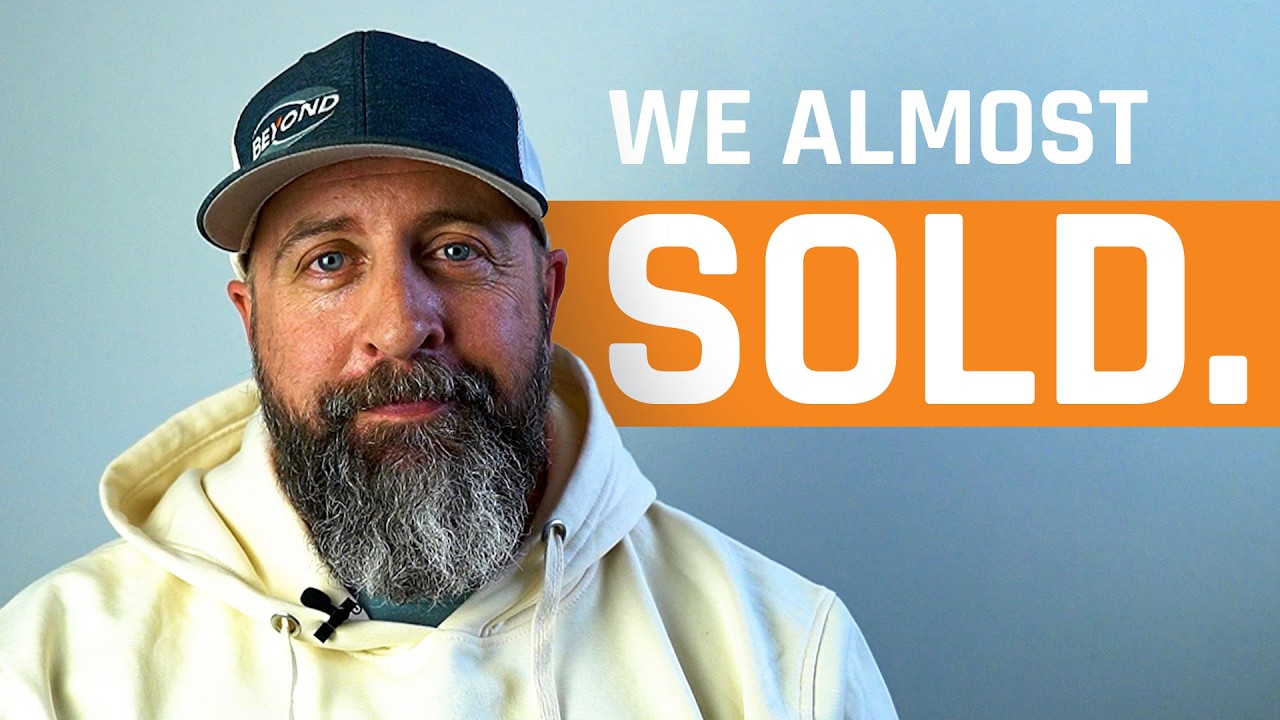
In this 19‑minute monologue, Curt Janzen, co‑founder of Beyond, reflects on nearly two decades of running a construction company and distills the experience into seven core lessons. He begins by recounting a near‑sale of the business and the realization that the real challenge was not revenue but people, culture, and sustainable growth. The lessons are: (1) hire for character (DNA) over existing skill, training the right people to outperform seasoned hires; (2) pressure reveals culture – a major lawsuit exposed the team’s loyalty, optimism, and principle‑driven problem‑solving; (3) robust systems create freedom, allowing employees to be creative within clear expectations; (4) growth without a strong culture leads to chaos, so alignment and clear goals are essential; (5) prioritize presence over perfection, confronting mistakes head‑on and communicating transparently with clients; (6) reframe feedback as advice, seeking forward‑looking input from all levels to drive improvement; (7) build the company to last, focusing on legacy, multi‑generational impact, and treating both employees and homeowners with respect. Janzen closes with a call to action for viewers to comment, subscribe, and join the community. The video serves as a guide for business leaders, team members, and homeowners on cultivating culture, systems, and long‑term vision in a construction context.
Chapters
A few years ago, we almost sold the company, and that would've been the easy thing to do. But because we didn't, it absolutely changed everything. Over the last 19 years, we've made a lot of mistakes with people, with systems, with processes. But scaling it, the hardest part hasn't been the revenue. It's actually been trying to figure out what we need to focus on. The focus needed to be on our people, the culture, and how to grow something that's gonna last a long, long time. Here are the 7 biggest lessons that we have had to learn. Lesson number 1 is character over skill. It is way too easy to just hire people with 2 feet and a heartbeat and bring them in, but that was the most stressful thing we ever did. And when we realized that we could hire people for their DNA and train them the skill set, it made life so much easier. I remember, you know, hiring one guy who was a big strong dude, told us he could spray, told us he was good at what he did, and he would just break stuff. He would lie about it. Clients were unhappy with the quality and everything that was there. And I'm like, man, for a guy that's supposed to be super skilled at what they're doing, they just caused so much problem. And when we were able to take the opposite of that and hire somebody that just wanted to grow and wanted to learn, it didn't take very long for that new person with the right DNA to surpass everybody else in our company. Lesson number 2. Pressure reveals culture. It wasn't, wasn't more than 2 years ago when we got served a pretty major lawsuit, and it would have been pretty easy to kind of get out of it if we would have had all of our paperwork in order for the, you know, the guys on the team just kind of recording everything that was done, why it was done, where it was done, how it was done. And so with a lot of pressure on us, it wasn't up to us to yell and scream and to fall apart in that moment. It was to build a process to make sure that this didn't happen again. happen again, to go back to the drawing board on a few things and figure out how we can make sure this never happened again. And the culture of our company is to just try and improve it. We believe that mistakes are okay to happen. It's how you act and react to them, and we don't want to make those type of mistakes more than once. And so solving it really, really well the first time is done by having the right people working together to try and create the best solution. In this situation, that pressure really revealed the culture of our company, that we were loyal to each other, that we were optimistic that we could get through it, that we could figure it out, that we could make a plan, that we didn't have to lie or manipulate or anything like that to be able to do it. We could stay within our own principles and that we could just overcome even something as big as that. Lesson number 3 is systems equal freedom. A boring system that you make today creates a lot of creativity down the road. The reason why this is true is people want to know exactly what their job is and what our expectations of them is as well. And so if we can write a really good employment agreement and our team can understand the things they need to do to actually achieve success and to grow our company, helps them win, it helps us win. When people can live inside of that agreement, they can actually be creative in how they get to where they need to go because they just know those markers that they're trying to hit. Lesson number 4, growth without culture equals chaos. What I mean by this is it's easy to chase revenue or top-line numbers or the number of team members you have on your team, but when you do this, you get a lot of people that are going to create dissonance in your organization. Because they're not aligned. They don't know exactly where the goal is. It's even, even the way we try and deal with conflict at Beyond, you know, it's state the goal, state the facts, make a plan. Well, that's all part of our culture of our company, is that we want to build these systems so that our culture can be prevalent through the whole thing, and that we're not chasing something that's irrelevant like a top-line revenue number. Lesson number 5, presence over perfection. We have a really high tolerance for mistakes and a really low tolerance for lying. So we understand that in construction things are going to happen. Bad stuff happens every day here at Beyond, but we have to show up when those things happen. We can't retreat. And those can be things as easy as, you know, our team members alerting us to tell our clients that something went wrong on site. What a difference maker that makes in our business when we can get in front of those type of problems and talk about it. The last thing we want The last thing we want to do as a company, or Kevin and I as individuals, is retreat when bad things are happening. We want to actually lean into them and make sure that we can create a solution to that problem. Lesson number 6, feedback is a strategy. I actually want to change that word from feedback to advice. There are times when I really want feedback of things that I've done, but more so than that, I actually want advice on what we could do better and how we can actually improve. And so changing your mindset a little bit into a forward thinking instead of a past thinking is a different mindset for me that I've really been trying to take on the last little while. And so I go up to our lead installers, to our admin team, to our operations, and I ask them, what advice do you give me so that I can move this company forward? And when I started doing that, both with, you know, my mentors and with our team inside here, it's really opened up a lot of ideas of great things that we can do as a company. The problem with a lot of leaders is they take that advice or feedback envelope and they return it unopened. And I just simply don't want to be that guy. Lesson number 7, we want to build beyond to last. The thought of selling the company or to exiting out in some way or another doesn't really make sense when you think of how we can continue for generations to employ great people, hire new blood, enjoy kind of growth of ideas and, and things that we can do within this company. It's, it's pretty exciting, honestly, to be wide-eyed and open to where this place could be in 10 years, 20 years, 30 years down the road. And that's really exciting to me. I would love to see Beyond as a legacy for multiple people, maybe even hundreds of people that, you know, have been able to touch and be a part of the DNA that's been happening here at Beyond. We're not just building a business, we are building into our people who build something Beyond. If you're a homeowner watching this, I want you to know how seriously we take running this business. For us, we want you to know how well we're treating our people, and I want you to feel how well they're treating you. And if we can continue to do that simple task, I think that Beyond's going to be around for a very, very long time. If you enjoy watching this video, I'm just going to ask that you, you know, comment below. Maybe, maybe give us some advice or give us something that you enjoyed about it. We're also going to ask that you subscribe to this channel. It really helps us, you know, create more content. And, and honestly, we just want to be an impact to the community around us and the people that live in it.