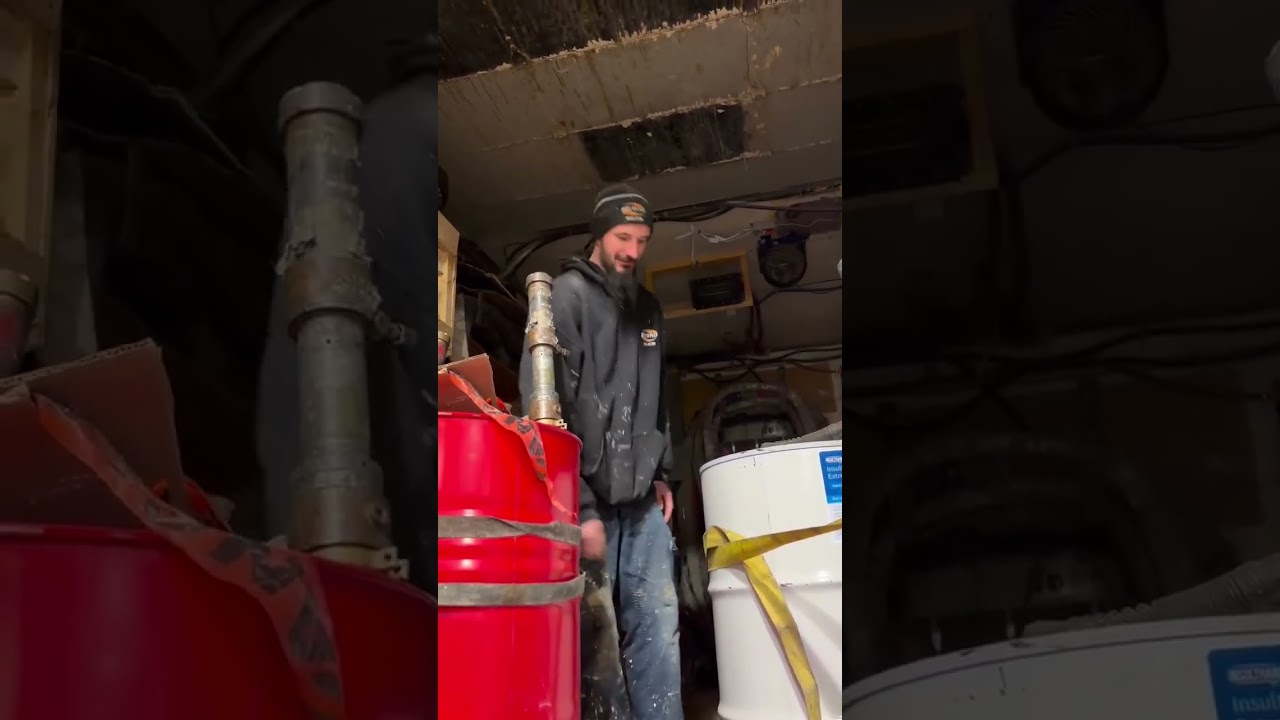
Spray foam is combustible but typically carries a Class B fire rating, comparable to fiberglass and less flammable than wood, carpet, or curtains. Elastichem Insultane Extreme achieves Class A. Thermal barriers like drywall provide a 15-minute fire-resistance rating required by building codes.
Chapters
All right, we've got a question from Hot RD Cowboy a couple of days ago here on our social media posts, and he asked, is spray foam flammable? And for that, Ryan's going to answer the question.
So is spray foam flammable? Answer is yes, spray foam is flammable, but not really. It's at minimum a Class B fire rating, which is right in line with fiberglass, and honestly, it's far less flammable than most stuff that your house is made out of.
So if you're building a brand new house, what else in your home would be considered flammable?
So like, if you're looking at the products that your house is actually constructed from, we're talking wood, there's glues, there's lacquers, there's all kinds of stuff that honestly goes up quite quickly. Now at the finished stage of a lived-in house, honestly, the image gets worse because now you've got your mattress, you've got your curtains, you've got your carpet. All of those things go up really, really quickly. Yeah, so spray foam is going to be far less of an accelerant than anything that I just listed.
Yeah, so basically what you're saying is the foam is kind of the least of your worries when you've got plush toys, a bed that you sleep on that's made out of foam, all those other things.
Absolutely. So although the foam is inherently a plastic like a lot of those products, the major difference is the amount of fire retardants that's in it. And so at minimum, again, it's going to be a Class B. The product we love to use is Elastichem. It's called Insultane Extreme, and it's actually a Class A fire rating. And so that's as close to being a noncombustible as you can be without actually being a noncombustible.
So now let's talk worst-case scenario. Let's say your house does catch fire, have a kitchen fire, grease fire, that kind of thing that happens, and the foam actually touches flame or flame touches the foam. What happens then?
So what can happen is like over an extended period of time with really high temperatures and extended fire, it will eventually start to burn. And the problem with that, honestly, more than anything, is going to be the smoke that it produces. Foam's not going to be an accelerant for a fire. But it is going to produce a really thick black smoke. Think of yourself as a child throwing your Styrofoam plate into the bonfire and the black smoke that comes off. This is comparable to that, but at a greater scale. So what's important is that foam has a thermal barrier over top. In most cases, that's drywall, but we also have some spray-applied products to get that 15-minute thermal rating as well.
And so why is 15 minutes important?
So 15 minutes is important, A, because it's dictated by building code, but B, that's the amount of time most people need to get out of the home. So most people will be able to safely vacate their house in under 15 minutes.
Yeah, and I'd probably also say that maybe it takes 15 minutes for the fire department to get to your house, you know, after that first initial phone call. So those are probably pretty crucial numbers right there.
Absolutely.
Beautiful. Well, like, subscribe, do whatever else the kids are saying so that we can create more great content like this.