How Do You Pay Penance?
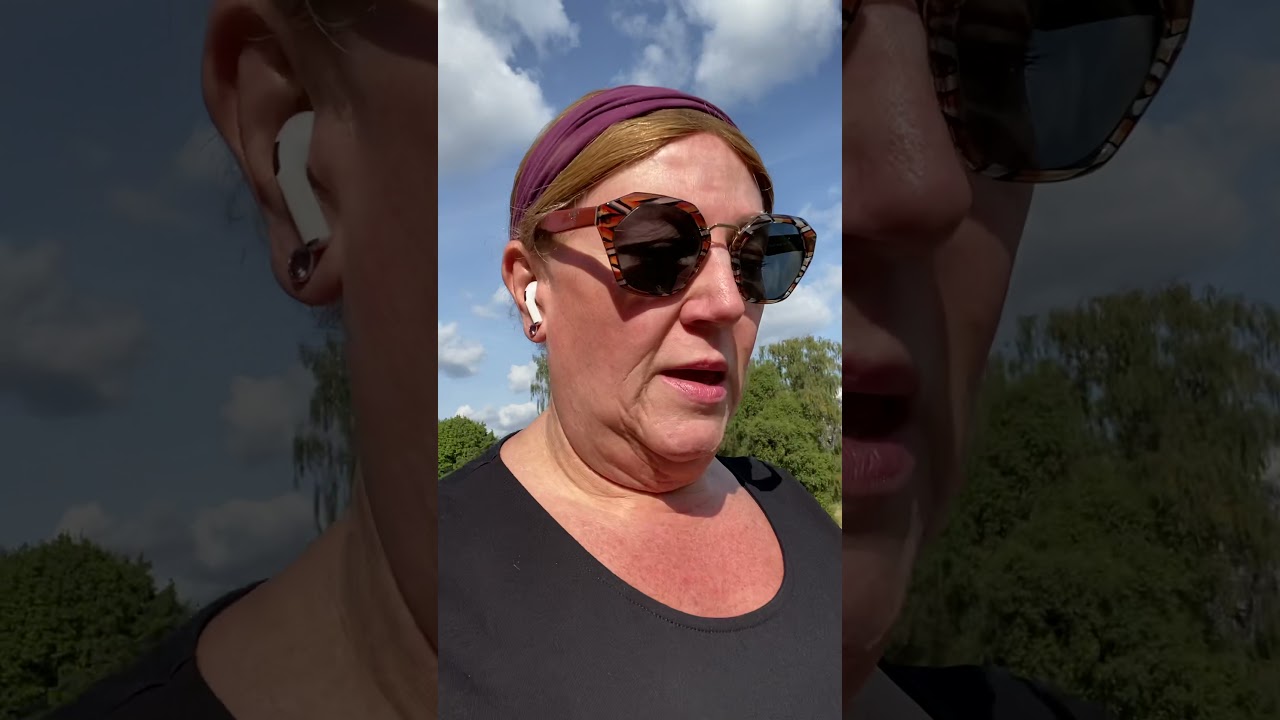
Coach Cynthia Fortlage walks through Hampstead Heath in London reflecting on penance, authenticity, and personal growth. She discusses selling her father's restored MGA sports car and how changes in her means have shifted her nomadic life in the UK.
Chapters
Hey, uh, this is Coach Cynthia just checking in. How are you folks all doing? I'm just outside the beautiful Kenwood House in Hampstead Heath. If you've seen other videos, you'll know that that's kind of the central part of London. I just walked to this beautiful place from the park entrance. It's about 3.5 kilometers, so it's kind of a walk. Now I'm taking a different direction back. To deal with it. So a whole bunch of things to share with you and talk about. I don't know the length of the video at this point. Um, so, you know, they always talk about that the only constant is change, and in the world that we live in, change is ever-present. And it's constant. And as you know that I am constantly on a journey of change. And not because I'm not satisfied with it. Because I know I haven't finished growing. I know there is more to learn. More to explore. More to grow into. So let's start off with a really simple thing. This is an absolutely beautiful treed lot. Sorry, that's a dike. Diverging from the topic. But yeah, so the reality is that, you know, those of you that have known me from the beginning of my journey, 2016, even beyond, you know that the name Cynthia means a lot to me. It's a name that I picked. I very much am Cynthia. But, you know, there's also learning who we are. And now most people just call me Cyn. C-Y-N. And for those of you that have known me, you'll know how different that is than when I first knew you. Because it wasn't Cyn or Cindy or whatever, right? It was Cynthia. And absolutely, that's who I am. But Getting comfortable with who I am also means kind of adjusting to this idea of I am constantly growing and changing. And so I am Syn, and you can simply call me that if you want. In future, certainly feel free to call me Cynthia. Call me hey you. Just don't call me late for dinner. Um, but anyways, the topic for today that I really actually wanted to dive into with you was a really intriguing one. And it's intriguing because of where it came from. The whole concept came as I was kind of processing this. And I'll connect the dots for you. But it came from this idea of penance.. And in my whole life I've always had this concept of, quote, pain penance. And the trigger in this particular case was the— some of you know it as the little green car. Some of you know it as my father's MGA that I had restored. But regardless, it is not mine anymore. It has been sold. And it really was at a point that I had no emotional attachment to the car because I had done the penance of doing what my father never could in restoring the car to a place that he would be very proud of, using the color scheme that he had picked and so forth. And the very first time I drove it, um, my, my kids know this, my son— I think my son and daughter were both with me— but, um, we went to my father's graveside, and that was, quote, the first person that I took it to show. Because it was about resolving somehow what I thought I had to do in order to, quote, "make penance." And really, that's been a theme of my life. But as I reflected on it, you know, the way that I did penance— and it manifests in lots of different ways— But it's this whole idea of, you know, because I had the means to, paying for things was an easy way to do it. Now I don't have the means anymore, so I'm having to learn different ways to do it. And whether or not I really need to do penance at all. And so it was so intriguing that, you know, as I looked at it, that, you know, things like in order to make friends that I would you know, pay for dinners. Well, that made it easier. I didn't have to really work at being a friend because people wanted to be my friend because maybe I would pay for the occasional meal or whatever. Um, I mean, that's a really, really simple, almost trite example, but I mean, I've done that through, through my life. And of course I'm about acceptance, and so it really got me thinking Well, this has been the thing at my hip. Then, you know, how does that kind of sit? Because obviously there was, quote, penance, um, to pay in getting divorced. I certainly felt a lot of guilt through that. You know, I've had some friends disconnect and pull away, um, some recently, some, you know, when I first transitioned. So, you know, it, you know, there's penance. And so do I have this concept of penance that needs to be paid, um, by each of these folks. And then it kind of made me think of, like, you know, the reality is, is you've heard me say it lots, right? You can't change someone, you can only change yourself. So in looking to— look to whether it be, you know, Pat's friends or family um, or, you know, co-workers, like whatever it is that is in your life and you feel that somebody owes you penance. And penance could be as simple as an I'm sorry. I mean, that's nice, but you're asking somebody to do something that obviously, if they haven't done it, they don't want to do it. And again, that's only your point of view. They will have their point of view, and perhaps you owe them a sorry too. So the idea of acceptance in this is to again accept, you know, to accept those things I cannot change. I can't change another person. I have to accept that. I don't have a choice. And so really going deep in myself and realizing that my pursuit of constantly growing is not a penance to myself, but it's I know that I haven't reached the point where I feel fully authentically myself. I feel myself in so many ways. I am Cynthia Fortlage. And I'm fun and I'm flirty and I have a great smile and a warm heart. And I know that about myself. And I know that's what attracts people. Not anything else. Not nothing, you know, as trite as a meal. Like, I mean, how ridiculous was I thinking that that was what it took? But that's also lazy, right? Because when you have means in one way or another, um, you end up taking the easy route. And I had just shared this with a group recently, and I said, you know, the journey to being your authentic self Means finding the best path to yourself, not the easiest. And so I really think a lot of these ideas were kind of starting to gel in my head and connect the dots as I do. Um, and I love that about myself. I love that I'm constantly curious, that I'm constantly pushing and exploring and really trying to understand myself and relationships and people. But more so just my journey. And so with that, it was really this idea that— I just got to turn this way, you got to see this just gorgeous field here in the park. We're still on the Kenwood House property, by the way. Um, Yeah, like it just— what is— what does that look like in your own life? What does it really manifest as? And is it something that you are— have a means to deal with in some other way rather than doing the deep work, the hard work? And what are you doing to address that? Because ultimately when you're faced with the journey to become your authentic self, it's about the deep work, and you can't get there if you take shortcuts. So I leave that with you as a thought from beautiful Kenwood House on, uh, Hampstead Heath, and I ask you to consider whether or not there is something in your life that you can grasp and hold on to as a way to do the deep work to find your authentic self and be able to challenge yourself to grow rather than pay penance. Not COVID. Remembrance of a chest infection. And that's really what I wanted to challenge you with today. Remember that acceptance teaches you that you need to accept yourself first. Easier said than done, for sure. And acceptance is also about learning to accept that you can't change others. That is a harsh reality of the process. And in doing so, that if others are negative influences in your life, you do have a choice. And you do have a choice to not include them in your life. And that's a hard one. Because what if those people are your friends, your family, your co-workers, your employers, um, your, um, other communities that you are a part of. And I just challenge you to kind of think about what does that look like and how could you possibly navigate it so that ultimately what you found is your authentic self. So I'll leave you with that thought. Leave your comments down below. Let me know what you're thinking in terms of what does that mean to you. And are there shortcuts that you take in your life? Quote, "pain penance" because you have means rather than doing the deep work. You know, sometimes the first step is, it's not, I mean, just being aware of it. Forget about admitting it. It's just being aware of it. That's the first step. When I talk about making the unconscious conscious, because only when it's conscious can you change it. So I'm going to ask you to consider that, see what you think, and would love to hear from you. For those that have been asking all along, um, Yes, I have. With the car sale and so forth, I am in the process of trying to kind of cross all the T's, dot all the I's, um, still to find more permanent work or clients and be able to occupy my time here in the UK full-time. That is the intent. That is what I'm trying to do. It doesn't mean that I won't come back and visit, but I think for me at this point, this is currently as nomadic as I've been over the last couple of years. I mean, I've lived 3 places in the UK in under a year, so I wouldn't say that anything is ever written in stone. But I think the reality is that you have to be open to the growth and the change. Clearly not as dramatic as myself. I openly admit and know that probably my extremes, or what might seem extremes to others, was simply for me the path. And it was a path of opportunity because I had means. Does that mean it— I took the easy path? Could be. But it is my path. And my path is now changing because I don't have means in the way that I had before. So it's about learning new ways. New ways to do the deep work, new ways to travel the journey without the shortcuts. And I think that ultimately will lead to a deeper sense of self, that will lead to a deeper awareness of my authenticity. And ultimately, I hope that as I continue to evolve and become me in all of my authentic ways, that as Cynthia Fortlage, that you still want to be connected and related to, etc. So That is your choice. That is not something that I can change. That is not something that I even have the right to demand. Is it something that I desire? Absolutely. So, thank you for taking the time to be with me on this little bit of a walk. I've got quite a few kilometers still to go. But I hope that you've enjoyed seeing some of the background of this beautiful old-growth forest. Um, and I really hope that you take a look. They've got some gorgeous, gorgeous old trees in here. It's just amazing. Um, and this is one of the places that I come to get centered. And so that's why I'm sharing this with you, because it's in a place that I'm centered and grounded, and I can share it with you without it becoming overwhelming. And Before I started recording, I just talked to my kids and I was tearing up. We were just texting back and forth, but it was so emotional for me in that moment because I'm so open. I'm so open for you. I'm so open to the universe. I'm so open to life. And I really think, for me personally, that that is What being authentic for me seems to be becoming is that I grab life by the horns and hold on for dear life and just enjoy the ride. It could be a rough ride, it could be a bumpy ride, it could be a beautiful ride, but it's my ride. And, uh, yeah, I'm looking forward to read your comments. So you take care, sending love and hugs to all of you. Cheers!








