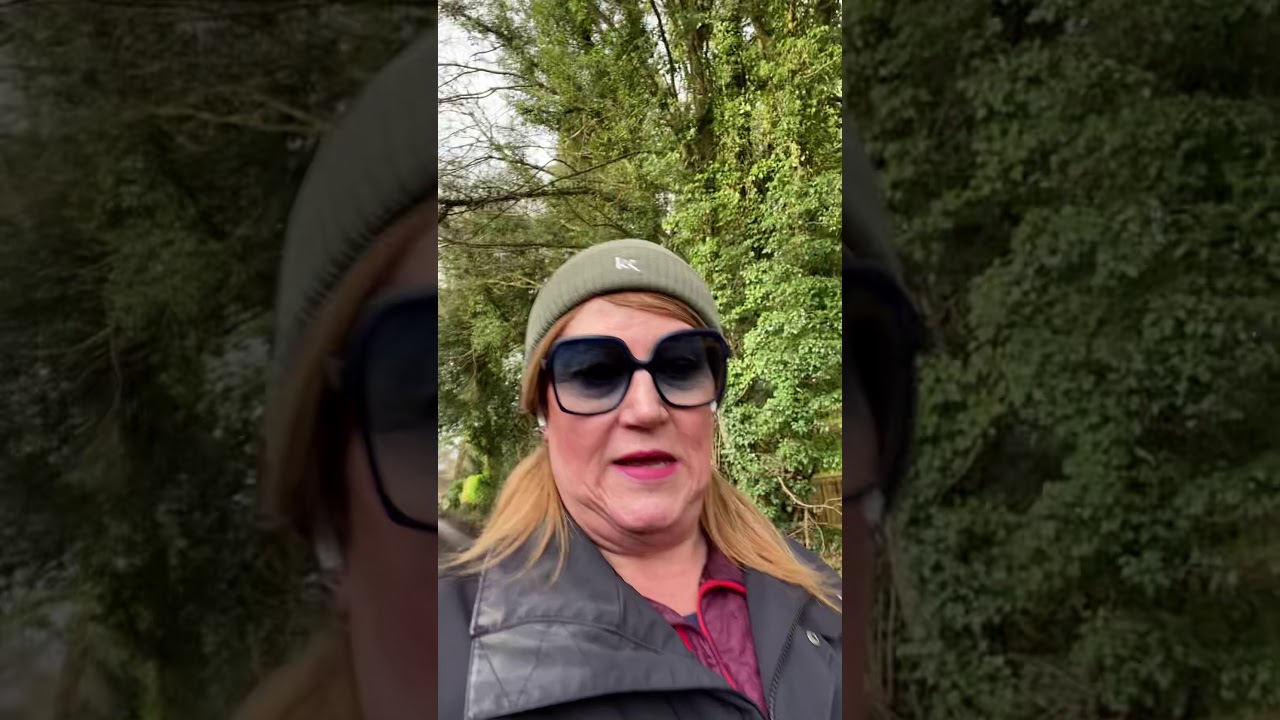
Cynthia Fortlage describes a 5 km walk where she encountered a flooded road and had to find her way through instead of around it. She uses the experience to argue against relying on workarounds, advocating instead for confronting problems directly by taking small steps and trying different approaches.
Chapters
Hey, Cynthia here. Um, you know, on my walk today I encountered an area of the road that was flooded. And you know, the very first time that I navigated it, I found that there was a path to the side that you had to be very, um, very flexible and, um, absolutely gymnastic-like in order to make. But I did, and I completed my walk. I went the full 5 kilometers. But on the way back, you know, I looked at it and I saw bicycles going through the puddle and I said, "Oh, you know, if others can have a different approach to solving that problem, perhaps I could." So I just finished going past that particular point along my walk and what I encountered was if you stayed on what you believe to be the middle of the road because it was flooded from ditch to ditch. So you kind of had to guess based upon where the trees were and everything else what the center was. You could kind of walk along the quote high point of the road as the water flows of course off to the sides. And so that's what I did is that you approach them. So you know sometimes we look at problems in the workplace, in life, and we want workarounds. Or we create workarounds. And because we really don't want to face the problem head-on. It's too painful. It's too sore. It's too monumental. And sometimes the best way to tackle the problem is actually take it head-on. You don't have to do it all at once. I didn't take one giant leap and cross that puddle. I took many, many, many small steps. Because I wanted to make sure that the potholes that I knew that existed in the road that I didn't go into just because they were covered with water. And so, you know, maybe that's a lesson that, you know, hopefully somebody needs to hear today, is that grasping that ability to realize that, you know, life is like a clock. It knows that there's a history. I knew that I'd passed that puddle before. But we know there's a history. We can't go back and repeat it. I can't pretend that I didn't walk that path. I did. So the only thing that the clock actually does is continue to move forward. And so we, like a clock, need to continue to move forward in that scenario. And in life and in business. And that doesn't mean it's the same. I didn't take the same path. I changed my path. And so I had a different outcome. Thankfully, I've got good boots, so my feet are still dry. But, you know, it was just a different path. And so realizing that sometimes when we go to tackle a problem, right, as we're continually told, that if you keep trying to do the same thing over and over again and expect a different outcome, that's really not a good thing, right? So What we need to do is to actually be open to trying something different. To trying a different way to solve the problem. And that's what I try and do with my clients is to bring my depth of years of experience. My life experience living a very diverse life. Being a very diverse person and continuing to find ways to lead through diversity. Not in spite of it. So I invite you to take that lesson into your life and see if it somehow helps you find the way forward. And if you're struggling, I'm here to help.