EP 1: 12: A.I. : The Future of Addiction Recovery with Dino
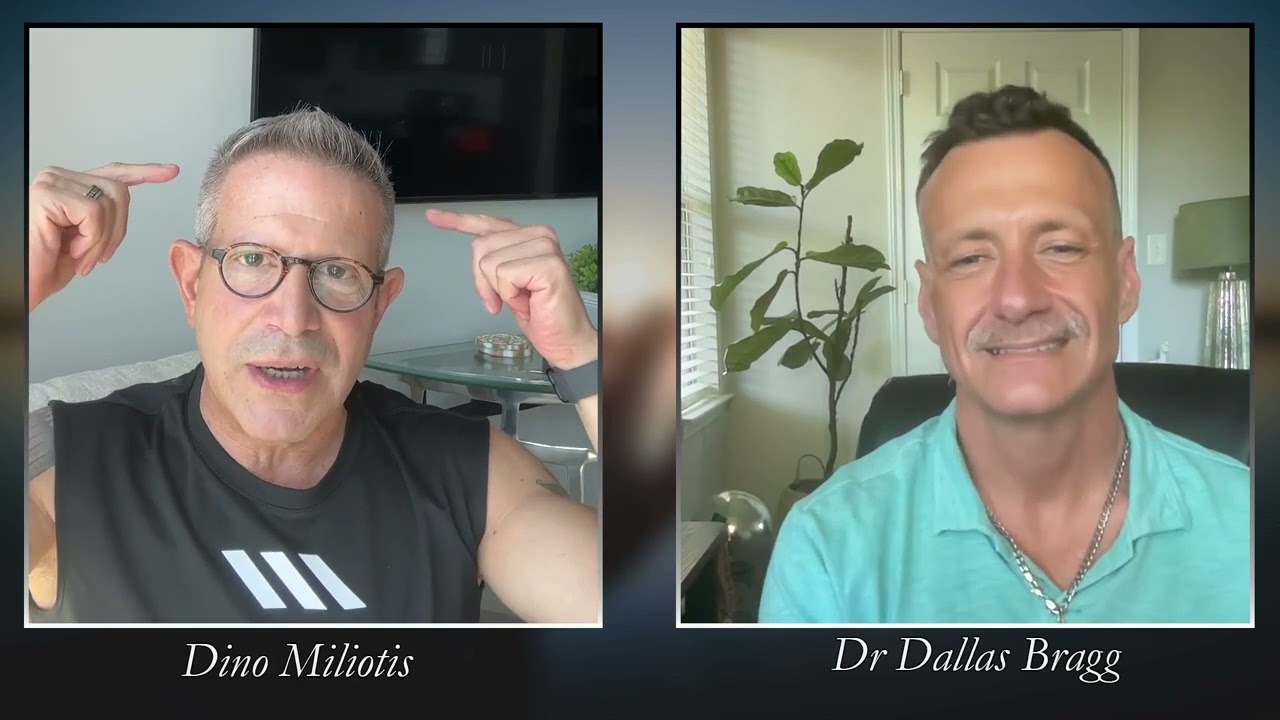
Dino Miliotis, an entrepreneur in recovery, discusses OpiAid, an AI-powered smartwatch that tracks withdrawal, anxiety, and depression in real time to help addiction treatment. The technology addresses a core problem: patients struggle to describe their symptoms accurately to doctors, and traditional assessments miss what's actually happening in their bodies.
Chapters
Yeah. Predictive and prescriptive. Yeah, that's the whole thing. So this knows you. Once it learns you, it becomes uniquely you. It knows you better than you sometimes. So when somebody asks you, how are you doing? You're like, I'm fine. This knows I'm lying.
Nope.
You know what I mean?
Welcome to the After Meth Podcast. This is your host, Dr. Dallas Bragg, a former crystal meth addict, now sobriety coach. Join me on my mission to increase awareness around the epidemic of crystal meth among the gay male population. And create a repository of resources for current and past addicts, as well as, and especially for their loved ones. This is The Aftermath. Trigger warning, this podcast will contain discussions pertaining to drug and alcohol misuse. If you feel triggered to use or relapse, please call SAMHSA's National Hotline at 1-800-662-HELP. Also, if you are new in your sobriety journey and you feel like you could be triggered by discussions around drug, alcohol, and sex misuse, please do not listen to this podcast. All right, now on with the show. Hey everybody, welcome to this episode of the Aftermath Podcast. I am really excited this week. I feel like I'm doing my first celebrity interview today with, uh, Dino. It's Maliotis. Maliotis. Maliotis. Miliotis, right?
Very good. Miliotis.
I was practicing before the podcast to make sure.
You nailed it. Yeah.
Miliotis. Miliotis. Okay. So, do you know Miliotis has been a driving force in business for more than 30 years? He's been featured on Oprah, Forbes, Entrepreneur, Crain's Chicago Business, and People Magazine. His resonating message of hope, changing the world one person at a time, is his mantra. At what he now describes as the most rewarding time of his life. That's nice. I love that. As a recovering addict, Meliodas documents his life journey and road to recovery from a more than 20-year battle with alcohol and substance use in his memoir, There Is No Box. Meliodas is best known as the inventor of an all-natural insect-repelling bracelet, Bug Band, which he launched in Chicago in 1996. He is currently the spokesperson for OpiAid, an award-winning data science company that's harnessing the power of AI to combat the opioid epidemic. Welcome, Dino.
Wow, I need you to do intros for me everywhere I go. I love that. How did you do all that?
Beautiful. Yeah, just right out of my memory too, right?
That's awesome. Awesome. Awesome.
Yeah. So, uh, the first thing we want to do on the Aftermath Podcast is we do a quick wellness check-in. Um, so I just want to, you know, besides the, the podcast and everything that we have to cover today, I just want to check in to see how you are doing.
I'm doing great. It was— it started out great. It was a great morning, and it just continues to keep getting better. This is a good one.
Love it, love it.
Sure. Yeah. Good, good, good.
Yeah, I think there's something in the air today because I just woke up with a spring in my step this morning.
Yeah, I don't know why, but I'll take it, man.
Yeah. Yeah. Well, there's something that's not in your bio that I just have to get to first. And that's what I saw on your Instagram page that you're going to be on Shark Tank.
Yes. Yes.
Tell us about that.
Well, you know, there's, there's just one way I know, and that's just plunging right in. Yeah. So we were talking before the show, we were talking about the number one fear is not death, it's public speaking.
Yeah.
So go figure that.
Yeah.
Isn't it? I unfortunately did not get that memo.
Yeah.
So public speaking is— yes, it's not my, you know, weak thing. And I don't mind. Look, what's the worst thing that can happen? Right, right. You know, and so I've always had that mindset. So I'm really, really excited to, to introduce this to— not for the investors. Okay. That's not what I'm looking for. I'm looking to, you know, create some kind of synergy and have them almost like ambassadors. I mean, let's face it, one call from them, we're in every hospital in the world.
Yeah, yeah.
And, and, you know, that's the name of the game, is the awareness to this wonderful new technology that, uh, I'm part of that's really going to change the way people recover. I mean, it's just incredible.
I love it, I love it. So let's dive in then to OpiAid. And we can talk more about, um, other things in your, your recovery story too, which by the way, um, you usually on the show where we've been interviewing gay men who have a past with, uh, crystal meth, uh, Dino is not a gay man, which we discussed before the show. Uh, you have a history with methadone though.
Yes, I do.
Um, which I'm just now learning about through my, uh, volunteer work with Controlling Chemsex. I've been helping having been working with a man who used methadone, and I had never heard of it until a few weeks ago.
Yeah, you know, it's methadone. Again, keep in mind, I'm not a doctor, so I'm not going to explain it like a doctor. I'm going to explain it like a regular person who went through it, who went through, uh, addiction. Methadone is something that was developed to get you off things like heroin, as an example. Right.
Oh, okay.
But, but what happens more often than not is we start getting hooked on the thing that makes us get unhooked from another thing. So for me, you know, I'm not gonna sugarcoat it. I was addicted. Like, when I go hard, I go hard, right? So, you know, I mean, a handle of vodka every day, cocaine, mounds of cocaine, but that wasn't enough. Methadone. 5 to 10 pills a day, uh, if that wasn't around Vicodin, if that wasn't around Percocet. I mean, it was always a combination of things.
Mm-hmm.
And I think that a lot of people, um, who are in recovery, they're not typically exclusive to a thing.
Mm-hmm.
It's a combination of things. Either you just wanna try it and experiment or whatever.
Yeah.
But at some point I found that, um, It's a balancing act. Like, you ever hear, you know, you get, you get too high, you got to bring yourself down. You get too down, you got to bring yourself up. So this is all I'm doing every single day. Right. And it takes you 4 or 5 hours to balance. Like, as an example, us talking right now, it would probably take me 5 hours just to prepare.
Wow.
And then I'd come on and I'd be all bloated and windburned skin or whatever. But then after the podcast, you know, using that same example, I'd probably like balance again and pass out. I mean, that was my life. It wasn't pretty. Anybody who goes through this obviously knows. And as, as much as people talk about it now more and more, especially the A-listers that are coming out and starting to talk about their stories, there's, there's still suffering alone. People still suffer in silence. There's still a kind of a taboo. And I think it's because our inability to vocalize exactly what you're going through. I mean, you know, you can have a good day and then all of a sudden you have a bad day and you're not supposed to tell people that you're having a bad day again. Oh my God, what's wrong? Should we take you to the— I mean, they don't understand.
Right, right, right.
And so, so that, that I found is a big part of it. Um, it's not pretty.
That's interesting. And it's a note that I want to make for the listeners is I know that I learned through— in rehab, uh, they passed out, you know, they passed out a lot of things that seemed juvenile, but one was this feelings wheel, right?
Yes.
But, but there is such value in being able to articulate exactly how you feel. You know, yes, I like the, the ther— the one of the counselors was like, how are you feeling today? What's the emotion you feel? And I said, I'm gray, you know. And she was like, gray is not an emotion, you know, so find it on the wheel, you know. And so you start with sad and you go out. And I'm like, oh, you know, I— this is how I really feel. And this can help me from there kind of articulate what is happening inside me. But being able to put it to words actually takes the power away from it.
Man, I gotta tell you, you just touched on something that's just the perfect segue of why I am representing this technology. You, you, you nailed it. I mean, I don't even have to go through my story. You, you just nailed it.
Nice.
That is the, the reason. Okay, so, um, can Can I do a little quick backstory?
Whatever you want to do, go ahead. All right.
I don't want to take over your show. No, go ahead, please. Yeah. Okay. All right. So basically, I— my, my addiction really started in 1996 when, as you read in the bio, that's why I invented a product called Bug Ban. Yeah. Okay. I'm not going to get into how I did it or whatever, but just to say that it was an instant overnight accidental success. And I underline the word accidental because there's just— I'm not that smart. Okay? It was just like it was lightning in a bottle. Yeah.
Yeah.
But, you know, whatever it was, you know, next thing you know, I'm in People magazine, you know, holy cow, you know, a young kid in People magazine. What am I doing? You know? And I remember the camera guy, ready, ready to take your picture, kid. You're going to be famous. You want to be? And I'm thinking, yeah, I'm going to be famous. You know, wow. So I'm on Oprah, I'm in the Chicago Tribune, the Sun-Times. I'm everywhere, everywhere. And people would run up and, you know, hey, I saw your show. They're excited for me, right? But I don't know you from Adam, dude. You're scaring me, you know? So I didn't know how to handle all this. And so I looked for comfort in a bottle or substances. You know, and, um, as, as most people will, will tell you, you know, the first time you try drugs, the first time you drink, uh, significantly, it's that— it's a weird euphoric feeling. I mean, and you wind up later in life, you're always chasing that first high, aren't you?
Yeah.
You know, but, but it was— at that time, it was perfect. It was like, wow, did you see me? I nailed that interview, and it was because I was high, so I might as well just keep you know, being high, you know, because, because you have to be perfect for every interview. You can't make mistakes. You're the rags-to-riches kid that made it, you know, big time. And everybody, you know, looks up to you. These are the things that go through your head. It's only my stupid ego. I mean, let's face it, right?
Yeah.
But, but, you know, that's how it starts. And I will tell you that I have not, not respect, but a healthier understanding when you see real A-listers that talk about, you know, well, they're incarcerated or domestic violence or they lost all their money, they burned their house. And you're like, how can you destroy your life like that?
You know?
Yeah. But, you know, it's, it's easy seeing it outside, you know, than in their shoes. But, you know, believe it or not, I mean, I've done and said things Under the influence that I mean, I'm embarrassed today to even just think about, right? So fast forward, you know, the the funny thing is is that as much of substances and alcohol that I would consume, I was still highly functioning. So instead of getting discouraged or understanding that I have a problem. For me, it was the opposite. You know, people still wanted to have meetings with me. They wanted to do business with me. And I'm thinking to myself, I don't have a problem because if I had a problem, nobody would want to do business with me. You know what I mean? Yeah. Kind of like the movie industry where they're like, they know these people are just like outrageously out of control, but they still shoot a movie with them because it's money. Yeah, it's money.
Wow.
So it took me 20, almost 25 years to swallow my pride and my big fat head deflated a little bit and walk through the doors of rehab.
Wow.
And, you know, trust me, it was not my first choice. There's no way I wanted to go into rehab.
Right.
But I did. And I had to leave my ego at the door and I wanted to learn 'cause this was the first and last time I was gonna go in there. So I get out clean and sober in the middle of a COVID lockdown. Okay. I got clean 7/7/2020.
Oh, okay.
Yeah. So when I got out, it was, you know, you couldn't just like kind of have access anywhere. You had to be stuck in a house.
Sure.
I should be an honorary lawyer because during the binge-a-thons, I watched 456 episodes of Law& Order. I got to qualify. I think. But my point is, is that it, in a weird way, kind of made me feel good that the whole world stopped because I didn't feel like so much of a loser because, well, it's not just me being lazy on the couch. The whole world is lazy, so it must be okay.
Right.
You know?
Yeah.
But, but, but after a while, you know, your demons and your dark thoughts catch up with you and you start feeling all kinds of things. And of course, one of the things that I started feeling alone in isolation was the need to use, like, really bad.
Yeah.
The need to drink really bad. I mean, almost like I'm looking at my former Rolodex of drug dealers and I'm looking at liquor stores that are open during the pandemic and I'm crying. I'm like, this is so bad. I can't feel like this. So I decided to be good and responsible and I went Took myself into the ER and they're like, what are you here for? And I said, substance use and alcohol. You know, I'm an alcoholic and, you know, I need help. I'm feeling withdrawals.
I'm feeling—
I don't know what I'm feeling. So they, they prop me up, they plug me in, they take all kinds of tests, my vitals. They start asking me questions just like your field chart or your wheel.
Yeah.
And they're like, on a scale of 1 to 10, pick a smiley face or a frowny face. I don't know.
Right. Yeah.
Second question. Well, what are you feeling?
I don't know.
Well, when did you use? I don't know. Not, not for a while. When did you drink? Not for a while. I came out of rehab and they're like, well, you shouldn't be feeling this way right now. I'm like, but I am, you know? Well, you know, tell us, tell us what level of anxiety you have. I'm like, are you serious right now? I took my ass into your ER. Do you really think I'm joking?
Right, right.
But it was, to put it mildly, it was so frustrating because like you pointed out, you can't articulate how you're feeling. Okay. And, you know, this, this, this fancy word MAT, medically assisted treatment, or MOUD, you know, medication for opioid use disorder.
Yes.
Whatever fancy word you want to use. The bottom line is it's a combination of counseling and therapy, behavioral health, and, and medication. Okay. Keep in mind, those work best when, when I can participate clearly, meaning I can articulate my answers.
That's right.
Because a doctor can only base their treatment, can only base what they're going to do for you on an accurate response from me. I don't know, doesn't rank real high in a very measured you know, accurate description of my ailment.
Right.
And so 9 times out of 10, I'm not knocking the health community, okay? But I'm telling you my personal experience, and I can't be alone.
No.
But 9 times out of 10, what's going to happen is you're going to sit either in front of a Zoom or face to face with a counselor, and they're going to start with the— you hear this— I'm going to give you something for your baseline anxiety. I'm going to give you something for your baseline depression. I'm going to give you a pill. But if you're addicted to drugs or alcohol, right? The last thing you want to do if you're asking for help today is have somebody tell you, well, you know, you'll feel better, but not today. You'll feel better in 4 weeks. Okay. This is where I think people need to understand from a regular guy like me.
Right.
Not the academia, but this is where we lose a lot of people.
Yeah.
This is where we lose a lot of people.
Yeah.
Because they can't wait.
Okay?
It's just such a powerful, gnawing craving that you feel. You'll do anything to get rid of it, and you're not gonna wait 4 weeks. So I remember that frustration. The only reason I didn't relapse is through the grace of God. I mean, I had divine intervention. Long story, but I decided to write a book. I've never written a book before.
Nice.
But I wrote a book about the story of my life. I thought, hey, you know what? I'll give— I've done so many things in business, it'll be interesting and maybe somebody out there will appreciate it. After I published it, the opposite happened. The recovery community came out in droves 'cause I wrote about my addiction.
Ah, right.
I didn't think that would matter. But guess what? It did. And shocker, you know, for first time ever, I'm like, wow, there's social platforms and people talk to each other and they're all in recovery. This is how naive I am. Okay. But, you know, I gained a pretty good following, and it obviously made me feel real good. And, and it was then that I had somebody reach out and they said, I think you need to meet somebody.
Hmm.
I'm like, who? Well, they're in— they're working on something in recovery. I think you guys have a lot in common. I'm like, Okay, whatever, you know. So I meet this guy, happens to be the founder of Opiate. Okay. And as soon as he started explaining, he's like, you know what, we're a data science company and our first true north is our love for our neighbors in recovery. They don't even call them addicts.
They call them neighbors. Yeah. So that was when I was looking over the website, which by the way, I want to show the website Sure, for when we have our YouTube, our YouTube viewers. When I looked at the website, what stood out to me was the fact that you know that you don't use. Can you see that?
Yep. Okay.
You don't they you don't use addict. Let me see where it is. It's down here. Okay. Yeah. So we reject. Stigmatizing labels such as addict and instead embrace the term our neighbors in recovery. I love that.
Isn't that such a wonderful thing?
I love that.
That's—
that is so— I, I have an issue, always have, with saying I am an addict, um, because you're declaring that you are an addict. But this neighbors in recovery, I just love that.
So yeah, and you know, I, I gotta tell you now, uh, you know, being intimately involved with the company, representing company. I got to tell you, that's not a tagline. That's not hype. That's real. That is their number one true north. Regardless of all these people that are coming out of the woodwork saying, oh my God, we want to take your technology, we want to use it for this, this, this. If it doesn't fit the number one true north, which is loving our neighbors in recovery and having more come home at night, then it's just, it's just, just going to be thrown out. So we always try and do the next right thing. And it's really a great guiding light, uh, you know, for, for the entire team. The team's made up of the most brilliant minds in the world. I mean, seriously, just like, they, they just completely blow me away. But to the extent of my involvement, where I think that I can help make the greatest contribution, and I'm saying this humbly, is while they're speaking to the health professionals and the clinics and the doctors and you know, all over the world and you could speak that lingo because this technology is just crazy.
Yeah.
What I can do is I could speak to my people in recovery in, in, you know, simple terms because I went through it.
Okay.
Because I went through it. I want people to know that there's hope. I want people to know that technology is here right now that exists that's going to completely change The way you recover, the way you explain about picking your smiley face and your emotion and your feeling, the way I explain my frustration about going to the ER and having not being able to find the words, not being able to articulate how I was feeling. So therefore, what they're doing for me, prescribing to me, I mean, obviously it's helpful and with the right intentions, but it's just not accurate.
That's right. Right.
So here we go.
Yeah.
So this is our— let's hear. Yeah.
Let's hear all about it here.
This is power technology by Op8. So Op8 is a data science company. Okay. This is a Samsung Galaxy Watch as an example. Okay. But, but any smartwatch. Okay. This has been powered with Op8 technology. So what we're able to do, we could do a lot. But here's, here's the The point that I want everybody to hear is for the first time ever, this technology will allow health professionals to distinguish the difference between withdrawal, anxiety, and depression. You hear that?
Yeah. Withdrawal, anxiety, and depression. Yeah.
It will measure the level of withdrawal.
Huh.
Just like you measure, as an example, your blood alcohol level, you know, a precise number of how, you know, intoxicated you are, just like you measure your blood sugar. Okay. It gives you a level. It doesn't say high or low. This measures the level of withdrawal. So as an example, had I had this technology available at that ER, right, they would have put this on me. It takes my readings, my biometrics every 5 minutes. Then all of a sudden it's got the machine learning and the algorithm that Opiate has in their database. And what it'll do is it'll present real-time options to make quality decision-making care to the health professional. It speeds up everything. It becomes uniquely you. Never before.
Wow. And it's connected to your— when it connects to the Opiate software, The Opiate Software also contains your, your individual medical records.
Correct. So electronic records that exist, I mean, at the very least, these electronic records, an Opiate-powered facility will take them, organize them so you can access parts of the file with precision accuracy.
Right.
I mean, so it's like saying I have nothing in my refrigerator to eat. And then I go to that same refrigerator and I make you a gourmet meal in 5 minutes. And you're like, well, how did you think of using that ketchup that way?
You know?
Okay. By the way, I do stand-up in Vegas.
Yeah.
No, no, no. But hey, you got to have a little fun, right? But so when you take that, the electronic files, and then you take the biometric readings using the smartwatch, right?
Right.
All this information, all this data at the OPA database. Now all of a sudden you apply the machine learning part and all of a sudden this data is the most powerful tool.
Yeah.
Because it starts predicting things. It starts prescribing. It's predictive and prescriptive. So the medical community, you know, look, your average health professional, like that example in the ER that I went to, and again, they have more than a million things to worry about, right? Besides little old me and how I'm suffering. Yeah, but they're, they're— the average professional is trained 8 hours on substance use disorder.
Wow.
I don't know if you knew that. It's not a lot of time.
I don't think so. Uh, I may have heard Gabor Maté say that. He said something like that, and from the amount of, you know, training that medical people get on certain things. But yeah, that's amazing.
Yeah. And so, so, you know, where you think it might be opposed, it's, it's being embraced. And the reason it's being embraced is because it cuts down on a lot of time. I mean, let's think about the old way, right? Doctor comes to see you, they have to access some of your electronic records because it's not organized. They're thumbing through it to find when the last time you were in for substance use, okay, which, which may be in page 12. It may not just be in page 1. You follow me?
Right.
Um, and then, and then, you know, it's the series of poking and prodding is what I call it, which is the list of questions. How do you feel? When did you use last? Did you use today? You know, describe your pain, describe your anxiety, describe your smiley face. All of these things where if I'm bashful or embarrassed, uh, or, or have had a bad day, if I'm suffering so much that my— I don't have clarity of thought, I may answer, I may ramp up my answers, I may ramp down my answers. Do you understand? So it's not accurate. But for the doctor who has an average of 5 to 10 minutes to spend with a patient, it's literally like beat the clock. I mean, it's like, yeah, okay, okay, all right, let's prescribe this and I'll see I'll see you in 3 weeks.
Yeah, yeah. Because I would think that your treatment is based on a lot of assumptions by the doctor, right?
Correct.
And yeah, the doctor has to fill in the blanks. And I know with— with— I have to— I come from the, the, you know, the crystal meth angle. But, you know, when you're, you're coming down off crystal meth, your, your dopamine receptors, all the stuff in your brain is going crazy. And you don't know, like you can't say, well, this means, you know, well, what I'm feeling is this, but what I might be feeling is right. And then you're paranoid and then you think everybody in the hospital is after you, right? You know, and all that kind of thing. And so this would just be a way to cut through all that bullshit that you don't know how to articulate. That, yeah, that'd be amazing.
Exactly. And here's the best part, right? And, um, one of the things that you and I, I'm sure, have experienced is we're not loyal to a certain ER or doctor.
Exactly.
Okay. Yeah. If you don't like how you're feeling in 2 weeks or whatever, you're just going to jump ship. You're going to try somebody else.
Right.
And why should you be loyal? Because there's no accuracy, there's no trust that's being built or anything like that. This technology, if it's powered, powered technology to a, let's say, a clinic, I would continue to go to that clinic because that clinic has the technology to be able to understand me. Now think about the initial visit, right? The initial visit with this would be able for them to tailor-make a program that I leave with that day, right? And what do they usually tell you when you leave? So let's check back, let's have another follow-up in 2 weeks or 30 days.
Yeah.
Right?
Yeah.
Okay.
Yeah.
Now the old way, you come back in 2 weeks or 30 days and they'll say, so how has it been going? And you'll say, I've had my ups and downs. Again, not accurate information. The opiate-powered way, These people leave with a watch.
Yeah.
That keeps taking your readings every 5 minutes.
Wow.
Over the course of those 30 days.
Yeah.
So they know, you know, when I'm having my worst, when I'm having my best, if I'm getting enough sleep, all these.
Wow.
I mean, it does loads more than what I'm explaining. But at the very core, like I said earlier, the reason I'm on board, the reason I believe in this so much and I'm representing it is because I wish this was around when I was going through it.
For sure, for sure. And, you know, I, I talk to men every day who have ended up in the emergency room or will end up in the emergency room. They, they shot up too much meth or whatever, or they're paranoid and they're, they're in psychosis. They don't know where else to go, and they know they can't get arrested at the emergency room, so they go to the emergency room. You know, but it always ends up to be this disaster. And they certainly can't— they're not being honest. They can't— they don't say they've been on meth, or sometimes they do, but like you're saying, they, they just can't be— they're not able to— they're not able to articulate what's going on. But not to mention that the nurses and the doctors a lot of times won't even take what they say for granted. Any— I mean, they, they don't believe what they're saying anyway.
Exactly. Yeah, exactly. You know, I mean, and I've tried every approach. You slowly learn to trick the system. I mean, I've been in for necrosis of my appendix. They had to remove that. My pancreatic wall was dissolved. My liver was bloated. I had necrosis of my hip. I don't want to gross you out or anything like that, but by the way—
I won't be.
Full, full checkup, full checkup not too long ago, and they're like, your liver looks perfect.
Wow.
And there's no— and there's no reason why you should get a hip replacement surgery. There's nothing wrong with your hip.
Wow.
It just tells you the body does regenerate.
Yes.
For everybody out there that's like— I'm pushing 60, okay? I'm 59 years old. Uh, don't, don't ever say, well, I'm too old to change, because, because seriously, I've been sober for This July, it'll be four years. Okay, that's not really a long time. Yeah, but anybody out there that says, "Well, I'm too old. I can't change my ways." You better think again. Come on.
That's right. And like you said in your bio, I mean, some of your best years are ahead of you.
All of them. All of them. You know, it's it's it's a it's it's very rewarding because you know I'm not. What's the word? I'm not money-driven like I was from age 6 till the time I left the business world. You know, I, I'm not just going to represent a widget. I'm not just going to sell a thing. I want to make an impact. I want to have meaning. And to be honest with you, I wasn't given a second chance just to squander it on myself.
Yeah.
I mean, I was put here to do something with, with, with the gifts that I have, and, and that's what I want to do.
I love that. I love that. I love that. And I want to say to the listeners, because something is coming to mind for me, is that I get a lot of messages from men who are in active meth addiction. There's some, as you know, as you probably know, there's a, there's a lot of paranoia that comes with Myth. And there's a lot of paranoia right now around AI, about—
Yes.
AI, uh, taking over and AI invading my privacy and everything. And I just want to remind, remind everybody of something that, that I always say, is that everything is neutral in and of itself until we give it meaning, right? So AI is just a neutral— I, I think of it as an entity. AI is a neutral entity, but it's what we make of it. It's like when computer— when internet was coming out, you know, um, it was—
you—
everybody was so up in arms about it. It was used for some good things, mostly good. It was used for some bad things. This is an example of AI changing our lives and giving us a voice where we don't have it.
That's right. You know, you're really— in, uh, your insight on this particular subject This is just incredible because that is how people perceive AI. And you have to, you have to understand that ultimately the success and future of AI depends on the trust of the public.
Right.
And how do you win the trust of the public is you have to literally paragraph and choreograph your true north and your purpose, right? I mean, you're not in it to read people's minds. You're not in it to You know, uh, um, you know, tap into their weaknesses and their phobias. You're there to, you know, again, the true north is to love our neighbors in recovery and make sure more of them come home at night. And there's a lot of, you know, thank God the tech world is still small. There's a lot of us that are banding together and we're actually, uh, authoring the first ever Hippocratic Oath for AI.
Oh, wow.
Yeah, I didn't spill the beans on that one, did I? Which, which again, that's, that's a, that's a big deal. But, but imagine like we will become the gold standard in the industry of what to do and how to be responsible with this valuable and brilliant way to, to read technology, which is really what it is. And then other people aren't really AI, but they say they're AI. Like, bots is not AI. Okay? It's just FAQs on steroids. That's right. That's all that is. Okay?
That's right.
And AI is not like a Terminator movie. Rise of the machines. Oh, they're taking over. You know, in all cases, our technology works when we power a medical office and the final decision is made by a live physician, a live doctor, health professional. Okay. There always have to be— they always have to be in the loop.
Yeah.
The technology is not going to decide for you. Obviously, there's variables that are very important. So you really, really nailed it. I mean, you get this and I appreciate it very much that you brought that up.
Yeah, I just, you know, I see it just like any other thing. the, the mainstream media and a lot of, uh, voices just want to create fear around whatever they can create fear around. Because when you create fear, you can manipulate. You know, somebody's scared, they'll do what you tell them to do.
Right.
And that's what they're— that's what we're doing. We're just creating this fear around AI. And, and, um, and especially if, you know, that there are long-lasting effects sometimes with um, crystal meth use. And one of the, one of the things that takes men a while to get through is that feeling of every— of there being an agenda against me, you know?
Yes.
Sometimes that takes 12 to 24 months really to repair in your mind that you don't think everyone's out to get you. Um, and so that would be, to me, I think I'm just thinking ahead that if this, if this technology, Opiate, came over, you know, to other— I'm sure that there's a plan to expand, right?
Um, if I'm—
yeah, if I'm a crystal meth addict, I may be scared to death to wear a watch. I mean, you know, these are, these are, these are guys who tape over any camera, or they turn their phone over because they think someone's watching them, you know.
I've been there, done that. Isn't that crazy where you tape and you're just walking in your own house and you think You're being watched and the birds talk to you.
Yep.
And you get sound business advice from your, from your cats. I'm talking true story that, that happened.
Yeah.
But, you know, all, all real good points. And here's the thing. There's obviously had to start somewhere. And, you know, opioids is, you know, there's, there's one opioid-related overdose and death every 4 minutes.
Yeah.
Okay, so that's extremely significant. But obviously we're, we're already working on the stimulants and we're working on, you know, alcohol and so forth because like I said in the beginning, most people who use kind of at some point integrate.
Sure.
Different things.
Yeah.
And in the future, this won't only power the hospitals and the clinics, that this, this eventually in the future will be available directly to John Q. Public. And why is that important? Because sadly, 70% of people who need help don't even go see a health professional. They don't even go to an ER.
Yeah.
So we're losing them there too.
Yeah.
And so if you had this and you see it also like long-term care, you look at it like a sober coach as an example. You know, it's just something that eventually will be looked at as a wellness tool.
Yeah.
Where it will help if you have bad moments, bad thoughts, or you feel like slipping. And it could be 2 years in the future. You could be clean for 5 years, 10 years. You know, at some point life happens. Yeah. And it's a series of unfortunate events that gets us, not just one. Wow.
Right.
Right in your face, right? But you can have a breakup, um, you can have a death, you could lose your job, you can have a disability. I mean, a lot of things can happen, and, um, all it takes is just one bad moment, man, and a lot of people, uh, slip. So we can help a lot of people that way as well.
Yeah, I know one thing I'm thinking of for me as an IV— former IV user— is the using dreams. Uh, and I know it would measure that because, you know, I would have— I have a— I still have them sometimes or get triggered, uh, to, to use. And my body remembers the sensation and reacts in the same way. Rapid heartbeat, I start sweating, I get burning in the back of my throat, I cough. You know, it's like the entire— my body reacts as if I just injected.
Right.
So I know, you know, I know that the, the technology could measure Could measure that and maybe check on, check in on me. You know?
Yeah.
Yeah.
No, absolutely. And what a comfort it would be to know that, you know, you have a lifeline, you know, because, because you'll be, you'll be able to be monitored by an ER, by your doctor, or at the very least, your friends or loved ones, if you choose to send a signal like you need help.
Yeah.
Okay.
Yeah.
But think about what you said, though, you know, where you're like, some people feel this 18 months, you know, to 2 years after they quit. Think about how long it took you to get to your worst.
Mm-hmm.
And then understand that it's extremely unrealistic for people to think that just because you stopped today, right, tomorrow, why am I feeling like this? Or 6 months, why am I still having thoughts? Well, it took you a long time to get to that point. It's going to take you the same kind of process to get down from it. And honestly, it's also creating— you got to look at this as a lifestyle, not a moment. You know, you got to change certain things. I mean, look, I, I, I had podcasts in the morning, I had a couple meetings, I'm still in my workout thing, but I, I made it a point to go, you know, even 40 minutes. It's my feel-good time.
Yeah.
You gotta, you gotta respect your body. You gotta do the things that keep you healthy, right?
Yeah.
And so for me, it's a, it's a lifestyle, understanding that I can never use again, I can never drink again. And one of the first things, being a single guy, divorced, um, how am I going to meet people? Well, they all use to have a good time, they all drink to have a good time. How am I going to meet people? I'm going to be a dud, I'm going to be boring. You know, a square. Yeah. And but, you know, I mean, first let me worry, take care of me. And then once I could take care of me so well, honestly, I mean, I'm not condoning anybody to do whatever, but, but what they do does not affect me. You know, as an example, I could go to a bar, I can eat some food, I can have beautiful conversations with people next to me, to the left and to the right. who may or may not be drinking, and I will not feel like having a drink. In fact, it won't bother me at all.
Yeah.
Okay.
I love that.
That is an amazing feeling if you really think about it.
Yes, it is. Yes, it is. And that's, that's a point. That's where we want to go with our recovery, right? Because some people may sit there, look to the right and see a drink and have to leave and call their sponsor. Right.
Yeah, right.
And, and that to me is you, you're, you're still working, you know. You, you have to know where you are in your recovery. But the goal is to, like you're saying, is to be yourself and, yeah, and to look around and converse with people and not be triggered by the sight of it.
Right. Um, right. Yeah. I mean, because a lot— because life happens. Because the, the first thing, you're, you're fresh out of, uh, rehab is an like we were, you know, you avoid beer commercials, you avoid vodka commercials, you know, you, you fast walk past bars or saloons or stuff like that. You avoid liquor stores at all costs. And oh my God, I have to be good. What does good mean? Well, let me just stay home because I don't want to be influenced by anybody. That's not living.
No. Okay.
And by the same token, you know, the— let's talk about meth. Let's talk about meth Let's talk about ecstasy. Those are all bar drugs that we all know.
Yeah.
You know, wow, I was able to go and talk to people and I was brave. And did you see me? I was with, you know, okay, yes, that does happen. Yes, that does happen. But one, I'm older. Two, I'm still a lot of fun. You know what I mean?
Yeah.
So, you know, you got to be— you got to be— eventually you got to be happy. In the skin you're in.
Yes. Yeah.
And, and that makes all the difference in the world. So don't, don't think like you're going to become Superman just because you take a pill or you smoke something because, you know, number one, it doesn't last. Number two, if you were videotaped and you go back and you see yourself where you thought you were like the life of the party, man, you weren't. Go look at that. Yeah, you weren't. And you really weren't that funny either.
Yeah.
You were actually rude and arrogant and obnoxious. So You know, um, think again.
Yep. Yeah, that's what I tell my, my, my guys too about crystal meth, because so crystal meth in the gay community is all about sex. Yeah, about heightened sex, hours and hours of it, right? And what you remember as having hot sex probably wasn't. And, and, you know, it's the same thing. It's like, I, I remember because I, I tried to— I videoed once And I went back to watch it and it was like I immediately deleted it because I was like, this is not what porn— this is, this is awful. It was clumsy, wild-eyed, you know, walking around, and it was like, I don't want to see that, you know.
But in your head it was the best.
Yeah, but in your head it's euphoric recall, right? You just think, yeah, you're just like, oh wow, I need that again, I need that again. But you really don't need that again.
No, but you're, you're just chasing your first experience, you're chasing your first high.
Yeah.
You're changing, you know, like the first time I did cocaine, I was just like, whoa, this is the coolest feeling in the world, you know? And isn't it funny how it only, it only happened once, you know? And then after that, maybe I needed more. Yeah, maybe it was stronger. And then would you believe it? Shocker. Hey, the stuff I had last time was more pure. This looks like it was cut up. Like, at what point did I become like a connoisseur snob?
Yeah. Where he's looking at it. Yeah.
Yeah. So, I mean, Like, your mind, uh, and your body are just amazing things. They're the most efficient machines that we could possibly imagine. And so you have to understand that, like, if you're consuming the drugs, if you're consuming alcohol, it starts adjusting. And that's why you need more, because it's just like, okay, I got it, I processed it, I need more, more, more, more, right?
Yeah.
Yeah. And, uh, it's, it's the same thing like if you're exercising. First you could lift 10 pounds, then 20, then 40, then 50. It, it starts, you know, it's that thing they call muscle memory. That's why you can't go and work out with the same routine every single day and then in a month you're like, whoa, I haven't gotten any results, because your, your body's so efficient.
Yeah.
We have to take that thought process, I believe, and apply it to recovery because it really is the same.
It is.
Like, especially in the beginning, you know, don't think just because you're clean that you should just stay home like I did and be good and just binge-watch and whatever. I mean, you got to meet people. You got to interact. You got to take a walk. You got to socialize. And I'm sorry, but, you know, what we're doing is great. But nothing replaces face-to-face interaction. You got to meet people at some point. Right. Okay. And all those things create what I believe is a great variety in life. And quite frankly, what a wonderful distraction. And you'll be like, meth, what? Cocaine? What? I mean, it's like it gets lower and lower on your list.
That's right. That's exactly right. You begin to connect to something, connect to yourself, um, and, and first, and once you connect to yourself, then you're able to connect with others.
Yep.
And, and, you know, there's that— there's the phrase that the big— the popular phrase about the opposite of addiction is connection, right? It's not sobriety, it's connection. And, um, so I, I want to wholeheartedly agree with that, and I'm glad you said that.
Yeah.
Um, so back to— we started our discussion around Shark Tank.
Yes.
So are you— you're taking opioid— the opioid technology, or API— Opi-Aid, sorry, to Shark Tank?
Yes.
How exciting. Exciting.
Yeah. So, so, uh, it's, it's, it's, it's kind of funny, you know, it's in New York. And at first you get 60 seconds.
Oh, wow.
That's it. You have a perfect pitch. And then if they like it, you get 15 more minutes. And then based on that, you're going to Hollywood. Guess what? I'm going to Hollywood, right? There's no way I'm screwing up 60 seconds and I'm not screwing up the 15 minutes. It's not me that's going to be effective. It's the message and the What this technology does that's gonna wow them. I, I just— there's nothing like this. And that's—
There's nothing like it.
That's the exciting thing. So as we're rolling this out, and of course, you know, that rollouts take time and we're talking globally, the, the best thing I could do is create awareness, uh, to, to my brothers and sisters in recovery so that they know that this exists, so they could seek it out. Or at least go to the website and, you know, you can, you can even contact us like, hey, I'm suffering and I live in, you know, in this particular state. Are you working with a recovery center that has your technology? You know what I mean? And, and we'll connect you if we can or help you any way. But it starts now. It's an education process.
Yeah. I'm also thinking about— because I'm from West Virginia originally— I'm also thinking about people in rural areas where access to healthcare is, is so difficult.
And you should be the spokesperson because seriously, I mean, that's a, that's a, that's a, that's another thing is the people in rural areas. Um, you know, some, some people have to travel. Uh, as an example, Lowry County or, uh, no, Horry County, the city of Lowry Oh, right. South Carolina.
Yes. Yeah.
Just a little— believe it or not, that's the epicenter for where the opioid epidemic started.
Oh, oh.
Do you believe they don't have a recovery center of their own? They're actually building one.
Crazy.
Do you believe that it's like between one county and another county, they only have like one hospital? So you're right, it discourages people from getting care. This basically has its own signal.
Yeah.
Okay, so, um, not unlike the Zoom care calls during the COVID pandemic, you know, where nobody wanted to see you in the office and you had to rely on a monitor. Okay, this, you can, you can talk to your physician, you could talk to a hospital, you could talk to an office, because again, it's talking to for you, but you could do this remotely as well, which is a wonderful thing.
Yeah.
So there's, there's so many different infinite applications to this technology. It's just like, it's sick. Yeah, definitely, definitely.
Yeah. I was thinking I wouldn't have access to it, but I was thinking as a sobriety coach, be interesting to get a signal from my client. Oh, I see he has adrenaline rush here at midnight tonight.
I bet he's— I bet he's doing whatever. Yeah, you would be able to see that and you would be able to get an alert. Yeah, that's interesting. But you would also be able to get alerts. And again, I don't, I don't want to like overcomplicate things, but you'd also be able to get alerts from people that are doing better than expected, who are recovering quicker. Don't forget the, the inmates, the people incarcerated, that population.
Yeah, that's right.
Disproportionate. is the relapse rate, overdose rate is 39 times higher than not, okay? Which is why it's a revolving door.
Yeah.
You know, in these jails. But imagine though, if I'm doing better than expected, you know, people could get notified. If I have a crisis or I'm ready to use, and I mean like usually when you quit and then you relapse, you're gonna use harder. Because that's just the way it is. That's where you lose people. Imagine getting an alert before that even happened.
Oh, yeah. Yeah.
Wow. This is crazy, crazy technology. That's good.
That's like that— I'm thinking about that movie with Tom Cruise where they, they had the precogs, you know, where they could see the crime happening before it happened.
Yeah, right.
Yeah.
Predictive and prescriptive. Yeah, that's the whole thing. So this knows you Once it learns you, it becomes uniquely you. It knows you better than you sometimes. So when somebody asks you, how are you doing? You're like, I'm fine. This knows I'm lying.
Nope.
You know what I mean? So, yeah, like you said, the future is here and it's now and it's not, you know, 10 years from now. And I'm just really, really happy that by— it was just a chance meeting that I get involved with a company that just like completely gave me purpose. Yeah, because again, I mean, I mean, helping people online is great, writing a book is great, but I'm like, what am I gonna do with the rest of my life?
Yeah. And boom, it's just like, yeah, wow, out of nowhere the universe chose you for this.
Yeah, isn't that funny how that works? Yeah.
And I mean, you're saving— I mean, it's, it's, it's, it's going to and probably already is saving lives. It's saving lives for Generations really to come.
Correct.
It'll only get better. AI only gets better, right?
And the thing is, is the more people that we integrate with, the more offices we integrate, the more data, the more data, the more accurate it gets. So this is getting smarter and smarter and smarter. Yeah, it's just, you know, it's, it's an amazing process. Um, you know, and, and similarly, like I was saying off the show, I mean It, it is important what we're doing, but it's also important what you're doing on your show and other shows like that. Because in your own way, I mean, you don't go on the show and say, you know, today I'm going to get a million viewers. What you're saying is today I'm going to do a great show or I'm going to, you know, post some great content. And if I could touch one person, it was worthwhile.
Right. Right.
And so congratulations to you on, on all you do. I mean, I, I keep saying this over and over again. I mean, most people that you see doing these podcasts or, or doing these, uh, recovery, uh, posts, they're not doing it for the money. They're doing it generally for their love of their neighbors and, and helping others. And so, uh, I don't think a lot of people take the time to congratulate what you guys do because It really is time-consuming and it is exhausting. It is. Yeah, it is.
It is. Thank you. Yeah, I, I really want to give a voice to, to men who, you know, not only when— if you go to the, the ER, not only do you— are you embarrassed of being— maybe you're embarrassed of being gay, or you're, you know, because there's a lot— there's still, there's still discrimination in some of these, especially these southern hospitals. Or, you know, I, I just heard of someone who was refused care because of their sexual identity. Um, but you have, you have that shame, then you have the shame of being a drug addict, then you have shame of being a meth addict, you know. And then in the meth community, HIV is a huge concern. Um, you have all these, all these shame levels that prohibit you from really being able to talk or articulate, but you don't have to. You've got this.
Yeah, you know, you're right. I mean, Team Opiate is not about judgment whatsoever. I mean, it's just if you do things out of love, you know, it's, it's, it's done right. And, um, and we're seeing it. It's one thing happening after another thing and just exciting opportunities, but the The most exciting part is like, I mean, like you, you— we didn't talk about this technology before the show, but you got it. You got it in seconds. I mean, and there's a lot of people that are like that aha moment, holy cow moment where they're just like, wow, are you kidding me?
Yeah.
Because like I said, I can't be alone in my frustration to articulate my thoughts and feelings. And I think, I think I think people put too much, you know, reliance on the health professionals to understand what sometimes— okay, I don't know. You know, that's not a scientific answer. They don't understand what that means. So they're doing the best they can based on past history and averages.
Right.
Like that lady said, you shouldn't be feeling like this is what she said.
Right.
Just going like, well, I don't care what the history says. I care about me. I mean, I don't— sorry, I don't want to be selfish, but yeah, you know, at the time you want to stop, at the time you've made that decision that I want to quit, maybe a day or two from now you'll talk yourself out of it, as you know, right? So when somebody says, I'm ready, I gotta quit, or I, I need to quit, take them seriously, guys.
Yeah.
Take them very seriously because you, you have no idea how much courage it took to muster that sentence. Yeah, right.
That's right. That's exactly right. And for me, that's when your recovery begins. When you have that decision point, when you make that declaration, that's when it begins. There's—
yeah, it isn't—
you don't have to start over if a relapse occurs. It, it begins in that moment because that's when you You set an intention, you send the signal out to your subconscious and universe, I'm ready to stop.
That's right. Yep. So take somebody seriously when you hear that, you know, don't rationalize with them. Somebody, somebody that one of the people that I helped, she's like, I'm an alcoholic and I need to stop, but I know I have to stop. I got to stop. It's killing me. But I'll stop after my wedding, which is in a month. You got to be freaking kidding me. Seriously. But the rationale for stopping, it's like, you believe you're going to be that much fun at your wedding, so you just want to— or was it the peer pressure? Like, if I quit, everybody else will be celebrating and whatever. So I helped her quit before the wedding.
Hmm.
And then in her wedding, she, she went in clean and sober, and I actually flew to her wedding to stand by her in support as the only other person who didn't drink that day.
Oh, it's nice.
Just to show her that it was okay.
I love that.
But, but this is what I mean by support. It's like, don't, don't dismiss people when they ask for help.
Yeah. Yeah.
Yes. Yeah.
Thank you. Thank you for that. Well, I really enjoyed this conversation. And I'm so excited. I feel like I've got a sneak peek into the future here.
Yes, yes, you have. And I slipped out about that Hippocratic oath, but that's okay. But, but it's just killing me because, yeah, it's just, it's a, it's a perfect tie-in to what we're doing and why we're doing it. But sure, thank you so much. I really enjoyed this. And, and thanks for having me on. And You know, when I— when, when we booked the show together, you know, I really didn't read the bio. And then when I read the bio and it said, you know, gay, whatever, I'm like, it shouldn't matter. It doesn't matter. But you know what? As just a person of integrity, I will reach out to you and say, look, I want to do your show, but I just got to be honest with you. I'm not gay. And what did you tell me? You said, you're right. It doesn't matter. Doesn't matter to me. I look forward to doing the show. So, you know, thank you for having me on. It was a pleasure.
Yeah, it was a pleasure for me too. And I think it— all information helps, you know. And there's something like we were saying earlier about all the recovery people out there, you know, one person resonates for somebody and it doesn't for somebody else. Something in this episode will resonate for someone.
I hope so.
Yeah, I believe that. So I believe that. Yeah, thank you. Okay, we're going to close up the episode. I just want a quick reminder, if you want to join the community, we have a Facebook page. The Aftermath is the Facebook page. Um, I have went out of my comfort zone and created a Discord server, so you can actually join the Discord at the Aftermath Community. Uh, you can go to our website aftermath.net and you can fill out questionnaires there or submit surveys submit questions or just reach out to someone, and we have special shows set aside to answer those questions. Um, Dino, we're going to put all of your information in the show notes— the Opiate Web— Opiate website, where to find Dino, because we can find you on Instagram, right? Where else?
Yeah, you find Instagram and Facebook.
And Facebook.
Okay.
Um, yeah, so, and if we Can we go to the Opiate website and donate if we want to be a part of the cause? Is it— is that something that—
what would you do? That would be wonderful. I mean, you can. There's no— not a specific, like, donate button, but always go to the Contact Us and there's a phone number. There's also an email address. You can reach out to us or just DM me. But wow, that's wonderful. You know, I— that's— the thought is just tremendous. I love you for that. But, you know, it's all about helping. So I mean, the more people, the more eyes on our site, the better it's going to be.
That's right. That's right. And we're going to be rooting you on when you show up on Shark Tank.
Thank you. Yeah, I'm gonna do this. I'm gonna do a shout out. You'll know it's me.
All right, that does it for this Thank you for joining us today, and we will see you next time.
Thank you.