Dan Negroni speaks to Sage Executive Group
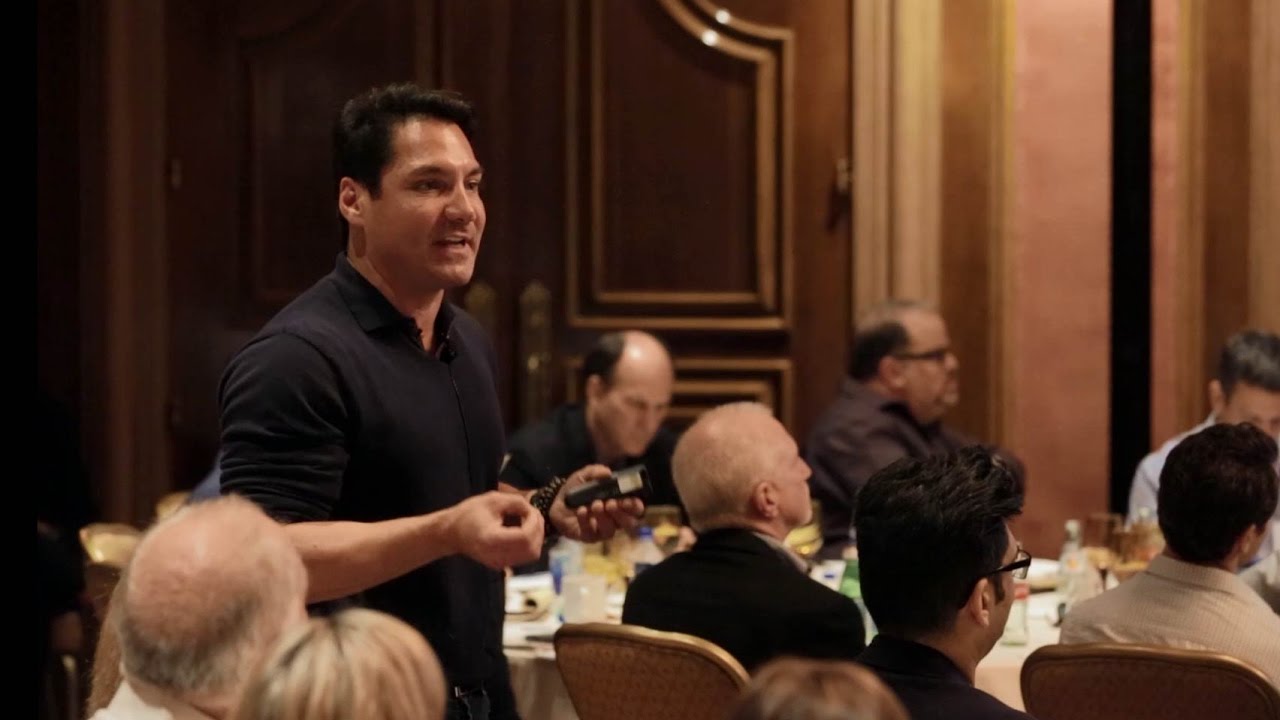
In this 20‑minute keynote to the Sage Executive Group, Dan Negroni tackles the growing tension between managers and the millennial generation in today’s workplaces. He opens with vivid cultural references and stark statistics – millennials now make up 40% of the workforce, 71% are disengaged, and their disengagement costs U.S. businesses $450 billion. He identifies the top three things millennials crave: capability (learning and growth), authentic, no‑bullshit communication, and frequent feedback. Negroni argues that the workplace’s depolarization stems from outdated assumptions and a lack of purposeful leadership. To bridge the gap he introduces the BRIDGE framework – Busting myths, Real relationships, I own it, Delivering value, Goals, and Empowering culture – and illustrates each step with concrete anecdotes from a commercial real‑estate firm, a police department, a law firm, and Intuit. Throughout he stresses servant‑leadership, accountability on both sides, and the need for managers to shift from telling to coaching. He concludes with a call to action: each leader should “rule themselves” by taking one concrete step tomorrow to connect with a millennial and begin depolarizing their organization.
Chapters
That's quick, right in. Now I'm not Google's number one rated speaker, so have some patience with me, guys. Can you believe it's December? And if you're in the Grand, you know it's December because they put it on here. What a crazy 2016 we have had. And it has probably been the noisiest year ever. 2016 with politics. It's been crazy noisy. Matter of fact, I still have a headache from the election. Who here has a headache from the election? Okay. The number 2 thing that people are sick about this year and have a headache from are hearing about millennials in the workplace. So, I'm glad I came to talk to you. We see it on Saturday Night Live, the skits. We see— the "Rent a Millennial." We see the "Sponsor a Millennial," if you've seen those videos. We hear about everything millennial, what they want, what they don't want, and it's crazy. And yesterday, just yesterday, I got to walk into my accountant's office, the pleasure of doing that, and Colleen was at the front desk. And Colleen said, "Oh, Dan, I'm so glad you're here. We have your book in the library. I read your book." It was super cool, but the thing is this: I didn't realize millennials were even an issue. Well, I'm thinking to myself, where has she been if she doesn't realize millennials were an issue? She said, tell me, I didn't think it was— they were that different from us. Tell me why they're that different. And I said, Colleen, Colleen, we wrote a book on it. Can we talk? Can we talk about what's going on with millennials in the workplace? And she said yes. And at that point, what I really wanted to do was play this little 2-minute video for her so I didn't have to talk anymore. So let me play it for you guys and see if we can talk. You don't have to buy it now because I brought you all copies. How do you like that? That's like, "Woo! Yes!" Who knows what a millennial is? I'm gonna tell you real quick because I only got 20 minutes. A millennial is 20 to 36 years old, born between 1980 and 1996. They are 83 million strong in this country alone. Today they are 40% of our workplace, as you saw growing to 75% of the workplace over the next 10 years. No one can stand them. Every time I say what I do, everyone says, "Ah, millennials." How many millennials do we have in this room? Who's brave enough? Okay, we got about 30-40%. Awesome. That's cool. The funny thing about the world now It's different. It's crazy. And we're at such a pace. We need these millennials to continue to do what we're doing. And the interesting thing is we totally need to lean in. The workplace is the most depolarized it has ever been. And age is a big depolarization. Everyone is complaining about millennials, what they don't want to do, how they want to come to work, that they want flexible hours, that they are entitled, everything you can think of. Is what they're talking about millennials. Even millennials, when I ask who's a millennial, say, "Well, I'm not really a millennial. I just, I fall in that age category, but I'm not like a millennial." They don't even want to be millennials. So the workplace is completely depolarized. Now I love them, and we need to put it back together. The challenge is this: this depolarization is costing us a ton of money, a ton of money. 71% of millennials in the workplace are disengaged. Cost us $450 billion. They are churning and quitting and leaving us at record rates, and it's costing us money. Retention is an issue. People like Suzy like that because they can continue to place people. But most other people don't like it that are running businesses. Only 22% of businesses have a plan to deal with these great millennials. And they are great. And we're going to teach you some tips on how to get along with them and how to look at them while we're telling you some stories. Here's the problem. This is the view of what most people have about millennials in the workplace.
That's the way it works. There are no credits on commercials.
But you got the Clio.
It's your job. I give you money, you give me ideas.
But you never say thank you.
That's what the money is for. You're young, you will get your recognition. And honestly, it is absolutely ridiculous to be 2 years into your career and counting your ideas. Everything to you is an opportunity, and you should be thanking me every morning when you wake up, along with Jesus, for giving you another day.
There we go. That's what's going on in the workplace, and we can thank Don Draper's straight from 1957 to tell us that. But here's the thing. I just don't get why it's such a big problem. Because they want what we want. And if you look at that chart, you can see it. What millennials want, the number one thing that we've researched what they want, with all that data that's out there, the most studied generation, is capability. What capability is, is the opportunity to learn and grow. They want to be taught. But look at what great leaders do to manage well. They teach. They teach their people. They grow their people. They create a succession plan. They guide their people. The number 2 thing millennials want in the workplace is someone to tell it like it is. No bullshit, authentic, real deal, not lie to them, guide them and help them. Look what great leaders do to manage. They know that the way to manage and lead is to formulate trust with those people that work for them. Look at the number 3 thing they want is feedback. Some of you say they want too much feedback, right? They want it twice, the same thing, and it's all telling them how great they are. That's not necessarily true. But great leaders that manage well They totally get it, and they know that communication is how you lead and guide and grow an organization with succession plan. Now, millennials want it all, which is not bad. They want purpose too. And there's nothing wrong with purpose and wanting to make a difference and wanting to work for a company that stands for something while you're making money. And great leaders that manage well They also know that the secret to managing well is being a servant leader. And there's a lot of purpose in that. So why is the workplace so friggin' depolarized? Why can't we just get it to figure out? Because where youth and experience meet is where magic happens. If we lean in and we guide the right way, We can get it done together. However, here's the hard part. It actually requires a shift in mindset from what Don Draper did to what's reality. We, as the managers, the other 70% in this room, have a fiduciary duty to create value and teach all these people that work for us. That's the way society has worked since the beginning of time. Socrates did it for Plato. And we have a duty if we want to get our businesses right to do that for them. And so it requires a shift in mindset. And by the way, I'm not putting it all on them. They have accountability— all on us. They have accountability too. But we need to teach them. We are not teaching the things this 6-step process is going to teach you in high school, in college, in graduate school. And then when they get to the workplace, they say— we say, "They don't know anything. When I was young, I knew it all. I figured it out the hard way 'cause I walked 3 miles in the snow to the bus stop uphill twice." Now, we know that's not true. And the question is, how do we bridge the gap and depolarize the workplace. And here are your 6 steps. We need to be— this acronym BRIDGE— B is busting myths. We need to figure out what are the underlying assumptions we're making about this group and break through those barriers. I'm gonna tell you a story about one of our kids in our— and I call them kids, so I apologize to the millennials in the room, but to me they're kids. I have 3 of my own, so they're kids. Mike went to his boss, and the boss needed him right away, 'cause he needed a project done by 5 PM. And it was a commercial real estate firm, so they had really fancy glass walls. And he calls Mike into his office, and he gives him the assignment. Mike leaves the office, and he can see Mike right outside those glass fancy walls. And Mike starts to go from cubicle to cubicle, to office to office, to talk with people. And the boss is sitting in his office, seething. What is wrong with that kid? These millennials, they don't take anything serious. How is he going to get me this project on time? And the challenge is, when you ask Mike what he was doing, He was getting the answer because he's realized that if you want to get an answer, go to people that have done it 20 times. And so he went from desk to desk to desk to figure out how to get a jump on the project. He was working. And that is the challenge that we're facing in the workplace. We are not assuming positive intent. They are smarter and they are better than us. They grew up with technology at their fingertips. And they have a clue. And if we invite them to the party and bust these myths, they will win. Here's the second thing in the real deal relationships being authentic. They love authenticity. Well, I'm going to tell you a story about— if anyone saw me speak at this particular event, we had a room filled like this and we had a millennial in it. I finished my speech and I said, "Any questions?" And the millennial in the room named Reza raises his hand, he's facing me because it's classroom setting, he turns around, sits on the desk in front of him, puts his big butt on that desk, stomps his feet on the chair and says, "I'm a millennial. I'm here to connect with you, to meet you, to show you how smart I am and to help you. And that's what we do and that's who we are." And okay, I'm a coach. So I was like, oh, shit. Right when we started the meeting, we learned that 85% of the audience were not millennials. I said, Reza, do I have permission to coach you? He said, sure, yeah, as he's still sitting on the table, by the way, with his feet propped on the chair. I said, let me ask you a question. When we asked everyone in the room what generation they were, they all said they weren't millennials. You just came here, you put your big butt on the chair, and you told them everything about you how great you were. Now I love that. That takes chutzpah. You guys know what chutzpah is? Okay, that takes chutzpah. You're confident, you're articulate, you care. But what were you trying to create with this audience when you did that? He says, a connection. I have my own business, I'm trying to meet them all. And I said, dude, you're in trouble. You just annoyed 85% of the people in this audience in a big, big way. You annoyed the heck out of them. Your job was to serve them, which is about them. You made it all about you. Deliver value to them. Invite them in. Stop telling them. Learn how to connect. Make it about the audience. What happened? The whole audience stood up and started to clap. My first standing ovation because I called out a millennial on the spot. That was my first one. Which by the way is something I was going for, but anyway, not in that way. What do you think Reza said to me when we were done? Thank you for the feedback. Thank you for the feedback is what he said to me. And that's what I'm telling you. If we're real with them, they figure it out, they help. Nobody cares about how much you know, John Maxwell said it, until they know how much you care. He thought I cared about him. I was straight with him, no bullshit. I got him to the point where he needed to be. I taught him the best lesson he probably was going to learn that day. He leaned in. Next story. I, I own it. Owning your own stuff and cleaning your side of the street. The police department, the San Diego Police Department, is 73% millennials. 73% of the police officers are between 20 and 36. So be careful. So Captain Sandy comes to my office and she talks to me and she tells me a story. Dan, I just went from community outreach to investigation. The first day I'm transferred, it's a Monday. I go into the office, I have boxes everywhere, it's crazy. A millennial detective comes by and says, Captain Sandy, I need to talk to you about my career right now. Do you have a minute for me? What did Sandy do? Absolutely, exactly. She said, absolutely, I'll talk to you. Well, Dan didn't like that as a coach. Dan said, "Sandy, what were you teaching him by solving his problem right there like his parents have done, giving him a trophy for everything, telling him how great?" How about saying, "Hey, I want to give you the best lesson I could ever give you in your life. The reason I'm captain after 27 years is because I figured out the secret to life is making it about others. You see all these boxes around?" I totally care about you. I want to go to lunch with you next week and help you with your career. But look at this. The way I got to captain is about making it about others and understanding situationally what is going on. Look at this. How come you're not asking to help me? How come you're not asking to help me? I hope that's the best lesson I taught you all week. And I care enough to do it. But Sandy didn't do it because in their culture at the police department, if you don't fix a millennial's problem on the spot, they complain about you. But Sandy said to me this. We weren't done. We kept talking. I like to talk. And Sandy's sitting there and she has her aha moment and she says, "Holy, I just thought of something. If I was at home and that was my 16-year-old, I totally—" would have schooled him on how to act. And I said to her, why didn't you do it here? And what she said to me is, next time I will, because I will make a difference. She told me the story about the culture didn't permit it, but she didn't care. She wanted to make a difference. And what she focused on was letter D, which is delivering value. She delivered value to that young detective like nobody else has done. The interesting thing about millennials is when I go and speak at USC, UCSD, and we teach millennials about how to be their best selves and make it about others, these are the questions I get. "Hey, Dan, how do you get paid what you're worth in the marketplace?" It's like, hello? I mean, who are you is what you really want to say. But instead, what I said to the kid was, hey, It's not about paying you what it's worth. It's what, what are you worth paying? What will you do for them? What are you going to achieve for them? Who are you going to be when you get there? That's the question. Go do a great job. Kick butt. Deliver value. And the world will be yours. So the coaching is bidirectional in this method. G is about goals in mind. And the funny thing about millennials is they're going to push you on the purpose. We grew up with SMART goals—specific, measurable, attainable, realistic, and timely. They want them to be smart and meaningful. What's wrong with that? It's pushing us. It's awesome. The last thing is about E—empowering a culture and getting it down. And this weekend I had the good privilege to be with 50 lawyers in a room— ouch— and to train them on business development. And the second day, after we trained the whole firm, we got all the partners together, and I was saying, hey, all your associates came up to me at dinnertime and they were asking for coaching, and these were all the things they were asking. Why aren't they coming to you with this stuff? What's wrong with you? And so one of the big best business developers with the huge buck Stands up and says, this is bullshit. I'm totally frustrated. I tell them what to do every day. I tell them how to build business. I tell them I'm here for them. I tell them what they can do, and they don't take me up on it. And I said, whoa, big guy, sounds like an awful lot of telling. Maybe you weren't speaking to them in a way they wanted to hear it. And by the way, when you're speaking to them, if you want to create a succession plan for your business, it's about them, not about you. And we had this awesome discourse. And then the other partners started, well, I do it a little bit differently and I do it a little bit differently. And that's about do you have a culture that allows that? The day before that, we were fortunate enough to be with Intuit and they have this amazing feedback program. It's an amazing company with all the things they do. They do drive-bys in the morning. They're assessing their feedback. And their approach was completely different to show the night and day juxtaposition about how to do it right and how to do it wrong. This is just tips. It's just 20 minutes. Hopefully the book will provide you some more value. But here's what I want to leave you with. This is about you guys, every single person in the room. Why do people leave jobs? Why do 50% of millennials think they're going to have a new job next year? Because they're quitting their bosses. They're quitting you. That's what they're quitting. It's the number one reason people quit their job. And what I'm going to ask you is, what are you prepared to do about it to guide and teach them in a way like never before? This next minute clip are kind of— makes me think about the things that it takes to do that and how much outside work and learning, just like being here. Take a look. Okay, I totally love that saying, "Rule yourself." And I'm going to ask you this: What are each of you going to do tomorrow to rule yourself to connect with a millennial to depolarize the workplace? It's that simple. Thank you. Thank you, sir. Thank you.