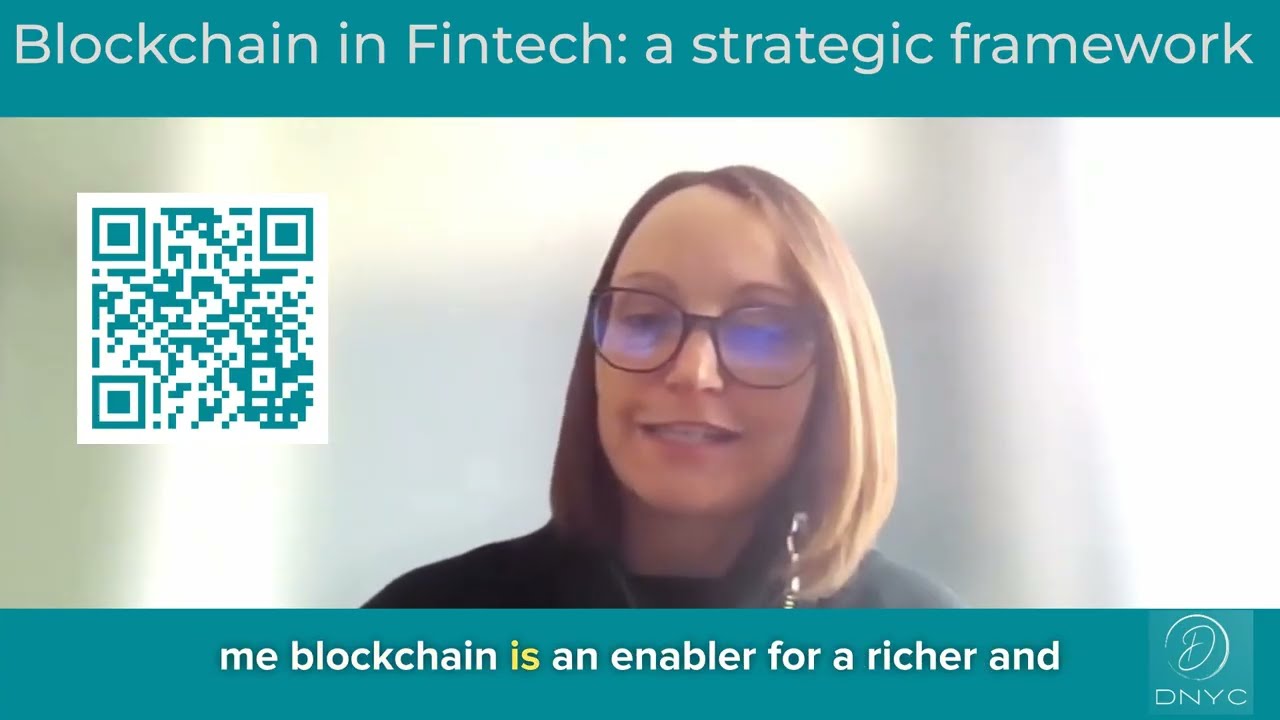
Daniela Sozzi explains blockchain adoption in finance. Plan three to six months for discovery, expect hidden costs from partnerships, and choose between public networks like Ethereum or private blockchains. The real challenge is balancing speed and quality while managing regulation, cost, and technical needs.
Chapters
Excellent. Thank you so much, Daniela, for that overview. It was really interesting to listen to. I'll kick us off with our first question. What are the risks of integrating a blockchain technology without thoroughly vetting if that technology is the right fit for your organization, your business goals, and how long do organizations usually spend in that pain point identification process?
Well, it's a very, very good question. Reputational risk, depending on how public you're willing to go from the onset, the risk of failure has a significant impact, particularly if your organization is publicly listed or it's out there among the top names that really attract attention from regulators or from potential investors. How long do companies take with discovery phase depends on the size and the scope of the transformation. So these are boardroom decisions. If the transformation is small, I would expect a period of 3 months. It depends as well on the maturity of the organization. So if the organization is already set up for this type of programs, then it can be probably more efficient in carrying out the preliminary phase because there isn't that much surprise that comes through the analysis. More immature organizations first have to find their own feet. I would say You should not take more than 6 months simply because the technology evolves, clients evolve in their preferences and demands, the risk of missing the opportunity altogether.
That makes sense. Yeah, technology can evolve even within that pain point analysis period.
Waits for no one.
Exactly. Second question here. I know you mentioned that sometimes there can be unpredictable costs when implementing blockchain technology. Are you aware of any common stages of the implementation process that those unpredictable costs can arise?
I was mainly referring to external costs. So the costs of partnerships, the costs that are related to the use of the blockchain, all of those should be constantly monitored during discovery phase, but also during implementation phase. I struggled to be more precise. Because as I mentioned, there are so many different ways that blockchain integration can be implemented. And therefore there are so many different nuances of solutions that have different cost structures attached. This is really part of an intentional delivery, always having in mind what the solution looks like and then being backed and supported by technical advisory that has this broader view of not just the technology, but also the economics of it. I see.
Okay. Next question here is, I know you mentioned that like the hybrid solution of combinations of different blocks is the most advantageous in contrast to just having one type of block, more of a pure solution. Are you aware of what are the most common combinations generally in the industry?
It's more by category, whether it is large blockchain networks, the likes of Ethereum or Solana, which is the blockchain on which several different assets can be built, exploiting the validation of further nodes of the chain. So those are the ones that are more often quoted and cited. There are big players out there that decide to develop their own blockchain purely to be used for their own purposes, purely in-house for various reasons, which are usually the delivery of in-house smart contracts so that different functions in the organization can expedite all their processes because the validation is done on the in-house blockchain. These are still good projects. They compare like for like, but that's the category is an existing blockchain that we can choose to exploit to obtain our solution or developing something 100% controllable in-house, but cannot be shared with anyone else because it's designed to be private.
Okay. I see. All right. Our next question here is, so you mentioned that blockchain technology isn't always the right solution for every organization. So even if a company isn't ready to integrate blockchain right now, is there anything they can do to set themselves up for success so that when they eventually do start integration, you're more set up for success.
Yeah, I would say start a cycle to improve and enhance all your processes regardless. 10 years ago, everyone was talking about migration to cloud or digital transformation. This is basically continuing on that journey and making sure that already that aspiration towards efficiency and towards stream is there, which can be achieved by blockchain. But as the point I made, it doesn't necessarily have to be achieved via blockchain. That journey towards efficiency, it is something that should be done in any case. And It's still possible to partner with suppliers that use the blockchain while not being a director of blockchain, because the supplier might have that bridge. We just want to be in a position to even exploit bridges that someone else provides.
Definitely. Perfect. I'll read our last question here. So you mentioned that some of the biggest challenges for integrating blockchain over the next couple of years will be those regulatory constraints, differences across markets, the cost of integration, suitability of technologies for your business needs. Is there one that you think will be the biggest challenge that will make it harder for organizations to integrate blockchain?
No, none of them individually would be the hardest to implement, at least in my opinion. But I think the combination of 2 or more of them can definitely become a real challenge for companies that are not prepared to this pace of change. The selection in the competitive arena is not so much between adopter and non-adopter, but those who can adapt and can change as fast and those who cannot. The example that I was making, you see companies that started as very early adopters of the blockchain, but they didn't do it the right way. And they are in no better position now than other players that have not done any blockchain implementation at all. So there's a paradox there to mull over.
Yeah. So balancing speed and quality will be the challenge going forward.
Absolutely.
Well, excellent, Daniela. I really appreciate that presentation and appreciate you responding to our audience questions. So that'll bring us to a close.