Annabel Karmel’s soulful journey: How a mother’s story became a global movement
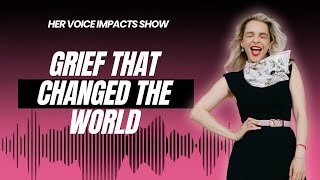
Annabel Karmel, a former harpist, turned her daughter's death into a mission to improve children's nutrition. Her first book faced 15 rejections before selling 6 million copies and spawning 51 cookbooks, a food brand, and a global movement on weaning, allergies, and early eating habits.
Chapters
There's always difficult times in a career, but do what you love and do something where it's a niche. I think the opposite of success is not failure. The opposite of success is not trying. You can teach your child to be a fantastic musician if it becomes part of everyday life. Everybody wants their child to have a healthy diet, whoever they are. When you have a child, it's the most important thing. If you don't believe in yourself, who is going to believe in you? And if you don't push yourself out of your comfort zone, you're never going to be a true entrepreneur.
Welcome to Her Voice Impacts, the first episode. My name is Daniela Eon, and I'm here to see the women's voices being amplified, especially in the area of arts, entertainment, culture, creativity, entrepreneurship, leadership, even tech and innovation. On the Her Voice Impacts podcast, we interview women from all around the world who have major success, who are influential on the global stage. They all have a story. Every woman has a journey on how her voice was amplified. She's here to express how she got to where she is, and also maybe to give you some insight into you taking those first steps out into fulfilling your life's mission, all with purpose and passion. Her Voice Impacts is all about you coming into your destiny, but having these women who have walked the path, who are major pioneers and catalysts, and are also doing their part in the world to even heal the world, bring more philanthropic energy into the world, and also making sure that they leave a legacy. So without further ado, I have the honor of having Annabelle Carmel with me, and she's an absolute powerhouse. And first of all, thank you for inviting us into your—
That's a pleasure. Wonderful, wonderful home.
You have an amazing story. Story, and I'm sure it's going to inspire a lot of women. And at the same time, I have heard that females and mothers in particular have said that your cookbooks are the Bible in their kitchen. That's extraordinary, isn't it? You've built this empire, over 6 million copies sold worldwide. And also, please tell me if I'm wrong, 47 books?
51. Okay, crazy, isn't it? A new one coming out in February called Finger Foods. Yes, I'm always writing a book, literally since I wrote my first book.
That is an absolute amazing achievement. Annabelle, please, I would love to know the journey about this and how this started, because I'm sure that there is an inspirational story behind it.
It was a tragedy actually that got me into writing books. I was a musician, I played the harp. And I was very happy being a musician. I got married and wanted to have a child. It took me 2 years to get pregnant. Gave birth to a little girl called Natasha. I was over the moon. She was perfect, absolutely gorgeous. And then one day when she was 3 months old, she didn't look quite right, and I called in a doctor. Actually, I took her to see him, and he gave me this lecture about how first-time mothers worry about their children, but actually they're much stronger than you think they are. And I always felt embarrassed about having disturbed him. Went back home. The next morning she did not look at all good. Took her to another doctor. He examined her, then he said, 'I've got to go and see another patient,' just left me for 10 minutes. Well, he didn't go and see another patient. He knew there was something wrong with her, and he was trying to get her admitted to Great Ormond Street Hospital, which is for seriously ill children. And he came back into the room saying that he had tried to get into that hospital, that there was something seriously wrong with her. He thought there was something wrong with her brain. And I actually went to St. Mary's, which is another hospital, and all that day they did lots of tests and eventually did a CAT scan. They called me into a room, it was like 5 o'clock, and they said that she'd never be normal again or she might die. And that's when she got transferred to Great Ormond Street Hospital because she was on the critical list. First day she was in a normal ward, second day she was in intensive care. For 5 days she was there, and on the 5th day they said they want to have a meeting with me. She was on a ventilator at that stage, and they told me the thinking part of her brain had gone. And they put her in my arms, they put a little dress and she died. It took 4.5 hours for her to die. It was just the most terrible thing. It's something that you never think will happen to you, and I do talk about it because I think a lot of mothers don't understand that when you have a very, very young child, and this is not very common but can happen, that they're very vulnerable. And that someone had kissed her with a cold sore that then developed into encephalitis, which is swelling of the brain, which is irreversible. And I always try and say to mums now— I work with the Lullaby Trust, which is an amazing charity, to keep your children safe, not let people touch them, kiss them when they're very young, because they don't have the antibodies to be able to deal with infection. And I was told when I left Great Ormond Street Hospital, like, if you have another child, just take her to the park, you know, don't let people hold her, keep her to yourself until she's a bit older. And I did that with my second child. Because it's something that you think will never happen to you. But it happened to me. And, you know, I can't even tell you how I felt. It was beyond—
It's beyond emotions.
And all I wanted was another baby. And it was so hard at that time. And I wrote my book because my second child was the world's worst eater, a boy called Nicholas. I didn't have great joy with doctors. My doctor didn't come even though I told him I was in labor. He told me it would be a long time. He was wrong. I went upstairs to get my things. The baby's head came out. And I said to my husband, I think I'm having the baby. Anyway, he didn't actually believe me until he came in and the head was already out. And then, uh, the baby was born, still attached by the cord, and no one came for like 2 and a half hours.
Oh my God.
So it was also quite worrying. I thought I might lose my second child, but luckily he's a strapping 35-year-old now. Oh, just got married, and he was literally the world's worst eater. Now he eats everything. Does he? But I, I was running a playgroup in London, and all the mums had young children, and I was saying to them, my child doesn't eat, it's like, what, right, your child? And so many of them had children who were bad eaters, or very fussy and very difficult, and I was making up all these recipes for Nicholas, and I gave them copies of these recipes, and every week they would come back and say, wow, these are amazing, my child loves them, what else have you got this week? And I was giving them out like for a few months, then they said, you know what, you should write a book about it. There's me, I can't even type, and I'm thinking like, how can I write a book? You can play the harp though. Yeah, but that's very different. Anyway, so I thought, you know, I wanted to make some meaning from her short life and sort of give something back. It's just you have this kind of— why did she die? Like, why was she born? And you want to make something of it. So I started to research child nutrition. It's extremely difficult because all the experts I asked were giving me difficult, different opinions.
Yes.
Like, when to introduce peanut butter. And it was really hard. So I worked then with the Institute of Child Health, which is attached to Great Ormond Street Hospital, which is the research arm. So everything in the book was based on scientific research. And I wrote this book. This is The Complete Baby and Toddler Miracle Guide.
Is this your very first book?
This book sold 6 million copies. Came out in 1991. My word. I sent it to 15 publishers who all turned it down.
Now, how did that feel?
I couldn't get— oh, terrible. And then I couldn't get a literary agent. And eventually I gave it to somebody I was playing tennis with, who took it to Frankfurt Book Fair. And a big American publisher, Simon Schuster, published it. Then Random House published it and it sold out immediately and it made my career. This book has been the Bible and it's still the number one best-selling book on feeding children worldwide.
And so imagine you hadn't pursued and kept going after that 15th try.
Well, I could have. I almost did.
It feels like an endless audition, doesn't it? Like it just doesn't end.
It's very hard to get started, but I think the why you do something takes you through it. And the why I did something was for Natasha and it was a passion. And I did it because I loved it, and I love cooking, and I love eating, and I love to see children eating good food. And after all, one, one in three of us will die of a diet-related disease. So the best thing I could have done is basically instill good eating habits in children. Yes. And for me, Natasha brought that to me, and that's my life's work now. That's what I do every day. I think about how do you get children to eat food like broccoli or spinach, or, you know, the things that they may not necessarily love. And you don't want them to just eat chicken nuggets and chips. So I make healthy food so delicious that they don't want to have junk food.
Wow. And I guess this is a mission for you in your life. It's not just— It is a mission. —food itself. No. There's something intrinsically inside of you that believes that you have to pursue this. Is it like leaving a legacy in a way?
It is my legacy, and it will live on beyond me because these books will carry on. But my daughter works with me, so she will carry on, and she loves what I do too, and she loves eating and cooking. So it will carry on, I'm sure. And I have 3 children now. So after Nicholas was born, I had 2 girls, which was lovely. And my life has been, I mean, I do so many different things now. I do children's menus in hotels, but I make sure it's beautiful, healthy food. We do the Jumeirah Carlton Tower. We do so many hotels all over the world.
So you've expanded, because I remember watching a little video and you had said something about, I went from the kitchen table to the global stage. And I thought, what a quantum leap that is, because to some people they hear that and think, How on earth do you do that? What mindset did you actually have to put yourself obviously in front of camera? I mean, I've seen you doing live cooking as well. Like, how does this happen in you?
I think being an entrepreneur, it's not, it's not a part-time job, it's not a full-time job, it's your whole life. It's literally, you cannot separate yourself from what you do. That's, and you have to have a passion for it. Yeah. And I was quite successful in UK supermarkets, so we supply all of the UK supermarkets. And then one day, because I'd done quite a lot of tours in Australia, I was rung up by the number one frozen food company in Australia. I'd never— like, Australia was not on my radar. You couldn't think of somewhere further away. And they said, would I come and develop a range of food for them that they could put into Coles, which is a very big Australian supermarket, which I did. And it was the biggest launch in Australia. It was mega. And now we've been in Australia for 10 years, we're in every single supermarket, Woolworths, Coles. I go there 2 or 3 times a year and everybody knows me in Australia. I'm always surprised, like, because every single supermarket stocks my food, my books are popular there. You just never know. I do P&O cruise liners, I do the Sunny Resort in Greece, which is an incredible resort. How does it feel? 29 restaurants in it.
It's like being known in that way, I mean, I guess it's normal now. Like, in the beginning it must have felt a little bit—
I think it gives you a platform to be able to do good things. Yeah, I love that.
I do a lot of work for charities. It's wonderful.
Look at all these beautiful— I suppose my mission is like to kind of erase obesity in children, because children are a blank canvas. They don't know what salty food is or sugary food. And so if we start off with good eating habits, they won't want to eat like crisps and sugary nuggets. Well, if they're not introduced to it, I guess. No, exactly. So if you train your child from the very beginning, which is what I do— my children love salad. They love the food that I make. They don't want cakes and biscuits, because the healthy food is so good. It's unusual.
You just make it very tasty, I think.
I make very good salads. But you can do that, anyone can do that. And you know, everybody in the UK uses my book, literally. And they're easy recipes, but the biggest thing that I've done recently is my app. So an app is always with you.
I've seen that, yes.
The great thing is like it's always with you because it's on your phone. So if you're in the supermarket and you can't think of what to make, you can just put chicken and broccoli in and that's what you're going to have in your fridge maybe, and all the recipes will come up.
Oh, it just shows you.
It's so easy.
How cool is that?
Or you say I want to make a 15-minute meal, I want to make a family meal, or I want to make a dessert, and there's like about 1,250 recipes on the app.
And these are all inside the app?
That is phenomenal. And it has a complete digital weaning course, how to feed your child in the very first year, from the very first purees or finger foods all the way through how to deal with fussy eaters, how to deal with allergies. It has an allergy tracker so you can take a picture of your child's reaction, then you write down what they ate and how soon after that happened, so when you go to your doctor, he can help diagnose— that really helps him diagnose what that food is that's caused to trigger that reaction in your child. A lot of people think their children are allergic to something, but they're not, and then they take that food out of their diet, which isn't good. Oh, wow. Yeah, so it's really important to know the truth about allergies, because it's not a very big percentage of children that have allergies. It's only about 6%. A lot of them will grow out of it. And the interesting thing is that egg allergy is the commonest. Yes. But if a child can't eat something like scrambled eggs or boiled eggs, but you put eggs into a meatball or a cake—
They can't tell it's in?
Well, it's not that they can't tell it's in. A baked egg they can often tolerate, and by having that small amount of egg, it helps them grow out of their egg allergy. So in my day, it was avoid all eggs in anything. So avoid meatballs with eggs or chicken nuggets dipped in an egg, and that was completely the wrong advice. Because a tiny bit of egg helps a child to become immune to the egg allergy. It's interesting. Not for everyone, but for a large proportion of children, so they can grow out of it.
It's amazing how you know all these things.
Like, I've been doing this for over 30 years.
In your brain. And Annabelle, I want to ask, are you constantly always thinking of something new you can come up with? Like, is it, is it something inside of you? Is it an intuitive hit? Is it spiritual thing? Is it just that you are so driven by this that you must complete the mission?
I think it's my— it is my life's mission and my passion, and I always have new ideas. Yeah. And I'm very lucky that, you know, my life is really busy and I do amazing things, that we have a huge Christmas event which is in the Jumeirah Carlton Tower. We invited loads of influencers, and I'm going to Turkey to visit a vegan factory after that, and It's just opened so many doors. Yeah, it's such a global business now because everybody wants their child to have a healthy diet, whoever they are, whatever their budget is. Anybody can do it because honestly, like, buying prepared food is more expensive than cooking broccoli and a piece of chicken or fish, which would be much more healthy for your child. But I can make it tasty. I can show you how to make it really tasty in a very easy, quick way.
Well, I did see you in action, by the way, at Taste Abu Dhabi, which we just came back from, which Abu Dhabi is just an absolute—
I was blown away by to be honest. It was amazing.
Centerpiece of creativity, and also I think it's going to be the next up-and-coming place for a lot of entrepreneurship and innovation, which we're all very passionate about here. I want to know, because at Taste Abu Dhabi I saw that there was a wonderful connection between family and children, and I think, is this something that you're passionate about as well, bringing the family back together? Because When you were doing the show, all the kids and the parents were so into it.
Yes, well, it's because I write books on how to cook for children. So two of my latest books are these ones. So this is my first cookbook. So like literally, when a child is very young, they can still cook. They can mix, they can roll out dough, they cut out shapes. And they're learning maths because they're learning about time, measuring, ingredients. But also they're bonding with their mum or their dad because they love doing it. All children love to cook and they like being part of the adult world. So this is the very first cookbook and then you graduate to this cookbook which is the Fun Fast and Easy Children's Cookbook which has amazing recipes in it and really fun, fun pictures. Everything is photographed and I think it's really, really important to teach children how to cook and that really has to be done at home with the mother or the father. And I used to have cooking birthday parties where there was no food and the children made their birthday tea.
They made their birthday tea.
And in Abu Dhabi, as you saw, I was cooking with the whole family. Like, the children and the mom were with me, and I was demonstrating how to cook, and the children absolutely loved it. Yeah, I love it.
I was quite amazed by the interaction because, you know, sometimes you get kids and parents just not on the same page, but there seemed to be a great energy about that. What were your thoughts about being in Abu Dhabi? It's itself.
And I thought it was amazing. It was incredible. So I was very lucky that we had a lot of excursions. So in the morning, before I went to do all my demos, I went to the Louvre, which is— I mean, the art is one thing, but the building is even more incredible than that. I agree with you. It's so stunning, that roof that they've built. And also seeing the sea, it's incredible. And some of the— honestly, the works of art are stunning. And now they're building the Guggenheim, so it's going to be a real center there. I also went to SeaWorld, which only opened a year ago. I couldn't believe it, how they built that. Unbelievable. I saw the dolphins and at that aquarium, which is just— I've never seen anything like it. It's absolutely huge, and there's like sharks and like all sorts of fish all above you, below you, everywhere. And it's just the most incredible place. It's amazing. And then I went to Ferrari World, went on the go-karts, did the simulator. You did it all? Yes, I went on that thing which is like gives you a tour of Italy, and it's just an absolute paradise. I mean, I didn't go to Warner, you know, with their stuff, what do you call that, sort of children's world. Yes, yes. So I didn't have time for that, but it was amazing. So, and also Abu Dhabi was amazing in the taste of Abu Dhabi. So I thought, you know, I tried lots of the food in different restaurants. I did too, and I thought it was very good. It was very good. Quality is very good.
I was going to say the standard of the quality is very high. High. Yeah. Um, what do you think about the, the energy around Abu Dhabi and what you feel might be coming up there, as in sense of like entrepreneurship and female leadership or creativity in some sense? Because it seems to be a very open place for that at the moment.
Definitely. Um, I think like every time I go there, something new is huge has come up in no time at all. Um, I mean, my hotel was actually on the racetrack, so I was on Yas Island, so I could see the cars. Literally whatever you do, you've got to feel Everything. Yes, and I went to some amazing restaurants. The food is very high standard. Yeah, it is. Yeah. Um, but yeah, I spoke to a lot of women there and they are, you know, intelligent women and they all kind of have their careers. And I think it's really important to inspire other mothers. Yeah, tell us about that. Not feel like just because they have a child that's the end of their career, because I think sometimes it was the beginning of my career, like when I had You know, when I had Natasha, never thought about having food as a career. She brought me into that. And very often you learn a lot through having children, or your children introduce you to something. But I always think it's important to have a passion for what you do. Don't do it because you make money, because that's not going to get you through the difficult times. And there's always difficult times in a career, but do what you love and do something where it's a niche. So for me, my niche was I just do children's food. I do family food and children's food. And that really wasn't covered very well because when I tried to find a book to feed my son who would not eat, it was like, put a piece of liver in some milk and poach it. Well, he wouldn't want to eat that. And nobody really cared about making something that's absolutely delicious. And I think we are catering for the most discerning gourmet, which is a fussy toddler. Very. So we have to make good food. It's very important. And I also think that children's menus in hotels should not be chicken nuggets and chips. They should be roast chicken and vegetables. I know, I can't look at this and say, I wouldn't eat that. Let's make them better quality. Yes. Because everywhere you go it's almost like, oh, it's just a kind of the same. It's burgers, pizza, chicken nuggets, and then children think that's the only thing they can eat. And then when they go to somebody else's house, they make them something fresh, they won't eat it because they're conditioned to eating that food. Absolutely. It has to be covered in breadcrumbs. And I want to dispel that and change it. And I want to stop obesity in children because I think you can in a simple way. Yes. And you don't have to spend more money on the food you make or spend a lot of time in the kitchen. But I think I have simple ways and, you know, informative ways so that a mother or a father is empowered to know how to create good food for their child because they— it's the apple of their eye. When you have a child, it's the most important thing. Yes. And I just think, you know, seeing overweight children at the age of 5, it's very terrible. Or having children of the age of 3 having to go under general anaesthetic to have their teeth extracted because they're eating sticky things, not necessarily sweets, but sticky dried fruit made into a fruit winder. People don't understand that even 100% fruit in the wrong way is not good for teeth. Or giving them juice in a bottle. All these things, just to know about them. Or to understand that if you eat iron, like in something like spinach or porridge, they need to have vitamin C at the same meal or they can't actually absorb the iron. So if you have porridge and orange juice or strawberries, that works.. But if you eat spinach and spinach alone without something with vitamin C, it won't give you iron. So these little things are really important to kind of get parents to understand and understand the critical nutrients, one of them being essential fatty acids. So oily fish is very important from a baby's point of view from 6 months because it's a very important part of the brain. So from 6 months— Yes, brain development. Yeah, a baby needs oily fish twice a week. Yeah, I know people don't know that. And they don't give it to them, and then their brain doesn't develop properly. And it's very important. You can't get that time back. So these, these are simple things to know. And then I make really easy, amazing salmon recipes that are very quick and easy to make to make sure that children get that essential fatty acids. There's no real food other than oily fish that gives you that.
This is amazing. Like, you just like got this educational thing about you as well, because it seems to just come so easily to you, obviously, because of—
yeah, but in a non-medical, non-complicated way that everybody can understand. And everybody can make within 10-15 minutes because that's life, we're all busy.
Tell us a little bit about your hidden musical gift because I do see a beautiful harp behind me and it is one of the most amazing instruments. How did you start to play that thing?
My mother wanted me to play the harp and I went to an exhibition and I think that small harp was draped with some material. It wasn't, it was not a musical exhibition. And I saw the harp and I thought, oh, that looks interesting. My mum bought that. I started to play that. Then I graduated to the big harp, and then I started to win musical prizes like a silver cup. And I thought, this is good. And I just, you know, as you have to push children at a young age to play, but once you become good at it, you start to enjoy it. So I became a professional musician at the age of, uh, 17, 18. I was still at school, but I started to play in hotels in London. And then I traveled the world and I played with— traveled playing the harp. I did. I went to Las Vegas, I went to Monte Carlo Sporting Club, I made albums, and it was amazing. And when I had my children, I didn't want to play the harp because it's so big, so I got them to play the violin. But I did Suzuki method where the mother learns to play the violin and helps to teach the child, and they all became phenomenal musicians. And my son, amazing, at the age of 13, played at the Albert Hall Concerto. Really? Yeah, because you can teach a child to be a fantastic musician if it becomes part of everyday life. Like, when you think about it, children learn their mother tongue, but we don't consider they're a genius or they're clever. They just— you know that they're going to learn it. The same as an instrument. So if you play music in the car when you're taking them to school and you sit and practice with them, they all become very good. Wow. So they didn't become professional musicians, but they all love it. And the thing is, my two daughters play with my mother, who's now in her 90s, I think it keeps her going.
This is a family thing, isn't it?
It gives us something to practice and something to do.
So everyone's cooking and with the harp.
Yeah, but it's nice. It's given her, you know, a meaning in life to play the piano for my children to play the violin. That is beautiful. It's lovely.
So do you think by playing the harp and being in front of a live audience has helped you even now to this day being able to present and being— I do.
It was good training. So does it help you with confidence? Definitely. Wow. Definitely. Because you go in front of people, and if you don't believe in yourself, who is going to believe in you? And if you don't push yourself out of your comfort zone, you're never going to be a true entrepreneur. Entrepreneurs will do something knowing that it probably will fail, and 90% it will fail, but it might get them to the next stage. And I've done things that haven't worked, but I think the opposite of success is not failure. The opposite of success is not trying. Wow. And entrepreneurs will try things. And if you don't try something, you don't know if it's going to work. People in a focus group will give you lots of opinions, but it's only when you actually produce it and people have to buy it that you know if it's going to be a success or not. My goodness. And not everything will work. And also, to be an entrepreneur, you don't need to be an inventor. People think, oh, I've got to find something new. Coming to you and we all, like— I was not an inventor. All I saw was there was a gap in the market. There was no good books on feeding children. Yet I felt that this is the most important time to have good food, when they're growing. Why all these amazing books for adults and nothing for children? Nothing for kids. Yes.
So it was— So you saw something and it just shone out at you, I imagine.
It's a niche, isn't it? It's a niche. It's a gap in the market.
And then did you think in some, like, this is how I'm thinking, you know, you've got this musical ability, you've got this great mindset, you've got confidence, I'm just going to put those together, why not? I mean, I can do this.
Because it does take confidence to do it. I didn't have the confidence to do it because whenever he turned me down, I thought, well, I've spent 2 and a half years writing this book and it's not going to work. I've wasted all this time and I don't know why I did it. And that did occur to me, but then I thought, well, how did you overcome that? It was like, I want to have a legacy to her. I want something to come from my life. So I carried on and I just told everybody about what I was doing, even my tennis coach. And she was the one that got me into You know, getting the book published. Affirming it.
It's done.
And when the book was published, I thought no one would buy it. Also, I didn't have— no, I didn't think it would sell because the reason publishers turned me down is no book on feeding babies had ever sold well. It was so uncommercial. It was the worst subject matter for writing a book and getting a publisher, to be honest. So I don't know what I was doing. But this book, it broke that and became the second best-selling non-fiction hardback book of all time in the UK. When it was published. It was like unbelievable. It was unheard of. They said people just buy baby food. But the thing is, it's older than the baby by the time the baby eats it. That can't be good.
Well, it's processed. I never thought of that.
It's got a shelf life of 18 months, you're giving it to a 6-month-old. Eee! No. Why would you want to do that? We don't eat food like that. Why don't we just steam some carrots? They're so good for you. Or give them a banana. I mean, it's better. But we're conditioned into thinking that we're going to buy this pouch or this jar from the supermarket, and actually a lot of the nutrients are lost in the processing. Why? It doesn't make sense. And all these snacks that are available, they have nothing in them.
They're empty.
Well, when it says it's got carrot, it's got like 2% carrot.
Just eat a carrot. No one reads all the little fine print in there to see, to realise. They just, oh, look, big letters saying healthy.
It's puffed up corn snacks with no goodness in them.
Annabel, I want to know actually what advice you could give Or even if in a sense, like, even maybe going into a little bit of spiritual advice. I'm sure that you've had to have faith during the time, obviously with the tragedy. Yes, definitely that. Getting through that and then getting the actual, like, passion to rise up in you as a woman to create this. Like, what can you tell the women who are listening? What can they do if they're in this position where they think these things?
So, this is what I think. I think that a lot of women have quite good jobs and have a lot of confidence, then they leave the workplace and they have their children, yeah, maybe take 3 or 4 years out, and then they're like, I'm not sure that I can go back and I don't want to do what I did before because it was very long hours and I want to be with my children, which I wanted to, so I thought writing was good. And eventually that career can— you can take more time in the career when your children are at school, so that's what I thought of. I wanted to choose a career where I could still be with my kids. Secondly, like, you can't You can't start a new beginning, but you can change what you're going to do in the future. So if you're doing a job that you're not enjoying, think about what else you want to do, but maybe not leave that job immediately, but just do that part-time and then find out if you enjoy that. But I don't think you can really research something by sitting at home. Let's say you want to open a café, I would go and sit in a café where you want to open one, see how many people come in, you know, and how long they stay there, what they order. That's the only way you'll know if that's that's going to be successful. Throw yourself into it. Yeah, do the research, do the research, and then find, find somebody who can mentor you, somebody who's been in that business and can tell you all the pitfalls. That's really good advice because I think you'd be surprised how many well-known people would help you and tell you, well, that is not a good idea because of this, instead of making a whole load of mistakes. And I remember when I came into wanting to do food for supermarkets that I hired a consultant to find me the factory, and he gave me one very good piece of advice. He said it was shelf life that destroys a business. So you have a short shelf life of 7 days, the food may go off and you get huge wastage. Yeah. So we extended the life of our food as much as we could, though it was still healthy. And now I do a lot of frozen food as well, which is the best form of preserving food because it's completely natural. You have nothing in it, no E numbers, nothing. All the nutrients are still in there. Exactly. So it's completely locked in. So that's important. And then that has a shelf life of 1 year. So think about that. Wow. So I, you know, I think that mentoring is important and also to believe in yourself and to push yourself out of your comfort zone. Oh, that would take advice. And also, uh, don't think you can do it all because you can't. You can't. You need people to help you. And don't mortgage your house, don't put your life savings into it because when you start a business, that's a really good point. Money to start with, you lose money.
Don't spend all your money at once.
No, you don't. It's hard. It's hard to build a business and make it profitable. Take little steps.
It takes time. That's amazing.
Yeah, it takes time and a lot of courage and a passion for it and a love for it. It has to fit in with your life. I had children. I was spending a lot of time in the kitchen cooking. I love my children. I wanted to be with them. I'd lost a child. It fitted in with my life. It was authentic. And be authentic. That's the other thing. I love food. I love children. And I'm in Emilia that I love. And I love watching children eat my food. I love— I have a huge Instagram. It's like 560,000. And, you know, I'll put something up on Instagram, then that day somebody will have made it and they'll show me a picture of their child eating it. For me, it's more important than anything.
Do you feel fulfilled that you've done your part in the world in some way, uh, to society? And I think that's what happens, is that at the end of it, you want to be remembered that you healed families in some way, if that—
Yes, well, actually, I got a message on my— an email came into me yesterday, and I'd done some talks about like what happened to me and my child, and she had a sick child, and she said had she not listened to what I said, she wouldn't have gone to the doctor, and she did, and it saved the child's life. Now, if you can do that, just one child, then you've kind of done a lot, even that one child. And if you spread the word about like how to make healthy food, you're going to save many more than one child because those children are going to grow up into unhealthy adults if they start eating the wrong food. And it's really hard for them if they get really fat when they're young to lose that weight. It's going to be very difficult. So don't let, don't let that happen.
Because it's like sugar is an addiction, isn't it? It just doesn't stop.
The brain keeps wanting more and more. And we don't, we don't give sugar or salt in the first year. I'm not saying you don't give any sugar at all because I think if you make it the forbidden fruit and they can never eat chocolates or sweets or cakes, They want it and they'll, they'll find it. But if you make your food so good and so healthy, they don't crave it anymore. And if it's available, they don't actually— it's not the best thing to eat. I'd rather have one of my delicious meals, to be honest.
I agree with you, Annabelle. Wow. Yeah, thank you so much for spending this wonderful time with us here on Her Voice Impacts, and I wish you more and more books.
Thank you. More and more lectures. I hope some more time in Abu Dhabi. I loved it there, it was amazing.
And I'm sure that we'll catch up in Abu Dhabi and maybe do another episode there, which would be amazing. Imagine all those big meetings.
Well, I have a new book out in February, so yes.
Okay, well done. We're going to do that. Thank you so much for your time. Thank you so much. What does it actually mean when someone goes through tragedy and then actually picks themself back up again with an amazing confidence to create such an empire? I think what we heard today was a clear example of a woman whose passion was so innate inside of her that she had a mission and a why. This created something inside of her that was pretty much the driving force to allow this conception to happen of this book, of these amazing like, I believe it's a spiritual intervention in some way. She went through something that I would imagine a lot of us have been through, uh, challenges in our lives where we have found that life is kind of coming at us and it's just not what we expected, but it gets turned around. Whatever was designed to create something that was destructive began a new seed that actually helped millions of people when you think about it. So what can you do in your life that is going to make you think, I have something to offer even though I have been through the situations of trauma, of disappointment, and even loss? Which is a, which is a heavy, heavy thing. But you can turn it all around by tapping into your gifts and talents and using that to propel you forward, to give something back to humanity. As a woman, you have been given that gift, so use it and explore it. And I do believe that you can create create something that will leave a legacy.
More from Daniela
Her Voice Impacts: Remembering the Heart, the Soul & the Power of Women’s Stories
The world is waiting for soul-led voices, for truth,courage, beauty , not perfection, but presence.