Frankie James’ Soulful Journey:The Human Side of Entrepreneurship
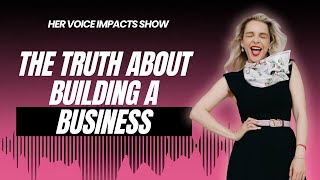
Frankie James, head of the Great British Entrepreneur Awards and founder of Ideas Fest, built her career from door-to-door sales to championing entrepreneurial storytelling. Her festival raised over £4.5 million in 2024 through informal networking, and she's planning an AI-driven connector to link her 100,000-member ecosystem year-round.
Chapters
Entrepreneurs are as much about their story as they are their balance sheet. But actually what we've encouraged our judges to do is to really look at the application. Really looking to? Look at the story, look at the journey, look at the why, and kind of find that human connection within that entrepreneurial journey. Every overnight success has had someone working, grinding for 5, 10, 15, even more years. Entrepreneurship is one hell of a rollercoaster. There is so much at stake when you start something.
Today we have an entrepreneurial spirit episode. Yes, Frankie James heads up the Great British Entrepreneur Awards and Ideas Fest. This is huge. We're going to be talking about the entrepreneurial mindset, especially technology and AI and how we merge with it and work and collaborate with it, and also the future of of festivals, conferences, events. I'm looking forward to speaking to her, and tune in. Well, I'm so excited to have you here, Frankie. Thank you so much for coming to Point Blank Studios here in London. I love these things. It's an incredible space.
I just want to press the record button.
Do you want to press the button?
I do, I do.
Let's press the button. No, no, because we could start recording. Um, but we're here especially because you have an absolute passion for entrepreneurship, right? And I did do a little bit of research.
Okay.
And I noticed that you had studied history and politics.
Yep.
Now, how does that correlate to what you're doing now?
I, I don't know if I'm the only one that felt like this, but when I was, well, at the age that you have to decide what you want to do for the rest of your life, yeah, I had absolutely zero clue. So So before I went to university, I took a job doing door-to-door sales. No way! Yeah, in the South Wales Valleys on 100% commission, and I stuck it out for 18 months. So you're in council estates with the rain coming sideways, and, you know, you've got your little briefcase and you're selling phone packages. Phone packages? Yeah, yeah, yeah. Oh gosh. Thought that that was going to— well, it was brilliant for me because I learned so much. I learned confidence, I learned how to talk to people, I learned that I was definitely competitive, I was driven. Um, but it's not a forever job. So university, if I'm being completely honest, for me was, I don't know, this isn't what I want to do right now. I don't know what I want to do. What can I do where I'm not going to be judged that I'm just lazing around and doing nothing for 3 years? Yeah, kind of give me a bit of space to navigate the world. And I literally, I was in a relationship in Cardiff at the time, so Cardiff was where I wanted to, to stay. Wow. Um, I wasn't the most academic, so I kind of didn't think that certain— one university, the main one in Cardiff, was within my reach. I thought maybe I won't get into that.
Yep.
So it was literally a case of me looking at a prospectus and going, what—
in those days there was a book.
Yeah, what can I stand learning about for 3 years. And my— in my naivety, I went in, you know, really open to learning about modern history and politics, but there were people that were, you know, so enthusiastic and knowledgeable about it. So I was sort of starting from zero.
It's like their life mission and you're going, this is not—
yeah. So it was, it was really strange, and I battled with myself about dropping out and, and completing the course, but I did, um, I did do it. Had a lot of support around me and finished it. I finished it. Yeah, I, you know, I came out with an okay degree, a 2:1, but I'd found my passion for entrepreneurship along that journey.
Really?
Yeah.
How did that evolve into that? Because like now what you're doing on such a big scale, how did that happen? How did this journey happen for you?
So when I went to university, I— there was two things I was certain of, um, and, and— but the main one being I didn't want to live a student lifestyle, you know. I, I was going in slightly older, and although it's only a few years there's quite a big difference between someone who's 18 and 21.
Yes.
Um, and I'd kind of done my 18-year-old stuff when I was doing the door-to-door sales. I'd gone out and partied and I'd done all of that.
You'd finished with all of it.
Yeah.
And you were getting serious.
I was getting serious. And I, so I didn't want that and I didn't want to be living on beans on toast, you know. So I knew that I had to make money alongside my degree. Um, the grants and the, the student loan weren't going to cut it. So I worked for my family business, which was, um, in publishing, and it was a publication for entrepreneurs, and I was the young person at the time, so it was a case of give the young person social media, they understand it, and it kind of allowed me to immerse myself in that world, realise that it excited me, and yeah, before I'd left university, I'd set something up, um, to go on my own.
So it seems as though there was something already in the family lineage to do with entrepreneurship. It just meant that you had to slip in at the right time, and you found your spark, you found something.
Yeah, I loved, um, I love the stories, you know. I loved hearing from entrepreneurs and hearing their journeys and their stories, and not just the, you know, we went from this to this. It was like the why, the purpose, the growth journey, the battles that they came up against.
And there are battles.
Yeah, I loved all of that. And yes, um, so it certainly sowed the seed for what I went— what I've gone on to do since, for sure. Amazing.
I love that. I love that you talk about storytelling because that Her Voice Impacts is all about storytelling and how important that is as an entrepreneur. The personal story, and then the story of what you're actually bringing to the people, whether it's a product, whether it's yourself, a brand. How important is that, do you believe, in what you do and helping others as well?
It's 100% central to what we do. You know, our, our strapline, um, which actually we, we use less now, but I don't know why, so I might need to go back to the office and change that.
So, meeting coming up very soon after this.
Yeah, is, um, the entrepreneurs are as much about their story as they are their balance sheet. So the Great British Entrepreneur Awards—
now that's an interesting one. Okay.
Yeah, so as a result, the Great British Entrepreneur Awards, it's always had such, um, diversity in the shortlist. And I don't mean diversity in the traditional sense, you know, I, I mean, you know, yes, we have, we have amazing, um, uh, split of male and female entrepreneurs. We have really, really good regional representation, particularly because I'm not from London. I love to make sure that we get incredible businesses from all across the UK entering.
And we—
but when I say the diversity of businesses, it's not always the ones that you think are going to win that are going to win. So, you know, you might look at a shortlist and you think there's a business there, half a million turnover, and then there's a business at 200 million turnover. Now, on paper, it makes sense that the Great British Entrepreneur of the Year will go to the biggest But actually what we've encouraged our judges to do is to really look at the application, look at the story, look at the journey, look at the why, and kind of find that human connection within that entrepreneurial journey.
Ah, I love this word, human connection. Yeah, which is a big thing right now as we merge obviously with technology and AI. How important is that now as you're looking at entrepreneurs coming to talk to you? How do you sort of like go, okay, well, there's human connection there, or you go, wait, there's so much futuristic there, it's going to lose touch?
Yeah, well, I think if we think back, it's not— it's, you know, it's certainly within our, our memory in our lifetimes where we can remember the, you know, the advent of the internet and the internet. Yes. And I think everyone in the events industry thought that it would be the end of events because everyone would just be doing everything online.
And we know there again, aren't we?
Yeah, we know that that's not the case. Now, what online does is it gives us access to things quicker, easier. It gives us more global opportunity. You know, it's a significant part of our lives, but we really crave that human connection.
Yes.
And I think that with AI, I think I'm feeling a sort of a very similar prediction in that AI is going to, you know, AI is going to be central to our lives in the next couple of years. Any businesses that aren't using it are going to be completely left behind.
They will be dinosaurs.
Yeah, absolutely. And that, you know, that's every single industry, not just technology.
I do believe that.
But I do think that when we're in a world— and just to look at it from a really simple point of view, you know, you go on LinkedIn and the, the amount of content that is on there is just astronomical because it's being churned out by AI, and real voices and real connection is sort of drowning and going you know, yes, getting lost in the noise. And therefore I think people are going to seek out real experiences and experience face-to-face connection. I like this, that's community feel.
Yes. And that's why exactly you've obviously initiated Ideas Fest, which is community.
Yes.
Yeah, very, very important, right? Tell us about that and how you see your point of difference. Um, obviously you've still got online perspective, but this community thing where people are talking, innovators are maybe collaborating with different types of industries—
how do you—
how did you come up with that one?
Uh, COVID.
So that's an interesting one.
Yeah, uh, literally, um, we were an events business that was unable to run indoor events um, in the pandemic. And so there was a narrative in the events world that outdoor events would come back sooner than indoor events would. And although that never really transpired, we, um, we had an idea, which was, how can we do something that's different and not, uh, we're doing the same as everybody else, um, style event? Yeah, yeah, like a forum, a conference. And look, there's a place for those things, but I I always find that the best conversations I have with people aren't around a boardroom table. They are, you know, when you go for a drink after, or you go for a coffee, or you go for a walk, or maybe you do something social together.
We feel like it's like an environment where we must talk about these things, but when you're sitting down and just having a conversation and other things are being spoken about too, you seem to get more understanding of that person's mission.
Yeah, absolutely. And, you know, you can connect on that human level. So when You know, there's lots of people I speak to, you know, about doing something together commercially or strategically or collaboratively. But when we're having a meeting and I go to that person's office and we're sat, you know, in a room with a whiteboard, actually the only bit that we get to know is the surface-level stuff about the person. You know, we know we will go into how can I help you, how can you help me, how can we work together. I might ask you how your children are, if you had a nice weekend, you know, but it's all surface-level fluff. And what we found is if you put people in, uh, in an environment that feels more human, then people will connect on a completely other level. So, um, the, the festival really asks people to drop their barriers because everyone's at the same level when you come into a festival. You know, you're not— it's not someone's in a better suit or someone's pulled up in a fancier car or some— you know, it's people are literally turning up in their festival selves. And some people go full-on festival, and, you know, we've got fairy wings and glitter, and some are a little bit more reserved, and they might say, actually, I'll just do the jeans and t-shirt thing and maybe put on a pink cowboy hat if I'm forced to later.
That's so cool. But you can be yourself.
You can be yourself. And that's helped enormously in, um, creating a space where people can connect.
Wow. And so what has come out of Ideas Fest, like, um, any kind of, um, big initiatives in a sense, or launching, um new, new products? What, what, what actually happens in these places of like creation?
Yeah, and look, I, I guess I, I don't know everything that happens, um, you know, we just create the space for the magic to happen and then we know that those relationships flourish from there. And I think that, um, so people have told us that they've met friends, um, you know, which entrepreneurship is hell— is one hell of a lonely place.
You've got no friends. Yeah, it's hard.
So it's, it's good for that. Uh, they've met collaborators, they've met customers. You know, we know that people have walked out of there with, with clients, and we know that people have raised investment in that field. And so over £4.5 million was raised in 2024. What? Um, and that wasn't through formal pitching competitions, that was just people meeting at the coffee queue or at the silent disco.
You know, it's, uh, very interesting you say it like this because I think that's, that's a big pivot and shift into where we should be going, where you're adding human connection authentic voice, people coming together. Hey, you know what, I like what you do, I want to be a part of it, let's get it happening instead of it being so formal.
Yeah, absolutely. I think Ideas Fest is a place where people find their tribe, you know, and that's what people have called it, the annual pilgrimage for entrepreneurs. Yes, if they turn up, they're going to— if they, if they immerse themselves in it, and we'll create, we'll create the spaces for that to happen naturally. So yes, people turn up on their own and they're a bit apprehensive about it, but we will make sure that we're creating these sort of serendipitous connections that, you know, from us as the organizers, are planned a little bit and kind of pushed in the right way and then let evolve in the field. People will come away with something extraordinary because you never know where that connection is going to take you, and it's just about being open, generous, and willing to kind of talk to people and see where that path takes you.
That is fantastic, Frankie. I love that because it's so important that we don't lose that human connection because we're either producing products or brands that we want humans to participate in, right? So we need to come back to that central point, which is the human connection. And if we now go into the Great British Entrepreneur Awards, which is— sounds like, you know, we're there, it's happening. And it has been called the Grammys, yeah, of entrepreneurship, which is a huge, huge thing. How much responsibility do you feel that you have to hold, you know, that kind of, um, meaningful quote in a sense?
Yeah, um, I mean, look, it's great that we're sat in a music studio talking about the Grammys of entrepreneurship.
I know, it's so iconic. I didn't do this purposely, by the way.
Um, but look, we, we've, we've been very, very good at spotting a lot of, um, household names significantly before they become household names. So we know, you know, you're never going to— and we don't do the, um, the judging. We have a panel of around 150 extraordinary judges who've been there, done it, got the t-shirt, and they can— they're good at spotting that sort of special sauce in someone, you know, that, that, that this person's going somewhere. Um, So yeah, we've got a fantastic track record of doing that, and so I think I'm confident that we're going to carry on doing that because we have every year. And, you know, yes, we will miss some absolute blinder businesses that, you know, I'll look back and think, 'God, they really should have won 5 years ago,' or have you. But, you know, I'll be completely truthful, the thing with awards is unless it's completely measured on financial performance, which ours isn't, they are subjective. So, you know, you might not win one year, but you might win the next year, and it could be because you tell your story better, or the time in the world that you're telling your story is more relevant and resonates more with the judges, or particularly, you know, or that you get read by a judge that just thinks you are absolutely fabulous and gets it. So I'm very aware that, you know, it's not— there's not a formula. Yes, we could probably pilot in AI to kind of analyze all of the applications, but that goes against everything that I I would just say—
Then you lose the human emphasis once again.
But yeah, there's a responsibility. But also, I think that I'm quite happy saying to people is that, you know, we're not— if you don't win a Great British Entrepreneur Award, don't be disheartened because it's not the end of the road. In fact, for so many, it's been the beginning of the road that they actually go and look at their, their business again, and maybe they're more reflective, maybe they've met some incredible people because of our network, and they take the next step. You know, we're not the oracle, we will get it wrong sometimes, but we've got a very good track record of getting it right, um, many, many years running.
I do agree with that. And it's interesting to say it's not the end. Yeah. And even getting a nomination, 100%, is a huge accomplishment. It's like you said, like even with the music industry, just being nominated, yeah, is enough to sort of relaunch or launch or do something, pivot in that situation, because you are being seen, right? I did read that you had, um, Steve Bartlett. Yes, Diary of a CEO. And I know you probably talk about this a lot, but it's so fascinating to see from the beginning stages of his career and to come into that obviously through the Great British Entrepreneur Awards.
Look, I, I, I—
it's amazing.
We'll take credit for a little bit of his success, but there's a lot that he has done. Of course.
No, he's a hard-working man.
Yes. On his own. Yeah, so yeah, Steve, Steve, uh, won a Young Entrepreneur of the Year award in 2017. Yes, co-founded Dom and, um, stayed in touch with both of them. Uh, you know, they've both gone on to do phenomenal things. And I think that for us, uh, when Stephen got on stage and called it the Grammys of entrepreneurship, that was the, uh, thank you, I really hope the camera's rolling. And it was.
Um, so, uh, moments like that, we want the cameras rolling.
Absolutely. So, um, Look, it's, it's amazing to get that sort of recognition from someone who's really gone on one hell of an incredible journey and that we were able to be a part of from a very early part.
I think that's a very special thing. And it's also, once again, it brings it back to that human connection. And nobody wakes up just one day and they have a thriving YouTube or podcast out to millions. Yeah, there's a beginning. And I think I wanted to ask you in that respect of the mindset of the entrepreneur, because there's a lot of down, up, sad, happy. Yeah, lonely, everyone's my friend. No, I'm not. Tell us about that, because it is the reality of it too.
Yeah, it's a roller coaster. And you talked about the overnight success. I think that every overnight success has had someone working, grinding for 5, 10, 15, even more years behind the scenes. Yeah. And I think a lot of people, you know, outside looking in, think, uh, that someone's just popped out of nowhere, and they don't see the graft that has really gone into making something that, that people care about and that people, you know, want to celebrate and champion, and that is, yes, is a success. Yes. Um, entrepreneurship is one hell of a roller coaster. Um, I am very lucky that I get to spend a lot of time with amazing people in spaces where they are happy to be vulnerable about that journey, and I think that Online, there is a lot of entrepreneurship gloss, and there's a lot of people sort of posturing and talking about how wonderful it is and all of their wins. And actually, every single entrepreneur that I speak to has had so many head-in-hand moments, so many times when they thought they want to quit, where it's, you know, they're risking financials, they're risking relationships.
Yes.
Because it puts strain on it, you know, on romantic and family relationships. Where they are making sacrifices, whether that be sacrifices with family or with friends, or, you know, there's so much that an entrepreneur pours into their venture, regardless of whether that's a, you know, one person with a coffee shop on their local high street or, you know, a global business. And I take my hat off to anybody that goes out and starts and grows something. But I think it's important also that I don't think entrepreneurship is for everybody. I think that—
I like when you say this. I think that's a very true statement. Tell us more about that, because maybe entrepreneurship might not be for you, but you want to, you know, put the toe in and then realize, wow, this is a different ball game.
Yeah, I think that we need to create an environment where everybody has the opportunity, um, to become an entrepreneur, you know. So that's access to education, access to networks. And, you know, we want to help people that have got that entrepreneurial itch to scratch. I think that the real— what I also think that we shouldn't shy away from is showing people how tough it really can be, because, you know, you can go online and you can watch a couple of Instagram reels that pop up and you think, I can conquer the world, I want to do this, I'm going to leave my job, I'm going to start something and it's going to become this overnight success. And actually, um, there is so much at stake when you, when you start something.
There totally is. And you have to look at the downsides and the upside and make a decision whether you're in it for the long haul as well. I wanted to ask, you know, what advice do you have for women who really do want to step into this entrepreneurial journey, or maybe have done it and then gone, ah, that was just so intense, but I want to go back in again. You know, what can you tell them, something that they can hold on to authentically throughout this process? As you know, technology shifts and we're becoming more and more connected, even though we feel like, well, everyone's out there doing their global thing, but somehow we are connected. What can you tell the women that will be listening today?
I think the opportunity has never been greater. We have got tools at our fingertips that allow us to try or to take something to market or to launch a, um, you know, an MVP super, super quickly. Um, we've got— there's access to networks, you know, this stuff we're doing, but obviously globally there's, there's, there's so many, you know, events and, uh, communities and networks that are open to, you know, to people getting involved in. I think there's a lot of generosity in the entrepreneur community of people who have been there and achieved some success, who are very willing to, um, to, to give back and support the next generation. That's a thread that I see throughout our community with, you know, exited founders and people who are really on that growth journey. They— the thing that they don't necessarily they don't have as much to gain from our community in terms, you know, in comparison to a startup who can use it for their network, can use it to learn. You know, someone who's already been there, done it, got the t-shirt, you ask the question, what do they get? And actually, the biggest thing that they get from being involved in our community is the opportunity to engage with and support earlier-stage businesses. So there's a huge generosity out there, and entrepreneurs who know how tough it is they really want to reach back down the ladder and, and help pull other people. Yes. So I guess, what would I say? I would say, um, go out and have some real conversations with people who've been there and done it, because they will give you the non-glossy truth, definitely. Um, but then if you are going to do it, you know, they're— take advantage of the time that we're living in now, 2025, 2026, and more moving up. Yeah, it's never been easier to start a business. It's never been easier to start a global business where, you know, we're connected. And like, that's not me saying it's easy, I'm just saying it's never been easier to start.
I think to start, yes. In, in times before, to start was a kind of a headache. Yes, you had to go through so many things to try and figure out who do I talk to, how do I find these people. Now it's like, yeah, exactly, just type it in and hopefully, like you said, serendipitously, everything comes together.
Yeah, nobody's more than a message away, you know, which is phenomenal.
I'm gonna use that. Nobody's more than a message away. It's been such a pleasure having you here on the podcast. Thank you. I really appreciate you giving us this amazing insight, and looking forward to coming to Ideas Fest. Absolutely, absolutely, we'll be there. And give us one last thing about where do you see the future going with what you're doing?
Community. Yeah, we're— we've called ourselves a community for a long time, but traditionally that community lives at our events, and therefore there's, you know, there's lulls in it. You know, it comes alive and comes on fire when people are together in that field or in that awards ceremony. Yes. What we want to do is work out how do we keep people connected all throughout the year And how do we— back 10 years ago, it used to be so easy because my network was not anywhere near as big as it is now. So people could call me up and say, hey, Fran, I'm looking for this type of person, and I'd be able to do it. I don't think anyone can call you now. No, I can't. It just— there's— of course I still do do that, but there's, there's an enormous ecosystem. We work with over 100,000 entrepreneurs. So, uh, what we're looking at is how can we use technology, how can we use the data points that that we have on people, and how can we use AI to almost be a super connector that doesn't sleep, um, that can help people all hours of the day. And that's, I think, when the real magic unlocks.
Yes, that's a great idea. Well, I'm looking forward to it. Thank you so much.
You're very welcome.
Thank you so much.
Thank you. Thank you.
We're here at Point Blank Music Studios. Seeing this desk here brings back so many childhood memories for me because I literally grew up in a recording studio. From the age of 14, I was doing jingles and demos and working with all these great producers. Little did I know that I was actually being an entrepreneur. Yes, it was not easy. I want to encourage you, and if there's something that inside of you have that spark to create music or to even participate in the process of bringing something to life that you know is a reflection of yourself. Now, I didn't know at that age that I would be going through ups and downs and challenges of what it is to be a recording artist. One thing I did know is that I wanted to be in this room and I wanted to be on stage and I wanted to give back to the people who are watching. The entrepreneur is always giving, and this, I think, is a key aspect of why you would enter in such a field. You are here to share your light. You're not here to take. You're actually here to give, and that's why we pour our heart and our soul in to the projects that we produce because they are personification of what we truly believe in. What is something that you truly believe in that you know that you could somehow package or brand and give to the world? The world is waiting for your sound, your book, even your business. How do I think entrepreneurially at the same time as be creative? Well, I always make sure that my mission is aligned, that I'm always in a place where I'm true to myself. All of the business attributes and everything can come out of me when I know I'm aligned. If I'm not aligned, if I'm not in a place where I'm authentic, I don't think I could produce anything. So ask yourself, am I aligned? Am I being authentic? And is my story from my soul? Because really what you're doing is that you're producing something that is from your inner, inner sanctuary of what you have held on to, and you're ready to release it, to let it go, to surrender it, to show the world but your giving, your giving of your light. So may that inspire you, and also at the same time, if this is a place where you want to be, and you want to be in that studio recording those songs, or creating even film scores as a woman, this is where it can all begin. That spark is right now.
More from Daniela
Her Voice Impacts: Remembering the Heart, the Soul & the Power of Women’s Stories
The world is waiting for soul-led voices, for truth,courage, beauty , not perfection, but presence.
Kerry Daynes’ Inner World: How Trauma, Empathy & Storytelling Shape Our Lives