Celeste Buckingham's Soulful Journey: From Run Run Run to Global Impact
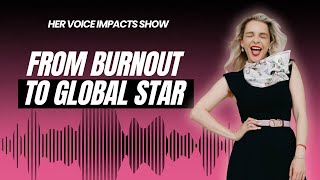
Singer-songwriter Celeste Buckingham, raised across Iran, America, Ireland, and Slovakia, talks about her breakout hit "Run Run Run" and why she stayed independent. She uses music as therapy, credits her mother and a trusted team for her business, and lives by one rule: the answer is never no, it's how.
Chapters
I wasn't so hungry for worldwide fame. I wasn't so hungry for recognition. I wanted respect. For years when I was in denial about going to therapy, I would write music instead. That's how I dealt with it. To this day, if I'm dealing with something difficult, it goes into music. I believe in living your life in a way that is kind and grateful. I believe in gratitude. But if you don't taste life, you won't know what it tastes like, you know?
Welcome to Her Voice Impacts. I'm Daniela Eon, and I'm here to amplify women's voices globally. Women who have influence in the area of arts, culture, business innovation, entertainment, and government. You know, it's so important that we now hear the rising of women's voices globally because they have a story, and not just any It's a soul story. And today's woman is no stranger to the spotlight. She is an award-winning, accomplished recording artist, singer-songwriter, runs her own music business, which is something that I would love to know more about. She's also won multiple awards, such as instance, we've got the MTV Music Europe Awards, charted on the Billboard Top 40. She's also Forbes 30 Under 30. An ambassador for L'Oréal. I don't know if she actually sleeps, but we're gonna find out. Her name is Celeste Buckingham, and she's a wonderful advocate for women. She knows exactly what the soul story is about because her music is all about that. She also has this thing that she calls authenticity, and that is something I want to tap into today. So I'm looking forward to speaking to Celeste today. Celeste, I'm so excited to have you here, and we are in the Sheraton in the presidential suite. How did we get here?
I honestly don't know. I've been here once before, which is also surprising. I thought that was a one-off, but apparently not.
So we are totally being a rock star today.
Are we?
I think so. No, Bratislava is beautiful, and this is obviously a place where you grew up. Right.
This is technically my hometown. I wasn't born here, but I grew up here, was raised here, started my career here, finished my education here. So it's home. It's home for sure.
Brilliant. What do you find special about Slovakia in itself?
I think Slovakia has a lot to offer in many different ways. It is culturally rich, socially rich, culturally. It's a very interesting dichotomy because Slovakia is both a young culture, yes, but with a really ancient identity. And so it's kind of this combination of of two things that meet, and you see it in the older generations and you see it in the younger generations. The only thing I would say is that I think that Slovaks have a hard time taking pride in who they are and where they come from because of the history of the country, but they're still very proud to be who they are, which I think is a wonderful thing. So it's a young country in many aspects, but I think that's nothing— that's got nothing but benefits, honestly.
That's so wonderful that you You obviously have got an amazing mixture of nationalities in your bloodline, right? And that's really influenced you as a singer, songwriter, and how did that kind of inspire your life to take on this journey, which is one that is very unique, by the way. Not a lot of people get to have this kind of journey that you've experienced, which you started from a very young age as well.
As well.
And winning all the awards and having all of the amazing influence, how did that begin for you where you knew, you know what, this is what I'm doing, and having different cultures embedded and ingrained in you at the same time?
I mean, I, I grew up with that sense of, of confused identity for, from the beginning. I always remember that it was a big thing in our household. I think also primarily because we as a family lived in a country that we didn't come from. And we didn't have any roots here, so we were creating those relationships and building those roots from the beginning. So from the age of 3, you know, I really remember that we were always different, which was fine for the most part. But what I found interesting is that I didn't think it was going to somehow be incorporated into my career. It was just a part of who I was. It was my everyday life, you know, learning a language I didn't speak. Every day would be just a discovery of something cultural I didn't understand because I didn't have the knowledge of because my parents didn't. And so it was always like you were always learning something and choosing whether to adopt it into the way you lived or not. And it's the one benefit of being multicultural is you get to kind of pick and choose. So I became this sort of enmeshment of different personality traits or behaviors that I picked from, cherry-picked from the different cultures I grew up around. I'm part Iranian, American, I've got Irish ancestry, I lived in Slovakia, you know, so there's a bunch of different things going on there and they're all very culturally different. But then when I, when I started working as a singer and I started performing, I realized that that was my biggest asset. And not only in, in growth, but also in marketing and in brand identity, because I was different. And no matter where I went, any country, I was always going to be different and different in a way that people— and I hate saying this— but that people would accept. Um, yeah, I'm I'm pale with blue eyes, I'm a female, I sing pop songs. It's kind of, can't really offend anybody, you know what I mean? But the truth of the matter is, is that I understood that this was a tool that I could use to my benefit, which I never considered before. I just thought, well, this is who I am and this is my life. And actually it would get in the way because people, oh, you're a foreigner, they wouldn't include you, you know, the classic kind of things of an immigrant kid, you know, in that sense. Socially, you know, you're not, you're not as It's not as easy to kind of transition, you know, from childhood to teenage years to adulthood. It's more difficult.
Huge obstacles.
So that was kind of the primary thing, but it's become my biggest strength, and now it's almost kind of an automatic part of everything I do. And whether it's work-related or it's personal, it's— I'm very proud to be, you know, from different people, from different backgrounds.
And you lean into those.
I do. And then also in the countries I live in, I really— we as a family, we adapt. We're the kind of foreigners that immediately go and learn the language, learn the culture, make friends, eat the So, exactly. So I really tried to kind of ingratiate myself, but not in a way that's offensive. It's like I still very much respect that I am not from here.
Yes.
So there's some claims that I cannot make, but there are others that can say, well, I'm very proud to be a part of this culture, and I'm very proud to be a part of this society that I'm currently living in. And that makes it a lot more easier. It also makes it easier for people to accept you and understand you, I think, and makes you a heck of a lot more interesting. I don't know, I can't judge that, but it's helped really find and create lasting relationships. Relationships, both personally and professionally, because I think anyone is more willing to talk to you and work with you if you try to speak their language. And I don't mean just their physical language, but embrace their language and their culture. I think it's so— it's such a great diplomacy, uh, tactic or a great diplomatic tool, you know.
Absolutely. And it's amazing to see how you've woven this into your life story. Your music is like your life story, I have to say. And also it's got soul, because you like soul artists. Give me some of those that you like, because I'm like listening before and I was like, dang, she likes some really cool people. So who really inspired you?
I grew up with parents who were academics who didn't really listen to a lot of music. My mother was kind of more into music, but she listened to Barbra Streisand and Celine Dion, and Persian music was a big thing in my household.
Okay, how did that kind of come in?
I loved it. It just seemed normal to me, and the fact that my like Years I will play it, you know, doing basic chores in the house or I'm driving in the car.
Does it bring you some kind of closeness to your nationality? Like who you are?
Yeah, the closest I can describe it to is how people describe like the hearth and the stories about, you know, like being around a campfire and that warm feeling you get when you're sharing family stories.
It feels ancient, doesn't it?
It feels like an ancient ritual in a way. And listen, for me, that act, that activity of listening to Persian classical music in my house when I'm doing something as mundane as cooking or vacuuming or, you know, whatever it is.
But they are important.
It's very deep.
Yes.
It's very deep. And I think it's also because I'm from a family that left during and right after the revolution, and so there's a very large community of Iranians and next-generation half-Iranians like me around the world who feel this deep connection to their culture and to a country that technically doesn't, like, exist in that way anymore. It still exists, but it's different. And so I think there's this like complete generation that grew up loving everything Iranian culturally, you know, culinary, whatever it is. And they kind of— they are, they're really wonderful. Iranians are some of the best people I've ever met. And I think, and I say that with complete and absolute bias, but genuinely, I think it's an extremely rich culture and society. And I'm very grateful to be a part of it in that way. So that was my childhood, was growing up with sort of different influences. And then when I got a little bit older, of course, you know, my friends were like, oh, you're lame, you got to listen to this and this. So I listened to all the pop things at the time when I was a young girl. It was Britney Spears, Christina Aguilera, it was all the big, great, that sort of the concept of a modern pop icon was just coming into existence in that way. And in the early 2000s, we had all these great like bands, and then we had, you know, like the Black Eyed Peas, and that was a whole era of music, pop music.
Music.
And then, but then I got a little bit older and I did the thing that all older, you know, when you hit the puberty teen years, like, I need to be cool. And listening to Britney Spears was no longer cool, so I was going into punk music. But I, what I really loved above all that stayed with me my whole life was, um, the old classics, jazz. So I did a lot.
I hear so much jazz in your voice.
Yeah.
And it's like, it's on point.
Thank you.
So that is where you have found kind of a sweet spot for you as well?
Yeah, and I'm not by no means a jazz singer, but I do have this, this influence there, especially with the greats like Aretha Franklin, Etta James, Billie Holiday, and then also Frank Sinatra, Dean Martin. There was a lot of— I listened to a lot of these kinds of— and then like also instrumentally, like I listened to Dizzy Gillespie and Louis Armstrong. So it was really not just— it was the whole thing. It was—
you were expanding your creativity at this time.
And I think it's natural, and I recommend it to every young person who is interested in art in any way, whether it's music or something else, is, you know, expose yourself to as much of it as possible. You don't have to love all of it. Yeah, it doesn't have to be your favorite, but I have this rule that like I never say no to anything new when it comes to music. I will listen to everything. Yes, I will decide whether it's for me after I've listened to it, but you know, if you don't try it, you'll never know. And the same applies with food and life and traveling and anything else. So I have this rule that I apply to most things in my life. It's like, if you don't try it, you won't know.
Wow, I love this rule.
Yeah. So that's kind of what I try— I mean, don't do anything stupid or dangerous, but you know, like, I mean, I bet that's happened as well, but the point, you know, your early 20s are an interesting time of your life. But generally, yeah, I mean, the rule is, you know, even if you're afraid, do it, you know, because you can always get over the fear later or decide, you know what, this is not for me, I won't do it again. You know, there's ways to kind of get around it. But if you don't taste life, you won't know what it tastes like, you know. So I kind of— that kicked in in my teenage years. Gave a lot of difficult nights, sleepless nights to my parents, but the truth is that it let me really, you know, understand that life is to be lived, to be tasted, to be enjoyed. My music is very much a reflection of where I am psychologically and spiritually, what I'm feeling, what I've experienced. It's very much like a diary in a way.
I can sense that, and obviously your first song, Run Run Run, Yeah, hello. Like, that really did open up.
It was a huge hit, and it sort of happened unexpectedly, which kind of threw me, you know, through the wringer for a bit because I was really surprised, like, oh wow. Um, and then, but that created this platform for me that I'm still, you know, hovering on and using to this day, which is really— I'm extremely grateful and also very surprised that a 16-year-old came up with that that little melody in her bedroom at 2 o'clock in the morning, and then the producers were like, yeah, this is good, let's do it.
And it's usually how it works, isn't it?
Because you never think, yeah, you hear these stories of the first big hits of some of the biggest artists on earth, and that's usually how it goes. I think the authenticity in it is what is key, because the one thing, the one pattern that I've noticed in any kind of artwork, with any kind of form of art, is when it's authentic, um, it tends to be successful.
It's real. You were really going through that.
Yeah, I was 16, I was in love, I was also fiercely independent. I was raised by a mother who was fiercely independent, and I was like, I don't know what to do with this. There's a boy I like, what should I do? So I said run. I told him to run and I told myself to run.
Fast as you can, right?
Yeah, so it was kind of— and actually I have this running joke with my team and with the people I work with and the people who know me is that like since that I've just— I wrote a song once about running. By the way, I don't run ever. I don't jog, I don't— nothing. It's metaphorical running. And yet I've been running since then. My whole life just took off from that one song and basically I haven't stopped. It's just been one big chill.
It's a phenomenal story, like, because you don't hear a lot of them. I mean, you know, now we're hearing that everyone is going into places of trying to make it, you know, by trying to study as much, learn as much, and this, and you were just there being a teenager, being yourself.
I was. I mean, I trained and I worked on my music and my my skills. But yeah, it kind of— it was happening when I was just being true to myself and creating something in an authentic space. That's when it kind of— and it doesn't necessarily mean it's going to be like very successful in terms of like business, but it spoke to a lot of people. And I think that's what gives art power, is when it speaks to people in a way that's authentic and is real and relatable, where, yeah, everyone can find a little bit of themselves in that art, in that piece of work. I agree. And I've applied this rule to basically everything I've ever done since, where it's like, I don't care about the semantics, but it has to be authentic.
Yes.
And it has to say something to someone, whoever is looking at it, listening to it, reading it.
It's not just surface.
Exactly. Because that's what marketing is for. The marketing is surface, and you can meddle with that as much as you need. And but the truth is, is that if the core of the product or the core of the thing that you're presenting to a person isn't authentic or from a real place, it doesn't really mean anything.
And then nowadays we see what is not authentic very quickly.
And it does really well, but it's short-lived. That success doesn't bring longevity. It doesn't bring— it doesn't create a legacy. And for me, it was always about creating something that would last. I'm not thinking about, you know, in terms of, oh, I need a legacy behind me. I really couldn't care less. But the thing is, is that I really couldn't. You know, one day I will be done. I was raised to understand the philosophy that From dust you came and to dust you shall return. So I mean, at the end of the day, what matters is what you do in this life, how you do it, and who do you take along with for the ride. Who do you help? Who do you touch? Who do you speak to? Who do you share with?
Who are you transforming?
Exactly. And so, and in the process, transforming and evolving yourself.
Yourself. Wow. And I love this because in your book What Do I Do Now? Now it is in Slovak, but I don't care. I found a way to read some of it, which was quite inspiring. I love the fact that you can scan the barcodes here and go to the songs, right?
Yeah, well, we thought, you know, as an artist, yeah, as an art— as a singer, even though I've written a book, it's got to have something to do with music. It's got to have music. So that's the way we came up with it, was we decided we would put these QR codes in. So you can just scan it and it'll play you the song that's related to the chapter you're reading.
It's really cool to be able to read something and then go straight to the song and be like, okay, I get it, yes, it makes sense. And there's a quote here, it says, in an industry defined by extravagance, she became a beacon of authenticity. Through her art, she inspired others to embrace their individuality. This is huge because Her Voice Impact stands on one of those pillars of authenticity. And I want to know from your your soul, your heart, what that actually means to you and what that is helping and how that is helping others.
I think it's very common, specifically in the business I'm in, but also generally for women. I think we're raised in a way to put on a mask. Yeah, I mean, we all wear masks day to day. We've got, you know, our professional ones, our personal ones, the face we show our loved ones, the face we show our superiors, wherever we happen to be in life. But I think there's this added weight to women. There's this added expectation. We switch our behavior and our perceived strength depending on where we seem to be, where we find ourselves, partially because women tend to sometimes be considered, you know, too much. I used to hear this a lot. I would go into boardrooms and I would go into meetings where there was nothing but men Who would say, oh, let me deal with it, or you're talking too much, or you're too loud, or you're too pushy, or that's asking for too much. And for a long time I believed it because it was told to me by superiors I trusted, advisors, managers, you know, whatever it is, or whoever they were. And the thing is, is that after a while I realized, actually, no, that's a way to cull whatever it is I'm trying to push through. Yeah. And also where is this expectation coming from that a woman should not be loud? Why is that a thing? You know what I mean? Except for public decor, I'm like, you shouldn't be yelling at the street at 2 o'clock in the morning. Otherwise, you know, why should I dim my light so that others can shine brighter than me?
And that passion. Yes. Why?
And so nobody could answer that question for me, you know, and then I realized, oh, there is no why. This is just a way to limit movement and progress. And so I started breaking those boundaries, and I think that's also part of being authentic. It's also being authentic to oneself in a very individual way, but it's also being authentic to your gender and being authentic to who you are, because a part of our identity or my identity is I'm a woman, and that comes with its own history, understanding, position in the world, limitations and strengths. And so I think that, you know, why should I limit myself anymore than I already am by society's constructs? Why should that apply to me or anyone for that matter? There's a difference between rules and limitations, and I think that people tend to blend those lines a little too much. So for me, that element of authenticity is not just authenticity in the sense of I'm going to talk about my feelings and it's going to be real. No, it's also talking about real issues and being a woman that I could look back on and say, I'm proud of you for fighting for your place in the world. You know, it's not about, oh, I need to be important or I need to be heard at every given opportunity and my opinion matters more than— no, it doesn't. Equal footing, equal positioning, equal place, you know. Yes, to men and to anybody else. So I started— when I started applying that, I remember I had a lot of pushback because I didn't do that for many years. I was kind of a people pleaser when I was younger, which is very common for young women also. It's also apparently very common for eldest siblings, eldest sisters. Very common, and I'm the eldest daughter. And so it took me a while to kind of say, "Hey, no." Like learning how to say the word "no" was extremely difficult. Now it's my favorite word.
Did you feel bad when you used to say it?
Oh, I felt horrible. I felt terrible. I would shake. I would shiver in my boots. I couldn't— on the surface, I was a good liar. I could pretend everything was fine. Show business. But you know, the thing is that you learn to set your boundaries, and not just boundaries in the sense of protecting your mental health and your personal space, but also setting boundaries of, no, I demand to have a seat at the table. I demand to have this place, and I demand to say my piece. And then you can express your opinion however, which way you like. So that was a big part of it for me as well. It really— that sort of second emancipation in that sense of like, I have—
Gave you a voice.
Yeah, I have a voice.
Not just a singing voice. But a voice that matters in an industry where you got to speak up.
Yes, exactly.
I do believe. And paving the way for women, which I'm sure that you're doing that because you're an advocate for women, women's rights.
I am. I mean, I do a very small part of it. There's so many people who do way more than me, but I do try to apply it into my work life and into my personal life in as many different ways as possible.
I like to talk about how you run your whole business as a woman, and I have to say, as artists, especially musicians, this is a vital part of knowing how the economy side of it works, right? The business side. Tell me why you decided to do that and how important that is to you, and to maybe even inspire other women to take a hold in that sense?
Well, I mean, it started— my mother actually encouraged me to do that. I know, I had a— when I— because I started very young, I started working at basically 15, 16, so I wasn't even legally allowed to, you know, sign contracts. And so my mother was kind of in, in the go-between. Um, and I, when I was young and I had that big rising success with Run Run Run and with a couple of other things, I was being offered label deals from everywhere, major label in the United States, and and worldwide, and these contracts would come, you know, and I couldn't make heads or tails of them. I was 17, I didn't know any better.
All those words and those kind of like nos.
Yeah, but I had a mother who was really— and I have a mother, thankfully— who is really savvy and really sharp and always kind of on the lookout for things. And so she was kind of filtering through them, but she would also very honestly tell me, you know, like she wouldn't deal with it for me, she would involve me in all of it. So from an early age, she was kind of training me to do this in a way, you know, run your own business and, you know, and understand your business and understand your rights and protect yourself. Yes. And then as I got a little bit older, I also, I chose to remain an independent artist because the label deals—
very powerful—
because it's a difficult choice. It's not the easiest choice, but okay, it's the choice I made because I realized that my freedom as an artist and as a person is more important to me than the actual level of success. I wasn't so hungry for worldwide fame. I wasn't so hungry for recognition. I wanted respect, and those are two very different things. They can be together, they can work together, but they're separate entities. And in the situation I happen to be in, those two were not mutually exclusive. I chose the path of I'm gonna earn my place. It might take me longer, it might be harder, I might never get to that level of fame.
It's a very different time then too, because being an independent artist, you didn't have all these kind of streaming online outlets.
Yeah, it was just starting when I was at that point. Like Spotify had just come into existence.
So you coming in as an independent artist, how did that feel for you that you now had not just the responsibility of writing songs and producing them and recording them, now you have this other responsibility?
The irony is that the writing and the producing is the easiest part of my daily job. I do that for fun. Like that's the fun That's the fun part of my job.
I love to hear that.
Because I've like, I had it yesterday, I was driving back from a trip and I was saying I'm really craving to write music, but I was like, I won't have, I won't have time for another 4 weeks to do it. So that's how the schedule is, and you know, I run my own career, but I have a team of people that work for me and with me, and it's really wonderful because I, it's fun being the boss, but all your friends, all your workers are your friends. They're all kind of independent of you because they're all sort of in a freelance capacity, or they kind of work with you based on commission, So it's very— no, there's no like hierarchy. Nobody's threatened by it, but I get to call the final shots and make the final decisions. And also I get to come up with crazy ideas and then I present it to these people, and these amazing, wonderful people, they're like, let's do it. I'm like, are you kidding? I was kind of joking. They're like, nope, we got this. And they pull it off every time. Wow. And so I'm really grateful that— but it also took years and time to find those people, build those relationships, and to build that team. I've been in the industry for 15 years and only the last 3 years do I really feel like I've gotten it to a point where it's really functional and really built to last. And so I'm very grateful for that. But I think I was born bossy. So I think that being in that business manager capacity— I was born bossy with a loud mouth and would never shut up. So that was kind of where I was at. And my mother always said that was just that's where you're going. She kind of knew from— my mother guessed my sister and I pretty early. Really? Yeah, she kind of figured it out.
So she knew that the stage would be a good place for you?
Yeah, yeah, definitely. And she was like, and even if you don't be literally are not on the stage all the time, you will have something to do with it. And I was like, yeah, probably. So I mean, no, and running a business, yeah, but I highly encourage every artist.
Yeah, why? Why?
Because of your— because of independence and freedom.
There's a lot of exploitation in art, in music business, and getting a record deal, yeah, is It's not what we—
I'm not saying it's a no, and I'm not saying it's always the worst idea, but you have to know your rights. You have to know what you're entitled to and then proceed accordingly. Getting a lawyer is expensive, which is why it's good to at least know the basics on your own so that you can really navigate as much as you can as possible before having to speak to a lawyer or to professionals. And the other thing is really not jumping at that first opportunity right away. Because your heart just goes, "Yeah!" Yeah, give yourself a little bit of time if possible to think about it before jumping into things. Because these things may seem like the once-in-a-lifetime opportunity, and they maybe are.
But they don't add up sometimes.
But they don't necessarily add up, and sometimes they end up costing the artist more than they would ever give, or they ever return. You know, the return on investment is low.
You feel like you've been used in a sense, don't you?
Yeah, and also you're at the mercy of other people. Your career and your life is at the mercy of other people, whether they decide to keep you on the roster, whether they decide to continue working with you. They might have a completely different understanding of the image you want to present, of the art you're trying to create. Again, I'm not against it, but it's just really knowing who you are and what you want out of it before you make a decision.
I agree. And you're keeping that authenticity going by also being independent.
Yeah, I mean, I chose the kind of difficult way to do it because I am difficult, but that's, you know, that's just a me thing.
That's okay.
I am grateful because looking back, you know, I had the opportunity at one point to be like a world-famous artist. I could have been a world-famous pop star. I don't know if it would have worked out, but I had the opportunity set before me. Um, but, uh, what I realized was that my freedom was kind of more valuable to me and the ability to choose for myself was more important. Wow. So I made that choice for me. And looking back, it's a huge choice. I never regretted that decision. I still don't. So for me it works. Other people look at me and they think I'm crazy, but that's, you know, that's everybody to each his own.
So there's always reasons you know, that are unknown to the others that might be looking in, but to you it's what you needed to do.
For me, as an artist, as a person, as a business manager, as a woman, that was where I wanted to be in life. And it took a long time to get there after I made that initial choice, but I'm there now, and I'm very content with the way my life is and my work is.
Yes. And you're still in some sense in control.
Oh, I'm in complete, complete control. I run and own and pay and do everything.
So it cost me a lot.
Listen, listen up. But I am 100% independent. I don't need anybody to do my job. I need to work for people. I need to do my job, but I don't need to ask permission from anyone.
It's so interesting to hear because knowing what's going on behind the scenes is just as important as what is going on in front, right? And if you don't know what's going on back there, anything could be happening. Exactly. Right. And then you wake up one day and you go, I didn't agree to this. Yeah, but you know exactly all the fine print.
Yeah, yeah, more or less.
I'm still learning a couple of things, but yeah, your mom's helping you out, right?
Mom and the team.
Yeah, she's very lucky.
She's— I love her. She's— I, I think having— and that's the other thing about women, having— yes, she's my mother, but she's also a force to be reckoned with. She's your rock. She's my rock. And even if she wasn't my mother, I would ingratiate myself to her to be best friends with her, because having female role models in your life, whether they're related to you or not, is so vital and so important. It took me years to figure that out. When I was younger, I was one of those girls who was raised like, oh, boys are easier, and you know, all these stereotypes about having girlfriends, you know. Yeah. As I've gotten older, I realized how foolish I was and how I wish I had even more girlfriends in my life and more peers to compare with. It does, and I think it's a mistake mistake. I think it's an issue because for me, I grew up without that feminine presence in my life. I had my mother and I had a couple of other people, but it was very minimal. Whereas I think when women are together in solidarity and also going through their different things together, that alliance forms, that sort of— and we're a team, we're a village, we're a community.
We do this automatically. It's like a sacred circle of women.
We do this automatically, even with women we don't necessarily want to be besties with. We kind band together.
Yeah. Yes.
Even when we don't get along, even when we, you know, bicker about each other or whatever it is, but there's that sort of sense of— from my experience, at least.
Somehow it's got to go down back to the roots that the women did really run the villages. Yeah.
And knew everything. Most successful societies in history were run by women. They were matriarchies and not patriarchies. But that's a conversation for another time.
It's a la la la time. I want to ask about, have you ever felt that your songs to some extent has provided healing?
I don't know about healing.
I mean, healing for others maybe, or healing—
I would hope so.
Therapeutically for yourself that you—
oh, for me, definitely. Absolutely. That is my therapy. For years when I was in denial about going to therapy, I would write music instead. That's how I dealt with it. So I— yeah, absolutely. I started writing songs because it helped with my mental health. It helped me process things. So for me, absolutely, definitely. To this day, if I'm dealing with something difficult, hard to swallow, or I'm feeling a lot of good emotions but I'm just feeling a lot, it goes into music. It goes into my music.
So that's your outlet.
Absolutely, yeah. And for me it is. And so I hope that people find themselves in it, it makes them feel good or helps them process whatever it is they're going through.
Transformational. Yeah. And some maybe even evolving.
Yeah. And also my music has evolved with my age and with my experience because it's a living thing to me. It grows with with me, you know. So when I was younger, the themes were a bit different, but more maybe simple, but still very clear. Then as I got older and I had a darker period, you can hear it in the music.
Of course, the dark night of the soul.
And you can hear the struggle and the sort of fight to understand and figure it all out. And now it's at a point where it's sort of more joyful but still trying to understand life. It's where I am. It's me in music form, basically. It's like if you took me apart and turned me into sound waves.
There you are.
So that would probably be what it, you know, which I hope means that I've really managed to write music from my soul that expresses me as a human being, as an existence. But I mean, that's, you know, time will tell. I don't know.
I love that. It's, it's still deeply soulful and at the same time touching on spirituality, which I wanted to ask. Do you feel that your gift, your sound, your music like is a force something that's greater than yourself?
I don't know about that. I was raised, I was raised in religion, but I kind of drifted away from it. I, I always like to use a quote from a, actually a very favorite TV show of mine, which says, I have a complicated relationship with the Almighty. Um, this is the best way to describe my spiritual and religious relationships. Yeah. But to be honest, I mean, I do hope that our life is more than just an amalgamation of cells that came to exist.
I hope so too.
And if it isn't, well, then the answer is clear. But regardless of where life ends and whether it ends and how it continues, I think that it's still important to focus on here and now and living your life and live your life in a way that, in a way that is kind to you, to others, and to the worlds that you live in, the universe you inhabit, the, the the tree in your backyard. I mean, there's a reason why nature itself constantly proves that— I believe in nature, to be honest. I believe in the power that the earth gives. I believe in the science of it all. I believe in how plants function. Recently they discovered, apparently in a study, that plants can feel pain. Apparently. It's just— and they emit a sound, but it's at such a high frequency we can't hear it.
That's awful, isn't it?
So then you're thinking, well, great, now I gotta starve because I can't eat the plants either because I feel bad.
We're just gonna be breatharians, basically.
Live on, I don't know, salt, I guess. I don't know what else is left. But no, but I really try, and I'm not perfect in any way, but I really— that's what I believe in. I believe in living your life in a way that is kind and grateful. I believe in gratitude, but not gratitude to me. Gratitude in what the earth Earth gives, what people give, the life that I have, the success, the luck, the sheer luck that I have. And then also to be grateful for the lessons life gives instead of looking at things, oh, well, this happened to me. Yeah, it happened to me, but why? And what can I take from it that will actually be useful? Yeah. So I tend to see— I have one more thing that I always use, which is kind of my motto in life, again stolen from my mother. Um, the answer is never no, it's how. And that, I mean, when it comes to trying to deal with a problem, you know, it's, it's how can I figure this out? How can I live if I can't fix it? How can I live with this? How can I understand this, process this? Or how can I solve it? Or how can I ask for help to get it solved? You know, which is another big thing.
I was going to say about women and asking for help.
Oh yeah, that one's the last one. That's the last lesson I learned recently.
Yeah, yeah, yeah.
How to ask for help and not feel like a burden and also not feel like you're somehow weaker or less than for asking for help or needing help, because I was very much tough, you know, and I always dealt with everything on my own. And I learned that was stupid, so I started asking for help, and surprisingly, people gave it, and it didn't hurt anybody, and it made my life and their lives a lot easier.
Yeah, I'm starting to see the release in that, that you're letting yourself go and surrendering into this.
Okay, I'm just gonna ask for help.
Exactly. Someone's gonna help me in this situation. I want to wrap it up by asking you, what can you tell the women who are listening? They might listen during the morning, at night. What can you tell them to keep them on their mission, on their path? Like, what can you give them, something like a little pearl to take away? They feeling a bit disheartened or, you know, they've come to that place where they can't say no, or they don't know how to solve something.
What can you give them? The only guarantee in life is that we're born and that we die. So everything you do in between is all that matters. And honestly, life is too short to be stomped over, walked over, abused, taken advantage of, not listened to, not heard, not appreciated and not loved. So go where they will love you, go where they will appreciate you, find those who will respect you, build things that you would like to see in the world. That's it. There's nothing else to say to it. Anytime I found myself stuck in situations where I was being mistreated or I wasn't being heard, I was stuck for a while, but this would always get me out of it because I would realize I don't have time. I— there is simply not enough time. Yes. On planet Earth, in this life, in this existence, to waste.
Time is speeding up.
Time is the one currency that is real. It's the one thing that is spent immeasurably. It's the one thing there is a finite limit of. Use it. You know, that's it.
I love that.
This is like, that's it.
That's it. Thank you so much.
Thank you so much.
You're an amazing soul, and thank you for your music and your gift.
Thank you so much for speaking with me.
What is it that makes someone, even from a young age, be so tenacious about taking on a soul mission? Could it be something in our life that has created some kind of challenge that then makes us want to take that step out? Or is it just a real burning desire to have that artistry be seen so that people can get healed, transformed, or even in, in, in their own life become a better evolved person? The thing about all of this is that you, where you are right now, is the opportunity that is given to you, and it's a consistent thing. It comes at you really quickly, and then you can feel it kind of simmering away inside of you. You have something that is telling you to go forward, and also at the same time, the polarity comes in and tells you maybe not to. But these are life's journeys, and life's journeys always brings you back to understanding who you are, your higher role in society for humanity. I think by sitting here and talking to these women, there's one thread that I consistently see, and one thing that really shines out to me is that they all acknowledge that they want to do good in the world. They all want to participate, collaborate, give back somehow to society through empathy, compassion, and authenticity. And not to forget courage. The courage that you have inside of you is what it takes. These women are not playing small. They are playing big. They think big. They're ambitious, but at the same time humble. These elements are really what Her Voice Impacts is about. She is ready to bring that compassion and also to some degree that healing to the world through these amazing gifts and talents. You have that too. You have something. Everybody has something, and I've been hearing this in all of the interviews. That everyone has said that the women have something to offer. We've all been put here on the earth for something greater than ourselves. This is a really— I would say for me, it's a really deep question. What are you doing that is greater than yourself? Where are you heading towards that is going to leave a mark for the next generation. I want to inspire you to look deeper into who you are, your gifts, your talents, even the challenges that you've been through, the sadness, the sorrows, the disappointments, the regrets, the questioning, and also at the same time when you've had those highs How have you felt when you've had those highs? And then how has it felt when you have gone down into that dark place? The dark night of the soul is a real element, and it happens a lot. But just know that that dark night of the soul actually is there to elevate you into that high moment again, where you become an evolved person. Person. Your creativity expands, your abilities grow, and you seem to be more resilient. So Her Voice Impacts is here to support you on that journey, to also encourage you, and to also see through all of the facade into the soul. Soul has so many levels. We have yet to even unravel and unfold. But I would like to take you on that journey where your soul becomes the message. The message is in your soul, and that's what's important here at Her Voice Impacts.
More from Daniela
Her Voice Impacts: Remembering the Heart, the Soul & the Power of Women’s Stories
The world is waiting for soul-led voices, for truth,courage, beauty , not perfection, but presence.