The Return to Home | Mariia Mezentseva x Her Voice Impacts
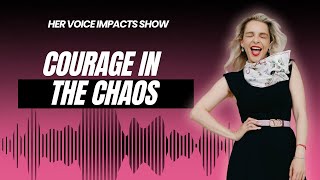
In this hour‑long interview for the Her Voice Impacts series, host Daniela Ion sits down with Mariia Mezentseva, Deputy Chair of the Ukrainian Committee for EU Integration and Chair of Ukraine’s delegation to the Council of Europe. Mezentseva recounts her personal path from a family‑inspired childhood, through internships in Brussels, to grassroots politics and national parliament, explaining how the 2014 Russian aggression propelled her back to Ukraine. She discusses the practical work of EU integration – from roaming‑phone regulations to temporary‑protection for displaced Ukrainians – and the human‑rights dimension of the war, including women’s participation in the armed forces and the pursuit of war‑crimes accountability. The conversation repeatedly returns to the importance of women’s leadership, arguing that greater female representation could reduce armed conflict, and highlights historical examples of Ukrainian women shaping European diplomacy. Mezentseva shares cultural reflections on language, art (e.g., Jamala’s Eurovision win), and the preservation of indigenous peoples under Russian oppression. She offers concrete advice to young women about self‑confidence, mentorship, and balancing personal life amid war, and speaks about her spiritual outlook, inter‑faith respect, and the books that shape her worldview. The interview blends personal anecdotes, policy detail, historical insight, and motivational messaging, presenting a holistic portrait of a young Ukrainian leader navigating war, integration, and gender equity.
Chapters
We should not be using slogan Ukraine is marching towards Europe. No, no, no. We're just coming back home and Russia is trying to prevent us. We are all different and we all have a right to express ourselves the way we like. If there could have been more women leadership, we would have less international armed conflicts across the world. If you really intend to serve, you will be a good politician.
Welcome to Her Voice Impacts. I'm Daniela Eon, and here we are for another episode amplifying women's voices, not just their voices but their soul story. Today I'm actually in Strasbourg at the Council of Europe. This is where it's all happening within the closed doors I'm interviewing women from all walks of life, from arts, entertainment, culture, and today, politics. Today I am interviewing a very young, amazing voice who is resounding throughout Ukrainian government and Europe. Maria Medzenkova is dedicated her life to service and politics. Currently, she is the Deputy Chair of the Committee for Ukrainian Integration of the European Union and also the Chair of the Ukrainian Delegation of Parliamentary Assembly of the Council of Europe. Yes, that sounds like a lot, and she does have a huge responsibility. Responsibility. Beyond the titles and beyond her position, we're here to listen to her story, not just from her voice but from her soul. How did she get to where she is, and how has she accomplished this mission with such a passion? So let's dive into it. I can't wait to show you. Maria, what a pleasure it is to have you here.
Likewise, thank you.
Thank you for joining us on Her Voice Impacts. I want to ask a question before we start discussing some deeper subjects. What made you start your journey in politics?
I can't say it happened accidentally. In our family, a very important place has the grandma. So she's very often, you know, I have a vision on the future of her grandchildren, grand-grandchildren. So she was telling me in the childhood that I would be either a journalist or a diplomat. So more or less it coincided with politics. And I think it's a cohesion of all the spheres of life. So you can be a medical doctor, but you still can become a politician. A journalist can go to politics. My My background is in international relations and human rights, and we are in the House of Human Rights in the Camp for Refugees.
You're in the center of it, right?
Exactly. So this is briefly how it all started. I loved watching the news, political news when I was young. I don't know why it is like that, but it's very often said that politics is not for the good cause, that it's dirty business, this and that. I don't believe that, and I think young generation is proving contrary. And of course, it is for serving to the, to your people. So I think this is a mission. You can't, you can't just, you know, you can't just be on the party list and inherit this feeling of service. If, if you really intend to serve, you will be a good politician, I think.
Wow. So you have a heart I hope so.
Yeah, yeah, yeah. Many of my friends are joking that I'm a Maria Red Cross. So during the war, it unleashes all, I think, all the good and bad things in many people. But I think our mission to help each other, to support each other, is the most important right now.
Absolutely. And did you see your vision, or basically your grandmother, saw maybe this possibility that you would be here doing this?
Yeah, you know, funny to say, funny to say, around 15 years ago I started in European institutions as a stagiaire. So right across the river in the House of European Parliament. I was 20 back then and I was just, you know, going step by step. Everything I've learned in the books which are being sold that's sold here, just about European conventions, human rights, EU integration. I saw that it's not very working in reality as it's written in the books. And then the aggression of Russia started against Ukraine in 2014 and coincided basically with me finishing my second master's, finalizing internships. Everything was at the crossroads. Yeah. I could have gone to, for instance, some business council where I used to work, but my heart leaned to coming back to Ukraine from Brussels and starting politics from the local level. So, the grassroots. Yeah, so the city council and then building up on that to finally be in the national parliament. Yeah, that's the time when it was not very evident if we're going to be there as young representatives, as women.
And that's an interesting point.
Yeah, and we had quotas, and I think we can come back on that later.
Yes, yes, I would like to know more about that. You know, choosing the road of politics can feel like a battlefield, really, and ideas and egos. How do you keep that inner mission inside of you to stay focused on what the real meaning of it is that you're doing, you know?
You know, I think the real meaning is looking into the future. Yes. And understanding that your today's decision will, how they will impact the future and will they do so? Will that be a positive impact? To rely on figures, calculations, and of course, wide support. Yes. Not to narrow it down just to your national experience. We had a negative sort of experience when in this house, when we have 46 member states, Before full-scale invasion, we could have been portrayed as super, you know, focused only on Ukrainian cause. Yes. But if we could have been heard more widely before, if, for instance, women's voices could have been heard more widely because we're talking about children's rights, civilian rights, and generally humanitarian issues more widely than men, maybe this is my observation. Yeah. If we could have been heard earlier, I think the aggression could have been prevented. Wow. But we were not believed ourselves that it may happen. And now we have, of course, the reality we're facing, and it is a battlefield, a current one. And I experience it because my husband is serving, my brothers are serving. I'm an officer in reserve right now. What?
Yeah.
When did this happen? Last November, I finally did my speech studies in Border Academy. But that's, you know, that's, uh, and that's something that is moving you to be prepared, because I don't believe that this aggression can stop tomorrow or in a week's time. Russia has no intentions of doing that.
So I think it unleashed something in you.
Yeah, a battlefield inside when you, when you are in, in a battle with yourself. So I could have been skipping this part session in Council of Europe and stay with my newborn back home in Ukraine. But we chose to participate because it's an impact, because it's decision-making. And of course, I do believe in our great colleagues. We are 24 in the delegation. We are one of the largest. But sometimes you need this women leadership to be inserted in men's club. And politics remains a men's club. Club, I think. We are not in parity whatsoever. There are more women in population on the planet Earth than men, but we're still underrepresented. Wow.
And I love the fact that you've gone and joined the military.
Yeah, well, not yet. Well, sort of, if the cause will be that politics will stop, I will be happy to step in. Yeah, because we are still doing international lobby for receiving weapons to defend ourselves. We are doing the lobby to broader security coalition like NATO member states, the partnership of newcomers into the coalition. Of course, when you lobby, you need to know the details. You know, you need to know how air defense system like Patriot works, how much it costs for per rocket. You can't use it against cheap drones from Russia like Shaheds that attacked, well, Poland had this issue recently with using F-35 Falcon jets against these cheap drones, which is inefficient. So I think you need to be technically prepared. That's why extra education is always a good thing.
That's amazing. You're just covering all areas.
No problem. Yeah, sorry for jumping on.
This is a powerful thing because as a woman, you're not just thinking one thing. We all do like to multitask.
Yeah. And maybe Daniela, one valid thought, which is nothing new to outline, but If there could have been more women leadership in different fields, especially in politics, I think we would have less international armed conflicts across the world.
There'd be more support.
And peace.
And peace. I do agree with you. You represent a new generation of women. I do believe that. Their intuition, empathy, and strength plays a big part not only in Ukraine but Europe's future, as women tend to be very much empathetic and compassionate, and they're going to use that strength, you know, as a next generation of a voice. How do you feel about that, using those attributes of your inner gut feeling we should do this here, do that. What do you feel about that?
Yeah, I don't want to make men feel bad right now, but we as women are very much multifunctioning. And when I'm responding to you, for instance, on WhatsApp, at the same time I'm listening to my colleagues when he's talking to me about amendments which we need to register. You got that in the back of your head. So we are multi— we are Well, may I say we're maybe born like that? I don't want to refer to gender issues in terms of which skills do we have. I think it's a brain thing. It's sort of natural. It's proven by science.
Yes, I have heard that.
And probably we should use this skill for the purpose to continue this multifunction. There's a very funny saying from Margaret Thatcher. I think she said, if you want things to be done, if you want things to be spoken about and discussed, Well, ask the man. If you want things to be done, ask a woman. So not to, again, not to insult the man.
Why is it different?
I think we have this, you know, not role models, but you are a mother. It's a choice. I'm not saying it's a must. You are a mother, you are a politician, you are a human rights defender, you are a volunteer at the frontline because I'm bringing military support and help for last 11 years of this war of Russia against Ukraine. And this is, I think, and I see amazing young generation. I mean, I'm falling out of this notion of being young according to Ukrainian law. I'm over 35 already. But it's not about the age. It's about young heart and sparkly mind, I think. And we really need to listen to voices of young generation. That's why in Ukraine we set up a new youth council under Parliament of Ukraine, which represents all the regions of Ukraine, even temporarily occupied territories, with parity for boys and girls being represented.
That is amazing.
So we can hear their ideas, we can reflect to their opinions, and I do believe there are future decision makers, meaning that they are elected members of various councils parliament, international organization, diplomatic corps, business representatives. And of course, this is amazing because we are not here forever. We have to pass this heritage and our knowledge to them. That's why I'm always eager, and I want to summarize a bit, I'm always eager to have interns I was myself an intern back in the days, but I didn't have the support, you know. I was knocking at different doors, uh, receiving no's. Yeah, so now I am eager to work with the young generation who are trying to get internship in the Council of Europe or European Parliament or in the Parliament of Ukraine or elsewhere to, to get this, um, you know, exposure, exposure, and to to show that they really can, and I do believe in them.
What an amazing opportunity to pave the way for young women to be able to even be here on the grounds, which is quite funny enough something that I thought about from all the way from Australia. I used to look at the maps to get here when I was about 16 because one day I said, I'm going to walk through here, but not knowing why, and look what happens. And I think it's a powerful thing because women can feel the future.
They do feel it and predict a little bit.
We do.
Yeah.
But that's part of also, um, as women, that's been suppressed to not be that way. I think it's important and vital that that is also taught for women, even in these industries, to go with that intuition.
Absolutely. I think it's about intuition. I think it's about the, you know, the general perception of women politics, like in the morning you do think how I'm going to look like, not because you are concerned with your look. It's about the fact that someone will criticize you. And then the man wearing different socks is okay. Yeah, I'm okay with different socks. Yeah, I'm okay with different socks. But it means that then neither men nor women have to be criticized for the way you look. Of course, appropriation, business casual, this, that. But I remember, you know, many cases when you would be disregarded because, like, because people are distracted of how you look. Totally nonsense. And I'm trying also to fight this stereotype, stereotypes. I think strong women know their value. And I will not name this minister of defense because if I name the country, it will be very evident. But one of the recent former ministers of defense, she's a woman from Europe. Maybe it's also unclosing, unleashing her personality, but whatever. When I saw her in Kyiv, like wearing, like, you know, more or less like short dress, like shoes like that, you know, very strong. She knows what she does. She is absolutely professional in military sense, and she can look whatever she likes. This approach, which should be taken. I mean, Daniela, I'm sorry that we're talking about this topic. Maybe it's nonsense, but sometimes it becomes ridiculous on a level, uh, how women may be mistreated because of appearances. Yes, we're all different and we all have a right to express ourselves the way we like.
Yes, and we all have a gift and a talent, and it comes out.
Absolutely. It's an art. A woman is an art.
So I like that Woman is in art. Maria, I want to talk about Ukraine's integration to the European Union, and it sounds technical and political, but I think our listeners would like to know more about how that affects on a human level for families, for women, for children, for the next generation. What does that actually mean for you?
For me, it's the last exactly 15 years of my career.
So, wow.
I've I studied European integration in UK university. I put this effort when— actually, it coincided with my comeback to Ukraine after studies in UK.
So you were very passionate about it.
The day I landed, the revolution started. And the revolution was initiated by a little bit more than 100 young students that were opposing non-signing of association agreement between Ukraine and EU. Back then, it was President Yanukovych who fled the country because of the protests. For me, it's also a choice covered with blood because we lost lots of people at those protests at the front line because it continued with aggression. So today's aggression is also against our— even though what we learned from Russian officials, they're saying they're not against EU membership, but that they're against NATO membership. But who are they to choose instead of Ukrainian people? Truly. It truly should be a referendum where we will vote yes or no sometime in the future. I believe it's 2030, sometimes then. Wow. But we really need to do our homework well because it's about amending the laws. In the committee I work, which is EU committee in the Parliament of Ukraine, we are absolutely You know, something you're fighting for, I feel. Yeah, basically we are one of the smallest committees, but we proceed around 90% of laws. Because, Daniela, the phone we're using, for instance, roaming. Yeah, if we're coming from Australia, in EU we're using roaming. If you're coming from Ukraine, same. It's the law on roaming, on affiliation of the systems of roaming. We will have a coffee or water with you in a plastic or or paper cup. This is the law and interaction of paper or plastic with water. How safe that is. This is EU integration. We will be talking about internally displaced persons. 7 million Ukrainians are now residing in Europe, including EU states. And this is the program of temporary protection. This is also, in a way, part of EU integration, human rights, and on and on and on. And I'm so happy that that during these years, EU and Europe is coming back to the idea of joint security programs. Because human rights is a great slogan, but today human rights are protected over here. Let me see, where are we on the map? Just there?
Yes.
Just this little part of all of this. Is protecting— this is the frontline of human rights. So our brave army men and women, by the way, we have around 70,000 women.
70,000?
More than in some NATO countries.
Yeah.
And the number is growing. We're very proud of that. And this small piece, even though we're the largest European country, this small piece is protecting all of this and maybe even wider, even globally.
When you explain it like that, my mind just explodes.
Blowing, yeah. I want to tell you one interesting thing regarding women and European integration from the 9th century.
The 9th century?
9th century. So if I'm not mistaken, the daughters of our King Yaroslav the Wise, all of them married European kings. Hungarian kings, Polish, Norwegian, Swedish, etc. So our diplomacy and European Ukraine expanded via women through the ties, etiquette, diplomacy to Europe. And they gave birth to children, of course, and Queen Anna, for instance, had her wedding ceremony with her Frenchman in Saint Sophia, which you've You've visited in Kyiv, I think, the cathedral. So she brought etiquette to France. And, you know, this brings us to the fact that we should not be using slogan Ukraine is marching towards Europe. No, no, no. We're just coming back home.
Wow.
And Russia is trying to prevent us. And Ukraine as a country or as a— how we can picture it? It's that lady, you know, which the project you've contributed. That lady which is bleeding today, but she is, um, with the force marching toward the bright future.
And she's taking her children with her too.
Exactly, exactly.
Which is so powerful, right?
Yeah.
I love this mini history lesson because I did not know that.
Sorry for that.
Yeah, no, don't be apologetic because I think it's important that we understand heritage and history.
Absolutely.
And culture. Because that's something that's important to you as well, for our culture.
Yeah.
And this is one thing that I've heard, and one of my favorite artists is Jamala.
Yeah, okay.
I've liked her for way before Eurovision.
That peninsula which is under temporary occupation, Crimean Peninsula.
Most amazing singer. And I heard her once say, you know, if you take away our culture, you take away my soul.
Absolutely, absolutely. Then Ukraine stops, stops existing if If we wouldn't be fighting for culture, as you rightly say, the language, history, traditions, even religion was misinterpreted by Russian church. If we would be deprived from this, then it makes no sense of existing. So it's existential for us. And I think art is a great way. So the music of Jamala, she won Eurovision. She sang in her native Crimean Tatar language.
That's what got her. I knew that one.
Neither you or me understands the language, but her soul is speaking to us. And that's why it's so important today to say that these indigenous people who reside in Ukraine, who reside in Russia, by the way, are oppressed by Russia. And we need to reveal them from this oppression.
I agree with you.
Because there are republics, the Chechen Republic of Ichkeria, Bashkirtarstan, many, many, Cherkessia. Have you heard of these names? All these people reside in Russia. And for instance, Cherkessians were experiencing genocide from Russia for 200 years. And there's only 2% of them left on planet Earth. 2% from, from how they were. Now it's only 2% because of the genocide. And I think this unleashed historical things which we inherit, insert in texts of many resolutions here. Yes, because this is a platform for that. I think it's very important.
Look how important it is to keep culture alive.
Yeah.
And I think many countries will lose their culture if we don't stand up to what our great-great ancestors fought for to keep that culture alive.
Yes.
You know, it's very important. I want to ask you here at Her Voice Impacts, we believe that the Voice is a legacy, but not just the voice of your own speaking voice, but it could be through art, it could be through all different things, even what you're doing, service in politics. You know, a young woman might be listening today and she feels like she wants to do something in her life or step into leadership, but she doubts.
Yeah, sure.
What message can you give to so many of the young women who have— and unfortunately we live in a day and age where these doubts are consistent through either social media or comparison— what can you tell them give them some tips of some sort, you know?
I think the main tip is never to doubt yourself. So we are so overthinking.
Yeah, I mean, overwhelmed with thinking.
Uh, men are acting. They're like, they are offered the position, they accept it, you know? You're afraid of the position and like, how I'm gonna be dealing with the family? Yeah, how many hours left, uh, for me to sleep? This, this, that. During the war, it's absolutely different dimension.
There's no more time.
You never know if you will wake up. This is so sad because of the attacks, because of the drones, because of the rockets. You don't know if tomorrow will come. So of course, for Ukrainian women, young generation Ukrainian women, that might be more valid to not overthink and to act faster. They haven't much time.
Right.
Other friends in Europe have more time. And of course, those who are relocated are also suffering even more because they are missing home. They are, even if they are great experts, they might not be receiving job fast. But we replaced so many workforce in Europe by women, and namely because they know the language. They are great experts, right? Yeah. And they adapt. And there's something that Europe likes and this dislikes. So we will see, we will see. But, um, for young generation, especially for, for girls and teenagers and ladies, if you're interested in something, let it be biology or chemistry, or I don't know, history, be great in it. Take one thing and be great in it and develop yourself. Yes, try to interact, uh, don't be shy to request, demand, or ask. Because I think young generation has it. They have it. They have it. And sometimes it's about coordination with, you know, not with the leadership, but self-coordination in the society. Sometimes.
Navigating.
Yeah. Sometimes you can withstand too much. It can happen. So finding the balance, having also maybe a mentor. A mentor man or a mentor lady. That's great because you will avoid mistakes and you will save one of the most precious things, which is the time. But never, never be regretting something that are called in our life mistake.
Nothing is a mistake.
I think there's nothing which is a mistake. If some things happen, they happen for the cause, for the reason.
And it always gives you another path that it still gets you to where you need to be.
Absolutely. Time machine is not invented yet, so by that day, uh, we need to, we need to deal with it.
Yeah, absolutely. And how much do you believe, um, in faith? Or I won't talk about, say, religion, but more of the spirit, like belief in something greater than yourself. Yeah, a higher power.
Higher power, absolutely. Universe.
Universe.
Energy. Yeah, energy, all of that.
Tell me about this energy.
I am baptized from birth. I'm coming from Christian Orthodox family. But in modern life, in real life, okay, I go to church, but I can go to, for instance, I can visit mosque. I can go to Catholic cathedral. You believe in the energy of it. Exactly. I truly believe that the Bible, Torah, and Quran are talking about the same thing. And same values. Not to kill, not to be envy, to be a good core person, etc. Not to steal, not to judge, the golden rules of life. It's more about also whether the energies are matched. For instance, the best present of this full-scale war was probably my husband. This is also about energy colliding. She's colliding with him. Tell me. This is brilliant that at this terrible time, the universe still can send you such a half, your half, let's say.
It's like looking at yourself, really.
Sometimes when I hear slogans like, you know, love is not forever. We will test it. Love is not forever, this, this, and that. I think it's, it's about still finding the right person next to you. It come— it may happen with, with the time, with the years, and the relationships are transforming all the time and transformation. Yeah, but that's what I want to say. That's why I want to send a message to young women who are in their like 20s or 30s that are upset that they haven't found their second half or whatever, a partner, let's say, because it can be a man or a woman. Yes. I want to send a message that the God, the universe, the energy, they will find the right time for this. If something goes wrong, it's not the right time.
I agree. And do you believe that your partnership is one that is a combined mission as well? Because you both seem to have the same passion even though I haven't met your husband yet.
I can feel his energy. Yeah, he is, you know, I'm joking that because he's serving in the army and I'm in parliamentary trips between Kharkiv and Kyiv, he defends part of Donetsk region, Kharkiv region, because we don't have that much time together. That's why we never fight. But this is not your recipe. Yeah, this is not the recipe. For a little while. I think it's It's about understanding. Yes. The more understanding you have, the more you try to put yourself in others' shoes, the more empathy you have. Or like, just imagine which missions are currently happening when we are even doing this interview. It just makes me feel good because I know that he's doing the right thing and his mission is great.
You're both in alignment.
Yeah. And it's just acceptance, you know, of the fact that these challenges are with us. But at the same time, we're happy to have that 10, 15 minutes, half an hour, an hour to even, you know, talk to each other over the phone.
Wow, that must be difficult to be apart from each other.
It is, but it's worth it.
It's worth it. It's worth it. Marie, I want to ask one last question. It's my little trivia question. What is on your bookshelf? Because everyone's got different kind of books.
Absolutely. I have the biography of Churchill.
Oh, really?
Yeah, yeah, yeah, yeah. I'm one of the fans of him. I'm, let's say, I used to work with conservatives back in the days, but when they chose to do the Brexit, I was not very happy. So you put back in the day. But, you know, Churchill was a, by the way, At your back, I have this book, Europe: A Human Enterprise. Why am I referring to this? Why am I referring to this? Because of Council of Europe. The speech and the photograph you see on that book was made in Switzerland at a square when Churchill said we need to create some kind of states of Europe. And he showed this for the victory. His nice symbol. This means a different thing. This is victory, just to remind everyone. So he showed this to say that the victory that occurred in mid-century, mid-century 20th century was not just a gift. It had to progress with human rights, with democracy, with the rule of law, with all these principles that were rising back then. And I think this is one of the founding principles, and that's why I love the books which are linked to Churchill. And this is actually the linkage to the Council of Europe.
That's amazing. So that's like your book.
This is one of them. Of course, I have the historical ones, for instance, How to Make Russia Small Again, you know, because of the— just a little book. And Of course, some psychology, some Bible, of course, some traditional literature, international criminal law, because we are today working with war crimes, with genocide, like for instance, mass deportation of Ukrainian children to Russia, bringing back civilians from captivity, prisoners of war. How are they treated? Are the Geneva Conventions used? Towards them or misused. Usually they're misused by Russia. Many particular European law books, you know, things like that.
I need to come over and just see.
Absolutely. So I have a lot of bookshelves, that's true. Oh, you have a lot of bookshelves. That's hard to keep because you're all over the place. You take your favorite book with you. Yeah, but I consider having sort of, um, given the book as a present is a good thing.
So I think so.
I love it.
They're the best presents, right? Yeah, I like to give books as presents, and I like getting books as presents. Maria, thank you so much. Thank you for spending this beautiful time with us. Thank you so much for inspiring so many women here on Her Voice Impacts.
Thank you. I hope, uh, this interview will get to the right audience.
We agree.
Thank you. Thank you.
We heard an amazing story from Miriam Methseba about self-doubt. And I think that was the core of the message. Where are you doubting? The importance right now is that we are being thrown so many messages of doubt and fear, but you can't be in that place. If you believe that you have gifts and talents that have been given to you, So we heard the story, Maria would pretend to speak into corn in her village and interview people. That was her future self playing out the role that she plays here now. What are you doing in your life that brings your future self quicker to you? Doubt and fear is not going to do it. How do we eliminate that doubt? Well, first of all, we must stop fearing. Fear has a power, has a power to eliminate all of your gifts and talents. Fear is actually not even real. It's something that you think is there or it's playing out, but it's actually not. It's in your mind. This brings in self-doubt. Self-doubt is also being projected through your exterior world, your environment, the things that you're putting your eyes on, the things that is going into your your soul. As a woman, you're here to bring out your amazing gifts and talents. Look into what those gifts and talents are. Maybe you have a gift in speaking but don't know how to move forward in that, but you have this fear of an audience listening to you and what they might think of you. But let me tell you, I once had that fear, and all I did was I just kept believing in myself no matter what anyone said. You know, even from a personal point of view, I'm standing behind a picture, painting, that I actually envisioned many, many, many, many years ago. And I envisioned being here at the Council of Europe. Somehow, I don't know why, but I felt it and I saw it. Now, I didn't tell anyone that. It was something that was personal to me. But this has manifested. I did not let my doubt or fear take over me. What are you fearing right now? What is actually having power over you that's stopping you from moving forward? You know, as a woman, you have a story with soul, and Her Voice Impacts is here to inspire you. This is why we have these women here talking about their journey, not about their success right away. What did they do to get to where they are? You must tune in to your inner calling, your inner soul. What is it saying to you? Take that step and be a woman who is going to stand up and be fearless.
More from Daniela
Her Voice Impacts: Remembering the Heart, the Soul & the Power of Women’s Stories
The world is waiting for soul-led voices, for truth,courage, beauty , not perfection, but presence.