Cruise Ship Musician into Entrepreneurship | Dani Robison [42]
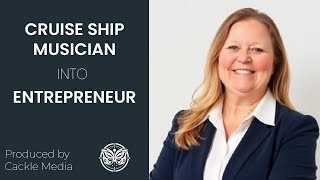
Transcript of a Transferable Skills podcast episode (host Noam Mishkin) interviewing Dani Robison. Dani narrates her path from cruise-ship musician to art auctioneer, then into financial services, mortgages, mergers & acquisitions, and real estate investing; she discusses money philosophy, networking strategies (esp. introvert-friendly tactics), public speaking prep/recovery, hiring philosophy, and using wealth to scale philanthropic impact.
Transferable Skills. Skills. From Kako Media, this is Transferable Skills. I'm Noam Mishkin. Today's guest is Dani Robison, who shares her skills journey from cruise ship musician into entrepreneurship and maybe even philanthropy philosopher. I hope you enjoy. Danny Robinson, welcome to the show. It's great to have you here today.
Thank you so much for having me, Noah. I am so excited to be here chatting with you.
Yeah. I actually get the pleasure of being able to talk to you on a fairly routine basis. And every single conversation I have with you, it's like mutual energy, I think. Like, we feed off one another's energy and vibes.
Thank you so much. I. The feeling is mutual. I look forward to our calls every single week. And there was a time where you went on a trip and I really missed you, so thank you. I'm glad we're getting our rhythm back on.
Fantastic.
I love it.
When we were introduced, you were in the midst of the early phases of a growing business in an industry that I have experienced in. So that's how we got connected. Connected. But it's funny, I think a few weeks into us talking on a routine basis, it occurred to me that we skipped some of those dating phases of getting to know one another and hearing about your background, which is why today's conversation is very exciting.
I love it. I'm excited for the same reason.
Great. Where does your skills journey begin? Where do you want to start?
Gosh. I was actually preparing for this podcast, going through your notes, and I just started writing down where I started my journey. When I was younger, I was a musician, played trumpet, and I went to school for it. I got a college scholarship for it. I played at Disney. Then I went on cruise ships. And then on cruise ships, I met my husband. It's a really great love story. Talk about destiny. And action.
But was he in the band too?
Yes, he was. And Trump player.
Oh, nice.
Yeah. Like, we literally have this story where he followed me. Everything that I did, he did one step behind me and a hurricane hit, and our cruise ships went to the Bahamas at the same time. And that's how we met. Like, it is a crazy love story. But we met and we started dating on cruise ships, and we decided to become art auctioneers. And so that's the first time from musician to art auctioneers, where my journey into. I'm just gonna say money. Cause it's a taboo topic, but I talk about it all the time, and it's been one of the things that has been a common theme throughout my Life after being a musician and from art auctioneers, I moved back on land and went into financial services and then mortgage industry and then mergers and acquisitions and then real estate. And then we built what we have today.
Every single one of those chapters in this book of yours is, could be its own one hour conversation and we're going to focus on a lot of the skills. I like that you said that. We're going to talk a little bit about money because it is a taboo subject and it's one of those things that is just so obvious we don't talk about it. You and I talked early on about some of the intentionality behind working hard and trying to accumulate wealth. Part of that is to live a lifestyle in as much as it is in order to be able to use that for good and opportunities to serve a community at large. So we can talk about that as well. It's funny that there does feel like a little bit of a taboo, but almost shame in talking about a goal of striving towards wealth and financial well being. But there's nothing wrong with it. And so I'm glad that you brought that up first.
Yeah, I grew up in, in church and religion and a lot of the people that I love and care about deeply were always giving back and never taking care of themselves first. And there's so much more that they could do. If they would have simply took care of themselves first and grew that money and grew that wealth and everything that they wanted to do in life, they could have done times 10 times, 100 times a thousand. And it's, I think it's part of growing up and wanting to make an impact in doing things for others. Like we all want to do it, but the people with money get to do more of it. And there was something I just learned really early on and I was just like, I want to go big. If I'm going to give back, I'm going to give back big.
Yeah. If you serve yourself first and as a means to then grow a larger amount in order to then give back in a bigger way. I don't know which one's right or wrong. They both have a place actually. I would argue, I would actually argue that it's the exact philosophy and strategy of all financial well being and investment, which is diversification. And so too in, in charitable contributions and giving back, whether that is time and money, resources, support, strategy, idea, whatever is, it does come down to a diverse community of how we give, in what manner, in what volume, quality, and quantitatively. So I'm glad That there's a lot of people doing it in different ways.
I've always had this desire to do things in a very big way. And I think, you know, some of it is just God given. Like there is a purpose why we're all here and why we connect with certain people and why we're drawn to certain things that give us joy. And mine has just been doing things in a very big way and surrounding myself with really smart, intelligent people like yourself. That's why I was like, noah, we have to start talking.
This is why I keep coming back. It's just all the compliments, but it's true.
I think that everybody has their own path, and together as a whole, the whole thing works. And we have to have that diversity in order for the machine to work efficiently.
Can we go back to your upbringing? Can you give me a little bit of context and paint a picture for me, if you will? What was your upbringing like?
Yeah, I grew up in the church. We went to the largest church in Phoenix, Arizona, Phoenix Assembly, Phoenix first assembly of God. And my dad was a children's pastor. And so we drove the buses to go pick up all the kids to come to church. We frequently went on missions, trips, trips and traveled and did weekends where we would give to the homeless. Like it was just all about giving. In order for all of that to happen, we'd always have to go to somebody who would have the funds for us to be able to do what we wanted to do and give of our time and give of our resources to be able to give back to people who needed help. And as I was growing up, I loved that part of it. But there was always this stumbling block. I felt that my family was poor, rich in love, but poor in money. And if they wanted to go do something good, they had to find somebody who had the means to be able to fund the operation of doing good. And I thought, man, I wish that, like, we just have this mountain of money because we just want to do good. We want to help other people and what, what a great cause, but we need money to do that. So now money is a tool in order to provide impact and do good. And because nobody in my circle had money, for some reason, I said, I'm going to be the one, I'm going to change it. I'm going to be able to give back and make an impact, and I'm going to be able to fund it myself. So I'm never having to not do it because I don't have the funds or I have to Go ask other people to give me money in order for me to do good.
At what age did you come up with these goals and determination?
I loved my family, and so I always said, I'm going to buy my mom a car, I'm going to buy my mom a house. I'm going to take care of my family. They're never going to have to want for money. I'm never going to have to want for money. And so that started early on. The desire to build something and make bigger impact grew with the confidence of where I was going in life. So as I did bigger things, I went, huh? What does this mean for what I can do as far as impact? I just, instead of thinking really big, like billions of dollars is where my brain goes now. When I was young, it was just thousands of dollars. And then can I eventually get to $10,000? And then $100,000 was big. And so I think it all just grew. But it started from the core of family. I just want to take care of them.
Yeah, the. I remember realizing when I was very young that everything I wanted, it was in increments of about $100. Everything was about $100. And then as you get into, like young adult age, everything is like about $1,000. And as you get into, like midlife, it's like everything is in increments of $10,000. And the same goes hopefully for your charitable contributions. Is that hopefully as your interests, wants and needs grow, hopefully also you're giving at that caliber by percentage. Really should be growing as well. It is a fundamental. What do you want to call it? Value, rule, expectation that is across the board in pretty much all religion. Is that the idea of, first of all, tithe. Yes, you know, is in scripture, but it is a belief system in supporting community. And even better. And the highest level is supposed to be in anonymity. And which is. I actually had this conversation recently with an organization where I always have this moment of conflict where there's an option to put your name or to check the box Anonymous. And I always wonder, if I check Anonymous. That's supposed to be the right way to do it philosophically, values religiously.
Yeah.
And I always want to do that. And then I wonder, but if I don't check Anonymous and my name is on a board, is that better? Because maybe it. It motivates others see that people that they know. There's always the question in your mind of I see these three people's names listed and we share a lot of belief systems. And I agree with a lot of the things that they do in their lifestyles. And so therefore, if they're giving, maybe I also. And there's also maybe even a peer pressure, positive peer pressure there, which is the result is we're giving. Maybe you should too. And it's such an interesting conundrum I'm always faced with. Supposed to be better or help the organization by putting your name on the list anyway. But I like that this has been a big motivator in your upbringing for yourself. Where did you find this confidence, though? Because you, you mentioned that as your confidence had grown and as you saw you were able to accomplish something, the question then, what else can I do? What did I learn from that? Where did you get that confidence from?
Yeah, I think it was literally from my parents being the type of people that always said, you can do anything that you want. And every idea I had it was, you can do that. They always, they just instilled this belief in me that I can do anything that I want. And so I just took that with me everywhere that I go and then I just went after it and I had this tenacity that I was just not going to give up because I was told I could do anything I wanted to. So if I'm not good enough, then I'll keep on practicing and I'll keep getting good enough and that. And I'll surround myself with the people to get me there. Because that was one of the important lessons when I was younger is my family was not my teachers in life. I had to go find other people to learn how to do other things.
Let's talk about that, if you don't mind. I want to dig into that because as you start talking about learning and growing and figuring out how to do something, I want to know what is the strategy or what is your go to method of learning something new?
Yeah. So I think it's truly about intention. What is the intention that you want to set for yourself of where you're going? And if you hold strong to that intention, you start asking the right questions and the people that surround you start directing you to the right places to go. For example, I'm going to use you because we're having this conversation. I have the intention of building one of my businesses in the home service business, circle trade. And as I'm exploring this intention of getting better and surrounding myself with people who can add value to my organization, that intention leads me to, hey, Danny, I know somebody that I think is really going to bring a lot of value to you. And then I got introduced to you and then we developed this relationship and we started working together. And I think we've known each other for, I don't know, three or four months. But like the time we've spent together has been so incredibly valuable and life changing for that particular company. And so that intention set out to the right people led me to you. And so I've always done that and it's always led me to the people that then poured into me and allowed me to grow.
Thank you. I wasn't asking for a compliment and I appreciate that. It was a.
It's just great to use you as an example because the words are.
That'S why we're here.
I agree.
Networking is its own skill. How do you network with strategy and intentionality behind it to hopefully accomplish goals with call to actions?
So that's a great question and it's something I learned. It was part of networking as a skill. Right. And yeah, it's sometimes the skills that you're learning, you're not really good at them. The traditional way of how other people practice that skill that makes you think.
That sometimes you're going to be given advice on how to do something or practice it, follow these directions and steps. But maybe it's not actually the best method or maybe it's not the one that's going to lean on your strength in the way that you would come to that conclusion.
Yes. You nailed it.
Wow.
So I've always been taught networking, you have to go to these big events, you have to go there and you have to talk to people and mingle and. And I'm not good at that. I am an introvert mostly. And I don't like shallow conversations. I like deep relationships, deep conversations. If I'm going to connect with you, I really want to get to know you. I want to have a relationship and I want to have a long term relationship and I want it to be win win. I want to benefit each other through life, business, whatever it is, I just want to be there. And so getting in a big giant room with a bunch of people I don't know and creating conversations, not even knowing exactly who to talk to, who I can help, who can help me, was a nightmare. Then I thought, this is the advice that I'm getting to go me people. This is going to be so hard because it's just not me. It's not how I do things. But then I learned that after those, I go in with the intention of knowing what I'm looking for. I did steer clear of shallow conversations because I'm just simply not good at it. And I would start telling people a little bit about what I do and they would start pointing me in the direction, hey, go talk to this person or this person. So I would start gathering names and information, and then after the event, I would connect with them, send an email, great to meet you. We didn't get to talk a lot. I would love to connect. And it was through that experience that I decided what I did not like, what I was not good at, but where the relationships came was those after conversations. And so I said, how do I do that without going to the big event where I don't want to be having these social conversations and be freaked out by all these people and be just mentally and physically drained after that. And it came down to, who are the relationships that you have right now? Ask them. Because many of them are extroverts and they love those events. So I found the people who go and they have all the tentacles out. And I say, hey, Noah, this is what I'm looking for. And we've had this conversation before. This is what I'm looking for. Do you know anybody? And then introductions happen and conversations happen and boom. I did not have to get uncomfortable and I got to create a deeper relationship with somebody.
Yeah, you nailed that. I. The whole time I was thinking, God, I love. That's my favorite. I love going to big events. It's not shallow conversations to me. Although I know what you're saying, they're superficial, they're not that deep as you described. I do love the early kind of stages of conversation, getting to know someone, because there's no bias, there's no agenda, there's no bias, typically speaking. And it's just pure curiosity. For me, I could very quickly turn that shallow conversation into a more meaningful conversation. And what you describe as the part that you enjoy more as an introvert is the follow up. And almost like the sales cycle, the follow up and the networking part and getting down to where can we get the best output from that relationship?
Yeah.
Mutually beneficial. And so I guess I would posit that you and I as a team would probably be that perfect balance. Like, I'll go to the events, I'll meet all these people, I'll have a great time, I'll get to know 30 people. And you'll probably have 10 meaningful follow ups from those 30 people.
Yes, 100%. And that's where I found the power of us going to Vegas for leadcon when we had that trip, because I was like he's got the relationships, he knows of people, he, this is what he's good at. I'm just going to be there with Noah.
Yeah. Did you read the book Quiet by Susan Cain?
I have not.
I don't know if you need to, but for the listeners out there, I read this book maybe seven years ago. I went into it a little bit skeptical. Certainly I was the perfect audience for the book, which is the book itself is all about introverts and the misnomer that extroverts are perceived as the most likely to be strong candidates for big roles, outward public facing positions, big speaking events. But the book really squashed that misnomer and it, it changed my entire understanding of introverts. My wife would self describe as an introvert and she's a principal of a school and she has to do a lot of public speaking in navigating many different conversations and groups of people. And I love getting up on stage and talking. I love talking to big crowds, I love talking to small crowds. But what I, the, what the book really taught me was that it's not that introverts aren't good at or can't fill in the blank, speak in front of large audiences, run a large company, negotiate a gigantic conversation, a big event. It's not that they can't, it's that what is their process for recharging after? So what do they do to prepare for that position, that event? What do they do afterwards to recharge? How long do they need to. It changed everything and it also opened my awareness of how many introverts are actually in these positions that I would have assumed were extroverts. I've had people by the way, who at first glance I assume that they're extroverts and then they explain to me that they're an introvert and why and how they behave and it like it just completely changed my entire understanding and it was a great book. Yeah, the rabbit hole down, down, down that.
I love it though because you could put me in two different rooms and in a room where I'm the speaker and I am giving and people are coming to me and I am helping. I'm charged.
Yeah.
Put me in a room where I don't know anybody and I have to try and find the people who I should be talking, who I can help or they can help me. And it's conversations that for me are like surface level and I'm not good at. I'm drained because of the stress. Two totally different things. So I love the example that you gave, because I think that there's power in each personality type and where they get drained and where they're given energy as a result?
Yeah. So far we, by the way, use diversity to talk about investment, to talk about charitable contributions, different tactics. And now we're using it really to talk about a diverse team and of skill sets and individual personality types to really have the best outcome of a situation. However, let me give you a scenario. You're at an event, you're alone. You don't have a wing person. I was gonna say wingman, but let's keep it, Chelsea. Let's keep it open and diverse. So you don't have a wing person. What is your strategy or tactic to at least manage, if not overcome, the anxiety or stress of those situations in order to figure out who to approach, how to approach them, and how to get down to where it actually is a meaningful conversation? What do you do in that situation?
Fortunately, these days, typically at events, they will require you to get into small groups where you're forced into this interaction. But prior to that, when it's just a. You're sitting and you're in a crowd, it came down to talking to the person next to me. And sometimes, I'll be honest, I just didn't do it. I went there, I didn't talk to a soul, and I left.
Oh. So let me ask you, when that happened, those events where you may have just been intimidated, not prepared, ready, or interested in talking to anyone, and you left, did you feel like you didn't get anything out of those events or significantly lower value out of those experiences?
No, actually, because I am an avid note taker. So I listened to the speakers, took great notes, connected with the speaker after the fact. My intention was clear of what I wanted and why I was connecting with them. And then they either served me in the way that I needed to be served or vice versa, or they connected me with the people that I needed to connect with because I didn't do my networking. Yeah, I. Yeah, I thought I. I left the event, and this was a learning lesson. I left the event feeling like a failure because I didn't step out of my comfort zone to talk to people I knew I probably should have been talking to. But then I said, after the fact, what can I do? Let me reach out to these people who I actually think could help me. Let me tell them what I'm doing and see if they can connect me with the right people, since I didn't do it myself in the room.
Yeah. So almost like the guilt or anxiety afterwards of not doing, not participating, not interacting, motivated you to say, I still need to get some value out of that event.
Yeah.
So what can I do to extract more value after the fact? That. That's a great example of using some of, like your own personal pressures that you put on yourself to actually get more value and to perform at a higher level. Okay, it's 2025. You remove all of the people from a conference, from an event. There's nobody there. You don't have to talk to anyone. You don't have to interact with anyone. You're a diligent note taker. You're great at listening to speakers, taking notes, understanding, synthesizing that information down. Networking piece of it. 2025, do you need to go to events or can you just attend webinars and watch YouTube videos or TED talks? Is there still a value? If you're not going to use the network of attendees, is there still a value in going to these things in person?
That's a great question that I'm actually working through in my head and with other people in conversations right now because I feel like there's so much information that you can find online. There's so many opportunities to use your network to reach out to other people. But right now I'm hiring for about five different roles. And one of the challenges that I've had in business is finding people that think as big as I do and aren't afraid to go after it. And as I'm talking to coaches about this, and I'm just like, I need to meet somebody that's not scared by my ideas, that wants to take this ride and go. And they're like, you need to get in those big rooms because those people hang out in these, those big rooms, or they're in certain pockets of the country because they all hang around the same people. And so then I'm like, okay, I can't do it all here from home. Like, I am going to have to find the rooms that these people are in so that I can connect and be able to successfully continue to build. Because I have more people with similar mindsets and growth desires as I have.
Yeah, I know you well enough to know how you think a little bit. Which is today your goal is how do I maximize opportunity, potential, but also being very lean and efficient.
Yes.
If you don't mind. At the risk of maybe focusing too much or exploiting some of you, personally speaking, can we still stick to the introversion for a quick moment? Because you do speak a lot, whether it is on shows or live events on stage, you're seasoned, you're experienced, and you're an introvert. So can you tell me, personally, speaking from your standpoint, as somebody who is an introvert but still enjoys speaking, what is your experience? What is your process for planning for delivering and recovering from a live speaking engagement?
Great question. So the planning is natural. I love research. I love writing. I love prepping. I love being organized. I love all that alone time that gets me really ready for an opportunity to speak to other people. Then the nerves come, and that is just blinding sometimes. And it just takes you all the way up to the point where you start. And then you remember, I'm just here to have a conversation, and I want it to be meaningful. Or I'm here because I can do something to help other people. So stop thinking about me, start thinking about them. And it shifts that mindset. But sometimes it takes all the way up to the point where you hit that moment to actually feel that way. And then once that starts, then the momentum, like, I'm having a blast right now having a conversation with you, because the energy has shifted to a meaningful conversation, and so that matters. And then after, I'll probably lay down, I'll probably just go outside, just be still for 20 minutes. Or knowing me and my schedule, I might hit a meeting and a meeting and meeting meeting. And then there has to be the decompression time. There has to be some alone time where I just settle back and think and be grateful for the bravery to do something that's out of my comfort zone, but something that I truly enjoy once I'm there in the moment.
Yeah, that's awesome. You're talking about, like, the recharge after this conversation. And in my head, I'm thinking, as soon as this is done, I've got an hour where I am doing some post work and then prepping for an immediate second podcast interview that I'm doing only an hour after we're done. And that fuels me. That is my recharge. The interactions and engagements are by my fuel, and they recharge my battery. If I can be so bold as to make an analogy to how you and I, respectively, recharge. You're the ev, you're the electric vehicle, and you got a lot of energy, a lot of momentum, a lot of horsepower and drive, and then afterwards, you got to recharge your battery. I feel more like a hybrid vehicle where the movement of the car is simultaneously charging the electric battery in that hybrid. Vehicle. And once in a while, I gotta fill up and put gas in it.
Yeah.
But the momentum is what's charging the battery in real time.
That is a really good example. I love that. That's so true. Because at first you were talking about. I was like, oh, but, yeah, no, I can see how the momentum that charges me, too. Oh, no, you're gonna have to rest.
Yeah.
You're gonna have to plug in Danny.
Yeah, I think we all need the rest. I just think we need them differently.
Yeah. Yeah, I agree.
And I don't know how much sleep you get, but to me, I have figured out Sometime in my 30s, I realized seven is my goal. Seven hours is my goal, to sleep. If I get six, I will function, but I can feel it. If I get eight, I feel really good. Nine is amazing. So my goal, at a minimum is seven. I could go like this all day, back to back, talking to people, and I will be fueled, and then I'll sleep well tonight. And. And I know other people that are. That operate very differently. There's no owner's manual correct for human beings. And I think that's part of what makes us diverse and makes us really special, is that you figure out hopefully at some point what works for you. And part of the spirit of the show is to find out what works for others and for the listening audience to be able to say, let me try that. That was an interesting point. Or I never thought about that way. Let me apply that to my own life and see if it's sustainable and actually improves and works. So that's what we're hoping to tease out here. Just let's go through some of the businesses so we have an understanding of what. What you do, and we can extract some of the skills that we find as through lines, through these.
Okay. As we talked about, I started off as a musician, but the moment I transitioned from musician to the next career was the moment that I went into a world of finance and money and growth business. And every single career thereafter has been a stepping stone and a way to build skills that translate to every single. It's almost like it was a path that was written for me to get where I am today, to build the businesses that I've been able to build today. Like the art auctions. When we became art auctioneers, we were on cruise ships still. We got to meet other wealthy people who had excess income and were coming to buy a Chagall or a Picasso or to park their money somewhere. And we didn't know really how much money anybody had because they're in shorts, swim trunks, flip flops, whatever. We were just there and we were the art auctioneers talking to them about the different pieces of art. So that that took me from musician to entering the world of money and wealthy people. And that transition from art auction. We were traveling on cruise ships and then we got promoted to land and traveling across the United States to do art auctions for VIPs and things like that. That led me to I, that's the world I want to live in. That's actually what as I we talked about, I wanted hundreds and then Thousands and then 10,000. And like, I started going, oh, look at what's possible. Okay, this is the world I want to live in. Because it actually achieves everything I've always wanted, but in such a big way. And I was so attracted to big. I went into the financial services industry to learn more about money and investing and asset protection, that whole world. I worked at Life, and I learned about cash value, life insurance. I learned about mutual funds. I learned got my Series 6 and 63. I was on my way to getting my Series 7, but then I decided, okay, I've learned enough about money and investing, but I just don't feel like my gut's telling me this isn't the path. So let me go into mortgage. So I went into the mortgage industry and learned about real estate and about loans and how to leverage and the different qualifications and different types of loans depending on your income level and things like that. So more along the path of finance, but entered into the world of real estate, real estate. And so I took that knowledge and skills and I said, hey, I really love real estate, and I've met some really cool people who run successful businesses. So I start teetering between business and real estate, and I go into mergers and acquisitions first. And that was probably the shortest career path that I had because it was in a cubicle and I was calling people, you want to sell your business? And that was not my life. I knew that for sure. So as I was doing it, I learned a lot. And I feel like I learned enough that I went, okay, I've learned enough here. I'm now going to move on to the next thing.
And when you say you learned enough was the subject about finance and that was it. Also the skills that took to pick up the phone and just, you know, bang the phones all day, dial, ask the questions, get rejected, tell me the balance between subject and skill.
Yeah, my desire and willingness to leave was knowledge because I'm an avid learner I always want to learn. I'm very disciplined and I want to master whatever it is that I'm doing. So I had learned enough to feel like I could go. But the skill that was taught there was what you just said. Banging on the phone, sitting down that cubicle, like getting turned down all the time, talking to people about money, about business, about all of our financial situations, why do they want to sell, what's going on, and learning all of that data, it gave me tenacity and willingness to just keep going. It didn't matter how many times I said no or I got hung up on or whatever it is that conversation led to. It just made me push, push also made me go, I don't want to do that for very long. So I took that knowledge and I said, I'm actually good with the knowledge that this brought me. I think I've up leveled. And so now let's go into real estate. And so I went into real estate. And when you go into real estate, most people don't know the avenues in which you can go into real estate. They typically think if they're an investor, they typically think, I got to buy a house, I'm a buy and hold, I'm a landlord. That's typically the path. If you're not an investor, you typically go the Realtor route. You think you have to go get your license and go work under a broker and help other people buy and sell homes. At that point in time in my life, I chose the Realtor route because I wasn't an investor yet. And so as I was a Realtor, we had worked on cruise ships for so long, we had no network. And so most Realtors start their career using their network and helping their network buy and sell homes. So that was like a big crash and burn. So I found a mentor with that direct intention of what I wanted to do. And he taught us 12 ways to buy and sell real estate. And suddenly I was like, I don't want to be a Realtor. I don't want to do this for other people. I actually want to be an investor. And I learned how to become a real estate investor without needing the capital to do so. All of these strategies that you can do in order to buy and sell properties without needing the money.
Realizing you wanted to get into the investment route for real estate, did your financial background give you more access to strategy or was that strictly from taking these courses?
And learning outside the financial background really did help because there was this knowledge and experience and track record in the financial Space that provided a level of trust with the people I was talking to, whether it was an investor who wanted to loan money in order to buy a property that I could do something with, or a seller who needed my help selling a property that they couldn't otherwise sell, maybe in a traditional manner, because I was no longer a Realtor. So it was that background and ability to talk through finance and ability to give people options because I'm not a natural salesperson. I want to help you, I want to serve you, I want to educate you. And so when I walked into those relationships for the very first time, I said, I've got all of this experience. Let me tell you what your options are. Here's option one, option two, option three, I can help you with all three. You choose which one's best for you. And people loved that. And that was my sudden realization that human connection, meaningful conversations, knowing people's destination and where they want to go in life and what they want to achieve is probably more important than anything else. And if you can use your background and skills to be able to help them in those ways, it becomes a win win for everybody.
Yeah, great observation. Did your experience as a Realtor at all influence your strategy or.
100%, because I still speak it to it this to this day about what realtors do and how they think. They don't have an investor mindset, they don't have the financial knowledge. They are there to create a transaction and many times they don't even understand the transaction and all the moving parts and how to accurately help the person that they are serving. So even when I'm buying a house with somebody, with a Realtor on the other side, I'm like, your Realtor's not even serving you. You don't even know that this is an option. This is actually better for you.
Are you saying, are you speaking specifically about the financial components of it, the mortgage and other things like that, or, or you're saying in the full end to end experience. And I'm pushing, not pushing back. I'm asking because I recently interviewed a Realtor and I think it's one of those jobs where everybody sees a Realtor, they think they understand what they do. But when talking to Realtor, you realize there are so many other parts of their job that you're unaware of, that they have to juggle, manage and advise their clients. And many of them do it very well. So I'm curious from your experience, what are areas that you wish brokers, agents and realtors respectively, could be doing better or should be more aware of.
I think it's the financial background and I think it's learning how to invest properly in real estate. Even if you're not technically an investor, your home is an investment and how you structure that deal and how you negotiate that deal matters. And if you don't have that background and the skill set or the experience of the back and forth, then you're being trusted, but you don't have the experience to be trusted. So the realtors that I really admire and respect are the ones that are sitting next to somebody who's been doing it for 20 years and are getting like double checked at every single, hey, Noah, this is what's going on with my client. This is what I advise them. Is there anything that I'm missing? Should I have said something different? Should I have presented it in a different manner? And those realtors are serving their clients in a great way. The realtors who are just going, I'm just going to put a sign in the yard or I'm just going to show you a few houses. There's so much missed. We actually had a closing in the last couple of months fall through because the realtor just didn't give them a net sheet. By the time they closed on their current house, they were, I don't know, 10,000, 10. Somewhere between 10 and $20,000 short to actually finish the purchase over here because they didn't get educated about the financial side and they were trusting their realtor for that information.
Yeah, pitfall. And it's avoidable.
It is.
Are there more options for a home buyer than what we believe? Do they have more options than just what we're typically told?
Great question. I think the one gold nugget that people don't know that they would probably have a leg up in their home sale or home purchase would be finding a realtor that actually has that investing in financial knowledge because they just know an entire different world and they will go about things completely differently. Like, I even had a realtor from Maine saying, hey, what would you do? In my case, this is what I'm looking to do. And I gave him all this information. He was like, I had no idea. And it's because I'm from this different world and I just have different knowledge and experiences.
If somebody came to me and said, my child is thinking about starting guitar lessons. What guitar should I purchase for them? My answer is going to be very different from somebody who's been playing for a number of years and saying, I'm thinking about getting another Guitar, where should I purchase it from? And they know the guitar they're looking for. The different opinion or advice that I would give is based on who you are, the context and what your goals are. Because when I'm purchasing guitar, it's first and foremost, it's out of curiosity. I'm interested in trying this guitar and I'm going to look at the secondhand market and I'm only going to buy it when I find it for the right price. Not because of affordability but because of resale opportunity. I don't necessarily think of it as an investment per se, but I certainly think about the utility of what I'm going to get for it and how long I expect to have it and if I'm going to lose money on it or if I could buy it at a price point where I know I could at least break even if not sell it for more. So I do think of it through the lens of all of the decision making process as one would in investment, but not as a quote unquote investment. It's not a financial investment, but more so let's call it a responsible purchase.
Yes, yes, 100%.
And that makes a big difference with the market, how the market is doing the US both nationally, regionally, locally. It has to do with hyperlocal. When you find a realtor who knows your hyper local specific area, it actually makes it, it makes a big difference because one neighborhood is different from the next neighborhood, one street might be different from the next street. And when you make a purchase of a home, it could literally be the difference of we talked about this earlier, tens of thousands, we're now adults, we're increments of tens of thousands said like a deal fell through because they were off by that net of the 10, $20,000. And the timing of all that too. And so when you do find the home, it's not just about amortizing that cost and thinking about I hope to have it for 30 years and 40 years. And so the difference of this amount of money is negligible when you think of it from a monthly mortgage standpoint. And while that is true, and it might be how you justify affordability on your purchase or what it is you're going to purchase, there is yet another filter with which you can think through making that purchase, that decision. And is this the right price point for me in this time in this market for this house? Because I also can't predict what will happen in five years, let alone 40. And what if I have to? It could be for good reasons, too, by the way. I got a job I can't say no to, and it's somewhere else I got to move. And so now I'm selling it much earlier than anticipated. And typically, what. What do they say? Three to five years you have to own before it usually is the right time to sell because of just all the closing costs involved that you have to cover.
Yes.
Unless it's an outlier of a market where, like, it really skyrocketed. Those are outliers. We don't count those. But typically speaking, what if you had to move sooner than that? Three to five years. The question is, did you get it at a great price point where it really doesn't matter? So that's a great. That's a great lesson, and I appreciate you giving that one to us here, because I think about these things in certain contexts, but not all. And maybe I should be thinking it more broadly, too.
I think it's one of the top transferable skills in life in general, is the research and due diligence you put into who you work, you're working with. Because I can provide so many examples. But as you were talking and you mentioned mortgage, I was like, I know a guy that is one of the best mortgage brokers in the United States, and he goes on stage all the time. He talks about history. He talks about refinances, when you should refinance, when you should not refinance, how much you're losing because you chose to refinance because somebody told you to and you shouldn't have. Like, it's the level. You and I recently had a conversation in a call we had about Ferraris and about hiring a Ferrari. Somebody who you bring on and you simply get out of their way because they have the knowledge and experience and historical track record to do way better than you ever could even dream of. And that is my current intention in business, in life, is how many Ferraris can I surround myself with? Because that's where I really put them on the track.
Get out of the way, let them do their thing.
That's right.
Part of my philosophy as a hiring manager. I'm not here to tell them how to do something. I'm here to give them the context, to give them our values, and they understand what our mission is. And now they do it the way they do it. That meets our mission. And I hate micromanagement. I don't want to be on either end of that. And. And so it's amazing when you have the opportunity to hire those Ferraris you give them enough information, what they need, and then they're. It's off to the race. Go.
Yes. The big thing that I talk about all the time is us as humans, humanity in general and our pursuit of purpose, love, connection, freedom, safety, peace, joy. And I've always just lived my life in a way that I just follow the path, the divine guidance, if you will, because I don't. There's very few accidents. I truly believe this. I believe you meet people and do things for a reason, and I'm just a strong believer in that. All your gut and you'll get where you want to go.
Well said. Given your natural strengths and learned skills, what job might you excel at but are also exceedingly overqualified for? What would those be? You can give me 1, 2, or 3. Any examples?
Yeah, I actually had a few, but I'm going to nail one because it was my favorite. And the word guilty pleasure is what honed me in on this one. And it was traveled concierge to billionaires. And why I chose that is because of my life's theme of wanting to make an impact, wanting to grow, wanting to make a lot of money. That taboo subject. I'm not afraid to say I'm going to take care of myself, I'm going to take care of my family, I'm going to take care of those I love, and with all of the abundance of excess, I'm going to give back and help change the world. I think humanity in general mostly has this mindset. I think humanity, we're good, we're all good people with a purpose and what we want to feel fulfilled. And I think once you get to that billionaire level, it's a totally different game. So why I feel overqualified is because I'm on the path and I want to be the one hiring the travel concierge. But if it's a guilty pleasure, I want to be the concierge so that I'm in those conversations, I'm on those planes, I'm in those destinations, around those people, hearing the conversations, the deals being made, how they're impacting the world, because I'm just. I'm stronger for it.
Well said. The intention of this is when people list a few different guilty pleasure jobs that they would be exceedingly overqualified for, but they would love to do and think that they would nail it, just kill it. In those jobs, it's to tease out the. The subjects, the interests, what brings you joy, and ultimately to extract those skills and then apply them into your role or Any role that you're looking for, typically it's about the skills. And in your case, your answer is really more about the value. It's not that the skills are what you're teasing out, but really the value of what you believe in and what really drives and motivates you constantly. So I love that answer. Thank you for sharing that.
Yeah, my pleasure. One of my other ones was an ice cream shop owner. Like, I just started laughing as. So it's a great question. I love that you asked this on the podcast. It's just phenomenal. It gets your brain thinking in different ways.
I used to ask this question at work and the initial superficial fear is, are you trying to encourage somebody to quit their job at the company to go pursue? I'm like, that's why I'm looking for exceedingly overqualified guilty pleasures, is that it's unlikely that someone's going to quit for that and go for it, go for it. If that's really going to bring you joy in life, absolutely, go do it. But more, more about, like, how can I elevate my experience here in this role or what I need to do in life and purpose and find out the things that truly bring me joy? And then you find flow. You find that zone of genius. You find all of these areas to help elevate the qualitative experience of your role and your performance and deliverables by way of leaning on the things that. That you shine within and your skills and strengths and interests. So, anyway, I appreciate you entertaining and humoring my curiosity here.
That was so powerful and so very well said.
Thank you, Danny. It's so wonderful to talk to you as it always is, but especially on this show in this format and context, and to share yourself with our audience. I really appreciate you being here.
Thank you so much for having me. It was a joy.
I want to thank Joe Flanagan for introducing me many months ago to Dani and for Danny Green to be today's guest on the show. I also want to thank our listeners for joining us on this episode here of transferable skills. Remember, the skills you've gained can take you anywhere. Until next time, keep exploring those transferable skills.
More from Dani











Physicians and High Earners — What Real Estate Can and Can't Do for Your Taxes