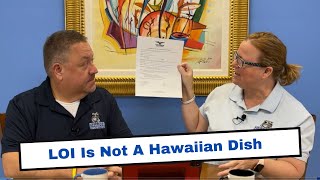
Flip and Danny explain what a Letter of Intent is in commercial real estate. An LOI is a one-page, non-binding summary that moves negotiations toward a Purchase & Sale Agreement. It covers price, down payment, earnest money, contingencies, and timelines, and signals seriousness while reducing early legal costs.
Hey, everybody. Flip and Danny here, founders of the Freedom Real Estate Group family of companies. And welcome to another episode of our podcast, which is called Freedom through Passive Income. That's right. And today's episode is called what is a loy? No, sorry, what is an LOI in real estate investing. I get the. Danny, that was awesome.
I feel so bad for everybody who doesn't watch the video because they totally missed the oi.
Yeah, yeah. You want to watch that big eye roll. Yeah, actually, I think they could hear the eye roll.
I think.
Yeah, yeah. Loi. So what is an loi? It stands for letter of intent.
That's right. So we actually brought one with us today to show you. It is very simple. It is only one page. So that's one that we just recently sent out for a deal that we're looking at. And ideally it's just a one pager that outlines the terms and the conditions of the deal.
So in commercial real estate, this is what starts everything. A lot of it is back and forth, hey, can we bout this? What do you think about this? What about this? Hey, can you do this? But then it starts to get this. The. The loi is what starts to make it okay. Now we've just went from hey, we're talking about a deal to okay, now we're really serious about a deal.
Yes.
And it's what it. It's before the psa.
Yes.
Which is not a public service announcement.
Purchase and sale agreement.
There you go.
Yeah. So another important thing to note about an LOI is that it's not legally binding. Exactly. What Flip just said. It is the initial back and forth. So commercial is very different than residential. It in that in residential, when you're ready to make an offer, you actually write up the full offer. Some agents will just do kind of a verbal to get an idea before they do all the work. But in commercial it's always a back and forth. Nothing is legally binding. We're just trying to get on the same page type of thing.
But it is signed by both parties.
It is.
So there is signatures for both parties, the buyer and seller and their title and date. So it seems very legit.
Yes, 100%.
So but where are we at? There we go. So once it's signed, Sorry, I moved it up. I lost my place. So once it's signed, once the LOI is signed, then we send this off to the attorney and the attorney goes, okay, what do I need to do? Oh, here's what I need to do. Everything's already in the loi so that way the attorney knows what to draw up in the psa.
Yes, and that's a good point because once you involve the attorney now you have expenses, right?
Oh, it gets more expensive.
Yeah, we don't want to pay all those expenses up front when we're not even on the same page with the seller. And those basic high level terms aren't going to be accepted. So some of the things that you're going to see on an LOI are the offer price, the amount of the down payment, due diligence timelines, financing timelines, closing timelines, and any special provisions. So on this one that we brought here, that we just submitted, we've got the seller and the buyer and the property at the top. Obviously that's important. We have the sales price, how much we're going to pay in cash, that would be our down payment. And then the financing amount. We've got the earnest money information, how much of it is due upon execution of the purchase contract, when it's, when the rest is due, the title company. And then it lays out those timelines. I talked about the due diligence, the financing contingency and the closing date. We do add in here the survey, that's not really necessary, but it's just nice to have in here as to who's going to be paying for it. And then we have our special provision section and then we sign at the, you know, at the bottom. So it's just like we said, high level. Right, right. Basic terms of the deal. That's it. Because once we've agreed on that, we can have the attorney get started.
Right. And so essentially a good LOI helps both the buyer and sellers, then that they know, they ensure that they're both on the same page. There's no, oh, hey, what about this? You know, did they say that, did they want this? I don't know. It's not, you know, nothing like that. Everyone knows what pays. They're on. And it also, it also shows the seller that, hey, we're not just tire kickers.
Yes.
You know, so, you know, we're serious. This is what we want to do. Here it is. Sign it, let's move forward, let's rock it.
Yep. And then like we said before, again, we're just saving on attorney costs because we don't want to engage the attorney and get that bill going before we know for sure us and the seller are on the same page.
Exactly. Because a lot of times the LOI, it never gets that far. Something happens, another buyer comes in, whatever yeah.
Or the seller and buyer just can't get on the same page and therefore we've done nothing but exchanged a few one pagers. Awesome.
Well, excellent. Well, we hope that this one was beneficial. I hope you enjoyed this episode. We do like to keep these as short and sweet as possible. Make sure you're going down to our website, Freedom Capital Investments, and joining our investor club. Yeah, investor club. But make sure you go in there because there's more information there than is on the Facebook and LinkedIn groups. So you get more information about things that we're doing. Just go there, sign up, you'll see what I'm talking about. But if you're on YouTube, make sure you hit the subscribe button. And if you're listening on any of the other platforms. Hello. We hope that you're enjoying these. Make sure. Reviews. Great. Reviews are great, but any requests, recommendations or anything like that, just let us know. But we always end with invest smart, Live happy. Bye, everybody. Nothing on this show should be considered specific personal or professional advice. Please consult an appropriate tax, legal, real estate, financial or business professional for individualized advice. Opinions and information on this show are not guaranteed. All investment strategies have the potential for profit or loss, y'.