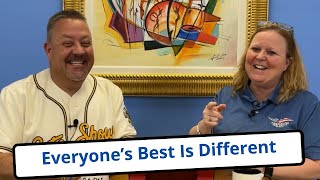
Flip and Danny from Freedom Real Estate Group compare passive income strategies: turnkey rentals, syndications, private lending, tax liens, ATMs, and BRRR programs. The best one depends on what you understand and feel comfortable with, and your preference might shift as you grow.
Hey, everybody. Flip and Danny here, founders of the Freedom Real Estate Group, family of companies. And welcome to another episode of our.
Podcast called Freedom through Passive Income.
And welcome to another episode. This one is called what? Passive income is bad.
Yes. And so I was like the other day going, hey, what else do we talk about? And so I found this tool that says, what do people search for? What questions do they ask? And so I was like, what questions do people ask about passive income? Because that's what we talk about. And this was one of the top ones, is people want to know which one's best. So let's talk about that. Flippy.
Yeah. Which one is best?
It's the one that you understand and you're most comfortable with.
Absolutely. If it's confusing, I'll run away.
Yes. And I think a lot of people will say ATMs are the best. Apartments are the best. Single family housing is the best. There's a lot of really great ways to create passive income.
Yes.
Notes, tax liens. Like, there's just private lending. There's so many ways to create great passive income. But unless you understand it and you're comfortable with it, you probably aren't going to invest in it. And, and. Or you shouldn't be investing in it because it could be riskier than you actually realize. And so every passive income instrument has a level of risk. It also has a level of activity. Do you remember when we did the whiteboard episode?
Yes, I do remember that episode.
I think we did a mini version of it here on this podcast, and it was usually evaluating fix and flips versus turnkey versus syndication and talking about active income versus the passive income that turnkey can be and syndications are. And then, like, we even created a report that I don't even think we give away anymore.
Right.
And it was a report of passive income scales, because even though turnkey and owning rental properties produces passive income, it's a little bit of work, right?
Well, it can be.
Yeah. So talk about that.
Yes. Okay. No, with turnkey real estate, I mean, you know, you. You choose your level of involvement.
Yeah.
And so you can be the. Gosh. We had a couple from California, and they came out here, they bought three houses, and then they went back to California. We never saw them. Never heard from them again. You know, and they. That's all they wanted. They just. They want properties, but they don't want to do anything. They don't want to. Just don't bother us with a thing. Just send us our check.
Yeah.
And then there's other Investors, actually there's turnkey investors that live here locally, you know, and they're, you know, going out to their house, checking out their house, making sure things are okay, and coming by, coming by here to talk to the property manager. And I'm just like, like, okay, you don't have to do any of this, but okay.
Yeah, yeah. And besides turnkey, we've got separate programs, right, that we created that's very similar to Brrr. And those are for investors who actually want the passive income, but they want to be more active and, and getting it. And so that's kind of how you have to decide what passive income is best. You have to understand, understand it, be comfortable with it, understand the risk associated with it, and then decide how active do you really want to be. Syndications, funds, private money lending, there's such a distinct limit in how involved and how much activity you have to do. It's typically like a couple, you know, review these documents, understand the investment, sending.
Your money, send in your money, and you're done.
Yeah, yeah. And then you get cash flow, you know, and then there's turnkey investments and other types of things that you just have to be a little bit more active, maybe working with the property manager or whatever. So you just have to evaluate it from all angles and know these questions to ask. Because that's what this podcast is for, is because you don't always know the questions to ask. People might go, oh, a turnkey rental party, you do everything for me. But that's fantastic, I'll do it. And they don't realize that, hey, when something expensive or over like $1,000 happens, you're going to get a call and you're going to have to approve it. Or sometimes if there's vacancies, if tenant leaves and then they're going to pre screen a new tenant and you might need to be a little bit involved and suddenly that passive thing, you're going, oh, well, I'm more involved than I really wanted to be. And so you just have to understand the level of involvement. And that's really the key to our answer, the one you understand and you're the most comfortable with. I think it's as simple as that. Nobody should tell you which one is really, truly best. It has to be your decision.
Exactly. Because everyone's best is different.
Yes, exactly.
Yeah. So the one guy, he likes to get knee deep into everything on the single family properties, but then you got the other couple, like I just said, from California, that just said, here's my money, don't talk to me.
Yes. Yeah. And ours changed. I think we were listening to church this weekend and the pastor was talking about relationships and how he, he joked, he says, my wife's been married to seven different guys. It was about him and his depending on his age of life and where he's at, mentally, spiritually, whatever. He is a different person. And so translate that to our investing journey. At first, we were doing a lot of stuff ourself in short sales and subject tos and wraps and mortgage assignments and. And then we got into where we go from there, really. We started, well, we started wholesaling in Arizona and then we came to Florida. No, came to Ohio and started the turnkey real estate business that expanded into these six companies. And now we're dead in love with multifamily and getting into storage as well. So I think different sections of your life, you're comfortable doing different things. Everything leading up to now was far more active than this multifamily is. And it's because we're now at a stage of our life, we where we want to build the true passive income because we understand what we want now more than we did before. And so I think things change, too.
Absolutely. And by the way, I've lost count as to how many men you've been married to. So make sure you head on over to our website, freedomcapitalinvestments.com and join our investor club because again, we talk about the deals inside there that we don't talk about elsewhere. Make sure you hit that like button and make sure you're subscribing, doing all that stuff. Let us know how we're doing. But make sure you interact with our team over on Facebook and LinkedIn as well. But we'd like to end all of our episodes with Invest Smart Live Happy. Bye, everybody. Nothing on this show should be considered specific personal or professional advice. Please consult an appropriate tax, legal, real estate, financial or business professional for individualized advice. Opinions and information on this show are not guaranteed or all investment strategies have the potential for profit or loss. Y' all.