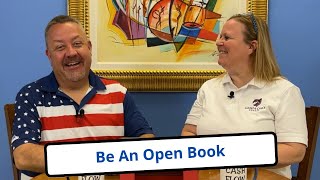
Flip and Danny explain how to build trust with real estate investors: tell the truth, admit when you don't know something, and share problems with solutions. They walked away from a senior-housing deal to avoid being guinea pigs with investor money.
Hey, everybody. Flip and Danny here, founders of the Freedom Real Estate Group family of companies. And welcome to another episode of our.
Podcast, which is called Freedom through Passive Income.
That's right. And this episode is entitled this. Welcome to another episode.
Yes, yes.
Forgot to say welcome. But this episode is entitled Best Way to Build Trust.
Yeah.
And we know. We were just talking about this one before we press record. And, you know, the best way to build trust is to. Because it's not something that you can. It's not something that you can, you know, say, hey, I want you to trust me. You know, that's. That's the first thing. That's never going to work.
Yep.
If the second that somebody says, I want you to trust me, it's usually because you're not going to trust them. But first and foremost is to tell the truth. Be open and transparent. You know, be an open book. That's the biggest way people are gonna trust you is when they can see everything about you and there's no questions. Yeah, there's not. What's this guy doing? Is he shady? If you're open to transparent, they're gonna know that you're not shady.
Yeah. And being truthful about things that you don't know. I think people are really afraid to say the words I don't know. Especially if they're just starting out. So I think the people that have a hard time building trust are the people starting out because they don't have that experience and that track record behind them. So they're trying to figure out, how do I do this, because I'm an honest person. But then when they don't know something, they don't feel. They feel like if they say, I don't know, the person's not going to trust them when it's exactly the opposite. If you tell me, I don't know, but I will find out. Thank you. You just built one little small pebble of trust because you didn't try and fib your way through the answer in which. That would have killed my trust and I would have left immediately. So I think that that's a big thing. I also think about talking about issues as they come and what you're going to do to fix them. Especially in the real estate world and in rehabs, we know shiitake happens.
Yes. Thank you. I love that. Shitake happens.
And it happens on every deal. No matter what. Nothing always goes right. There's always a hiccup. But whether it's a very minor hiccup and means nothing or it's a huge hiccup. It means $40,000. There's always a hiccup. And depending on the communication level that you have with the person that you're trying to build trust with. For us it was building the company and building the team. And so the communication within our team had to be like, hey, we screwed up here. Right. And so what are we gonna do to fix it and how are we going to prevent that from happening again even if it's possible? Cause sometimes you can't prevent it. So you can't look behind the walls of every single house when you go walk it. So I think that that's a really, really big piece of it. Some like if in our private lender relationships is the perfect example or even syndications, when things go wrong, I think it's important to communicate. Remember our senior housing, the senior assistant. So that was a perfect example of letting them know why we opted out. And it wasn't for lack of trust in the operator who we were partnered with. It was the fact that he was entering into a new geographical location and we didn't want to be the test subjects of that.
Guinea pigs.
Yeah. Of that new footprint. And he had good track history behind it. But you and I would have kept investing. We would have put our money on the line.
Right.
But we didn't want to put our investors money on the line. That's a totally different level of not only care about your money, like I think, like I care about my own. I care about your money more than.
I care about my own. Exactly.
Yeah. So I think that's another example of how, you know, we built trust in scenarios that happened and how we conveyed it to our clients.
I do know that when, you know, when we first started out, we never said the words, you know what? I don't know. It was always, you know what? I'm not sure about that. It was always a word game because you don't want to. When you say, I don't know, people just, you know, they might shut down.
Yeah.
And so we always had a little bit of a word just to, you know what, I'm not sure about that or you know what, I'm not 100% positive. So let me look into that. And so it was just an softening the below.
Yes. Yeah, I agree with that. Well, I also printed out Jeff's email.
Yeah, let me read this actually. And so this is in response to a.
A property that we were selling.
Uh huh.
Yep.
And he said, and we a little preamble to this is actually we, we were 100% honest and we were 100% truthful. We did not sugarcoat a thing about this property. And it would make most people, most investors run for the hills. Not all investors, but most.
But this particular investor was experienced. And so I was like, you know, we're just going to go ahead and tell him what's going on with the property. Let him opt out. He might not opt out because he's experienced investor and he gets what we're going through, but at the very least, we, we've put it in front of him. And this is how he replied to that.
Yeah. He says, I so appreciate your transparency and honesty in this situation. To me, that's what builds leadership, credibility and most importantly, trust in an investment partner. And I respect you guys that much more. Thank you for answering the questions and your transparency in the current state of the property. As I mentioned in my earlier email, the transparency and honesty really helps solidify the reputation that you carry with investors like myself. I know I've done several deals with you and continue to build up on it with this trust.
Yes.
Yeah. And that's true because it's. Trust is. What's that? You know, the graph, it gives a curve line.
Yeah.
You know, it's not a straight line. Trust doesn't go like this. Trust goes like this. And then it just goes incredibly. Because, you know, you start a little bit, a little bit, and then it gets bigger and bigger and bigger.
And some people might say, I can't tell him that I'll lose him as a client. Again, the opposite happens when you do it. Like it's counterintuitive to be just 100% all out there and talk about your mistakes. People don't want to do it. They have no idea the impact it has on your business and the trust it builds with people around you.
And then there's also the people that just do whatever it takes to get the sale.
Yes. Yeah, yeah, yeah.
No bueno, no buenos.
Yeah, yeah, yeah. Not in our company. Darn it.
That's right. That's right. Well, I think that's it.
Yeah.
Yeah. Well, so we hope that you enjoyed this episode. Make sure you're heading on over to our website, freedomcapitalinvestments.com to join our investor club to find out all of the behind the scenes secrets of what we're doing in the background. You'll find out more information there than you will on the Facebook and LinkedIn groups, but make sure you're going over to those groups as well and to interact with the team. If you have any questions, that's a great place to get those answered. But make sure you're subscribing and make sure you hitting the like button. And you're going to hit the like.
Button if you think building trust the right way is important.
There you go. So make sure you hit the like button. But we like to end all of our episodes with Invest Smart, Live Happy. Bye, everybody. Nothing on this show should be considered specific personal or professional advice. Please consult an approach appropriate tax, legal, real estate, financial or business professional for individualized advice. Opinions and information on this show are not guaranteed. All investment strategies have the potential for profit or loss.