Ep 184 - Our Journey Episode 12 - Commercial Real Estate
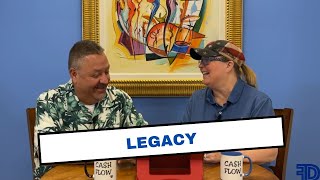
This is a conversational podcast episode featuring Flip and Danny, founders of Freedom Real Estate Group, discussing their journey into commercial and multifamily real estate investing. They recount moving from single-family strategies to acquiring larger apartment complexes (56-unit, 48-unit), the launch of their companies (renovation, property management, acquisitions, realty), lessons learned, benefits of syndications, and pros/cons of scaling multifamily investments.
Hey, everybody. Flip and Danny here, founders of the Freedom Real Estate Group family of companies. And welcome to another episode of our.
Podcast, which is called Freedom through Passive Income, Our Journey. It's the last time you get to say it.
I know I'm gonna miss it. So welcome to another episode. This one is our journey, Commercial Real Estate and Freedom through Passive Income. Yeah, that's a wrong title.
Well, I mean, because it was just commercial real estate. And I was like. But this is where we launched this podcast, and commercial real estate was the Freedom through Passive Income. We literally named this podcast after this new journey.
Yep. And welcome to birthday month. Again. This is July 3rd, and so every day of this month is my birthday month. And so because of that, it's fun shirt. Every day fun shirt flippy. Yeah, there we go. It's fun shirt flippy. There you go. I love it, love it, love it, love it. So. And if you're listening and not watching, I really apologize because these are some fun shirts. Okay, so. So this series, the last time I'll explain this.
Okay.
All right. So I was born in Ohio.
Oh, my God. Just kidding.
No. So we talked about when we were on cruise ships and we were musicians, actually. And then we became art auctioneers. And then we went from cruise ships to land. And then. And then you went into the insurance and then mortgage business. And then I left the art auction and somebody said, you should do real estate. And so we went into real estate in 2008, because that's the best time to get into real estate.
It was.
And then eight months later, we did a deal and said, wow, being a realtor really sucks. And so then we decided to do real estate investing. And we ran right out of the gate. We were doing short sales and mortgage assignments, and then subject to. And subject to wraps, and then seller financing. And then we went to wholesaling. And then we went. Then we found out about turnkey. And then we moved to Ohio, like I said, which we got that backwards. And so we moved to Ohio and then. And that's when we started to build the companies. So Freedom Real Estate Group. And then we did our renovations company, Bulldog Renovations, and then our property management company, Independence Property Management, and then our realty group, Independence Realty Group, then our acquisitions company, which is called Cash for Ohio Houses. And then because of that, Cash for Ohio Houses, we came across a seller that had a package deal of 15 single family duplexes and a 56 unit. And we're like. And after months and months and months, we finally just said, screw It. We're going to buy it because we wanted those 15. And that was what we talked about on the previous episode. And so. And so now that leads us to here because now we're at the point where we actually. We're refinancing the 56 unit and we can actually lick our wounds from that property.
That's right.
And now we're actually doing another 48 unit, and we're like, this is a breeze.
Yeah.
That's all you got? What? You know. And so now I will hand the baton over to you to tell the story.
Yeah. So we fell in love. That 56 unit is tough and challenging as it was. And the horror stories that we tell about it are really just a matter of giving you the big picture of the real challenge. It was for that year of us going through everything, you know, much of it for the very first time and going, okay, how do we deal with it? And never giving up and just always tackling that problem once at a time and one step at a time, and then ultimately deciding, hey, this wasn't so bad. If this is the worst of the worst, look at what we just did. Look how we improved the neighborhood. Look, we just got all of these thugs out of this area. And it was a nice area a block away, really nice place. And now we've got this cash flow coming in. Our private money lenders, they made bank with us on this because they took that journey with us. And we are so thankful to them and that we're always going to create that win, win relationship because they trust us, and we're so appreciat, appreciative. And we just said, let's do that some more. Because suddenly economies of scale came in. Right. We've got this. Even the renovation was less expensive than when we renovate houses because they were doing 56 doors. They were able to put their crews in one spot. They were able to buy in bulk and put all the materials into one unit. And they were just going. Just doing every single one all the time. And that, quite frankly, helped us with the challenges that we had, because those people that kept on coming in and bringing. Breaking in, you know, we had our crews there, you know, to help. So that was really, really fantastic. So we just. We literally just fell in love.
Yep.
With. We've just been doing this on a very small scale, and look what we can do. And we didn't even know we could do it until we forced ourselves to just get it done.
Yeah. And I love the one guy, one of our main Guys that we use for all our rehabs. Mike, you know, and. And because I don't think he'd ever done an apartment building before. And so he did that one and. And, you know, we're talking about looking at other apartments. He's like, oh, hell, you tell me where it's at. I'll just take my guys down there and we'll do the whole apartment complex. He was ready to go. He loved doing it, right?
Yeah. And after we bought that, he was like, hey, buying more apartments. And so he's working on our 48 unit right now because he really. Yeah, he does a really, really great job.
And he's already ahead of the schedule, too. Yes.
Yeah. Yeah.
Thank you very much.
Love, love, love him so much. And that's what also launched this podcast series. Right. Because we realized what we could do in the multifamily world. We realized how much we loved it, and we said, hey, if we can do this for us, how much more can we do for other investors? And that's when we got introduced to syndications for the very first time. One of our good friends, Stephen Libman, invited us to be a part of the Lake Forest syndication for the very first time. We raised almost $2 million to be a part of that particular deal. And it's been fantastic. They've gotten a few passive income checks, and it got to open up a whole new world. Not only can we buy apartments just on our own, but we can do it with others on a larger scale. Because that was 384 units in Daytona Beach, Florida.
Yep.
Right. And it just. We just went. So we get to help us. We get to get to do bigger things. We get to do like 56 doors in one spot instead of across, you know, all of these areas with four roofs instead of, you know, 56 roofs. So all of those things. And we've done a episode about single family versus multifamily. And after that, 56 unit is really what turned the tide for you and I, where we went, ho, ho, ho, multifamily, hands down. That's what we want to keep on doing. So, and then the syndication allowed us to understand how it not just helps our private money lenders, but it helps other people participate in deals like this and be able to earn passive income and get tax benefits at the same time. Like, the whole. Everything that we learned through this was just like, man, mind blowing.
Yeah.
And it's just the world that we want to be in now for a very, very long time. And it's what launched this series. So that's why we are where we are today. And we always have the heart to. Obviously, we think about us and our journey and where we want to go, but there is never a point in time where we go somewhere and don't take other people along with us.
That's right.
That's. Quite frankly, life's too short. Right.
That's boring.
Yeah, that is boring. So we're excited that we've gotten to this point so that we can expose everybody around us to the very same thing and help lift them up along the way, whether an active investor or a passive investor. So super exciting. Want to talk about the pros?
Yeah. I'll let you do the first one.
Okay. The first one. I'm calling this the Legacy Company.
Yeah.
Because I think this is where the true legacy is built. Our ability to scale and keep on going. And as we're working on financial forecasting, where. I had two meetings yesterday, one you were a part of, one CJ was a part of. And looking at the financial forecast in this world is dynamic. This is where legacies are born and created. And I just have never. The. I knew wealth could be created at this level. I just. I'd never learned how it was done.
Yep.
So I'm calling.
It's not taught in any book or any high school or college even.
Yeah, exactly. So I'm calling this the Legacy Company. Super excited about it.
And that leads right into. Expanded our ability to help others. And it has. Not only within our company, but just. Just a lot of people. So it's. That's awesome.
Yeah. And it's expanded our ability to confidently do more deals across the United States. So the Daytona Beach, Florida property we did, we just closed on 129 unit in Mississippi. So we are starting to expand our ability to do a lot more and not just in our backyard. Because you heard the stories, if you listened to all the episodes about renovations and property management, can you imagine, like now trusting somebody else to do that in a city that you don't have boots on the ground, like. No. Like after going through it ourselves? Absolutely freaking not. If we're gonna expand, which we might be expanding, by the way, we're already in Cincinnati, but we might go into Columbus. If we do that, then we are going to be there, we are going to be training, we are going to be hands on and we're going to go in. But in the syndication world, like, there's people at levels nothing like the turnkey world. Right. And those levels, they're Experts, and they've been doing it for years and have successful exits. And we're getting to partner with that, like, upper tier level of people that we can trust that do things exactly like we would and get through the mud no matter what it takes.
Yep. Yep. All right, cons.
In my opinion, opinion, it's been the hardest company to build in terms of. Okay, how do I put this? Renovation and property management was by far the most challenging. Like that it's a world of its own. And we explain those stories in those episodes. This one is. It's bigger scale, it's new lessons, it's legal, it's financial. Having being able to forecast because a lot of what we're doing, we're not getting paid. First of all, our investors get paid before we do. So we've got this overhead that we're having to again front ourselves and then get our investor paid, and then we get it paid. So we're looking at a horizon of like one to two years before we start actually seeing some of the fruits of our labor. So being able to bring on people to help us build this company has been challenging. And we've talked about that in, I don't know, it was one or two episodes maybe about how look at where you're at in the company and just figure out how to do it. So that for me has been. This one has been hard because we've had to go back to the basics of we don't have the money to start this company because we won't see it until a couple years down the road because we're paying our investors before we pay us. So it's a different kind of challenge.
Yeah. I mean, it's funny because it's real estate. How hard could to be, you know?
Right.
I mean, I talked about, you know, with single family houses, you call me up, tell me the address, I can figure it out by looking at it, and then have somebody over there in an hour and have an offer to you in two hours.
Right, right, right.
This is. What's the address? Okay. I'm going to give it to my guy, the underwriter, and I should be back to you in the next two to three days.
Yes.
And that's if he's. If he's on it right away. I mean, it. That Excel sheet is mind blowing.
Yeah. And that's just the due diligence phase. Let alone you buy the property, you do the whole renovations, the 48 just bought. I mean, like none of us are anticipating to get paid a dime in the first Year because we know we're blitzing through innovations and re leasing everything. And then we're gonna start paying our investors. Right. So I think we got an acquisition fee to cover some of the expenses that we had to pay out upfront to actually do the deal. And then we're getting an asset management fee to cover a very minuscule part of what our team is having to put in to manage it, but nothing else. And so it's a lot of, like, dig into your pockets and like, pay for this company to get built. But the legacy of it is just. It's absolutely w. Totally worth it.
Yep.
But it's still. It's still a con because not everybody can fork out the money to build a company like this.
That's right. And that's the financial forecasting and then the legal knowledge. I mean, I can't even tell you how many attorneys that Danny has talked to because I don't talk to attorneys. I don't talk the same language.
We had, I think three different attorneys. No, well, three different attorneys that we actively participated with anyway, with the five companies.
Yeah.
Plus like an employment attorney. Plus like a workman's comp attorney that I'm not even counting in three.
Right.
And now with this, just this company, I think we doubled like how many people we're working with. I'm like, oh, my gosh. And that's all costly. Right. They're not free. Our CPA and the financial knowledge and the consulting that we're getting in order to make sure everything's structured right, that's not free. So it's a whole lot of high level knowledge to be able to build this, I would just say that that's the only cons. In a couple years we'll forget about this. But. But in the respect that just like the renovation company and property management company, acquisitions company, we remember to write on there, increase overhead that we can't afford, but we're paying for it anyway. Right. We'll say that in two years and we will just have gone through the tough times to get it done, and it will be worth it in the end.
Yeah. I think it was funny because Cassie, who does our QuickBooks and everything in our financials, she said, hey, do you recognize this name? I got an invoice for like $5,000 from this. This name. Do you remember this name? I said, I think that's an attorney.
There was another attorney invoice Betty, when I walked in yesterday. She goes, here's an attorney. No, I sent it on your desk. I Said something on your desk, and it's an attorney invoice. And Aaron looked at it, and he was like, I don't know what that is. Ask Danny. I'm like, all right, there's another bill, another attorney invoice. All right, so we're gonna go through our five. Are you ready?
Yep.
Risk tolerance.
Yes.
Very, very high.
We ground it.
Yes, yes, yes. Time availability.
Yep. I don't think there's been one of these things that has not been time.
Knowledge.
Knowledge. We're still learning.
Yes, we are still learning. And it's probably the top of the ladder in terms of knowledge. Inner circle.
The inner circle kind of goes to not only what we call our partners, but also our masterminds. And just talking to so many people because, you know, that's what I love about you. Like, you know what? I don't know. Let me ask the 9 million people on Facebook and the Facebook groups. And you know what? And I'm going to get an answer for.
Get an answer. No matter how many masterminds I'm in. I'll paste the same question. I'll go. And I guarantee you somebody in this world that we live in, in the circle we've created, will have an answer for us. And access to capital.
Yeah, that's muy grande as well. But what I like about that, too, because. So we're just starting, right? And like you said, the first couple, like, we don't. We're not getting paid the first year or whatever, but then after year two or three, then all of a sudden it starts getting up here. Well, we're still doing deals. So in year three, when we're making money off of all these other properties that are starting to come in, we're still building. And so it's just going to be. It's just getting through those first couple years. That's when it's the dry period.
Yeah.
But it's just going to get. It's going to get better and better and better. And that's that building that legacy that you're talking about.
Yeah. Super exciting.
Yeah.
We did it. This was part 12 of 12.
No, no. Episode 13.
No, no. Episode 13. No.
Because tomorrow is 4th of July. We can't do an episode.
That's right. But There is a 13. It's in my head. I actually have a 13 and 14. But you're gonna have to wait for us to get there in life for you to hear episode 13, 14 of our journey. But we're always thinking, we're always building. We're always imagining what could be and what essentially helps us, the family of companies, our investors, our team. So anyways, but Tomorrow is the 4th.
Of July and just like those deals that I find out about during these recordings, I just found out about episode 13 and 14.
Just drifted my noggin.
Well, we hope that everyone has a safe and happy 4th of July tomorrow. Make sure you're going over to our website, freedomcapitalinvestments.com to join our investor club. And make sure you're hitting the like button because you liked our journey, our 12 part series.
Yes. We enjoyed sharing it with you.
Yes.
Hope you liked it.
Yes. These were some long episodes so if you made them through all of them, you get a gold medal.
Yep, we'll get them back to our eight minute.
Yeah, there we go. But we like to end all of these episodes with Invest Smart, Live Happy. Bye everybody. Nothing on this show should be considered specific personal or professional advice. Please consult an appropriate tax, legal, real estate, financial or business professional for individualized advice. Opinions and information on this show are not guaranteed. All investment strategies have the potential for profit or loss. Sam.
More from Dani











Physicians and High Earners — What Real Estate Can and Can't Do for Your Taxes