Ep 207 - IRA Basics
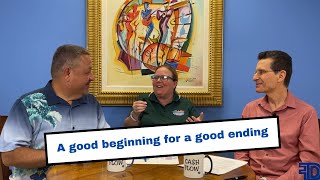
A conversational podcast episode (Freedom through Passive Income) introducing IRA basics with emphasis on choosing between mainstream custodians (Fidelity/Schwab) and self-directed IRA custodians, types of accounts that can be self-directed (traditional/Roth/HSAs/401ks), and the critical arm's-length rules. Hosts repeatedly stress consulting a tax professional, understanding custodian-mandated cash-movement procedures, and following rules to avoid penalties.
Hey, everybody. Flip and Danny here, founders of the Freedom Real Estate Group, family of companies. And we're. We have our guest here today. Ben's with us again. If you didn't watch yesterday's episode, Ben's going to be with us for about five or six teams. Thousand episodes to cover the rest of the year. So it's all yours, Ben. I'll see you later, but welcome to another episode of our podcast, and our.
Podcast is called Freedom through Passive Income.
That's right. And again, if you're not watching, you can't see me moving the microphone back and forth because we only have two microphones. So anyway, you know, we forgot yesterday. Yeah.
I was just function flippy.
That's right. It's fun shirt flippy all month. And yesterday I did forget because it is birthday month.
Yes.
And so I said I was gonna wear a fun shirt every day this year or this month.
Yep.
To remind. No. Yeah. No, no. I don't have that many shirts. You might think I do, but I don't. But I completely forgot yesterday to mention that, so. And I thought this would be easy. And it's not very easy because I'm trying to remember which shirts I've worn and which ones I haven't. Yeah.
And for those of you listening, not watching today, he's got his Mickey.
I got my Mickey on. It's the special edition Tommy Bahama Mickey.
Yeah. Yeah. Me and Ben are just, you know, we're boring.
You know, Wah, wah.
Actually, we've got kind of a Christmas theme. You said, I'm gonna wear a red shirt. I was like, I'm gonna wear green.
And I'm gonna wear my fun shirt. So take that. And along this theme, wait till you see tomorrow's shirt. That's all I'm gonna say.
Oh, dear.
Yep. So welcome to another episode. This episode is entitled Ira Basics. And we brought Ben along because he has the knowledge. I'll let Danny explain all this. And this is when I sit and wait until the very end.
Well, I don't have much to explain because we did go through it yesterday, so I don't want to go through it every single time. But Ben is on our investor relations team. We have known him for a very long time. He's a good friend of ours, and we're super excited for him to be hosting this series of podcasts. We don't know exactly how many it's going to turn into because we goof off during the beginning. We always get around five minutes before I even give the content because that's how we roll. But yeah, Ben is a wealth of knowledge and he has gone through this process so he is sharing his journey and knowledge with you. Gu. And so Ben, I'll let you take it away.
Fantastic. And I'm very excited to have my own mic.
Yes, you don't have to hand the microphone back and forth. Yes, it's great.
Well, we'll start off and you'll hear me say several times during the series, these are talking points for you to discuss with your tax professional. One of the things that you'll find with tax professionals is the stories that they commonly tell each other is the client came in and announced to me that he or she did this and if they had only spoken to me first, I would explain why their specific circumstances. It's not a very good idea to do this. They should do that. So as we talk about these different points, take notes on them. And these are questions to ask your tax professional so that based on your particular unique situation, your tax professional can tell you what's best for you. So that's the first point today on IRA Basics. Always start the conversation with your tax professional. A good beginning can lead to a good ending when it comes to your IRAs. Several points we'll talk about today. First is this idea of self directed stocks for your IRA type of platform versus your normal large type of trading house that will be the custodian for your ira. So you have your Fidelities, your Schwab's that handle the whole tax platform on one side. Then you have the self directed which opens up a whole different world of possibilities for you to be able to invest in. So one of the things you want to talk with your tax professional about is say, look, I've been listening to these podcasts. I really want to become involved in real estate investing. So therefore what's the best platform or method for me to use? And that will give your tax professional chance to be able to share with you some of the pointers and things to look out for along the way with mutual funds. And let's just talk basically about these two, these two different types of platforms, your Schwab's and Fidelities and your TD Ameritrades. They allow you to trade stocks, bonds and usually on the stock market side very easily within your ira, whether it's a traditional IRA or a Roth ira. With the self directed, you have much more freedom to get into crypto or some real estate, gold and other types of investments. So be very clear in your mind about what you want to invest in. And that's going to allow you to be able to make the best decision for you about which of those two platforms that you want to work with. You can switch from one platform to another. There's a process when you want to do that and we'll talk a little bit more about that process coming forward. Your self directed IRA custodian will talk you through each of those steps. The second thing we'll talk about here is the different types of IRAs that can be self directed. So we talked about in the last episode, what's better, traditional or Roth. There's also your HSA account can be modified and taken over to a self directed platform and allow you to be able to invest those funds in some of these alternatives. Other than stocks and bonds and mutual funds, there's all different types of 401ks that you can use and eventually when you retire you're able to transition those things over. There's also one in what I mentioned want to mention for you to do is go to your HR department. If you have you're currently working, one of the next steps for you to do is to go to your HR department and ask them what the options are for you to be able to use your funds in a self directed type of investment. A lot of companies, every company has a little bit different types of rules. They may or may not allow you to do anything at all with self directed, but it's certainly worth your time to be able to go to the HR department, ask who oversees that part of your retirement funds and then ask them these questions as you talk with them. The third thing we're going to talk about today is arm's length rules. IRAs, the rules are pretty simple. You need to follow the rules. If you don't follow the rules, that's going to create a lot of issues for you. So one of the things we want to do is to simplify things. And one of the simple rules is ask your tax professional before you make some of these moves and say okay, is it all right for me to move in this direction? And he or she will let you know about that. Arm's length rule simply says that you cannot do business between your IRAs, whatever type it is, and your personal type of funds. As an example, if you're married, you could not take something, an investment that you have in your IRA and be able to sell it to your spouse that's not arm's length. So it has to be someone who's not. And again, your tax professional will Tell you what, those different arms length rules, what type of relationships do not qualify for you to be able to move your funds? And finally, or the next point, and I guess our final point is that when you have your money in a self directed ira, you're going to have an IRA custodian company that's set up for this. All of your movement of cash needs to go from your IRA account that you're in now or if you're setting up a new one through the custodian. The custodian is the one that is going to be making the moves of your cash for you. So when you start to talk to an IRA custodian and in a future episode, we'll talk more about how to do that, make sure that you understand what movements of cash they can do, that they have to do by law, by the rules that you cannot do. So when you follow those IRA basics, then that prepares you then to make some of the decisions we're going to be talking about in our next few podcasts.
Awesome. The one thing that I wanted to mention was the arm's length. Do you remember when we were in the Atlanta session and we had multiple conversations about, okay, Flip and Danny, you guys are actually real estate investors. So in your accounts, just make sure that you're not actually investing in one of your deals where that's not arm's length anymore. You need to take your money and invest it in somebody else's deals. So now we're like talking to everybody going, okay, who's doing what deals? So we're like researching, just like the investors are doing with us. Right? They're researching us and what type of investments. But now we're creating this circle of people that we trust that we want to then just take our money and put it in them. Because we can't put it because it would make sense. We always invest in our own business. Right. But when it comes to retirement accounts and that arm's length rule, there are some guidelines that you have to follow. And Andrew kept on, follow the rules, don't break the rules. This is the way you're supposed to treat your investments. And putting it in this type of vehicle forces you to do it the right way. Otherwise you're going to get in trouble. So just follow the rules. I thought that was a really, really good point.
Yeah. These rules are not the rules where it's better to ask for forgiveness than for reparation. These are not the ones to do that with. Just letting you know. Well, we hope that you enjoyed another episode make sure you're heading on over to our website freedomcapitalinvestments.com and join the club. Plus, we have the swag on there now as well. But. And we're Also on Facebook, LinkedIn, YouTubers and link tick tock techers and whatever those Insta Pops and Snap Grams. Is that even Snap Snapchat? Is that even around? I don't even know. But anyway, we like to end all our episodes with Invest Smart Live Happy. Bye everybody. Nothing on this show should be considered specific personal or professional advice. Please consult an appropriate tax, legal, real estate, financial or business professional for individualized advice. Opinions and information on this show are not guaranteed. All investment strategies have the potential for profit or loss.
More from Dani











Physicians and High Earners — What Real Estate Can and Can't Do for Your Taxes