Ep 208 - Questions to ask your IRA Custodian
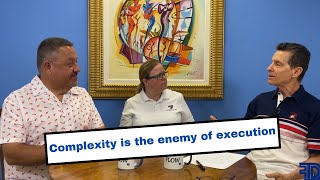
Before choosing a self-directed IRA custodian, ask which investments they allow, how they charge (annual fee or per-transaction), whether you can use a single-member LLC to cut costs, and if you can pay their fees from personal funds instead of the IRA itself.
Hey, everybody. Flip and Danny here, founders of the Freedom Real Estate Group family of companies. And welcome to another episode of our podcast featuring Ben. Welcome to another episode of our podcast.
And our podcast is called Freedom through passive Income.
That's right. And again, I'm having to share the microphone with Danny because we only have two microphones. And we give one to Ben because he's running the show here and I just get to do the intro and the outros. But the extra special shirt today, we. We happen to frequent the wing establishment called Hooters.
Yes.
And we went in there the other day and this shirt just. It was. It was screaming my name. And so. But I even thought, this is even funnier. I'll have to wear it on one of those days when you're like, well, what are we doing on the podcast today? I don't know. We're winging it.
There we go.
That's so bad.
But it's. It is Fun Shirt Friday. Fun Shirt Flippy all month. Birthday month. So this is the extra special. And if you're not watching, I'm really sorry.
Oh, you are missing out.
But welcome to another episode. Now, this episode is entitled questions to ask your IRA Custodian.
Yes. And so, as you know, we've got Ben here. He's going to be talking through all of this stuff. He's really kind of the expert because he just went through a lot of it. He did a ton of research. So before we could even get through to the goal that we had of doing a lot of this informational stuff, he sent the email. I was like, boom, Ben's got it covered. And so he said, hey, you want to come to the office, Ben?
And so what they said was, do you want to come to the office very early in the morning?
My. My coffee cup has water over there. I think his has like double doses of something. Something Goodness.
We're calling it coffee today.
Anyways, Ben, you have the floor. Take it away.
All right, in. In this episode, we're going to talk about introductory IRA questions in which you will ask your IRA custodian for a self directed IRA to kind of make sure that you're in the right arena when you're talking with them. And so the starting point is in your mind as you listen to the many podcasts that Flip and Danny have been making this year, you're deciding what type of real estate investment specifically do you want to participate in. So that's step number one, the second step, as we've talked about in the last few podcasts, Then discuss with your tax professional the best way to move forward for you to enjoy these type of investments. Now, armed with that type of guidance, then you can go and do a simple Google search for the number of IRA custodian companies out there. And there's a bunch of them and they're all over the country. There's a lot of choice that we're going to talk about as far as what they offer to you, what their pricing structure is. But all that starts with you doing a simple Google search for your ira. Going to be self directed IRA custodian or if you have an HSA account, self directed HSA account. So type that into Google. They're going to give you plenty of names. Remember, when you have a Google search, the first couple of names are advertisers. So be sure to move past those. Those might be good choices, but make sure you move past those first few and get down deeper into the list. So you've got a list of 10, 15 different companies that you can choose from and call and find out about that. So now you have this list of companies, what type? When you call them up and talk to them, they'll send you to the sales department. The first question to ask them is what type of investments do you allow in your self directed IRAs? Each company may be a little bit different what they allow you to do. So talk about the specific real estate investment. For instance, I want to get into a debt fund. It's a 506B fund. Do you allow me to do that in your type of funds in your self directed IRA accounts? And they'll let you know if you can or not. So if they have any questions, you can just send them the documents that Jody has sent you to be able to participate in that. And they can look it over, but they'll know right off if they can do a 506B or 506C, whatever it is that they allow for that. So that's one type of investments that they do. Then you want to ask what type of fee structure they offer. Now we'll talk in the next podcast about specific questions as far as fees. But there's two basic types of fee structures that we want to talk about in this podcast. And the first is a one size fits all fee. And that is where they'll say to you, hey, for $295 a year, for $350 a year, we will cover almost all the fees. And it's not good. The one size fits all is not going to be every fee. But it's going to be most of the fees where they're not going to nickel and dime you to death with every time that you want to move money in and out, or every time that you want to move money to your investment from your fund, etc. So one size fits all is the first general type of fee structure. The second type of fee structure is all the cards. And that is as it sounds. Every particular move that you make in your account, they're going to charge you for. We're going to charge you for having an account, we're going to going to charge you for each investment that you have within your fund, we're going to charge you on the size of those particular investments. So every time you move money or if you want to add money, and we're going to charge you for that. So if they have that type of fee structure, they will, sometimes you can see it on their website and just go to fees and look for that. Sometimes you have to ask them for it and they will send you a list by email what their fees are. But those are your two basic choices. And there may be some extenuating services, the services that they offer that might justify some of the extra fees that they have, but that's a choice for you. Now, one of the lifestyle choices that you'll make for you individually as an investor is, is your time more important than the fees. So for some people that are very busy, you're working hard in your profession, you're making great money, you're like, listen, you know, $95 here, $50 there. $250 for the year, no problem. Just I don't, you know, want to put my time and effort into it. I'll pay the fees. Just I want a company that gives me good service that I call them up and I say, look, this is what I want done. They'll take care of it, they'll charge me the fees. That's fine. So you decide. Other people, like myself, I'm a little more. Is thrifty a good word?
That's a good word, thrifty.
We'll watch our fees very carefully. So it's like, no, I'm not going to pay $500 of extra fees each year if I can avoid it. So it's based on your personality and knowing yourself, you make your choice about which type of fee structure is there. What I would simply say is this. If they're charging you a lot of fees for everything, then make sure that your time is more important than the fees. Otherwise, you're just spending money that you could be using to invest in money. So that's it. Another consideration that you have is do you need an llc? Now, we're not going to get into detail on this because this is a topic for you discuss with your tax professional. For a lot of these investments that you can make in a self directed ira, there might be one transaction after another. An example would be investing in tax liens and real estate. Okay, you're buying tax liens, as they redeem, you're getting the money back. If your company is charging you each time money goes out to buy a tax lien, and let's say you're buying 10 at a time, and then each time they come back in, you're getting other fees, then it may be beneficial for you and very much cost savings for you to get a dedicated llc. Now, there's very specific rules about this. And again, the tax professional information or conversation as well as a conversation with your IRA custodian, they will talk with you specifically about this. But it typically needs to be a single member LLC that's dedicated only to your IRA account. So in other words, if you have your own air conditioning H Vac business, you can't have your corporation for your H Vac also be your dedicated llc. It has to be this LLC specifically for your ira. And what happens then is the IRA custodian moves the money for you because they're the ones that have to move the money into your llc. And then from your llc, you being the manager, you, you can be able to buy the tax liens or buy the real estate investments, private money lending, et cetera, whatever your investment is on that. So the bottom line in LLC is this. Only get one if you absolutely have to because it adds complexity. And complexity is the enemy of simplicity.
That's my word.
That's something I would say it's the opposite. It's the opposite or it's the enemy of execution. The more complicated you make something, the less likely it is that you continue to move on. So if you can avoid an llc, do it. In some of the investments we've been talking about, for instance the debt fund, it's just you take the money, you put it into debt fund, it just works for you. The fund continues to grow. You can, you know, talk to myself or C.J. about how that works. You don't need an LLC. So. But if you think that you're going to be doing lots of transactions, then talk to your IRA custodian about if they allow you to Get a single member LLC to be able to save on the fees, and they'll talk to you about whether they allow that or not. And the final consideration is, can you use non IRA funds to pay the fees? So as you're talking to this IRA custodian, a potential custodian for your account, ask them, hey, can I use my credit card in my own personal money to pay the $295 one size fits all fee or your $95 moving money transfer fee on that? Can I do that with non IRA monies? And they will answer that question. Most of them will say yes. If they don't say yes, just be aware that there are other IRA custodians that allow you to be able to do that. So those are general introductory IRA questions to ask. And in our next podcast, we'll talk a little bit more about specific fees, questions that allow you to make sure you understand what type of fees you're going to be incurring each year.
Awesome. So I think my big takeaway from all of that was the simplicity piece, because what he said is so very true. And it's true for you and I as well. Every time that we're introduced to something new, if it's too complicated, even just a wee bit, I'm going to want to take a pause and research it more. But our time is very valuable and very limited, which means I never get to it and so I never move forward with it. So the simpler it becomes, the easier it is for us to say yes and no. And so Ben and us have had multiple conversations saying, too complex, too complicated. You know, simplify it so that it can be easy to say yes and no. So thank you for simplifying some of this information for everybody here, because this can get very complex if you don't know how to dwiddle it down to.
The little things and you're just being polite. What she's saying is dumb it down so Flip can understand. And by the way, I keep saying you need to rub off on me, not I need to rub off on you. The complexity is the enemy of simplicity. That's me saying that. Stop doing that. I hope that you enjoyed another episode. Again, make sure you're heading on over to our website, freedomcapitalinvestments.com to join our investor club. Again, we're on all the social media, so make sure you're checking us out on all of those. This, that's. And the others, and hitting the bells and the buzzers and all that. But we'd like to end all our episodes with Invest Sports Live. Happy Bye everybody. Nothing on this show should be considered specific personal or professional advice. Please consult an appropriate tax, legal, real estate, financial or business professional for individualized advice. Opinions and information on this show are not guaranteed. All investment strategies have the potential for profit or loss.
Sam.
More from Dani











Physicians and High Earners — What Real Estate Can and Can't Do for Your Taxes