Ep 302 - How do Syndications & Funds Compare to Traditional Investments?
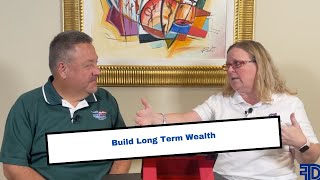
Danny and CJ compare stocks and 401ks to real estate syndications and buy-and-hold rentals. Real estate has historically built more long-term wealth. Syndications let you invest passively without managing tenants or dealing with property maintenance.
Hey, everybody. Flip and Danny here, founders of the Freedom Real Estate Group, family of companies. And welcome to another episode of our.
Podcast, which is called Freedom through Passive Income.
That's right, and welcome to another episode. And this episode is called How Do Syndications and Funds Compare to Traditional Investments?
Yeah, so this is a topic that we recorded a very short video when we had our videographer in town. And I thought, you know, this is probably something that people want to learn a little bit more about and have us not like throw something together for 60 seconds into a short reel or whatever is cool for social media these days. So I figured we'd talk about it. So the traditional investor, you're typically accustomed to learning about retirement vehicles at your workplace, right? You're typically investing in 401ks and mutual funds and things like that, stocks, because you know that you can grab it and it can become liquid at any point in time. But there's something that we talk about frequently and that's that rich people don't become rich investing in traditional investments like stocks.
Right?
They absolutely use retirement vehicles for sure, but they don't also don't use those retirement vehicles and invest in stocks. It doesn't mean that they don't invest in stocks, period. It means that a large part of their portfolio is in real estate. There's a reason why a lot of the wealth building podcasts or books or courses or things you hear are all about investing in real estate. There's some that are like private equity firms and like different stuff like that, but you get into other things like that, it gets a little bit more risky. Right. They're not a. Real estate is very well known and history has proven it's a stable way to invest and build wealth long term. And so that's why you'll see that a majority of the rich will say 90% of my or 90% of millionaires have real estate in their portfolio or made their millions by being in real estate, things like that. And so I wanted to talk about the syndications and funds that we're doing. These don't have to be real estate. We just happen to put them in real estate because we believe in the stability and the long term growth of real estate and what has done historically and what it will continue to do. So you can certainly be in a syndication and fund for crypto or not.
Right?
Because that's a high risk investment. If you have money to burn and you want to see if you're going to get a shot at glory, go ahead and throw your money in there. But if you're looking to build wealth for retirement like we are, then you're going to put something in your money into something more stable. So syndications and funds, the way we're talking about it is real estate based, not anything else. How do they compare to traditional investments? So stocks and mutual funds, we've just kind of talked about that. A little bit volatile, especially right now. And it's down and it's down big. And everybody's talking about it. So grateful that, well, we do have money in stocks, but it's not very much.
But it's, it's, it's like you said, it's money that we're not expecting anything from. I was just doing it just to have fun.
Yeah. Yes.
You know, it was, it was a side project and it just, it, that's all it is.
Yes. Plus you got to think about the fees when you're investing in stocks. And quite frankly, syndications and funds aren't necessarily without their fees. There are fees associated with them. So when you're talking fees, you really need to kind of compare side by side. I was in the industry where we sold mutual funds and the fees just made me sick to my stomach. I was like, how do people make money when this is all the fees being taken out all the time? Doesn't even make sense. That is not as true when comparing them side by side with syndication fund. Not as true. So again, big believer in syndication funds when you're, when you're looking at those two things side by side. One is long term, right? And that's what really proves the stability of real estate is you're putting your money in, you're trusting the process. What has happened historically and will continue to happen as opposed to stocks. You're very emotional. You're going to go in there and throw it in. Then we're like, eek, it went down. Pull it out. Yeah, that's not the time to pull it out, guys. So wait for it. You need to be patient. We always say wealth building is boring anyway. So that's stocks and mutual funds. The main other way that a lot of people know to build wealth is buy and hold. People understand that wealth or building wealth through real estate is a thing, right? A lot of people understand, not everybody, but a lot of people do understand. So they understand, they want to buy and hold, right? That's their idea of if I hold and own a lot of properties, I'm going to get wealthy. It is true. You have to have the risk tolerance for it. You have to have the lifestyle that allows you to have the activity that for that it is another job, especially if you're self managing. So if you don't have the time for it, your investment is going to fail simply because you have to pay attention to it. So you buy this property and you put a tenant in it. You can't just set it and forget it. You gotta make sure that the tenants taking care of the property, you gotta attend to the work orders, you gotta make sure that they're paying rent, screening the tenants and making sure you're actually putting somebody reliable in there. There's a lot that goes into a property that people don't think about. They think it's super simple until they do it and then they oh, well, that's not as easy as I thought it was. And it's actually why a lot of our investors who invest with us are what we call tired landlords. It's like they tried the buy and hold strategy and decided that they didn't like it. It was too active, too much work and they weren't getting as much of a return as they wanted. They would rather sell that property, have nothing to do with it, and invest their money in something truly passive. And that's what we do in syndications and funds. It's truly passive.
Yeah. Now they're doing less work and their money's making more money.
Yes, exactly Right. So now some of those buy and hold investors are going to go, Danny, Danny, Danny, you guys own a turnkey company. So I'm investing in the buy and hold rentals and I'm letting you guys do it. That is fantastic. That's a better way to do it. If you're going to do buy and hold is having a property management company manage your investment for you. So if you already own rentals, find a property management company, vet them, vet them, vet them. We went through five before we created our own. We are not perfect. Are you sure? Yes. But at least we can fix our problems. Right. When people call us and say, hey, this is what's happening on my rental, we can at least run down the hall, knock on a door and help fix it. When we outsourced other property management companies, we couldn't jump in and help our investors. And literally we wanted to just take all the properties back. That's why we built a property management company. So find one, vet them thoroughly and don't expect them to be perfect. Property management is a very, very hard business. That's why you don't want to do it, don't do it, outsource it to somebody else. But just to understand that you really want to know who you're, who you're doing it with, with. Because I can tell you, most investors are going to say they've probably gone through three, four or five property management companies because it's just tough. And some of them are like, I just decided to self manage and they end up selling because they didn't want to buy and hold and tap self manage. So just know who you're going through. Vet our team just like you would vet anybody else. And again, transparently, we are not perfect, but man, we try hard and we do everything in our power to align our interest with yours. And I talk about that in many episodes about the things that we've done to say, hey, investors, you're not making money right now, so neither are we. We're trying to really create a relationship there with you. But you're still active, right? Our property manager is still going to call you and just say, hey, water heater blew or the AC went out. It's going to be an expensive fix. We need your approval because it's over a certain threshold. The only time that they can actually approve something over that threshold is if it's an emergency. So there's parts where you're just still active. So you're still going to need to babysit the property management company in some cases, if you're with somebody that you don't necessarily trust or they just need more hands on, or you're going to get phone calls about different situations and then there's funds and syndications. And the reason why we fell in.
Love is you only work about five hours up front. That's up front. And then over the next three years, total of about another 10 more hours. So 15 hours in three years?
Yeah, five years.
Five years. Sorry, I can handle working 15 hours in five years.
Yes, yes, exactly. Right, yeah. So we did an example about this about how to make $4,000 an hour. So go watch or listen to that podcast.
Sounds like I need to go back.
And listen, but listen to that podcast episode and it talks about the five hours up front that you review all the information, ask all of your questions. We kind of lay it out into the strategy session, call, then review the information, then call and ask questions. And then we get five hours. You don't need five hours, but let's just say you did. And then two hours every single year for the life of the investment. We just gave an example of five years. So 15 hours divided by And I think the return was like $60,000. And we calculated how much you're making per hour. That's the type of investments that you want to go into if you're truly looking for something passive. So we wanted to create this podcast to kind of show you the step by, like, side by side comparisons of the two in a short way. We're a little bit over time, but I hope that this helps kind of open your eyes and start asking more questions so that if you're an investment that you no longer want to be in, you can start talking to the team and asking more questions about the opportunities that we have available because they might be a better fit for you to reach your goals in a more passive manner.
Absolutely. I love it. In fact, another phone call I had last week with another guy and he's like, I want to get into real estate investing. I'm like, well, do you want to be a landlord? Oh, no. I'm like, all right. Well, we have just the thing for you.
That's right.
Well, we hope you enjoyed this episode. Make sure you're checking out our website, freedomcapitalinvestments.com and join the investor club. We have a lot of stuff going on there. I know I say that every time, but this time I mean it. But we do have a lot of stuff going on there. Check us out on all the social media platforms, but make sure you get in touch with CJ and Ben. Very important to be communicating with them and finding out what we have going on. But we like to end every episode with invest smart, live happy. Bye, everybody. Nothing on the show should be considered specific personal or professional advice. Please consult an appropriate tax, legal, real estate, financial or business professional for individual advice. Opinions and information on the show are not guaranteed. All investment strategies have the potential for profit and loss.
More from Dani











Physicians and High Earners — What Real Estate Can and Can't Do for Your Taxes