Ep 326 - How To Talk To Your Spouse About Money & Find Common Ground - Part 2: The Actions
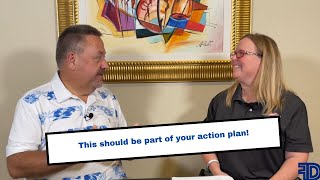
Flip and Danny walk through concrete steps for couples to align on money: list and prioritize your financial goals, schedule a weekly one-hour money meeting with split responsibilities, and add small rewards for wins. When partners disagree, meet the person with the extreme position.
Hey, everybody, Flip and Danny here, founders of the Freedom Real Estate Group, family of companies. And welcome to another episode of our.
Podcast, which is called Freedom through Passive Income.
That's right. And welcome to another episode. This is how to talk to your spouse about money and find common ground. Part two, the actions. And this is part of our 33 episode docu series, stop docudrama.
Hopefully you watched part one, the why. That was really, really important way to start this discussion. Today. We're just gonna go on to part two, which is gonna talk about the actions you're going to take now that you've gone through part one. So it is important to go through all four steps that we're going through these four parts. So don't do activity two without doing activity one, because one's a very, very important part of the process. So activity two is to determine the actions now that you've listed your why. So actions means, okay, what are we going to do now? Now that we've decided, hey, this is important to us and we understand the negative impact it's going to make on us if we don't do it. So what's the first step? How do we figure out what we're going to do? And so some of the things I wrote down is we discuss and write down our financial goals to achieve all we want to, no matter how big those goals are. And a lot of that started in your first brainstorm session, right? You said all of these things of why it was important. And so now you get to look back at those things and say, okay, this is actually something. I want to be a goal and I want to be able to do this by. You can just say, for now, I just want to be able to do this. Don't even say the by date, right? Just list, I want to be able to do this, and I want to be able to do this. So all those things that we talked about in part one, you list them out and then you finish the brainstorm session thinking of absolutely everything. And it could be when we were talking about discretionary fund, it could be the things that you want to get in the discretionary fund, right? These are the things that I would really like to get for the house or for me personally. And it could be, we got you a golf cart, right? We're getting the garage stuff. And it could be listing all those things because then you start to understand what is this discretionary fund, how much needs to be in it. And it's going to help you make decisions, like later as you go but so that's one thing. If the goals differ, meet the spouse who is on the extreme so that we're both happy. So this is what I said in part one that we were going to talk about when I said you'll be able to have reserves up to 6 to 12 months.
Right?
Right. So this is an example, actually, that I learned from Chris and Arianne, because I believe Arianne wants six months of reserves and Chris wants 12 months. Right. And so they decided to. To have 12 months of reserves because having six would have stressed Kris out.
Right, Right.
So in the same situation with you and I, if you had 12, you would be stressed. And the goal of this conversation is to get. Is to find common ground and not cause anybody stress. So we need to meet you at the 12 so that you've got peace of mind. And I certainly have peace of mind. I have double peace of mind now because I only wanted six. Right. So that's what it means when there's a difference, and there usually is going to be, then you meet the extreme. So if he said 12. If he said two years, we're going two years because we want Flip to sleep at night. Right. That's part of this process. Another thing is we prioritize those goals together in 100% agreement. That is really important.
100%?
Yes. Because if you and I disagree on a priority, we need to figure out, okay, why do we disagree and why should one be higher than the other? And we're going to go through the same kind of exercise of what are the good things that are gonna come out of this one? What are the good things that are gonna come out of this one? What are the negatives that are gonna come out of each one that will impact us? And together we'll figure out through an exercise like that, which one should be going higher. Right. And again, we're paying attention to the extreme because in this, you gotta act out of love. Right. I want Flip to win. Flip wants me to win. And if you have that attitude going in, then it's a lot easier to take your disagreements and find, you know, the win by saying, hey, you're the extreme. We're gonna go to you. Okay? This time, Danny's the extreme. Let's go to me. And you're gonna build something that you both feel really, really good about. Right. And so. And then. Yep. So I said that. So if opinions differ, we won through the positive and negative exercise to come to the best decision that we can. Then we let each other have small wins as part of the priorities, so we get to enjoy the process and be rewarded for our commitment. And these are added to the priority list. This kind of helps with your differing of opinions. Right? So let's just say flip wants a discretionary savings account and he wants to buy a new car and he wants to buy this all, and it's suddenly stressing me out, like, we can't spend that much money. Well, maybe in our discussion, we start saying, oh, well, that's just what I want. It doesn't mean we buy it right away. Right. We just start to know, here are the things, and maybe I want something small that I feel really comfortable with. And so we decided to put that on the win list. It's a small win list. Like, maybe your garage thing was something that we said, hey, this is something that we could save for, and it's going to be your small win. And we're going to reward the process of having this discussion. And then I'm going to want a small win, right? So I might want annual passes to Disney parks. And so we're going to put that on the list and how much it costs, and we're going to prioritize where those go so that even if we have differing opinions and making some compromises, We've given ourselves some small wins in the process. So again, it becomes fun, it becomes a little bit of a game that you're really excited about, and you build a momentum of these wins that you can just keep on going. And then we set aside one hour a week to review and update our financials together. We each are involved, divide up responsibilities for the updates, and then meet together to review everything and make decisions based on how we're progressing towards our goals. So if it's one hour a week, and let's just say Flip's responsible for the bank's bank accounts, I'm responsible for the credit cards, and we're both responsible for reviewing the budget and making sure that nothing has been added or discussing if anything can be taken away. Something like that would be an example for flip and I. He actually handles all of the financials because we've divided up work in a different way, where he's handling a lot of the financial stuff, a lot of tax stuff, a lot of legal stuff, especially for us personally, while I focus on the business and the items that have to be taken care of. So whatever your relationship is, is divvy up those responsibilities so you both feel good about what each other are doing and somebody doesn't have the heavy workload without the other person's help, right? You just want to feel good about that. Workload split and then you just meet. So every time he updates finances, we review it together, we discuss it, decide if we're going to cut anything out, add anything in. Can we afford it? If we can't afford it, what are we going to do about it? What are the solutions? Does it really need to happen now? Can it happen later? There's all these discussions around this meeting, right? And it's a regular so that there's never a question of a month goes by and we're like, oh, we've got a lot of work to do to kind of figure this out. If you just do it weekly, it's very small activities and you just very quickly stay on the same page and make quicker and better decisions if you make it more frequent. And these are all examples, right? You guys build your action list the way you want to build it. This is just an example of how Flip and I might build it. And literally I was down in my office just brainstorming it. So some of these examples aren't even exactly what we do, but I'm trying to relate it to how we have decided to do it. Last one I put on here was seek out help for questions we don't know how to answer or advice. We need to feel confident about our plan. We have done that. We have joined masterminds that are about wealth building. We have hired advisors who are about asset protection, tax strategy, all of those things, because we don't know what we don't know and we don't know a lot. So we have surrounded ourselves with people who can help us in the journey. So that should be a part of your action plan. Because if you know everything, you probably don't need these four episodes. You probably have figured it all out. And the last part of this is your desired end states. So after building this action plan, what do you want out of it? And I put, we want to be excited and confident about the game plan we put together. We want to feel like we both got to contribute our ideas and we found small wins to make this fun and like a game we are playing together.
That's right.
If it's not fun, it's work.
That's right. Work's no fun.
So I know I took on a lot of that because I was on the brainstorm the action plans, but any feedback on what was reviewed or how it applies to us?
I think the one thing that. Because you talked about doing a weekly meeting and I really agree with that. Because I find. And the reason why I agree with that is because of us not having a weekly meeting every week.
Yeah.
Because then all of a sudden, we have a meeting and we're talking about something. I'm like, what was that for again? It was like three weeks ago. Yes. I'm gonna have to look that one up. I'm just like. And it's out of mind. At least for. For how much we do. It's. It's after a week, it's like, no idea what that's for.
That's right.
And so it's just making sure that it's top of mind.
Yes.
And then plus being top of mind, it. It keeps you excited about. About everything you're doing.
That's right.
So.
Yep.
Yeah.
Love it.
Yep. And I believe I heard something about.
A new car example.
That's all I heard, so. Well, you. You can call whatever you. That's not the maker model I want.
All right, we're over time. We got to stop the episode.
For the first time ever. There we go.
All right.
Well, we hope you enjoyed this episode. Make sure you're heading on over to our website, freedomcapitalinvestments.com to join the investor club. Like I said, on all of these episodes. Now, make sure it's very important because we do have a lot of stuff going on here to wrap up this year. So make sure you're reaching out to Ben and or cj. Make sure you're checking us out on all the other social media channel things and what's up and diggers. But we like to end all of our episodes with invest Smart, Live Happy.
Bye, everybody.
Nothing on this show should be considered specific personal or professional advice. Please consult an appropriate tax, legal, real estate, financial, or business professional for individualized advice. Opinions and information on the show are not guaranteed. All investment strategies have the potential for profit and loss. It.
More from Dani











Physicians and High Earners — What Real Estate Can and Can't Do for Your Taxes