Ep 327 - How To Talk To Your Spouse About Money & Find Common Ground - Part 3: The Challenges
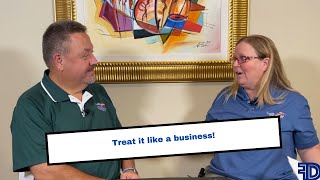
Flip and Danny break down why couples struggle with money alignment: job loss, surprise bills, conflicting priorities, and broken agreements. They suggest planning contingencies ahead of time, holding regular money meetings, and understanding why partners want different things.
Hey, everybody. Flip and Danny here, founders of the Freedom Real Estate Group, family of companies. And welcome to another episode of our.
Podcast, which is called Freedom through Passive Income.
That's right. And welcome to another episode. And this is how to talk to your spouse about money and find common ground. Part 33.
No.
Part three, the challenges.
All right, so hopefully you watched part one and two. If you did not go back and watch part one and two, because this is a four part exercise that we're going through in four. Four parts, four episodes. So you need to do the whole thing. You can't do. Just do. Do one step. So today we're going to talk in order to. Yes. Yeah. It is important because each one builds off the other. So today we're gonna talk about the challenges. So now that you've done step one and two, you wanna ask yourself and discuss with your spouse what challenges or roadblocks are going to potentially come up that's going to limit or block our ability to actually complete what we've written down and planned so far. So these are things like loss of income streams, right? So if we put a schedule of what we want to do and how we want to achieve it, if somebody loses their job or an income stream, just go for some reason, things like that, that's going to be a roadblock or a challenge that you're going to have to overcome. Right. So these are the types of things that you want to throw on there. So another challenge might be unexpected expenses. What if we have a doctor's bill that we didn't budget for? Right. Or maybe the kids need soccer here. Right. And that's expensive.
Lacrosse.
Lacrosse.
All kids need to play lacrosse.
So that's it. So depending on your life and what goes on in your. Then you need to figure out and just build this challenge list of what are the things that could come up that is going to throw a wrench into our plans for us. I put busy schedules.
Oh, yeah, yeah, right.
Because it's hard sometimes. This morning, literally you said, danny, I need you for like 10 minutes so that we can go through and find a date for two things. And he was like, when can I get on your schedule? And ultimately we said, oh, this is going to be pretty easy. Let's just knock it out right now. Right? So if you're like us, and especially if you guys work separately, right. We're lucky. We work in the same house, in the same business. And so getting together is much easier than it might be for you. So busy schedules might be a challenge. You have to overcome. Another challenge I put is disagreements on goals and priorities.
At the end of yesterday's episode where there was a major disagreement right at the very end.
Right. And so we had to shut off the episode because I didn't want to talk about it anymore.
So if you didn't watch the end of yesterday's episode, make sure you do that.
Oh my gosh. Another challenge might be someone or both people not owning their commitment to adhere to the agreed upon plan.
Again, yesterday's episode, somebody is not adhering to the plan.
So the idea here is that you want to write down every possible Roadblock obstacle challenge, anything that is going to be that is going to cause you to screw up the plan or cause you to have to get together, talk about what to do next. And so every single idea that you can possibly think of based on the life that you're living right now, think of it right here. And the idea is some of them are going to be uncontrollable. Right. A loss of income stream, you probably can't predict. Some of them you might be able to, you know that, hey, this particular investment is probably going to cash out around this time. Now you've got, okay, I know we're going to get this capital back and we're going to need to understand where it goes. Or some of it you might be, but some of it it's just going to be an unexpected. So you're going to have a. Or something out of your control. You're going to have a list of things where you can brainstorm and figure out an answer to them. And then you're going to have some things that you're going to brainstorm. What would we do if this happened? And kind of start the process when you're in a very calm state of mind. Because if somebody lost their job, that's not a calm state of mind. Right. And so it's a lot harder to dive into ideas and thoughts when you' frantic or worried and stressed and having anxiety. And it's especially hard to talk about it with your spouse because there could be shame or whatever feelings are going on that you don't. It sucks. I just have to start talking about it. So talking about it early when you haven't lost your job is something that you're going to allow your brain to do some work in a calm state of mind. And quite frankly, you might end up going, these are pretty good ideas. I think I'm going to quit next week. So this is the exercise. This is the part three of Just figuring out what challenges are there. And then. So flip. One of my challenges was disagreements on goals and priorities. So what do you think is an idea of how we overcome that challenge?
Well, typically for you and I, for goals and priorities is we. For goals, we really. You and I, we sort of not meet in the middle, but we really hash it out, you know, and figure out, okay, you know, if your goal is way up here and my goal is way down here. Well, why is my goal way down here? Why do I think that? And why is your goal, you know, and really, really get into the. The weeds?
Yes.
You know, to figure it out. And same with the priorities, you know, my priority is the new car.
You know, There it goes again.
Stop. Slipped. I didn't mean it. You know, but, you know, so typically, our priorities are the same priorities. I'm teasing, obviously, but, you know, it's figuring out what. Why are your priorities. This and why, you know, but it's getting in. It's digging into, you know, find what you're. What you're not agreeing upon.
Yeah.
And then just dig into it. You know, the. Have the. It's not really a hard conversation. It shouldn't be a hard conversation.
Yeah.
But definitely getting into it.
What about busy schedules? I think the example that we used of you saying, I want to get on your calendar, I think that was a good idea. Right. Because you weren't demanding my time right then. Even though it was a fast exercise, you could have walked in and said, can we do this right now? And I could have been frustrated by that, by, like, I'm in the middle of this, you know, and I. And this is important, and I want to check it off my list because I'm a list person. Instead, you said, when can I get on your calendar? And we mutually agreed. Hey, this is going to be fast. We can do it right now.
I've also learned that I need to start asking, like, two to three, three days in advance. I'm gonna need to get on your calendar sometime soon. That's the first day. Then the next day is, I need to get on your calendar tomorrow. And then in the morning, I say, I need to get on your calendar at some point.
Yeah. Today. Just a reminder. I've told you three days now.
It's only taken me 20 years to.
Figure that out, but it's really good because then it's block time. Right. It is an appointment that you guys can't forget and literally put it on your calendars. I'm meeting with my husband at this time. And we are doing this. Otherwise life gets in the way.
Oh, yeah. Yeah.
It just happens.
And you have to treat it like a business. You know, even. Even if you don't work together.
Yeah.
You have to still treat this like a business because if you don't, then it's just gonna be like, oh, well, you know, he missed the appointment.
Yeah.
You know, or he, you know, or she. She had to do something else. And so we're not gonna meet. No. And it needs to be acted like a business and set an appointment and actually meet about it at that, you know, at that said time. Because otherwise it won't happen.
Yeah, absolutely. And then I'll do one more example because I think this was. Is important where someone or both people are not owning the commitment to adhere to the agreed upon plan. So I think this is really important to have the guts to approach this challenge and define what you're going to do ahead of time. Right. So that when it happens, if Flip went out and bought a car and we didn't have the car in the game plan, then I need to talk to him about it. Right. Because I need to say, hey, this is what we both talked about. And maybe you're not letting me have a personal win because you just spent all the money that now we can't do. Priorities 1, 2 and 3. And now this isn't fun anymore. And it's not a game. And the purpose of doing this together was so we could have fun, so we could achieve these goals and we make the decisions together. It's something we both participate in. And it's not fair that you went out and did something that was against it. So how do we fix it? What do we do now? And so I think the answer is that we sit down and have a conversation about it. Right. And I say, flip, you aren't supposed to do that.
I say, I'm sorry.
And we re strategize the game plan. Right. Because now we need to shift our priorities and probably let Flip not have any more wins for a little bit so that we can catch up. And I think that might be a solution that he hates and he might think of a better solution that we both can get on board with. Right. But the idea is you just sit down and talk about it. Right. Because nothing is going to stop you concretely from reaching your goals if you continue to have open conversations.
I really like the example of I buy a car.
Yeah. We're just using it because you keep throwing it in there.
That's whatever you need to tell yourself, that's all I know. That's all I know. But then that wraps this one up. Yep. Okay, so I'll make sure you're heading on over to our website, freedomcapitalinvestments.com to join the investor club. We have a lot of things that we're doing to wrap up 2022, so make sure you get in that investor club. Talk to CJ and or Ben to get into that club, because that's very important. Make sure you're checking us out on all the social medias as well. But we like to end all of our episodes with Invest Smart, Live Happy.
Bye, everybody.
Nothing on this show should be considered specific personal or professional advice. Please consult an appropriate tax, legal, real estate, financial or business professional for individualized advice. Opinions and information on the show are not guaranteed. All investment strategies have the potential for profit and loss.
It.
More from Dani











Physicians and High Earners — What Real Estate Can and Can't Do for Your Taxes