Ep 334 - Creating Your Financial Priorities
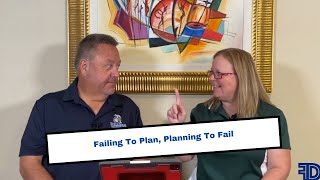
Flip and Danielle Robison break down the order that matters for business money: operations and debt first, then owner pay, equity holders, lender requirements, and taxes. For personal finances, pay yourself first, then split income into buckets for giving, debt, savings, investments, and vacation.
Hey, everybody. Flip and Danny here, founders of the Freedom real estate group family of companies. And welcome to another episode of our.
Podcast, which is called freedom through passive income.
That's right. And welcome to another episode. In this episode is entitled creating your financial priorities.
Yeah, we've talked about finances a lot this year, and we started at the very beginning talking about your freedom number and how to find that. And a lot of that was prioritizing and figuring out how to discover what it is that you need in order to retire with freedom through passive income, which is what we've been, you know, our mission and passion has been about all year long. So we wanted to kind of recap some of the things that we haven't talked about and we have talked about, and we wanted to split it up two ways. One is professionally and one is personally. Personal conversation is going to be a recap of what we've talked about. Especially at the very beginning of the year. The professional. We haven't really talked about it a lot. We do talk about our professional and active investor lives because we know there's a lot of active investors who do listen to this that do both active and passive at the same time. So they have always talked to us and said, hey, I'm just really intrigued about what you're doing, because I too, am both an active investor and passive investors. And then some of the people that listen to us are active investors who want to be passive or passive investors who want nothing to do with acting. So we just thought we would hit on both. So we're gonna start with a professional, and I'll let you go through the very first one.
So number one is cash flow for generations and debt obligations.
It's actually operations. He can't read my handwriting.
Operations. It looks like generations. That makes sense, though.
Yes.
So cash flow for generations, operations and debt obligations. Yeah.
This is what happens when.
I wish you could see her handwriting. I was like, you know, scribbling, sorry, but no. And we talked about this go a couple years ago now. And that's been our boom. That's been our main mission. So that way, no matter what, we always have cash flow coming in for operations and for debt. So that way we don't worry about anything. That's whatever could possibly happen tomorrow.
Yes. Yeah. And so Covid was one of those experiences that it gets very scary in a time like that because you just don't know for sure that you are going to be able to create an atmosphere to continue to bring in the revenue that's going to cover Everything. So highest priority is keeping things running. If you're an active business owner and if you need to cut expenses, cut expenses. We won't go into a lot about that because we have in previous episodes. So that's number one. Number two, owner compensation. So Flip and I are the owners of the company. We are not W2 employees. So we do something that's called guaranteed payments. You can do owner compensation in many different ways. Talk to your CPA about that and how it would work for you. Guaranteed payments worked for us because we were building and we knew that we weren't going to be profitable for years. So in order to make sure that we could create and build these companies and still make sure that we're covering our own personal lifestyle, we had a guaranteed payment structure so that we were paying ourselves while we were building the company. And that structure can change depending on the state of the company. So I'll put that as category number two, because the business has to run. If the business is not running, who cares about owner's compensation? But as long as the business is running and you've got the cash flow for operations and debt obligations, then number two would be making sure that you're getting paid as well.
Right. Number three is equity participants.
That's right. You read it correctly.
Thank you very much. And shareholders and partners and whoever else might be a part of the deals.
Yeah, absolutely. So this is something like if you've got profit sharing programs like we do in our company, you actually lay it out so that everybody understands on a financial basis how everybody is paid. Right. The business has to be taken care of first. All salaries have to be paid, all bonuses and commissions, things like that have to be paid. And then there's a tiered order on how maybe company profit sharing works, maybe how partner profit sharing works, how owner equity partners might work. All of that gets tiered down. You have to understand that you have to talk with your cfo, cpa, whoever it is that is helping you with your financials. Ask them to explain to you and how that works. That way you can communicate that to your team. And then number four is bank or lender requirements. So depending on how you're funding your operations, you might have bank loans, you might have private loans. You might have many different things. If you're in real estate like us, you have a lot of private lenders on properties, you have mortgages on apartments. All of those things come into play. I tend to lump them into the debt obligations and take care of them at level one. But sometimes there's certain requirements that are unique. And so you're going to want to make sure that you're checking those. And that's why we put it down here. On number four is just as a backup to go, hey, is there anything besides the debt that we need to think about with regard to our bank and our lenders?
And then number five, lastly, tax minimization.
That's right.
Say that.
Yes.
And it's just being able to pay as little of these taxes as possible. Legally.
Legally, yes. Legally is a very important word. And this is what we've been talking about a lot recently because we're preparing for the end of the year, talking to your tax professionals about how to reduce your tax burden. This is something you think about last because you have to have a successful and profitable business before you have to worry about minimizing your tax burden. So that's why we put that as number five on that list.
Now I'm going to do this first one because you need to talk about the second one.
Okay? Okay.
So the personal side of things, which is. I like this one anyway. This is my personal favorite.
Yes.
Yeah. Pay yourself first.
That's right. So on the professional side of things, we talked about owner compensation being number two, because the business has to be running before you start paying yourselves. Right. So on the personal side, you have to make sure that you're being paid. So we had to make sure that the business was being taken care of, that the operations and the debt was being taken care of because we needed to get paid. So it was number two on our professional list, but number one on our personal list, because without us getting that income coming in, we can't take care of us on a personal level to reach our goals. Which leads us to number two. Number two is then to divide that pay into buckets. And this is where it really is a recap of what we talked about at the very beginning of the year when we talked about finding your freedom. Number and we really went through the finances and what you would do and how you create different types of buckets. Your buckets might be tithe. It might be debt, might be savings, might be investments, might be a vacation fund. There's different types of buckets that you can have. Flip and I have a lot of buckets. They've actually grown as we've grown because we're eight to do more things. So we start creating those buckets. And when you get paid, you want to prioritize where that money goes. And sometimes there's buckets for what's left over. Right. When you start increasing your income beyond what you've planned for, then you've got these buckets over here that says, hey, if we have extra, then this is where it's going. These are the causes maybe that we're supporting. So that's part of one of our buckets, is that we do have causes that we support. And that bucket, we want to grow bigger and bigger and bigger as we continue to grow financially and professionally. So without a plan, you'll never get where you want to go. This is something you have to be intentional about. None of this happens by accident. You don't just suddenly make more money. You don't suddenly have all these investments that are producing passive income for you without sitting down and thinking about it and figuring out where all the money goes and where you want to be and the path it's going to take to get you there. So make sure that you're taking those steps. And if you need help, we've got our entire team that is a resource for you. That's why we are always asking you to call Ben and CJ because that's where you start and we can start helping you define what that path may look like, using what we believe to be a safer and high return investment. It's why we're in real estate. It's why we pour all of our money into our businesses and into our investments. Because we believe of all the investments out there, this is a high return. But it gives us stability, reliability, dependability, safety. And that's exactly what we're looking for, is the highest return without taking a whole lot of risk. So that's why we're sharing this with you. Yep.
I remember a professor at Michigan State University. This was decades ago, unfortunately, but anyway, he had a sign on his desk says fail to plan. Plan to fail.
That's right. Yep.
So we hope you enjoyed this episode of our podcast. Make sure you're heading on over to our website, freedomcapitalinvestments.com to join our investor club. Make sure you're talking to Ben and or CJ to talk about all the stuff that we've got going on this year and what we got going already on in 2023. Make sure you're checking us out on all the social medias and all that fun stuff. But we like to end all of our episodes with Invest Live Happy. Bye, everybody. Nothing on this show should be considered specific personal or professional advice. Please consult an appropriate tax, legal, real estate, financial or business professional for individualized advice. Opinions and information on the show are not guaranteed. All investment strategies have the potential for profit and loss.
Sam.
More from Dani











Physicians and High Earners — What Real Estate Can and Can't Do for Your Taxes