Ep 340 - 7 Investor Mistakes
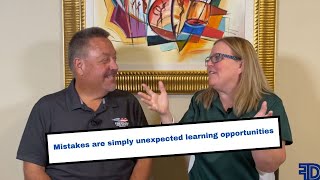
Podcast episode (YouTube) titled "Seven Investor Mistakes" hosted by Danielle Robison and Sam of Freedom Real Estate Group. Based on Michael Batnick's book "Big Mistakes, the Best Investors and Their Worst Investments," the hosts enumerate and discuss seven common investor errors: (1) mental lapses by even smart people; (2) expertise in one field doesn't guarantee investing skill; (3) learn from others' mistakes; (4) plan for challenges and contingencies; (5) take smart risks and beware "can't fail" pitches; (6) acknowledge macroeconomic crashes and unavoidable market realities; (7) recognize investor behavior biases. The episode mixes book-based takeaways with host anecdotes, practical tips, and a closing CTA and disclaimer.
Hey, everybody. Flip and Danny here, founders of the Freedom Real Estate Group family of companies. And welcome to another episode of our.
Podcast, which is called Freedom through Passive Income.
That's right. And welcome to another episode. And this episode is called the Seven Investor Mistakes.
Yeah. So there's a book out there from Michael Batnick. It is called Big Mistakes, the Best Investors and Their Worst Investments. And the title obviously grabs you. And always learning from people's mistakes is something that we all love to do because we prefer not to make them ourselves. So I thought this would be a great episode because in life, we all make mistakes, right? Doesn't matter who you are. In fact, the CEO of Disney just got replaced, Right, with the guy that he replaced. Yes. So he obviously made a lot of mistakes while he was there. Right. So it doesn't matter who you are and what level of business, and whether it's personal or professional, whether it's sports or finance, it doesn't matter. We're just all in the same boat together. And it's really good to learn from other people's mistakes. So we thought we would take the key takeaways from this book and title. This podcast tops the seven. Yeah, just Seven Investor Mistakes. Because really, it's from this book that we're taking them necessarily what we view as our top, but we think that they're really, really good. So I'm going to read the first one. The first mistake is even the smartest people have mental lapses and fall prey to poor investment decisions. So I think an experience that we can talk about is when you get so, so, so, so busy that you're not quite sure if you have time to evaluate something, so you rush through something or you've had experience with something before that you didn't think about because you were so busy rushing into the investment decision, that mental lapse caused you to make a poor decision. And we have done this before in our own businesses. We're like, ah, we've done this before, like, and we were just going so fast that we just didn't remember. And so we had to make the mistake again and go through a similar experience. Now, of course, we recover really fast, right? Because we go, whoo. Okay, okay, okay, okay. Rushed that. But now we can just recover really quick because we understand where we were. So, again, number one, even the smartest people have mental lapses and fall prey to poor investment decisions.
Number two is being smart in one field does not necessarily translate to being good at being a good investor. In other words, being a smart doctor or Lawyer doesn't ensure investing success.
Yes. What's interesting about what we've learned about doctors and lawyers is I don't necessarily think that they even believe that they know that they're really, really smart. From the people that I've talked to, they're like, I'm very well known in my field, I'm very good at what I do. However, when it comes to investing, I don't have the, I don't have the knowledge, I don't know who to trust. And it's more of a now in action. It's a piece of inaction because I'm so busy up here with all my schooling, all my experience in this high income career and what I'm doing, what I love, I don't have time to do all this and I don't know exactly who to trust in order to do it for me. So it was interesting that he wrote this as if there are people out there thinking, oh, I'm really good at this. Well, certainly I could be good at that. And maybe that is the takeaway here, is that he's saying, just because you're a great doctor doesn't mean you can go study real estate and suddenly be good there. The successful real estate investors who are out there doing it actively every single day went through as much real life schooling as you would as a doctor and have made as many mistakes in real estate as a doctor probably has in their field in order to be where they are. So unless you want to start from scratch and feel like going through school and going through all the mistakes yourself, then you shouldn't position yourself to want an additional care learning lesson just because you're really successful in the first one. And then the third one. Oh, this is me third one. It is important to learn from the mistakes of others, to avoid repeating those same mistakes and to protect and enhance your portfolio. That's why we're talking about this today.
You know, when I first read that, I was just like, can you imagine doing what we're doing? But like back in the 80s when there's no social media, no Facebook.
Ah, yes, right.
I mean, how many the friends that we would have would be the maybe two or three other people that we knew in the area were doing what we were doing?
Yes.
I mean, oh my gosh, yes, agreed.
And we're big. Like we've always said, we're big on coaches and masterminds and we do that because we want to learn from the mistakes of other people. And that's why we're doing this episode because we want you to learn from the mistakes in this book.
Yep. Number five, be ready to face challenges and obstacles and arm yourself with an advanced plan for all possibilities and unplanned circumstances, chances.
And actually, that was number four.
Oh, sorry.
Okay. No, no, it's my bad. I was counting the bullet points.
Yeah. Yeah. You're the odd ones. I'm the odd ones. Yeah. And so this. This one's great, too, because when we first started, it was go, and. And whatever happens, happens.
Yeah.
You know, we were just throwing everything at the wall and whatever stuck. Stuck.
Yeah.
But as we got. Got better and started doing more and more deals, all of a sudden we're like, oh, hey, we need to watch out for that. And, hey, we need to watch out for that. We need to make sure that doesn't happen again. And we need to make sure, you know, it was. It was trial by error.
Yes.
You know, and even today, because we really didn't have all that much Facebook back then, you know, but even today, it's still a little bit of trial by fire. But you can learn a lot from other people just asking. Asking them questions of what to avoid.
Yes. And we're very, very much more proactive these days about being intentional about what we're doing and plan the. And mitigating the issues that might come up as they arise. So that's powerful. Okay, now for number five. Now, number five, focus on taking smart risks and exercise utmost caution. Even when something looks incredible and can't.
Fail, those are the ones that I know that's horrible.
If somebody is overconfident about something and is not providing you a realistic picture, and if you ever hear the words can't fail, just walk away. There is nothing in life that can't fail. Everything can fail. It would be ridiculous to think otherwise. And I think that somebody who is overconfident about an investment is likely in a position where they need the money and they're promising more than they should in order to get the money, and they're making it too good to be true. And that should be something that always causes a red flag to go up. It's why whenever we do our pitch deck webinars about a deal, it is very. I love this deal. And here's why. That does not mean anything. Right. Something can happen. You are investing at your own risk. Know that the disclaimers are on these slides for a reason. You are an investor. You're becoming an owner of the company that is going to hold this project, and you have to know those things. And those things have to be disclosed to you. And the person talking to you needs to be realistic about what that means to you so that you understand what you're getting into and the risks that you're taking along with it. Now, we, as investors, we tend to go towards the safest. Risky investments. That's a word. We like to lower our risk by knowing exactly what we're doing. That's why we stick in the world of real estate, because we know it so well.
Yeah. I always think of when somebody says, it's a sure thing. Yeah, it's a sure thing. I'm walking away. All right, so number six. Number six, understand that there are times when no one can escape from economic realities and major crashes. And they're talking about the Great Depression because even I don't know when this article was written, but even the COVID Even when Covid happened, that took a lot of people out, but it didn't. It didn't take everyone out. This is saying that there's time when everyone goes out.
Yeah.
So. But. But it's still. There's things that you can't prepare for. No one saw Covid coming.
Yes.
You know, well, everyone said that they saw the crash in 2008 coming. And, and now we're, you know, in a situation where the. The housing market is, you know, interest rates are going up and the housing market prices are going down. You know, it's what they call correction.
Yes.
You know, so. But you just have to be prepared for everything.
Yes, absolutely. So I think the lesson in that one is you can't escape, you know, the inflationary environment, the rising interest rate environment, what's happening in the market today, the possible recession. You can't escape it. You can navigate it, though.
Yes.
So don't, don't ever forget that. You can't navigate something like that. You get around the people who have experience and have multiple options in avenues in which to do real estate. Vertically integrated companies have so much control over what they do and the power to make better offers, make more creative opportunities. So things like that. It's all about who you're surrounding yourself with and how they're navigating the market and the environment that you're in. That's what's important. I think right there and then number seven is recognize your investing behavior biases and tendencies to avoid or mitigate investment losses. Now, there was a series that we did the. The personality traits of the investor, or we did like it was A, B, C, D. I can't remember at all in detail. It was a little while ago. I think that's what really reminds me of this one is recognizing your investor behavior and that's why we did it. What type of investor are you? Are you a type A, B, C or D? And based on knowing that it now empowers you to be able to invest in things that you are truly comfortable with and be able to go, no. I know that I'm not that type of investor because I've gone through this process of understanding who I am and what I like. And so I just quickly walk away from that one. Wasting time evaluating something that really makes you uncomfortable. And you should never be investing in anything that makes you uncomfortable. So I like that powerful number seven. So that's it. That's our seven investors.
That's all seven.
Yep.
Well, we hope you enjoyed this episode. Make sure you're heading on over to our website, freedomcapitalinvestments.com to join the investor club. Make sure you're reaching out to Ben and or CJ to find out about all the stuff that we've got going on the end of this year. And we already have stuff going on in 2023 as well. So make sure you're heading on over there. But we like to end all of our episodes with invest Smart Happy. Bye, everybody. Nothing on this show should be considered specific personal or professional advice. Please consult an appropriate tax, legal, real estate, financial or business professional for individualized advice. Opinions and information on the show are not guaranteed. All investment strategies have the potential for profit and loss.
Sam.
More from Dani











Physicians and High Earners — What Real Estate Can and Can't Do for Your Taxes