From Navy Captain to Wealth Strategist: Gary Pinkerton
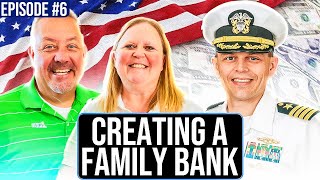
A podcast episode (YouTube interview) featuring Gary Pinkerton, a retired Navy captain who became a wealth strategist. Gary recounts losing substantial family wealth during the Great Recession due to inattention and poor advisor communication, his 2020 move to Florida as a lesson in "agency" (freedom), and his commitment to teaching family wealth principles openly to his sons. The conversation centers on Gary's core strategy of the "family bank": using overfunded whole life insurance as a safe, liquid, tax-advantaged foundation for liquidity that can be borrowed against to fund investments. He outlines a "hierarchy of wealth" (tiered pyramid from guaranteed cash to speculation), emphasizes betting on yourself and vetting partners' character, and advocates keeping meaningful liquidity to take advantage of opportunities. Practical anecdotes include borrowing versus paying cash for a rental, losing money in a scam, and lessons learned from real estate and market cycles. Contact and resources (garypinkerton.com, Paradigm Life) are provided at the end.
The great recession was exactly the time that I was paying no attention to my personal finances at all. None. And when I left command and I was handing it off to the next guy, I realized I had lost over half, over 50% of my family as well. I paid no attention. But worse, none of my advisors had ever called me, emailed, texted anything. Right. Didn't write a letter. And so I felt like there was no control there.
Hey everybody, Flippin Danny here and welcome to another episode of the Freedom show. Today's guest is Gary Pinkert in.
Yeah, super excited to have Gary. He has been a friend for a while. He's in one of our masterminds and today he's talking about the family bank. So it's another wealth building strategy that we're excited to share more with you. So enjoy the show.
Enjoy. You're tuned into the Freedom show. We are in the studio having a conversation. We are really excited to share with you. Today's guest is Gary Pinkerton.
We're so happy to have you here, Gary. We're going to be diving, we're going to be diving into a bunch of topics with Gary today but before we do, we're going to tell everybody a little bit about you.
Gary Pinkerton is a wealth strategist, veteran best selling author, entrepreneur and real estate investor. Passionate about business, reducing taxes, building agency wealth and family legacy. He's a graduate of the U. S Naval academy where he later taught ethics. He commanded the nuclear attack submarine USS Tucson and was a Pentagon division director for the joint chiefs before retiring as a captain. Gary owns and helps others couple high cash value life insurance with alternative investments and investments. He directly owns 20 buildings, a general partner in a 48 unit resort in Cape Coral and a limited partner in 30 syndications. His hobbies is working on and racing cars. My kind of guy.
Welcome to the show, Gary. Sorry, thanks. I was just thinking of you and I did racing the other day so that'll come up somewhere I'm sure. Awesome.
I can't wait. And after reading that bio. I'm sorry sir. Yes sir.
I love it. Well, we are thrilled to have you on the show, Gary. We've told our network this is the very first podcast that we have created where we actually have guests on it. Typically we only do solo shows. We did the 365 day podcast in 2022 and it was crazy and we don't want to do daily anymore so we changed it to weekly and we said hey, why don't we just introduce our network to everybody that is in our network. So, Gary, you are in our network. You are somebody that we work with, that we are in the power room, mastermind with. And so we thought it would just be great to introduce you to everybody and tell them more about what you do. But before we get into how we are working together and what I like to call, like, the superpower of how you help people, we love to talk about freedom. And so I'd love for you to tell us what freedom means to you and share with us your freedom journey and what that looked like.
Yeah, awesome. So freedom to me means my favorite word that I've adopted to be my fight song, and that is agency. So it's pretty close to freedom. It's really agencies having the ability to control your own future, live life the way you want to live it, both financially and just in general. So maybe it's just, it really is freedom, frankly, it's financial freedom. It's life and time freedom. And so for me, just having the ability to do what you want to do in life. My story of how I exercised my freedom was 2020. My family and I were living up in New Jersey. I retired from the military in 2016, and all before that I was searching for financial freedom, not agency. So, you know, if you go all the way back to when I'm a kid in high school, it's the late 70s, early 80s, and Ronald Reagan is in there trying to fix the high inflation that we had under Jimmy Carter era. And so he and Paul Volcker, the Fed chair, raised interest rates to 21%. And we had variable interest rate loans on our farms, which all farmers, a lot of farmers did back then, wiped us all out completely. Living in a, you know, rented or a borrowed trailer, used trailer on our uncle's land, my uncle's land, and really kind of hating life as a young materialistic kid who wants to attract girls, but not with hand me down clothes, you know, and, and so, and old cars and stuff like that. So I was so focused on making money and changing my future that I got an opportunity to go to college. With the Naval Academy and University of Illinois and the Air Force Academy. The one that was furthest from Illinois was naval academy. And that's, I'm not kidding you, why I went there. And they also, it also offered a free education, right? Which is what I could afford. And it offered five year guaranteed employment after that with pretty good pay. So that's why I did it. And along the way though, I got super inspired about patriotism and about nuclear submarines. And so I spent my, you know, 30 years doing that. And near the end I was actually, it was 2008, I was getting ready to go into command of my submarine.
So.
And I had enough money, in my opinion, to retire, to walk away from my W2 job and finally start to see my young boys start to grow up. Because I was starting to get a little guilty about the fact that I was around my dad all the time. And I really should attribute a lot of my success to everything that he taught me as a father teaching a son. And my kids were not yet teenagers, but they were getting old enough that they were starting to kind of act out. And I was realizing that this was not the best path of me to just not be around them. So I intended to do that. So going into command had enough money in my opinion, to do that left command a little over three years later. And so my commander was from 2008 essentially to 2011, the Great Recession was exactly the time that I was paying no attention to my personal finances at all. None. And when I left command and I was handing it off to the next guy, I realized I had lost over half, over 50% of my family as well. I'd paid no attention. But worse, none of my advisors had ever called me, emailed, texted anything, Right. Didn't write a letter. And so I felt like there was no control there. And, and I felt trapped in that I had to stay in the military and I had to come up with a follow on job because I wasn't in the position anymore to do that. So for me, my story of getting to freedom was realizing that freedom and agency comes from having control over your entire life. Right? So now let's fast forward to where I was in 2020. We're up in New Jersey. And now I'm. I've always been freedom focused. I mean, for 30 years I was trying to help other people be free in their lives. And now I'm focused on this agency thing, which means that I have the financial capability and, and I've set up my life in such a way that I can do whatever I want. And this guy up in New Jersey, our, our governor keeps, keeps putting more and more restrictive freedom limiting things on people during COVID time, right? And like, listen, people get a little bit of a buy because none of us had seen this before, but they just keep doing it. And, and so he's got this great idea to take everybody that's in a Hospital in 2020 and make them stop off in a nursing to like infect the people in the nursing home or themselves get infected. And so the death rates were pretty high in New Jersey in mid-2020. And so he's on television and he's, he gets flustered with all of these questions, and eventually he just says, listen, if you don't like what I'm doing, you can leave. And so, like, the third time I heard that, I went to Susan and I said, hey, this guy's talking to me like he's physically speaking to me. And so we uprooted ourselves and we moved. And that taught me that have an agency is all it means, everything in the world. And so, yes, all of a sudden after that, I'm living in the great state of Florida with you guys and my. And it's not just everything's Florida, but, but like, everyone leaves you alone. Like, you know, like your neighbor sees you working on the beat up, broken down old car in your front yard, and he's like, well, that sucks, but, you know, I don't own that. That's him. That's his world. Right? I'm not saying everybody's like that, but that's, you know, it's a much more free environment. So I could go on for the entire podcast, but I'll stop there. You know, agency and freedom. My story is I moved to Florida in 2020 and it taught me what's super important, and I just roll that into how I now talk and help clients.
I love that. So if you summarize that into a word, I feel like I'm hearing geography freedom a lot. Right? Because you wanted to move somewhere to where you could do what you wanted. Time, freedom to be able to spend time with your kids. Tell us a little bit about that. We have a lot of people with families and we talk about this blueprint that we create a lifestyle design, right? And choosing what you want to do early on, like what you want out of life so that you don't get stuck in what could be another prison chasing financial freedom or some type of freedom. Right? So when it came to spending time with your kids, what did that journey look like?
Well, first of all, you mentioned, like, don't get stuck in a prison, right, or get stuck doing something you don't want to do. And you know, we all have, in America, amazingly, we have the freedom to like, like, we don't go to prison if we choose, like physical prison if we choose to be a skater instead of, you know, being a bread maker, right? So you get the choice to do that and choosing something that at least you don't hate doing is a really, really good idea or at least getting there as soon as you can. Because if you don't enjoy life at work at where you devote your adding value to the world and getting paid for it, you know, time of your life, then when you're around your kids, you're not going to be, you know, you're going to be in a really horrible mood and you're going to be beaten down and, and it's not going to be quality time there either. Right. So the only way really to add value to and, and have freedom to spend time with your children and then pass on your lessons learned is that you enjoy what you're doing. Like, my dad never made much money and, you know, he just kept getting, you know, kicked in the groin, if you will, every time financially. The big, you know, the big dairy farms took out the small guys and the banks got, went after us and, you know, there's always just one thing after another. But he enjoyed what he was doing. He enjoyed working the land and raising the animals. And so he spent the time he was still in a decent mood when I was out there with him doing that. Right? So you have to pick the right place to be before you can, you can't just make $2 million, be really upset about where you have to go to work and then, you know, have a great life with your kids. It's not going to work. So you have to be okay with and excited about what you do every day and then spending, you know, and then, you know, I guess what I would say is that there's no shortcut on passing on our values, our ethics and our lessons learned to our kids. There just are no shortcuts. You have to spend the time with them, bottom line. And so if you're in a financial position where you can say, hey kids, I've carved out two weeks here in June. Where are we going? You guys pick, right? And so if you can get their buy in, I mean, maybe it has to be within reason, right? Maybe it has to be like, pick these three states that we can drive our car to. Maybe that's the situation that you're in right now. But let them pick and then let them pick the activities that you're doing while you're there with the understanding that there is one day or one evening or whatever that's mine. And in that period of time we're going to order their favorite food still, but we're going to spend time talking about the things that I think are important for them to understand about how to grow wealth, how to save on taxes, why education is important and, you know, and why owning real estate is important and all these things that I think are vitally important for long term wealth. You need to pass it on to your kids. And it's not going to work as well if somebody else does it. And they're not going to listen if they're not bought in. Right. Like my first family meeting like this like family legacy, wealth creating topic was in the living room of our primary residence and that did not go well at all. Like, it was horrible. It was like one of those crazy Brady Bunch meetings where they all sit down on the couch. Right. Like, it didn't go well. But I've learned and so create an environment that they're excited about, that they're bought into and they created and just let them, you know, make sure they understand that there is, you know, there needs to be an education side to things.
Yeah, I love that. So this kind of, it transitions a little bit and we can keep on going on the freedom stuff because I love the stories that you're sharing, but it transitions a little bit into this get real aspect that Flip and I talk about a lot. You know, this journey of reaching freedom and in your word, agency is a journey of roller coasters. It's not all rainbows and sunshine. There are times that, where you're struggling, there's times where you're not sure exactly what to do and you're having to reach out to your network to, you know, find solutions to problems. And not a lot of people talk about those times. They talk about the highs and don't talk enough about the lows. And we're very much, we have a kind of a passion to say, hey everybody, you can do what if we did it, you can do it too. And we're going to tell you about all the failures so that you realize it's okay to have failures and it's okay to get up and do it again. So as you're talking about your kids and teaching them all of these things, I thought in my head, you know, I wonder, is that, are those conversations happening as well? You know, here's the mistakes that I made so that you don't make them too. And can you share just some get real moments with our listeners?
Yeah. So Susan and I are very open with, I mean, my kids are 19 and 22 now, both boys. And so but for, I would say for the last close to 10 years, we have been completely 100% open with them about how much money we have and, and what mistakes we've made, what successes we made and what we recommend for them, like aggressively open and conversational about that. And, you know, my parents were open about what we had too, but we didn't have much, you know, and so they were open about the deaths that we had and things. So there wasn't a lot of secretiveness going on. I think a lot of, I think one of the big challenges is that many successful business owners and entrepreneurs are so busy building the business, but they don't ever spend time teaching the family about it. And then they realize the family is not educated to be able to handle this. It would be a weapon in their hands, and so they have to shield them from it so they don't talk about it and they. Because they don't think the kids can handle it. Right. I mean, there's bumpy moments when you're totally open about stuff. Like, I remember my son on Xbox telling one of his friends how much money I had or made or properties we have or whatever. I'm like, who are you talking to? He's like, oh, some guy I just met from Kansas. I'm like, no, no, no. So, you know, so like it could have been a 60 year old, you know, craz. But anyway, so being open about that, you have to, you have to do the work, right? You have to do the education side of it. But I'm certainly open. Like, my kids definitely know some big, big setbacks that have happened in the last two or three years. And I think one of the things we want to talk about coming up here is like your big. Your biggest lesson learned or take away your advice. Right? And so I'll hold kind of what that lesson was until then, but what I'll say is they saw me go through the turmoil of losing seven figures in a scam. And, you know, and, and I believe that God teaches us all these things, like we go down this path intentionally to learn the lesson. And I was getting frankly a little cocky about, you know, I can make money, you know, while I sleep or not. I wasn't really thinking that. But, you know, I was like, very comfortable and I wasn't learning as much because when you're, when you're in stress, when you're learning the lessons, when you're moving the boulders that just showed up in front of you at an inconvenient time, you're learning from that stuff, right? You learn the most. Donald Trump said when asked, would you learn the good times and the bad times. He told the real estate guys, I don't learn anything in the good times. I learned everything in the bad times. And I would 100% agree with that. When you're coasting and everything's going well, you're not learning anything. And so I want to make sure my kids. I mean, I can't really hide it anyway, but they see the pain. They see that, you know, that I really regret those decisions I made. But I also learned a lot of lessons, and I make sure they understand what those lessons are. You can teach kids the wrong lessons if you're not verbal about what they're seeing. Right. Because they're watching everything, like, you know, do what I say, not what I do kind of thing. Right. But if you're not saying and doing, then they're just going to learn from what you do. And I've had my kids tell me stuff, my sons. I would never do that. One of them said I would never invest in real estate because he saw the pain associated with me making a mistake in real estate. Right. But I didn't take the time to verbally explain and show that the. That that pain is absolutely worth it. Right. Like, it's. It pales in comparison to the alternatives. Like, I didn't take the time to explain that. So.
Wow.
I don't know if that helps, but. Yeah, you know, really, it's being as open and verbal as you can.
Yeah. That is very, very powerful. So is that the lesson? So, yeah. What would you tell people? Is that the lesson that you would tell people? Or is there something different that you would say to people, hey, if you're struggling right now, or if you're. If you're on a journey, understand there's going to be these ups and downs and what advice would you give them? Yeah.
So there's a lot of lessons there, but the one I was really going to talk about is that really it all comes down to the character of the individuals that you're dealing with. Right. So all risk in investment deals and opportunities and businesses that you start up or whatever, everything you pursue, the risk is in the other people. It's really not in anything else. It's. You're betting on two things. Other people that are involved and yourself. And you should always put the most possible amount on yourself and believe in that. So if possible, keep a positive mindset, like work on gratitude, work on abundance. I have this dear friend who was running a business and she was getting on an airplane 20 years ago when you couldn't stay connected on the airplane. And she got news on a telephone right beforehand that she was probably going to lose her business. And she had done a lot of work on personal growth. And so the entire flight, all the way across the country, she's staring at the blue seat and she's like, I came up with everything possible that I could think of positive about that blue seat in front of me because it kept my mind off everything else. She walked off the plane, got the follow up phone call and she was like, we can deal with it, we'll handle it, right? And it's because she could change her mindset, right? And so that's the one thing we can always control. And that's why I always say, bet on yourself. No matter what, bet on yourself and stay positive about your ability to stand up, dust yourself off and move forward. Right? And if you ever give up on that, if you're ever looking at anybody else, first of all, you're going to be scared out of your wits and you're not going to have what you need to move forward. So biggest lesson is always better on yourself. If at all possible, do everything possible to stay in a positive mindset, even if it means throwing away the work and going and doing your favorite thing in life and just putting it off till later, do that. Because if you can approach it from positive mindset, then you're not in fear mode and you're not trying to cut your losses and do all kinds of crazy things, right? You're moving forward the whole time. That's super important. And then I would just say that in my lessons learned, in all of the big mistakes that I've made, it's been because of the character of the other individual. I'm not saying don't trust people. I'm saying find the right people to trust, spend hours and days around them. Before we started recording, I spent a lot of time around a good, mutual close friend of ours. And then one of the primary reasons I did that was to know him in the fun times and the not fun times when we're super tired and we're worn out and things didn't. The people didn't show up to pick us up or the reservations not there or whatever. Like how does that person respond? Right? And once you know those people who do have good character, just stay tied to the hip to those individuals and just protect yourself from everybody else.
Wow, I love that you just shared that story because it's something that Flip and I talk about all the time. We are in masterminds and we Talk about the fact that they say, hey, how do you have, you know, such a large, you know, investor network? And I said, we're just very authentic, we're very transparent, we're very genuine. We talk about our failures a lot. Like, we don't. And we don't mind. Like, we, when people vet us, I say, you should be asking me and somebody else what their biggest failure was. And what you really want to know is what happened as a result of that circumstance, what happened to them, also what happened to their investor. And out of that story, it's going to reveal the character of that person. Because some people will tuck tail and run in hard times. And it's the people who stand strong, do what you said, find the positive, get up every single day, never giving up and continuing on to follow through with what you promised to do. And not enough people do this as an automatic. And the fact that you said it, I was like, what? Number two, it's like the second person that actually says exactly what we do. So I love that you shared that with us. So I want to jump into what I like to call your superpower, Gary. So this could be anything. I personally think I know your superpower because it's why we're connected and it, and it's part of, you know, you know, wealth building strategy. It's also, you know, protection. And so I'd love for you to share a little bit about what you do and how you help others, how you've helped us. Anywhere you want to start. I really want to share this.
Yeah. So the fundamental, you know, description of my certification and my day job is life insurance. It is, it's often talked about as, I mean, it's uniquely designed for the purpose of growing wealth and it is often described as infinite banking wealth maximization accounts. I personally have started to talk about it as family banks because it's a really nice two word description of what you're doing. You're creating a bank for your family's wealth where you store your safe, liquid and guaranteed money that grows better than your Chase bank account and provides a bunch of other benefits. So that's kind of the fun, foundational or fundamental aspect of it. Where I think my superpower is, is helping other individuals as a coach, as a guide. Not as a coach, but as a, as a guide, as a mentor, as somebody who's on the path with them. Like, I will never ask somebody to go down a path that I haven't already looked around the bend and know basically what's down there. Like I don't know all the answers, but I've done something before, I recommend it to somebody else and I think I can break it down simply. I love Robert Kiyosaki's writing. He writes like to an eighth grader or less. And so it's very simple writing. And what he said to me one time, and I think he even puts it in his books, but he said to me on a real estate guy's cruise one time, he said, if you can't explain it to an eighth grader, then you don't actually understand it. And that is so powerful. And so I try to simplify things down as much as I can. I just did a presentation to 400 people and the biggest and best comment I got back was, you made that so simple and you were so confident when you were up there talking about it. Well, that's another secret to it is if you can say it to an eight year or an eighth grader and you understand it that well, then you're confident on the topics. Right. And so this fundamental tool is really like a replacement for the foundational part to your family's wealth. Another aspect to it, and where I really like to do though is to be that guide on the path to wealth. And so I love talking to people about their personal tax strategy and growing wealth and passing it on as a legacy. Like those are my big things. I love to work with individuals who have a future generation that they want to pass something on to and, and are self motivated. Like they're interested in owning things that they directly control, like real estate and businesses and things like that. And, and so this infinite banking or family bank is really just a foundation that sits underneath everything. Think of it as a pyramid, as a hierarchy of wealth, Egyptian pyramid. And most people ignore having enough cash liquidity sitting in the bottom because they're thinking cash is trash. It's not growing for me down here. I could have this in an investment. And I can't tell you how many people I know in 2008, 9 and 2020. Quick story. In 2020 I have a client who is third generation owner of an ice cream store in their small town, ice cream shop in their small town. And it was paid off, had been for decades. And so he decides, and it was from advice from everyone, including family, hey, in 2019, take a loan against that thing, go get another one and open it up in our neighbor town or across town or whatever so that you can serve more people. Totally makes sense. I probably would have done that. The challenge is he had zero liquidity, no savings, no checking, and 20, you know, who would have predicted that Both properties were heavily leveraged at the moment, that the government, for the first time in 100 years, refuses to allow him to open the doors to his building. Right? Company goes bankrupt, third generation, right. All because he had leverage. His leverage. The problem. Leverage is not the problem there. The problem is no liquidity. And people are like, that's the same thing. It's not at all the same thing. I have tons of leverage in my life, as do the two of you. What I also have is tons of liquidity. I have like 40% of my. My net worth is liquid. And it stays pretty close to that for most of my life. And, and so I think some of my unique genius is getting across to people that being liquid is an advantage, not a disadvantage. Warren Buffett always says, you know, be, be excited. I'm going to get this wrong, because that's not the right word, but be excited when others are fearful, and fearful when others are excited. Enthusiastic, maybe, is the word he says. But, you know, and then there's that phrase of, you know, buy when there's blood in the streets, even if it's your own blood, right? Well, how do you do that? Well, you gotta have liquidity to do that, right? And so, you know, you have to. You have to be preparing for the future, but just be comfortable maintaining some liquidity. And this tool, the reason you don't put your money in Chase checking accounts is because you can earn 4 and a half to 5% today with no tax in a tool that's just as guaranteed safe and liquid, right? And so that gives us. I've learned over time in dealing with clients in my own world and myself, I mean, that that gives you enough confidence and enough comfort to say, okay, I'll let it sit there liquid, because it's growing pretty solid, right? And that allows me to be ready when somebody, like, calls two days, two days ago and said, I'll give you a 30% return in two months if you'll lend me some money right. Today. Like, the problem was I had to lend the money that day. And not that many people have that money, right? And so it's a tremendous return, but you have to be ready for it. And which means you have to be comfortable having liquidity in your life. Not that you're just missing out on everything, because that's how I used to roll. I used to have all my money in mutual funds and stocks and that kind of stuff. And I meet people every Day that are like that, and they just are not comfortable having liquidity. But the two of you are, and I am.
Yes.
And I tell people that every time you go through a challenge, like 2020, when they tell us, you know, so all of our tenants don't bother paying your rent until further notice. Right. Like, I can remember vividly my wife sue looking at me and saying, how long is that going to last for us? Well, ironically, we had just put our money into a syndicated investment and the bank wouldn't close because it was Covid time, and they gave all the money back, and so my liquidity doubled. And that was God saying, you were about to screw this up and I just gave you a lifeline. Right. And so then when I redid the math, I said, oh, look at that. We could go a couple years like this now. But it was not intentional at that point. It is today.
Wow, that is incredible. I think that's very powerful. We're actually in the middle of talking about liquidity ourselves with another one of our investors for the same exact reason of being prepared for the markets and the markets changes. And that quote by Warren Buffet is, be fearful when others are greedy. Greedy when others are fearful. Yes. And I just love that quote. I have a picture at the Power Room Mastermind. I got a picture of Warren Buffett from those guys that are always back there because. Yeah, I just. I just love that quote so much. But go ahead, you were going to say something.
Well, I was just going to add to that that not, not only does it set you up to be ready financially to take out, take choice of, or take take advantage of opportunities. Because, you know, I would say that luck is when opportunity meets preparedness. Right. So you have to be prepared. So that is true that you're going to be the lucky one that picked up the deal at a low price because you were prepared and the opportunity showed up. The other thing, though, that Patrick Donahoe taught me, and this took me forever to understand, Patrick Donahoe is the guy I work with at Paradigm Life and is my mentor in this world and taught me this 12 years ago. Dear, dear friend. He always would say that you need certainty in your life to enable uncertainty. I'm like, what are you talking about? On enables off. What are you talking about? But what he's talking about is that certainty. Certainty is like having a parachute and you want to go parachuting, but you have. You like to live till tomorrow and you have family that are depending on you. So you need some kind of certainty in there, right? And so the parachute is that certainty and working with a quality individual who knows what they're doing. Like that's the certainty that you put in place so you can go do that crazy thing, right. And have fun doing it. You wouldn't be having fun if you didn't know the parachute worked or not, Right. Like you'd be scared out of your, your rear end. Right. So you have to be careful. But if you have certainty in place, you're good. And so some, you know, my buddy calls me, like right now I don't think it's the best time in the markets, right. Like I have some investments that have stopped paying me cash flow and I have some that are asking for my capital extra. I have some that are not returning the loan that I've given them, right. So there's, there's like crinks in the or chinks in the armor a little bit at least. And so most people are getting a little more conservative with giving out the money. Well, why did I then say absolutely, I'll do as many of those as you will offer me. Why did I do that? Well, it's because that certainty, that big old buffer, is really giving me the confidence to say, yes, things are changing, things are going to get worse. But a lot of money is made in those worst economic environments because the people are prepared and they're confident. Like you have the confidence. So I think that having liquidity around not just actually provides the capital, it provides the clear headedness, the confidence, the ability to look at things and make a good choice.
Yes. Oh, that's so, so powerful. One of the notes that I wrote down that I wanted to talk to you about was hierarchy of wealth. So can you share with us the order that you build wealth in and why that matters?
Absolutely. So if you think of it as an Egyptian pyramid, it's really. We took this from hierarchy of needs, which was Maslow's way of explaining to people how to get to your unique genius at the top. And a lot of people have come across this in school, especially anybody in the medical profession. And it was him saying like, hey, the foundational, there's like these different layers. You have to go through four or five. I forgot how many he had. And it was basically like an Egyptian building a pyramid that's going to last for thousands of years. You need to finish all the bricks, don't cut any corners. Finish all the bricks in the foundational layer and then move to the next level and do it systematically. And you only put that cool little triangle Piece on the top if you've done everything else along the way, right? And so we had just adapted that to talk about hierarchy of wealth, which is your relationship with your money. And so it's simply just if you can think of this hierarchy of wealth pyramid and I'm happy when we talk about contact information, happy to send the book that talks about this and you know, any other kind of videos and stuff. But you think of a pyramid on one side is control and you have maximum control at the very bottom where if you jump off or fall off, you don't get hurt, right? And then you have maximum risk at the top where if you jump off the top or fall off the top, you do get hurt. So just max control at the bottom. They're opposites, right? And so control is talking about your money. If you have a lot of insight and control about what your money is doing, who's got it, when they're going to give it back to you and is it going to bring any return with it, right? Then you're very, very low in the foundational layers of this thing. So for example, in the life insurance policy, it's down in tier one, it's maximum control and it's and therefore minimum risk. Like there's 150 year track record of never losing a penny for anybody, right? In fact, there's 150 year track record of growing it every year guaranteed. So pretty high control. The other end of the spectrum is pulling the slot machine handle or spinning the roulette wheel at a casino. Like that's no control, maximum risk, right? And so everything else is in between. And so if you look at like four levels, the bottom is foundational, tier one guaranteed money. Again, it could be a savings account or shoebox in a well, in a safe, right? Like those are fine. It's just that some grow better than others and have, you know. And in my opinion, the life insurance, whole life insurance policies have a lot better features than the others. But they all work with respect to safe, liquid and guaranteed. But then, but your house doesn't work there, right? Your house is in the next level. Your rental properties, your business, the money you invest in your own personal development, all those things are directly controlled things in tier 2. And then above that is all the syndications, right? So like you guys investing in the property that you're going to manage and control, that's tier two, me investing with you, it's tier three. Because rightfully so, in the contract it says you can make decisions without my permission because I imagine that would be a lot of fun having a passive investor that has no clue what he's doing that just decides we should paint it pink and rent out to homeless people. Right. So that's a bad idea. But, you know, but. So, yes, there's a reason why the passive investor is passive. Right. But if I want to be a passive investor because I want to focus on my own business, I do take on more risk in Tier 3 up there by doing. Being like a. An indirect controlled asset. But like we talked about earlier, you control that by learning the individual and minimizing the risk. The biggest risk, which is the character of the individual you're working with. Like, they could be an idiot. You can test that they could be crooked, which is hard to test, takes a long time, but it's the most important. And once you've solved those, then you're in pretty good shape. Right. And then above that is complete speculation. And so that's where you're so far removed from your money that it's almost like pulling a slot machine ham. And to me, the way I dealt with all my money that was in the markets for the first 25 years of my adult life, while I was in the Navy, I just handed money to some actually automatically came out and went to some dude I'd never met. He gave it to some mutual fund managers who put in some companies, and I couldn't name any of that stuff. And so I might as well have been put on the salt machine now. Right. So it's like all the stock market is up there for me. But if you're a person who does Warren Buffett level of exposure and investment and sits on the boards and all that kind of stuff, well, that's a little further down the pyramid for you.
Yeah, I love that. Okay, so I like how you call this the family bank. I think that those words are incredibly powerful. And even when Flip and I came to you, it was because a lot of things were happening for us financially, and we were like, what do we do? And so what do we do? We sought out advisors to help us on the journey and figure out where to place some of our capital. So talk to me about efficiently storing reserves and investment capital and how the money is growing in two places at once.
Yeah, that's awesome. Thank you for that. So, again, I call it a family bank. It is high cash value, really, called overfunded whole life insurance. And there's another product called Index Universal Life, or iul. It's a decent product, but it's an investment it's not a bank. Right. It can't guarantee your money for the rest of your lives. And so it just doesn't do this role. So I always use whole life insurance for this role. And so you are stuffing cash. You can think of it as a big box. You're stuffing cash into a big box. It's a variable amount. You can adjust how much you want to put in or not put in. And when it's in that box, it's growing at 4 and a half to 5% and a very conservative estimate. And, you know, probably better than that. But those profits are growing inside there without paying tax on them. And then whatever's inside the box, again, what's inside the box represents what you personally put in and what the insurance company put in for profits and guaranteed increases that they're adding. Right. And so it's growing cash. The true purpose for this growing this cash is to one day pay it to your family as a death benefit. But along the way, you get to use it as your own personal cash banking system. And there's two ways you can use it. You can physically withdraw the money like you would out of your checking account to go make an investment. The challenge there is that when you do that, it stops growing. Right. And I like to use an example that I've memorized the numbers for, and that is my first rental property that I bought on Volpe Drive in San Antonio, Texas, in 2011. It was a fourplex. I needed $50,000 as a down payment. And so I had this choice. I had just started my policies, and there was room to put this 50,000 into the policies and immediately go access it, right? And. And so I asked people like, hey, what do you think I should do that? And so one guy looked at my plan, and my plan was to use the cash flow from the asset, like 300 some dollars a month at the time, the net cash flow, to pay off the loan. And I figured it was going to take me 25 years to pay this off, principal and interest. And they looked at it and they're like, oh, my gosh, 25 years. At the time, it was like 6% alone. So it's closer to five today. But, you know, 6% loan, 25 years. They're like, my gosh, that's $47,000 in interest. Dave Ramsey says that if you're going to pay as much in interest as you do in Princip, you should just pay cash for everything. Right? And I understood that and, you know, it sort of made sense. And that's why people pay off their house and they pay for everything with cash. Right. Because they use that mindset. But the second half of that's a super important conversation, and that is, what can I do with my money if I don't lock it up in this property, in this investment? And it turns out that if I borrow the money from them and pay them 47k extra in, in interest, if I then take my 50 and I grow it at that same 6% back then without any taxes and the interest earns, interest turns into $215,000. And so if you take out the original 50, that's 167,000 or $165,000 of growth and $47,000 of interest paid to do that $118,000 difference. Because I chose not to use cash. Right, right. So that's the idea of your money doing something two times. Right. It's earning inside this policy and you've just accessed the value of it by using it as collateral for no cost on your side. Borrow money from somebody else and pay them back the interest, which allows you to, you know, the alternative again is it's sitting in a checking account earning half a percent and getting tax.
Yes.
And then you take it out of there and now it's not earning anything. Right?
That's right.
That entire 25 years as you start to build it back up in the checking account. So either way, we're making the $300 payments. One is filling up a checking account and the other one's paying down a loan. But my 50k was sitting at this amazing return with no taxes compounding that whole time, as opposed to earning nothing.
Wow, I love it. So there's a reason why we came to you when all of that, you know, all that financial windfalls were, were coming because you know this stuff. You are one of the, like, we know a lot of people in this space and you were the expert that we trusted to go to. So, yeah, I, I just wanted to say thank you. That's why we wanted you on the show, so that you could really share that with other people. So we are going to get into a little fun segment here. So. But before we do, you are listening to the Freedom show with Flip and Danny. Our guest is Gary Pinkerton. And we're going to be right back after this short commercial break.
Add new income streams to your financial statement. Freedom Family Investments can help own property and get paid rent. Join funds and get paid interest. Wealth is well being. Own your own future. Freedom Family Investments get More time to focus on what matters. Learn which investing path is for you, where to start, and who to trust. Visit freedomfamilyinvestments.com all right, welcome back, Gary.
Thank you so much. We've been enjoying everything that you've been sharing with us. This is the part of the show where we just have a little bit of fun. Flip prepares for every guest that we have with a short segment that we like to call Real Quick with Flip.
Yeah, and actually Real quick. Real Quick with me. What was funny is, is, you know, because we. We've talked about, you know. You know that we met you through a mastermind, and we had talked with you a number of times. And I remember sitting in the room and one. One of the guys was on the stage and they said that, you know, in this room is a retired, you know, U.S. navy nuclear attack submarine captain. And I'm like, wow, that's awesome. That's so cool. And then they said, gary, come on up here. And I'm like, whoa. I'm like, I. I know that guy. I couldn't believe it. That was. That's so awesome.
Thank you for your service.
Yes, yes.
Appreciate that. Yeah.
All right, so this is, like she said, it's real Quick with Flip. I like to call it this, that, or the other. So I'm going to give you two items. You have to select which one you'd like, but I give you the wild card. If you like a third item that's in the same realm, the same genre, then you can select a third item. So if I say corn flakes or Raisin Bran, you could say.
Exactly.
You've got it figured out.
Perfect. All right.
All right, so are you ready?
I'm ready.
All right, so first one, I'm starting it off hard. Mustang or Corvette?
Corvette.
There you go. All right. And that's all I have today. No, I'm just kidding. Art festivals or music festivals?
Ooh, race car driving festivals.
I believe they're called festivals. Yes, yes, yes. Morning person or night owl?
Oh, morning person.
We have yet to meet a night owl. I'm just. Just saying. That's interesting. Well, it's that time of year with trick or treaters. M and M's or Snickers.
Oh, boy. Snickers. That's tough, though.
Yep. Yeah, I would have said Reese's Peanut Butter Cups.
I was close.
All right. Mac or PC?
Oh, PC. Oh, there's a reason, but there always is.
Baseball or football?
Oh, gosh. Race car driving. I don't watch either one. No, sorry.
No, no, that's. That's perfectly, perfectly lol. Mexican food or Thai food?
Mexican.
All right, there we go. All right again, back in the theme of the, the month that we're in that we're recording this in. Pineapple pizza or candy corn?
Pineapple. Love me some pineapple.
Nobody likes candy corn. Sorry, Tiffany, if you're listening. All right, here's a tough one. Michael Keaton. Batman or George Clooney? Batman.
Whoa. I'm gonna have to go with Michael Keaton. I saw him first. George Clooney is an actor. Better. But I'm going. Michael Keaton.
Very, very good. Last one. Air guitar or air drums?
Air guitar. Oh, man, I love air guitar. That was fun. That was easy.
See? Told you.
Yeah.
Yeah. So, okay, so whenever we talk about that, there's always something that comes out that we want to like, kind of keep going down on a. In a fun way. And since we started off this podcast with, you know, your favorite hobby being racing cars, so I'm going to let you and Flip kind of go back and forth a little bit on cars in general because this man, he just. Every time we see a car that is something that he likes, we have to stop. We have to go to car shows. We have to like. It's crazy. So let me start with you, Gary. What is it about cars and racing? What is it that you love and how did you fall into this magnificent hobby?
To me, it is the quintessential red blooded American male. I don't know, it's just when I hear, when I move my foot and I hear V8 or bigger numbers rumbling in the background, it's just freedom. It is power. It is. I think it's just the power side of it. It's, you know, the same thing when I, when I go full throttle in an airplane that I'm flying. But I like cars better because, I don't know, I'm a little simpler in two dimensions, a little easier to handle. I just finished Skip Barber Racing School, like Monday, which is why I can't think of anything but this. It's not normally the way I am, but I can't tell you how. It's just. I know I've missed one of my callings. I think there's many callings that we each have, but one of them was racing cars because I had so that the guy who's a professional high end, professional race car driver who is leading our lead follow group, you get to pass other cars. Other we're driving Mustangs, which not my favorite but we were driving them and. And you get to pass when you're, when you catch up and you tail somebody for a lap. So now I'm up to the leader and for whatever. Crazy. Oh, it's because it was a ride along car. The pace car was a ride along car, so they had to have back seats. He's driving a Camry, right? And this was a road course, so he's doing his best. And I'm on his number non stop, and we pull into the pits and he's like, okay, you can back off. And I go, oh, sorry. And he's like, well, I can't go any faster, so you can back off. So it was awesome because I didn't see anybody else do that. But yeah, so I, I love them forever. I. I feel like anything with an engine on it, I have a blast driving and do okay with. But cars, man. Muscle, American muscle cars. Just incredible. So had a great chance to go to Sebring Raceway and just drove the heck out of some Mustangs and did skid pads and did all kinds of crazy stuff. It was awesome. The funny thing about the story was I finally bought my dream car, which is a 2018 CD Cadillac CTSV with your ZR1, you know, C7 engine in it. And I was driving back like a little grandma. I'm not kidding you. I had it in cruise. I had it on cruise control the entire time because I was scared to death to touch the throttle on the thing because it was twice the horsepower. The Mustang, I just drove it over a hundred. And I was certain I'd be in prison or jail by the time I got home if I touched it. So it was a great day.
Yeah. And for those of you that are unfamiliar with Florida driving, when he says he was driving like a grandma, that's I believe, 85 here in Florida.
That's true.
Oh, my goodness. Yeah, it's pretty crazy. I guess I should have, I should have asked the question. Should have been Corvette or Tesla?
Oh, still Corvette. Still Corvette. No question.
Yeah, yeah, yeah. Well, it's because you said, you know, love. You love hearing the sound of the, the engine and, and you know, that's the, you know, because Corvette's coming out with the E. Ray.
It's.
It's actually out now with the electric engine in the front and, and the, you know, combustion engine in the back. And people are like, oh, it's electric electric car. I'm not buying it. I'm like, kidding me. And now it's like almost 700 horsepower. I'll take one. Thank you.
I don't know if you've seen the Cadillac. I think it's Cadillac that has the hybrid where it, it starts off electric and makes this like jet engines kind of sound and then the, then the internal combustion engine kicks on. But that thing is incredible. It's 12, 2000 horsepower or something like that in a, in a formula car. But it's incredible that that E. Ray is going to be the same way.
Yeah, yeah. And then the Corvette's smart too, because you can start in electric mode and be very quiet. Like they call it leaving your neighbor, you know, leaving your neighborhood. But they don't call it electric mode. They call it stealth mode. I'm like, well, there you go.
I like it though. I like it. It's like a stealth bomber.
Yep. I love it. I love it. I can't wait. I can't wait.
Awesome. All right, so thank you so much, Gary, for being on our show. Is there anything else that you wanted to touch on with regard to the family bank and how, how it helps people like us, you know, build wealth and serves as protection as well?
Yeah. So I would say that one thing that I didn't really talk too much about in the hierarchy of wealth side, it does come into play with, with family bank. But again, I will, I will tell people like once you get your liquidity established, then go use it for directly controlled investments. Unless you're already filled up there and filled up means I can't focus on my business because I got too much real estate or whatever that too full means. Right?
Yes.
And, but to me, Tier 2 investing is initially on your own business if you're running one, but definitely on directly on real estate with long term fixed rate Fannie Mae conventional loans on it. And that really comes from my childhood and that we lost our farm like I mentioned in the 70s. And I recognize the impact of not protecting your hard earned money, what you have accumulated from the insidious impact of inflation. Like, I hate inflation. I hate high interest rates. I hate that the government can print money, but we are there. Like we.
Yeah.
Instead of trying to be Don Quixote and tilt the windmills, just realize you're in a bunch of windmills and go buy one. Right. And so I now want to get as much long term fixed rate loans on real estate that I can because somebody's going to pay off the debt for me. I'm going to get cash flow from it and it's going to appreciate because the government keeps getting, you know, devaluing the currency on us and so you could, you know, there's different ways to build wealth, but that's one of the most fundamental things you got to put in place is own real property. And if you can get somebody to rent it from you and you can give some, get somebody to give you an 80% loan on it that's at a fixed rate, that's going to make, it's not going to guarantee you wealth, but it's going to become pretty close.
Yes, yes.
And then borrow against your policy to make it happen. Yes.
Love that. So, so powerful. Okay, so if anybody wants to learn more, what is the best way to reach you or find you?
Yeah. So I tried to make it as simple as possible. Just, it's just my name, so it's GaryaryPinkerton.com so last name is the color pink, E, R, T, O, N. So I'm sure it'll be on the show notes or whatever. But yeah, just GaryaryPinkerton.com that's the best way. And we have a ton of amazing resources, including a live, an ability to put your financial information in and create a hierarchy of wealth, which I think I need to show the two of you because it's just got them out a few months ago. But, but you can, you know, actually see your world change as you buy one more tier 2 and get rid of a tier 4. You can see it adjust. And so that's all at Paradigm Life and I will give you the, the contact information there, but you can go check us out and what we do there as well. It's just paradigmlife.net but the easy way to get me is gary@garypinkerton.com fantastic.
And we will have all of these links in the show notes. Thank you again, Gary for joining us.
Thank you so much.
I really appreciate the value that you shared with everyone here and for everybody else. We are looking forward to seeing you next week.
Bye.
Bye. Awesome. Thank you, guys. Wow.
What another amazing episode. Gary, I just love him. He's so full of energy and he's just a wealth of information.
I really enjoyed you two going back and forth about cars.
I could do that all day.
Yeah, I know you guys could. So I hope you enjoyed that show. It was really incredible. We are so happy to have Gary on. I wanted to share with you a little bit about what we have going on right now. We are just now getting ready to release the Power Fund. By the time this recording is released to you, it might actually be launched already. So please contact us about it. The Power Fund is going to allow you a ton of flexibility. It has liquidity options. That's something that we were talking with Gary about on this episode is during a time like we are in right now, it's really, really important to have some of your funds in a liquid investment so that you can grab it when you see fit. So we have Power Fund launching. It is 6 to 14% interest that the interest rate is going to be dependent upon how long you're going to be in the fund. So if you do want to be more liquid, and that's the bucket of funds that you're using, you're going to get a higher rate of return than your bank, than any other investment out there. That's why we built it this way. But it'll still give you liquidity. So make sure you contact us and learn a little bit more if you want that higher 14% interest rate. We do have terms that go up to 10 years. The longer that we're able to use the funds, the higher interest rate that we can give you over the long run. So that's why it's structured that way. But it's built to provide benefits to everybody, whether it be cash flow, compound interest. For those of you looking for growth, diversification, liquidity, we really packed a whole bunch into this fund. That's why it's called the Power Fund. So if you want to learn more about that, then go to chatwithfreedom.com, scroll down, and then jump on the calendar of either Ben or CJ and they can tell you more about it. And until then, we look forward to seeing you on the next Freedom show, which is next Wednesday.
Bye.
Nothing on this show should be considered specific personal or professional advice. Please consult an appropriate tax, legal, real estate, financial or business professional for individualized advice. Opinions and information on the show are not guaranteed. All investment strategies have the potential for profit or loss.
More from Dani











Physicians and High Earners — What Real Estate Can and Can't Do for Your Taxes