How Tanya Rooney Found Freedom Through House Flipping
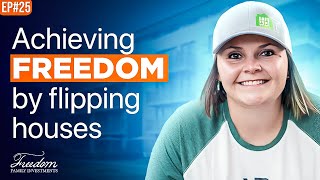
Tanya Rooney left corporate real estate to flip houses and run short-term rentals. She defines freedom as time, location, and partial financial independence. She learned to quit when momentum was high, pivot when flipping slowed, and delegate tasks she hated.
I feel like our freedom is like the freedom to wake up whenever you want and do what you want to do. Like most of the days, don't have to work too much or anything like that. Get to pick up and take vacations whenever. People gave me permission that it's okay to not flip houses. Like, just because you spent this amount of time learning how to do it, learning the process, like doing all these things, it doesn't mean like you're throwing away all that experience. It doesn't mean like you can't apply that somewhere else. The things that happen in your mind when your mind is not on that. I've gotten so many ideas that I'm just like sitting here painting something and then all of a sudden some brilliant idea comes into my mind. I'm like, holy crap. Like there's the answer. And it's like you could sit and ruminate on this thing forever and just be like, why am I not getting this creative solution that I'm looking for? But it's because you need to like lay off now. When you're laying off, all of a sudden you're like, oh, that's a great.
You're tuned in to the Freedom Show. We are in the studio having a conversation we're really excited to share with you. Today's guest is Tanya Rooney. The crowd goes crazy.
We're super excited to have you, Tanya. Before we get into it, Flip is going to actually introduce you to the audience so they can learn a little bit about you.
All right. Tanya Rooney is the owner of BAFS Real Estate and I love this. Yay, you're here properties located in St. Paul, Minnesota. She began her real estate career when she joined CBRE in 2010. Fast forward eight years and she started flipping residential houses. And when one of those flips had great numbers for daily rental, her and her husband dove into the world of short term rentals, bringing expertise from residential flipping which included raising private money to do deals. They now have a small portfolio of STR and MTR and are working towards location and time freedom through through real estate on the daily. She runs her rentals, coaches other real estate folks on STR and creative financing. She was recently published as a co author in a multi author book called Hospitable Hosts 3 talking about her secret sauce for short term rental success. When Tanya isn't talking about real estate and short term rentals, she is writing, traveling, cooking, eating, cycling, hiking and most of those with her husband Matt. And I believe there's a mile or two in there too. Welcome to the show. Tanya.
Y. Thank you.
That was quite the bio. I love it. So before we actually start the podcast, I'm going to ask you a few things about the bio. Many of them I know the answer to. In fact, I think I know the answer to all. But first of all, company names. So how did you come up with your company names and tell everybody. And pardon the beeps that you might hear with Tanya here, Just like Erin Chapman, you know, they've got some colorful language. And we tell you that we have colorful language too. We just clean it up every now and then, but not when we're around people like the lovely Tanya. Lovely Aaron. So go ahead, Tanya.
Okay. So Bass Real Estate was my first company that I started in like 2017. And now it actually means best at finding solutions because my husband is creative and he can figure it out. But I actually started it and it means be a shark. And because at the time that I started my business, I was working out across. At. Across a gym at 6am like, every day. Um, and my. We called each other the morning sharks. Like, we had to keep moving forward. You know, like, you have to wake up in the morning and you have to do stuff anyway, so you might as well bite things and be a shark and stuff like that. So that. Truly, that's actually what bath means. And like, anytime, like, I say best at finding solutions and honestly, that encompasses a lot of what we do now. But it's. Yeah, really, that's. That's what it was. And then, yeah, you're here. Property is like, I. Whenever I see people, I love seeing people. I love. Like, I have a lot of friends all over the country and because of that, like, I don't see them very often. So when I do see them, I seriously say the word yay. Like, I get really excited. I'm not one of the woo girls in the airport that, like, is screaming like a college girl, but I do say, oh my God, yay. I'm so excited to see you. And stuff like that. So because of that, I was like, this seems perfect. Like, we're welcoming people into our houses. We get really excited. Like, I'm really happy people are there. So. So we have. Yeah, you're here on all kinds of things now.
I love it. It's so unique and so memorable and it provides an emotional response right when you say, yay, you're here. Like, there's. I'm actually kind of happy. I like, I smile just at the name and the idea of it. So I love how creative you are with the names. The other thing that I want to ask you for our listener's sake, Flip said a couple times, STR and mtr. Can you. I know we're going to get into that in the podcast, but can you people know what that means?
Yes. STR is a short term rental, which most people know as Airbnb VRBO. They might find it on booking.com or things like that. So it's a house that's less than 30 days rented. So it could be one night, could be, you know, 28. And then a midterm rental is MTR and that's 30 days plus. So it's still a furnished rental, but you rent it for 30 days that the likelihood is in most states you actually now would have to have a lease or it's smart to have a lease, like, things like that. So that's mtr, str. Tons of people just call it airbnb. And I don't want to do that because they don't own my business. I own my business. So I'm kind of a stickler about it. It's really weird. I get super weird about it.
I love it. And then the last thing before we get into the first part of the podcast is all of the things that Flip said at the very end. And then he even mentioned. I bet it's a mile.
I said, and a few miles in there, too.
Yeah, yeah, yeah, yeah, yeah. So we've got riding, traveling, cooking, eating, cycling, hiking, and most of those with your husband, Matt. So we love watching you on social media and we love your there was a mile a day thing that you and Flip both had in common. So talk about, like, the fun side a little bit, because not a lot of us who are entrepreneurs do a really good job at the fun side of things. So I love this part. And before we get into your freedom story, I would love just to hear a little bit more.
Yeah, I think it's interesting because social media people do concentrate on, like, what are the cool things that we're doing? And I think more and more, like, I want, like, the people that I like the most on social media, and the most authentic ones are ones that are telling me, like, what's going on in their everyday life. Like, I don't share a ton of the bad stuff, but I don't have a ton of bad stuff. I'll be honest. Like, I'm a pretty optimistic and happy person and very excited about things, so it's harder to share a lot of that. But, like, everyday things like me and my husband love to cook. We really, really like to cook meals together and you know, take cooking classes whenever we travel and things like that. So I like to point those out and sometimes it's even just a reminder like, hey, you do these things too and these are great. So between the fact that yeah, I don't concentrate on a lot of them, but I just like, I know that I need those breaks. Like I can't not have those breaks. I've been struggling sometimes here and there to figure out what play means to me and that like, because people suggest like you need to kind of break it up. So I'm just continuously finding ways to do things and a lot of times they like, they just are like they're just attached to a goal. Like last year I rode more bike miles than I've ever ridden in my entire life. Like I did a four day ride that was 130 some miles. I've never ridden that much bike in my entire life. Like maybe, you know, like adding up my childhood. Yes, of course, because I bike to town all the time. But I just think like we're, we're, we're so goal oriented as entrepreneurs anyways, so why not bring in something like that? Like I don't want to work out every day. I actually think working out is lame. I, it's super cool that people love it. I love to lift weights and stuff, but I just like sometimes it's really hard to stack that habit for me and I can stack other habits. So I just try to attach something that's like a little bit more simple. Like it might be riding a bicycle, you know, a couple times a week. I did a mile a day for I think two years in a row. Like every single day, rain or shine. Didn't matter where it was. I did a mile every single day. And that was inspired by Flip and it was awesome. And a lot of people know me about it because I used to post about it all the time. So I try to do these things that kind of attach it to fun and then I use social media as my accountability. Like people still talk to me about the mile thing and I haven't had that as my goal. Like last year I achieved two years in like May. So I stopped doing it. I still walk, I still do that stuff. I just try not to make it like this stringent habit that like my, you know, I don't, I don't like to walk at 11pm but I'll do it if I, if I'm habit stacking. So I Try to attach those things, and that's just a way that I can at least introduce something different.
I love it. I. Like I said, entrepreneurs. It's such a tough thing for them. And Flip and I are doing the exact same thing. We're trying to figure out what play looks like for us and what, you know, creative things that we could be doing. I took my first golf lesson, like, just the other day. I posted on Facebook, I was like, yes, I'm doing something other than work.
I actually noticed it was like, whoa, this is a big deal, like, because I know, like, your guys's idea of fun is work. I. And I know that's for sure you, Danny. I don't know if that's your idea of fun, Flip, but I know you've golf, so you must have some kind of other fun.
Yeah, it's funny because our. Our version of fun is working, but in, like, in a different room. So that makes it, you know, if I'm. If I'm working close to the pool table.
No, no. Like, I just want to spend, like, three weeks with you guys and be like, okay, now this is what we're doing. We're shutting our computers. Let's go do this now. But you guys also have the dogs. I feel like, you know, like, there's some play in your life that sometimes we don't even recognize that, or we wouldn't consider it play because it's just our normal lives, like cooking. Like, I love cooking, but I wouldn't necessarily call it play. But then when I'm in the kitchen with Matt next to me, I'm like, oh, this is totally more play. We're not on our phones. We're not doing business stuff. We're not watching tv. We're actually, you know, just listening to music and cutting things. So. Yes, an interesting thing, too.
Yeah, that's a good call. We take for granted, like, the normal, everyday things that aren't work, and we kind of view them a little bit as work because they're daily routine activities that we could mindlessly do and we're not present for. So I think that presence of saying, hey, this is actually, you know, this is fun time, and I don't have anything else to do or to focus on. And I can be present here having fun with my husband or, you know, doing whatever silly things or trying something new that engages the brain just a little bit.
Yeah. And full disclosure, she decided to do the golf without me. I didn't. I had nothing to do with it. She said, I think I want to do a golf list. And I was like.
Not gonna touch it. You don't want to. You don't want to actually scare her away from it.
I was like, where? Where and what time? I'll book it.
That is so true. Okay. It is so easy to talk to you. So we've already started this podcast just, you know, giggling back and forth about your bio and teaching the audience a few things about you. I really want to get into your freedom story because I really love some of the accomplishments that you have made from the time that you've entered real estate to where you are today. So if you wouldn't mind sharing with us what does freedom mean to you, and share with us your journey from where you started and where you are now.
Yeah. So I felt like when I got the list of questions, I was like, what does Freeman mean to me? Because, wow, that like is such a big word. And so many people, seriously, they just treat it also differently. Like, your guys's version of freedom in mind, it's completely different. And 10 other people's. It'll be different, too, because we're all at different stages and we have different family lives and stuff like that. So Matt and I are just solo. Like, we don't have any kids or anything like that. We have houses, and we have nieces and nephews. So our freedom means completely something completely different than a lot of our. The people that we both know, because we don't have to, you know, make sure kids are around to go to school or anything. So I feel like our freedom is like the freedom to wake up whenever you want and do what you want to do. Like, most of the days, don't have to work too much or anything like that. Get to pick up and take vacations whenever. And I think my biggest thing is probably location freedom that I don't have to be. Like, I live in Minnesota, and a few weeks ago, it was, like, negative 10 to negative 20 for, like, a week. And it's really, like, it's not. It's not the most fun thing in the world, and I want the freedom to be able to leave when that happens. Like, it only happens a couple of months out of the year. And if I want to go to Florida and work for two months, or if I want to go to Hawaii and work for a month, I have the freedom to do something like that. So that's probably the best way to. To explain it for me. And then when it comes, like, I feel like there's also a version of freedom with your checking Account, because that is. Honestly, most people put dollar signs next to freedom. And I don't think my checking account reflects the freedom I would love. I would love to just be like, oh, I want to go to, you know, Disney this weekend. I've never been to Disney. I'm going to call it the idiom flip and see if they're around. And I just going to book a trip. Like, I haven't. I don't necessarily have the freedom to do that, but I have the location freedom that I could do that if I wanted to. So I feel like there's still. I still have lots of journey left, that's for sure. But I think it's really interesting because if you. I was looking at pictures actually the other day of like, honestly, I'll just call them my accomplishments. Like, the stages I've gotten to speak on, the people that have thought I was cool enough to have on a podcast, like, those kinds of things. And I. My life has changed so dramatically since, like, 2017. I think is when I about started or started kind of thinking, what the heck do we need to do? I think I bought. We bought our first flip in 2018, and then we started flipping houses. I was in a corporate job at cbre, so the biggest commercial real estate company in the world. Lots of cool opportunities with cbre. And I had a really cool job. Like, I really like it. I still talk to those people because I liked it so much. I had a really good team. And because of that, like, I didn't necessarily want to leave. I just wanted. I wanted some freedom, honestly. Like, I had a client that just kind of rubbed me the wrong way long enough. That made me feel like I got a gut punch on a Saturday and I was just pissed. I'm like, why on earth am I dealing with this? Like, this is somebody else's crap that I don't even. I'm not getting paid anymore or any less to do it this way. And so I just kind of got irritated. So I asked a friend about real estate. She's like, I think you'd be good at flipping. So I started, like, I literally dove in intensely for probably like a year of, like, listening to tons of podcasts, meeting a lot of people. I bought a house within about two months after starting, like, that weekend. I remember because I think it was like the weekend before my birthday at the end of May, I bought a house. We flipped it, and then I realized, okay, we could probably figure this stuff out, like, but if we really want to do it, we're Going to need to do it. Not, like, at scale. Like, we're going to have to do it faster if we want to have any kind of freedom, have some more money coming in and just, you know, maybe not have a corporate job. That'd be really neat. So fast forward, I think, like, so the following year on my birthday is when I talked to Bill Allen and I joined, like, my first mastermind. And he's, he happens to own a mastermind. But we had some back and forth and I realized, like, I just needed help.
So.
And then again, put like seven or eight or maybe even nine months later, like, I quit my corporate job. Like, I was convinced that it would be fine. I had to be convinced because half the time whenever I do something really big or different or make a big change, I need permission. Like, and it's funny because I need the permission from myself, but I get it by talking to other people when they, like, they just kind of boost you up and they're like, wait a minute, like, what about these five things? Like, it seems like you would be able to do this because of this, this. And so we've kind of paved a path of some kind and figured out a way, okay, if we just keep doing it this way, I can quit my job. So I quit. I put in my notice because at that point, oh my God, like, trying to flip like multiple houses and then have a full time corporate job just like, oh, my God, this is really hard.
Yes.
In minus 20 weather, you know?
Yes. Oh my God, that's gross. But it does happen. Yeah. And like, snow removal for all these properties is a pain in the butt. But I was able to quit my job. And then we kind of, we were still flipping. We got into some short term rentals. It was kind of an accident. It was another, you know, thing that happened because of the mastermind. I was in. Somebody's like, hey, what about these numbers? They look pretty good. Why don't you try this? I realized, holy crap. Like, even if we could do half of what they're saying, like Air DNA is saying, and Air DNA is just a website that's kind of tells you if you put a house on airbnb and vrbo, how much they think you can make. And it's comparing a couple of things in the market. So I just thought, if I can make half of this, this money, like, we'll be doing fine. So that first one, we opened it up just kind of on a whim, I guess, and. And now we have five of them. So that's not so bad. And they. And they. They do just fine. Like, I still do some consulting, and my consulting work is really lucrative. I don't have to do all that much work for the kind of stuff that I do because I have a lot of experience, got a lot of really good connections, so I can do that. So those two things coupled with each other, me. And. And I get to sit on the couch and read when I want to. And that's also. That's probably a freedom thing for me, too, is like, I want the freedom to read whatever I want. I don't have to read nonfiction, like, business building books all the time. So, yeah, now. So in a way, I feel quite free all the time. Even though I still have to make money, I still have to be attentive to that kind of stuff. But it's pretty neat.
That's incredible. The fact that you just said. Talked about the book just made me go, oh, that's another thing that, like, you could use as freedom. Um, so time freedom, geography freedom. Those speak to us so, so much. Um, and, you know, so many people chase financial freedom first. And I think it's actually a better way to go if you chase the time and geography freedom, because then you get to start living life and you get to start exploring what you love doing.
How about. How about the interesting ideas you come up with because you're somewhere else? When you guys, like, I know you moved from Ohio to Florida and your business is primarily in Ohio. Well, now you're like, okay, well, we have to pivot. Like, we can't be there. So what does that mean? Like, if it's hiring somebody cool. But if it's, like, me and my. My husband still has a W2, so when we go to Hawaii for two months, like, that's my goal right now, is like, how can we go there for two to six months? So when I go there, I'll still work and that. And that'll be fine. But what does it look like for him to work there? Can he get a job there? Or can he think of a completely different way to make money? And that, I feel like, is what happens when you're not just chasing financial freedom, you're chasing location and geography freedom. Because, like, well, I don't. You know, I can't. I don't have the same network or something from back home, so I can't do stuff locally. So what does it look like to do it here? This other thing? Or can I sell things online? And, like, it's a really big change in like your whole entire mind to think like that.
Yeah, for sure. You start asking different questions and those different questions, you know, marinate on them long enough and the universe gives you answers. And one of my coaches, he said, you know, whenever I'm thinking about a decision or I'm just thinking about something that's really important, I will go to three different places, you know, and just think about the same thing. I would just. I go to a park and then, you know, then I just kind of turn. I think through it and then I just turn it off and la la, la la. And I land at Disney, maybe, and then I'll kind of think through it again because I'm somewhere else. And then I'll turn it off and not think about it, and then I'll go somewhere else, maybe a mall and walk. And he says that exercise, you end up thinking through different things because it's just a different, different place. It's a different, you know, viewpoint. It's different perspective, and it just allows, you know, your mind to just look at things from a different point of view and it gives you different answers to your question. And I thought, oh, my gosh, that's powerful. And so now I try to practice that. It's not very easy all the time because I always have so many decisions. I'm like, I can't keep on going to three different places every day. But the big ones, I think, think it's, you know, fun.
I've noticed when you put in. So, like, I have somebody that I talk to fairly often, like once a week that has talked about play and how when you're playing, like. And when I say play, like, I kind of hate that word because it just feels weird. Like I'm not. I'm not in kindergarten or anything, but play. To me, it could be like crafting. It could be, you know, like, I'm trying to do this little cross stitch thing. I've never cross stitched. I don't know if I'm doing it right. It doesn't really matter. I like to paint. Like, when I was in high school, I had a painting class. So I. Me and Matt went on a date recently and I did some painting, like on a canvas. And I noticed, like, so those things I would consider play. The things that happen in your mind when your mind is not on that. I've gotten so many ideas. Like, just while I'm doing that, I'm just like sitting here painting something, and then all of a sudden some brilliant idea comes into my mind. I'm like, Holy crap. Like, there's the answer. And it's like you could sit and ruminate on this thing forever and just be like, why? Why am I not getting this creative solution that I'm looking for? But it's because you need to, like, lay off. And one, when you're laying off, all of a sudden you're like, oh, that's a great idea. So, like, I mean, walking same thing. Like, you just. It's just a little bit different.
Yes, yes, absolutely. We call it let it go. So every time one of us says let it go to the other one, it.
It. It is the.
The signal to turn things off and just let everything go. Just go have fun and don't think about anything, because your mind does need those breaks. And that's actually where the breakthroughs many times come through. So I'm glad that that's like a gold nugget that if I was listening to this podcast, I wish I would have heard, like, 10 years ago.
It might not have worked if you heard it 10 years ago. Anyway, Sandy, you weren't ready for it then. You're ready for it now.
Yeah, absolutely, 100%. Okay, let's roll into what we call a get real segment. And you know us, we're very much about keeping it real. We don't mind talking about, you know, the bad times. It's not always rainbows and sunshine is what I always like to say. And we like to share with people, hey, if we can do it, you can do it too. So here's the crap that we had to go through to get where we are. So if you're going through crap right now, don't feel like you're alone. We all go through it. We just don't talk about it a lot because it sucks. So can you give us some, you know, get real moments from your life and your journey that might be something that would help somebody else.
Yeah, I can think of a couple things. So I already mentioned earlier that I feel like I need permission when I. When. When I do certain things. I was flipping houses. We actually don't flip houses anymore. I'm good at, you know, managing certain things. I'm not necessarily good at managing that certain thing. And I recognize that it was making, like, little things in my marriage not work as well because I take, like, I'm a pretty emotional. I'm an emotionally driven person. So I would come home, be mad at a plumber, and then I'd be, you know, bitching at my husband, and I'm just like, dude, Matt, is like the coolest guy ever. I do not need to at him. So first we, we like figured out how to just deal with that in general. Like, he knows when to just step away from me and be like, you're not mad at me. But second, like, we were able to, like, I had some conversations around that and people gave me permission that it's okay to not flip houses. Like, just because you spent this amount of time, time learning how to do it, learning the process, like doing all these things, it doesn't mean like you're throwing away all that experience. It doesn't mean like, you can't apply that somewhere else. So just like, whatever you're doing, this could apply to literally anything. Just because, like, if you feel like you're hitting your head against the wall and you have been for two years, it's not that big of a deal to stop doing that thing. Like all those lessons you just learned, you just apply them to something else. And there's something else out there that I feel like is going to be easier because maybe it's meant better. Like when I got into short term rentals, I'm like, this is my jam. Like, I really communicating with people. Like, I like, I like this business. Like, there's a couple pieces I don't like and I just hand them to somebody else. So you would be surprised at what you've already learned. You can apply to somewhere else. So don't, like, just don't be so hard on yourself. And if you have to ask other people, then just ask them. Just ask them for like, what do you think I should do? Like, not necessarily like you need them to tell you what to do, but you do kind of need, like if you need somebody to kind of just push you over the ledge a little because you're just standing there like, I don't know, I'm really good at this thing now.
Nothing on this show should be considered specific personal or professional advice. Please consult an appropriate tax, legal, real estate, financial or business professional for individualized advice. Opinions and information on the show are not guaranteed. All investment strategies have the potential for profit or loss.
More from Dani











Physicians and High Earners — What Real Estate Can and Can't Do for Your Taxes