How To Rent A Rental Property and Screen Applications | REIal Talk | EP. 66
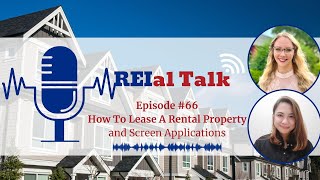
A podcast episode (REIal Talk #66) in which Erica (assistant property manager) interviews Kath (leasing agent at Independence Property Management) about practical leasing operations: typical lease lengths and renewals, pet policies and fees, accepting Section 8 vouchers, rent due dates and late-fees, utility handling, applicant screening criteria and background checks, and the leasing/advertising tools they use. The conversation mixes concrete rules (fees, thresholds, vendors) with qualitative leasing tips and tenant-counseling anecdotes.
Questions this video answers
12 months (with month-to-month and 6-month renewals available; 2-year leases are rare and owner-dependent).
Rent is due on the 1st of each month; a typical grace period of three days is allowed.
Late fees range from $25 to $75 (depending on property).
An additional $50 monthly utility charge is commonly billed on top of rent to cover water, sewer, and trash.
Household income must be approximately three times the monthly rent.
Welcome to Real Talk. Real Talk for real estate investors. My name is Erica and I work with Independence Property Management as assistant property manager and this cast our leasing agent and this is podcast number 66. So. So it's all about how to lease a property and how to scan for residents. So it's going to be a great time talking and so great. I do want to. Before I start off, I have a shirt on, it says do all things with kindness. And I picked it up for a reason. It's because Kath honestly does everything with kindness and she's awesome and she's very kind and I really respect her for everything that she's doing. So welcome.
Cath. Thank you. Erica, thank you for that very wonderful introduction.
My pleasure. Well, it's easy to say nice things about you, that's for sure. Well, awesome. Cath, how long have you been in real estate and how long have you been leasing?
Well, I've started with Independence two years ago. So this is my first real estate company and at first, yeah, I was hesitant working at real estate, but then when I got into Independence Property Management, everyone around me helps me overcome that doubts. So I don't want to leave this Independence Property Management anymore. That's.
Yes, we got her. That's awesome. Well, great. So how do you determine when you're kind of working on leases and all this different stuff? How do you determine the lease length? The term? Is it.
Yeah, for Independence, most of our leases we have a minimum of 12 months lease. So the first. But if they renew when they're already with us for 12 months and they would like to renew, we have a contract of month to month and 6 months lease as well.
Okay. So we don't really do any kind of like two year leases very often.
Or two year leases. It's very seldom. It depends if the owner requested that one.
Okay, very cool. That's awesome. So it's not typical to like start off leasing with more than 12 months though, right?
Yeah, because most of the time we're going to follow the market rent for the property. So most of the time market rents are increasing or decreasing every year or every six months or so.
Okay. So that makes especially right now with how everything's going and all that stuff. So great. That's good to know. Thanks for sharing with us about that. So what if our wonderful tenant has a beloved animal? How do you determine the pet limitations if you will allow a pet in.
A property or not for allowing pets on the property? Normally we ask the owners input on this one. Most of Our owners are agreeing to have pets on the properties, but we have limitations so we only limit to animals. So it's either cats or dogs or cats and dogs. And then it's just we don't have breed restrictions as long as they follow the pet rules that we're going to send them. And then we also have a pet sanitation fee that they must need to pay that's a non refundable. And then we also have a pet rent every month for each pet.
What's the purpose of the pet rent? Just for damage for the pet?
Yeah, most of the time. Because if you do have a pet and sometimes you can't say that those pets are really. We just like stay on one side or one place of your house. So sometimes they scratch us off some carpets, walls or anything. So it helps us get funds for the maintenance for the property.
Okay, that makes sense. Well, that's good that we kind of preactive or preventive on that side. That's great. So how do you determine if you'll allow like Section 8 or housing vouchers in a property? Like if we're going to work with that.
For Section 8 vouchers, I normally ask the owner if they would like to work with Section 8. Most of our owners are very open with working with Section 8 vouchers. And then if they agree on having a Section 8 tenant on their property, that's the time we can advise a tenant or the applicant that yes, we do accept Section 8 for this particular property.
Mm. What is the benefit of accepting Section 8 or housing vouchers? How does that help?
There is a lot. There is a lot because they pay in bulk. Then they also sometimes they pay twice a deposit. So it's a win for us. And most of the time what they are helping are really the people in need of a house or property. Sometimes some of them are from abusive relationships that would like to get out of and start a new life. Sometimes there are people that they are helping, their house got caught on fire and they need a new house and they will help those section 8 or the voucher program helps them to find one for them. So the benefit for this one, we get benefits for us on my end as leasing. So my timeline for the leasing, it shortens for the benefit of the owner. Since the leasing timeline shortens, they will get rent payments already on their end without waiting for too much or too long for the property.
That's cool. That's really great insight. Is there any kind of negatives that you notice with it that is like this makes it harder a little bit.
Well, I don't think it's a negative side. It sometimes before section 8 or the voucher program pays us with their rent or deposit or anything, or they put the tenant on that one, they provide us a list of items that we may need to fix on the property. Well, that's not a negative side on us because it will help us provide a much better property or home for the tenant. So it also gives us space for us to, like, see that this is what we've missed because we also need some other set of eyes to see what other items are needed. And. Yeah, it helps us a lot as well.
It also helps keep the resident kind of accountable a little bit more too, because if they want their rent paid for, they have to do so much so to keep their property in good condition and things like that. So that's. There is a good amount of benefits to doing it. Yeah, but I know that's not. Our main way to rent is not through section eight. It's just kind of like an additional thing that we'll do every once in a while.
Yes.
So can you tell us more about if a resident is paying their rent late? If there's, like, the rent fees, Is there a grace period, percentage of the rent? Is that a part of the thing? Like, percentage of the rent is the late fee?
Yeah. Well, we have late fees for all of our properties. Well, it depends. It ranges from $25 to $75. So our due date for the rent is every first of the month. So as soon as they started signing the lease agreement, they know that the rent should be paid on the 1st. So the grace period, mostly we can give them, like, three days. But the main thing here is the open communication. So as long as the resident let us know what they're going through that time or that month, we are very, very kind to give them time frame for them to pay their rent. We also give them, like, payment arrangements to help them pay the rent for that particular month.
Okay, that's great. That's great that we do that for people.
Sorry.
Oh, what were you gonna say?
You know, we care a lot for a resident, so.
Yeah, we really do. That's why I'm thankful you're one of the first people I contact because you show a lot of care. That's awesome. I think the rest of the team does as well, so. Yeah, that's good. You set it off right, though. So when it comes for, like, you know, kind of establishing the new relationship with the resident, you know, you kind of have to share with them what to expect, you know, like what is their responsibilities, you know, regarding, like utilities, lawn care, snow removal. How do you kind of start that conversation off or do you get any pushback regarding it?
Well, not really. Well, thankfully. Yeah, so it depends. So we do have lots of properties. We have single family units, we have apartments, duplexes and so on. Yeah, for a single family, I always let them know that the lawn care snow removals are their responsibility. For utilities, it will always be the tenant's responsibility, even if it's a duplex or a multifamily unit, as long as the meters for the utilities are separated for each unit. But if we have a unit that has a sharing meter for electricity and gas, we place in an additional utility package on top of their rent. So they don't need to go or call the utility provider and put the utilities under. Under their name. But most of the time. And this, this is for all of our properties, water always stays at the owner's name. So there will always be an additional $50 charged on top of their rent. Well, that's every month. But it pays for not just water, but it also pays for sewer and trash as well.
And that's for all of the properties?
Yeah, most of the properties. I think 90% of our properties. Because sometimes if the properties are shared meters, we just combine them for water, sewer, trash, gas and electric. We just provide them a utility package. But most of the time it's always a separate or it's always a additional $50 for water for the properties.
Okay, that's good. So then the. Any kind of overages that gets charged to the resident as well?
Yes. And it is well written under lease agreement.
Yeah, very well written. They won't have any questions about that. That's cool. At what stage do you tell them about that? Is it before they sign the lease or like as they're looking at the.
Property, as soon as they get approved. So once they get. Once they filled out an application, we run the application for one to two business days. And then once they get approved, I explain to them everything, the rent, the utilities, what's included, if there are any appliances. And then before. Because I tell them that you need to understand everything first before you sign anything or you pay as the deposit.
Oh my gosh, that's so funny. So since you kind of brought this up, what. How do you screen an applicant? How do you vet them to make sure that they're actually going to be good?
Instinct.
No, you have your cath Reader?
No, we use a third party called ntn. So I send them the other names and they send us a background check. And from there I check their credit history, evictions, rental history. And then also on our application form we have references, we have past landlords contact details. So once they receive the NTN background check already, I run through it and then I call the references and I call the previous landlord to get some information for the tenant or for the applicant. And then from there I establish a good relationship with the tenant or the applicant. First I listen to the sound of their voice, how they speak to us.
There you go, that's great. Yeah, that's helpful. You don't want someone causing a ruckus from the get go and rent to them.
And one thing I learned from leasing is that you also need to take it from their emotions. So if you feel like they're really telling the truth, like you can feel it if you're talking to someone even on the phone. So if they're really telling the truth, they, you can, can just, you can just feel it. Yeah, aside from the background check and the facts.
Yeah, you look at the facts first. It aligns up with what they're saying. I'm sure that is very helpful. So what kind of like leasing tools do we use and what do we recommend when it comes to the leasing tools?
Leasing tools, we have a lot, we have appfolio, we have, we also advertise on apartments.com, zillow, Trulia, so on. But the main thing, yeah, those big rental websites. But the main thing that we are using is Show Mojo. So Show Mojo is a combination of our. Sorry, showing first the lockbox showing the self showing tour, plus they also advertising us to 50 rental sites, different rental sites. And then sometimes you also use the Section 8 website, the Affordable homes. Affordable homes, sorry, we're also advertising on that one. And then for before we place a property for rent, we also determine the rent price of the property through we're using Appfolio and then we're also using Rentometer for comparisons.
Can you explain Rentometer a little bit?
So Rentometer you just have to place in the property address how many bedrooms, how many baths, square footage and then it will give you a 75th or 75% percentile for how much is the property is renting within that area. So it will give you like, okay, so for this particular property it should be renting for this amount. This amount. So from there we can play with in the middle. So the median rent to the 75 percentile rent amount. So we can play on the middle of that one.
And it helps if the places like the unit is recently remodeled or you know, some additions have been. Right. That helps us get into the 75%.
Yes.
Yeah, that's great. Very cool. Have you had any kind of success with like the rent signs, the yard signs that we put in the yard or maybe you don't know, people aren't telling you.
Yeah, we do. I do. Sometimes I get phone calls, emails, texts, inquiring about a certain property and they were like, no, I just drove by this, this area and I saw the forensic and I saw your number as I call this, blah, blah, blah. Then from there we'll get a prospect.
That's awesome. Yeah. One thing that I've also for our frag properties, we have a distinct red door on those properties that the renovations team is doing. And I think that kind of helps too for some of it because there have been like multiple times that we go to put like a lockbox on for the show Mojo box and it says like because we've had renovation going on there, we've had someone post a note being like, hey, I want to rent this. So red door helps a little bit. Like, hey, look at me.
It's like it's kind of our trademark or signature. Yeah, they were like, no, the one on this, this particular street, the one in the red door. Sometimes we have multiple properties on that street. I was like, can you please let me know at address because we have more properties with red doors in that area.
Yeah, there's lots of red doors. Sometimes I'm driving around and I see a red door and I'm like, oh, is that us? That's not the right red. Never mind. That's funny. We might have already kind of gone through this. This is kind of going back to the how to screen applicants. But how do you kind of like pre qualify a prospect on the phone? Is it just your intuition again or is it.
If I base it on my intuition, everyone will be accepted?
I'm glad we have recording.
No, just like the same. We ran the background check. I pre qualified them through the background check. And then we also have the qualification requirements. So they must meet the three times the rent amount for their income as a household. And then there should be no felony conviction or eviction actions within the last five years and then they should agree to 12 months lease as their minimum. Also, they should not be a smoker. All of our properties are non smoking areas.
Properties they just don't smoke inside though, right?
Yeah, Just don't do it inside. You can do it outside on the street.
Yes, go outside, far away.
Okay. And then if they pass that one, sometimes they would ask me before filling out an application, what are your qualification requirements? So that is how I think I pre qualify them. So when they pass all of. We're not really hard on credit scores. Imagine that. We're not really hard on that one. As long as they can keep up with the monthly rent, we're really okay with that. What we're looking for is the eviction and the felon. Because if you do have an eviction, of course we might never know if you're going to bail out on us again or not. If they qualify for that one, they would fill out an application. But that doesn't stop on filling out an application because they will still need to undergo the usual background check that we have because sometimes they tell us, no, I don't have any eviction on my name. But then the background check came in. We do have multiple properties with eviction. We need to call them one by one and then ask them.
Yeah, it's good to know. So when you have those situations that someone applies for it and then you see that they don't actually pass the background, how do you kind of break the news? Do you call them and talk to them? Do you like to email?
No, I ghost them. No, just joking.
I was like, I almost got really nervous. I was like, if that's true, Cass, we're going to have a conversation after this.
No, just joking. No, I tell to them that it's not them. That was not. That was denied, it was their application that was denied. So I tell it to them over the phone that they will be receiving a letter from us. It's not actually in the mail, but I sent it to them through their email. It's. It's a denial letter for their application. But there are explanation as to what denied their application. So it will tell them that they. You got denied because of your rent income does not meet this one, you got an eviction in this one and so on. But if they return to us advising us that I do have a co signer, can you rerun the application and us? Well, we can possibly do that one, but the co signer needs to go through the same application like them. So we can combine. If their denial is through rent income, they can have a co signer, but the co signer and the main applicant needs to have or needs to pass the.
Income requirements.
Yep, the income requirements.
Oh, okay, so if the resident has, like, past evictions and they're like, but I want a co signer. You won't allow that because.
Yeah, because it's an eviction. Actually, we're really hard on evictions on our properties.
Good. I think that's good. That's awesome. So do you, I guess the notice that we do send them, is that something that gets sent out, like through the services that we use, or is that something that you actually populate and like, write out?
We use the use or I use a folio for sending that notice. You mean the denial letter or the acceptance letter? Yeah, yeah, we use folio for that one.
Okay, that's cool. So nicely. That's awesome. And then I guess it's the same process for like, approving applicant then too, right? It wouldn't be anything different. Just let.
For approving applicant. Of course, same thing. I don't send them the approval letter, but I call them and then I discuss the details of the property. If they would like to move forward, then, yes, we'll get a new tenant.
Yay.
Yeah. But also, I think you will also be asking me if, for example, we have five approved applicants for a particular property, so what will happen in that one? So the first applicant to pay to. To place in the application, of course, that's the first one that we're going to process. If that first applicant still is interested and already paid the deposit, they get the property. If I have five applicants for a particular property, I let them know that, hey, I receive your application, but please be advised that you are the second in line, the third in line for the applicant. So if, in case the first applicants already paid a deposit or like, the property, that applicant will get that property. So most of them, well, actually all of them really understand that one, the situation. It's very seldom that we have someone.
I know I've had like one person get upset, but that's their problem. They probably were having a hard time finding a place.
Yeah. And, well, for talking to all of the applicants, they were telling me that it's really hard to find a property to rent.
So do you think that because it's kind of hard to find a property rent that kind of like, helps us and being able to have a good rent amount so that it's good income for the owner and then.
Yeah, sometimes it gives us. It's a good thing for us.
Yeah. That's awesome. That's great. Well, do you have any other, like, tidbits or any funny stories from your job and what you've done.
Yeah, a very funny story is that. Well, I guess, because the first point of contact with renting our property is through me. So every time they moved in, they, like, sometimes they have personal issues. They would, like, call me like, hey, I need your advice on this one. I'm getting divorced. I want him out of the property. Okay. So let's just talk for a while. Sometimes they're crying over the phone. Sometimes they're just, like, sending me photos of random things I don't know.
So Cath is our leasing agent. Resident counselor.
Yes. I'm trying to feel like I'm a counselor as well.
So. Funny how that happens. Well, you do a great job, Kath. Thanks so much for sharing with us your expertise of leasing. It's been really fun getting to learn from you. Well, awesome. Thanks, everyone, for listening in. And we always like to end these things with invest smart and live happy.
Happy.
Yeah.
Thank you.
Bye.
Nothing on this show should be considered specific personal or professional advice. Please consult an appropriate tax, legal, real estate, financial, or business professional for individualized advice. Opinions and information on this show are not guaranteed. All investment strategies have the potential for profit or loss.
More from Dani











Physicians and High Earners — What Real Estate Can and Can't Do for Your Taxes