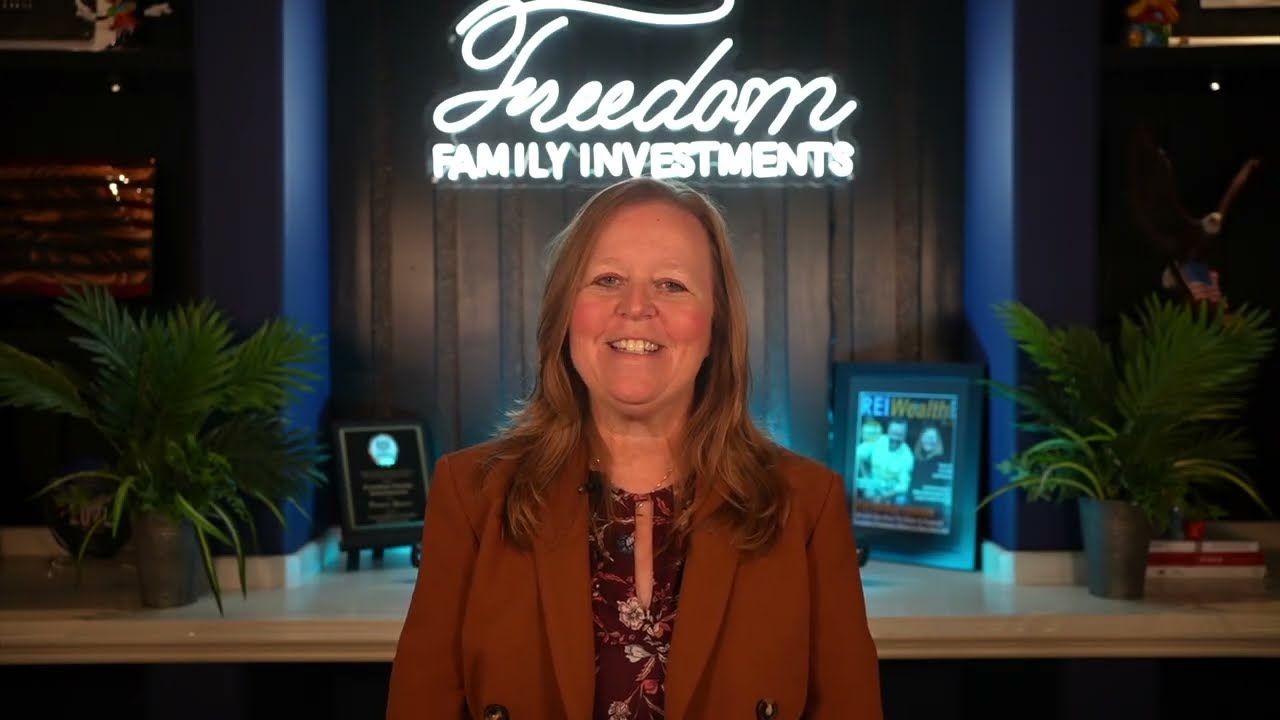
Dani Lynn Robison walks through how the firm sources and underwrites senior-housing deals. They rely on two decades of relationships to access distressed situations before they hit the market, stress-test models against worse-than-expected exits, and weight operator quality as heavily as the financials.
Chapters
The question that tells you the most about an operator is how they find their deals, because the quality of what you invest in is only as good as the process that selects it. And that process is not visible to most investors. I want to make it visible today. The foundation of how we find deals is relationships, and not the kind you build by showing up at conferences. These are deep trust-based relationships developed over nearly two decades of being active operators in this space. When capital markets tighten and borrowers can't refinance, motivated sellers emerge. The people who need to resolve these situations call operators they already know and trust. And after 18 years in this space, we're in that network. Deals find us before they reach the open market. We also have relationships across the legal and financial advisory world, professionals who work with real estate owners navigating transitions or capital events. When those owners need to move quickly, they need a buyer who can close with certainty. Our reputation as operators who do what we say means we get those calls. In the asset classes we focus on, particularly senior housing, the operators who run these communities are some of the most valuable relationships we have. They know the landscape deeply. They know which situations need capital, which sponsors are struggling, and which assets need a strong partner to step in. We've invested years building trust with those people. That trust is not something you can manufacture quickly. What all this means in practice is that we're not competing for deals on the open market where every buyer drives up the price. We're finding deals before they get there because the right people know to call us first. That's a competitive advantage you can't buy. It's built over years of showing up, doing what you say, and treating every relationship like it matters. Because it does. We invest in what I call distressed situations, and the distinction between that and a distressed property matters. A distressed property has fundamental problems. Deferred maintenance, no problem. Structural issues could be a problem. Location issues, definitely a problem. These sometimes no amount of capital is going to fix. We don't invest in severely distressed properties that have problems that create too much risk for us as investors. An example of a distressed situation is where a good asset, one that is generating cash flow and serving residents well, is attached to a capital stack that's broken. Examples include a bridge or short-term loan that matured, a sponsor or operator who needs liquidity, a refinance that fell through. These are situations where the asset is performing, but the financial situation is not. Other opportunities we see are sellers who are in over their head when it comes to management of the property. This is when we typically see an asset that has strong potential, but the wrong operational oversight. These are the opportunities we look for. It's the difference between a business that is struggling because of poor operations and a good business in a bad deal structure. And in each instance, we wanna be the solution that stabilizes it. Once we identify a potential deal, the underwriting process is where we determine whether it actually makes sense. We look at what the property earns today. Then we look at what it should earn after we make our planned improvements. Then, and this is the important part, we deliberately assume things go worse than expected when it comes time to sell or refinance. We model a less favorable market than we're sitting in right now, and we make sure the deal still works even then. We also look at the gap between what the deal earns and what we owe our investors. We want that gap to be wide enough that if something takes longer than planned, a renovation that runs over, a lease that fills slower than projected, your return doesn't change. The cushion exists specifically to absorb the unexpected. We don't build deals that only work if everything goes right. We build them to work if some things go wrong. We don't invest in development risk within this structure. We're not funding ground-up construction where the timeline is uncertain and the exit depends on a building that does not yet exist. We invest in operating assets or assets in transition where demand is already proven and we can control the outcome through operations, not speculation. One of the things that separates our underwriting from a purely financial analysis is how seriously we take operator quality. In senior housing, especially, the operator is the linchpin. You can own a great building in a great market with a poor operator and lose money. You can own an imperfect asset with an exceptional operator and generate strong returns. We spend as much time evaluating who is running the asset as we do on the financial model. We look for operators with a decade or more of experience in their specific sector, transparent and consistent reporting, meaningful co-investment in the deal, and a proven ability to operate through challenging market conditions. Operational execution risk is a primary underwriting factor, not a secondary one. In our next video, I want to walk you through exactly how the renewal and redemption process works, because understanding how to exit is just as important as understanding how to enter. If you want to see what is in our current portfolio and understand how each asset fits our underwriting standards, go to chatwithfreedom.com. I hope this was helpful, and I hope we have the opportunity to work together.