Is Making Money from Short-Term Rentals Easy? With Tanya Rooney
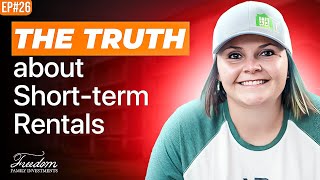
Tanya Rooney breaks down short-term versus medium-term rentals, explaining why STRs now demand strong design and reviews while MTRs work better for traveling nurses and contractors. She stresses tracking your numbers obsessively and checking local regulations, since Minneapolis limits STRs heavily.
Those kinds of struggles, they're real and all of us have them. And if anybody tells you they don't, they're absolutely lying to you and don't trust them anymore. Short term rentals have been really crazy the last couple of years. A lot of people are talking about them. It's super saturated for about a year and a half, two years. You could put anything out there. You could have Walmart furniture or used furniture, like all that stuff and you would make money. I'm sick of hearing people like just pleading ignorance. You can't plead ignorance. The government does not care if you were just ignorant to the rules that are already out there. I've had plenty of struggles. Like, I think my biggest lesson, like throughout the real estate stuff is, is all about numbers. I've always told myself I'm not good at numbers, not good at taxes, I'm not good at bootcake. Like all these, all these things that I've been negative about. And I've realized once I started changing the way I talk about it, like, I'm going to get good at numbers. And then now I'm just saying, like, no, I'm pretty good at numbers. Like, I know actually way more than I've ever given myself credit for. And I think once I started realizing my numbers, I realized what was working and what wasn't. And that is a big struggle for most people. I'm not kidding. Like, we don't all have number brains and that is okay. Like, you just find somebody with a number brain kind of partner with them on figuring out what you need to figure out. Like, you don't have to be amazing at taxes. You just need to know a few things to be dangerous and you can get that information from somebody else. So when you're struggling through, like, okay, like I know some people with flipping businesses. In my own flipping business, we weren't super profitable. We were not profitable enough for me to have quit my job, to have realized, like, well, they just paid me all that money and I just, I didn't have to find my own work, I just did the work. And in this case, I have to find all my work. I have to do all this stuff, I have to learn all the things, I have to hire the people. And I didn't make as much as I did with my corporate job. And my corporate job was really good, funny. So I'm like, well then why am I doing that thing? And I feel like knowing something, some of those things, like, we do have to struggle through it. And I feel like every One of us has to learn that lesson at a certain time. You have no idea when your time is, but you'll get punched in the gut. Enough with this lesson. And you'll realize, oh, yeah, that's what she was talking about. And once it is your turn to realize that, I feel like that's a huge struggle. And it's okay, because I think everybody does. And not very many people talk about it, but it's okay to talk about it, and it's okay to figure it out. And don't give yourself a tight timeline on figuring out. Like, I'm gonna go with. Just keep saying, like, your numbers. Like, your numbers within your business. Like, sometimes if you're solo, like, I can't compare it to Danny and flips businesses because they have people, they have big businesses. They, like, they've been doing this a really long time. So don't compare yourself to someone like them. Compare yourself to someone like me who's been doing it for four years or somebody else who's doing it for two years and say, okay, the first year or two, like, you're just, like, trying to tread water and stay above and it's okay. But now, like, if you're getting a little bit more established now, you need to. You need actually start diving into things like this. Like, this is the stuff that's going to make your business be there 10 years and not two years. And those kinds of struggles, they're real, and all of us have them. And if anybody tells you they don't, they're absolutely lying to you. And don't trust them anymore. Like, don't trust what they say. This is true. Like, we all just think everybody's doing great because we're seeing the highlight reel and it's not actually true. Like, if somebody actually want to talk to me about my numbers, I would totally hop in with them and be like, well, these are the things that I care about. These are the KPIs I care about. These are the things I'm tracking. And this is how I'm getting to that. But I had to learn, like, you know, I mean, it's taken years to figure this stuff out because I didn't go to school for business. Like, anybody can do this. Because truly, I went to school for, like, communication studies at a fine college. Whatever. It was just fine. It wasn't anything crazy. Not a lot of people, like, I need to go there. They don't come from out of state just to come to the college I went to. But I didn't learn this kind of stuff, like none of it is inherent to me. I've just learned it by struggling through and watching other people and having mentors and having a really good community and tribe to be like, well, how do you do this? And then ask more questions, stumble through and then, oh, this is how I do this and then ask more questions and stumble through. I feel like that's the whole entire business is ask more questions, stumble through and then do it again with the next thing.
I love it. Well, I'm excited to talk about where you are at today and what you're doing with the short term rentals. You are listening to the Freedom show with Flip and Danny. Our guest is Tanya Rooney and we'll be right back after this short commercial break.
Add new income streams to your financial statement. Freedom family investments can help own property and get paid rent. Join funds and get paid interest. Wealth is well being. Own your own future. Freedom family investments get more time to focus on what matters. Learn which investing path is for you, where to start and who to trust. Visit freedomfamilyinvestments.com all right, welcome back.
Thank you so much, Tanya, for being with us. We want to jump into the short term rental. So you gave a bunch of gold nuggets for that get real segment. Flip and I talk about that stuff all the time. I think the most important thing that we've learned is it's okay to shine the light on your business and find those dark areas and go, e, that doesn't look very good. So what do I do with that? And not enough people realize that that's okay and it's okay to struggle through those things and ask people for help. So thank you so much for sharing that. It was very inspiring for to hear you, your perspective on that. Now I want to dive into short term rentals and medium term rentals. Flip and I don't. We're not in this game at all. I don't want to be in the game. It's actually something that totally turns me off. So I love talking to people that, that you love it. It's your passion. It's like you found so much joy in it. So why did you choose strs and mtrs and tell the audience more about it?
Yeah, it was all because a flip wouldn't sell. Like that's truly it. And a guy from one of my masterminds had said, here, look at these numbers. What do you think? And then we just kind of realized, well, I love traveling. We love traveling. We like to use short term rentals other places. So let's give this a try. And it's just, it's been so good. Like my personality, this is where it aligns. Like I feel like half the time I'm trying to talk people out of doing short term rentals because I'm like, guys, this is actually a very active business. It is not passive income. It's not even close to like even rentals I don't think are passive income. But this is like super active. Like is. This is essentially a hospitality business. There are people that do it just fine. They make money by not being hospitality, but they don't do as well as the people that are good at hospitality and think about like guests and things like that. So like there's a lot of little details that get me really excited. Like stocking a kitchen. I. It's really silly, but it's just like a well stocked kitchen when I travel is my jam. So I like want to do that for other people. I want to bring. Our houses are really big. We have a six bedroom, we have a five bedroom but three bedroom. That's not very big. But so we accommodate anywhere from 12 to 18 people at these houses. And that's my jam. Like that's one of the reasons I wanted to do this was because I love bringing people together. Like I like to invite people to a house to be like, hey, let's watch this event together. Let's hang out and talk about real estate. Let's do a girls weekend. Like I do that kind of stuff. And I was frustrated because when I was booking some for that, I'm just like a, they're expensive but B, like it's hard to find a place that you can have 15 people. So, so that's kind of what we targeted. We're like, well, let's just do these bigger ones. Our numbers are fantastic. Like it's, it's great what we do. We get to like roll with the punches. Like I feel like short term rentals have been really crazy the last couple years. A lot of people are talking about them. It's super saturated for about a year and a half, two years. You could put anything out there. You could have Walmart furniture, used furniture, like all that stuff and you would make money. It was like shooting fish in a barrel kind of deal. Well now the fish are like spread out in a huge pond and now you do actually have up. It's been interesting to watch because we've been, we've been tracking our numbers. We're tracking our numbers better this year. Than we ever have. And we're seeing the differences. And it's all about like the track record you have. And you have to have good design now. And you used to not have to have good design. Everybody, every wall could be gray and it's not that big of a deal. And you could have the same couch in every single one. Well, now people are like, well they have 15 of those to choose from. Like, and they're all in the same is price point. So like now it's okay who has really good reviews and who has better like design design and who has a really good location? Like things like that matter now. So I feel like it's starting to get into the nitty gritty that it's like, well, you actually have to level up, otherwise you're pretty much going to flounder or there's going to be like a lot of people are selling theirs now and it's because they're not making enough money because they bought high. And now like we're finally in a dip where you're not going to make as much money. You have to try harder.
That's exactly right. Yeah. That's what I got really nervous about with short term rentals. I also got nervous about the, what do you call it when like an HOA or some type of regulation within the city or the state changes and then suddenly this short term rental that was phenomenal, probably very popular, out of your control, can no longer be a short term rental. So how do you navigate across that? And then I do have one more question on this. But I, I won't, I won't confuse you too much. Let's start with that one.
First of all, if you're going to get into a short term rental for any reason, like that's a. Don't, don't run the numbers. Don't ask about the neighborhood, don't ask any questions. Literally go to that county city states website and look because, and don't go to a Facebook group. Don't ask your realtor, don't ask all these people you think are going to know. Because they might know. But you need that information firsthand because this is your business. Because I know people who have taken the word of short of other people. They've taken the word of the realtor and then they go to try to apply for a permit and find out they can't have permits or they froze permits for two years. Like don't, don't, don't use, like, don't build your business on somebody else's Word for it. Like go find that information out and then, and then put some Google. Like I, I have Google alerts on all of our cities because we've had that. We're in Minneapolis and St. Paul. We only have. We have two in Minneapolis and three in St. Paul. And in Minneapolis, they actually did do that. They grandfathered a couple people in for like two or three years. But otherwise there's only one permit per like name. It's not like me and my husband can each have one. They're like, no, it's one per, per like one per household or something. Yeah. So. And I'm sure people are still functioning without the license and you can do that. If you want to build a business on that, go for it. That's not the way that I want to do it because if somebody rips away all of my money like in one fell swoop, I would be very upset. So I don't build my business on things like that. And you should think about it if you want to do it that way. But I think there's actually a lot of people that talk about regulation. There are groups out there that are specific to. This is all they do. They do short term rental regulation. Like you can start groups that literally go to the capital with you. They go city council, they have all kinds of letter writing campaigns. Like we try to let our neighbors know this is the stuff we're doing. Some, some place. Some like cities actually require you to do that to say, like, hey, you have to tell all your neighbors that this is what you're doing with that property. And then some places make you go through a city council meeting to even find out some of that is like, it might be worth it, but at the same time it might be that it seems a little volatile and maybe it's not a good place to be. Like as in don't go to that town if it's going to take you six months just to find out if you can have it. Can you imagine the stringent need things that they're going to apply later on? Like if you have one noise complaint, what are they going to do? Are they going to just shut you down completely? But this, if this is the way you're going to make money, like, this is the only way I make money. So I take it really seriously when I, when a neighbor complains or says something to me because I'm like, I, like, this is how I make money. Like I don't have to have a 9 to 5 job because of this. Like, I need to Protect that. So there's different ways to do things like that. Like, but there's a lot of regulation that, like people that can help you with that. There's lawyers out there that have fought things like this. Like I got a friend in Michigan that fought the city about all of this. And they've gotten injunction functions. They're literally going to trial for some things to make sure that they get it can be okay. But. And then there's some cities like we'll call Gulf Shores, Gulf Shores. Like they're a tourist city. That is the reason they exist. Like there's so many restaurants because of those tourists. So you're kind of safe in that. Like you're safer in one of those areas unless they put a cap on how many licenses they have. So you need to be really mindful of where you're going to do this kind of stuff and make sure, you know, and if you can't find it on the Internet, call. Like there are cities in Minnesota that are just like, no, you just have to have a rental license. And then there are cities in Minnesota that are like, no, actually we don't give that license out anymore. You can only do this for 30 days at a time. Like, you just need to make sure that that stuff is there. Like be smart. Like don't build your business on somebody else's land kind of deal.
Yeah, yeah, yeah. That's huge. Okay, one last question I have for you. And it's about the medium term rental. So if we were ever going to get into the space, we had talked about this and we were only going to do it like if it was going to be medium, partly because we didn't want to have all the work of people coming in and out and like in those short term stays, even though that's more cash flow because you can probably charge a higher amount. It was just less work. I'm just going to say for us to do. Yeah. For the medium. So tell everybody what the difference is between the two. And I think you did at the very beginning. One's less than 30 days, one's more than 30 days. What are the advantages, I guess of the medium term rental?
So medium term rental, you don't have to find as much business. It doesn't mean that it's easier, it's different. So like right now you can put medium term rentals on VRBO and Airbnb. You can still get people coming in. I know people who still do big business even with 30 day plus days on Airbnb. I think every Market is a little bit different. It's kind of like anything, I guess. Like, not everybody wants to travel to A, B or C. They want to just travel to D and F. So, like, everything is different. So in my city, I've had the best luck with Furnished Finders, which is a website that you go on and you'd put a medium term rental. It's any day, 30 day plus. And they, but they're not like Airbnb. They don't necessarily vet guests or vet those people. 30 days means you need a lease. Like Airbnb will still let you book somebody for 60 days, but I think they actually book them in 29 day chunks and that's all they charge them and stuff like that. And you have to be like, you are the business owner. You cannot. I like, I'm sick of hearing people like just pleading ignorance. You can't plead ignorance. Like the, the government does not care if you were just ignorant to the rules that are already out there, like putting them in front of you. So in this case, the reason I'm saying it is like, I live in the state of Minnesota. We're tenant friendly. You need to have like, if you're going to have somebody stay for 30 days plus you would have to evict them and they decide not to leave, you have to go through the whole entire eviction process. So you need a lease. You can't just go on to Airbnb and just let them book and be like, well, they booked on Airbnb, it's fine. Airbnb covers me. No, they don't. There's not insurance. Like, people think air covers insurance. Like there's all these, like, I'm going to call them myths, because people do think this one way, but the actual intention is a completely different way. And I know this because I hang out with a ton of real estate people, lots of like, I'm in Masterminds who. We talk about stuff like this. We have to. Because again, you can't plead ignorance. Like, the government doesn't care if you didn't pay your taxes. They're expecting you to pay your taxes. So. And things like this, like, you need to have a lease. Like that stuff is really important. You have to chase people. Like you have to do. It's a lot more like you might have to do some networking. You would have to. Like ours, we usually have construction workers that are in town for a few months. They could be engineers, it could be construction workers. We've had some nurses stay in town. So that was a really big business, especially around Covid, that lots of nurses were traveling all over the place. Traveling nurses are a little different now. They don't get as much per diem, so they Maybe can't pay $3000 a month. Maybe they're closer to $1800 a month now. So you can actually connect with, with like places to find that stuff out. Insurance stays are a really big deal right now. And we get, we get inquiries on insurance days. So that just means like your guys's house flooded because, I don't know, the bathtub needed to flood and, or there was a storm or something and somebody has to come in and fix it. Well, that family has to go somewhere else. And insurance companies pay for that. And they might pay. And it's kind of interesting because we might set our rates at $2,000 a month, but the insurance company might pay $7,000 a month. So you kind of have to be careful with some of that. There's lots of things to learn and there's tons of teach there. There's lots of free stuff on YouTube. There's a gal named Rachel Gainsborough and this is like her jam. She does luxury stays. So like big, huge houses for people that are displaced from their houses and then they need a spot to stay. So that's kind of the big difference. Like it's not just somebody coming in for a concert or coming in for a hockey tournament because we have hockey here that's like really happening right now because it's January and February. But those are the big, huge differences. The money can be there though. Like they're. But you have to work harder in a different way. But you just don't have the. Every day like, oh, I need a cleaner to come in at this date. And you know, we need to turn things over. And you don't have as many guests asking you about things. You still have people asking you about things. It's just you have furniture that you have to worry about and tell them. And then it's different leases too, because you do have to tell people like, hey, you can't take stuff off the walls. And please don't move everything around because if every time you have a turn and maybe you have a five bedroom house and they moved everything, like that's really not fun. And it costs you a lot of money to like, yeah, redo things. So they're kind of different, but they're both quite lucrative actually, if you do them right and if you concentrate on them. If you're not doing 12 things and you're just doing one or two things. It's pretty cool.
I love it. So anybody that's interested in short term rentals, medium term rentals? Do you, I know you. That's your business, right? Do you teach it? Do you. I heard you say you did some consulting. So tell everybody about that.
That. Yeah. So I just started, I guess probably like six months ago or something. Like I do some short term rental coaching. If you're a brand new host, like you've never even set anything up on Airbnb. I have some deals like going on that you can hop on a call with me. It's like 200 or 250 bucks and you get like two or three hours worth of here. I automate a ton of things. Like I pay people to do things that I hate in my business and it's fantastic and it's worth it. And then the other things that like I kind of like, I automate a ton of things. So I help people automate and honestly it's just using the platforms are given to us. So I'll like automate people's messages, I'll give them all of my messages and then they just have to change them for their own, you know, area. Because obviously the places that you eat at in the Twin Cities aren't the same as where you would in Florida or wherever. So I do stuff like that. And then I like to talk to people about creative funding and mainly I get excited about talking about that. You don't have to necessarily wait five years to save up enough for a down payment to have real estate. And some people need to do that because they don't have the money to just put into a fund that maybe you guys would have. They have, they need to build their money so that they could put money into a fund. So there's just different ways to do it. You don't have to think in this tiny little box. It's not like just a go to the bank and try to get a loan. Like there's tons of different ways to do it. So I taught, I have done some coaching on that kind of stuff. I do consulting on like all kinds of things. But a lot of times, like people just hop on a call with me and they didn't know what they needed, but I'll just ask them questions and then I listen to what people say. And you, there's a story always being told whenever you're talking to somebody, especially in a coaching call, there's a story being told that you just, they, you have to hear it they aren't telling it because they don't know about it. So it's interesting because I'll have conversations with people and they're just like, I didn't know what I was gonna get out of this. And it's like the most fun. And that's the reason that I do what I do, like, isn't. I'll hop on podcasts with people because I'm like, I have no idea what I'm gonna get out of this, but it's gonna be so fun. And there's gonna be like, I'm gonna get something. And like, events. You go to an event if you've got that kind of brain and you're there to only write notes and to do that, that's super cool. But you should go to an event and be like, I have no idea who I'm going to meet this week, but it is going to be super cool. And I'm going to write down somebody's name, I'm going to make friends with somebody. And like, that, like, it's going to change everything. Like, that's. That's the stuff that's my superpower is like, how do I meet people that are going to change everything? And I do it all the time and it's fun.
I love it. I love how different you are from us. Like, where are the people at the event that are just like, he. We don't want to, like, you know, go and network with everybody. Like, we're just kind of in the back row. Yeah. Yeah. We're just kind of shy to ourselves and not really shy. Like, very outgoing. If we're in one on one conversations. Right. Like, we just like small, intimate gatherings. We don't like big, huge things. We're getting more comfortable with it as long as, like, you know, we're like, we're helping people. That's totally different. Like, happy to be in a big, huge room helping people. But to be there just to randomly talk to people and you don't know who they are. I'm just like, I just don't know. It's not.
I would target people like you. I literally would target. Like, I'm not kidding. I've done stuff like this in a couple of the masterminds I've been. And I'm like, that guy's really quiet. Like, why is he quiet? Like, what does he know? So I might go over and just start asking random questions and oh, my God, the stuff that you find out. Like, one time I started asking random questions and found out some guy had like 180 units. I'm like, holy crap. The guy at the back of the room that you wouldn't ever think. Which is the beauty of real estate, by the way. The guy in the overalls always has the money. Most always has. Find the person with overalls. If there's anybody with overalls, they have money. I promise they won't tell you they have money, but they do.
And then disguise.
Seriously.
I always joke that we're, we're, we're extroverted introverts.
Yeah.
You know, you put us, you put us in a room full of people that we know. You can't shut us up. You put us in a room full of people we don't know. We won't say a word.
It's kind of funny because I don't actually love like cold meeting people, but if I'm around enough people in my energy, like, as long as my energy level is up, I will, like, I'm going to an event next week. I know at least 25 people that are going to be there. I'm super stoked. I've been messaging like, are you going to be there? Are you going to be there? Are you going to be there? I'm, you know, we're being published in like just a few days. So by the time this is out, it will definitely be published on Amazon, which is super neat. But I get to meet all kinds of people that I've been talking to on the Internet for a couple of months about this book. There's just so many people. So if you put me around people that I at least have a connection with, I'm like, okay, now I'm okay. But if it's cold, cold, I kind of hate it too. Like, I need some, like, I need a wing person just to be like, hey, would you just introduce me? And then I'll go in and I just like to ask random questions and yeah, community building is my jam.
I love it. It definitely is your jam. I agree. Well, thank you so much for being here with us today. We went longer than usual. This might end up a two parter. It is my guess. I love it. I love being able to kind of split it up and allow people to really get to know the people, you know, kind of. Because sometimes 20 minutes is just, it's not long enough to really get to know, you know, what, what's going on in your world. And like I told you before we even started recording, we love doing, you know, these podcasts with our network of people because it's a chance for us to just sit and chat, right? And people get to listen in. We get to catch up with you and see how things are going. So I love introducing people that we know, like and trust to our audience. So thank you so much for being here. Um, what is the best way for people to reach out to you if they would like to connect?
Tanyaroony.com My name is spelled T A N Y A R-O-O-N-Y dot com. Like, that's probably the easiest. And then I hang out on Instagram the most. Like Facebook and I have an interesting relationship and right now I don't have it on my phone, so that means I don't see anything that's going on. But Instagram, typically I'm on and it's Tanya Rooney. Mn. So same spelling. It'll be in show notes. But yeah, that's like, I love kind of bebopping around on there. I like photos, so, yeah, I love it.
Well, thank you so much. Anything from you, Flip?
No, not that I can think of.
You want to send us off?
Yes. Well, we hope you enjoyed today's episode with Tanya Rooney. We will see you next Wednesday.
Bye, everybody.
Bye.
Nothing on this show should be considered specific personal or professional advice. Please consider consult an appropriate tax, legal, real estate, financial or business professional for individualized advice. Opinions and information on this show are not guaranteed. All investment strategies have the potential for profit or loss.
More from Dani











Physicians and High Earners — What Real Estate Can and Can't Do for Your Taxes