Keith Weinhold's Blueprint from 4-Plex to Financial Freedom!
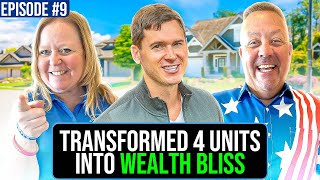
Keith Weinhold shares how he built wealth starting with a fourplex, emphasizing relationship capital and physical fitness alongside real estate investing. He offers practical advice for new investors on creating long-term financial freedom through property ownership.
Questions this video answers
3.5% down payment and minimum credit score of 580, plus 12 months owner-occupancy in one unit.
VA benefits can allow 0% down for eligible buyers (owner-occupancy requirement applies).
11 years.
He completed a 1031 exchange into an 11‑plex, by 2013.
Over five million listener downloads to date.
Investing is not about emotions. If I and my wife are going to live in the brick home ourselves. Oh, okay. Well, maybe it matters that it looks pretty, but it does not have to look pretty to be profitable. In fact, there's almost a negative correlation there for long term rentals. If a property looks too pretty and it's in too good of a neighborhood, it often doesn't cash flow either.
Hey, Flippin Danny here. Welcome to the Freedom Show. Show, show, show.
Welcome to another exciting episode of the Freedom Show. I'm super excited about this podcast. I've been. This one was. I had a little star around it, around this date and underlined an exclamation. Pointed. I mean, because I was super excited about doing this recording.
Yeah, yeah. So today we're going to be talking with Keith Weinhold. And the reason that we're so excited about talking with Keith is that we have known him for about five years. He has got, he's one of the first podcasters out there. He has the, a large, large audience that, you know, just really, really love him. Whenever we are featured on his podcast, which we have been featured every single year for five years now, whenever we are featured, like we get phone calls and we get emails and we get, you know, just the most wonderful people that we get to talk to and build relationships with come from Keith's podcast. And we've just really grown our relationship with him because of the quality of people that he engages and that he attracts. And that's just been really, really important to us because there's something called relationship capital that people don't always use that phrase necessarily, but it really means the investment that you put into other people and into relationships. And I think that's really, really big important when you're building something long term. There's, you know, investors, there's people, there's business owners, there's entrepreneurs. There are very short sighted and they'll think of themselves first. They'll want to negotiate and win, which means that somebody else has to lose. If you're winning. As opposed to finding a way for both parties to equally have some good and some bad, that's when you know you've really negotiated well. We each lost a little bit, but we each gained a little bit. And it was really kind of an even playing field. Right. And that's how Flip and I run our business. Yes, is making sure, hey, we, we aren't running a not for profit business. This isn't a charity. We have to make money to be able to pay for our overhead. To be able to create the income and live the lives that we want. We desire to be able to give back in the way that we want to give back. But that doesn't mean that we want the people that engage with us and interact with us and in our network, we don't want them to lose. So we find ways that we can align our interests to be able to serve what we are trying to create here and serve what the investors are creating in their lives as well. And that's really what Relationship Capital is all about, is that long term thinking of how can we do something that's going to accomplish our goals and then how can we surround ourselves with people like us and create a scenario where we're all winning together and we're all achieving together and we're all accomplishing together. And sometimes when there isn't, sometimes when there's losses, we've been known to take the losses ourselves because we are the ones taking the risk. We're the ones with the knowledge and the skills and the experience and other people are trusting us and that knowledge, skills and experience. And we are making a profit off of that knowledge, skills and experience. Experience. And so when something bad happens, we have to date always just taken that loss because we want to say, hey, you can trust us. We've built this company in a way that we can do volume and be able to mitigate the risks of it. And that all goes with Relationship Capital. And so Keith, this relationship of five years has been an investment for us into him. It's been an investment of, for him into us. And it has just grown and grown and grown. And when you have this type of mindset of this is long term, this is something that I want to be able to give to others and they're going to give back to me and we are going to find a way to accomplish things together. Those relationships turn into the most wonderful. I don't want to call it a thing, but wonderful. It's what builds our future, right? It's. It's the relationships that build our future because they're the ones that create that, that giving and receiving. And everybody's okay with, I'm okay with receiving help from Keith, he's okay with receiving help from us. And then, and we love giving to each other so that we can just add value to each other's lives. So I think that that's really important and I think it goes to the character piece you and I talk about all the time, right? If you work with somebody long enough and if you Ask the right questions. Before you get into a relationship with somebody, you' going to start to see their character by the way that they engage with you, by the way that they have treated situations, deals, you know, when they are shortsighted and they say, oh, it's okay that my private money lender didn't get paid, that's shortsighted. Right. Whereas we'll take the loss and our private lender will always get paid 100% of the time. That's the character of, I understand this is a long term relationship and I understand that me losing money right now builds the trust with this relationship and we'll keep on doing deals together forever. So I love talking about relationship capital and the investment that you have in other people being one of the most important things. And Keith is one of those people and I'm just excited to be able to have him on the show. And I don't know how much flip you interact with Keith personally because I know many times I'm the one on the podcast, but I know that you follow him on social media like you've had some interactions with them.
So, yeah, this is sort of bookending for me because I was on the first one. And gosh, now it's been three different locations now that we've been on podcasts with with Keith. And you know, and as you were talking, I was thinking about all of the people that we've been doing deals with and all the people that we've been interacting with and business with and, and you know, some people come in and fall off. Right. And some people we do one deal with and we never see them again. Yeah, Some people we do maybe three or four deals and we never see them again. Keith has always been there and it's like, you know, they always. What'? Line. The cream rises to the top.
Yes.
Right. You know, for gosh, it's been five years now. I remember where we were when we recorded the first episode. You know, I was as scared then as I, as I am recording with him, you know, today, you know, because it's Keith Weinwald.
But, you know, and, but, but he's still there.
You know, he's always there. He's. He's not fallen off because he's that person. And you talk about, you know, the relationship capital and, and you know, being around someone like him. And you know, there's. We have a few other people that have been around with us for that long, but it's a very short list.
Yes.
That we've known and still do business with that for that long. And. But he's definitely one of the. He's at the top, you know, and it's. But regarding, you know, yeah, you do a lot of the podcasts with him, so I haven't had to do the last two or three, which, you know, hey, that's fine with me.
But, hey, welcome to flipping Danny. But today's just Danny. Uh, but. But.
Yeah, I know. So I'm super excited to. To be on this one. And. And, you know, because it's. Gosh, he's just a wealth of information.
He is. And also he's one of the few people that has really seen us from the very beginning. Um, because we've known him for around five years. I can't remember the date or the year of our very first podcast, but our. Our companies are. They're past their sixth anniversary, probably coming up on the seventh anniversary. So he's really at the beginning of the formation of maybe two. Two, maybe three of our companies by the time that we met him and started being featured on his podcast. And now we're up to, you know, launching our seventh company. So he's. He's seen the entire growth of it. Right?
Yeah, we were just. We.
Yeah, yeah, we were just. We. Right, Right. And he's actually one of our investors. Like, he. He not only has us on. On our. His podcast because he likes us, he. He loves what we've built, and he believes in us as people and has us on this podcast, but so much that he put his money where his mouth is. Right. He says, not only are these guys on my podcast, not only have I had this relationship with them, but I invest in their power fund. And so I love those types of relationships where we not only collaborate and help each other, but we invest with each other, and that's where that trust level is. So I'm really, really excited to have him on this show today. So is there anything else that you want to talk about before we jump in with Keith?
No. Let's roll.
All right, let's go.
You're tuned into the Freedom Show. We are in the studio having a conversation. We're really excited to share with you. Today's guest is Keith Weinhold.
Welcome to the show, Keith.
Yes, welcome, Danny and Flip.
It's an honor to be here.
Yes, absolutely.
We're so excited to be talking to you today. And before we get too far into it, Flip is going to get into your bio so our audience can learn a little bit more about you.
So Keith created and hosts one of America's Top Investing shows, the Get Rich Education podcast with five plus million listener downloads to date.
That's amazing.
Keith originated the concept that real estate pays five ways, appreciation, cash flow, loan amortization, tax benefits and inflation profiting. He authored the international best selling book seven money myths that are killing your wealth potential. Keith has served on the Forbes Real estate council since 2017. His articles are published in Forbes Markets Insider, Business Insider, the Epoch Times and International Business Times. Keith's investing mantra is what's your return on time? One doesn't simply want more income. The ultimate goal is to live a great life as the outcome. Keith focuses on the following key principles of financial education and real estate Abundance, arbitrage, asset protection, fiat currency disposal, inflation, hedging leverage, passive cash flow, precious metals, and velocity of money. It began with an Anchorage, Alaska fourplex and I've seen that picture actually on Facebook. By the way, Keith lived in one unit and rented the other three. Since 2000 he has owned income producing real estate in the United States and Latin America. He is primarily a buy and hold investor for cash flow, Class C multifamily apartments, Class B single family home rentals and productive agricultural parcels. Keith has 20 years of experience directly investing in income producing property. Wealth is not acquired by trading time for money. Everyone knows that wealth is not acquired simply by putting one's money to work either. Few know that one acquires wealth by ethically employing other people's money. Opm do you want to clearly learn how real estate creates more wealth than anything else without having to be a landlord? Keith tells you how.
Welcome to the show Keith.
Oh, thanks again. Hey, appreciate that. Great bio.
Yes, you have been somebody that we've had a relationship with for years now. We have been so excited to have you on the show. When we did season two of the Freedom show, it was the very first time that we started having guests and so we started creating our guest list and we were like, okay, who do we want to have on the show? And you are in the top of that list because of how we've gotten to know you and just how you've helped us on our journey through different ideas, even starting this podcast. I told you at one point in time I said hey Keith, I think we're getting ready to start a podcast and you are just phenomenal. You've been doing it for years. You have so many great listeners, you know, can you give me some advice? And so you wrote a great email of some tips for us as we got started and it was just phenomenal. And so we are really, really excited to. When we bring on guests, it's really our network. It's the people that we have worked with for years. And we tell our audience, you just say, hey, these aren't just guests that we're bringing on that we don't know. These are actually the people that we work with and talk to and get advice from or do deals with. So we're really excited to have you.
Yeah. Now here I am creating content for one of your episodes, talking as you interview me. So that's great. And yeah, I think we go back almost five years now since we met.
Yes. Yeah, it's been phenomenal. And you know what I'm excited about and so we're going to jump into this a little bit is because it's never been, you know, it's never been turned around where I'm getting to interview you and Flip is getting to do some of this interviewing as well. And so we get to hear your story and be able to share it with our audience. So I'd love to start off with your free. So this is something that we talk about a lot. That's why it's called the Freedom Show. And there's many types of freedom, and everybody's freedom tends to be different. We had one guest that where it was emotional freedom. That was one that I was like, oh, I never even thought of that one. For Flip and I, it's time freedom and geography freedom, which is what is really important to us. So I'd love for you to share your freedom story and maybe the types of freedoms that are really important to you.
Sure. Well, like you said, I started young, so I've been investing in real estate more than 20 years now. We're not just talking about, you know, buying some passive reit, real estate investment trust or something like that. We're talking about directly investing in real estate. And I quit my day job seven years ago, exactly seven years ago, because I. Because I had enough residual income from my real estate activities. And we can go into just how you, the listener and viewer, and can do that yourself in my unique route to get there. But one of my interests is geography. I'm a real geography guy. One of my degrees is in geography. Was actually a pretty easy major, just a bachelor's in geography. But yes, this gives me freedom of place. You know, I really think of freedom as three different types. You have a time freedom, you have place freedom, and you have financial freedom. All three of those are equally important. But once you get the financial freedom, since I don't need to show up in my 8 by 10 blue cubicle at my employer, which was a state dot anymore. I'm able to set up my own schedule and not just travel anywhere. But really it's a lot of those little things. If I want to go to the car wash to get my car wash. Well, when I used to work a day job, you know, I usually had to show up on like a Saturday and wait in line for 40 minutes or something like that. Now I can go Tuesday at 1:30pm and you know, cut the line because there is no line there. So that's part of the time freedom I have and then the place freedom. What I do is I invest in real estate. All of the real estate I invest in is out of state. It's out of my local area where I have property managers that oversee say eight properties in this US City and six properties in this US City. And the managers manage it for me. And therefore I am just the asset manager over my property managers. I get a monthly email statement from them whether they're in Dallas or whether they're in Tampa. And, and that's my life. And I get income in my bank account automatically collected by those property managers and deposited into my account. Most of these properties I have never even seen. So that's how I got freedom. And those are some of the things that it's allowed me to do. And that includes travel. I am a geography guy. I like to do a lot of mountaineering from the Andes to Alaska. And this allows me to do that. I'm untethered from an employer geographically. So again, those are really the three types of freedom, time freedom, income freedom and place freedom. You really want all three?
Yes. I love that. Those are the top three that we talk about as well. And I want to ask you. There's many ways to invest. There's many ways to build wealth. For us, real estate was an obvious choice. For many real estate, they're not even quite sure how to get started. So how did you get familiar with real estate? How did you get started? How did you decide that real estate was the wealth building vehicle for you?
Well, it's because of my friends. It really goes back to the old Jim Rohn quote, which you've almost certainly heard. But it's so prescient here. And that is you are the average of the five people that you spend the most time with. Take your five closest friends, take their morals and values. They're probably pretty close to your morals and values. Take their formal educational Attainment level. Take the way that they dress, take the time that they go to bed at night. You know, if you average the five, that's about how you are. If you want to change yourself, change your five. Just a great quote from the legendary business philosopher Jim Rohn. But I had found that two of my five closest friends about 20 years ago, Flip and Danny, what they had done is they made their first ever home, first ever property of any kind, a fourplex building where they lived in one unit and rented out the other three. So because this is two of my five, it sort of took on this context of normalcy to me. It didn't seem scary. And I learned and I did indeed follow through and make my first ever property of any kind, a fourplex building, like Flip mentioned in the bio there, where I lived in one unit and round out the other three. And this is something very actionable for you, the listener and viewer here. If you want to get started in real estate with a bang, you can do exactly what I did. This program still exists. With an FHA loan, you can buy a single family home, duplex, triplex or fourplex. A fourplex is the biggest property that you can do it with. So I really recommend that you do it with a fourplex. For economies of scale, if you live in one unit for at least 12 months, if you can make a 3.5% down payment. I didn't have a lot of money. I was just a workaday job employee at a state dot. But I think a lot of people can come up with a three and a half percent down payment. And part of that or all of it might even be able to be a gift. And then the third thing you need, besides that 12 month owner occupancy period in one of the units, and the 3 1/2% down payment is just the minimum credit score of 580. That's all you need? Yes, that's all you need. Now there are some things that you need to avoid and properties that you need to avoid, but that's how you can start with a bang, live in one unit, rent out the other three and get the appreciation and the tax benefits on an entire building. That's exactly how I began. You probably saw a picture of it. It was a $295,000 modest fourplex and the rents in each door were 725. I can still remember that. That is a great actionable way for you to get started. And if you have Veterans Administration benefits, VA benefits, it's 0% down. A 12 month owner occupancy period. And your credit score doesn't even have to be that good. So that's how I began. And that's how you can still get started with a bang today with an FHA loan on a fourplex building.
I love that you just gave very actionable advice. Yes, right. Because very many times we talk at such a high level that people aren't sure where to get started. So when I'm on the phone with investors, I get, you know, where do I start, which path is right for me, who do I trust? And Keith here, as a guest on our show, just gave you one of the ways to get started and a very actionable way if you want to do that fourplex. So just curious, Keith, when you got this fourplex, did you do the rehab or did you hire contractors?
I did it myself. I didn't know how to do it. I'm still not a good handyman by nature at all. People must think I'm a good handyman since I own all this real estate in multiple states, but I'm really not. I just know how to identify a good deal and then put the people in place in order to manage it. But yes, I did some of the rehab myself. Actually, one of my two friends that had also made their first ever property a fourplex building, I still remember, he showed me how to remove the vinyl and replace it with hardwood plank flooring, knock out a pony wall and add this plank flooring. But like, that's the most sophisticated type of rehab that I've ever done. It is simple to fig out, but I really needed someone to come in the door and show me how to do it. So it actually didn't take too much rehab. It definitely wasn't any sort of bur strategy or fix and flip. It was really a buy and hold property.
I love it. And so last question on this topic, because I love this part of getting to know you. Do you still own the 4 Plex or did you sell it?
No, I sold that 4 Plex after holding it for 11 years because I wanted to take the equity from it. The return from home equity or property equity is always zero. And by 2013, I was aware of that. So what I did is a 1031 tax deferred exchange from that 4 Plex building into an 11 Plex building, adding little or none of my own money. I just extracted the equity from a smaller property because it had grown, and I use that as a 20% down payment on an 11 plex.
Nice. I love it. What a Great strategy. Thank you for sharing that story. Okay, so I want to go into what we call a Get Real segment. This is really where we tell people about the challenges that we have. Whether it's business or real estate. There's always a roller coaster ride of learning, having something happen and failing and then realizing that that was something that you could learn from and now you can be better. So I know that you have amazing podcast and I would call it call you a very successful businessman as a result of what you've grown, but you're also a real estate investor. So I'm not sure where you want to go with this, but I'd love for you to share some type of Get Real moment, whether it's business or real estate or even your personal life that will just allow others to kind of understand that, hey, it's not always rainbows and sunshine. We all go through challenges and we all eventually get over them.
Yeah. Gosh, things have gone so well with the Get Rich education podcast. I don't even know if there's a Get Real moment there, although I still have my small problems with it from time to time. Shirley, I would say as an investor, I made an early mistake. The first time I ever bought property across state lines. It was in Crowley, Texas, which is just south of Fort Worth. There's nothing wrong with the Crowley market, but I got so enamored of buying this place. My first ever out of state turnkey property. You know why? You know the mistake I made? It looked pretty. Just because it looked pretty and it was cheap and it looked pretty. It was a brick single family home. I paid 153k for it despite the fact that before I bought it, the property manager that I was going to use in that market told me, hey, they don't think that's a good property for whatever reason. And I never found out why. But for whatever reason, we don't think we're going to be able to keep that one occupied. I bought it anyway. I was like 153k, even though there was someone with local market knowledge right there that told me not to buy it because they couldn't keep it rented. I just thought, it's only 153k for a brick property. I'll buy that. I could never keep it occupied for whatever reason. It was actually a failure. My first ever out of state turnkey property and I sold it because I couldn't keep it occupied. Now I did sell it for 165k a couple years later, just a little bit more than what I bought it for. But after aging commissions and anything, I make any gain. But, you know, it wasn't a complete tragedy. But really the lesson that I got from this is the market is more important than the property. And your team, especially that property manager, that's actually more important than the property itself. So, you know, I got a hard lesson. You know, I ended up losing my time on that deal and I didn't make any money, so I wouldn't get emotional about it. This thing is not about emotions. If I and my wife are going to live in the brick home ourselves. Oh, okay. Well, maybe it matters that it looks pretty, but it does not have to look pretty to be profitable. In fact, there's almost a negative correlation there for long term rentals. If a property looks too pretty and it's in too good of a neighborhood, it often doesn't cash flow either. So those are some of the lessons that I learned on that. And really, just about every one of my turnkey rentals I bought since then have been winners. Danny and Flip.
Oh, I love that. So I love the lessons learned because that's really what helps people move past the mistake. Right. Is when we can share what we. What happened, what we learned so that now they, they don't have to make the same mistake. So thank you so much for sharing.
Should be about facts and numbers, not emotions. I might have emotions in my own home, but yeah, that has no place in my investment. So, yeah, that was the lesson learned. Don't fall in love with a pretty property. Pretty does not matter in a long term rental.
That's right.
Pretty does not rent.
Yeah.
Yeah.
Just because it's pretty doesn't mean it cash flows.
That's awesome.
Yep. I love it. Okay, so now I'd like to really dig into your, what I like to call your superpower. So I say superpower because it tends to be either a passion of somebody or the career, the very successful career somebody has done. So when we asked you about this, Keith, you actually sent us a note that physical fitness is prioritized over finances. And I thought this was really, really interesting because I follow you on social media and I watch your YouTube videos. I listen to your podcast. I'm on Facebook most often. So what I really, really love is when I get to see you running up a mountain or you just posted like it's ski season. I see your workout videos. There was one. It was late at night. You were in your garage doing this one and you were balancing. I was like, I think I commented. I Was like, oh, I totally want to try that now that I saw you do it. So I love that you said this. I'd love for you to dig into that a little bit more and maybe let us know, like, how you began.
Yeah, well, I mean, I've been doing cross country ski races since I was nine years old. So, you know, my father, my parents always instilled in me the importance of physical fitness. And I don't think that everyone has to do things the way that I do them. But to me, in the United States, where we live, money is falling out of the sky. Like, it's easy to be successful in business. I mean, you almost have to use an umbrella to keep the dollars from hitting you. They're just always, you know, falling down out of the sky. So in my opinion, like, finances is easy, but fitness is difficult. And I want to prioritize fitness because I'd rather take care of my own body than take care of my wallet. I mean, my wallet can come after my body, but I'm only ever going to have one body, and so does you, the viewer or listener. So that's why I prioritize things like I do. And I like to do it in the morning because that way it's done. And it also keeps your metabolic rate higher throughout the day if you exercise early in the morning. And I, yeah, as you've seen, I do some pretty intense exercise. So if you ask me what my superpower is, I guess I do have this motivation that comes from within. I don't need to have a personal trainer that pushes me. I can just find the energy myself. But, yeah, it's true. People know me and look to me for, you know, real estate, investing guidance. But in my personal life, I prioritize fitness first and then finances second. That doesn't mean that anyone else has to do it that way. That's what works for me. And, you know, I found that when I have business or investing problems, I still feel good about myself because I've still got this same body that I have. But, you know, when my business is going bad, if I didn't feel good about my body either, gosh, I might really fall into, you know, a really sad mood or something like that. So, yeah, I prioritize fitness over finances. And those are just a few of the reasons why I love that.
I especially love the do it in the morning flip and I have found, and obviously we don't work out as much as you do. Everybody can see our soft, fluffy shells that we are trying to get Rid of bit by by bit by being, you know, having healthier eating and good practices. But we have found if we do not work out in the morning, then it's likely not to get going to get done at all. So above and beyond that metabolic rate and keeping it high, it gets pushed off by business or something else, and then, you know, it gets away from us and then here we are today. So I think for me, that was probably your biggest tip is just reminding us, hey, prioritize this first, because your body is the one body you have in this lifetime. And it's important, you know, get in there, take care of it, and then you can do business and let the money fall all over.
Yes. Try to keep it from hitting you in the head. Yes. You guys look great. In fact, I remember a few years ago, Flip did something like what, Run at least a mile per day for an entire year. 365 days.
Yeah. I ended up going. It was close to a year and a half, close to almost. Almost two years.
But then this actually started wet. For anyone that's following me any recently, that actually started the really forcing me with hip pain. And so I actually had to stop running because I had hip pain. And I kept saying, ah, it's fine. Rub some dirt on it. And you know, and now we're down here in Florida and Danny finally said, you know, you need to really get that checked out. And I did. And the doctor said, we need to get you in for surgery right away. So, I mean, I'm in the hip replacement capital of the world down here in Florida. So I had a really good. I had a really good doctor. So I think he did like 12 that day.
I was number two.
But yeah, so I've unfortunately had to stop doing that. But, yeah, I used to love doing that every day. And I would do that different times of the day based upon the workday, but I always love the ones right in the morning because you're out in the fresh air. No one else is up yet.
I used to love that.
Yeah, having that hip work done. Yeah, that takes some of the wind out of your fitness over finances prioritization there.
Yeah, I can walk fast now.
He can. And. And we love the outdoors. Yeah, it is. We do love the outdoors, like you. That's why I love watching your Facebook post because it's just so fun to get outside and get some fresh air. So anyways, okay. We could talk about this all day long because we love it.
Oh, man. And that is part one of two with Keith Weinhold.
That's just, I, I, that's all I'm going to say. Yeah.
Head exploding.
For those of you that are not watching and only listening at home, my head just exploded. You know, Keith is, gosh, I'm so glad we put this into two, you know, part one and part two, because this is that that was jam packed and that was just part one.
Yeah. So what I really love about this episode was when he was talking about his freedom story. I love hearing people's freedom story. And we've known Keith for a while, as everybody knows by after hearing that episode. But his story of why he chose real estate was probably one of the most powerful things I felt about his freedom story. Because there's lots of things that you can do for investing and, you know, there's stocks and crypto and there's real estate, and there's just many different ways that you can go down different paths. And he mentioned his friends, right? And he talked about, you know, the people that you surround yourself with, you become the average of, you know, you know, the top five people that you end up surrounding yourself with. And I think that it's such a powerful statement because you and I look at our network all the time and we look at how we've gotten as far as we have, like, we look back and go, whoa, like, look at what we built. Like, it's just crazy. And I'm so very proud that we have been able to do it because we keep leveling up on who we are surrounding ourselves with. We continue investing in ourselves and in masterminds. And so, you know, keep Keith saying, this is why I chose it. And then he went and did you know that fourplex? And he lived in one side and then rented out the other ones. And he even bought a fourplex that didn't even need a whole lot of rehab, right? So he was able to rent it out without having to do a whole lot, and that was able to launch him on his investing journey. Now, that path isn't perfect for everybody, Right. Some people decide that they want to go down that path only to realize later that that wasn't the path that they truly intended because they did things backwards. And we talk about that lot, you and I, and so I think that that was really, really powerful to hear. Even his three top three freedoms are the same three that we talk about. Where it's time, freedom, geography freedom, which he calls place freedom, and financial freedom, which is income freedom. So I love when he's talking and I go, oh, my goodness. We say that, too. And we. We say it a little bit differently because we have different paths, we have different experiences that we're tapping into, but we're saying the same thing. And we're. When you continually hear people saying similar things, you start to go, hey, success leaves clues. Right? Because all these people who are at this level that I want to be at, they're saying, this is how they did it, and this is how they did it. And sometimes somebody like Keith will say different nuggets that you and I don't share. He has tapped into different skill sets and different knowledge and expertise that we don't have. But some of the experience is exactly the same experience that we have. And we're still. We're. We're all telling the same stories just in a different way. Um, that's what really excited me about his freedom story. What about you?
Well, you know, I thought it was funny because he said two of his friends were doing it, so, you know, hey, well, I'll just do it.
Yeah.
You know, he didn't even think so. Well, that's hard. I can't do that. That's hard. It's a fourplex.
Yeah.
Who starts with a fourplex?
You know, he didn't have any of.
Those thoughts because two of his friends were doing it. Yeah, sure, I'll do it.
Yeah.
You know, and so it makes me think, gosh, where are those two friends for. For us 20 years ago? But, you know, love that, you know, because. And while. Plus he was working at the dot Department of Transportation. That'll make you want to go into. Go into real estate investing right away.
Can you imagine knowing Keith when he was just a kid? He'd be so much fun. I mean, he still is.
Running up the mountains, but.
Yeah.
So, I mean, that just blew me away. You know, just. He had two buddies or two friends that did it, and so that's what he did know. And it's house hacking, you know. Yeah. And this is. So that's. And this is. You know, he's the second person that I've known that's built a. And I don't know the other person. I just know their story. That built a real estate empire starting with just a fourplex. You know, that's how they started. And they. They. And they went from there and they turned that into. I mean, he even talked about, you know, how he turned that into 31 into a 11 unit. And that's what you do. And then you turn 30. That one into a 40 unit. And then.
Yeah.
And so on Ye. Um. So, yeah, he did it. He did it. Right? And that's just. I loved hearing that story because I didn't know. I. I mean, I'd always heard about the 4 Plex because he puts pictures on Facebook every so often, but I'd not heard the, you know, the backstory behind it.
Yeah. Yeah. And actually, when I had asked him about the 4 Flex and if he had sold it, I knew the answer, But I just wanted the audience to kind of understand, you know, what he did and how he, you know, started. Because those three questions that we always get asked, Keith had a different way of starting. Right. And so getting to hear those stories about how. Start on their journey and. And to see that they have succeeded and they've made it, you know, to the top of their mountain. I mean, he does. He travels everywhere, and he's out every single morning, like, just doing something, whether it's in his garage because he's traveling or whatever. Like, I just love watching his. His journey. And he does really, you know, prioritize health. Right. And fitness. And it's always very, very inspiring to see somebody successful. Um, his business is a podcast. Podcasts. His investment vehicle is real estate. His personal passion is fitness. And it's just really neat to see somebody's passions, you know, come alive through our relationship and through social media and things like that. But I also really liked his Get Real segment where he talked about the market and how important the market was, because I think that was really, really something that hit home for us when we were in Arizona and decided to make the move to Ohio. Right. And really understanding that Ohio was the right market for what we wanted to. And we fell in love with turnkey real estate. We fell in love with cash flow. We already loved cash flow, and we were doing Sub two Wraps at the time, but Sub two Wraps, you could pretty much do everywhere but the legal consequences and all the changes in the law with Dodd Frank act and us going, we don't really want to be a case study in a court case, so what do we want to do now? And then exploring that and getting to know the Ohio market and making the move from Arizona down here and living there for how much? Five or six. Six years. I can't even remember before we moved to Florida.
Oh, right.
We were there six years.
Yeah, six years. So love the Dayton in. In Cincinnati Ohio market for all of the reasons that we discussed in the. In the episode itself. So really, really excited about hearing that story and just how many synergies that we heard and how many similarities of our stories that we heard. So part one, I can't believe that we. Yes, yes. So there's, there's, I think a couple podcasts now where we've just taken so much time with the guest because there was so much that we wanted to share and talk about that we're having to divide it into two parts. So this is part one of two. We're super excited about it. Before we let you go, we're going to talk about what's going on with Freedom Family investments and some opportunities that we have. We are closing out the year with Cottonwood Townhomes. It is the last and only syndication for 2023 where you're going to get some tax benefits benefits. So you're going to see anywhere from 30 to 50% of bonus depreciation on this investment. What that means is if you invest a hundred thousand dollars into this investment, you are going to see a 30 to $50,000 tax benefit from it. You're going to want to talk to our investor relations team as to what that means for you. Everybody's tax situation is different, but this is one of the ways that the wealthy get wealthier. When you want to know what the 1% of the 1% is doing, they are taking as as much advantage of tax benefits as they can of our friends. Actually, we just talked to last week and we said call your CPA right now to ask them what your 2023 tax burden is going to look like because I promise you this investment is going to allow you to reduce it and you won't have to pay as many as much taxes. But you have to invest before the end of 2023. So make sure that you are contacting our team right away. We have, I'm not even sure how much we have right around $500,000 left to be able to have investors jump in and be able to take advantage of that bonus depreciation. The other thing that I wanted wanted to mention is the Equity Adv series. It's very much what Keith did, like where he bought a fourplex and lived in it. The Equity Advantage series. You don't have to live in it, but you are going to be able to buy a property where it's pretty much a done for you rental or done for you flip by us, but you actually get the equity. So turnkey is true done for you. We're going to do it all. You're going to buy it after it's done, after it's tenanted, you're getting the cash Flow already. The Equity Advantage allows you to buy it at the beginning. So before we rehab it, you can buy it here, gain some of that equity. We'll still help you rehab it. We'll still help you tenant it, will still help you flip it on the market if you want to do that. And you're going to gain a lot of cash flow still without doing the work. Is it more work than a Turnkey rental? Yes, 100% it is. We won't lie to you there. So it is more work. You are more involved. You're also going to get a bigger reward. That's how that works is if you're actually going to get involved, then you're going to get, you know, some of that equity out without the sweat. Right. Which is really crazy about how we have taken our vertically integrated companies and allowed you to be able to use it so that you can buy a deal, get some equity, and then still use our team to get the entire work done and still grab that equity piece. So J.R. is going to be the person that can educate you about what properties we have available, what that looks in terms of how much it's going to cost, what the loan might look like. We do have a hard money lender that you can use to be able to finance these properties. We will be a hard money lender in 2024 so that you can finance them through us. But we have the financing for you, the renovation team for you. We have the property management team for you. We have the brokerage team for you. So if you're looking for a deal that you can get some higher cash value, you don't mind putting in more time for that higher return, then talk to JR and just go to chatwithfreedom.com and scroll down and you are going to see Ben, cj, JR and Lauren. If you would like to talk about Cottonwood, Townhomes, private money lending, syndication or funds, please jump on the calendar of Ben or CJ if you would like to talk about turnkey rental properties or Equity Advantage series, then you're going to want to talk to Junior specifically. Also, Lauren can help you with turnkey. But if you want to talk about the Equity Advantage, definitely jump on the phone with J R. He's the one that's got access to those specific properties. But I think that's it for this particular episode, Part one. All right, Part one is in the books and we are going to see you next Wednesday.
Bye. Nothing on this show should be considered specific personal or professional advice. Please consult an appropriate tax, legal real estate, financial or business professional for individualized advice. Opinions and information on the show are not guaranteed. All investment strategies have the potential for profit or loss.
More from Dani











Physicians and High Earners — What Real Estate Can and Can't Do for Your Taxes