Lake Forest Syndication Q&A
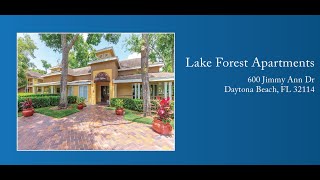
Transcript of a Lake Forest Syndication investor webinar (host Danielle Robison; speaker Steven Lidman) about a Daytona Beach, FL syndication (384-unit Class B multifamily). Steven describes his background (~11 years, ~$150M AUM), syndication structure (preferred equity for investors), returns (6% cash preferred + 6% accrued to exit → ~12% annualized; 1.6x over 5 years), tax advantages (27.5-year commercial depreciation plus cost segregation front-loading), accreditation rules (506(c) offering — accredited investors only; net worth or income tests), capital raise (~$11.27M total; $100k min), financing (10-year fixed debt), underwriting horizon (5 years target close ~Mar 31; first distribution ~90 days after close), contingency/reserves and operator experience (Lloyd Jones Capital partner, 40 years local experience).
Questions this video answers
384 units
6% per year paid quarterly
6% per year accrued until exit (so 12% effective per annum when combined with cash distributions)
$100,000
Approximately $11.27 million
Just hit record real quick. And Joe just wrote. Danny, it's Joe. I invited my cousin Chad and a couple of his friends. Never did this before, so I can't seem to speak to you. Oh, so, yeah, on Zoom, you might see a microphone, and if you click that microphone, you should be able to unmute yourself and be able to talk. But you can also use the chat, just like Joe and Mr. Wilkinson have done. And I'm admitting a few more people as they come in. All right, I have some questions that I'm going to start with. As everybody gets familiar with Zoom and knows how to unmute the way that Steven did his webinar, I really liked it where people could just unmute and ask the question themselves. So you can either do that or you can put it in the chat and I'll go ahead and read it to Steven. I'm going to let him answer all the questions because he's the real pro. It's why I partnered with him. So he's got the either one with the knowledge and the skill and he'll have all the right answers here for you. So I'll go ahead and start, Stephen, if you don't mind, with the list of questions I got via email, and then we'll let them unmute as we go.
Yeah, absolutely.
Do you want to introduce yourself or anything or say anything before we get started?
Yeah, sure. So first, I appreciate everybody being cool with the casual Friday look. No, it's Thursday. My family and I are moving in a couple of days, so we're living amongst boxes and stuff. But my name is Steven Lidman. I have been in real estate for, oh, just about 11 years now. And we have about $150 million of assets under management. And we have done both sides. We've done the residential side flips, and then we've also done these large scale commercial, what we call syndications. And we started by just kind of finding ways to reduce our taxable income. So the reason that we're in mostly commercial real estate is because we were making a lot of income on the flip side and we were trying to figure out how do we minimize our tax liabilities. And as you start to read books like Tax Free wealth and you find other people in the space that are doing one or both of these, you start to find, find there's more tax advantages in the commercial real estate. As cycles come and go, residential tends to be a little bit more volatile. So that's why we moved into the commercial space full time as just a hedge against some of our flip and wholesale risk. So we love both sides of the business. We think that they complement each other very well. From a passive investor side. Part of what I had an issue with was getting my money back and then giving money back to Danny, let's say to, to flip another house. And it was, you know, we don't know when the money's coming in, we don't know when the money's coming back. And as a limited partner, I just wanted to set it and forget it. Right. I wanted to. So as part of our portfolio we started finding some of these longer holds, three, four or five year holds where we could deploy capital. And I know I'm not getting it back. It's a great problem to have. Right. When you have some money to deploy and actually deploying it becomes a little bit more challenging than the returns that you're making. So those are kind of some of the background on us. We own multifamily and self storage complexes the Midwest and southeast. And the deal that we're going to be talking about today is Daytona Beach, Florida. It's 384 units. So a small city class B asset, which means it's not the top of the of the line type of property. It's also not like C and D, which is more lower income. Class B historically has done very well regardless of the market timing. In a good market, when the economics are good, people from class C residences tend to move to class B residences. There's the one year old, I told you he's going to come in. And then also in a bad market, the class A's tend to go down to class B's. Right? Who knows that wealthy people know how to manage their money and in a market recession they tend to move out of the penthouse in Miami and they, they move into more of a class B residence. So that's kind of what we're going to be talking about today. Feel free to stop any questions. You know, feel free to put them in the chat or just stop and ask and then, you know, we'll make sure that everybody gets a real good understanding as to what the project is about, why we like it and how you can participate.
Awesome. So you, you and I have talked before about the nature of. Most of my private lenders have previously worked with me on note and mortgage type deals. So the list of questions I have relates a lot to that so that they can understand the difference between this and how they've worked with me in the past. So the first question I have is what would be the nature of my ownership in this project.
So the way that we structure all of our deals is you're purchasing shares of a company that own the underlying asset. So unlike a note where you have a first position, we put debt on these properties. It's how we can accelerate returns to a higher level. Which means that we have a mortgage on the property. So the mortgage gets paid first. Right. And that's most important to understand. And then the way we structure our deals is in a preferred equity position. So you have two types of equity in these deals, preferred equity and common equity. The money that I put in is common equity. The money that our investors put in is preferred equity. All that means is that in the operating agreement that's filed with the sec, it, it dictates who gets paid and when. So the mortgage has to get paid first, obviously, then the preferred investors get paid and then if there's anything left, then the common equity gets paid. So it's just what they call the capital stack. And that's kind of your security is our investors get paid first before we get paid. So that's kind of the first key. The second key is you don't. So in a mortgage situation, you own a note. Right. That note is leveraged against the property. Here you own shares of a company that own a larger project. So when you do decide to join in one of these deals, you get what they call a subscription agreement. And a subscription agreement just says, here is what I'm buying, how many shares of that company I'm buying with the amount of money that I'm putting in. And again, those shares are in a preferred position as well. So I hope that clarifies it.
Yes, that was great. Thank you. Can you talk us through the returns again and how that works, including the depreciation piece?
Yes. So a couple of things to tackle. So first is our investors get paid quarterly through cash flow. So I'm just going to use a $100,000 example on all of these types of numbers just because it's easy math. But we pay a 6% preferred return through cash flow. So what that means is that the existing cash flow is carrying your 6% per year. Right? Now, once we start, once we close, we'll start making quarterly distributions. So $100,000 investment would relate to a fifteen hundred dollar quarter distribution. Right, six thousand dollars per year. The other side of it is what we accrue. So we're going to also be accruing a 6% preferred interest until we exit. So effectively the investors are making a 12% return per annum. Half of that comes through cash flow, the other half comes at exit. And an exit is what we call a liquidity event. That could be a refinance or a sale. And typically it's a sale. So those sales are typically five to seven years out. We underwrite everything to a five year horizon. So let's just use a five year horizon at 100,000, make 100,000 investment. $6,000 a year for five years is 30 grand through cash flow. We sell it in year five. Another $30,000 comes with your return of capital. So effectively what we call 1.6 equity multiple in a five year hold or 12% per year in interest. Okay, so that's the return profile. Right. And remember, those again are preferred returns. Meaning if we don't achieve. If let's say we achieve 12% only on this entire project per year, then that's what the investors make. Right? We don't, we don't make any money. Which means that Danny and I and our families aren't happy. So our goal is to make significantly more than that. That's where the investors stay.
Great.
And so, and then the depreciation piece, that ties into that. Right? So those are your return profiles. Why is it tax advantaged? Why is it better than a residential mortgage? Right. Sorry, everyone.
It's okay. You're a dad.
Oh, you're okay, bud. He's gonna be fine. So this is Noah. He's our youngest investor. He actually has. He has about $20,000 into one of our storage projects. And we'll show you some compound interest that gets really fun over time. So stop giving your kids savings bond or your grandkids savings bonds. Let them invest in one of these deals. Okay, so depreciation.
Aw, poor sweet note.
I think we're getting, I think we're getting there. He's calming down a little. He started playing with my printer. So, okay, so depreciation. So on these deals you get straight line depreciation, just like on your regular mortgage interest, right? So if in your residential house you get to deduct your mortgage interest, well, we get to do that on these large projects as well. In commercial, it's 27 and a half years versus 35 years in residential. And then the. So that straight line depreciation actually offsets most of our 6% gains. Right? So most of the 6% gains just with the depreciation from the mortgage interest are tax advantaged or tax free gains. On top of that, the tax code allows us to do what they call a Cost segregation study. A cost segregation study is basically an engineering report that goes in and says, hey, you know, I know that the government's given us 27 and a half years to depreciate this asset, but I know that my carpet isn't going to last 27 and a half years. I know that my appliances aren't going to last 27 and a half years. So it's an extremely detailed engineering report. It costs tens of thousands of dollars to do, but it's worth it because we typically see a quarter to a third of the cost of the asset in accelerated depreciation in year one. So for example, we built a ground up storage facility. It cost us about $11 million. We took $4 million in depreciation the year that that came online. Half of that depreciation went to our limited partners. Half of our depreciation went to our general partners. So on average, I think over the historically last 18 months or so, we've seen our limited partners get in a K1 loss even though we're making payments to them in year one, a K1 loss of about 35% of their investment. So $100,000 investment. We've seen about $35,000 in depreciation in year one against the initial investment. Right. So in year one they made $6,000, they lost 35. So they have a net loss of 29 grand. And you'll have to talk to your accountant about how you can utilize that and other passive gains or if you're a real estate professional, against your active income as well. That's what Danny and I get to do as real estate professionals. We get to take that against our ordinary income. As a limited partner or a passive investor, you can take that against gains, for mortgage gains, long term, short term, passive capital gains, things like that. So everybody's tax situation is a little bit different. So you just have to check out with your accountant exactly what that means for you. But again, taking loss. Did I answer the depreciation?
Yes, I feel like you did. Does anybody have any questions on that while we're on the topic? Feel free to unmute your MIC if you do want. If you have any other questions with regard to the returns or the depreciation.
I have a question.
Go ahead, Dennis.
On the depreciation for passive investors, can you go over again what the categories are with which we could use the depreciation to offset gains? Yeah. So that it really does depend on your personal tax situation. Right. If you're a real estate professional, that's the, that's the best kind of bucket to be in. Which means that at least half of your income is coming from real estate investments or passive investments. So if 50% of your income or more is coming from that, then arguably you're a real estate professional. Right. You have to spend at least 750 hours a year doing that to hit that barometer. So talk to your accountant about whether or not you're a real estate professional. If you have a W2 job, you're a high income earner and you're not a professional, professional real estate investor yet. The goal should always be to get there, by the way, because once you're there, you get to offset your all your gains for your ordinary income against that. But if you're a W2 employee, high income earner, business owner, things like that, then you'll have passive capital gains. Right. Long term capital gains either from stock gains or sales of different stocks. Some. Some capital gains that you'll see even by being a lender. On some of these flips that Danny's doing, there's different categories. The two biggest ones are are you a real estate professional or not? And then where that depreciation can offset because it can offset either your ordinary income or your passive income gains. That answer it.
I think it did, Dennis. You can let us know if it didn't.
Yes. Yes, it did. Thank you.
Great. All right, anybody else on the returns or depreciation piece before we move on to more questions? All right, I have another one here. Once I made my original contribution to the project, would I be able to contribute more later on it for the same tax advantaged return?
Nope. So it's, you know, you choose up front what you're going to be investing. And then we close on the project and we're running the project and the returns are calculated off that. So if you have more money, you want to invest later, we do about four or five projects a year, so we'll be able to send you out some different projects.
Awesome. Do we know for sure the timeframe for our investment or how does that work? I think you touched on this a little bit regarding the five to seven year timeline.
Yes. So every deal is underwritten to a five year horizon. And the reason that we do that is because every deal will work at 10 years. And what that means is typically when you underwrite these deals, you underwrite for rental appreciation. Right. Typically it paces inflation. So you're looking at 1 to 3% depending on the market, you might have 5 or 6% of rental appreciation. We like to be conservative in a Covid environment, we're underwriting flat appreciation over the next 24 months and then maybe 1 to 2% after that. But let's say use a 2% rental appreciation rate. If you hold that property for 10 years, you're going to see 20% rental appreciation, which will make almost any deal work on paper. So the shorter the timeline, you have to really make sure that your underwriting is tight. Because in a five year hold, you need years one and two to do capex and tenant terms, you need years three and four to stabilize and year five to market and sell. So if you're doing that to that timeline, only the right deals will work, at least as far as we consider the right deals. So you can expect a five year hold with all of these projects.
Fantastic. A couple accredited questions. So again, this is the first time that I'm doing a syndication partnering with you. You guys are the masters. So we've got some questions about accreditation. One is what is a sophisticated investor?
So there's a difference in the SEC's eyes, right? These are just governmental terms that we utilize because that's how they've come up with them. So you have what you call a sophisticated investor and you have what you call an accredited investor. A sophisticated investor is just somebody that has some relevant experience in investing, right? Whether it's through stocks, bonds, housing, market, lending, et cetera. So sophisticated investor is based on your level of sophistication when we're talking to you about your financial finances, what your financial aptitude and wherewithal is, and then also what kind of experience you have in investing accredited, which is what this particular project is going to be for. So sophisticated investors, by the way, they can invest in different sets of projects, but we can't publicly market those projects, right? So you have to have what they call substantive business relationship, which you guys do with Danny to participate in those types of deals. Those are what they call 506B offerings, which are private offerings. They call them friends and family offerings. And we've done those for the last couple of projects. This is a 506C. And what that just means is the, it's the code for the exemption for having to have a securities license to sell a security from the sec. So the exemption means that you can market it, you can show people the deal, but they have to be accredited. And an accredited investor meets one of two litmus tests, not both, one or two. So the first test is, do you have a million dollars in net worth outside of your primary residence? Okay. If you do, you're accredited. Congratulations. They just updated the accreditation. If you happen to be a financial advisor, if you have a series 63, 7 or 82, then you also are accredited. They think that you have securities knowledge. So you're also corrected. The other litmus test is income based. If you've made $200,000 or more over the last two years single, or 300,000 married, and you have a reasonable expectation for that income level to stay the same this year, then you're also accredited. So Those are the two barometers. This is a 506C offering for accredited investors only.
Fantastic. And related to that question, how do you vet accredited investors?
Yes, we have to verify. Actually the investor has to self verify. We have to pay for it. Or some syndicators have their investors pay for it. We pay for it in house for us. But there's literally a company called Verify Investor. And once you get the offering memorandums and you sign and you say, hey, I'm in on this deal, then we'll send you to that website and you'll self verify that that information and they'll do a third party check.
Fantastic. Okay, I answered a question in the chat, but for people who can't see the chat, I'd like you to answer it. Stephen, is there a minimum investment?
Yes. So for this project, $100,000 is the minimum investment. We're raising 11.275 million. 11.272 million, I believe it's been adjusted to recently. And we have about 60% of that still available because we just launched this this week, so.
Fantastic. And I know on your call you had a few people ask what the maximum amount is. So for everybody's education here, do you want to address that too?
Yes. So typically we keep it at about 25 to 30% of the entire capital stack. So somewhere between 2.8 and 3.1 million would be the maximum that we would take from one investor. And the reason that we do that, by the way, is just we like to aggregate risk. We don't like to have all of our ducks from one investor into one deal.
Fantastic. Okay, I have a question here. Is there a contingency plan for the debt if the project has a delay or overrun, could there be any capital calls? If so, what would Stephen see as the amount investors could have to add to project?
Yeah. So do you mind if I share my screen real quick?
No, go right ahead.
Have you sent this out the packet? Yeah.
Yes, I sure have.
Okay, so I'm going to ask you to repeat the question because I know there's a couple parts to it. But so first, there's always risk, right? With every real estate investment, there's always risk. The last thing that we would want to do is a capital call. A capital call for those on the line that don't know what that is. We are having an overrun of expenses versus income and we need more money to continue to operate the project. In my mind that's the worst case scenario of doing a deal like this, right? We have never had to do one. It's not to say that we can't, but so far the way that we underwrite is to make sure that we don't do that. So the contingency plan for the debt, number one, the debt is 10 year debt. It's, it's not going to change. A lot of different operators use different debt structures. This is a 10 year note so the debt service cost doesn't change. So I like to underwrite to those things because some have variable rates, some have floating rates, some have arms, three year interest only and then fully amortized. This is a fully amortized 10 year debt. So we know exactly what it's going to cost. What I love about this deal by the way, is us and our partners have run this deal for two years already. So this is not a strict purchase and sale. This is what they call a recapitalization. So our partner Chris Finley from Lloyd Jones put 11 million bucks down on the deal, went and got his financing in place and then we'll do a recapitalization of the deal to take his money back out and go find more projects. The reason that we like that by the way, is because he's got 40 years operational experience in the Florida market. He owns about 1,000 units in and around the Daytona beach area. He has built ground up. He's seen every market cycle and he's operated this deal for two years now. So what that means is he's gone in. We have a proven business plan. So the pro forma rents are not based on pro forma projections as in a typical purchase. We're already operating the deal, meaning we've seen him do some upgrades in the units and we know exactly what those upgrades relate to. In terms of rental bumps. Half of the units have already gotten washers and dryers put into the units and we're seeing a $45 a month rental premium just for that. So we can project pretty clearly exactly where we're going to go. Maybe that goes up, maybe it doesn't. Maybe it stays exactly the same. We've underwritten to be exactly the same. So what that means is we're at 98% economic occupancy with an operator of 40 years experience that's been in the property for the last two years. There's not a lot of unknowns. Right. And owning these things through a Covid environment and operating successfully through it gives us a real good sense of how we're going to continue to operate this. So all right, so there was contingency plan on debt and I think capital call I addressed and what else? Was there something else on there?
Let me read it again. That contingency plan you got, could there be capital calls? If so, what would Stephen see as the amount investors could have to add to the project?
Yeah, so I mean I don't see anything happening. And here's where I wanted to share my screen is and you guys will see this packet from Danny. But this is, we can go through this too or you guys can ask questions about it. But here is the amount of equity that we're raising, right. This is the net operating income on a yearly basis and then this is the cost of the equity. That means that's your 6% that is getting paid on the equity raised. Right. So that's the yearly cost of the, that's what the yearly cost is of the investor money. And then this is what the debt service is and this is what our reserve plan is. So we always have a interest and capex and insurance reserves along with some operational cost reserves. And then this is the free cash flow. So this is free cash flow in year one, year two, year three, year four. The reason the free cash flow number matters is because we don't hit the investor's preferred return until this number is expense. And then if money has to get taken out, it's from the preferred return, meaning we're just not paying our increased 6% but we're not bleeding yet. So you have almost $1 million in net operating income that would have to go away for a capital call to be needed. Right. So from an investment perspective, you know, out of $2.7 million in net operating income, almost a million dollars of that is going to be profit to us and to the investor. So that would all have to go away before we would be required to make a capital call. So that's just kind of insight into how we're under.
Yep. Somebody started a question. Go ahead. Maybe not. Okay. Dave asked, is the offering memorandum available?
Yep, of course. And you'll send it over to them. That's the packet that we're talking about. There is not a PPM formed yet that's in legal private placement. Memorandum is going to be a much bigger packet. It's going to lay out the risks, the operating plan, the operating agreements, all of that stuff. So the way that this works, by the way, is you'll see the offering memorandum. You can sign a soft commitment, raising your hand, saying, hey, I'm in. We'll send you the legal paperwork, all that stuff through DocuSign. And then just about two weeks before we are set to close, we'll start taking funds.
Fantastic. And Jeremy asked, is there an indicative pro forma available for a $100,000 investment?
Yes. So actually it kind of lays out right here back to that page that we were just on. Right. Because of our preferred yield structure. It just shows you on the bottom here, annual cash projected for 100,000 invested. Right. And this is exactly what we talked about before. 6,000 in year one, 6,000 year two, 6,000 year three, 6,000 year four and five. And then this is the exit. This is the SAL cash equity gain at exit another 30. So you're talking about a 60% return or 12% per annum. So that just lays out for you there.
Fantastic. Another one in the chat. What is best and worst case scenario?
I mean, best case scenario is we operate as we always have, right? We hit all of our projected returns and we sell the property in five years. Everybody takes their 100 grand and turns it into 160 and we move on to the next project. The worst case scenario is. You know, it's funny, I always, I always get asked this question and I really do try to, you know, inherently see what the downside risks are. It's just we kiss a lot of frogs before we decide to pull the trigger on something like this. So we underwrite constantly to try to de risk an investment. But you know, the risk is really a lot of the variables that might be unknown. Right. The risk was Covid when we purchased our three properties pre Covid last year. And then Covid came in and we had to make some adjustments to the pro forma and to the timeline because we needed to evict a lot of tenants that were in different industries that were not working or just decided not to pay or whatever the case may be. So nobody has a crystal ball. We don't know what we don't know. But our partner this with 40 years experience is, is kind of the reason that we've invested with them because in this environment, we're trying to de risk ourselves through things like recapitalizations versus purchases, partnering with sponsors with 30 or 40 years experience. I mean, so we're investors first, right? We're underwriting these deals because we're putting our money in. And I actually see that somewhere skin in the game between half a million and a million dollars on every project. So we're investors first. We're looking for the same returns that you guys are. We want to make sure that it's a de risking environment. And as operators ourselves, we can go in and say what is it that you're doing to de risk the asset? What are you doing that is going to create value? So there's good stable cash flow in this asset. Now we're doing about $1.2 million in capital expenditures to increase the value even further, which will allow us to increase rent, but also just be. We'll have the biggest units with the most feature rich amenities with a $500 delta between what we're charging for rent and what those competitive assets are charging for rent. So our goal, you know, is to make sure that we stay at 98% or better occupied, which is what we're at now. And they're 98% economic occupancy too. So who knows that you have two different variables here. You have occupancy, which is how many people live there, economic occupancy, how many of those people are paying? I have one project right now in Columbus, we're at 75% economic occupancy and we have 90% occupancy. Now we bought that asset specifically to turn it, so we knew that that was going to happen. We're bringing the economic occupancy way down on purpose so that we can turn the tenant base and things like that. But that's a different risk profile that we, you know, it's a different project. This type of project we like because we do two things in our portfolio. One, we do those heavy lifts where we have to turn and increase the value a lot. And then we do things like this in our portfolio for stable cash flow. And we're moving more towards all stable cash flow deals because honestly, in this economic environment, I don't want to gamble on what the government will or will not do over the next 24 months to stabilize the economy. So I would much rather get into more stable assets. Biggest risk back to your point is, you know, we're not operating it well. Our 40 year operator partner decides that this is the year that they're not going to operate well. And we start to see a decline in income, we started to see a decline in occupancy, we start to see a decline in the asset itself. So part of our job as the equity firm is to make sure that we have controls in place. So you guys will see every month you'll see the reports. It's about 150 page report. Don't worry, if you like me, I take the tops of the waves and I put it on one page in front of that big report and then you'll see it on your investor portal. So you'll log into your investor portal, you'll see this package of here's all of the information. And what that information is is it lays out all of the income, all of the tenants, who's paying, who's delinquent, all of the expenses, and all of those expenses that are actuals versus budget variances. So if there's a differential of, you know, half of a percent in the trash, right. It'll throw a flag for us and we'll go back and talk to the operator and say, hey, why is this happening? Right. So we keep a very tight handle on the operators, which is kind of how we de risk it for you guys, but also for us. So, you know, worst case scenario is they're not operating properly and we have to take over the asset, meaning we kick the operator out in terms of doing the asset and property management and we come in and we take it over ourselves. So that would be the worst case scenario for me, only because it's time suck. Right? We don't, we don't partner with operators that are going to have us be put in that position. But anything can happen, right?
Yes. So Dave asked, generally what percentage of your projects are close to hit or exceed the projected return versus what percentage have fallen significantly short for 11 years?
We've hit our projected returns so we haven't missed. And so that's part of why we do this 12% return. By the way, there's other syndicators out there that you might find that are offering like a 6% preferred return like we do, and then a share of the profits at the end versus just an accrued 6% preferred return. That's a common equity stake. So that number can vary. Right. Where if they do really well and operate the property, then you could make 15, 16% returns. But if they don't and they sell the property for just your 6% preferred returns through cash flow, that's what you make. We've Raised a lot of money from a lot of people. And I've found that consistency is key. Long term retirement planning, long term cash flow planning. So our structure is a little bit different and we can underwrite to it very well. Right. Because we can see that in year one, we have to pay the investor $735,000 and we have $2 million to do that. 1.3 goes to. So there's free cash flow on deals like this where we're going in, making sure that we're hitting our returns. If those returns, if we don't make any money. Right. That 210 grand that you just saw in year one goes away, then it could start to chip in to the investor return. But we won't do a deal without at least 25% cushion of free cash flow from where the equity investors are supposed to get paid because that comes out of our pocket if we mismanage the deal. So in terms of projections versus hitting them or not hitting them, and we're happy to share our investors. But I'm sure, Danny, you've never missed a payment and you've never missed a projection either, and neither have we. So.
Fantastic. All right. Jay asked, Stephen probably mentioned, but what's expected closing date on the investment?
So we're looking at March 31st is the goal. We've gotten held up in legal a little bit longer than we expected to. And I am moving somewhere in between all of that. But that is still our target date, you know, so we are already taking in commitments. So once that, once the commitments are full, we'll close.
Okay. And then he followed that up with first investor payment question mark.
So it should be Q1. Assuming we close on March 31st, it should be 90 days thereafter.
Fantastic. All right, I have one more question on my sheet. How much will I be able to be involved in the project?
It's a good question. I guess it depends in what sense. Right? I mean, so we always invite our investors, if they're in Florida, to go take a tour of our property, meet the property manager, walk the property. You can't go inside of the units. Right. You're not going to accompany us on due diligence calls where we're going inside of all 384units and taking photos. Photos. The good thing about that is you don't have to be that intimately involved in the process to know what's going on with the process. Because through the investor portal, we give these monthly updates, videos, pictures, all kinds of things like that. Right. We know that people want to invest in real estate. The same reason that we do, we like to touch it, feel it. And then if we do that, then if we can make sure that you guys are feeling that regardless of where you're at in the country, then you kind of feel part of the, of the operations of the deal. And that's, that's really what we're shooting for. It's why I invest in real estate. I'm sure that that's why you guys invest in real estate. It's not just numbers on a page going up and down. So but in terms of how involved you want to be, it's a limited partnership. So there's limited risk and liability because of the structure of the deal. There's also limited participation that you have to do. You know, you have to open the envelopes to get the checks, I suppose.
Awesome. All right, any questions you guys want to throw into the chat? Did you see that chat, Steven?
I did, I did the Q kids. That's awesome. All right.
You can unmute and ask questions or throw them in the chat if you have any more for Steven.
So if you're on the call right now, Danny will send over to you. You know, I just shared recently the video of. We did some nice drone footage around the properties. You can see how large the property is and what kind of asset class it is and things like that. You'll see the marketing packet and you'll be able to go through that and ask any questions if you, if you have any as well. But yeah, this particular project, you know we really love it because is the debt fixed or floated? Loading. Gotcha. So the debt is fixed. 10 year fixed debt. No Opportunity zone projects that we're working on. Opportunity zones are heavily tax advantaged as you know. But they are also because they're so tax advantaged, really looked at hard by private equity funds and Wall Street REITs. So they're very competitive. You know we do we as much as a fan of we are as the tax code to make sure that we're getting our tax advantage returns. Opportunity zones come and go depending on the climate, the economic climate, the political climate and then also the competitiveness of them makes it really difficult to find really good deals that pencil well so so far we haven't done any. It's not to say that we haven't looked any at any and underwritten any. We haven't ever closed on one yet. You know the. Here's the metrics that we're looking at. Right. I'm from New Jersey. I'm moving to South Carolina. I'm not the only one doing that. There's a mass exodus from New Jersey, north New York and California into really big states like Texas and Florida. Right. Texas and Florida are taking in the most people. New Jersey, New York and California are seeing the most people leave. So the things that we're looking for is population density and growth, economic growth, job growth, and job density. So if we see an influx of population, Daytona, by the way, is that metro area is number four in 2017. They're still in the top 10 now, but we're invested in Orlando, we're invested in Columbus, Ohio, which is the 15th fastest growing city in the country. We're invested in Daytona Beach. So we're looking at where the economic markers, where is the census seeing populations move to, and then how do we get capitalize on those, on those moves? Jeremy, where'd you go? You just left New Jersey? Everybody's leaving Jersey. I have a big cap gain. So you know what, why don't you. Danny, why don't you connect me? And it just says Jay Wilkerson, so I'm going to call you Mr. Wilkerson, too, even though it made you feel old before, because I don't have an opportunity zone right now. But if you have a big cap gain and the clock is running, by the way, that cap gain can extend over 180 days because of the CARES act right now. So that's good to know if you are running up on that time. But I do have a buddy who is running an opportunity zone deal right now, so I'd be happy to refer you if that would help you out. So.
Fantastic. All right, Beatrice, she said, I'm in Miami. Everyone is coming here.
I bet.
All right, anybody else before we go? I do have this recorded. I'm gonna be sending out the recording for any of you that came on late.
I have. I have a question.
Sure, go ahead.
Dennis, because of the past investing situations, this is my question. What happens if Steven gets hit by a bus? Great question. Yeah. So. So there's multiple layers in these properties, right? So Lloyd Jones Capital. Who. Who is our partner in this deal? Who's the operator? We are partners with them 5050 on what they call the Managing Member LLC. So the Managing Member LLC has that level of two entities. I have a business partner in the integrity holding side. He has an entire team. There's probably 40 people that work at Lloyd Jones with contingency plans and things in that. So we're 50, 50 partners on the managing member side, meaning who's dealing with the day to day operations. So you have a significant depth of property and asset managers on just that side of it. Right. And then the limited partners and the property LLC is a separate entity. So that's first internally. What we also do is we self insure all of these properties internally up to the equity stack. So if we're looking at insurance policies that will flow back through to the entity level to insulate the limited partners scope and liability. So the good thing is that unlike a single family operator that gets hit by a bus, we have full organizations. Right. That run, I mean, so Lloyd Jones has almost a billion dollars of assets under management. We have about $150 million under management. So it's not just me going out there and tackling these problems. You have large institutional grade organizations that are well capitalized, well insured, and you'll see kind of how that all breaks out into the operating agreement as well. But to your point, we did just start having the conversation recently of how do we further insulate that through, you know, what they call keyman insurance policies and things like that. So we're looking into how to even do that better. But right now that's kind of the structure. Key man's really important. Thank you. Yeah. And we have that internally, by the way, in integrity. And I know that Lloyd Jones has it internally, but I want to start putting it at the property level. Okay, thank you. Mm, sure.
Fantastic. Anything that it's important that you think to share, Stephen, that is a common question that maybe we didn't address here.
No, I think we've covered a lot of it. I mean, you know, really the top questions for me when I'm looking at an investment is, you know, why the area, why the, why the property and why the operator. And I think we've covered those pretty well. You'll also see in the marketing packet that goes out some more information on us and Lloyd Jones and why Danny decided to partner with us. But yeah, I think a lot of the questions from moving from a single family investor to a multifamily investor is why would I do that? And for me, it's all about tax advantages and splitting up your portfolio to de risk your portfolio. You know, how many people know that when you flip one house, if it goes really well, great. If it doesn't, maybe the returns aren't the same. If you've been in that position before, when you own 384 units and two people move out, it doesn't really affect the capital. Right. So that's why we like this as at least a portion of our portfolio because it's just more consistent returns in 2007. I'll give you an example. And this is just one of those things that obviously the market fell out and everybody knows that. So I always get the question, well, what happens when that happens? Again? One, you have to just be a research analyst. You have to know why you're in certain areas and why you're in even the flipping game versus this game. Right. So in 2007 and 8, a four and a half percent mortgage default rate is what created the residential mortgage crisis. Right? Four and a half percent, not a lot, but catastrophic. The multifamily was 0.4% default rate. And the reason for that is because you're not buying an asset. Right. We don't value this asset based on the size, square footage and things like that. We're buying cash flow. So the cash flow in these properties is what creates the value of them. If the cash flow goes down, the value goes down. If the cash flow goes up, the value goes up. So unlike in your neighborhood where your value of your property is based on your neighbors, you know, it's all about operations here and that's why we only partner with the best operators. So I think it's just important to point that out as a piece of your portfolio.
Awesome. And then Jason had to take off. He had a poor connection. So he's going to watch the recording. So I'll let you address his question because I think he joined us late. He said, I'm interested in. My only question is going to be around the two different share types with or without depreciation. So you think you covered that? Do you want to address it again?
Yeah, well, I didn't cover it because what he's talking about. So there is different class of shares. So if you're investing through an IRA or a self directed 401k, you can do that. By the way, about half of our investors do invest through those vehicles, but those investment vehicles are also tax advantaged already, which means that the depreciation does not get passed through. So you know, because you're not, because it's growing tax free or tax advantaged or tax deferred, it means you can't take the additional depreciation. So that depreciation for that class of investor is for cash investors, not IRA investors.
Excellent. Good distinction. Good. And Karen, I know that you just joined us, I think we're running to the end of questions, but this is recorded, it's been 50 minutes of very valuable information. So I'll get this off to everybody as soon as we're done. But if anybody has any other questions for Steven before we let him go play with his kiddos, now's your time.
Nope, we're good. So, yeah, of course, if, you know, if you're in the shower later and you remember a question like I always do, make sure you just reach back out to Danny and me. We can get back on a call. You know, we want to make everybody really comfortable with the investment before it fills up. So ask if there's, you know, I've, I've found that in my own investing journey over the last decade, a confused mind says no. So if there has been any confusion that hasn't created clarity for you, don't hesitate, don't, don't say no. Just reach out and let's see if we can get some clarity. This type of investment is not for everyone. But if it's only because we haven't answered the questions, make sure you at least find them out.
Fantastic. Thank you so much, Stephen, for your time today. I really, really appreciate it and I know everybody here does too. We're super excited about doing this with you.
We're really excited. So, you know, we'll definitely get down to Florida soon. We'll walk the property together, maybe after we recapitalize it. But I'm excited to, we've been on site. I'm excited to get back on site and really see what they're doing there. It's a really nice, big project. It's institutional level 40 something, million dollar projects. They don't come along for us very often. And now that we're moving into that size space, it really feels good to be able to partner with folks like you and give the opportunity directly to the investor. Which, by the way, just to as a closing note, right. I think it's interesting to know that Lloyd Jones Capital has historically been funded by Wall street real estate investment trusts and private equity. I met those guys about seven years ago at actually a private equity luncheon. And I sat down next to Chris, who owns Lloyd Jones, and we started talking. And now that we've moved into this space, he heard. So I run a podcast called Free from Wall Street. He said, I really like the idea that you guys are taking Wall street out of it and putting investors in at higher returns. Right, because these 12% returns look great, but who knows that Blackstone country has been giving a 5% preferred return with an aggregated 10% return over the last 30 years, and they're the largest real estate investment trust in the country. So it's great that we can take our individual investors and plug them in into institutional grade projects like that. Chris loved that idea, too, even though historically, that's how his company got built. So it's a really exciting opportunity for us. For us.
Awesome. I love it. I learn from you every time we're together.
Awesome.
All right, thank you again, Steven. Thanks, everybody, for joining us today. Shoot us any questions. Just like Steven said, we want to be able to answer them and make you as comfortable as you want to be before you make that commitment. So reach out anytime.
Okay? Awesome. Thanks, everyone.
Thanks, everybody.
More from Dani











Physicians and High Earners — What Real Estate Can and Can't Do for Your Taxes