Learn How To Protect and Boost Your Wealth Now! 📈
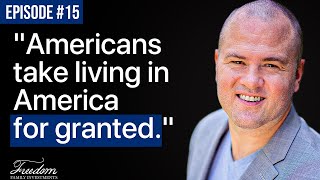
Flip and Danny talk with MC Lobster about building wealth through real estate and alternative investments. MC immigrated from South Africa in 2001, got into real estate early after reading Rich Dad Poor Dad, and scaled through partnerships. The hosts define freedom as time, money, relationships, and purpose.
Questions this video answers
2001.
Within six months.
In the United States is like, hey, bring your talents, bring your ideas, bring your game, bring your work ethic and you could do whatever you want here. That is why you look at the self made millionaires and billionaires in this country. I mean, you have people coming. We could throw around so many names, but literally growing up in poverty and they become billionaires.
Hey, everybody, welcome. Flip and Danny here. Welcome to another episode of the Freedom Show. It seems like it's been years since I've done that. Sorry I had to say that.
Happy 2024.
Happy 2024. We survived the holidays. I mean, this isn't the very first episode of 2024, but we survived all the holidays. We survived family, we survived travel, we survived everyone else being sick around us the entire time we were on vacation.
Yeah, I actually got under the weather a little bit there too.
It was minor, but welcome to another episode. We're super excited about this mc. It was someone that when we were introduced, where we're getting ready to be introduced to him, you know, I looked him up and I got super excited. You know, anyone who has a show called Cash Flow Ninja, I'm like, I must meet this guy.
Yes. Yeah, he's super cool. But before we get into the show, we wanted to share with you a little bit about what's going on here in 2024. So we are recording this, you know, a couple weeks into 2024. It's going live here in few days. So if you're listening to this, you actually are catching us probably a week prior to this, you know, going live. So you get a real sneak peek into what we're doing right this moment. And Flip and I were just discussing, you know, the seasons of, you know, life and of business and that there's always a purpose to every season in what you're working on. And so you always have to be able to adapt and continue on in a different way so that you can thrive. And for us here in the first quarter of 2024, we have decided to go and do a deep dive.
Yes.
So we told you in a previous episode that our word for 2024 is excellence. And I think Steve, in our meeting today actually came up with a new word. I can't even remember. I said, oh, we got two words for the year, but yeah, excellence. And so in order to achieve excellence, it really takes attention to detail. And in order to run six companies and be preparing to launch a couple more here this year, to get into great detail means we have to go deep. And in order to Go deep. We have to block time on our calendars, which is not easy to do. I was just texting with Steve this afternoon after our morning meeting, and we were like, boy, these meetings are incredible. They're really moving the needle. And he kind of joked back, he says, expensive meetings, but they're worth it. And that's so right. So what Deep Dive kind of means to us and how we structure, structured it is every single day for three hours a day. Flip and I and our president Steve are blocking off the morning for those three hours in order to deep dive into a company. So with six companies, we've actually blocked out the next six weeks. The very first day was Monday of this week or Tuesday, because New Year's Day we weren't working. So Tuesday of this week we had the very first day and we created our first dash dashboard. So we're calling it a CEO dashboard. And at the beginning of every single file, it's got the company's name. And we're really just kind of creating all of the things that we want to be asking in a different way a little bit. Like we're starting from scratch. Like, if we were just going to build this company right now, what would we be looking at? You know, what, what are the things that are critical to this company? What are the needle moving activities? The 20% that moves, the 80% of activities. And so we built this dashboard with a bunch of tabs and session one that we met with justeve and we created what we think we're going to use exactly for every single company for the next six weeks. And then the next day, actually after that first meeting, we sent out questionnaires to our team that actually asked questions as if we were starting the money, the company from scratch.
Right, right.
So there were questions that were like, you know, what is your role? What do you think is the key thing that matters to your role? What's the needle moving activities? Who's providing value the most value right now? Just questions. And we allowed it to be an anonymous thing where they tell us who they are so that we can go dig in deeper. But it's not something that's necessarily shared with the team.
Right.
That they can, you know, feel like, hey, I'm actually contributing and helping here achieve the word for the year, excellence. And so we got those in for the very first company. And so session two was really us giving time for the team to give those questionnaires back to us and us then creating the dashboards for each company thereafter. And when we say each Company. We don't. Me, just the company. So we're actually doing departments within the companies too. So we have some shared resources and that's financials, it's operations and it's marketing. Those are shared resources within our family of companies. So they have their own dashboard. And so it has been, we're three days in and it has been one of the greatest exercises for us to do. And it's just really proved like, this is what's going to change the game this year. And every time you say we're going to change the game, it's usually something new, depending on the season of business that you're in.
Right.
And so I just thought that would be worthy to talk about.
Yeah. You know, I, Excuse me. I had to be, you know, when I first heard about doing this, I was like, oh, this is going to be exciting.
Yeah.
And then when I heard about. Because originally it was four hour meetings every day. Every morning.
Yes.
And I was like, oh, I thought this was going to be fun. But then we moved it to three hour meetings and I was like, oh, but after, I mean, we're only, well, where do we get one more day left this week? But I'm like this, I'm super stoked about this. This is like just one three hour meeting. I want to stick a fork in my eye, you know, but this, we've gone through three.
Yeah.
You know, and, and it's been, I'm, I'm, I'm ready for tomorrow. Let's go. You know, and because it's, it's exciting, you know, and it's, it's. What's your job? Well, I rent properties. Oh, okay, great. Thanks. No, how do you rent the properties and where do you put them? How do you put them there? Where do they go? What, what, what software do you use? How do you do this? How do you tell those people? How do you communicate? You know, it's, it's all the little tiny questions and gosh, we, we got into it and some of those little tiny questions. Well, we're like, what? No, there shouldn't be a. Well, you know, and so it's, it's exciting. And because those little things are gonna be, you know, it's the little thing down here, but it's huge up here.
Yes.
You know, the trajectory. And so it's, that's why it's super exciting.
Yeah. I was really excited today, so that today was the very first time we brought in a leader from one of the companies that we're working on and went through some stuff with him and it was really eye opening. Exactly what you were talking about. About how we think that things are running, you know, pretty smoothly. We know we have some gaps and we walked into this week for this company knowing, hey, here's the gaps. We actually have an issues tab. And on the issues tab we already put down items that we knew we were going to want to talk about, but today we added numerous more. Why? Because we took the time to put aside to actually start digging, you know. And like, what is that? You're like when, when you're like, you know, you're just kind of digging that hole into the ground, like with what, you know, a little hand shovel or something. You're just going, let's see what's down there and let's shine a light on it. And we go, oh, what's that? Okay, I think we need to fix that. So it's just, it's like a clog in a plumbing pipe. I guess that would be a better analogy of, of like we're looking down the plumbing pipe and saying, hey, there's some muck right here. And if we take that muck out, then everything's going to run a little bit more efficiently and we're going to be more productive and effective. And so today was really exciting. So what I really wanted to, why I wanted to share that is because I love sharing things that we're doing because a lot of the people in our network are active investors and pass of investors. And so when you're working in the active side of business, even if it's not real estate, so many times I take lessons from other business owners and what they're doing in their business at this moment. And one of the things that was that I thought of when we were creating this exercise to do was one of the companies that we follow and how they said, hey, after you get over 50 employees, it's a totally different ballgame. You have to change everything that you do. And we're at 64 now. I just looked at in one of the chat, we have these different, in Google, Google Workspace, we have these different chat rooms and one of them is called FFI All Stars. It's because we think of our team as the all star team. And so in that you always look at the top and you can see how many people are in it, that tells us how many team members we have. That's literally how I check and see how we've grown and where we're at. Because we're not part of the hiring process anymore for the companies as they grow. I was like 64 and I went, oh, they said after we reach 50, we're going to have to change. And here we are automatically doing the work that we didn't. I didn't make the connection before now because this is the very first time that we said we are going to dedicate six weeks of three hours a day with the top three people in the company and then bringing the leader of every single company into it at some, some point or the other, or the leader of a department if it's financials, marketing or oper. So that is a very expensive block of time and I think that's probably why we haven't done it before. We've been able to accomplish things in much shorter periods, but this time we're like, hey, let's just go in. Let's think about what it's going to look like after six weeks. We're just going to be like, whoa, look at what we did to 2024 and how that's going to change the game for us. So I thought it was really cool to share because I love it when other business owners share their, you know, insider secrets and what they're doing behind the scenes with us, whether it's on a podcast or in a private meeting. I love taking those gold nuggets and then applying it depending on what's relevant for me in our business and our, in our lives.
So with weekly three hour meetings and all the companies we have, we should be done right around July 4th.
Stop it. So anyway, so let's talk about MC. MC is our guest today. You're going to learn more about who he is, what he has accomplished. He is such an exciting guest. He's from South Africa and I love that. I love listening to him talk.
Yeah, I don't know what it is about South African accents. It's, it's different than, I mean, it's different than other accents, but I don't know what it is about South African accents that I love more than other accents. Yeah, I just, it's just he started talking, I'm like, oh, he's from South Africa.
Yeah, but it's, you're going to get to hear his freedom story today and I'm really, really excited for you to hear this because this is true. Coming from South Africa and coming to the United States. Listen to the perspective that he has and how his eyes are so wide open. And it made me realize even during the episode that I don't take our lives for granted. I don't take living in the United States of America for granted, but when he started talking about it, I went, well, maybe I do. Holy heck. I mean, think about his perspective and where he's at in life and how he's talking about it. I was like, what? Wow, this is so incredible. So it's a really great episode. His freedom story is just amazing. You're going to enjoy it and I'm excited for us to be able to share it with you.
So, yeah, so we'll see you here when we're done with this first half of this interview, because this one was a doozy. It went. Went long, and so we broke this one up. So this is part one. So enjoy the show.
Foreign.
You'Re tuned into the Freedom Show. We are in the studio having a conversation we're really excited to share with you. Today's guest is MC Lobster.
Welcome to the show, mc.
So good to see you guys. Been looking forward to this conversation. Yes.
It's been actually a week since we talked to you, and so we're super excited to be hearing all about you, what you've got going on. But before we dig in, Flip is going to just tell everybody a little bit about you.
And I did want to quickly say my last name gets mispronounced every day, all the time. So I hope that I pronounce your last name correctly.
No problem, Lobster.
No problem. Beautiful. All right. MC Lobster is a wealth strategist, educator, and cash flow coach. He is the creator and the host of the popular and top rated business and investing podcast, Cash Flow Ninja and president of Producers Wealth, a wealth creation firm helping clients in 50 states implement holistic wealth creation strategies. His purpose is to help producers and creators create, protect and multiply their wealth in any economy and market. His mission is to help producers and creators achieve financial freedom as soon as possible so that they can live their legacy today on their terms. MC challenges existing societal belief systems and misinformation around concepts such as money saving, investing wealth, and retirement. Welcome. Welcome to the show.
I love it. So I wanted to say something real quick before we get into your freedom story. So we were connected by Keith Weinhold. And I tell everybody that this show, this is the very first time we started bringing on guests. We've always kind of done pilot episodes ourselves. And we said, hey, let's start bringing on our network the people that we know like and trust, and let's introduce them to our community. And so through our network, Keith Weinhold introduced us to you. And we are so so thrilled because I hold Keith in such a high regard. We have been working with him for over four years now, and I said, hey, Keith, if you were gonna recommend me to anybody in your network, who would it be? And it was you. So I am just thrilled to have you here on the show to introduce you to our network and to just learn more about you in the process. So we always like to start these podcasts off with your freedom story, because everything we do, freedom, and all the different ways you can achieve it for Flip and I, time, freedom and geography freedom happen to be at the very top of our list. And so you shared a quote with me that I won't get into, just in case you share it on your own. But if you could just tell us more about you, your story, and how you achieved freedom and what freedom means to you.
That's a great question. So I'm originally from South Africa, and I grew up during a very interesting time in South Africa's history. And as a young man, too, I mean, we had a transition of governments, and I was 13, 14 years old when all this stuff kind of happened. So there was a lot of uncertainty. There was a lot of, I would say it was turbulent. It was a very turbulent environment, A lot of unknowns, pretty chaotic. It's funny, we humans behave in very strange ways when we have uncertainty and there's a little bit of disruption and chaos, and we're out of our comfort zone. Right. So collectively, you know, then the environment's very, very volatile. So that was actually a huge gift for me. I didn't realize that at the time, but being 13, 14 years old, to go through that. I mean, this is a while back now, but I mean, it's kind of crazy to you recollect certain things that you saw. You know, you basically had a country preparing for civil war at that stage, and no one KN what what it was going to look like, how this was going to play out and end up. So, anyway, as an investor and on my journey, that was a great tool to put in the backpack, having lived through that experience. And then I, I, I graduated university, also in South Africa, and then I traveled around a little bit, and then I ended up in the United States. I ended up playing sports in the United States and coming from, coming from South Africa, having seen a little bit of, you know, and traveled a little, Just blown away by the United States at that stage. I landed here in 2001, if you can believe it. But, yeah, time flies when you're having fun. The one thing that impressed me so much about the United States was the incredible opportunity for up, upward mobility. I don't think Americans understand that. They take it for granted. A lot of stuff here in, in, in the United States they take for granted. And I mean that struck me like, like a brick right there on the head. I'm like, wow, so you can literally come from anywhere, any background and like just build your dream here and the only thing holding yourself back is you. That's kind of insane because as most international people would know, if you travel around the world, it isn't that way in other countries.
Right.
Usually where you start is there's a very high probability that's where you end up up. Just because of how society is structured in every, you know, every continent, every country is different. But in the United States it's like, hey, bring your talents, bring your ideas, bring your game, bring your work ethic and you could do whatever you want here and there. I mean that is why you look at the self made millionaires and billionaires in this country. I mean you have people coming, I mean we could throw around so many names, but literally growing up in, in poverty and they become billionaires.
Yeah.
Not a bad place to be in if this is what you can achieve here. Right? Not bad. Everybody's got problems, right?
That's right.
That's not a bad, that's not a bad thing. So yeah, that really blew me away. So while I was playing sports and traveling and playing in a sports league here at that time, a rugby league, you know, I, I had a background in history and economics and I loved reading and studying and learning and, and I'm also a very big critical thinker and not just, I just don't just study economics and history. I try to get as many different opinions and views and you know, kind of back story as I can. Again back from my South African background. Right. And I love, I love a contrarian kind of views too because it challenges your thinking. And then I came across, my mom actually gave me a book while I was, while I was playing in that league to read on the road. It was Rich Dad, Poor dad by Robert Kiyosaki.
Yes.
And it just completely blew me away. It's a purple book moment that I, that I call or refer to. And in it it just opened an incredible world of opportunity. And number one, I'm blown away about being in the States and seeing what's going on here. And then number two, you have that book and it's like, hey years, not only are you in a Different environment that provides endless opportunities. Here's a different paradigm to adapt to. And I finished the book, I took action. I bought my first property within six months after reading that book. And the, you know, the, in hindsight, if I look back now, it was a blessing being so young to do that because you don't know what you don't know and you're just like, I'm gonna go for it, let's do this. And I had that sport mentality too, that, you know, I'm gonna like, like I'm gonna figure this out. And I, I can, I can grind this out and put in the work. I'm not afraid to put in the work. So I put some tenants in and I, I, I use the, the funds that I've made playing sports. I use that. I actually bought a property back in South Africa, my first property. And this was at a, in a town that a lot of people were moving to. The commuted. It's, it's, it's in the Cape Town metropolitan area and a lot of people were moving to that part for commutes because it's short commute to Cape Town, it's beautiful beach and it's kind of like still it was very untapped upand coming. So I, I put some re tenants in there, some renters, they paid rent, collected the rent, paid all the bills associated with it. And at the end of the month there was money left over. And I looked at this and I'm like, are you kidding me? Just like in the book. This is incredible.
It works. Yeah.
And then, and then I said, how many times can I do this? Yes, like you do. How many times can I do this? Because if I have this and this produces, you know, cash flow, how many of these places can I, can I buy? And then of course school starts, right? Then you learn, hey, sometimes people don't pay and those bills still got to get paid. Hey, sometimes people cause damage to property. Fun fact, right? Real estate adventures are probably laughing. You get undesirable tenants. You know, you get, there's a lot of challenges, but I think like that moment and having that success that really like that was the light bulb, the second light bulb that I had. And, and I read Rich Dad, Poor dad every year, that book. When the student's ready, the teacher appears.
That's right.
I read, you know, I have the philosophy we in and especially in the world of personal development, people talk about as reading as many books as possible sometimes. And I listen I my head with knowledge and I've got My Audible subscription and you know, I've got books all over the house and read it, I get it, I'm on board. But sometimes reading the greatest, the greatest books more than once and often is, is better than just trying to reach as much as you can. And that definitely, that definitely strike that chord with me because I re, I think it was the third or the fourth time that I read it. The lesson I got from the first time was cash flow. The second lesson was, hey, these financial statements, all these liabilities that's on this is someone else's asset. Whose assets are these? And then I'm like, it's the banks. And then I look at this and I'm like, the banks have this all figured out. All of us?
Yes.
And I just, and I was just mesmerized. I couldn't believe that epiphany. I started reading about our banks function. I had a, a couple of friends that were working in investment banking at that stage. You know, they had grown up jobs at that stage. I was still playing sports and just studying and you know, doing real estate. So I was learning from them. And then I, you know, I, I, I came to the conclusion that I, I gotta, I gotta become my own bank. I gotta be the bank and I've gotta create my own banking system, you know, and, and just to bring like the lesson for folks home is, you know Nelson Nash that wrote Becoming your, your, your becoming your own banker. He, he shared with me and as a great mentor of mine, a light mentor, a fantastic human being, but he, he always talked about like the earth being this one giant pool of water. And he shared that. It's all water, right? It's, it's the, the oceans are all connected. And then you have the rivers which are on land but connected to the oceans. You have underground water which is connected to the rivers which is connected to the oceans. It's like George Costanza pipes, everything, they're all connected. But anyway, it's all connected. And when the earth eats up, there's condensation, clouds form, it comes back down and the water goes back into the oceans, the rivers, the underground water. And it's all connected. It always comes back to that one pool, pool of water. And if you look at banking the same way, it's the exact same thing where the commercial banks, think about it, they have a giant pool of capital and capital always leaves their pool, but it comes back to them. I'm going to buy that real estate property and what am I going to do? Oh, I'm going To get a loan from a bank. And then I'm going to put a down payment down and then I'm going to use the loan to close. And guess what? The person that I'm closing with is receiving the capital. And where does that person put it? In a bank. Back in the bank. And it's just switching. Right. So it's always leaving, but it's always coming back. So anyway, so I went down and that's kind of the journey with infinite banking that I, that I, that I combined with real estate investing and investing in other businesses and an alternative investments. So that was the second part. And then I started in single family. And this is what I would want to share with folks. And, and what I realized is, and this is. You mentioned Dan Sullivan, you know, the who, not how is a fantastic book. But what I started to realize was, and this was through, you know, my journey in real estate. I had one stage at a broker's license. I was working for a friend while I was, while I was playing sports because I was unemployable, right? Yeah, somebody's going to hire you and you travel all the time and play sports all the time. So I had a friend that came from a family, they owned a ton of multifamily real estate. We became really good friends. And he's like, listen, if you are looking for something to do, come and, you know, come and work for us. You file in when you're here, you, when you're gone, it's fine. So I literally started picking up trash on their properties for them. That's where I started. So talk about start right at the bottom. And again, immigrant mentality. Opportunity, opportunity. So I figured, you know, I'm gonna start. Absolutely. I started right at the bottom picking up trash. Eventually I was like part of like maintenance. I was turning over apartments. I eventually managed over a thousand units for him. I had my broker's license. I was part of an acquisitions team doing all this kind of while I was playing sports. And I'll never forget the one time that I was there was this one real estate investor, had a huge portfolio of multifamily properties that he wanted to sell. And I was, was cold calling, cold calling and going after this specific investor. And then one day I got in early in the office and he just left. My friend, who was his partner, he owned the real estate brokerage. They had a bunch of companies just like you guys, the brokerage and management and all this kind of stuff. And I'm like, what just happened? There has to be A lesson here because this is pretty brutal of me chasing this person and not getting there there. Well, these people, my friends, they were cash flow ninjas in that area. They basically nothing moved on that specific side in the north side of Chicago in real estate, multifamily real estate and commercial real estate. Without those guys knowing and everybody knew them, they had it all wrapped up. If somebody was selling, they would go to them, they would either buy it cash, close it and, and add that to their portfolio or they already had a buyer for it and they would just wholesale it to someone else. And then I started to look at this and I said this is ridiculous. How do I. These are, these people are cash flow njs.
I can't.
And then the second question then you know, because the quality of your life is determined by the questions that you ask yourself, not the answers. And I said, well, how do I then partner with these people? And you know, in my freedom journey, yeah, it was a struggle with the single family and starting up and investing in smaller business and smaller deals. But when I really, really started to get traction on my freedom journey was that switch in my mindset. Because now all of a sudden I realized that hey, why don't I invest? I can do invest with the best operators in the best deals in the best markets and in some projects I can be a general partner if I add value and I bring something to the table besides capital, right? I can work in. Or I could just be a limited partner and invest that way. And then, and I looked at that and I'm like this is how I can, this is how I can build out a diversified portfolio in alternative investments. I don't have to be the guy, I can just be the person managing my own stuff and diversifying it, spreading it with different operators when the best investments in the best markets. So that's what I continue to do. I, I build my business producers wealth. What's it now? 2023. We're in floss track of time. I started building it in 2014 so it's almost been 10 years but so we help business owners and investors do infinite banking across the United States. And then I started a podcast, Cash Flow Ninja which is just a passion project learning more about alternative investments and meeting incredible people such as yourself. And that turned into, I mean it just, I never could thought it turned into what it turned into. I mean like 180 countries, millions of downloads. You know, it's, it's turned kind of into an educational company with books and you know, educational courses and all that kind of stuff and mastermind. So what I then ended up doing was the blueprint of, like, generating capital in these businesses and then investing it into something that pays me to hold it, reduces my taxes, and appreciates over time. And I just kept rolling that snowball. And I would say it's the, the, the discipline. You have to be very disciplined to do this. It's like, it's almost like, where. How do you, where do you want to be in 10 years? 10, 15 years? And then that's how you should live right now. You know, you can't, like, be like, oh, I want to be financially free sitting on the beach, drinking my ties and just checking my laptop now again. But everything that's coming into your economy, you're just spending it, right? And, and the, the successful people that I, that I saw and met and learned from, they started by investing 10 or putting 10 away of the money that comes into their income, increasing it to 25. I mean, some of them end up at 90%. And people would be like, why would you, how would you, like, you know, live off 10%? Well, they didn't raise their, their living standards significantly because they knew where they wanted to be 10, 15, 20 years down the line. So they figured, I'll just keep snowballing. I'll keep making money in my businesses, investing in these investments, alternative investments. And I did as a GP in some, and I did as a limited partner in others, and you just snowball that and keep on snowballing. That's how we achieve freedom. And freedom is. I think people should ask themselves what that means to them. I think it's a very, very important question because it means different things to different people. You know, obviously, freedom of time, money, relationships, purposes Dan Sullivan talks about. But also, what is your, what does your life want to look like? You know, it's, it's kind. It's very. It's amazing to, to live within purpose, do what you want to do, do, be a part of your, your children's lives every single day, coach Little League sports teams, you know, be that dad, which I've always wanted to do. That's what freedom means to me, you know, and like, what you guys mentioned, do, location, do, if you. I have family in South Africa. If we want to go to South Africa for a couple of months and take off, let's do that. So, yeah, you have to be very, very clear of what it means to you before you kind of map out and build kind of this blueprint. Otherwise, you can, you can create Another prison for yourself, which I did, by the way, the first two years I built Producers wealth, you know, 20, like I started in 2014, but I would say like from 2014 to like 2016, it was kind of a prison that I tried to escape from and I had to break it all down and rebuild it. And when I finally got it rebuilt, that's when cash I could do passion projects like Cashel and Angel, right?
That's right.
So you have now space to do other things. But yeah, I think like the definition of freedom and I'll throw something else in there too. And I know I've rambled on for a little bit, so I'll pause for a second. But another thing that I will add to freedom too, and this is something we've been talking about quite a bit in our community and in our network, is yes, freedom. That's the first target. And alongside with freedom too, which has become really important, is this concept of sovereignty because you can be free and not sovereign, as most people found out in 2020. There's a lot of people that I know that were financially free, but all of a sudden, because they haven't set up their lives a certain way, they didn't feel that free for a couple of years, you know, starting in 2020. So I think that should be an intention too. So, so what does that mean? Well, how decentralized can you be from systems? And I'm not talking about like 100% decentralized. I'm talking about setting up your life in a way that if there is a black swan or you know, a, a gray rhino as we call them in Africa, things you can see coming, you can hear them, you can hear those footsteps. It's not a black swan out of the blue. When those things happen, then you're not that impacted. So I'll give a couple of examples because people are like, what are you talking about? Well, how independent are you with regards to food and water? What happens if, for example, food stores run out of food or your water gets shut off or the power grid goes down? You know, this is the African and me coming out again because we, that's people in Africa, they, this is how they, this is how they live. And you know, we had, we've had rolling blackouts to where my parents are now for years. So sovereignty has become a big thing for them. They've set up their life and build it so that it doesn't affect them. They have solar, they have, they, they have generators, they have, if they don't grow their own food, they have access to farmers and relationships in their areas. They have their own source of water and, and those kinds of systems and then their own way to protect themselves and their family. So when it comes into wealth, a lot of people miss apart, but I think like, it's also important that with the freedom to bring in the sovereignty because, you know, you have a combination of those two things. I think you, you, you can have a pretty incredible life.
Yeah, I was about to say you're living a pretty good life if you've got both of those. I love that. So Flip and I, when we're doing talks on stages, we talk about a lifestyle blueprint. And you reference this a little bit when you're talking about defining freedom, asking what freedom means to you. And so we give people like six boxes and we say, here's the six things that you want to look at in your life. What is it that you want? Or more importantly, what is it that you don't want? So I'm going to read your quote here. Successful entrepreneurs enjoy four freedoms. The freedom of time, the freedom of money, the freedom of relationship, and the freedom of purpose. And that was a Dan Sullivan quote. So tell us a little bit about how you defined freedom in your boxes, especially as it relates to the freedom of relationship and purpose. Because we talk about time and money a lot. Right. But talk to us about the relationship and purpose part. That might help some of the people listening be able to really define that for themselves as well.
Those are multipliers in your life too. Massive multipliers. And what I mean by that is the thing is with relationships is you don't have to do something with people that are not aligned, not with of the same mindset, not philosophically aligned, or people that you don't want to hang out with. You know what I mean? I mean, let's call it what it is. You do things with people that you enjoy that are of similar mindset on the same page, philosophically aligned, have the same worldview, and you enjoy their company. And because of that, you find, you know, again, you know, what do you want? What don't you want want? Once you start cutting out a lot of that, and now because of the freedom that you have, you don't have to do something with someone that is sucking more energy than adding more energy in your life. It's incredible. It's a multiplier. Can you imagine? And a lot of people can probably relate to this, but can you imagine cutting out all of the relationships where there's an energy Drain and fill them with other relationships just like the ones that you have that add that energy to your life.
Life.
It's a. And, and by the way, all those people, they know other people that continue to add energy to you. You know, you mentioned Keith Wynold in the beginning. Great, great human being. Keith's fantastic. So, you know, he introduced us. It's all of a sudden it's like, I, I, I love doing stuff with Keith. I love, I love doing stuff with you guys. So it brings up the energy. So that's a multiplier. And then it's the same thing with purpose. There's a lot of stuff, and I'm the first person to say this, this you're going to have to do stuff that you don't want to do in life. That's life. I mean, we all got to deal with it occasionally. We still do. We still do. Even though we have freedom and sovereignty, there's still some things that you got to do that you don't really want to do. But for the most part, if you can make that switch. And the majority of the stuff, let's just say, you know, 90% or higher, is in purpose of what you are aligned with that drives you, that motivates you, that are things that you're good at that you enjoy doing and things that are your gifts. I mean, just think of the multiplier effect there. It's just crazy. There's if, if you do a time inventory, the stuff that you spend your time on, if it drains your energy and adds to your energy and is within your unique ability, using another term that Dan Sullivan uses versus stuff that you're not really good at. It's a multiplier. Because most people start with, man, I only really do 20, 20% of things that are like, aligned and with my purpose that things that I'm good at. And you know, my response would be like, yeah, now try and cut out that, that other 80 and now do 100 of it and you'll 5x everything. You'll find your 5x, you know, productivity, your energy levels and everything else. It's like, you know, it's everything else will benefit from it in your life, your business, your investments, your family.
Everything thing, yes, 100% true. One of the other things that you said that really hit home for me was you are the only thing holding yourself back.
Well, we had to find a spot where we could go in there and go cut. Because between MC and Danny, I don't know who talks faster. I was holding on by one finger over here. But wow. Just wow. Yeah, that was. I mean, like I said, we had to find the spot to cut it, but that was. There's just so much energy in. And I just. I love it. Like I said before. Before the interview, you know, I love his accent. I love, you know, but then. Then just listening to him talk and listening to his story, you know, it's just. Yeah. Like. Like you said, I don't take things for granted, but, wow. Maybe I do.
Yeah.
Yeah.
I have a new level of gratefulness for living in America and the abilities we have right at our fingertips. I mean, when he said, count how many people have just become, you know, millionaires or billionaires, I think he used billionaires, Billionaires, you know, that have just come to America and that you can just. You can create whatever it is that you want to create. You have the opportunity to create here. You're not stuck in a. A class of, you know, family or person based on your parents and, you know, what they do for a living and then not have the ability to do what you want to do, which is the story for many, you know, foreigners. And so to America, really, I think it made me. It's not that I think that I wasn't grateful or I wasn't taking. Or I was taking things for granted. It was. I just didn't realize how special it is, you know?
Right.
And how special it is for people coming to America from other places where they can't do what they can do here. So, man, that was just a powerful story. And when he said, the only thing stopping you is you.
You. Yep.
Yeah.
Yep. Well, you know, it's. It's. I mean, you and I have had a coaching program in the past, and. And one of the reasons why it was draining on us is because we would pour out with ourselves to coach people, and they wouldn't do anything.
Yeah, right. Yeah.
And it was just. It was such a drag as the teacher.
Yeah.
Is, you know, that whole, you can lead a horse to water. Right. And. And so. But just hearing the story that his mom bought him a book and it was the rich dad, poor dad book. And so what did he do? He bought a house. Six months later, you know, he. He got the book, read the book, and just like, oh, yeah, well, that's all you got to do is buy. I go buy out. So I. He went and bought a house. Action. He took action. And like, it's like, well, there's. There's. That's the key ingredient to those millionaires. And Billionaires, you know, and. And it's because they take action. They do it regardless of the situation. Yeah. And so I just, I love that story. That was his quote, what he said. When the student is ready, the teacher appears.
Yes.
And so. Because he reads that book every year.
Yeah, yeah. I remember as well, he was into sports and he was talking about, you know, people are into sports, like, they just. They know how to go out there and take action. They know how to get out there and do it. And, you know, he was talking about, you know, coming to the United States, and he was like, all you got to do is bring your talent and your work ethic. That's it. And then you can become and create anything that you want. And his freedom story truly shows it. Like, you look where he is today and look at the circle of people that he's around, and look what he's created just based on his bio. Um, I thought it was really, really incredible. I was excited to have him on and I'm so thankful that, you know, we've been able to bring him, you know, into our network. So one of the other things that he was talking about was just his freedom journey and partnering with other operators to be a GP where he could contribute value. So for whatever talents that he does have and experience and knowledge that he does have on some deals, he's choosing whether he's going to be an LP or a gp. So for those of you who might. Might be new and to that, Lang LP is a limited partner and GP is a general partner. And that really is relating to syndications. And a syndication is when you want to buy a property, but you can't do. You can't do it all on your own. It's like, it's a big property and it's going to take multiple investors. Maybe it's going to take three or $4 million, and you don't have three, $4 million liquid. And so you're gonna have to invite some other investors into the opportunity. You're gonna have to have an operator, you're gonna have to have an asset manager. You're gonna have to have a team be able to underwrite the deal. You're going to have to have people who are going to raise the capital and have that network. So you have to have all these pieces of the puzzle in order to do these really, really large deals. And it allows multiple people to ultimately get together and be a part of a deal that otherwise they didn't think they were going to be able to do ever. And so you could say, hey, I'm part owner of a $10 million property. And you could never do that on your own. But you're either an lp, a limited partner, meaning you. You invested money into the deal as a passive investor, and now you're part owner of the entity that owns that property or properties, depending on the. The particular deal. And then. Or you could be a gp, which is a general partner, which means you have to be an active member of the deal. An active member means that you're doing something. You're doing underwriting, you're doing due diligence, you're part of the property management team or the asset management team, or, you know, operations of some sort. And so there's different roles that you get to play. And so he was talking about. He really found true freedom when he started doing that and started taking part as either an LP as a passive investor or a GP as an active part of those bigger deals. And I thought, you know, that's just a story that we hear a lot. You know, people sometimes go into the single family arena first and start doing those properties, and then as they network and meet more people and depending on their aspirations for how big they want to get, they make some decisions about whether or not they're going to be a passive investor or an active investor. And then they go, you know, to. They kind of are attracted or drawn to the types of investments that, you know, really, they're passionate about. They enjoy being involved in. So I thought that was really, really neat because I've just seen that happen so many times. And to watch him and his journey and what he went through. He started off as a maintenance technician.
Yeah. Yeah. So one of the things he said is, you know, you're gonna have to do stuff. You're gonna have to do stuff that you don't want to do in life.
Yep.
You're gonna have to do it. And then he tells a story about how he started working for this, you know, these. The big dogs as a maintenance tech. He was walking around picking up garbage.
Yep. Yep.
So you're gonna have to do stuff and that you don't want to do.
Yes. And then the last thing that I really wanted to point out from this particular episode was the snowball effect. I love that he used that analogy because I've used it so many times when people will be in Masterminds and people will come up and just be like, danny, how the heck do you guys do so much? Like, you're always just accomplishing so much. And I literally get go. It's the snowball effect. It's literally just putting it on my plate. And when I put it on my plate, I have to put it somewhere. It goes on my task list, it goes on my calendar. It goes somewhere because I don't want to start something and then let somebody else down by me not doing my part. So I stick it on something that holds me accountable to taking the action so that it can get handed off to the next person who takes the next step. And I just never drop the ball in that regard. And sometimes that means longer days than usual. Right. So sometimes we don't want to work 9, 10, 12, 14, 18 hour days, but sometimes you do and just because it's a part of growth and it's a part of the journey. And so I love that he talked about that snowball effect because you never really realize how that compounds. It's why we one day went, what? Look at all this.
Well, where did all this come from?
Yeah, it's amazing how much you can build when you're doing just you got your blinders on and you're focused and you're somebody who is willing to hold yourself accountable to doing the right things. And sometimes you're not doing the right things and you have to adjust and you and you have to be the person that is okay with that and go, woo. I was not okay. I don't want to be going down that way. I want to be going down this way. Let's shift, adjust and adapt. And if you're that type of person then anything is truly possible. And so anyways, I'm really excited we are privy to know what part two is about but we can't talk about it. So this was actually going to lead me into something. I was like, oh, that's total spoiler alert. Yeah. Yeah. There's some really cool things.
No idea what's happening in part two.
He's. There's some really cool things that he's going to be talking about in part two that you are just going to love. There's so much value that MC brings to the table and his story is so incredible that I'm just thankful that we were able to have him on and I'm thankful to Keith that he introduced us. And again, I'm not going to spoil why I just said that. So talk about real quickly what's going on in our world.
Yes.
So turnkey deals.
Flip turnkey properties. Yes. For any of you out there that don't know what this is, these are done for you. Turnkey real estate properties. These, these properties are cash flowing when you close on them. You know, they're, they're not, they're not marked up in price or anything like that. These are, they're sold at value, you know, in, in southwest Ohio here. And they're great cap rates or great cash on cash, depending on whatever you looking for. And it's a great entry point.
Yes.
You know, and we always talk about passive investing and active investing. Turnkey real estate is kind of a, a morph of those two. Yeah, it's actively passive and passively active because there's some things you have to do, but there's some things, a lot of things you don't have to do. And as, and depending on the resident and in your property, sometimes it'll go months without you doing anything. And so it really goes, it ebbs and flows as far as what you have to do with the property, but it's a great entry point. Again, we take care because we're vertically integrated, we take care of everything from the rehab to the property management. So everything's handled with us and by our family of companies. But we have some great properties available. And going into the new year, I keep getting emails from more important people, people that, that tell me that they know way more about me, about the economy and about the, the markets and. Well, because everyone knows more about those than me. And so everything's looking and, you know, it looks like it's on its way up. I'm not going to say anything. I have no idea. Because I have no idea.
We never pretend to have that crystal ball.
No, I don't.
I let people, I let other people talk about that type of stuff.
Yep. And I get a lot of emails that, of those people telling me about those things.
So I love it. Yeah. So if you'd like to learn more about the turnkey properties that we do have available, you're going to want to reach out to jr. He is fantastic. He's on our investor relations team. You can get in his calendar by going to chatwithfreedom.com and just scrolling down and look for JR's calendar. And he's going to be the one that's in charge of all our inventory. And even if you don't like turnkey, we've got properties that you can burr. So buy, rent, refund, finance, repeat. And so those are great opportunities where you can get some equity. We're rolling out a lot of things. We continue to just, you know, provide excellence where we can. Our word for the year and, you know, innovate based on your feedback and then. And also, you know, how are we doing on the podcast so that we've. I'm not even sure what episode that we're on, but I'm excited that we're going into the new year, and Freedom show has been really, really exceptional in terms of the very first time for us bringing on guests. So we're exc. To hear from you. If we're doing great, please just go to the and give us a review on itunes or wherever that you see it. And if you've got some feedback on maybe somebody that you'd like to hear from or things that you'd like to do, then just shoot us an email and you can email us@investreedomfamilyinvestments.com and we would love to hear your feedback so that we can incorporate it into future episodes. But that's all I've got, Flip.
That's all for me, too.
All right, we'll see you next Wednesday. Bye, everybody.
Bye. Nothing on this show should be considered specific personal or professional advice. Please consult an appropriate tax, legal, real estate, financial or business professional for individualized advice. Opinions and information on the show are not guaranteed. All investment strategies have the potential for profit or loss.
More from Dani











Physicians and High Earners — What Real Estate Can and Can't Do for Your Taxes