Maximizing Your Real Estate Portfolio | REI | REIal Talk | EP. 37
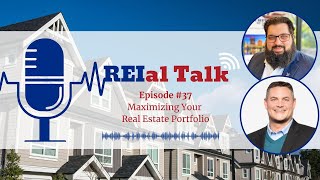
A podcast-style conversation (Real Talk, Ep. 37) between Chris Sonino and Mark Woodring about strategies to maximize real estate portfolios. They discuss diversification across property classes and strategies (single-family, multifamily, private lending, funds), risk management and patience, tax advantages (depreciation, deductible expenses), scaling via refinance/1031 exchanges, and the role of property management in protecting investors and handling operations.
Foreign Today's episode 37 of Real Talk. That's Real Talk for real estate investors. My name is Chris Sonino. I'm here joined today with Mark Woodring. He's the director of investments here. Freedom Real Estate Fund Family of companies. Today we're talking about maximizing your portfolio. If you heard our vlog, we're going to kind of dive into the nitty gritty of four main topics. Diversifying your portfolio. Different strategies you can take advantage of in real estate investing, tax advantages in real estate investing and hiring property management. So I think the biggest part of this conversation, Mark, I'm sure you agree, is diversification.
Yeah, absolutely. Having, you know, multiple different asset and asset classes that you have, you know, so I know that sometimes when you're talking to investors, they're like, well, you know, what do you think I should do? You know, and so, you know, a. Definitely that's a good question. Because you want to have a strategy.
Right.
You don't want to just, you know, either do what everybody else is doing. I mean, you have to, you have to build out your portfolio for what works for you.
Absolutely.
You know, and I know that on some of our different blogs that we've talked about, you know, the difference between, between single family home versus multi and you know, I'm sure we'll jump into like scaling and all those kind of things as well.
But yeah, actually that's a conversation I have a lot with with our owners, with our clients. That.
Right.
You know, it's not so much a conversation of hey, I have this money, what do I do with it? It's more of a, hey, look, I'm interested in this property. This is the asset class that I'm looking at. Is this area going to do what I want it to do? This is my goal. Right. We talk about, I mean I talk about 5, 10 and 15 year goals with the clients.
Sure.
That way we can try to maximize their moves. Right. And what they buy and how they approach that. So diversification isn't just, you know, buying mutual funds and stocks versus real estate. We're talking about like when you buy real estate.
Yep.
Are you buying single family homes in high market areas? Are you buying single family homes and you know, C class areas. Right. Where you're just kind of a longer term tenant at a lower rate and cap rate performs differently there. And looking at things holistically and then going further into that, the multifamily, like is a duplex or a quad more in line with what your portfolio goal is versus you know, our 8 units and 10 and 15, the bigger monthly family. The one thing that makes us a little bit more involved in that process is we also have different investment strategies where it's 100% passive, where all you do is write a check and sign a note, and all of a sudden you're investing real estate with real returns without actually owning any real estate, which we've talked at links in other podcasts.
Like private money.
Yeah, but private money lending. You know, I think we have a fund that's going together that I think you and Tiffany kind of touched on a little bit. And then. Yeah, I mean, there's lots of different things you can do there that are definitely helpful.
Yeah, absolutely. And it basically boils down to what is your appetite as an investor for risk? You know, again, we talk about diversifying. You know, like, so say if you were a stock broker, you're talking about diversifying your portfolio. Well, it's the same thing in real estate. You don't want to just buy all the same single family properties in a B class neighborhood or a C class. You know, I mean, it's. Again, it ultimately boils down to like what your, what your risk is or what you would like to do or what you feel comfortable doing. But I mean, so imagine an A class property, right? You know, the market right now. You're a real estate agent. I'm a real estate agent. We're watching real estate just, you know, across the nation, just boom, boom, boom, boom, boom. And you know, yes, it may cost a little bit more money to purchase one of these homes, but if you were to purchase that and have your bills being covered with a little bit of cash flow, I mean, that's not the primary reason for it. But imagine buying a house and gaining 15, 20% equity over five years, right. You know, when you're talking about your five year plan. And then of course, like a B class property.
Yeah.
You know, maybe a little bit easier to rent, maybe a better tenant. I mean, all the things that you obviously, as a property manager would, would know. But you know, and then a C class, you know, again, some people now we don't dive into D class properties, but I mean, at the end of the day, people need to rent houses there too. So, I mean, there's, there's really nothing wrong with it. It's just that, like, to protect our investors, we don't really. That kind of risk.
Yeah, yeah. So I'm glad you touched on that. Like, you know, part of what we do is we try to set expectations for risk management a little bit here. And you know, as you mentioned, we don't buy. We, we try to stay away from the lower class properties just because, you know, we, we try to set expectation of like if you purchase it here, we've already done this work to it or this is the work we would suggest and this is what the rent would be. And the realization is the rents are not usually at a comparable market rate for lower class properties, which means that the numbers don't work as smoothly. Obviously the deal has to work. So you analyze your deal, look at the numbers to put some projections, have conversations with people like Mark and myself to determine, hey, what would the market rate be if I went retail and sold it or if I had an investor purchase or renting and all the, all of those things. Right. It changes the dynamic. So one of the things that we do here as well is when we acquire properties in the front end of our business, when we buy, when we purchase at the Cash for Ohio houses level, you know, they don't always, they're not always locked in to what the disposition status is. Like sometimes we're just talking to deal, actually walking in the door to the studio today that it may be turning from a retail sale into a turnkey because it's not fitting the retail market right now, which is something we can't gauge. I mean, we do the best we can, but it shifts and moves all the time. And it's one of those properties has been on the market for a minute. So we kind of looked at the numbers, we gauge the class and the area and tenant base and what the rent should be and you know, we're probably in the next week or so making a decision on that, moving that into a turnkey status where you know, I'll be able to put a tenant in there. And then now it shifts into a different owner class too. Now it's not a live in owner, it's an investor owner.
Right.
So it's nice to have that flexibility and we encourage our investors to have the same kind of strategy and flexibility dispositions.
Yeah, absolutely. And I mean, you know, we've touched on it in other areas of conversation where it's about patience as well. You know, real estate is definitely a patience game. I know that sometimes, you know, you may talk to your stock advisor or something like that and you know, you start to see the market dip a little bit and all of a sudden, you know, I mean, you want to jump ship, sell, sell, sell. You know, like in real estate, sometimes you have to Weather the storm, ride the wave. Exactly. Because at the end of the day, I mean, ultimately you'll pay down your mortgage. Like, you'll have equity in your house. So, you know, for, for our new investors and our, even our savvy investors, I mean, they know that. Well, the savvy investors know to ride the wave. I mean, new investors, you know, just trust in the fact that you've, you've done your homework, you've looked at the numbers, you have an asset, you know that that's performing. Maybe it's not performing as well as you wanted to, but at the end of the day, you've put money into it, it will pay off. You just have to be patient with it, you know, and again, you know, I know one of the things I think we're going to touch on as well is like, when you're, when you're talking about just tax benefits.
Right.
You know, I mean, so real estate has huge tax benefits. Tiffany and I had. Tiffany and I talked about this earlier in another vlog episode of all the things that you can write off. You know, you can write off property management, you can write off, if you had to make repairs to the house, you can write off, like, the house itself, the depreciation of it. So there's so many things. And, you know, so it's really like real estate is such a fun portfolio to build. And, you know, I mean, as long as you're patient and understand it takes time.
Yeah. I mean, it's a chess game, but it's a chess game that the pieces have been laid, laid out, the moves have been kind of laid out for you, and you can definitely predict three, four, five moves ahead.
Right.
You know, you brought up tax strategies. And when you were saying that, I was thinking of liabilities, like going back to risk management. And, you know, we can make predictions on quite a few things, but honestly, the market as a whole, the masses at whole, as a whole make, make the determination on how things like this play out. And when you have rental portfolio specifically, like, you can't control the risks, we start introducing other stakeholders, like residents and their families and their friends that may come by the property. You know, we can't always account for certain damages or certain situations to unfold. And we can set a standard. Right. We can set expectations. But ultimately, there's risk involved with anything. I mean, there's risk of getting in your car every day and putting your seatbelt and driving to work, you know.
Exactly.
It's unfortunate. Right? So there's risk involved with this but the tax benefits on the back end, the, the, the potential equity return on this outweighs it. Right. So if you, we, we always encourage you to talk to your tax professionals too. And I mean, I can't offer up time with Mark, but I'm more than happy to be on the phone with anybody any day to talk about this stuff. But talk to your tax professionals and they're going to tell you what you can and can't write off. And even in situations where we've had, owners have had some losses, like we just came out of a tough Covid situation, difficult not only for us to, to navigate, but for our owners to accept ye and there were some lost rents, there were some pain, there were some, there's some feeling there. And you know, that's, that brings kind of in. Our next point of hiring a PM is having a professional that's in your corner.
Right.
You know, so I actually, I just watched the Rocky franchise, so I'm going to bring this up.
So there you go.
You know, some would say that Mick was the best character out of the whole franchise because he was just standing in the corner telling Rocky, hey, you got this, you got this. Just swing, step up and all those things. And that's what the PM does for you. Like we're, we're the people that step in and say, hey, I know this is hard, you're going to get knocked down, it's going to hurt. I'm going to set this expectation. This is what we're going to do. Prep. You have that conversation. Hey, talk to your insurance. They're going to help you recover some losses. Talk to your tax professional. You know, we document this. You should, you might be able to get a write off. You know, we can help navigate that pain. It's not always easy, right. However, when it is good, right. When, sure, just land and everything's perfect, you have a really nice opportunity here for some passive wealth. And I think we all agree we're in this game to be in a passive financial freedom position. And real estate's a key way to do that.
No, absolutely. And I mean, you nailed it. I mean, you are the middleman. You know, there's the investor, there's the property, and then you have your property management. They probably know the tenants, you know, of course we know the area, we know the market. So we know, you know, when it gets a little scary. So again, it's, it's. I know I keep referring back to that stock broker or whatever, but I mean, because they may know that stock or they know that particular area of their expertise. And so that's, you know what the property management, that's what you're paying for, is their expertise in that particular field and that particular market, that rental area. Knowing that, yes, there may be some ups or maybe some downs, but just like Mick, you do have to ride it out. You eventually, hopefully come out on the better side of that. But you're right, there is risk. And I mean, gosh, this, this last year, I know, has been, has been rough for Covid. I've been talking to investors and they're like, should I get in it now? Should I not? Again, it ultimately comes down to like what your appetite for risk is. But it's a protected risk. It's a calculated risk. I mean, you've, you thought about it.
And so yeah, and in order, in effort to come full circle on this, like if you hold, if you hold rental real estate. Okay. And you want to mitigate some of that risk. You know, we talk about tax advantages. We mentioned several times here. I know you guys have done other podcasts to discuss what those look like. I think Randy even said, hey, like, this is, this is some stuff you can do. Yep. From an accountant standpoint. And ultimately diversifying is a really good way to mitigate some risk and liability because it gives you additional cash resources in something with a different stability to supplement income to be able to take those punches when, when things come down the road. That may be painful.
No, absolutely, that's. It's amazing way to think of that. And so it's, it's kind of like why you have to, you know, when you're talking about diversifying your portfolio, sprinkling in some of those things. Like imagine if you had some. A class proper and you had a tremendous amount of equity in those properties. You could do a cash out refi. Use that money to mitigate maybe some losses. You could use that to put back into property, which then again, you're writing that off.
Right.
So I mean, there's just so much magic. But it all starts with the first purchase.
Right.
You know what I mean? Like, so you're gonna have to at some point jump in, get your feet wet. You know, you get that first property. You don't have to be a millionaire to buy real estate. There's plenty of banking and things out there for just the regular guys like us. And I mean, you're an investor, you know, and so, you know, so Chris does investing. I haven't jumped in yet just because I got three kids and it Costs a lot for daycare. But we're going to be getting into it very soon because again, we know that this is a vehicle you ultimately want to. And we all touch on the passive income. I mean, yeah, in 20 years, again, I got to be patient too. In 20 years I want to own multiple properties with no mortgage, just going out and you know, in my bathrobe and a cup of coffee to grab my checks. I mean, right. Isn't that, that's ultimately what we're trying to do is not get out of my underwear in the morning. But so, yeah, I mean, and so you have to do that. You have to have some A's, some B's, some C's. I mean, I'm sure your, your, your, your clients come to you and talk about scaling, like when is, when is a good time to scale. What were your thoughts on that?
Yeah, well, I will tell you, one of my clients very, very close to me actually, he, he recently doubled his portfolio size in the last like four months. And when he did is actually exactly. You're talking about. He had rent, long term rentals. He didn't quite double it. It was probably 150%. Right. So but he had long term rentals and they were performing once the second or third set of lease renewals. So we're talking two and a half to in.
Right.
All of them have been renovated in some capacity at standard. All of them a market rate. We're now into two and a half years roughly of there being tenants in there. He did a mass refinance and just refinance the whole portfolio.
Right.
Pulled 70 to 80% ARV back out.
Yep.
And for those of you who don't know, ARV is after resale value, which is essentially what the property appreciates at. And he pumped that money back into a new portfolio. He bought I think five or six single family homes and a couple duplexes.
Right.
One of which is an emerging market for ipm. So we're kind of going through a learning curve of going into that market. But yeah, I mean now he's already looking to the future saying, okay, hey, these are all rented. Now let's kind of get through the seasoning of six months finishing out his, he has private lenders on that, so finishing out his private lending terms. And he'll go back and probably refinance them in the spring, early summer and then probably repeat it again.
Yeah.
And now actually he's in a position where he's actually close to retiring from the military. So he's looking at that paycheck, like, okay, this, I'm a little on this income now. So now he's having the conversation of diversifying, saying, hey, if I take some of the butter off the top, can I invest in other areas that aren't necessarily, you know, hold real estate rentals and get a little residual. Right. And ultimately, like, I mean, that's the, that's the goal is to be in a position where you don't have to be a 9 to 5 landlord. Right. You don't have to sit there and answer emails and questions and all those things. You can just be passive 100%.
No, absolutely. And by having, and I'm sure you've even had clients at this, you know, by, by having a, you know, a started portfolio and you've paid down your mortgage and you have equity in these houses at some point, I think we've had a couple investors where they just dump the property, you know, they just want to sell it on the mls.
Yeah.
Take that money. Because I mean, imagine if I had a house where I originally paid $100,000 for it. So I put my, my 20 grand into it and over time I've paid it down. Now I know that I could sell it for, you know, 110. Right, right. So it made a little bit of money, but, you know, and I walk 50, $60,000. Well, now I can put 50, $60,000 towards, you know, two $300,000 purchase. And so that's how you start to, to, to scale and double that portfolio. Or, you know, take that 50 grand and buy two properties.
Yeah, you can take that 50 grand. You can either buy a larger portfolio, possibly pull a 1031 while that still exists, or you could dub it in two properties is now you have 50 grand. If you had a down payment of 20 on the one, now you can buy essentially two and a half down payments again.
Right, exactly.
Or in the effort to be all inclusive, you, you could private money lend that, get 8 to 12% depending on who's your, who's your recipient. And now that money is tied to real estate through a contract and you get paid, you know, interest, dividends, either quarterly or semi. Annually or annually.
Right.
Just checks in the bank. Right. And then you're not actually owning property, but you're getting, you know, I mean, if you get 10% on 50,000, you're getting what, five grand? You know, I mean, not a bad.
Way to turn around, right? Exactly. And why not? And you could just defer all that interest.
Yeah. You don't have to pay for repairs.
Yeah.
Deal with tenants.
Sounds. Sounds. I like that.
Yeah. So, I mean, there's. There's different strat. I mean, obviously I'm. I'm an advocate all day for rental real estate, job security for me.
Right.
But, you know, like, personally, my personal investments, like, I do passive. I might lend.
Right.
Just give money a small percentage. I know we have people here that do a little bit of both.
Yeah.
And I know some of. One of our, one of our groups here, you know, we do the lending side, we do recipient, where we take money and we put it into projects to. So we do a little bit of everything. And that's when we talk about diversifying. It's not just the asset class, but it's also the strategy.
Oh, man, there's so many. It's so many. I mean, you could sit down with you, me, your cpa, your financial advisor.
Call cj.
Yeah. I mean, cj, you can talk to any one of us, and we can, we can help to, to build a plan for you, go over all the different strategies that you have, like, what you have your money in, where you could move it to, you know, but ultimately, I think, you know, I said it before, it's going to come down to your appetite for risk. What makes you sleep easy at night, because again, it's in. It's an investment, you know, I mean, so you're gonna, you're gonna be putting a little sweat equity into it, you know, some sleepless nights. But, I mean, these are calculated risks, and you just have to kind of decide, like, which route do you want to go? And ultimately, like you had mentioned, what's your 5 year, your 10 year, your 15?
Right.
You know, what's your, what's your retirement exit? You know, what are you going to do with these properties when you no longer want to be in this business?
Right? I mean, and honestly, you can move on the fly. Like, if you, if you sit down with one of us or even your CPA or, you know, a financial advisor or whoever, you're in person is that you trust to give you real estate advice and financial advice. The plan you make today will not be your plan next year this time. Like, it's going to 100% change.
Yep.
And that's okay. Like, I think my chain, my plans changed three or four times at this point. I've only been investing for a couple of years. Like, and it's okay. Most of that. Some, that's because the market changes. Some of it's because you inherited some money and now Your positions change. You don't have to do this long term equity build. You already have some equity. All of those things are factors. But the most important thing is to plan because failing to do that is failing. So get in, talk to somebody. I mean, our line, our phones are always on reading up the hook. So call one of us, call CJ Bring your CPA in the conversation if you want. We have any problem having those conversations? Yeah, the most important thing is though, is half the conversation.
Right?
Talk about it.
Exactly. You can't, can't buy if you don't, you know, don't try.
Right, Right. You got to try something. Right?
Right.
So. All right, well, I think that's it today.
I think we got a lot of that out, right? Yeah.
You have any questions, feel free to reach out. Like I said, it's been fun. It's another day in the podcast of Real Talk. That's right, which is Real Talk with Real estate investing. We like to end these by saying.
Invest smart and live happy.
Take care.
Thanks, guys.
Nothing on this show should be considered specific personal or professional advice. Please consult an appropriate tax, legal, real estate, financial or business professional for individualized advice. Opinions and information on this show are not guaranteed. All investment strategies have the potential for profit or loss.
More from Dani











Physicians and High Earners — What Real Estate Can and Can't Do for Your Taxes