Profit, Purpose & Passive Income with Dani Lynn Robison
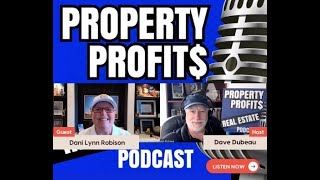
YouTube interview (2025) in which Dani Lynn Robison (Freedom Family Investments) describes her and her husband Flip’s real estate journey since 2008. They moved from single-family turnkey investing into scaling vertically (in-house renovations, property management, brokerage) and later into multifamily, senior housing and build-to-rent syndications. The conversation emphasizes conservative, needs-based investing, a 100% investor payout track record, capital-raising via podcasts and networks, and the decision to scale back turnkey single-family services to focus on larger, long-term deals.
Questions this video answers
2008
2025
Centerville / Dayton, Ohio
15,000 square foot office; nearly 100 team members at peak
Nine companies (then later scaled back to four active companies)
My name is Dave DeBeau, founder of MoneyPartnerFormula.com and this show is built for everyday real estate investors who are actively doing deals and looking to scale using other people's money. So if you're an active real estate investor and you want to get featured on this show to talk about your own real estate and capital raising experiences, then just go to davainterviewsu.com now let's get rolling with this episode and remember to subscribe for daily interview content.
Hey. Hey, kids. Welcome back. Today we have another great episode. We have one half of a dynamic real estate duo. We've got Dannielyn Robinson on the call with us and she's with Freedom Family Investments. And these guys are based out of Florida, quite close to Orlando. So, Danny, welcome to the show. Great to have you.
Thank you so much. I'm so excited to be here.
So, Danny, give us a little snapshot of Freedom Family Investments. Love the name of that. That kind of encompasses what real estate is supposed to be all about for people. Freedom Family Investments. Tell me a little bit about how long you guys have been in the business, what kind of properties you focus on. Right now we're, you know, in the, in the midst of 2025, as we're recording this. What does the portfolio currently look like? Just give us kind of a big picture overview, if you don't mind.
Absolutely. So my husband and I, his name is Flip, by the way.
Great name for a real estate guy.
Isn't it hard. Forget that name. So my husband and I have been in real estate since 2008. That's actually when we entered into the market. Kind of a unique time, but it allowed us to learn many different ways of doing real estate. And over the years, we have done many different strategies. So we have a lot to talk about. We can dive into almost anything. You ask me and I'll go, I think that we did that. It'll be rare that I say we didn't. So we started then, and then I'm going to fast forward all the way down to where we are now. Um, we ultimately fell in love with the building the wealth, building wealth piece. So there was all these strategies from subject to, to wraparound mortgages to wholesaling and flipping. And we as private money lenders, very active kind of. Yeah, yeah, yeah. And we, and we fell in love with passive investing. When we were introduced to turnkey real estate. We were introduced in turnkey real estate when we are in Arizona, actually wholesaling at the time. And the guy that we were networking with on Facebook and creating a volume mastermind because we knew we wanted to do volume. He said, I'm doing turnkey real estate. And we're like, what's turnkey real estate? So he told us what turnkey real estate is, and so we started working with him and we fell in love with it. We're like, oh, this is a great way for us to build wealth and take others along the ride with us. And for whatever reason, that has always just been the piece that fulfills me, is not just do it for me, but to actually help other people and take everybody else on the ride too, that wants to go. And so when we made that decision, we actually moved to Ohio because that's just a great place to do turnkey real estate. And that's what we started building our.
Sorry for a second.
It's okay.
What does turnkey real estate mean to you?
To me, it means done for you. Real estate rentals.
Single family, multifamily.
Single family, primarily. Yeah. Not multifamily. That we do multifamily now, but we don't sell that turnkey. But we did single family because there's so many people out there that were like, I understand the power of building wealth through real estate. I just don't have the time to do it. And we thought, hey, we're doing it for us. So we'll buy and rehab and manage the property and sell it to you for that profit. So we built our own portfolio while selling properties to other people to build their.
Basically, you're buying fixer uppers. It's that whole experience of being wholesalers was probably pretty handy with that.
Yes.
So finding these fixer upper type properties, fixing them up, and then cherry picking some of the. Some of the good ones to keep in the portfolio, selling off others to passive investors. And then how about the management side of things? Did you guys help out with that or did you outsource that to another company?
We did. So that's part of the big story of how we have nine companies today is because on the road to turnkey real estate, one of the things we learned is outsourcing stinks because you don't have control. And you can get very disappointed with people who don't have the same expectations as you do. So we one at a time just pulled businesses in. So we had the turnkey company and then we pulled in renovations, and then we pulled in property management, then we pulled in brokerage, then we pulled in acquisitions, and then we had the whole thing. So we had an office full of people. We still have that office full of people. It's not as full because we're all spread out across the area, but the United States, but we controlled every piece of it. So literally, if something went wrong in property management, we're walking down the hallway and knocking on a door as opposed to trying to chase, you know, the company. Because we went through five property management companies. Like the horror stories. I've got them all. Yeah, I did either. Yeah. So that's where we are today. Our offices are in Dayton, Ohio. Centerville. Exactly. We have a 15,000 square foot office. At one point in time, we had almost 100 team members. We've built nine companies. We now really specialize in multifamily senior housing. We're starting to do some build to rent self storage. We partner with other people who are experts in this space so we can, you know, grow together. That's where we are.
Okay, cool. So do you guys in, in the larger deals that you're part of these days, are you guys co GPS in those projects? Are you sponsors in those projects? Where, where do you fit into the. The mix?
We do all of the above. So it was in that turnkey world where we were grabbing deals. We had built the acquisitions company, so we're marketing and getting our own deals. We found somebody who actually had 15 properties. Three 12 of them were single family, three of them were duplexes. And then they had 56 units that were apartments. We had never done apartments to that date. So we were going to wholesale them. And so we had a buyer. It was during COVID and the lending fell through. But so he, then he got another lender and we were going to close, but this guy decided that he wanted to cut us out of the deal. So we were going to make a $200,000 wholesale. Feel that on that. And I was like, that's great. I don't know how to do ap. I imagine it's not that different. But I wasn't ready to do it at that point in time. We had just, you know, built the, all the companies. And so when he cut us out of the deal though, I was like, that's not okay. So quite literally my husband told me about that and I said, forget it. Tell them we're not doing it, we're buying them instead. So we literally, in two weeks we told the seller because the seller is frustrated too, because what we thought was going to close pretty quickly, the lender situation, nobody, everybody had to understand that was just the, the time. And so, but that seller's frustrated. He's like, I'm going to, I'm going to get out of this contract. And I was like, nope, in two weeks, I promise you I will close on this deal. Don't, don't worry about it. And so I reached out to my private money lenders. I said, here's an apartment complex, we're about to buy it. This, here's the numbers. Gave him the same proposal I would as a single family property. And I said I would like to have one private lender per building. So that way, because we always gave them first lien position. So I said this is how I'm going to structure it on this deal. Because at that point in time I didn't know how to create a syndication. I didn't even know the wor who.
Put up the cash for the 56 unit. What?
Yeah, no, that, that's the, it was 5 buildings, 56 units across 5 buildings. So we had 5 lenders for each building. So that's how we ended up buying the deal. So in two weeks we did all the due diligence and actually closed on that deal. And that was our very first apartment complex. So now going to go back to answer your question because that was our first deal, we have our own portfolio of apartments now. So sometimes we're buying it for us, sometimes we're buying it by ourselves for our company because we do have the ability to do the whole thing. Soup to nuts. Sometimes we're partnering with other people. We've got, we had a 384 unit in Daytona Beach, Florida. We had a 100 and oh, we have 189 I think unit in Jackson, Mississippi. We've got deals in North Carolina. So we partner, we co gp, we sponsor, we do whatever works for that deal so long as it's a deal.
Well that makes sense. So with everything that went through. Well, let's back up for a second. When it comes to the law, the multifamily properties, what's kind of your philosophy and your exit strategy with those properties? What's the goal with those?
That's a great question. So I will say that I'm going to do what's right for the property and the market at the given time. So I'm never completely sold on exactly what I'm doing. But going in, I love the idea of buy and hold. I love keeping it long term. If I'm going to buy it and do the work, I would like to keep it and just keep that cash flow coming in. Always, always Always. And I'm a big believer in impact and helping others and giving to causes that I care about. And I've always thought I'm just going to build up this portfolio of cash flow and some of that cash flow is going to go to these causes. And that's always just been the idea. But that 384 unit for example, that was one where we were code GP on and the market was just right and we sold it at the right time, which does not always happen in real estate. So we're so thankful. And that was just one where, you know, we took the windfall, we took the win, we took the windfall and it helps the companies grow. Right. When you get that cash influx as well. So we're not sold on any one strategy, but many times I go in with the intent to hold.
So question for you then, Danny. When you're bringing on investor partners these days, are they coming in as debt partners or equity partners? How do you. Because you know, especially a few years back everybody was kind of getting into multifamily, which I always thought should be long term myself. But they're getting into these two year flip type things and 18 months craziness and all this kind of stuff and everybody thought that was the norm. What do, do you have any challenges with getting investors on board for these things?
Actually no. And it's because of our track record, like we speak to our track record always. I have, I tell everybody if you're in real estate, expect to lose money and if you're talking to somebody that says that, you know, they've got this home run deal and there's no way they're going to lose money on it, just run away because just it's a reality that you're going to lose money on on deals. I believe in volume, I believe in mitigating the risk of losing money on some deals. So if I'm going to do 10 single family properties a month, I'm going to expect maybe one or two of them are not going to go as I planned and maybe I'll break even, maybe I'll lose money, but the other eight are going to, you know, make up for the, the two where I lost. So I've always gone through real estate with that strategy in mind. And when I speak to our track record, I, we have a 100% payout track record. We have never once not paid our investors back in full plus everything owed and the amount, number of times that I've gotten on the phone with investors who now invest with us, it's because I invested with this person. The deal didn't go as well as it should have. I am fighting to get my money back. I certainly didn't make any money on the deal. Maybe they're having to foreclose. There's just all of these stories and I was just like, I am never ever going to be that person. When the going gets rough, I'm taking the hit. It was my responsibility. The investor trusted me. You're getting paid back. And so because of that track record, like it speaks volumes, right? People are just like, I'm on podcasts like this and, and they're literally calling us going. I heard Danny say that even if she lose money, money, I get paid. Tell me more about that. And that's kind of the, the, the thing that I tell people all the time. I said, when you're getting into real estate and you want to work with people who are going to give you money, character means everything. Do what's right 100% of the time. Because too many people think short term and not long term and that's why they don't succeed.
Yeah, most definitely. So Danny, where do you guys see the business going over the next 12 to 18 months? It sounds like you've kind of pivoted more towards the larger deals, the syndications, the fun type stuff. Where do you see things going over the next year, year and a half?
Yeah, so we're focused on needs based real estate. So work workforce housing, multifamily self storage, senior housing. The silver tsunami, build to rent. So we're staying very, very conservative. And our fund manager and I have worked really hard at building relationships across the space. You and I were talking right before we pressed record like why do we all do these things? And it's to build these relationships. Right. So that we can partner with other people who are really great at what they do. And so we partner with people on their deal flow coming in and they say, hey, I've got this 380 unit in Daytona Beach, Florida. I've got this 189 unit. And so we have the deal flow coming at us and we've got the capital ready to deploy and we just find the right deals that pencil and that we feel like are going to go through the long haul. And our investors know that we're in it for the long haul. So if the market shifts and changes, we're boring investors. We're going all the way through the market cycle as it goes up and down, up and down. And we will Figure out at what point in time it is the most strategic time to refinance and cash people out, or sell and cash people out, if that's how we choose to exit.
Right. No, that makes a lot of sense. So the original business, the turnkey of the single family homes. Sounds like you still got a big office in Ohio and staff and stuff. What's going on with that?
Yeah, so strategically scaled it back. So that's one of the things that we have done recently. The nine companies, we decided, hey, a few of these, we're going to go ahead and slow these down and we're going to ramp these up because of what's going on in the market. Where we see our positioning, where we feel like we can mitigate the most risk, where we feel like we can keep ourselves safe. Peace of mind, sleeping at night. That means our investors are safe. Peace of mind, sleep at night. And so we are really going forward with four companies right now and then just scaling back turnkey. So we don't offer any. Any single family that we still have is our own portfolio. We don't do it for other investors anymore.
Okay. Yeah, that makes sense because that's a lot to juggle. All of the same, man.
Yes. Oh, man.
Yeah. So primarily these days, you're more in the finding good sponsors who have good deals, finding investors, matching things up kind of and doing things that way. Am I understanding that correctly?
Yeah. So we're the direct sponsors, so we still find our own deals. And sometimes we'll just do our own deals. It might be in our backyard where we still have all the capabilities of going A to Z through the entire deal ourselves. Or we find a great deal that's in another market that's got a different operator and they need capital in order to make the deal work. So we come in as a code GP we're almost always the sponsor on the deal. We're almost always the people with the capital on the deal. Sometimes we do it all.
Okay, good to know. So, Danny, when it comes to raising capital these days, sounds like you guys have a good track record. Not everybody can say the same, especially in the multifamily space. Yeah, that's for sure. So are you finding it challenging? A lot of people are finding it challenging to bring on new LPs. A lot of people who have invested in multifamily or other assets are kind of sitting on the sidelines with the capital these days. What have you found to be the situation?
Yeah, I do think it's getting tougher because I think LPs are starting to see situations where deals aren't getting refinanced, deals are getting taken away.
They're starting to see. Yeah, they're getting close is what's.
Yeah, yeah, yeah. Deal sponsors are scooting out of the country, you know, with. With their tail and between their legs. And that's. When I speak to character. I think it is harder because LPs are just. They're peeling back the onion or the curtain, however you want to phrase it, and they're seeing sometimes they just invested in the wrong person. And that's really, really unfortunate. We learn from hard lessons and we learn from failures in life. Right. So that it teaches our LPs how to do better. Due diligence. Due diligence for the next person they're working with. So I would say for anybody that is having a hard time or has. Doesn't have that perfect track record, I would say go and find somebody who does have a really good track record in this space and partner up with them. When you're talking to investors, be transparent and honest about the mistakes. Like I tell investors, ask people about their worst deal. Ask them about what happened when they lost money. Like, how much money did they lose and what happened to them. How did they get through it? How did they solve the problem? What happened to their investors? Did their investors get paid? Did they not get paid? Like, ask the hard questions. And if you're somebody who, you know, messed up, we all, we all mess up. Just be honest about it. And like when we have a property management company and it's one of the hardest businesses to run, and I tell people, the investors all the time, I said, I'm not perfect. This is a hard business to run. It is hard to keep the tenants happy. You have is the same kind, suspicious it is. And, and I'm saying we're not going to be perfect. We're going to make mistakes and it's going to be tough. But you call us, you talk to us, we'll figure out a way to fix it and come to an agreement together. And you have that type of transparency with somebody. This is where I screwed up. This is the mistake I made. This is what I did. This is what I'm doing to change it going forward. Here's who I'm partnering with. Here's what I learned. Oh, my gosh, people love that. And that's what builds trust.
Yeah. Very, very well said, Danny. So these days when it comes to bringing on new investors for your deals, because it is kind of a Challenging environment. What are you personally finding is working best for you and Flip these days to meet and connect with new LPs, new investor partners.
It's actually talking to other people, with audiences. So it's the fastest way. Like, we have, literally until this year, we've never intentionally marketed for capital. It's been word of mouth. Because I will show up on a podcast, tell our story, talk about our deals, and people will just ring, ring, ring, ring, ring, ring, ring, ring, ring. And not all podcasts are like that, but you just, you care about adding value to the people that you're networking with. Like, I'm here with you. I just want to add value to you. I don't care if anybody works with me, but you have that heart and that thought process. People just, you build that network and then you leverage their audience and then you help them as best you can. Like, when I leave relationships or participate in relationships, I'm always like, what can I do for you? How can I help you? Is there something that you need? Can I introduce you to something? And it's just, it's always this give and take. So for me, the fastest way to raise capital is by building that network. That takes time. And because when you're building that network, I think what's really important is that you're not asking for something right away. Like, you give, give, give, give. Like, show people who you are, and then eventually they're going to want to do business. They're going to be like, what do you do? And how do I. Like, how can I be a part of this? And how can we, you know, do things together? And that's when I get really, really excited because the network just grows and then it grows and grows and then people start hearing about you. So at first, just be the giver of value and have that heart and you will build as a result. And if you're starting from, from a place knowing that that's going to take a long time, then I think your immediate network is just always the right answer. I don't know if you've heard of Bill Allen, but as I went through real estate, I always find coaches. And he happens to be one of the people that I listened to and I followed and I joined his mastermind for a little bit. He's got this course about raising private money, and it's like, raise something in 50 days. I can't remember what it is, but he leverages, he teaches people how to leverage social media. And all you're doing is just getting on social media and saying what you do, this is who I am. This is what I do. I'd love for you to be a part. Do you have any extra cash sitting in a bank account or an ira not earning anything? Come on board. Let me tell you more. And you do that consistently for a certain amount of days. Suddenly you've got people going. They might not even engage. People get so frustrated on social media going, I didn't get a. Like, I didn't get enough likes. I didn't get a million views. Like. And we all have this complex about it. Like, you know, and we feel like we're failing. When. I will tell you, I don't get a lot of likes on live social media either. But I'm telling you, the number of people that private message me because they don't want people to see the comment. You know, they don't want to see that they're liking my post. Like. Like, everybody understands how social media works. And there's a lot of people that are just private. They will direct message you. Can you tell me more about this? Just saw your post about this and there's people that. I've been following you for years and I just, I'm like, what? It's just crazy. So I think that, you know, the power of sharing what you do and who you are is super powerful and it's free. So your immediate network already likes you that, you know, they're friends.
That makes a ton of sense. Danny. Time flies when we're having a great conversation. If people want to connect with you and find out more about you guys, where should they go?
Chatwithfreedom.com chatwithfreedom.com that goes directly to our website. It's just easier to remember. And I love freedom chat with freedom.com.
Danny, thanks for being on the show. It's been a lot of fun.
Thanks so much, Dave. Great to talk to you.
All right, everybody, take care. We'll see you on the next one. Hey there.
I really hope you enjoyed that episode. And as always, if you want to listen to more daily interview content, make sure you subscribe. And if you're an active real estate investor and you're doing deals and you'd like to get featured on this show, then just head over to Dave interviewsu.com.
More from Dani











Physicians and High Earners — What Real Estate Can and Can't Do for Your Taxes