Property Management Tips for Multifamily Investors | REIal Talk | The Freedom Show | EP.89
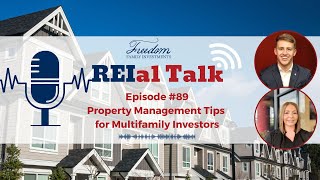
Podcast episode (REIal Talk, EP.89) where host CJ and guest Ashley (multifamily property manager at Independence Property Management) discuss why investors should consider multifamily real estate—reliable cash flow, easier scaling, steady demand—how to source deals (brokers, off-market, wholesalers, pocket listings), differences versus single-family management (consolidated maintenance, utility/landscape responsibilities, higher cash flow but some extra expenses), property management value, and how listeners can contact Freedom Capital to invest. Includes management anecdotes (takeovers, pandemic-era senior housing) and a closing call-to-action.
Foreign.
Hey you guys, this is CJ here. We're here with podcast 88 for multifamily tips. And today we have Ashley, who is our multifamily property manager. So really excited today to kind of go through everything, multi family from an investment side and how you can decide what type of multifamily you want to invest into, whether that's syndications, buying your own multifamily properties and what to really look for. So I'll hand it over to Ashley to introduce herself and we'll hop into questions.
Hi, I'm Ashley. I am the property manager for Independence Property Management for the multifamily assets. And then just, you know, some thoughts in the multifamily real estate and. Do you want me to jump into.
Yeah, let's just jump into.
Okay. So one of the questions a lot of people ask is the thoughts on why someone should invest in multifamily real estate. So a couple reasons that I think would be a good reason to invest would be the multifamily real estate is like a reliable, quick cash flow. It's something that you can invest in and see like your return back pretty quickly. You can create passive income and build long term wealth. Multifamily is easier to finance and quicker to expand your investment portfolio. So you can build a lot quicker by having more property. And then there's also demand for multifamily. So especially with the market that we've been in, the crazy housing market, I think that's pushed people to apartment living until they find their, their next home. So there's always going to be a demand for multifamily. So there's, it's almost like recession proof in a way. So protect your assets. Um, and then you also have better management options like me. So you can have actually someone to do the work for you manage the property and then you just kind of sit back and see your wealth build.
So yeah, I think that's great what you hit on, right? Like it's, it's easier to scale and it, the way I like to look at it is it's all in one place. So it's easier for you, the property manager to manage because you're not going around to all these different single family homes trying to do maintenance requests. I also like that it's a single roof, right? Some of it, you know, you're only having to, maybe a bigger payment, but you're only having to do it once and not, you know, a lot of small jobs, which I think is a huge benefit from Maybe you can speak to the tenant base that you see maybe the difference between multifamily versus single family homes and just like the length of stay or however you want to take that question. When someone's kind of thinking about, oh, should I go buy this four unit, for example, or should I just buy a single family home? What are those things that you think someone should be taking into consideration when making that decision?
So the, I guess the biggest strategy for making that decision would be one you want to choose like what type of market you're in. So do you want to like, you know, kind of what class do you want to cater to? Do you want senior properties? Do you want, you know, like just multifamily of all ages? Like you got to kind of decide what market you want to cater to and then you also want to see like your location, where do you want to be at, and then decide on how much you want to spend, what's your budget, and then narrow down, you can narrow down your search.
So yeah, that makes a lot of sense I guess for, you know, someone who said, hey, I've heard great things about multifamily, I think I'm going to have a lot stronger cash flow. How would you recommend someone to kind of navigate towards actually being able to purchase multifamily? Like you said, it's very competitive, this asset class. A lot of people are wanting to buy, but how does someone make effort towards doing that? And then I'll, I have a, some input there as well. I'd like to talk to.
Yeah, I mean, I think you would honestly just need to find like a real estate agent or a broker just to kind of. Yeah, you cj. So you would contact CJ for any type of like investing in multi family or single family homes. But yeah, finding your investor, your company to work for.
Yeah. And I think a big decision that I would say for people who are listening to this and maybe you, you have gotten into buying a single family home rental, you've realized you want to go into multifamily. I think it's understanding what type of investment you're looking. So here at Freedom, we do sell some small multifamily to our turnkey buyers. But a big part in these last couple years has been investing capital into larger apartment syndications where we're actually pooling the funds from ourselves and multiple investors to go put towards the down payment in the rehab budget to then go improve an asset. And basically what's different about that is you have ownership, you're getting a specific Preferred return. But you are not dealing with all the headaches maybe day to day or having to make all the decisions with someone like you. Right. You're just. It's a much more passive opportunity where you're going to get a quarterly report and get your cash flow and then typically have a bigger exit whenever we sell or refinance the asset. So it's just a decision of do you want the true own ownership where maybe you can do a little bit, get a higher return, but you're probably going to have to put a lot more work into it yourself, right. From a time perspective or do you want to work with another operator such as Freedom Capital or, or all. There are many out there to, you know, make those investments. And I think it just depends on where you're at in your investing career and how active you want to be.
Yep.
Yeah, yeah. And I would just say that from a multifamily perspective, you there's. It depends what size you're looking at for making an investment. But you have to, you know, obviously reaching out to brokers or commercial agents who are involved with the multifamily asset space. But I've bought in multi units off of Craigslist. I've bought them from wholesalers. Like there are a lot of ways to find opportunities off market, not just what's listed on the MLS or on LoopNet. Right. A lot of agents, because it is in such a high demand, they have people who they built relationships with and they call them pocket listings. Right. They're just handing. They know this opportunity is coming available and they'll send it to those who they know can actually close on the close on the asset. So I guess maybe you can discuss a little bit how you feel the multifamily property management is different than single family and property management. Are there any differences there how you manage the asset from your perspective?
From my perspective, I'm not too sure because I have not managed single family homes. I've only done multifamily. But I guess it could be different. 1 Like you said, everyone's under one roof. A little bit easier to, I guess, remember apartment numbers and the way the property set up and you know, how the units are addressed and also closer to tenant relationships too. So I feel like you see them more frequently. They stop by the office, you know, you're in contact with them more frequently than I think you do a single family home. So that would be different. And then I think they're different too because I feel like multifamily, you know, it's gonna, it's gonna generate more cash flow for you than single family home. And I think that's the biggest one right there. Yeah, you can get more, you can get more for your money pretty much in one space rather than just having a single family home.
Exactly. Yeah. Typically you're paying a little less per door. Right. You'll hear like, oh, we're selling this at this asset at $50,000 per door, whereas the single families in the area may be $150,000 a door. Right. And yes, maybe you're getting 100 or $200 less in rent for the size, but it's typically not as significant for the price difference. So certainly the cash flow has been stronger. And that's why I personally have more only purchased besides a single family home to live in. I've only purchased small multifamily because I wanted that cash flow. I think a key difference is, like you said, the cash flow is higher, but there are some additional expenses that someone needs to think about when they are investing in multifamily. So I was just working with one of our investors and he had bought and sold single family homes before, but it was a new thing for him to have to, you know, when he's budgeting or like underwriting his deals to think about. Well, in Ohio here we have snow removal. Right. We have lawn mowing. And so typically for single family homes, some of those activities are put on the tenant from a responsibility standpoint. But from a multifamily, we're normally organizing the lawn mowing, the snow removal, and also sometimes in these multifamily units, the utilities aren't separately metered. Right. So you have to, maybe you're responsible for the water or you're responsible for the electrical, just because if they're not split out or separated, you know, how are you going to decide who pays for that? So there's ways to get around that by just charging a certain amount or proportionally, but just something to be cognizant of when you're doing your underwriting that there might be additional expenses than when you're underwriting single family homes. I guess when you say there is a, how do you kind of view multifamily in moving forward from where we're at, from an economic environment. Right. So right now interest rates are going up a lot. People are nervous about buying homes. But how do you think that's going to impact multifamily in general?
I honestly think there's nothing but growth for the multifamily from like My generation standpoint, there's not too many homeowners, so they go more towards the multifamily units. They don't want to be, I guess I don't want to say tied down, but tied down in a sense. They want, like, simplicity. They want maintenance taken care of, they want landscaping taken care of. So you get that type of group that, you know, goes more towards multifamily. And then I just lost my train of thought.
You're good. I, I agree completely with that. And I think going into that, people are also, you know, they're not wanting to worry about it from a maintenance perspective, but they're also wanting more amenities. Right. So typically, you know, when you. You start getting into, maybe not a four unit, but you start getting into these larger apartment complexes, there's other amenities that are being provided, whether it's a playground, a pool, a workout facility, or just a front, you know, front office person, a maintenance person, whatever that may be. I think you're able to consolidate that and be able to provide more for the tenant base at a lower price point. And that is obviously desirable and I think will continue to be so as. As time moves on and. Exactly right, what you said. So many of my friends have said, oh, with the interest rates, I'm going to hold off on buying. You know, even though people have great jobs and these different things, they're scared off by the higher payments that they're going to have to have. And in my opinion, they should still move forward with buying if that's what they truly want. Right. They can always refinance later, but it's definitely an interesting situation to navigate. I guess just for our. Our viewers may like to hear, do you have any, like, fun stories being in the multifamily property management space or a scary story? Maybe not too much to scare them off from the investment moving forward, but just something fun that they may like hearing about.
I have some pretty crazy stories. I've done a couple takeovers where we've basically brought over the property and, you know, transitioned ownership. And we came into, like, a management company that had left, like, pretty much abandoned the property. So these residents were without heat for a couple of months. They were without hot water. So they were, they were mad. And we got the bright end of everything because we were there, you know, kind of cleaning up the mess. And I mean, we have gotten cussed at. We've gotten spit on. We. I mean, there's just all kinds of stuff, and you have to learn to not take it personal because that you Know, that kind of stuff can upset you a little bit. But the good thing is for, you know, you investing in multifamily is you do have that property management dealing with that for you. So, you know, we're the ones that take the front end of it, but we're handling that job for you.
So.
Yeah, and then there's good stories too. You know, I've worked in senior community like multifamily, 55 and over and just making their day especially I managed a property during the pandemic. They didn't have family visiting them, the community rooms were shut down, fitness center was shut down. So they came in my office and talk a lot to me. And just talking to them or bringing your kid in to see, you know, or your dog to come in and see them, it made their day. So that was kind of happy that I got to make their day during the pandemic and it was just so lonely for them. So, yeah, they struggled, they struggled hard with not having family visiting them.
So, yeah, yeah. And I, I agree, right. You see some wild things in the living conditions that people live in, but therein lies the opportunity. Right. I think for a lot of people who are looking to invest is wanting to elevate the living conditions and experience of their tenants and thus being able to achieve maybe higher rents. You know, I've come into properties in the last year or two that hadn't had a rent increase in 10 plus years, but they also had had very little if no repairs done to their units in that time. And there's just extreme deferred maintenance. Things are broken. Right. And being able to, it can be as simple as, you know, replacing doors or just like, like you said, like making sure there's hot and cold water, their, you know, their ACs are working properly. All these different things that just are going to elevate their living condition and experience is something that I really enjoy, like helping and trying to provide that safe, clean environment for people to reside in. So, yeah, it's definitely rewarding both financially and emotionally, like as you're helping others.
Right. And that's kind of why it's important too to I guess do your research when it comes to property management companies. Like if you have someone managing your multifamily for you, just getting someone in there who is experienced, they have a history, like background in property management so that they can handle those everyday struggles and the everyday operations for the property and hopefully go in the right direction with it. So you see more cash flow, you see less maintenance, less unit Turns more tenant retention. So that's the important reason for getting a good property management company.
I. I love that you hit on that, Ashley. So my role as investor relations here is I take all our investors client calls. I'm the first point of contact for people who are looking to buy turnkeys, do private lending with us as well, apartment syndications. And when people are talking about turnkey or, you know, active ownership, the number one question I get is, what is your management fee? Right. Okay, great. 10%. Right. And we can go into more detail on that. But they never ask what you just said. How are. How do you actually manage the property? Right. What is your track record? Like, how do you organize your. All your receipts, Right. All the expenses that come through in a month, like, all these things that truly matter because, you know, for me, I never wanted to do that part. Right. I never wanted to be responsible for the property management perspective because I had another job. It isn't going to be my main focus. And I think a lot of people look at that cost of 10% as a cost. But I truly think there is so much value that a property manager can bring to an investor. Right. Like, for me, when I first bought my first duplex, I needed a new fridge, for example, Right. And I would have gone to Home depot and spent 800 bucks on a new fridge. Right. But they knew a route for like a, you know, a cheaper way to get that. And I realized the value just there, right. Like, I didn't have to go do the research, spend hours of my time, go to Home Depot, coordinate the delivery, you know, and they were able to get it done cheaper, quicker, faster, with me not having to worry about it. And that was a huge win. And I said, Yes, 100%. I am all in on the property management because they have the expertise.
Yep. Yeah, we definitely build those vendor relationships so that we can. Who to go to if this is happening, who to go to if the roof's leaking or if your refrigerator goes out, you know, so we do try to build those vendor relationships so that we have someone that can get there to handle it right away.
Yeah. So actually a loaded question here as we kind of wrap up, you know, if someone is interested in apartment or, you know, multifamily or apartment investing, what is the best way for them to move forward with. With us?
Well, you would just contact C.J. he is with our Freedom Capital Investment Group. So you just contact him and he'll walk you through and, you know, ask what you're looking for, what you want to see where you want to be and then they can help you from there.
Yeah, awesome. So, yeah, exactly that. So, you guys, if you. There will probably be a link below, whether you're watching this on YouTube or on our podcast, right. That has a link to Freedom Capital and you can go in there, schedule a call or just see, kind of review the different investment options that we have and would love to have a conversation and help you navigate that journey. Um, so hopefully you can reach out there and really looking forward to working with you. But actually we. We end all of these with saying invest smart, live happy. Awesome.
I do have one more thing to input. It's really important.
Oh, please, please.
Just a little, just a little share is.90% of all millionaires have became millionaires by investing in property. So I just wanted to share that.
No, agreed. I mean, I think that was a big incentive for me to get involved with real estate investing a long time ago. And why everyone should do it right? Whether it's via just your own personal home to start or doing rental properties or flips, there's so many ways to accumulate wealth via real estate, whether you want to be active or passive in it. All right, well, we'll end it here like we do with every podcast. Invest smart, live happy. Awesome. Thanks, you guys.
Bye.
Nothing on this show should be considered specific personal or professional advice. Please consult an appropriate tax, legal, real estate, financial or business professional for individualized advice. Opinions and information on this show are not guaranteed. All investment strategies have the potential for profit or loss.
More from Dani











Physicians and High Earners — What Real Estate Can and Can't Do for Your Taxes