Rules To Real Estate Investing | REIal Talk | EP. 54
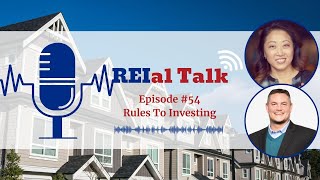
A conversational podcast/video (REIal Talk episode 54) featuring Tina Howard (COO, Freedom Real Estate Group) and Mark Woodring (Director of Sales) explaining common rules of thumb for real estate investing: the 1% rule (rent ≈1% of purchase price), the 50% rule (expect ~50% of rental income will cover operating expenses), and the 70% rule (max allowable offer for rehab deals = 70% of ARV minus repair costs). They discuss market differences (Dayton, Cincinnati, Franklin/Middletown), cash-flow considerations, risks, holding/rehab costs, and investor mindset (patience, avoid emotional buying).
Hello, Freedom family. Welcome to Real talk. I'm Tina Howard, COO of Freedom Real Estate Group and its family of companies. We're here today with Mark, our famous Mark Woodring, Director of sales. And so we're here to talk to you today about the rules of real estate investing. These are general rules that you'll hear the more, the longer you've been around in real estate investing. The rules of thumb, the 1%, the 50% and the 70% rule. Just kind of want to give you a summary about what, what those numbers mean. So 1% rule, Mark, let's talk about that.
Yeah, absolutely. We had touched on this earlier in the vlog for the 1% rule that is basically that you are going to collect in rent 1% equal to that of the purchase price. So I believe that the scenario that we used was $100,000 home purchase, which is, believe it or not, that that is real here in Dayton, Cincinnati, believe it or not, there are other markets. I just talked to someone earlier this morning, you know, was talking about buying homes in Florida for 300,000. So with that scenario, that would be a $3,000 rental. So with our $100,000 house, with our 1%, you know, we're collecting thousand dollars in rent. I know that we had talked about that we were going to touch on some of the different markets and you know, how our investors that are working with Freedom Real Estate Group should take a look at those markets with us. So both the Dayton and Cincinnati markets are a 1% here or very close the properties. And as I speak with investors, the property values are going up in both markets. So Dayton and Cincinnati, and then even in Franklin Middletown, which is our middle market. So the property values are going up and the rental market is trying to go up as quickly, but it's harder because again, like you can have a house on the market in March and then a whole bunch sell during like the busy time, right? Like that March to October, you may have a 7.8percent explosion in the market, but you still have somebody that's renting and that hasn't gone a full year rental cycle yet. So it takes a little bit more time and obviously be patient. And so as we talk with investors, you know, like you had mentioned, these are not hard and fast. Like, do not, do not flip out if you're like, oh my gosh, isn't gonna be 1%. It will eventually, you know, I mean, so because the market is so close is is to just relax, you know, just focus more on where you're at with Your cash flow, taking a look at some of these different markets, the different taxes that you are, things like that, a lot more variables. But, but, but again, the 1% rule. So again, like I said, those values are going up in the house. The rents aren't, but they're slowly starting to tick up. Right. And as interest rates are raising, I mean it may slow the market as far as like the appreciation and the rents are definitely going to catch back up. So it will, it will happen again. I don't have a crystal ball, but in our best guess, they kind of staggered, right? Correct.
Little delay.
Our best guess, it's, it's going to fix itself. Now in the Cincinnati market, homes are going up relatively quickly. And so say we purchase a house down there for $140,000 turnkey, right? Single family home. There's a good chance that it might be a fourteen hundred dollar rent, but who knows, it may only be like thirteen hundred at the moment, you know, but as more people are buying in that neighborhood and as more rentals happen, it, like I said, it will eventually start to tick back up. But it's very close in Cincinnati. But I try to tell our investors I feel that the appreciation is going up faster than the rentals. Whereas in Dayton, very stable market, the values of the house are going up, but because it's such a rental market that the rents are going up almost equally as quick. And then when we take a look at our third market and we're looking at the Franklin Middletown again, there's lower taxes because the counties that they're in and so your cash flow is a little bit better. Your appreciation on your house may not be as high as it would be in Dayton or Cincinnati, but the rents are right there too. They're like at the 1%. And so obviously I love all three markets. I love talking about them. Traditionally you may even have higher, you know, with some of the investments that we have here, you may have higher on duplexes and multi units above the 1%. And that's, that's also, you know, an excellent advantage we have here in Dayton.
Yeah, absolutely agree. It's, it's really, I like to think of it like you mentioned, it's a rule of thumb. It's so that it's a quick analysis knowing yes, this is worth my time to look into further, or no, it's not worth my time. If you're looking at a $200,000 purchase and the rent is 1,000, then you know right away this is not going to cash flow. I'm not going to have enough money to cover maintenance or things, surprises or vacancies even, or turns. And all those expenses kind of tie into rentals. But at the same time, if you got something that's close to 1% or a little bit above, then you know that it's, that's an indicator that you should dig in a little bit more and take a closer look. So it saves you time when you're analyzing deals.
Yeah, there's, there's, like you said, like when you're analyzing a deal, there's so many things that you can look at. And so like we'd mentioned there, there's definitely some, some counties that have lower taxes.
Yeah.
So for example, let's just say I have $100,000 house. I love this example. Right. That $100,000. Easy math, right? It's easy math, Right. So in Dayton and Middletown and Cincinnati, they're all making a thousand dollars. Let's just say that 1%, just, just for argument's sake, you know, so Franklin Middletown may have a little bit lower taxes. So let's just say that your cash flow is 300. And then so for Dayton, let's just say it's a little bit higher taxes. So let's just say your cash flow is like 275. And then in Cincinnati, maybe even a little bit higher in taxes, so 250. So sometimes when you're analyzing the deal, the 1%, like you said, is not like, you know, it's a good indicator of the market and where that property sits in relation to other rentals in the area. But it's not like it should not be your only key indicator. Right. You know, when we're talking about rules of investing, you know, I mean, just outside of the Talking about the 1% rule, when you're just talking about rules of investing, obviously take a look at the big picture. You know, what does your investment portfolio look like? You know what I mean? Like, are you going to be pulling money out of other houses that are performing better and paying this one down? You say there's so many other variables that go into those. Rules of investing is, you know, start small, you know, start smart and things like that and build on your portfolio. Nobody out of the gates is going to be buying 20 properties.
Right.
I mean, who knows? If you are giving a call, it's market for you. But yeah, exactly. Everybody has my phone number. But so, yeah, so I mean, so the rules of investing are obviously, you know, analyze the property, you know, take a look at what your cash Flow is. And we'll jump into, you know, one of these things obviously is then jumping into the 50% to consider, you know, when you're investing in that property is where is your money going? You know, like what does the appreciation look like? Like, for example, so say I have an investor who is just stuck on cap rate or cash on cash. Like that's the only indicator they use. Like it's got to be a 9% cap rate. It's got to be, you know, 15% cash on cash or I don't even look at it. You know, sometimes you might be missing good deals because who cares? This property might BE Cash flowing, $400 a month on a 20% down.
Yeah.
And you know, it's in a neighborhood that's going higher and higher. And so now you're also gaining that equity position. But it's got a cap rate of 6.
Right.
Well, who cares?
Yeah.
So those are things just to try like at the grand picture. And then when we were also talking about, you know, the different classes of investing, you know, if I buy an A class property for 250, $300,000 like we were talking about, and you know, I'm not going to get that $3,000 rental, but if I can get enough to cover my mortgage, that's good. Correct. And then, you know, you're getting a good renter because again, you know, you're just traditionally, again, traditionally, you're going to have a better renter in that A class property. They're going to stay longer, they're going to take care of your property. You're not going to be spending as much money on turns and things like. Or the money that you are spending on them is, is less frequent because it's not a frequency turnover.
Yep. You don't forget about that.
Absolutely. I love A class properties because again, you know, I mean, if I can, if I can buy a house for $200,000, have that mortgage paid and still be netting the $250, like additional cash flow on the side.
Yeah.
I'm buying that down in 10 years. I bought five of those. I have a million in assets.
The renter's buying that down, correct?
The renter, exactly. I'm not buying anything. Right. You know, I put $40,000 down and now I've got 200. You know, in 10 or 15 years when that's paid off. It's just to me, like those are some of the things like when you're looking at the rules of investing, if you will, is where do you see Yourself and you know, maybe, maybe a first rule is be patient. That should be rule number one. Be patient. That's right. You're not going to be a millionaire overnight. But in time, obviously you can give yourself a position, better leg to stand on if you're patient and just, you know, apply things like this, the 1%. And so I didn't know if you wanted to touch on that 50% or.
Oh yeah, a little bit. But before we move on to that, just it really boils down to like you were saying, what your particular flavor of investing is. What's your goal? If you're looking at these are just for cash. You want to make sure you're safeguarded and you've got cash flow coming in to cover expenses. But some people may not, cash flow may not be as important to them. It could be because it's in a good location or it's a different class of property or they're interested more as a tax to help with taxes or they care more about the appreciation versus the cash flow. But the 1% rule is just to make sure you don't hurt yourself or end up making a wrong purchase decision and limiting your exit opportunities and you're stuck with the property. So nobody wants that. That's never a good time.
Yeah, absolutely. And it made me think as you were talking there that like some of the other things that some of our investors, they will buy in pockets, you know, so if you're self managing, obviously that makes it easy if I've got three houses on the same street. So things to take into consideration, you know, is this self managing or keeping them clustered so that you know that you have the same style of renter.
Yeah.
Plus the other thing is, this is another one that has come up. Sometimes when we sell personally as a real estate agent and we put the sign out in the yard, the phone numbers on it, we'll get calls asking, you know, like, hey, are you renting this property? Yeah, unfortunately I'm not, but I know somebody that is. Yeah. So, so we turn that over to our property management and so we can build our lists for our investors by just being in market. And so again we here at Freedom Real Estate are obviously paying attention to the high level numbers of the, you know, the rules of investing and trying to safeguard our investors, our clients for that, you know, buying in good neighborhoods, buying in neighborhoods that have great rentals, people that are looking to be renting. And so again, we're trying our best to, to be near that 1%. You got it. You got to be there. Right.
That's a good target. Good safe zone. Safe zone, that's right. There's so many different factors that come into play, so it's just really, you know, a guideline. Now, the 50% rule, we can touch on that as well. But it also speaks to rental properties to make sure that you are covered, that your expenses are covered. What is the 50%? 50% of what?
50% of your total rental. So your total rental revenue. And so if you take 50% of.
Your rental revenue, so the thousand bucks somebody's renting.
Correct.
So 500.
Correct. Assume that that's going to cover operating expenses. Okay. So that's, that's what you should try to, you know, manage your expectation. Again, it goes back to rule number one. Right. Be patient. Is that managing your expectation that things will come up? You know, it's right. Anybody that owns a primary residence realizes that things break. You know, you have to put back into the house.
Yeah.
You know, no matter if you just freshly redid the plumbing. Freshly. Did the electric things come up. I mean. Yes. I mean, you buy a house that's a brand new build, I promise you something. Yeah. Within five years, you're going to have a roof issue, a garage door opener, a toilet leak. You know, things like that happen. And so there's going to be costs associated with that. And you want to make sure that you give yourself enough buffer.
Yeah.
Basically the 50% rule should just be called the buffering.
Yeah.
You're buffering your, your, your expenses. And we've seen, I know that Chris and I have been on. Our property manager has been on podcasts with me before, and we're talking about investors who are not paying attention to this rule. Yeah. You know, and so it's unfortunate. And so they are not taking this into consideration and they're just taking that cash flow and either putting it towards another property or whatever they're doing with the money. They're investing it, not saving it.
Yeah.
And so, you know, I really caution investors to try to think of this one. Wrap your head around this. Manage the expectation, be patient, save some money in the bank for the what if fund, the buffering rule, if you.
Will, and even expected things, you know, every however many years, you're going to have to replace the roof, you're going to have to replace older appliances like a water heater. When it reaches its end of life, you're going to have to replace that. You know, so put aside those, the part of your monthly cash flow towards those things so that they don't just take you by surprise or, you know, put you in a, in a rough, in rough circumstances. And also, if you take care of the property as maintenance issues come up and not be so maybe hesitant to get things fixed, the better condition the property, the better. Typically, the resident will care for your property.
Sure.
Also, it's tax deductible. I mean, why not, why not take care of your investment, your asset? You know, don't be so afraid to spend a little money to make sure that your tenant is happy, because in the long run, that saves on your turn later, that even maybe defers the turn later because they like a property, it's in good shape, so they want to stay. So keep all of those things in mind when you're thinking the 50% rule. And, you know, don't always think about the cash grab. Always look at it as an investment. Be patient. Real estate is a perfect vehicle for you to build that wealth and to just, you know, and get paid at the same time. I mean, it's a perfect blend of both worlds.
Absolutely.
If you do it right.
It reminds me when you're talking about, you know, making sure that you allocate to spend the money on it, if it is an issue to get out ahead of it is is the little, you know, expression that, you know, don't use a band aid when it needs stitches.
Oh.
You know what I mean? Like, it's, it's, it's one of those. All right. Well, I just coined it. You heard it here first. Make sure I'm gonna use it, though. Absolutely. You know, I mean, like, you know, if it needs stitches, then that's. You gotta pay for it, you know, versus if a band aid's not gonna do. So sometimes just keep that in mind when you're considering that 50% rule, you know, so.
Perfect. That's great. All right. And finally, we'll, we'll touch on the 70% rule. I mean, it's not, it really is about when you're acquiring the property. So say somebody is brave enough to take on a. Take on a rehab project themselves or, you know, attempt to purchase a property to turn it into a rental.
Sure.
What is the set? How does the 70% role play into that?
So 70% is referring to the max allowable offer. So basically what they do is you're going to figure out what the after renovation value of it is minus your expenses, and then you're going to be able to offer 70% of that.
Yeah.
And so this one definitely, we have investors that do this because again, we have real estate agents like myself and that can represent you in the transaction of this market. So for some reason, you find a property and you're asking me like, hey, Mark, what are your thoughts on this? Well, what I'll have to do, ask or do the diligence first is find out what's the value of the property.
Right.
So I'll run some comps. I'll tell you what, I feel that the, you know, the renovation value of this property is. And then the next step would be to have a construction crew walk it and give you a number. So we also have that available. So we have rehab crews that can go out, take a look. And this is, I'm referring to, for us, we have local investors, I mean, we have local investors that find a property, you know, or maybe see it at auction or whoever, you know, I mean, and then they just call us and say, hey, Mark, I mean, can you run an arv? Sure, no problem. Only takes me a few minutes to do that and I'm happy to help. And then our construction guys have a little bit less time than I do. But, you know, if they can get out there, walk the property and say, okay, like, so, for example, let's just, I think I'm go back to my. Go to $100,000 house.
Right? Yeah.
So we have $100,000 house, and it's going to cost me $30,000 in rehab.
Right.
So I'm already at $70,000. So I then take 70% of that and that is where I'm going to be coming up the max allowable offer because I'm building in minus the expenses. That's what you're, what you're looking at. So it's not 70% of the project. 70% of the purchase price, minus your expenses.
Your expenses minus the rehab costs.
Correct.
So that kind of back of the napkin math that they show on hgtv.
Nice. Very. Yeah.
It doesn't include everything.
Yeah, they're getting free materials from Home Depot or whatever because that's not real. But yeah. So like when you're taking a look at possibly evaluating a property, if you want to get into home flipping or you want to get in. And again, these are, these are basic rules of investing. But I'm sure that if you got on Google for five minutes, it'll probably say like the top five failures that you have as an investor. And this is it. Yeah, this is where, this is where.
They get in over their head or they don't calculate for everything.
Exactly. This is where your non seasoned investor will not take into consideration the 70% rule for this. And they get in, they're overextended on what the rehab is. Utilities. All the things that you don't think about if you're borrowing money, you know, something like that, like taking in all of these expenses that you have.
That's true.
There are so many different expenses that you don't even think about.
Holding costs. They don't even think about holding costs.
Absolutely. Like if you're doing a hard money loan, if you're doing a loan from the bank, if you, heck, even if you're borrowing from yourself in cash, give yourself a line of credit so that you in your mind, you know, have that additional expense.
That's true.
So yeah, when you, if you do brave out into going into trying to find your own investment property, try to keep the 70% one in mind because again, it's those added expenses that will slowly try to catch up.
Yeah. And there's also the little bit of a. And it's really the rule is to keep you safe again, not to shoot yourself in the foot. But then people don't calculate for the oh, shoot factor. You know, the surprises. You never know what you're going to find when, when you're opening up a wall or when you're, you just never know what you're going to find. And so a lot of times when we even talk to direct to sellers who are interested in selling their property, they're like, I don't understand why this, this offer is nowhere near what I was thinking. Well, that's why we have to factor in the unknown. You know, we're taking all the risk. We're giving you cash and taking on the risk of what are we going to find when we open the wall. You don't know. We have found it all.
Oh my gosh. Right. So we've had to dig up stuff, streets. Well, because the problem is, you know, and again, every once in a while I'll be on an acquisition call as well. And you're right, it's perfect that you know, they're like, I don't understand, you know, like it should be worth more or they think that it's the after renovation value. Yeah, right. Somebody down the street just sold theirs for. Well, unfortunately they probably have, you know, no leaks in the roof. I mean, say you have a property that's been sitting vacant for six months and has a slow leak during the rainy season here. All right, well now you just did that for six months. And so yeah, there's so many different issues. I mean, how many, how many properties have we bought where, you know, it's been a drainage issue or like a collapsed pipe? I mean, we're buying homes that are 100 years old. Yeah, they're going to have some issues.
All kinds of things. We just. You just never know. And there's been so many times we've just gotten surprise after surprise. I mean, there's. I don't think there's ever been a project where we didn't have a surprise. So we have to build that into the maximum.
Yeah, absolutely. Have your, Your shoot fund. You know, add. Add a couple thousand dollars in your own shoot fund and, you know, subtract that from your. From your MAO or your max allowable offer. But I think that that should be, you know, a pretty good overview. I'm sure, like I said, that there's probably, you know, if we got 10 different people in the room and we're talking about the, you know, like, the rules of investing.
Yeah.
I'm sure everyone has their specific thing that they, that they like, whether it cash on cash or, you know, don't buy a house with a cap rate lower than. But again, I think we just talked about that. You can't really even put that into. Because you could have A class properties, B class properties, C class properties. Even if you want to delve into D class. Now, we don't. We don't. Freedom Real Estate Group doesn't do D class, but if it's something that you want, it's a quick and easy way to pick up a couple different properties, dump that money in for tax advantages that you have so, so many different rules. There's so many different ways to invest. But if I had to pick, you know, some of the safeguards, those would be the ones that we talked about. You know, be patient. Try to pay attention to 1% rule.
Yeah.
You know, the 50% rule. Of course. You know, giving yourself the buffer and then the 70%, you know, don't overextend yourself on a project. Things will. Oh, shoot.
Yep. And don't fall in love with something. Just look at it. Look at the numbers. Does the numbers work? Don't get too emotionally attached to things.
I have, I have read that one, too. Yeah. I mean, like, you. You buy according to the numbers, not the emotion.
Right. Because you can convince yourself really easily.
Absolutely.
Oh, but it'll be all right. We could just do this or that.
Whatever. If your way of thinking about investing is. It's gonna be. Yeah, it's gonna be. Oh, it'll be all right then. No, no, no, no, no, no. Don't. Don't ever go with, it's going to be all right. That's never your business plan. It's a great song. Don't worry, Be happy. It's a great song. That. That's not a rule for investing.
All right, with that, that is the perfect way to end it.
Thank you.
Thank you. You've listened. You've been listening to podcast number 54, Real Talk. Invest smart and live happy.
Thanks so much.
So much, everybody.
Nothing on this show should be considered specific personal or professional advice. Please consult an appropriate tax, legal, real estate, financial or business professional for individualized advice. Opinions and information on this show are not guaranteed. All investment strategies have the potential for profit or loss.
More from Dani











Physicians and High Earners — What Real Estate Can and Can't Do for Your Taxes