She Nearly Lost EVERYTHING To the Crash of 2007
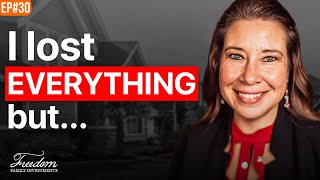
Kim Slaughter and her husband lost everything in the 2007 real-estate crash and filed bankruptcy. They rebuilt through buy-and-hold investing and passive income, which eventually funded their nonprofit training rescue dogs as emotional-support animals for trafficking survivors. She talks about investing with a spouse and how financial freedom made their mission work possible.
In 2007, when that crash happened, we lost everything. So our home was in foreclosure. We had a bunch of wraps, so we were playing bank. People walked away from those. They were 3, 400,000. We tried and tried and tried to keep up on that just like everybody else did, but we had no choice but to file bankruptcy. And we look back on that now as a blessing because it actually allowed us to have a lesson to turn around. And now we invest differently.
Foreign.
You'Re tuned into the Freedom Show. We are in the studio having a conversation we're really excited to share with you. Today's guest is Kim Slaughter.
We're so super excited to have you on the show today, Kim. I can't wait to introduce you to the audience. But before we start flip, do you want to share a little bit about her?
Yes. I have my Ben Franklin glasses on now. I'm ready to go.
Okay.
Kim Slaughter's journey began in 1997 when she married her husband, Greg. Together, they started investing in real estate in 1999, which paved the way for financial freedom. With this newfound freedom, Kim pursued her passion by founding together Saving Paws. This non profit finds rescue dogs, has them trained to be emotional support animals, and places them with survivors of human trafficking. Additionally, Kim provides ballistic vests to canines in law enforcement across the country. Despite her busy schedule, Kim's love for travel knows no bounds. Alongside Greg, she has explored all seven continents, including Australia, where we met them, cherishing each adventure. Now Kim shares her expertise and passion by helping others book their dream vacations. Now, I'm going to read this line, but when I first read it, I was confused because it says, kim is grateful every day for the freedom real estate has provided. But I thought it said, kim is grateful every day for freedom real estate.
Yes.
Thank you. That's so nice of you. I'm like, what have we done with Kim? Welcome, Kim.
Welcome to the show, Kim.
Thank you so much for having me. I'm excited to be here. And you did read that properly.
I love it. So we're super excited to have you. And just so you know, the Freedom show is the only podcast where we bring on guests. And so we told everybody that as we started first, the first season of this show, we are going to bring on people in our network, people that we knew, liked, loved, and trusted and introduced them to our entire audience so that our audience could get to know the people that we hang out with, the people we learn from, the people we surround ourselves with, the people that we support. So we're grateful to have you because we're in multiple masterminds together, and you have one of the biggest causes that we love, we're just passionate about, and that we're like, as we're building this foundation of marketing and everything that we're doing as we build out Freedom Family Investments, there's two organizations that we're always talking about, and it's yours and one other, which we'll talk about later in the podcast. But we just want to say thank you so much for being a part of our lives and being on this show so that we can introduce you to everybody else, and everybody else can be blessed to know you, too.
Oh, well, that was very kind and very sweet of you guys. And I'm so honored that I know you and we've known each other and we're in masterminds and that you've picked my cause to be one of the causes that you guys support. That really means a lot to me. So you guys are awesome, and I'm really happy to be here.
Now, before you get into all the fun, you know, important stuff I wanted to point out real quick, you know, maybe someday we'll get your husband on one of these podcasts.
Wink.
But it just goes to show you, I mean, we met Greg at a real estate investor event in Phoenix, and because we just decided to go and he was presenting, you know, and that's how we met him. And that was a lot of years ago. 10 years ago. 10 years ago now. And we had no idea. You know, you just. You just don't know who you meet. You know, that's the point of, you know, we always tell people to go to those real estate investor groups, you know, because, you know, you're going to meet other people, you're going to be, blah, blah, blah, blah, blah. Right? It's true. It really works, you know, and it's just so happy that we've been friends for so long, and at least I think they're still friends of ours. Do they still like us?
We love you guys.
Well, we like to start this podcast talking about freedom, because this is. I mean, we're Freedom Family Investments. We titled this show the Freedom show because of all the things that we love, we love freedom the most. And we've fallen in love with freedom more and more and more because we're learning what it means to everybody else, and it's not the same for everybody. We always pursued financial freedom first, and then all of a sudden, we were like, ooh, there's time. Freedom. There's geography freedom. And we started kind of learning and understanding. Hey, there's many things in life that we can relate to. Freedom. And as we've had guests on the show, it's been really interesting us to learn about what freedom means to them and hearing their freedom journey. So if you could start this show off with what freedom means to you and start sharing a little bit about your journey from where you started to where you are today.
Okay, great. So freedom to me, first of all, I love the name of it and what you guys are doing with it, because freedom, I guess, for me would be love. I look at freedom as love. It allows me to love and give back and do the things and the purpose that I feel like I was put on this earth for. So I believe everybody has a destin. You know, we're all destined to do something. And I'm not tooting my own horn, but I'm really good with relationships and my love for animals. So freedom to me equals love I can. And the freedom to do this came from real estate. So, you know, my journey started back in 1999 when my husband and I actually purchased our first home in Las Vegas, Nevada. We were living there, and instead of selling it, when we moved back to Arizona, we decided to keep it. And that's where our real estate started from. That was our first rental property. Honestly, when it first started, my husband was in corporate America, and He was with McDonald's Corporation, and we were moving back to Arizona, and he wanted to get more into the investing because he didn't want to live that life. He wanted the freedom to be able to do the things that we now can do. But I was so driven on security at that time that I was scared to death. I wanted that paycheck. We had security, and I wasn't very supportive. You know, I'll be honest with you. I was not on board with him leaving and us just going fully into real estate. So once that first couple deals started coming in, the money started coming in. I was like, you know, maybe I could do this.
This isn't so bad.
Yeah, exactly. I'm like, okay, well, you. I trust him. And so we did. That's where it all started from was back in 1999 when we got our first rental property. From then, we built our real estate career. We did over probably 2,000 transactions over the last, what, 25 years now. So we've been involved in subject to's, wraps, lease options, any type of real estate deal, buy and hold flips. We've done it all so we eventually ended up with doing the buy and hold because we wanted that passive income, which gave us the freedom to be able to do what our passion and purpose is. So that's where it kind of all transitioned and allowed me to do what I love now.
I love that. So talk about for people who are so some of our audience is new to real estate and starting to understand what passive income means. They have maybe invested in the stock market or just other types of more common investments, maybe their retirement accounts, and they're learning, hey, real estate is a vehicle that, you know, anybody can actually get into. It just depends on which path you want to go down. And then some of our audience is very experienced investors who, like you, have tried many different things. And so if you could share a little bit about your journey from the very beginning of why you started where you started, because you mentioned multiple strategies for the beginners who are trying to understand which path is right for me and those experienced investors who are still feeling a little bit lost, because, let's be honest, we all feel a little bit lost when we're doing, I can do a sub 2 here, I'm going to do a lease option here, I'm going to do a buy and hold here. And it's like, where is the end game and what are we trying to achieve? We're just bouncing and figuring things out bit by bit. So can you share where you started and how you found clarity of where you wanted to go?
Well, where we started was I was new to, brand new to real estate. So for me, Greg, on the other hand, had, you know, some experience. And so, but for me, I was like, man, I don't even know, like, what the heck is a flip? Like, I didn't even know what those terms meant besides the flip. I know. But yeah, I didn't even know what that was. So I actually got my real estate license in 2000 here in Arizona. So it allowed me to start learning about real estate. And we needed to build the capital to eventually get to passive income. And passive income is mailbox money where you don't have to work. It just literally comes in the. And that was the end goal, is to be able to not have to do everything. But to get to that point, we had to do flips. We had to do traditional real estate. We, you know, I had to do all of that. So we had the income to be able to eventually get us to where we wanted to go. So we were all over the place. Not because it was like a bad thing, but we wanted to get as much capital as we could to then take that capital, reinvest it into rental homes, buy and hold so that we could then have that passive income to give us the freedom. So when we transitioned over to that and the mailbox money and the passive income started to come in, we didn't have to do anything else. And that was our. You know, some people enjoy the game of flips. They enjoy the game of, you know, doing that type of stuff. But to me, that's a job. And my husband's really good at always saying this is, can you go on a 7 to 12 day vacation and your business still runs? If your business needs you, it's not a business, it's a job. If you have to be there to answer calls and do everything and you can't just shut down like you guys just did for three weeks, which was awesome. If you can't shut down, your business doesn't survive. That is a job and that's not freedom. Freedom is mailbox money. Passive income allows you to do these things and still live the life and the dreams that you want and have the time and the freedom to do what you want. And that's what passive income is to us. And that's why we chose that road.
Gosh, I love that story. So Flip mentioned your husband Greg, and you've talked about him a little bit a couple times already. So a lot of people ask Flip and I, how do you guys work together like, and not kill each other? So can you talk a little bit about that? Especially from. What I really loved hearing you say at the very beginning was I was scared and I was not in support of my husband wanting to do this and leaving a job to be able to take us on this journey. So can you tell us a little bit about how you worked that out and what is it like and what has it been like working with your husband through this journey?
It wasn't easy. It's not all roses and poppies. It's not. And I'm sure you guys can attest to that.
No idea what you're talking about.
Yeah, no, it's. It's perfect, right? You know, one thing that my husband is really good at is systems and creating things and doing things. And he told me from day one, if we're going to work together, there has to be one person in charge, one person overall that makes the decisions. Because if you have two people button heads, you're never, ever going to get there and it's not going to be good for the Marriage or the business. So, of course, because he has the business background, he was going to be the one to make the big decisions. We would discuss it together. It's not like he was in charge. But ultimately, if it had anything to do with the business, he was going to be the one ultimately to make the final decision. And I had to accept that. And honestly, it was hard because I'm a control freak. I'm like one of those that needs to be in control, and I do it with my family, you know, get togethers. It's just who I am. So it was hard for me to let go of that control. And it still is sometimes. And sometimes we butt heads. It's not always perfect, but in the end, I know he's going to make the right decision. And he has because of where we are today. Honestly, if it wasn't for him, there's no way we'd be. Because I'd be like, spending every dime because I'm a spender and he's not. So it was actually a good thing. And I, you know, we've been working together now full time since 2002, and I wouldn't trade it for anything. Like, it's just wonderful. And now because of where we are both with focusing on our passions, because real estate gave us that freedom, is where we still are together. But we don't really have to work on the same business stuff anymore. Now we're both working on our passions and supporting each other, which is amazing. So. But it is so hard, you know, at the beginning with the security, like, I wasn't supportive and I wasn't very fun to be around. But as time went on and our relationship grew, for us personally also, our business grew. And when you're getting along, your business can flourish. And now we get to travel the world and both work on what we love. To even back that up, which I didn't even talk about is in 2007 when that crash happened, we lost everything. So we. Our home was in foreclosure. We had a bunch of wraps, so we were playing bank. People walked away from those. There were 3, 400,000. We tried and tried and tried to keep up on that just like everybody else did, but we had no choice but to file bankruptcy. And we look back on that now as a blessing because it actually allowed us to have a lesson to turn around. And now we invest differently. So it actually helped us. And we're better off now than we would have ever been if we had kept doing what we were doing. So don't let the things that attack you and, you know, in life, everybody has issues. We had issues. We went through it, we struggled, and we flourished. And now we have the freedom to do what we love because we stuck with it and we didn't give up. Wow.
There was a couple moments. That one just gave me chili. Chili bumps, goosebumps. They're all over the place. But, yeah, wow. That couple moments in there just made my heart smile. I want to ask you about what was. What did you do better? You said something about, we did it better. It ended up being a blessing, and we ended up doing it better because of the lesson you learned. Can you talk to that point?
Absolutely. So when we first started investing, because we didn't have the capital, we leveraged everything, meaning got mortgages for those new people out there. So we carried a lot of mortgages and we owed, obviously, a lot. So we couldn't pay that back after the crash because everybody lost everything. So fast forward, we made actually Greg help with that. He said no more. You know, we don't have to leverage. We're not going to. Not that we did everything that way, but we were able to. So if the world tomorrow collapsed on us, then we're still okay, you know, with the investing part of it. So that was one of the switches and. But we couldn't have gotten to that point until we started. We had to. When we filed bankruptcy, we had to start all over. So we had to do more flips and do all of that stuff to build the capital back up to allow us. And that's when we transitioned to doing some investing in the Midwest because it was a lot cheaper to get properties out there and a lot bigger spreads. So our capital went a lot farther in Arizona. It's an appreciation state, so we have the appreciation here. But we in the Midwest, we were able to get that spread. So that's why we decided to buy a lot of properties out in the Midwest.
I love that. Okay. I keep on taking notes, so don't bother me over here. Things that you're saying are just sparking my attention or my imagination on what I want to talk to you about. So on this note, can you talk through the timeline? So for many of our investors, whether they're new or seasoned, there's a timeline in which if you're going to go all in into real estate, which is what you guys did, there's a timeline in which you're going to be that active investor and you're going to have a job and you're going to build the capital in order to be able to become a passive investor. So what did that timeline look like for you guys? How long did you have to do it? Maybe giving us both. Because you did it twice. Right. So giving us both timelines, that would be.
So from 1999 to 2007 we had a job, we had to do everything. After the crash we had another job probably until about 2014 or 15. We bought our some of our properties in the Midwest in 2014. We bought some stuff in St. Louis before but that didn't work out. So we had transitioned over to Indiana in 2014. And I would say probably by 2015 or 16, maybe 17, we were at the point where we could say we were financially free. Yeah. And even during COVID like everybody shut down, we did not like our lives continued the same. We were still had contractors working on our homes. We still were, you know, having residents or tenants move into our properties. Like our life never stopped and we didn't allow it to stop because again we don't give up and we aren't going to just sit back and let that happen to us. So we just continue to grow and now we're reaping the benefits.
Yes. That really speaks to perseverance. Right. Because a lot of people, we're the right now world. You know, everything needs to come with the Internet and all the different ways of communication. And you see people that are so successful on all over social media, at least they appear successful and you're comparing yourself to them. There's all of these instances where we feel like we're not good enough or we're not going to make it or we don't know enough or they must have something that I don't have and I'm not going to be able to make it to where I want to go. Whereas your story, that was years, it wasn't an overnight success, but it was a lesson of perseverance. You just never gave up. What would you say to people right now who are on that journey and are like, you know, this is hard, what would you say to them?
I would say don't give up. Everybody struggles, everybody goes through something. There's in. When you see those so called gurus that charge you 40, $50,000 to do their programs and you know, all these gurus that are going to teach you and do all this stuff actually look and see are they doing it or do they have a job or the collecting the money from you to be able to do these things and don't get stuck on the little things don't get stuck on. The stuff that the next day aren't going to matter or five years from now aren't going to matter. Ten years from now aren't going to matter. Just realize we all go through it and we all have issues and struggles and challenges. But that's where you need to build up your network of friends. Like you guys, for instance. If something was really bothering me, I honestly, and I'm not just saying this because we're on the podcast, I feel like I could call one of you guys and we could talk on a higher level and bring each other back to reality. So find friends that are at your level or higher that you want to mimic and be friends with and build that network of people that will build you up and not tear you down. Don't be around the people that are constantly like, oh, just go find a new job or maybe this isn't for you. Those are not the people you want to hang out with. You want to hang out with people who are striving or have been to where you are. And those are the people you want in your network that you pick up the phone every single day and when you're struggling, you can call them. So I would say your community is huge as well.
That is so powerful. Okay, I'm going to ask you a question, but we're going to go to a commercial break before you answer. So the question is we've talked about the spousal relationship, right? It is not always easy to keep the fun and magic in life when you're working together non stop.
I don't know what you're talking about.
With all the stress. So it's something that we get asked about a lot. So we're going to go to a quick commercial break and I want you to ponder on that question and be ready to answer when we come back. So you are tuned in to the Freedom show and we our guest is Kim Slaughter. We're super excited to have her here. We're going to jump back in as soon as we are done with this short commercial break.
Add new income streams to your financial statement. Freedom Family Investments can help own property and get paid rent. Join funds and get paid interest. Wealth is well being. Own your own future. Freedom Family Investments get more time to focus on what matters. Learn which investing path is for you, where to start and who to trust. Visit freedomfamilyinvestments.com all right, welcome back.
Thank you everybody. During that short commercial break, I had two children on my hands making jokes and singing the Jeopardy theme.
So this is new for you.
I'm sorry you all missed that. But Kim, you had a few minutes to think about this. And because we're great friends, I know where you're going to go with this, but I really want our audience to hear this because it isn't easy to be working with your spouse and you do have to have things in place to make sure that you don't lose yourself. So share away.
So probably, gosh, I want to say 10 to 13, it might even like 13, 14 years ago now that time is going fast. My husband was actually wanting to be more diligent in our relationship. And so he wanted to create something where he stopped working at 12 o' clock on Fridays and from that point on, the phone was put away and we, he, he actually named it Fantasy Friday. It's not what you think when it comes to Fantasy Friday. This is not a. That type of show.
I bite my tongue. I'm biting my tongue. That's all right.
Oh, no, no. So the Fantasy Friday that was created was each of us rotate Fridays and after 12 o', clock, the other person decides what is going to be, what we're going to do that day. Now, we don't force each other. Like, my husband would die if I said, hey, we're going to go to the mall for the next three or four hours. I'm not going to torture him and put him through that and go shopping. So we keep it where it's what we decide that day, but also to make sure we're pleasing the other person. So it may be like, let's go for a hike, let's go to dinner, let's go to the movies, let's just stay home. You know, I love to play games. He is not a game player, like board games. So I'll be like, can we play a game? And sometimes it depends on the game. Without torturing him, he'll do it. But it's just, it's just our way to keep us and the attention on each other and shut the phone off, keep the distractions. And then after 12 o', clock, we just focus on each other on Friday. So we've been doing that now consistently for, gosh, probably the last 13 or 14 years. And it's been awesome. So it helps keep us grounded and comes back to each other.
I love that. And the most powerful part of that for me was shut the phone off.
Yes.
Because it's so easy to get distracted and pulled into something flip. And I still catch ourselves. We'll be sitting there. It was just last night, we were having dinner and he was on his phone, and I'm taking the dogs out, and I'm just like, you know, we're not even paying attention to each other. We're literally just sitting next to each other eating our dinner while we do individual things. So that phone piece is. So it sets an intention for the evening that, hey, you are my priority, and we are together and nobody else, nothing else is as important as this time together. So thank you for sharing that. I love that.
And actually, Greg is way better at that than I am. I'm just telling you, like, he. We go on vacation, put that thing in airplane mode, and he. Honestly, he could go two weeks without checking it because he's like, I don't care if something's burning down. I'm on vacation. And that's where my mind is. I'll deal with it when I get back. And that's the difference of having a business and a job is you can do that. So I'm not as good at that because I find myself on social media or whatever. So I have to sometimes go, okay, whoops. I go to reach for the phone. I'm like, it's just a habit. And it's so bad that all of us have gotten to that point. So it's not just you guys, it's everybody.
Yes. I actually read an article about. I don't remember what it was called, but it was something syndrome, and it had to do with the phone. And it made me become aware of when I'm in line. They said, you will pull out your phone, and even though it might have the ringer on it, maybe have vibrate on or whatever, but you will pull out your phone and tap the screen just to see did somebody call, did somebody text or maybe just. And so I started counting it, and I was like, oh, my gosh, like, every minute or so, I'm pulling out my phone. It's like, what does my life come down to? It's just insane that we're so addicted to these phones. It's crazy. Okay, but we're going off on a little bit of a tangent that we could probably talk two hours on. What I really, really want to get into is freedom, what freedom has done for you and what you've created. So you sent a quote that I'm going to read, and you told us in this podcast already, I'm actually going to have Flip read this quote because I always steal the show whenever we're talking to guests. I'm always the one, like asking questions, so I'm going to let Flip jump in. But you had said that the freedom that real estate has provided has allowed you to pursue your passions and to travel. And I really wanted to dive in right that second because I know what your passion is. But we saved it so that we could Share this quote Flip, the quote is right there.
Seems like I haven't spoken in 20 minutes. Financial freedom is not an end goal. It's a mindset shift that allows you to create a life of abundance and purpose.
So why I love this quote is because we all chase a finish line and we can't seem to find happiness because that finish line keeps on moving. And the quote you sent financial freedom is not an end goal. It's just a mindset shift and it allows you to create a life of abundance and purpose. So what has financial freedom done for you? And tell us about your purpose in life.
So my purpose in life is to give back and help those and creatures that cannot help themselves. So I'm a huge, huge, huge, huge animal lover. Ever since I was a little girl, I always wanted to have a no kill shelter. And so that, I mean, I have a vision back. I remember writing something, I think when we lived in Vegas that, you know, we were going through Tony Robbins stuff and I remember writing something down like, I want to be able to have a no kill shelter someday. Well, I looked into it. Whoa. It's a lot of money to do that because you have to hire, you know, and find the the building and hire veterinarian care. And I was like, okay, what's the next best thing to do that? So that's when I created my nonprofit about two and a half, three years ago now, called Together Saving Paws. So my mission or my vision and purpose was still in place, just on a different scale. So then I started deciding, should I, you know, what I really wanted to do with it was take the funds and put that towards no Kill shelters, raise funds for no kill shelters. But then during our mastermind that we belonged in, an individual came in and spoke about human trafficking through Operation Underground Railroad. And it just tugged at my heartstrings and I'm like, okay, how can my nonprofit do something to help within the human trafficking aspect? So after I learned that they have canines that sniff out electronic storage devices. So every cell phone, laptop, tablet has an SD card that keeps it from over or has an SD card and there's a chemical that keeps it from overheating. We can't smell that. But the dogs can. So these dogs actually are trained. They're placed with law enforcement across the country. And these dogs can actually go in and find where people are taking. You know, maybe they have child pornography or whatever, and on those SD cards, and they're hiding them like in drop ceilings or behind drywall. So officers are getting warrants, and they're taking these dogs in. And these dogs are finding stuff hidden in the most craziest places that officer would never have been able to find. So these dogs were huge key. And I'm like, okay, so now how can my nonprofit help? Well, then I realized they're going into dangerous situations. Yes, it's a warrant. The house has been cleared. But you just never know. Especially right now with unfortunate people targeting law enforcement. Even the dog sitting in the car, the car could be a target. So that's when I started to provide the ballistic vest, the bulletproof vest for the K9s through Operation Underground Railroad. But that also then blossom that out to be able to provide it for dogs or canines and law enforcement in general. But then I was like, okay, how can I still find, like, a rescue? And how can that help with the human trafficking aspect? So then I realized, well, they have survivors that are coming out that have gone through. I don't even. I can't even imagine what these. These women and children, even sometimes men have gone through. So then I was like, okay, maybe we could do is once they're, you know, they've been through the program, after they come out, they're back on their feet, they're working. Is I can find a rescue dog, and I have trainers that can train them to be emotional support. And then now we're placing that dog with a survivor. And for that. That love. And as you guys know, the unconditional love only a dog can give you, I'm telling you, people say they're unconditional. It's. There's always something. A dog is a true unconditional love. Love. So I wanted to save dogs, but also help save survivor. So for me, I. I like to say I'm saving two souls at once by providing these dogs to these. These people and that deserve it. And I'm actually looking to expand that into domestic abuse victims as well that come out of that. But want that love and that connection. Oh, that's incredible.
You're making me cry.
Yeah. No. And you guys know the love that only a dog can give, I mean, they're just. They're most amazing. And then I have people say that they're a dog. Just a dog. Don't talk to me. That dog is not just a dog. That soul. That dog is. And you leave for five minutes, it's like you've been gone for four hours. So.
I know, I know. Yeah, we're big animal lovers.
Sign in our kitchen says, dogs welcome people tolerated.
Yeah, we've been talking very recently about the things that we want to do, like you. We just want to. We want to support animals. And I don't know, you know, where that came from, but we just have this deep love for animals in general, and so we love supporting what you're doing. Is there a need that your organization has right now?
Actually, yes. I have eight handlers, so eight law enforcement handlers that have requested vests, but I don't have the funds to provide them. These vests cost. Actually, the cost just went up. They're about $1,200 each. So I have handlers on a wait list. So if anybody. And what I do as well, I say if there's just one person out there that says, hey, you know what? I want to. I want to donate one vest, I'll do the $1,200. I know that's a lot, but if they're willing to do that, they get the name of the canine, they know where the vest is going. And once the vest is shipped, we have a picture that sent over of the canine in his vest or her vest. And then we will send that to the person that donates so they know who and where that's going to. And it's kind of cool to be like, hey, I got canine Roscoe a vest, and now he's based out of Oklahoma or whatever. So it's not like it's just random. So right now, that is the biggest need. Or I don't care if it's $50 or sharing, you know, my social media and having people just talk about what I do so that somebody wants to donate in the future.
I love that. So what I was thinking about while you were telling your story is I would love if this possible. I don't know when we're going to release. I think we're going to release this probably in the next couple weeks. So I would love for us to donate to Vess. And so we'll send you a check for $2,400. And if you could. I don't know how fast you're going to be.
Cry.
You're making me cry. $2,400.
I don't know how fast this can Happen. But it would be really cool if you are able to send a picture or anything to Jodi. And we'll keep all of this. So on my production team, don't edit this part out. I want this to be part of the podcast. So if you can send Jodi all of this stuff, maybe on the podcast, for those watching on the YouTube, you can see what Kim is doing and how she is helping these animals and these people. I mean, it's such an incredible organization to be able to do the two souls at. I think that is so incredibly powerful, and I just love what you're doing so much. And also, please talk about somebody. There's people that know our heart, and our heart is I want to reach this abundance, you know, this financial freedom. Like, we want to talk about it, we want to share it, we want to spread it. But what we do with the profits is we give. Like, that's what we want to do. We have a heart for giving. So I'm not chasing money for money's sake. I want to live a great life. Absolutely. Everybody does. But we want to make an impact on other things. Your organization is one of them. So one time recently that is top of mind right now, one of our investor relations team said, hey, when you're giving back, how do you vet the organizations? And I said, that is such a great question. Let me tell you, one of the things that's really important to me is where is our money going? Is it going 50% to the organization and payroll and then. And then only 50% is going to the cause? What does that look like on a financial basis? So, again, I know the answer to this, but I want you to share.
100% goes out. I don't take a dime. Like, there is not a penny that comes to me. And full disclosure, I pay taxes every year, and a little bit goes to paying my cpa, but that's it. Every single dollar comes in, goes right back out to the animals. So I will never. My goal is to never, ever, ever have to take a salary. And the people that do want to work with me are volunteers. They don't get paid anything. So every dollar that comes in goes right back out to where it needs to go. So, yes, yes, yes.
Thank you for sharing that, because I answered the question and I said the same thing. I want the dollars to go to the cause. That's really, really important to me. And they invested just like that. So not only did they have a passion for investing with a company who was giving, they had a passion for Investing with a company who was vetting the organizations in which they were giving to. And I just thought that was super powerful and the perfect, appropriate time to share that particular story. So how do people support you? Like, where do they go to learn more about you?
So they can go right to my website, which is just together, savingpaws.org, make sure it's.orgnot.com Facebook or Instagram together, saving paws as well. I'll post pictures and updates on there. So those are mostly the three biggest places that they can go to. And they could donate on Facebook. They can donate through my website, PayPal, Venmo credit card. That's all set up on there. And I can't thank you guys enough that I'm still thinking about it. So thank you.
Yes, it is our pleasure. We love supporting you. And it literally came to my mind during this podcast. I was like, oh, my gosh, she could send pictures, and it would just be so cool because then now everybody gets to experience it with us, right? And they really get to see what your organization does, and I think that's going to be super powerful. Kim, thank you so much. Flip, is there anything else? Since I didn't talk to let you talk very much today, is there anything else you would like to talk to Kim about?
That's what happens when you get two women together. Let me.
I'm just waking up. What? What are we. Are we still talking to Kim?
He's like, wait, what? You just spent $2,400? What?
Yeah.
Actually, you know, I did want to say one last thing. It is very funny that you said this. Kim, you know that when you and Greg first got together that, you know, you guys sat and talked, and Greg said, one person is going to make the decisions going forward. And. And I just want to say it's funny that we had that same conversation, and I said, one person has to make that conversation. Is that okay? And she said, yes. And so that's pretty much how it's been ever since. So.
You keep the comedy. You still make your wife laugh, and I guarantee you that's one of the reasons why she loves you.
I like to think so.
You nailed it. Thank you for helping us end on a funny note. Kim, thank you again for your time today. We really, really appreciate you and thank you for what you're doing to make an impact. Thank you guys so much for everybody else. We're super excited to tell you that Flip, if you weren't watching the video, Flip did a little winky face to Kim. Earlier when we talked about her husband. So we don't know when all of these are going to air, but we are going to talk to Greg. And so for those of you who are spouses, who are investing in real estate and loved what Kim shared today about their journey and about doing it together with their spouse, I encourage you to listen to his podcast as well and hear what he's doing in his life and pursuing his purpose and his feedback on the working together. I think the two of them are a very dynamic couple. We love them. We're great friends with them. They're the people that we want to surround ourselves with. So these are the people that you want to listen to their stories and figure out what applies to you so that you can go on a journey that's similar. And so we're just super thankful for you, Kim.
I'm thankful you guys, too. Thank you so much.
All right, for everybody else, we will see you next Wednesday. Bye, everybody.
Bye. Bye.
Nothing on this show should be considered specific personal or professional advice. Please consult an appropriate tax, legal, real estate, financial or business professional for individualized advice. Opinions and information on the show are not guaranteed. All investment strategies have the potential for profit or loss.
More from Dani











Physicians and High Earners — What Real Estate Can and Can't Do for Your Taxes