Webinar Replay: Spouses Flipping Houses - Learn Live with Flip and Dani Lynn Robison
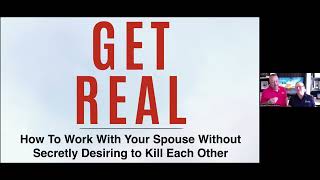
Recording of a Feb 2024 live webinar with Flip and Dannielynn Robinson of the Freedom Family of Companies about working with a spouse in real-estate investing. The webinar interleaves relationship-management guidance (pros/cons, boundary-setting, routines like debriefs and date nights, DISC personality assessment) with practical investing advice (active vs passive paths, JV examples, contractor risk). Contains Q&A, a free hard-copy book offer, and an invite to a Feb 21, 2024 "Wealth and Wisdom Wednesday" event.
Questions this video answers
Over $30 million
Over $22 million in apartment portfolio (AUM) and over $3 million paid out in dividends to investors
Over 60 team members and seven companies
About 1,200 deals completed; roughly 800 properties under management; about 600 multifamily units
February 21, 2024
Welcome, everyone. It's a pleasure to have you here with us. We're excited about our live webinar today with Flip and Danny Lynn Robinson. Let me go ahead and ask to join us.
Can you start your video? Yes, I tried and it says we can't start your video because the host has stopped it.
Okay, let me go ahead and make you the host, and then that way you can start your video.
Fantastic.
Here we go. Wonderful. Well, I'm so glad everything is working out so far. And we are recording this webinar just in case you'd like to see it again or share it with a friend or colleague. So let's go ahead and get started. Now, I'd like to share with you a little bit about Flip and Danny Lynn Robinson. Now, they are the founders and owners of the Freedom Family of Companies, a vertically integrated investment firm. Now, Flip and Dannielynn were raised in families rich in love but poor in money. And Flip and Danny decided to change their financial story. The couple discovered real estate as a path to create wealth while also creating the kind of loving environment that they had experienced growing up. Now, Flip and Danny Robinson entered real estate at the height of the 2008 crash. And through all the ups and downs, they emerged as top leaders in their real estate industry. Now, their approach to personal and financial leadership and personal success has landed them on the Forbes Business Council and featured industry publications such as REI wealth magazine, which their cover is featured right here, if you can see it. And yes, we are sharing our screen. So it was a pleasure having them on the COVID It was their cover feature story was at the height of the COVID 19 pandemic. So it certainly attracted a lot of attention because we were covering, you know, what was happening with the pandemic in the real estate industry at the time. Now, Flip and Danny are on a mission to empower the next generation of real estate investors with an authentic get real investor education. With over $30 million raised and over 22 million in assets under management, Flip and Danny teach what's working in real estate right now. Their teachings help investors spend less time worrying about their wealth and more time loving their life and enjoying their freedom. Dannielyn and Flip, you are the epitome of what every real estate investor strives for. The financial freedom of taking vacations when you wish to, living in the area that you want to live in, and having an investment team in other parts of the country to manage your, your portfolio and also other aspects of your business. I mean, it's an incredible lifestyle, and we're really excited to have you here with us and for you to share your story.
Love it. Thank you so much, Linda. We are so happy to be here. And I'm going to go ahead and let Flip work on sharing the screen in the meantime, Linda actually mentioned that we're. We're living this, you know, life of being able to travel. And, you know, we have our team working with us, and we're actually getting ready to go to Australia and New Zealand here in three days. Is that right?
Yes, three days.
We're counting down. It's the first time we've ever been to Australia, New Zealand, and we're really, really excited to be able to go on that trip. And the reason we're going on that trip is because it's our 20th anniversary. But. But technically we call it anniversary number four.
That's right.
Because we got married on leap year. And so we said every four years we're going to go on a very special trip. We have not succeeded at that. This is the first one that we've actually done.
This is actually number five. This is number five. This is number five dot yep. Yeah, it's 20 years.
20 years. I can't do math. Me at math do not work. But hopefully you guys can see our screen, and I'm hoping you can see. Linda, can you tell us if you can see the screen that says get real. How to work with your spouse without secretly desiring to kill each other?
Trying to.
Let's see.
How do I get over to that screen over there?
Yes, I can see it now. I stopped sharing our screen with you on the COVID We wanted to share that cover for a little bit. And now we can see your screen perfectly. So take it away.
All right. Okay. So when we set the date for this particular presentation, Linda had said, hey, it's close to Valentine's Day, so can you talk a little bit about how you guys work together? And so we actually decided to start with this topic because as we started making the slides, we thought of, like, all the pros of working together, all the cons of working together, and the tips that we could share with you. And it's. It turned out to be a lot more that we could share than we actually thought starting out. So here we go. Let's do it. We're going to figure out how to do our slides. Okay, so first, just so you know about us, we've actually been featured by Linda a few times. Not only just on the COVID but we've done a few presentations. Each time we do a Presentation, it's something different. I think the very first presentation we did like nightmares of real estate construction and all the things that you need to learn if you're going to be a rehabber this time, of course we're going to be talking about working together with spouses and also the differences and the answers, the differences between active and passive investing and also the answers to the top three questions that people ask. So a little bit about us and our real estate career. We love real estate. Financial freedom and time. Freedom and geography. Freedom are the three favorite types of freedoms that we have. We are here in Florida and our offices are in Centerville, Ohio. We have a 15,000 square foot office. We have over 60 team members, we have seven real estate companies. So freedom is a big part of our life in every possible way. And we really have gotten to the point where we're very intentional about how we live our life. And that's why it says here life on purpose. So the seven meet seven companies working together.
Yeah. So now we are up to seven companies and. And probably eight or nine before the year is over.
That's true.
Right now we currently have over 60 team members and we're only six years old, right? Six years old, yeah, we're only six, almost seven years old now. But we have over 60 team members. We have over 1200 deals completed, 800ish properties under management. Because I think it's just shy of 800 and 600 ish multifamily units that we have under management. Right?
Yeah, yeah. And I put the ish actually this morning because usually before we do presentations we have these slides and we always go to the team and say, what's the number right now? So that we can get as accurate as possible. And the team's not working this morning. So I was like, okay, we're around 800ish and 600.
So those seven companies still working together, we have raised over $30 million in capital raised. We have over $22 million in apartment portfolio and over $3 million paid out in dividends to our investors.
That's right. So today again, our big topic is a Valentine's Day special. How to work with your spouse without secretly desiring to kill each other.
I have no idea what you're talking about.
How and strategies for working and living the wild real estate investing life with your spouse or your loved ones.
All right, so first we're going to talk about the pros of working together. So there's better communication, there is better understanding of each other, there is more time Together, there's collaboration towards goals, work trips, because every single dinner and trip is work. Mutual support of personal and professional growth, mutual respect of talents, a deeper bond and more fulfilled life experience.
Yes. So let's talk about the pros a little bit. So we tried to even out the slides between pros and cons. So even after Flip was helping me work on these slides, I was like, oh, actually, I've got a couple more I'm going to add to it. So we probably could have kept going on and on. So for those of you who are thinking about, should I be working with our spouse? We thought this was the stuff of or the. The essence of why we love working together. I want to talk about, like, the deeper bond, because it has so much of what. Everything that's on this slide is a part of that deeper bond for me. So when Flip and I are working together, I know him better than I ever would have because we're working together, and I get to see a side of him in his work that I don't. I wouldn't have otherwise been able to see if he had his own career and I had my own career. And we only got to see each other in the mornings and the evenings and weekends and things like that. So I love the fact that we are closer together, that everything we do just has deeper meaning, that we are. Every time we're. We're going to talk about some things that we do to avoid some of the cons, but when we do those things, we're talking about life in general and what we love and what we're struggling with, and the ability to support each other in those areas has been really, really impactful to how we've grown together. And couples always have bad times. It's just part of life. We're all going to struggle. We're all going to suffer in different ways, but you always hope that the good is going to outweigh the bad. And truly understanding each other in working together and doing work and life, I think is what has helped us overcome those cons of the times when we get frustrated because we were truly collaborating towards goals that we knew that we were going to be doing together. So why don't you kind of tap into some of that? Anything on this slide that you want to talk about from your point of view?
Yeah, a lot of people, the number one that jumps out towards me right here is more time together. Because a lot of people will say, oh, I wish that I had more time, or wish that I could spend more time with my Wife.
Yeah.
You know, or my husband.
Husband.
And so this. This gives you that. That opportunity. And I think one thing that's, I mean, it's sort of not on your. The pros, but it said we get to troubleshoot and hash out things because, like, we. We've worked with a lot of people that were. That were working by themselves.
Yeah.
And they go home and they go home to their wife or their husband, and they can't vent and explain what their day was like and hash out ideas with their significant, significant other. Whereas you and I, you know, we would typically go out to eat and we would just go, you know, what was today about how to. What did you think? What can we do better? You know, and so we could. We could constantly catch it out. So that's one of the huge pros, which goes along with the. More time together.
Yeah. I think what I love about that is, you know, when we're watching TV shows and. And by the way, you're going to see us, like, just talking to each other, because you guys are here in the audience where we can engage with you. So it's helpful for us to just feel like we're having a conversation and you're just there to listen a little. So when you. We watch those TV shows and then you see the couples at the very end of the day and they're tired and they're just sitting on the couch and they don't really say anything to each other. And the wife, let's just say, says, honey, how you doing? Something seems wrong, and the. The spouse is just like, you know, it's almost like I don't. I don't have the energy to talk about it. I don't have the energy to explain to you all the stuff I have to explain to you to even understand what the problem is or what I'm trying to solve. I would rather just here in silence and have peace and not have to talk or just talk about something other than, you know, what I'm thinking about. So it's very hard to have that. That bond. I think that's when couples start straying away from each other, because then the spouse that was trying to care for the other person feels left out and feels like they have this thought process inside their head that, you know, why is he not talking to me? Or why is she not talking to me? And I think that there's so many struggles in regular relationships. That's what I think I' getting to is regular relationships, actually, I feel, are hard. I feel like working together Just makes it that much easier because we're with each other 247 and we know each other so dang well that even when I am frustrated and I don't talk, you probably are just like, okay, I know what, like I get her at this point. I've seen her in this area of life enough that I'm just going to give her space.
Right.
I'm not guessing about what she's thinking or that. That something's wrong or things like that. Do you agree with that?
Yeah, 100%. Absolutely.
Okay. Absolutely. So work tricks. I put this on here and I put a smiley face because we get to like, you know, go to places and say, hey, this is a write off. Because they're going to a mastermind and we're doing it together. We're going to visit a property and we're doing it together. Like you said, dinners and all these other things. So we have certain tax advantages because we're working together. And we're going to talk about the cons of this too. This is an all. But the pro of it is it's more fun because you could be having a career where you're off and I'm stuck at home, you know, and. Or I'm having to go and now it's an expense for me. And it's not a write off because, you know, it was just me trying to tag along, tag along to your trip. So I really love this because it gives us more adventures and I love going to events in different places the other and we get to call it work. It's so super cool. Okay, let me see if there's anything else that I want to. Okay. Mutual support and respect. I do want to say something about this. I. What I love is that that deeper bond piece, like I respect you more now because we work together than I think I would have if we weren't. Because I get to see you troubleshoot. I get to see where your strengths lie and where my weaknesses are and where you pick up things where I've dropped them because it's just not my strength and you're able to do something. I also have so much respect and support in terms of backing off and being quiet when I know you've got the skills to be able to do something that I don't necessarily have or you're just stronger than them. So I think that there's something there that we recognize in each other. Right. That really helps us and everything that we do. The very last one was. The last one, obviously I put on this Slide When I was doing the. I feel like life is just more fulfilling in general.
Yes.
Because we're doing this all together and it just, it brings so much, you know, emotion and joy. Of course, there's the cons too. So let's just dive into the cons. All right.
And the cons are hard to separate and balance career versus family. Perceived flaws become magnified. Lack of me time or personal space. Unbalanced workload or responsibilities. Boredom, stress or fear. Abandon all ships mentality, friction and personality types. Blame game can ruin a relationship. And differences of opinion, especially financials.
So you can choose one. I'm gonna let you start on this one.
Oh, my gosh.
One to share.
I'm gonna jump at the lack of me time or personal space.
Okay.
I mean, because there's just, you know, it's funny because like in the movies and TV shows, you know, they always show the guy, you know, that comes home, he grabs. Grabs a newspaper and he goes into the bathroom and. And he stays in the bathroom for like 20 to 30 minutes.
Right.
That's like his me time. Right. You know, so it's.
It's not.
I've never grabbed a newspaper. Does anyone have newspapers anymore? But anyway, I've never grabbed a newspaper. But it's. It's trying to carve out that time where it's just me.
Yes.
Now granted, it's me and the dogs and it's at 4:30 in the morning because that's the only time I can find for me time. But I love it and I love my me time. And because. And that help. You know, you say unbalanced is the word in the next line that helps me balance.
Yes.
Because without that me time, whatever it is, it's not much. I don't need much, but it balances me out throughout the rest of the day.
Yeah. So I'm going to jump on the unbalanced workload or responsibilities just because you pointed to it. And as soon as you did, I was just like, oh, I know what that meant to me when I wrote it. So there were times early on when we were working together that we were trying to divide and conquer. And that's something you're going to see on the tip slide. And in that there was times where I felt like I had so much on my plate and he was, he didn't have as much on his plate.
Now, that was by design.
And so there was a friction between us. There was some frustration of, you know, I'm stuck, I've got this to do list that I cannot get through for the life of me. And he's done. And he's, you know, now doing things around the house to try and help out because he knows I'm still working, which is the loving nature of Flip in general. But I'm frustrated because I would love to be doing something around the house just to get my head out of work. So it's that unbalanced workload or responsibilities that is a con that you have to be able to work through. And we're going to tell you how we work. Work through it with us. Another one is hard to separate and balance career versus family. So something that we found ourselves doing, and we're so much better at it now, but it still creeps into our life, is we will go to dinner. And that is our download for the day. That is how we like actually finally talk to each other because we have done such a good job at the divide and conquer piece that we don't talk a lot during the day unless there's a specific reason to. We might be in the same meetings with team members or things like that. So we use dinner as our download of information, which means where are we actually having our personal time to enjoy each other and actually have a fulfilled and loving marriage? And that always fell to the back burner. Business always came first. And there was just. Just many times where it was just work, work, work, work, work, work. Especially building a business. It takes a lot out of you. And so there was a lot because we weren't balanced in terms of, you know, shutting things off. Everything was always on. And then boredom that I. I think this ties into that. You stop finding things to talk about except for work, right? You're with each other 24 7, and so what are you going to talk about? Work. And so that's what we defaulted to all the time, right? Dinners just came about work. Everything came about work. So that was a conversation. I put friction in personality types. Flip, I'm going to let you share this, but Flip and I are exact opposites to, like folding sheets.
Exact opposite, everything, you name it, she'll do it one way. And I'll look at her. I've now, we've been together now for 24 or 5 years now, and I've now stopped saying, you're doing it wrong.
Because.
Because everything that she does is differently. She does it differently than I will now. From the start to the end, it gets accomplished. It's how we get from the start to the end. She does it one way, I do it another way. And it's taken me 20 some years to realize that her way is not wrong, my way is not wrong. We're just doing it two different ways. But we have two completely different personality types, which, again, that's like the yin and yang. You know, it's. I think that's why we get together or why we get along so well. Yeah, because of that. But, yeah, I can't. There's. I don't even know how many times it's already happened today, you know, but I just. I don't even say anything. I just laugh.
And then we're going to go to the next slide because I was trying to. I'm gauging time to make sure that we get through this, but also jump into some of the other stuff that we want to share with you. But blame game, that was seriously something. When we weren't doing a good job dividing bunker, it was who dropped the ball and it was, you know, pointing a finger back and forth. Flip is the kindest soul I know, and so he would never point the finger at me. It would be me being a jerk pointing the finger at him if anything happened and then differences of opinion. I'm going to hit on this really quick because I don't think we put it on the tips, but financials are a stress piece for relationships. And Flip is a spender. I am a saver. And so one of the things that a coach actually taught us is if one of you wants to is risky and one of you is not risky, then a lot of people will just find the middle ground. But what they said is a better way to do is for the person that's most conservative, the other person needs to meet that level. So if this was high risk and this was low risk, and I've got my hands pretty far apart here, this coach, what they told us, and I think it's. I think it's fair said that both of you deserve to sleep at night. Right. And for the person that's really conservative, they. They can't necessarily sleep at night if they go to the middle, if they have to rise up and feel like they're taking on more risk. So the appropriate response was really to take the high risk person and down to the conservative. Now that high risk person is probably going to be frustrated about that. So then the right thing to do is to let that high risk person have a bucket of funds that's theirs to essentially do with what they please with those high risk things. But for your family, for your future, you both get comfortable about the amount of money that you're investing or spending on your business or anything like that. And you go down to the conservative point of view, because that person who is conservative deserves to sleep as much as the other person does. So I thought that was really a unique way to look at things.
Absolutely.
And so I thought I would share today. All right, so tips. Here we go. So what we got? Yeah, we got a little bit of time, so we're gonna. There's about four slides of tips. We're not going to go into every single one unless you guys have questions about them, but we're going to try and touch on each one. So the first one is divide and conquer. Play to each other's strengths. So we always say, what would you do for free? Or what's fun for you because you're actually good at it.
Right.
So when we started, I was the capital raiser, and you were the person in charge of acquisitions.
Right.
And I don't know at that point in time that we had the concept of what would you do for free or what would you do for fun? We just knew that you were going to do better acquisitions than I was going to and that I was going to do better at capital raising than you were going to. And that was our way to say, hey, this is how we're going to split the road. This is your responsibility, and this is mine. And then stay in your lane.
Yes.
So I was not allowed to cross over and say stuff about the acquisitions. That was his gig. And he wasn't allowed to cross over and talk about the raising capital. That was my gig. What we did instead was this push pull of I would raise a whole bunch of money and say, flip, we need more deals. I got a ton of money. And then, flip, would I get a bunch of deals?
And I was like, I need more money.
Yep. So we had this push pull, but we knew what each other's responsibilities were, and we didn't cross lanes. And so he was responsible for his thing, and I was responsible for my mind. And then personality assessments. I'm gonna let you talk about this one because you just recently was on a coaching call kind of talking about this.
Right. So the disc test. Hopefully you're familiar with this. And which one was this? The. The name of the disc test?
It's the disc.
Okay. So each letter D, I, S, E is your different personality types. Now, the strong D type is. Is. Is the person that is in total control. Right. And they are very analytical. You know, it just. I. I could go on. Yeah. Yeah, the, the I person is the, the person that's not as in control or not. Not the total control, but they're the one that's always prepared. You know, they're the ones that, that make their beds in the morning. You know, they have their clothes laid out the night before. You know, they do all the little stuff, you know, so. But each type D, I, S, E, that each, Each different personality. So when you take the test, it shows you where your, where your letters are and what percentage of letters. If you were to. When Danny and I took the test, if you were to lay our tests on top of each other, they were exactly opposite. Like her D was high, mine was low. Her I was low, mine was high. You know, and so it was. But the great thing about the disc test is it says when you're done taking the test and you put you and. And whoever else it is that you want to work with, it'll tell you, you know, hey, listen, that person is this type of person and to work well with that person, you should do this.
Yes.
Or you should do X and, and the same for. The same for the other person, it says, hey, you're working with that guy over there. He, He's a huge. He's a strong eye. You need to handle things like this. And so not. By the time we took the distance, we're like, duh, we already know this. You know, that was.
You, really.
But that would have helped at the very beginning. But. So the disc test is huge if you've not taken that.
Yes, absolutely. All right, celebrate every win. Really bad at this. Me, I'm very, very bad at this. Whenever something good happens, Flip will go, danny, can you just pause for a second and just. Can you just say that again what just happened? And he'll make me say it again and he'll just say, well, can we just like, like sit with that just for a minute? Can we just celebrate the fact that that just happened? Because what do we do instead? We. We sit and deliberate and discuss and collaborate and brainstorm on the things that are challenges in order to solve them. And we spend all that time. And that's why it's ingrained in our memories, right? Our neuro pathways are just like hard, hard, you know, challenge driven. And then the wins get lost because you just go, oh, yeah, next. And then you go chase the next. Now everybody's not. Not like that. I certainly am. When we have a win, I don't take time to celebrate. So certainly one of the things that.
Has helped us, my Favorite was when we closed down a 48 unit apartment complex. I found out in an email that we closed and everything went successful. And so I went into your office and I'm like, we closed on that property. And you're like, yeah, yesterday. Like, okay, yay. You know, yay, we win.
I love it. All right. Don't take challenges so seriously. It's part of the game. And so this is just one of those things that I used to get. Like, I. I don't know, I thought life was ending. I thought the world was ending as we got challenges. And reality is, is the more successful you become, the bigger the challenges get. So you have to understand that they're always going to come. Challenges will always be a part of life. So just let it be part of the game and think of it as a game. The more we have gamified everything that we do, the more we don't take things seriously. And we're just like, okay, so this happened, you know, okay, we got suit today. That's fun. You know, what's next? There's nothing I can do to control that situation. I'm going to talk to the attorney and I'll let them know what's going on, and I'm going to shelf it and wait for them to get back to me until so we can figure out next steps. And of course, we do everything so much so high above board that there was no reason for me to be stressed about it in the first place, but it just caused me stress until I realized, you know, stop taking that so seriously. It's going to keep on happening. And if you live life that way, that's no way to live.
That's right. All right, some more tips. End of the day debriefs. Plan next day so you can turn off.
Yes. We used to do this at dinner.
Yes.
Not the great, greatest place to do it.
We still do it.
Yep. So it would be better to do it before you go out to dinner, if you go to dinner, or if you have dinner with your family, you know, block. We now block 30 minutes at the end of our day that says wrap up, no appointments please. And it's meant to plan the next day. We don't necessarily always have to debrie during that time, but it is our time to really set the stage for tomorrow. So it's set up for success and allow us to then turn off as soon as we decide to spend time together.
That's right. We evaluate often when things get unbalanced, balanced, what's working, what isn't who needs support? Where can we improve?
Yeah, so this is one I was reminded to put on the list because we were at a conference recently with Sarah Blakely and she's like the first female billionaire maybe or self made billionaire and maybe the youngest, I can't remember. Anyways, she was really, really amazing. And her and Jesse who are married, she said every single quarter they get together and start talking about who's taking care of what in in their lives so that they can balance things out. Because often things just get unbalanced. And so as you take on new responsibilities or as life happens and you shift things to another person because there's support that's needed or anything like that, it's really, really good to say, hey, I've got too much. Can we even things out? And then you decide who's taking what responsibilities.
Lead with love in everything you do.
I think this is the magic sauce of every of the entire thing. I think if you just write this one down and you act upon it in everything that you do, I think that you can do anything in life. So anytime that you're getting frustrated or anytime that you're having a challenge, if you just take a step back and breathe and re center yourself and understand that we're all humans, we all make mistakes. This is a place where we're going to go through challenges, we're going to have suffering. And if you recognize that everybody's just out there trying to do their best. Right. There are some real jerks in the world. And that. And that is true. And I don't always understand them. But at the very least I can go to flip. And even he, he if I'm frustrated with him, he's trying to do his best. And I knew know that. And if you can just lead with love. When I'm frustrated with him or when we are frustrated with somebody else or he's frustrated with me. We did a practice. I should have wrote this in there about spoiling each other. Remember how we would always give each other like a corner of the couch and it was every other night and.
So no matter it was a big corner, like ouch. Don't think it, you know that's like oh boy. The corner of the couch. No, it's huge.
Yeah. Yeah. It was like, like you are the king of the castle or the queen of the castle that night. And so you got this corner of the couch and it meant you were getting spoiled then. And it was our attempt that, that even though business was tough and we're doing this together. It was our attempt to spoil each other and to lead with love and remember, hey, we're in this together. We care about each other, and we're going to make sure that we're taking care of each other. All right? Respect each other. Differences in working style can lead to conflict. We talked about this. He and I do things completely different. Yeah. So when he does something, I'm like, no, that's not the way you do it. And it's the way he does it. And he still got the same end result, so who cares?
And then trust and support each other.
Yeah. This is just. This is just a given.
Yep.
It's hard to do sometimes.
All right, more trips, more tips. Learn to let it go. This one is you.
Yes. So think of the song from Frozen. We actually jokingly sing it sometimes when we're on walks. Yep. The idea here is what she sings it. The idea here is to let things go, meaning shelve them like, so we now you're going to see in a different slide. We now go out and take walks, periodic walks throughout the day. And when we go to take walks, it's meant to be a small break for the two of us. And we can't take the work that we are working on right that minute outside with us. We have to let it all go. It gets put on a shelf in our office and we will come back to it. As soon as we come back, we go out on a walk and we talk about miscellaneous things or we don't have to talk at all. We can just enjoy the weather. We enjoy the beauty of nature. It doesn't matter. So that there has changed the game in terms of being able to get through the day with so much more energy and not being tired. Every time we walk back in, I'm like, I am so fresh because all I did was just take my brain off everything for 15 minutes. That's it. And enjoy something that felt nourishing to. And it was something I could do with you. So learn to let it go. That was. That's been a game changer for us. Date nights. I'll let you talk about this one.
Yeah, yeah. Every week we have a date night, which was basically back in the day was every Friday. We would just get together and go out to eat and talk about work. But now we actually do things and then we actually don't talk about work. And so we're actually. We actually make them more into date nights.
Yes, we do. Put your phones down. This really means create boundaries. We're not really good at this all the time. We, you know, we, when we're tired, sometimes we don't want to talk. And so ultimately that means sometimes you're just on your phone for whatever reason. But we do try and do it. In the times that we do, we're present with each other and we have undivided attention. And I think that's on here somewhere too. The greatest respect that you can give your partner is undivided attention and that in being present with them at that time. So create boundaries, whatever that means for you. For us, we're so addicted might be the right word, addicted to phones, that putting them down is an exercise in discipline and care and respect for the other person. Happy spouse, happy house. So I got this from Greg. He did a post and he said, you know, you guys hear that? Happy wife, happy life. He's like, that's bs, like, what about me? I'm the husband in this relationship. Why can't I be happy too? And so I love this because there should be. That's where I was actually going to tell that. We spoil each other's story, sitting in the corner of the couch because it's important that you're both happy. That's why the risk scenario that we talked about, it's important that the spouse that is more conservative gets to sleep at night too. So respecting each other, supporting each other, and making sure that you're both happy is really critical to working together and just marriage and life in general. Planning how to deal with problems. We didn't do this early on. We kind of figured it out as we go. So if you are like us, as you see things that get challenging, figure out how to deal with them. But you can just get ahead of the game and just say, hey, if we're having a dispute about financials or if we're having a dispute about this, or if we feel like things are unbalanced, what are we going to do so that we have the ability to get together, coordinate our action, have a conversation so that we're both happy, and how to move forward, avoiding expectations of each other. So this is something like. And we've done this often when we were at the beginning of building our businesses, this was something that was harder on us than it is now. But let's just say, Flip, you got done with work early and I still had stuff to do. So Flip might come to my office and just be like, I'm done. And it's like 3 o' clock in the afternoon. It's like, what up and I'm like, dude, I got shit to do. I'm working. And that might hurt him and he might be disappointed. And that was. That was a like. And then that hurts my feelings because now I know I disappointed him. Right. And so avoiding that, expectations of each other, still understanding that we have to respect each other and the workload that and the responsibilities that we have now, literally, I will find a way. If he did that today, I would go, what am I working on? And how do I get out of the house? Because my husband just asked me if I could go and we could leave early. And yes, I want to do that. I want to prioritize him first. How do I do it? And I would, like, tell my assistant, please take over. These are the things I'm not doing. Cancel my appointments. We're off. But we didn't do that early on. And so it hurt him, and it hurt me because I was hurting him. So avoid that process or again, plan how to deal with it. All right, I talked about this in a little bit, if you want to touch on it at all. Or we can go to the next one just listening and the undivided attention. There's times where, Flip, you'll say something to me and you'll know I didn't hear you. Right. I mean, how many times that still happens?
Right?
Right. And so what do you do?
I'm like, did you hear what I just said?
Yes. Or you'll just walk away and just like, she's not even paying attention to me.
I'll tell her again later.
Yeah, and there's sometimes in the car, he'll be like, did you hurt here earlier when I said this? And I'd be like, no, I'm sorry. He has to tell us the story. So just remember, do your best. It's hard, and it's a tip because it's still a tip for. For us agreeing on priorities. Flip used to print. Print out his list because he wasn't sure what to work on. So we're dividing and conquering, and so he knows his list is his, but he's like, what do I do first? And so he would print it out and come over to my office and say, hey, what. What's most important right now so that we don't get to the end of the day. And you're asking me, did you do this? And I didn't do it.
So I did all these other things, though.
Yeah. So he would end a day and be feeling so accomplished. And I'd be like, you didn't get that done. I'd be frustrated. And he's like, look at all the other stuff I crossed off. So just agreeing on priorities beforehand and then overestimate time and cost of everything. I put this one on here because it's easy to get frustrated, especially if you're agreeing on finances. Somebody else, a friend of ours says they 10x everything. And this doesn't come from the Grant Cardone thing. It's like he said, literally, if I think something's going to take an hour and it's a project, it will sometimes take, take up to 10 hours. So when I block something, I understand and I leave room for it. Now there's the principle of as much time as that you give yourself. You'll. You'll take that much time. So it's not necessarily the right thing to do to actually block 10 hours. Just understand there's going to be times where it's going to take more time and it's going to cost more money and put, you know, have that conversation beforehand so that doesn't become a frustration. All right, more tips. Leave your ego at the door. You're in this together. This isn't easy to do. It's self explanatory though. So we'll go on to the next one. Be willing to accept being wrong is the same thing about your ego. There's times where I'm wrong and I readily admit that now I'll be like, you know, he'll say something. I'm like, you're right, dang it. And what do you say? Usually it's that line about, yeah, it's.
The line from the blind side. Like, oh, how did that taste coming out of your mouth?
So you just start learning how to have fun with everything. Next one. Gamify things that we talked about this earlier. Just the point is you're trying to have fun, right? This is work. But how do you make work fun and make the awesome thing that you're building together fun? Avoid disagreements in front of your team. We've actually been pretty good at this. So if he and I get frustrated with each other, we never show it in front of our team because we don't want our team getting involved in personal issues between us as spouses. And so the next one actually also says, hold each other accountable though, just like your team. So the other, there's a flip side to this. The team doesn't want to see you disagreeing and having, you know, a spousal, you know, argument. They also don't want to see that you let each other off the hook. So if I am not doing something, Flip has to call me out on it and say, dana, that was something that. And, and we actually practice this in a way that like Flip actually says something or I will actually say something to, you know, to Flip. Because we want the team to see that we are holding each other accountable as much as we are holding them accountable and that that produces respect. So here's the quick, fun things that we do for variety and break. So we're going to go fast through these. We take 15 minute walks that we told you about. That's when we let it go. We take afternoon bike rides. Sometimes we eat outside on the deck.
Golf.
This is actually a new thing. Flip Golf. I just took my very first lesson because we're just trying to do more things together. Walking Disney every weekend. Like if you follow us on Facebook, you're going to see lots of posts of us walking Disney because it's inspiring. We have me time. That usually means Flip says, danny, I have a game tonight. What does that mean to me? I need to go find something to do. Games. We don't do a lot of the games. We don't play a lot of games. Games. But every now and then we play games too. And finding true joy in your present situation. So this is something that we're actively practicing and it is changing our lives in terms of fulfillment and joy. And that is, what do we have going on right now that we should be present with? What have we achieved so that all 48 unit apartment complex thing? What is bringing us joy? How do we double down on that? What is making us. Us lack what? How do we double down on that? So the more we point ourselves towards joy, the more our lives get better and the more we enjoy what we're doing together. Okay, so this is now we're going to. We're going to roll into little pieces of presentations that we do when we're really digging into real estate. Not necessarily talking about how we work together. This is something that is for you and your family. So whether you're married and working with your spouse, or whether you're single or you're married and you don't work with your spouse, this exercise of designing your lifestyle is one of the things that we wish we would have done when we first started. And there's six boxes that you hear. You could take a blank piece of paper and just. Or take a screenshot, take a picture with your phone, grab a piece of paper and write down. Just write those six things into six Boxes. What you want to do is ultimately say, what do you want out of life? What do you want for yourself? Where do you want to be living? Geography. That's what that. That living thing is. So we decided. We actually worked through, I don't know, how many states.
A lot. Yeah, yeah, yeah.
And how many types of houses, like, right before we figured out what it. What it is that we wanted. And we had, like, a checklist of what we wanted. We eventually found Florida was where we wanted to live, and we just discovered why. And then we made this checklist of the house that we wanted. What do you want your spouse? If you're already married, what do you want that relationship to look like? So you're frustrated that you have phones on all the time. You're frustrated that you're always talking about business. You're frustrated that you're not doing anything new or if you're not married or you don't have a spouse yet. What do you want in your spouse? Do you want somebody who's very active, that likes to hike and do outdoor activities? Those are the things that you're writing in there. Finances and investing. You know, what do you want that to look like? Kids? What do you want for them? Private school? You want to attend their games? Charity? Who are those? The causes that you want to give back. You are designing your perfect life right here. Nothing in life is perfect, but if you write it down, you have a vision for what you want it to be. And as soon as you have a vision for what you want it to be, you start making decisions that point you in the right direction. And that without that vision, you are randomly saying yes to things that you might not be. You possibly should be saying no. Right, because you didn't actually, actually design your lifestyle first. So steps to freedom. I'll let you take this one.
Yeah. So everyone's steps to freedom are different and they're unique. So the steps to freedom, number one, you want to set your goals, you want to know your options, you want to build your team, and then you want to make a plan. You don't have to be successful to be. You don't have to be perfect to be successful. If we can do it, you can do it. We're real people, just like you.
This is why this is called a Get Real presentation. We actually. You're going to see our book at the very, very end. We're going to give it to you for free. An actual hard copy. We talk about Get Real a lot because we just don't believe in the highlight real we believe in being transparent. We believe in being authentic. We believe in just saying it like it is. Even though sometimes we failed, sometimes we've succeeded. We want you to understand that if we can do it, you can do it too. That's why this type of stuff is so important to us. So if you want to talk about.
So yeah, it sounds easy but where people struggle is they don't have a plan. They have unrealistic expectations, underestimating their potential. They believe in only one path. They have fear based decisions and indecisiveness which paralysis analysis. So how do you overcome these struggles? You need a team. So three most common questions. Where do I start? Which path is right for me and who do I trust?
Yeah. So we're going to go through a few things. We'll spend a little time on these slides. We've got 15 minutes so we want to give time for you guys to be able to have questions. So start thinking through your questions. As we look at this slide. If you haven't seen this slide from us before, take a screenshot of it. It's a really good way to kind of understand the different types of investing that you can dive into as a real estate investor. And we're going to try and stop at about 5 till to give you 5 minutes to go through question. So just think through any questions that you have for us while we're talking about this. So the other thing besides designing your lifestyle first, that this one design your lifestyle first we didn't do, we wish we would have done it so that we could have made decisions with more wisdom, so that we could have said this is the life that we want. And now when it, when a question comes to us, when an option comes to us, when an opportunity comes to us, we are filtering the answer through that design lifestyle of what we want. And if it doesn't fit in our design lifestyle, we say no. And that helps us improve the trajectory of our future. We likely would have got gotten to where we wanted to faster because we wouldn't have gone down so many paths that were not right for us. Ultimately there is two distinct paths. And so the reason you have this map here is because we were trying to show you two different hemispheres with regard to real estate. One hemisphere is going to be your active world. This is truly giving you another job. Don't be, don't think that an active investor is a something you can do on the side. You can try and do it on the side. It just doesn't usually work. So if you're doing it on the side, the best way to do it as a side hustle is JV with somebody who's experienced and who's doing, doing it full time. That's the way to successfully be an active investor while you still have a job. So some of the active investing opportunities you could be going after are fix and flips, tax liens, wholesaling, do it yourself landlords, being a realtor, subject to wraps, short term rentals and house hacking. All of those are things that house hacking I feel like is one of the things that many people will do as a side hustle. They don't realize how long it takes. And that's where the overestimate the time and cost comes in is because like, hey, this is going to be no problem. I'm going to go ahead and do this and I'm going to still keep my job. And what was supposed to take three months ends up taking a year or something like that. I think we've heard that story over and over and over. Subject to wraps for all the people who are going after opportunities where like, you can buy this house, no money down. And they're like, oh, that sounds perfect for me. I totally want to do that. That you have to know and understand all the legal ins and outs in order for you to do that and stay protected. So you want to be partnered with somebody who's doing it for real and has been doing it for real for a long time, has the resources and the attorney who's going to keep you protected. Because on a part time basis it's really hard to make sure that you're doing everything correctly. So every single active list here, this isn't even all of them. We literally, the team was creating these slides and they're like, tell us some active things. And we're like, it was in the first 10 seconds. Yeah, yeah, yeah. And they threw, you know, threw out them on a slide and then they said, tell us the paths of things. We were just telling and one side was heavier than the other one. So we're like, all right, let's just erase like a bunch of them from one side and make them both eight. So there's plenty of other things here. Just make sure that you're working with somebody who's doing it. If you, if you are, if you still have a job and you're trying to do this on the side and realize that this is an extra job job, it's not going to, going to be passive. So let's talk about the Passive side.
So the passive investing, turnkey real estate, private money, syndications, funds, master notes, private equity, JV deals and crowdfunding.
Yeah. So we are in love with the passive side of investing. It's really what we preach these days because we have seen so many investors start the active. And there's going to be one example of somebody who loves their job, but they think the only way to get into real estate is to be doing something here on this active side of the screen. So they try and do it, but they realize, hey, I don't want to quit my job. I actually enjoy my job, but I didn't realize I was giving myself another job. And then there's people who do not like their job who also try and do the active on the side so that they can quit their job. And they didn't realize how much work and how much time it was actually going to take. And then ultimately both people in this scenario that I just gave you come to us and tell stories or go to other people. It's not always us, obviously, but we just hear the stories over and over. And they say, yeah, so I did this and I did this and I lost the money and I took longer than I thought it was going to be. And I realized, realized I just want to, I love what I do. I want to be spending time with my family. I want to be going to my kids soccer games. I want, I want, I want, I want. Because they didn't design their lifestyle first and it's exact opposite of what they just did. And they just wasted two years of life and probably, you know, thousands, if not hundreds of thousands of dollars trying to pursue something that they didn't actually do a little bit of homework on before they started. So the passive route is ultimately what they end up doing. Turnkey real estate is just done for you rental property. So you want cash flow and you want to own proper turnkey real estate. If you're not wanting to be an active investor, is the way you go. Private money lending. If you just want to loan money backed by real estate, then a private money lender is for you. Syndications. If you want to be a part of something really, really huge that you can do all by yourself, syndications is a way you could go if diversity is important for you. Funds is a way to go. Master Notes, it depends on. It just depends. Not everybody has a Master Note program, but it does have diversity. It also has high interest rate. So if your return is, is what you're interested in, Master Notes might be for you Private equity, same thing. If you want the higher return and you're okay with some risk, private equity might for you, be for you. JV Deals is a lot more passive. That's how you do the active side. But do it passively because you are saying, hey, I'm going to partner with somebody who already knows what they're doing and I'm only going to do to do a little bit or maybe I'm just going to provide my money to them and we're going to do it together, but I don't have a whole lot of work on myself. Crowdfunding is, if you don't have a lot of capital, maybe you can't do 1 through 7 on the passive side. So it's a smaller way to be able to get involved in real estate and see returns on your money. So that's the passive side. All right, so if you want to do passive, you really focus on retirement and legacy. If you want to do active, you're really focused on giving yourself a new career or side. And most people, even after they try active, they end up landing on the passive side. And that's why we talk about it so much. And then we're going to let you take a screenshot of this. This actually isn't our newest, latest and greatest. But this will give you a starting point if you want to talk about passive opportunities. This tells you all of the things you know when you're starting something and you don't know what you don't know. This is going to help you ask the right questions. So where do I start? Which path is right for me and who do I trust? Trust some of these things. You might be looking for liquidity, cash flow, tax benefits, diversity, active or control, passive. You might be looking for high returns. You might not be accredited, or you could be accredited and you could have a certain amount of money. All of those things are in this chart to kind of say, hey, depending on who you are, this is where you would fit. And if you'd like to talk about any of these things more or discover actually what's available right now, because this is an old chart, go to chat with freedom.com you can jump on a call with our team. It's no obligation, absolutely free. And last slide, I think right before we're going to go to, we're going to go to questions here in a second. Who do you trust? This is the most critical pieces to the puzzle because we talk to people who have lost money because they've invested with the wrong people. And they didn't do their due diligence. So find teams that, you know, invest in the relationships and take time to get to know them. Make sure that you're working with somebody who's honest and transparent who's going to answer all of your questions. Questions. Our investors love that we're authentic. We just say it like it is. And we always share our successes and our failures and then work with somebody who has a profitable track record. So we talk about all the time that our investors have never lost money. Why? Because we've lost money instead. Our investors come first. They've trusted us. We're the ones taking the risk. We're the ones that should know what we're doing. And so when mistakes happens, and inevitably they do in real estate, if you talk to somebody and say, you know, they've not lost money in real estate, or they've never encountered problems, or they just don't talk about their failures, I would run, because to this day, with as much experiences that we have, we still encounter problems. We still have properties that we peel back a wall and we see something that we didn't know about, and it costs more than we thought. We still lose money on deals. That's reality. But the fact that we're doing volume and we have seven companies, it allows us to mitigate risk, and that allows us to put our investors first. We say, hey, you know what? We're the ones taking the risk. We're the ones in the business. We are going to make sure that. What? What? The money that you've given us, that we are honoring that, and we are making sure that you're getting the return we promised. And so how we found success, our best investments have been education and mentorship, networking and masterminds. That's really us investing in us. We believe in us. And then building our teams, which is we wouldn't be where we are today without our teams. And here's our educational resources. It's got our book here we have the Freedom Show. If you want to listen to our podcast, we are coming out with a bunch of mini courses in 2024. And when I say mini courses, it's meant to convey our knowledge in the simplest way possible to allow people, for very low cost to be able to just, you know, download some videos and learn from the experiences that we've had where we have lost quite a bit of money. And you can learn from our mistakes and then the causes.
Yeah. So there's a lot of causes that we actually give to you, but two of the ones Two of the bigger ones, Operation Underground Railroad, they had a huge movie out last summer. But it's an incredible organization that's been around for a number of years that their main goal is to stop human trafficking. If you've not heard about them, just Google our or Operation Underground Railroad. They're amazing, amazing company. And then together Saving Paw is actually a good friend of ours. And what they do is they raise money to get the ballistic vest for the dogs that work with these companies. We work with sheriff office, work with police stations, and also work with Operation.
On the Ground Railroad. And just so you know, those aren't our, they're not our non profits. They're actually just nonprofits that we support. We are going to create a foundation of some sort of sort soon, maybe this year. Because the reason that we do what we do and the reason that we want to go so huge is because giving back is so important to us. So we always talk about these causes on our slides to expose more people to the causes that we care about and the causes that we feel are, feel are using money very, very wisely in the effort of what they're trying to give back to change the world. So I just wanted to share that too.
Awesome. So get a free hard copy of our book.
Take out your camera. That's the QR code. This is probably the last time we're going to give out free hard copies. So use that QR code to be able to get a free hard copy in the future. If we're giving them away for free, then we are going to give you a digital download. But the hard copy, we're gonna, we're starting a way to have other people pay for shipping and handling so it's not cost to us. So this is the last opportunity to have the cost fully on us, including shipping and handling. So just use this QR code to be able to get a copy of our book. And then join us if you would like to learn more about what we're doing. We have monthly wealth and Wisdom Wednesdays. The next one is February 21st of this year we have a surprise guest. He has been featured on Rich Dad, Poor dad, interviewed by Grant Cardone and featured in so many places I could not list them all. So one of the topics that he will be addressing is what most financial professionals don't have an incentive to discuss with you. So I just, he blows me away every time we hear him speak. And so if you would like to be invited to the February 21, 2024 webinar and be invited to all of our monthly webinars where we talk about different things. Just email us@investreedomfamilyinvestments.com this is free. It's usually only four people on who are on our list. So it's not something that we advertise. But if you would like to be a part of that Realty411, we want to be able to offer that to you. So just let us know. And say ask. Just say, hey, I was on the Realty411 webinar. Please invite me to your monthly wealth and Wisdom Wednesdays. And then here's the last slide. We're open for questions. If anybody here has questions, we want to be available to you. I said that we were going to end five minutes. It's early, but we didn't. But we're still here for your questions.
If you have anything to put in the the comments to an email at us@investreedomfamilyinvestments.com for that wolf and Wisdom Wednesday.
Yes. So if you do have any, you can put it in the chat. We can see the chat. We're happy to answer questions. If nobody has any questions, then, Linda, I don't know if you want to wrap things up. I'm going to leave that to you and we'll keep on watching the chat box in case anything comes in. Yes.
Wonderful. Thank you so much. I really appreciate you stopping by and sharing these wonderful tips. Folks, we have the chat available, so please go ahead and ask your questions. You can post them right onto the chat. And I just posted something right now, so if you have a question, go ahead and post that right on the chat. Now I do have a few questions for you. One of the things I wanted to know is, in your opinion, what was your biggest REI lesson so far?
I think it has to do with contractors. It's really where we've lost the most money. And that's why I think when, when we did the very first presentation for Realty 411 and you Linda, it was about contractors because it was our pain point of, you know, vetting your contractors and checking the work and not allowing them to turn in pictures before you pay them, making sure that they have insurance. There's just been so many ways where we have been burned when it comes to renovating properties that we have really dialed that part of our business in. And when I compare losses across the board, renovations is the biggest piece to the puzzle. So if that is something that you don't have experience in, when we talk about JV ing. Find somebody who's got the contractors, who has the systems, who has the processes, who ultimately has done like us and lost money. And that's how honestly you learn lessons. The painful things that hurt the most are the ones you never ever forget yet. So I would say when it comes to real estate investing, the thing that I would encourage everybody to dive into or partner with somebody is when it comes to renovations.
Wonderful. And we do have a question from one of our guests. They'd like to know, how did you start your real estate journey? Was it flipping rentals?
Well, actually, because we did start in 2008 and we wanted to go into real estate. So we both got our Realtor's license in 2008. And after eight months of doing only one deal, that was when we decided to go into real estate investing. And we learned from a mentor in Austin, Texas that taught us the 12 ways, 12 ways how to buy and sell real estate and do real estate investing. And so the very first thing that we did was actually short sales. And this was 2009 and short sales were a plenty. And so that was we. We hit the ground running and we were doing short sales. And the funny story was is that as we were doing short sales, we learned about doing the mortgage assignment. Like how to.
It's like a subject. It's like wholesaling a subject to deal.
And we learned about doing that and we did one of those deals and we got paid in two weeks. Meanwhile, we were still doing about six or seven short sales that we've been trying to negotiate over six or seven months. Months. So we immediately stopped doing short sales and went strictly right into doing basically sub two reps and that. That strategy. This was 2009, 2010.
Yeah. So it really was the nature of when we got started because had we not got started in the crash, maybe our journey into real estate investing might have been different. But because it was 2008, short sales and mortgage assignments was the strategy for that time in order to be successful. So you have to adapt and shift depending on the market.
And this takes me to the next question. What are. What markets have you already invested in? Because it sounds like you have a lot of national experience in different markets.
We have. That is like we started in Texas. We went to Arizona. Ohio is where we're based out of now. Now Florida is where we live now. I don't think we've done any Florida deals, though.
We did one.
Oh yeah. Beach. We had a 384 unit apartment complex in Daytona beach. And then we partnered with an attorney when we were doing subject to wraps. And. And then we probably had another six states added to our list where we did deals. And what we did is we partnered with other investors like yourselves and we would say, hey, this is how you find these deals deals. Because again, it was a market thing. In this market sub two wraps are really great. So we taught people how to go find them and then we would help coach them on how to talk to the sellers or we would get on the phone with the sellers and we had an attorney that was able to work nationwide with the appropriate docs, because that is one of those things that you never want to do wrong on a legal basis. So yeah, there's been multiple. It's not all 50 states, but those are probably the most noticeable notable stakes.
And it sounds like your investments have changed over the years, starting with single family. And you mentioned 300 plus multifamily units. So wow, what a big change in properties. And it seems like you really just skyrocketed into larger deals. Can you talk a little bit about that?
Absolutely. So when we got started, that's why we talk about the three questions, where do I start? Which path is right for me? And who do I trust? Because those three questions start to answer a lot of things for you. When we got started, we didn't know that there was all of these different active and passive investor types. That's why we share it and we tell people take a picture of this because we weren't told when we were starting, we thought being a realtor was the only way to go. So that's what we did. And we wasted eight months and went through almost all of our savings before we said, forget this, we're going to be a real estate investor instead. That's when we took a class where somebody else thankfully told us 12 ways to buy and sell real estate. So then we said, okay, what market are we in right now? Which of these strategies are actually appropriate for this market? So that's how we got started and we did single family because while thinking about multifamily, I don't think that we would have jumped in with both feet on. Multifamily is too big, too big of a risk for us. And so really our growth to where we are today came from comfort being, starting to gain the confidence of everything that we are doing. We're like, oh, that's how you do this, that's how you do this. And going to webinars like this that Linda's host Hosting and learning from other people and then surrounding ourselves with people and us going, hey, I like what you're doing. Can we learn with you? Can we JB with you? We will work for free just to learn or we will pay for your class, whatever it was. And that led us to the confidence of moving from Arizona to Ohio, partnering with somebody, learning turnkey real estate, and then building the seven companies that we have today. And these, the sixth company was a funds and syndication company because somebody in a mastermind said, said, danny, I'm watching you. I saw you bought an apartment complex. You are really good at raising money. We are acquiring a 384 unit apartment complex in Daytona Beach, Ohio. Would you like to be a part of it? And I was like, holy cow. I would never thought in a million years that we would be a part of something so big. And I loved him, I trusted him and I just said, yes, I will go. This is an opportunity that I want to, to explore and see if it's for us. And we went in and it was, it was a home run deal. It was really fantastic and really was a reason we launched company number six. And so that's really been our journey and it's been about what everybody is doing here today. We did the exact same thing and we just kept following the path based on where our desires kind of align with what we were learning.
Wonderful. Such great information and tips. Tips. Thank you so much. Now, how do you handle it when one of you don't agree on the same decision that's being made?
Yes, that's a great question.
I was about to say, this is. He actually said, before we did this webinar, he said, I should tell this joke. So this is a perfect time.
Yeah. So the joke was, is that, okay, so we're going to teach you how to work with your spouse. And what I'm going to do is I'm going to start with this slide right here and then Danny's going to say, hey, why don't you do that other thing? And I'll say, yes, dear.
So that is a joke, but we ultimately talk it out. There are some times I had to, I had to learn, you know, how to trust him and his thought process. And it was a no ego, no judgments process of learning, of saying, hey, I don't have to be right all the time. I respect this man so much. And he's got a completely different point of view that we really need to just use logic to determine what is the right decision. And then we have to be fair to each other to make sure that we're going down a path that we're both confident about. Also, another way that we have utilized other people is if we are kind of stuck, we would ask a mentor, we would ask a mastermind member, we would ask somebody else in real estate and say, hey, hey, this is what we're thinking about. We're not quite sure exactly what we want to do. We don't even know what we don't know. What do you think? And gathering that information from other people allowed us to make a decision that we were both ultimately were happy about.
And if those two don't work, then it's rock, paper, scissors.
Oh, that's so funny. I love that. Oh man, that's great. Oh, and we have another question from one of our guests. Can you share an example of a JV opportunity that you've worked on?
Yeah. So when we were working with the attorney and we were doing deals nationwide, everything that we did there was a JV deal. So we taught people how to go and find deals that we were looking for. And as they found them, we worked together to do it. And it was a partnership where we were splitting the cash flow. So if there was any fees up front that we were able to to get, which typically. Let me describe it to you. We did a lot of subject to wrap. So let's say we found a seller who couldn't sell their house the normal way. They wanted to go ahead and let us buy it sub 2 or they wanted to sell or finance it because to us, because we were giving them a higher price, then we would buy the property. We would then go find a buyer that wanted to put a down payment on maybe it was $10,000. And in that scenario we both own the property. So me flip and our attorney and then partnered with his other investor. And when we got that $10,000 down payment, any fees that were associated with the deal obviously were taken out and then the deal was split and I believe it was 50, 50, 60, 40, I can't remember the specifics. And then the cash flow. So we would wrap the note. What that means is let's just say the underlying loan that we agreed need to be responsible for is 800amonth plus and that included taxes and insurance, any other third party servicing fees, and maybe we charge the new buyer eleven hundred dollars a month. So whatever that cash flow looked like, again, whatever the agreement was with us in the JV investor, if it was 60, 40, 50, 50, the cash flow would then be split. So we Use third party servicing companies to be able to get the payments from the buyer, pay them to the bank if there was an underlying loan, and then any cash flow, they were instructed to split to the four of us appropriately based on that relationship. So that was an example of a JV deal that we did over and over and over because of the program that we had created at that time.
Perfect. And right now, are you focusing primarily on the Ohio market?
We are. That's our backyard. And because we have vertically integrated companies, the more we can do in our backyard, the better. We have cost savings, we have control. And those two pieces are winning combination. So Dayton and Cincinnati is our backyard. That's where we do a majority of our deals. We do have partners across the country. And so we've got an apartment complex in Mississippi. We've got an apartment complex in Menorah, Ohio. We're getting ready to. We're underwriting one in Columbus, Ohio. Those aren't our backyards. I'm trying to think of the other ones we sold. The one in Florida. I know. Oh, North Carolina, we have one. So we have partners now across the country that we vet and make sure that they can operate it. But I would say still 70 to 80% of our deals are in our backyard.
Wonderful. Well, one of our guests would like to thank you. She says, my husband and I just started our real estate journey, and it's been so much harder than we thought. So we want to thank you for sharing your story and inspiring us to keep at it.
I love it. Thank you so much. We. We were hoping that this story. And Linda, thank you for telling us to talk about this particular topic, because I think more and more husbands and wives, spouses, loved ones, we've s. We've seen people bring their kids, kids into this. More and more people are doing this together, and it's not easy to do, but if you just stick it out, it is so, so worth it. So keep on going.
Yeah. One of the things we didn't really touch on it today is people ask us, you know, what would you tell yourself at the beginning? I always. My line is, never give up. You know, always keep. Always keep going. Because one of the lines that I'll say, whenever it gets tough, because it gets tough for everybody and when it gets hard and for us, I always look at Danny and I say, well.
Remember, if it was easy, everybody would do it.
So, you know, but. But the difference is, is that we don't stop, we don't quit. And if you don't stop and you don't quit and you keep going. You will be successful because it's, it's everyone else that says, oh, go into real estate, it's super easy. And they show you the flashing checks and whatever and, and. But 90% of the people quit because they thought it was just going to be so easy and they're going to get a check in the mail. So. But it's not, it's not all that easy. Like people make it seem, but just don't give up.
Yes.
Awesome. Awesome. And Jay Miller would like to tell everyone. Appreciate everyone here. The collective sincerity is apparent. Congratulations to all.
I love it.
Yes, thank you.
We love doing things with Realty411. And Linda just brings us joy to be able to share our journey and let everybody know, if Flip and I can do it, we're goofballs.
We can do it.
You can do it too.
I love it. Well, folks, if you have another question, now is the time to post it on the chat. Let's see, is there. Oh, I do have one other thing. Can you tell us about a particular mentor or someone that perhaps you look up to or has really impacted you?
Yeah, I'm, I'm going to use Bill Allen. Bill Allen is the founder of Seven Figure Flipping. It was handed off to him after he had been a part of the group for maybe two to three years. And he has really taken it to a new level. If you Google 7, 7 figure flipping, you should be able to find they have now like three different levels. I think there's Runway. He's a pilot. He's a Navy pilot. And, and so everything that he has created, it's been about planes. Um, he's even has a YouTube channel where he actually does interviews in the plane. Yeah. And so the beginning journey is Runway. And that's if you haven't done a lot of deals. And then the next one was Altitude, I think. And then I think he has another one. He has like an eight figure mastermind now. He just keeps on growing. He's now teaching teenagers. He's trying to change the landscape of understanding money and talking about money and talking about how to build wealth and how to use real estate. And I'm just really impressed at his willingness to give back and teach others. It's not the cheapest thing, but I would say that it was worth every single penny. Flip and I constantly invest in ourselves because we believe in surrounding ourselves with other people to be able to help us on the journey, because when you encounter hard times, times you need that support group. I can't count how many times in that particular group, like, they probably have Facebook groups that still have my post in it, that I'm like, oh, my gosh, I'm going through this. And I'm just like, I'm just at the bottom. And I needed everybody's help and encouragement and support because of course, I wasn't going to give up. But it really, really helped hearing other people's perspective or just hearing them cheer me on, saying, hey, it's going to be okay. Keep on going. We all go through this stuff. So the answer, I think, is Bill Allen. Bill Allen and his and his Mastermind groups.
Absolutely fantastic. Will flip. Danny Lynn, it's been such a pleasure to have you here, sharing your incredible journey of success with all of us here. And we're so excited that the recording is working and we will be sharing this with our guests and our database.
Awesome.
So thank you so much. Yes. Jay Miller is familiar with Phil Allen, and his plane on YouTube videos are worth checking out. Yeah, yeah, yeah. She's like that as well.
Yes. Yes, they are. Awesome. Well, thank you so much, Linda, for having us today. We, we love, love being able to share our experiences with others. So thank you.
Thank you. And you have a wonderful weekend. Thank you to everyone and to May in Hawaii. Mahalo and aloha to you.
Yes.
Have a wonderful day, everyone. Thank you for joining us.
Bye.
Bye, everybody.
More from Dani











Physicians and High Earners — What Real Estate Can and Can't Do for Your Taxes