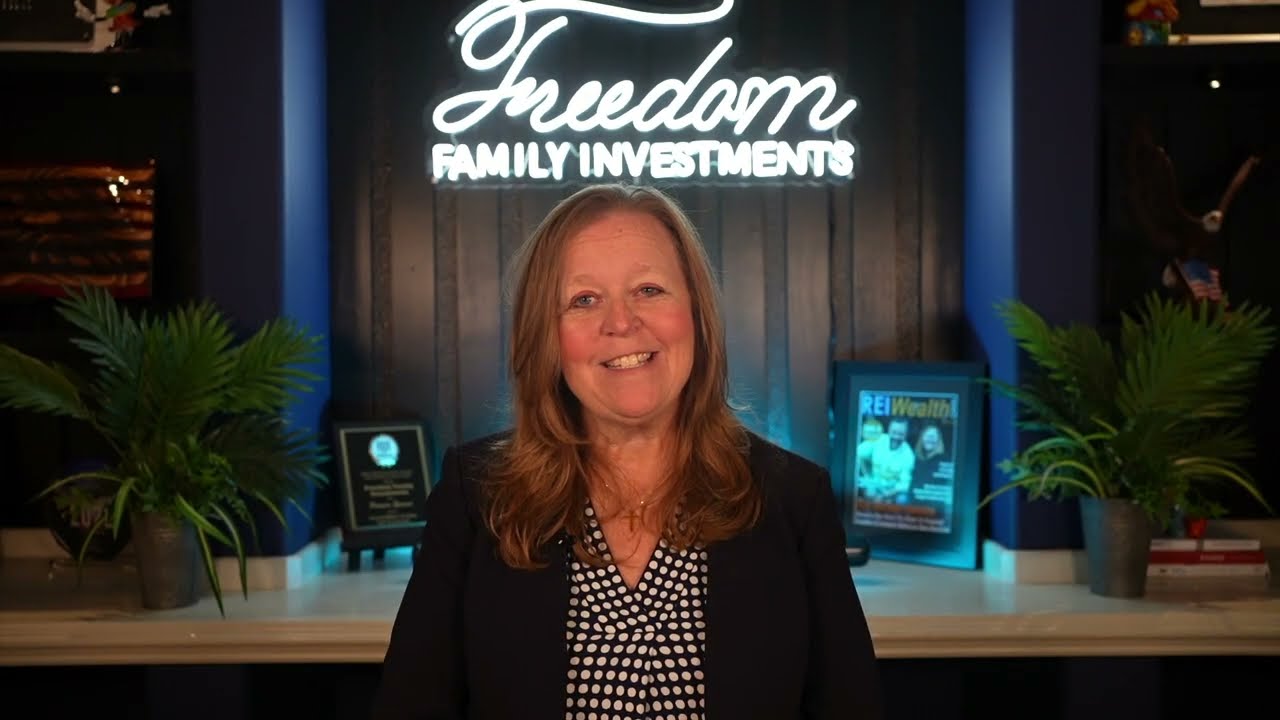
Dani Lynn Robison explains why private real-estate debt stays stable when markets swing. Lenders get paid before equity owners, and the debt is structured with a protective margin. Returns come from occupancy, rent collection, and interest payments, not market sentiment.
Chapters
Early 2026, the S&P 500 is essentially flat year-to-date after 3 years, driven largely by a handful of technology stocks. Volatility is back. The same stocks that carried the market for 3 years have become some of the biggest sources of instability. Most investors look at that environment and feel one thing: fear. And I get it. When your portfolio is moving up and down with every headline, Every Fed statement, every earnings call from a company you've never heard of. That's exhausting. It's not a strategy. It's an emotional marathon. But here's what I want you to understand. Not everything in your portfolio has to move that way. When the stock market falls, private real estate debt investments backed by essential assets continue collecting rent and interest payments. And here's why that structure matters. Most investors think of a bad market as a tidal wave that sweeps everything equally. It doesn't. Most people have only been offered two categories: stocks and bonds. Private real estate debt is an alternative investment, and it behaves entirely differently. The difference comes down to where you sit in the capital stack, meaning the order in which you get paid. When Freedom Family Investments invests in real estate debt, the structure behind Freedom Notes, we sit as the lender. The borrower owes us. And lenders get paid before equity owners. A property can decline in value and the lender may still be fully protected because the debt is structured with a margin between what we lent and what the asset is worth. That's fundamentally different from owning stock in a company that reprices every second based on market sentiment. It's a different risk profile entirely. And most investors have never been taught to think about it that way. Here's the other thing that changes when you move into the right assets. What drives your return? Public market investments reprice based on sentiment. If fear runs high, prices drop, not because the underlying business changed, but because people are scared. Private real estate backed investments are driven by something completely different. Occupancy, rent collections, interest payments, whether your tenants are paying rent this month, whether people are moving into your workforce housing community or your senior living property. None of that is driven by headlines. None of it reacts to what happened in the market today. Think about what that means for you as an investor. It means that when you turn on the news and see the markets drop 2% today, you don't have to do anything. You don't have to call anyone. You don't have to recalculate your position or decide whether to sell. Your returns are not determined by what the market did today. They're determined by whether the tenants in your Workforce Housing Community paid rent this month. And they almost always do because they need a place to live. And this is not just our philosophy. Major financial institutions have reported that private credit fundamentals remained resilient through recent periods of significant market volatility. When traditional banks pull back during uncertainty, private lenders often find more opportunity because borrowers still need capital and there are fewer sources providing it. I've seen this in my own portfolio. There was a property that was sitting in the market for over 200 days with no offers. Everyone else had passed on it, but I stopped asking when the market was gonna turn around, and I started asking what's already there that others are missing. I anchored my attention on fundamentals, not sentiment, not what brokers were saying, and I moved forward. And in less than 2 years later, that area becomes an emerging corridor. Not because I predicted it, because I refused to let other people's fear make my decision. This is how we underwrite investments at Freedom Family Investments. We target project-level returns that are well above what we pay our investors. That spread, the gap between what the project earns and what we owe our investors, is the margin of safety. It's what allows us to absorb slower lease-ups, higher operating costs, or flat rent growth. Without those conditions affecting investor returns. Calm money never panics because it was never designed to. We underwrite every investment to perform conservatively. We build in the margin of safety first. We protect your returns by design, not by hope. You don't have to choose between earning return and sleeping at night, but you do have to choose the right structure, the right assets, and the right team. In one of our next videos, I wanna talk about the investor who's done all the research, believes in the product, and is still waiting because waiting has a cost too, and it's a cost that most people never calculate. Go to chatwithfreedom.com if you're ready to understand what the right assets look like for your situation. I hope this was helpful, and I hope we have the opportunity to work together.