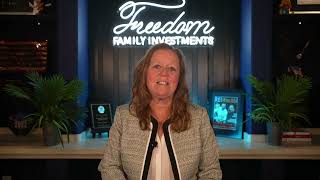
Dani Lynn Robison walks through four questions to evaluate any investment operator: What was your worst deal? How do you get paid? Who will I actually talk to? Can I speak with your current investors? She shares how her firm, Freedom, absorbs losses to protect investors and only takes fees after investors are paid.
Chapters
This is probably the most important video I'll ever make because I think the question of who can I trust is the question that sits underneath every single investment decision you'll ever make. And I want to give you a real framework you can use with us and with anyone else you're considering. Here's the first question I want you to ask any investment operator. Ask them to tell you about their worst deal. Not their best, their worst. The one that didn't go the way it was supposed to. The one where something went sideways or cost more than expected. Or where a hard call had to be made. And then watch how they answer it. Because here's what that question tells you. If they can answer it without hesitation, with specifics, with honesty about what went wrong and what they did about it, That tells you they're not hiding anything. So I'll tell you ours. We had contractor fraud on one of our properties. The contractor submitted paperwork and photos showing a renovation that was barely half complete. And we had been paying him as though the work was done. When we found out, we had a choice to make. We could tell our investors there was a problem and ask them to absorb some of the impact alongside us. But we didn't. We absorbed the entire loss because that's what we committed to when we took their capital. We not only finished that property, our investors got every dollar owed to them exactly as promised. That's what I want you to look for. Not operators who say they've never had a hard moment. That just means they haven't been tested. Look for the ones who've been through something and can tell you exactly what they did. Because what they did is a sign of their character. Ask what happened to the property, to the investor, and to them or their company. You want to see what people do when the going gets rough. Second question: Ask how they get paid. This matters more than most people realize. Most fund operators earn a management fee—a fee they charge for running the fund regardless of whether you make money or they make money. So even if your returns are lower than expected, they still get paid. And I'm not saying that's completely wrong. A company has to have funds to operate or no one wins. What I'm saying is that it creates a small margin of possible misalignment, meaning your interests and theirs are not actually pointed in the same direction. We have that same provision in our documents, but to date, we've never taken those fees. Flip and I and our team, we get paid last. Our investors get paid first. We invest our own capital, meaningful capital, into everything we offer. So if something goes wrong, it affects our money too. That's what skin in the game actually means. Our money is at risk alongside yours, which means we're motivated in exactly the same direction you are. Now the third question: ask who you're gonna actually talk to. I don't believe in the model where you wire your money and then wait for a quarterly report. I think you deserve real contact with real people who know your situation. When you invest with Freedom, you have two dedicated contacts: your investor relations contact, who knows you from your very first conversation, and an investor concierge. You can call, you can email, you'll get a real person who knows who you are. And fourth question: ask if you can talk to their current investors. We actually encourage this. We'll connect you with people who have been investing with us for years. Investors who have seen how we handle both the good years and the hard ones. We're not afraid of that conversation because the investors who know us best are the ones who trust us the most. And here's the thing I want you to understand about trust. Trust is built through transparency, meaning honesty even when it's uncomfortable. I've been asked before, Aren't you worried that being this honest about your challenges will push investors away? And I want to tell you what one of our investors said to me after we called him about an issue we had with a property he had under contract. He said, "Dani, you could have easily not said a word. The fact that you did, yeah, I might not do that particular deal, but you've probably kept me as an investor forever." That's exactly what he said. And he's still with us. That's who we're trying to be for every single investor. Honest when it's hard, transparent when it costs us, and consistent because that's just who we are. So ask the hard questions of us and of everyone else you're considering. The ones that welcome that conversation, those are the ones worth your time. In one of our next videos, Flip and I share exactly why we invest our own money alongside yours, and what that means structurally for how we make decisions. If you wanna have that conversation with us, go to chatwithfreedom.com and schedule a call. We'd love to meet you, answer your questions, and let you decide for yourself. I hope this was helpful, and I hope we have the opportunity to work together.