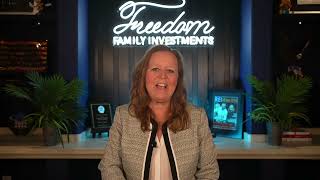
Dani Lynn Robison and her partner Flip invest their own money in the same deals as their investors, under the same terms. Freedom takes no management fee and gets paid last, after investors receive their returns. When a contractor committed fraud, the company absorbed the entire loss for investors.
Chapters
I wanna talk about something that I think is genuinely rare in the investment world. And because it's rare, I want to make sure you actually understand what it means. Not just as a talking point, but as a real structural commitment that shapes everything we do. Flip and I invest our own money in our investment offerings. Not some of our money, not a token amount to check a box. Meaningful capital right alongside yours in the same vehicles under the same terms. And it's not just us. Our families invest with us. Our team members invest with us. Several of our team members are also investors in Freedom Products, which means the people answering your questions and managing your account have their own money in the same place yours is. I want to explain why this matters, really matters, beyond the surface-level skin-in-the-game talking point. Because I think it changes things in ways most people don't think about. Here's the thing about most fund structures, and when I say fund structure, I just mean the way most investment companies are set up legally and financially. The operator, meaning the company running the fund, earns a management fee. That's a fee they charge themselves for running the fund, and it's typically 1 to 2% of all the assets under management, meaning the total amount of money being invested. And that fee gets paid regardless of whether you made money or didn't. That's a necessary part of managing a fund because there is real overhead to cover. But it can also create an unintentional misalignment. Not only have we never taken a fee to manage investor capital, our capital is in there with yours. When Flip and I are sitting in a room deciding whether to push through a difficult renovation, whether to hold a property through a tough market, whether to absorb a loss as a company, so our investors don't have to. We're making that decision as people who have real money on the line, not a fee, our actual capital. That changes the decision-making. I believe that completely. And I think that's really important to understand when you're choosing who to trust with your money. Now here's something you should know. Our fund documents, which is the legal paperwork that governs how the investment works, do allow us to take management fees. That permission is in there because we do have real overhead and there may be a time we need to start taking those fees. But to date, we've chosen not to take them. We get paid last. Investors get paid first. If we execute exceptionally well on a property, if we buy below market, add value, and create strong returns, then yes, We participate in that upside, but only after you've been paid what you were promised. That's what alignment of interest actually looks like in practice. Meaning we make money only when you make money. Now let me tell you about one more thing that comes from this model, and it's actually one of the things I'm most proud of. It changes how we communicate with investors when something isn't going the way we planned. Because we're personally exposed, meaning our own money is in the deal, we don't have that instinct to hide bad news. When something isn't going the way we projected, we pick up the phone. We call our investors. We tell them what's happening, what we're doing about it, and what the path forward looks like. Because we're in it with them, not on the outside managing it at a distance. There was a period during a renovation where we discovered contractor fraud. We'd been paying for work that was barely half complete. When we found out, the company absorbed the entire loss so our investor wouldn't have to. That standard is what we've set for ourselves—to take the loss before we let our investors take the loss. And that standard has held for 18 years. I think the most honest thing I can say is this: we're not just asking you to trust us with your capital. We trust this investment enough to put our own capital in it. And I think that says more than anything else we could tell you. That's what alignment actually looks like, and I hope it means something to you. In one of our next videos, we talk about what genuinely makes Freedom different from other private investment options, and we let you be the judge. If you want to learn more or ask us questions directly, go to chatwithfreedom.com and schedule a call. I hope this was helpful, and I hope we have the opportunity to work together.