Building at the Frontier: The Delta Interview with Dariya + Brandon of Layer3 | Ep. 11
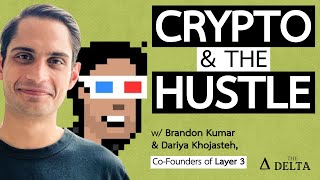
Dariya Khojasteh and Brandon Kumar built Layer3, a crypto distribution platform that connects projects with users through token incentives. They started with a "Bucket List as a Service" drop that proved real-world actions could be rewarded on-chain, then shipped Layer3 Intel during a hackathon rather than waiting for perfection.
Chapters
Welcome to the Delta Podcast. I'm your host, Coach Cole. This is the show where we dive into the relationship between leadership and change, what it means for individuals, teams, and organizations looking to thrive. Today's a great day to be coachable. So let's jump in. Brandon, Dariya, it's great to see you, my friends.
Yeah, thanks for having us. Great to be here.
Yeah, good to see you, Kevin.
Welcome, man. As we begin, I want to share a little bit about you two. If that's okay.
Please go ahead.
Yeah, so Dariya Khojasteh is the CEO of Layer3, and from my perspective, Dariya, you're one of the most creative divergent thinkers I have ever met when it comes to the intersection of design, UX, and gamification. I know this intersection is a space that a lot of leaders are increasingly interested in, and from where I'm sitting, you make it look easy to to dwell in the space and build in this space. So I'm thrilled to have you as a guest. Brandon Kumar, COO of Layer 3. So Brandon, I just wanna make a note about your leadership. So when it comes to developing partnerships in building a culture of operational excellence, I feel like you're on a level of your own. You help people, including me, see the magic of consistency, which is something I think is way often way too often overlooked. We talk about great leadership. When you combine the two of you and your leadership styles, I think what folks get on your team and beyond is a great example of the importance of complementary co-founders. One of the biggest mistakes I think leaders can, can do is just, I need to find somebody that looks like me, that thinks like me, that has the experience that I have. And let's bring them in. And I think that can backfire. So finding somebody that thinks differently, has a different life experience, and will challenge you and hold you accountable, I think that's, that's great stuff there. And that's what I see you guys doing. And on a personal note, I'm proud to say that I had a chance to support you guys in the early days, you and your team, uh, as you were building Layer 3 from the ground up. So that's what I love about the work that you guys are doing. I'm going to kick it back So welcome you here into the Delta. What do you two love about the work that you're doing?
And what an intro. Really, really appreciate that, Kevin. I mean, honestly, building a startup is really hard and building in crypto is especially hard. But I think Brendan would probably agree with me here in that building a startup that has a playbook which is usually outside of crypto, there's a lot more constraint and love crypto, hate crypto, whoever you are. Like there's a lot of experimentation that happens. And so the intellectual freedom that you have in this industry and the ability to like put something out and see how people respond to it, that's a really fun way to spend your days, weeks, months, and years. And it hasn't gotten old. Doesn't get old for anyone around us or anyone on the team. And I think that that is the singular thing that I love most right now, is just there's always something new to try out and new to, to follow along with, even, uh, if you're kind of pursuing some, some grander North Star.
Yeah, I echo that. I think when you're, when you're starting a business, um, there's a tremendous amount of inertia that happens at the beginning because you need to bring this thing into existence and So in the first few months, no one's paying attention to you. You have no distribution, you have no brand, no one knows who you are, often if you're a first-time founder. And that can be, I think, a very isolating experience. But then once you get a product to market and you develop a brand, um, you know, it's kind of your game to lose, particularly if you're able to find product-market fit and you, you have momentum. You typically have raised more capital, you have a larger team, you feel like you know what you're doing a little bit more. And so I think what I'm enjoying most right now is probably the fact that we've been at it now for 3 and a half years. It feels, it feels like a lot longer. I'm sure Dariya would say the same. Feels like it's been a long time, but at the same time, you know, we, we do have a larger balance sheet. We've got more people on the team. We've developed a relationship as far as how we work together. And so I think it's, we got a little bit of wind in our sails and that's, that's fun. And then to Dariya's point, crypto, the industry just moves so quickly. So like the design space that you have in any given week or month. Just continues to expand and expand and expand. And so if you're building in a fixed market, that's very different versus building in a market like crypto that's just— yeah, it's growing massively.
Yeah. Sometimes as a coach, people ask me, who do I support? My short answer there is people building at the frontier. And when I answer that, I'm thinking of you guys. I mean, you're really building something that doesn't yet exist in a space, in an ecosystem that doesn't yet exist. And so I'm hearing what you shared, the joy, the challenge, the magic potentially of that when that all works well.
Yeah, I would agree with that. I mean, I think any good business changes the way the market itself operates, and Layer 3 does act as kind of this connective tissue between protocols and users. And prior to us bringing the product to market, I don't think that that really existed for consumers or for protocols. And so it's been nice to see the industry change as we've grown.
Fantastic. Well, I want to imagine for a second somebody listening, let's assume they don't know anything about Layer 3. What's the short version, top line of what you guys are doing?
We aim to help people navigate around crypto and we aim to help builders in crypto get distribution for their products. You know, to Brandon's point, starting a company, building distribution is the hardest part. And we saw that every builder in crypto had to rebuild their distribution from the ground up when in Web2 or, you know, in previous iterations of the internet, you really had the ability to just plug into an existing distribution network. And so we tried to imagine, you know, what does a crypto-native distribution network look like where users are earning, where builders are able to access those users very simply. And that's ultimately what everything we do boils down to.
Great. That's great. So you're supporting the folks building in the space, but also the consumers, folks that are new, curious about it. Am I hearing that correctly?
Exactly.
Yeah. So you guys know on the Delta we talk about leadership and change, what it means for individuals, teams, and organizations looking to optimize. You guys are in arguably one of the most changing, fast-changing industries there is. Did we start with 3 questions? I don't know what you're bringing in, so I'm excited to hear what you guys would like to talk about. The first question here is, what do you want to talk about? What should we talk about with the time that we got?
Yeah. So, I mean, I put some thought into this before we hopped on. I think, at least for me, the origin story behind Layer 3, I think, is still not really known by the market. And that obviously starts with Dariya Khojasteh during his time at USC. So I think that would be Interesting. You know, also there's a brief stint at this, this house called Launch House, which I think was formative. And then also my decision to leave, you know, the investing side and kind of join Dariya on the journey of Layer 3. So I think that would be a really interesting— and then the other is just kind of lessons learned. I think there's a lot that we've learned about building in crypto, which Dariya alluded to in his opening remarks, as well as how to go about building a team, like leadership lessons and just building a company in what is kind of a wild market. So those are some things. Dariya, I don't know if you have any thoughts.
Yeah, the origin story is always a funny one to look back on because I mean, what do you mean when you say funny? Well, funny in that like so many random things aligned in such an odd way, but I guess that's always how life looks in hindsight, right?
Yeah.
Yeah, I'd be down to talk about both those things.
Fantastic. So of all the things we could talk about, why should we talk about these two things now? Talk about the origin story and lessons learned. I think this is great. Why now?
Well, I think there are a lot of podcasts with crypto founders that talk about their protocol and why the world needs their protocol and what are all the nuances behind it. And I think, you know, we've both done a good job of kind of articulating the nuances behind why and how we've built Layer 3, but the origin story, I think, is often underdiscussed. And a lot of founders, particularly myself, always find that really interesting.
Great. Let's imagine we have a great conversation. We talk about these things. Is there anything in particular we should aim for? What does success look, look like in this conversation?
A first-time founder learns something new that helps them find success, find product-market fit, get their next raise done, change the way they're running their company. They just find it useful.
I love this. I don't need to say this to you guys, but I mean, you know, founding something can be a lonely experience. Sometimes it feels like you're going through something that nobody else is going through. The top of the leadership pyramid is not a highly populated space in my experience. And so I love this topic. I think this is going to be great. And I imagine it resonating with a lot of folks out there in a situation that you guys were in 3, 3 and a half, 4 years ago. So let's jump in. Where do you want to start?
Over to you, Dariya. Yeah, we can start with the origin story. God, I got to think about this for a second. Where did it start? I mean, it kind of started in my teenage bedroom clicking around on Instagram. Some quick context. So I was building apps and Instagram accounts when I was about 14. There was actually a small cabal of us, some of whom are in crypto today. Okay. I think like the Pudgy team has a lot of these like, you know, internet hustlers, you know, from kind of the mid-2010s and just hustling in e-commerce and apps and meme pages and stuff like that on social media. So, you know, when you're hanging out with other nerds on the internet, you naturally find out about crypto. That just like happens. And so the distance from building those things in my teenage years to when Brandon and I started Layer 3 was multiple, half a decade, right? So I'm at USC, I'm about to graduate, which I still haven't done. And I was sharing a backyard with another crypto founder who who actually introduced Brandon and I. But we got lunch a few times and we were just discussing about what was really necessary in crypto. And that was just that everyone is building these cool things. No one's showing up. We have all these treasuries with a ton of cash. We don't know how to spend them. How do you service kind of a growth marketing need? And started building Layer 3 as this just like organization that would work with other builders trying to figure out Well, how do we get users to care about all this cool stuff that's happening? Tokens are kind of a conduit for acquiring users. And there's some design space there with helping these teams distribute treasuries. I explored this through a couple drops, ended up going to kind of this hacker house called Launch House, rest in peace. Spent, you know, the month just doing marketing drops in 2021. I'm sure we all remember what that summer was like. It was just, you know, no one could figure out what was going on. Incredible volatility, kind of the first meme coin supercycle happened in that summer when, uh, you know, people were just dropping meme coins and Solana was going up and down and it was just the Wild West, um, back then. And so I mean, Brandon and I had gotten introduced fairly early in the, the Layer 3 journey, and we just bonded over this idea of figuring out a way to actually grow the user pie in crypto. And the fact that there's all these, you know, users who are looking to do things and teams looking to acquire those users, but there's no real, you know, pathway between the two.
Mm-hmm.
And it wasn't until I tried a marketing drop called Bucket List as a Service. And showed Brandon. And we got, you know, some folks to go skydiving, get tattoos, uh, take pictures in front of, you know, different landmarks around the world, and kind of created this global scavenger hunt where we distributed tokens to those, to those users.
So if people did these things, they got tokens?
Exactly. Okay. Right. It was basically just a bounty board for folks to do these tasks, earn these tokens. Do X, earn Y at a global scale in the real world using governance tokens as the primary incentive. When, you know, people saw the Twitter, I guess, hype that that generated and the brand awareness that that generated, we got a lot of inbound. And that, I think, was ultimately— Brandon, correct me if I'm wrong— where you were like, fuck this previous life, I want to join and try and build this thing together.
And Brandon, were you still working for somebody else at that point?
I was.
Okay.
Yeah, I was, I was still at Atlet, but— okay, Dariya finished.
Yeah.
And, you know, we ultimately generalized a task board for folks to use, uh, to, to basically get people to do non-technical things in their communities using tokens to distribute them, or tokens to reward them. And, um, we processed, I think, $20 million in, in GMV before focusing entirely on on-chain actions and growing the actual usage in the ecosystem because ultimately that's what people ended up using the product for was do X on-chain and earn Y on-chain as well instead of do X off-chain, earn Y. And that is the entire story in as condensed a format as I could fit it. Somewhere along the way, obviously Brandon— Brandon and I went through ups and downs and, you know, just had the classic founder journey.
So, well, hang on a second. I want to go back if I may, Dariya, because I'm going back to you on the internet kind of exploring things. What was it about crypto or being on-chain specifically that drew you in?
Um, the pseudonymity, honestly. I was working under a pseudonym in my teenage years as I think most folks who were kind of doing e-commerce stuff were, just because you'd regularly interact with people in their mid-20s, late 20s, which at the time seemed old to me. But no one's going to take a 14-year-old seriously. You don't tell them how old you are. You don't post a picture of your face or do anything like that. You just exist as a pseudonym, and, uh, you kind of just judged on the value you can create and nothing else. And I mean, ultimately, that's why crypto was interesting to me, was because, you know, the pseudonymous economic rails— that's really it. Yeah, great.
I love listening to that. Um, what's been the most surprising or interesting part for you along that journey?
Surprising or interesting. Um, the highs are higher than you could possibly expect, and the lows are lower than you could possibly expect. I think that's like the volatility on the founder journey. It's very abstract before you actually do it. It's so much harder than you think it's going to be, but almost— but also so much easier as well, which is such a weird thing to think about because if you think about how difficult some of these things you may be confronted with are before starting, you'll, you know, no chance in hell you'll think you can do it. But then when you're confronted with those issues, it's just like you still go home and your wife or girlfriend loves you the same. And it's, it's, life doesn't really change outside of this laptop. In a weird way.
Yeah. Hmm. Thank you for sharing that. I have more questions, but Brandon, I want to kick it over to you, and I'm curious to hear your— how you linked up with this, this, this guy, this project.
Yeah. I mean, so by way of background, I was investing at a firm called Accolade Partners that I had started my career at. So I graduated with an econ degree. Had no prior experience with product building, engineering. I, you know, purely was trained in like basically finance. And Acklade was an alternative asset manager. Today they manage about $6 billion in assets and they invest across venture growth, buyout, tech, and healthcare. And between 2016 and 2019, I was basically covering all of those strategies. But we were one of the larger investors in Andreessen Horowitz when Andreessen came to market with their first crypto fund. We took a look at it, realized it didn't belong in our commingled vehicles, but we decided to raise a separate pool of capital for that or basically just test the waters, see whether or not there was actual interest from LPs. And there was. And so we, we ended up raising a fund of funds, $150 million fund of funds in 2019, 2020 to back a lot of the emerging managers. And the basic thesis was if you're an endowment or foundation, you want exposure to crypto, you're probably going to put maybe 1 or 2% of your total exposure to the asset class. So you're not going to go and meet all of these folks. Instead, you'd back someone like Accolade, and we'd give you diversified exposure across vintages and strategies and geographies and so forth. And being one of the younger investors on the team at the time, I had found crypto really interesting. So I kind of like raised my hand to say, I want to go all in on this. And so I got to meet a lot of really interesting people at a time when the asset class and the industry was just much smaller. So I remember having breakfast with Jesse, who's a well-known investor at a firm called Variant, Matt Olaf at Polychain, the guys at Multicoin Framework, etc. And, um, my job was basically to find the best investment talent. And then once we found the best investment talent to talk to the founders that they had backed to do references.
Okay.
And so I was basically picking up the phone and again, the industry was much smaller. So I remember we did reference calls with Hayden before Uniswap had launched the UNI token and Robert Leschner before Compound had launched. But I was using those products because I wanted to just learn how the asset class worked. And that was probably 12 months before DeFi Summer happened. And when DeFi Summer happened, which many of your listeners are probably familiar with, like the, the entire industry just went bananas and everyone thought they were like, you know, the next, um, Warren Buffett. I mean, everyone just was making so much money. And, and I also thought I, you know, I was like, I'm the smartest person in the room. But I, because I was well positioned DeFi Summer, I was trying to do some angel investments. And one of the founders that I had gotten to know through some of those reference calls was a client of yours and a friend of all of us, um, Jay Bhavnani, who at the time was building a protocol called Rari Capital. Today he's working on a project called, um, Waymont and Royco. And, um, he, he was close with Dariya, as Dariya mentioned. And Dariya had put forward a proposal in the Rari DAO that I just thought was great. And it was, it was basically like a way to activate the Rari community through these off-chain activations. And I read it and I was like, there's so much that happens in crypto that's just low quality. It's poorly designed. It's not well written. It's not compelling. And I was captivated by what he was trying to do. So I asked Jay for an intro primarily because I thought, you know, Dariya Khojasteh was starting a business that I would like to angel invest in, and I just tried to be as resourceful as possible. Dariya Khojasteh, for people who don't know, maintains a relatively low profile on the internet. And so I honestly couldn't figure out like what his deal was or who he was. I, he, um, and even today, like, you know, he, aside from his, his personal blog, does maintain a relatively low footprint. And so I think I was just trying to get to know Dariya Khojasteh. I offered to meet him. I was in LA for work and I offered to meet him at Launch House. And that was the first time we met in person. And we spent a few hours together and we went out to dinner. And yeah, I mean, I had for a long time thought about wanting to, like, take an operating role. I didn't know if that meant joining, like, as like a head of growth or being a co-founder or something. But it just felt right. Like, I really enjoyed my time with Dariya in person and had been watching him build Bucket List as a Service and some of the things at Layer 3 early on. And so I basically said, hey, like, if you want someone to go in all in on this, like, I'm your guy.
And we just said in this conversation, yeah, at dinner, I think.
I think at dinner. And then we both thought about it for a few days. I remember Dariya was like, yeah, he called me after I had landed back. At the time I was in D.C. And talked to my now wife about it, talked to some friends and family, and decided that it was a risk worth taking. Um, and so that was kind of how the whole thing came together. And yeah, I mean, I would say like co-founder dating is like the number one thing a lot of people say is really important. Like make sure you pick the right co-founder. And yeah, I think, you know, we got lucky because we, we had only gotten to know each other for maybe a month or two at that point.
But yeah, it's, yeah, we proposed, you know, fairly quickly in, in that analogy, co-founder dating and marriage.
Like, uh, it was an accelerated experience.
It was accelerated.
Yeah, super, super funny. I also, I forgot to mention like the, that, that what I mentioned about all these weird things lining up. Um, Jay and I shared a backyard in college. He was a freshman, I was a senior at the time. Yeah. And that's the only reason we got to know each other. Which is, you know, by extension the only reason Brandon and I, you know, obviously got to know each other. So that, that was like a weird thing. And then, yeah, I mean after that dinner, you know, when Brandon joined, like, totally refounded the company. It was just like that. It was just like a whole new, but like the growth agency stuff like that just died like immediately. It was just all in on this product and growing this thing.
Wow. Okay. So when you linked up, It sounds like pretty quickly then you were able to identify a new course or new direction.
Yeah, I think it's worth mentioning, and Dariya didn't mention this in his background, that he, he actually on the final hour decided not to pursue an internship that he had that he was going to do that I think would have likely converted to a full-time job. So I think that there is also some fate there because that was independent of me, but it was basically like, I'm going to go all in on this. I'm going to go to Launch House. I'm just going to focus all of my effort on that. And had he obviously not done that, then none of us would be here because there is, there is some element of serendipity to just like deciding to go all in. Yes.
Yeah. The morning of, I was supposed to start, I canceled, I called my manager and quit and I had, I had all my supplies for 2 years after that and I returned them. They never asked for them back. Public company things. They never asked for $5,000 of equipment back.
So funny.
I totally forgot about that. But yeah.
Yeah.
Well, I love listening to what you guys have shared. One of the things that I wrote down was just the idea of a risk worth taking, because I'm hearing that, like, you guys have different experiences, but there is a through line there. You know, Brandon, you said thanks but no thanks to an opportunity. Dariya, you did the same. Can you talk a little bit about that? Like, how do you guys How do you guys weigh that? How do you make— because I don't know. I, as a coach, don't believe there's any growth without taking good risks. But a lot of the stuff that we're doing is a risk investment. Sometimes it works, sometimes it doesn't. How do you guys think about risk personally, professionally, and in your work together?
I was recently asked if I— how I felt about the decision now, 3 years after. By someone that I had worked with. And my answer was basically that there was like no losing in this decision because if the business works and it grows, which it has, then economically, obviously there's, there's downstream benefits there, right? You built a business that's large and successful. And if the business doesn't, then like, well, you can try again. And like in entrepreneurship, I do think it's underrated that if you're in the game long enough, you'll ultimately like find success. And so it's kind of like that you either win or you learn mindset. And then the other thing is like the slope when you are doing this. And Dariya mentioned like the highs are very high and the lows are very low, but your slope the entire time is just, it's like practically vertical. And when I chat with some of my other friends who, you know, they're at great firms, but like there are certain things that they just don't think about and they're not thinking about the culture or the branding or they're not dealing with employee issues or they're not dealing with this thing broke, like, or we have to make sure that we can meet payroll. Like, none of those concerns are in their mind. They're just thinking, how do I do my specific job very well? And what I have found is like, in the moment, you don't feel like you're learning a lot. You're like this, I was banging your head against the wall. But then you look back on your year and you're like, holy shit. Like, that was a tremendous amount of growth over the course of that one year. And so I think a lot of people mischaracterize the risk in entrepreneurship, particularly in America, because you can always find someone to give you a little bit of money to test your idea. And then your slope is just massive. So you can always try again if it doesn't work.
Great point. Love that visual. The slope is going to be a steep one. Anything you want to add there, Dariya Khojasteh?
I think my approach to risk, it's largely intuition-based, and I think there's some subconscious level of you know, analyzing asymmetric upside and downside, which is basically just what— and limited downside, which is essentially what Brandon just said. It's, you know, that a loss isn't actually a loss if you start something, in all honesty. Um, but also just that I lost my train of thought here.
Well, I want to play that back again because if I'm hearing that for the first time and maybe it will shake something loose, but a loss isn't a loss if you start something.
It really isn't because you learn to appreciate a system holistically instead of just some narrow part of, you know, a system that you're a part of, right? Like you have to— I mean, I'm more of a design guy than Brandon is, and I'm sure Brandon along this journey has had to understand, well, oh, this looks like shit. This looks good because if you're responsible for, you know, the outcome, then you have to kind of understand how all of these different things go into affecting that outcome. Uh, and I just think that in the founder seat, as we both are, you just have to appreciate all of the different parts of the system much more than the subsystem than you're— that you're a part of. And, you know, it did shake something loose. And I think it's, it's honestly just that as a, as a human, we have this weird superpower of deciding something as an inevitability and then just, you know, reorienting your entire life as if that inevitability is truly an inevitability. And I, I don't remember who told me this, but when making a decision to start a company, uh, or, you know, defining, hey, this is my life now, it's kind of like changing your wallpaper on your phone. It feels weird for the first couple days, but then this is not— this is your new identity. Right? This is your new identity and you can't shake it. It's just part of you now. And if you decide, okay, this is— I'm starting this company and this is what my life will look like, and here's like the end goal that I will obviously achieve, then you've changed the wallpaper of your entire life. In your whole life, your whole subconscious, your interactions, the way you wake up, the way you go to sleep, will all reorient themselves around accomplishing that goal. And I honestly, yeah, that's been the coolest thing to see because since that day, yeah, I think Brandon and I could both say that, you know, it's just been an inevitability and your whole life restructures around that and making that a reality.
So that's a great point. So perspective is powerful as shit.
Yeah.
How I think about something can inform how I feel about it. I hope the person who came up with the idea— like, I hear the designer in you, Dariya Khojasteh. I hope the person who came up with the idea of being able to change your wallpaper listens to this podcast, because that feedback loop, that's a valuable piece of it, is it's a powerful thing. Like, my identity is a thing that I, I have some influence over if I, if I really want to pay attention to that or change something up. Like, I can inhabit a different way of being. Um, I, I have a lot more questions I can ask you about what we're talking about, but I want to make sure that we're tracking. Uh, you want to talk about the origin story before we get into lessons learned? Before we head into lessons learned, is there anything else you guys want to share? Uh, and maybe let me ask you a slightly different question. You two probably know each other better than any other human on the planet. Brandon, is there anything that you think, uh, Dariya jumped over that he ought to have mentioned? And same question for you, Dariya. Anything that you think is important in terms of Brandon's origin story with Layer 3 that's worth calling out?
Well, I, I think in Dariya's, uh, probably his opening, he didn't give enough credit to the fact that I— he, um, By, like, I think just his path. He's always trying new things. He's always experimenting with new things. And so that, you know, if you can, in a traditional investment role, your job is you find opportunities, you underwrite those opportunities, you make a decision, and then you do it again, and then you do it again, right? And so there is somewhat, there's linear thinking. Yes, it is perhaps a different market or it's a different product, but that is, that motion is very much how I spent the first 6 years of my career. And then I started working with Dariya, and what became clear to me was like, you constantly need to be trying new things. You need to be rethinking about what— how you're spending your time, what you're spending your time on. And I think that's something that comes very natural to him, which is constantly questioning, well, should we even be doing this? Like, if there's anyone I've ever met who doesn't have any sunk cost fallacy behind something, it's Dariya. And sometimes I think you'd— he would be the first to admit that that's frustrating for me because I'm like, what do you mean? We've been working on this for 2 weeks. Why are we not doing it? But that, that I think is actually— it's a huge unlock and I think it's just like core to his being. So I don't know how he would have woven that into the origin story, but I do think it's important.
Yeah, great point. Yeah. I mean, like a similar kind of soft skill here is just, I mean, Brandon's determination outside of work as well. Like guy runs Ironmans, marathons, etc., like kind of fully glossed over that. And that was just something he woke up one day and decided to do. When he was in the early 20s. And, I don't think there was some grander associated with it. It was just, "Oh, this is my life now. I'm an ultra athlete." And, that obviously carries over into the way he works with people and he organizes projects and makes sure that we accomplish certain things because you just kind of have to do that when you're swimming, biking, and running, what is it, like 90 kilometers or something like total? I don't know. Yeah, it's just like that. Not many people in the world kind of understand how to get that out of your own body, but it starts up here. And I think he's really good at that in work as well and working with people because you have to get that out of other people.
Yeah. These are great points. And this is in, in the intro when I said you guys are, I think, a great example of what it looks like to be a complementary set of co-founders. What you just shared there, I think, is great evidence of that. It's a Dariya— your ability to question the process, like, what are we doing? Should we even be doing this? Isn't valuable. And then Brandon, your ability to say, okay, we just need to check out and do the work. When you're in the middle of that long bike ride, like I'm going back to my sports days. A Tuesday practice is hard as hell. And there's, you just got all these, all these exercises, sprints left. You just gotta get through it. So there is a, there is a time and a place to say, okay, what are we doing? Does this still make sense? Is this serving us? And there's also a moment to say, oh, we just gotta put our heads down and do the work. Put the hay in the barn.
Yeah, I think that's right.
Let's talk about lessons learned. I'm curious, uh, what— 3 and a half years in, you guys, are you writing the book yet? Because I feel like you have enough content to do that.
Um, yeah, I mean, I can start. Like, so I think, um, one thing that's really popular nowadays in, in at least America, like, entrepreneurship has— there's like status to it, right? It's, I'm a founder, and a lot of people love to go. And then once you've raised a little bit of money, there's this whole like community that you start— you get invited to these founder dinners and everyone's reading the same Paul Graham essays. And particularly if you live in San Francisco, there's this whole community around it. And so it's not this— it's not like, you know, back— if you've ever read this book called Shoe Dogs, it's the origin story of Nike. Like, that was a very different time in America because he had to finance Nike entirely through bank financing. And nowadays you've got like access to venture markets and it's very easy to get some money to start a business. But a downside of that, I think, is that there are all these preconceived notions and frameworks that people come into it with because they, they basically decide to run their company based on the last Paul Graham essay that they read or the last podcast they listened to. And that actually was my mindset as well. Like I had read all of these things But the number one thing that I've learned is that if you're building in crypto in particular, like all of that is thrown immediately out of the window because this industry is just— it's very different relative to building a normal business, but also it just changes so quickly. And so you have to like— it's a clichéd term, like the first principles thinking is cliché, but you do very much have to come up with your own thoughts as to what you think are the correct ways to do things in crypto. And I'll give you kind of an example, right? So there are certain products where you want to go into R&D for 3, 4 years, and then you bring the product to market. You know, Figma actually, I think, is famous for this. Their product was basically in R&D for, I think, 2, 3 years before it came to market. And so you have no feedback loop. You have no idea whether or not it's working. And there may be certain pockets of products in crypto where that is true, but certainly is not true for us. And what we've had to do is very much like move with the market, particularly because our product is, is centered around discovery. It's constantly adapting to what is common or relevant. And I think in a small percentage of times that, that may have hurt us, but that, that speed or that iteration I think has been a huge asset. And, um, there are other examples as well, but you really do just need to— like, the number one lesson is just you have to think for yourself as to how you want to go about building in crypto because it just moves too quickly. Hmm.
Hmm.
Have to think for yourself. When do you know, like on this topic, when— if, if there's a story out there where a product, a successful product was in R&D for a while and— but the industry that you're in moves much faster, how do you decide as a co-founding team when a product is ready to ship?
I think we've gotten more comfortable shipping it even if we don't feel it's like 100%. And, and I think in part that's just because like the, the market, you'll get a faster feedback loop. You can make changes and the market will reward you if you just start putting things into the world. But if you take this really opinionated approach for 6 months, you're 9 times out of 10, it's not going to work. Or at least that, that's my experience.
Yeah. So even when it's not fully cooked, getting something out there is going to be better than not, or better than continuing to build. Correct. I'm curious, can you give an example of that, or is there an example that comes to mind when you think about what you guys are building?
Yeah, sure. There is a product that we recently released called Layer 3 Intel that was built during an offsite hackathon that has tremendous potential, and we could have probably allocated 6 weeks to additional R&D before we decided to bring that product to market. Instead, we just put it out into the world, and the feedback loop that we've gotten by giving customers the chance to just use this product directly has been far better than if we pontificated for another 5 weeks on what else needs to be added. And to Dariya Khojasteh's credit, that was, you know, his priority. He said, we're going to build and ship this in 1 week. And I think that that is just one example of us doing something quickly. And then often what we found is our investors or others in the market will ask us, well, you know, how are you guys moving so quickly? And I, I do think it's just because we would prefer to build in public versus, uh, go through these really long iterative R&D cycles.
Yeah. So let me make sure I got that correct. Dariya, you announced to the team— was the team in person when you said this? We're going to ship We're going to build and ship this within a week.
Not the first time, but they're in person to build it. Yes.
Okay. So the team's heard you say something like this before.
Yeah. Yeah.
Yeah.
So we designed this, like, you know, we aimed the scope proverbially, right? For this project.
Yeah.
Defined basically how this would look and how this would feel and essentially, well, how would you kind of grok building this? And it was just off to the races in person. And we knew that we had a plethora of tools to get this done.
Yes. Well, I want to ask you about this and then I want to hear your lessons learned, Dariya, but I specifically want to ask you guys about the importance of being in person versus being remote as we're talking about it, because I know this is— in the, in the world of the folks that I get to support, this is an important question. Should we come together? If so, how do we come together? Is it okay for us to be dispersed all over the planet? I'd love to hear your take on this.
So when we started the company, it was remote first, and so we had ended up hiring some folks across Western Europe and then across the United States. We quickly realized that there needed to be an in-person component. And so when we were smaller, we would do quarterly offsites. They were one-week formats, all under the same roof. We've now gone to 2 or 3 times a year.
Okay.
We did a 2-month onsite in New York in late 2023 as well. It was an important time for us as a company, and we asked everyone basically to pause their lives and move to New York to help bring Layer 3 v2 to market. I think that there are the obvious trade-offs are in crypto. Yes, it is growing, but your talent pool is still relatively small if you choose to recruit only from one city. And so if you recruit globally, you have access to a wider talent pool. That's obviously a plus. I think the downsides are two. One is rhythm. So everyone has their own day. In a remote company, and they, they're not building off of each other's energy. Whereas when you're in person, when someone's really excited about something, that is infectious. That's always the case. Like, people react to enthusiasm, and then, then they are bought in, and then they work faster. So that, that's trade-off number one. And trade-off number two is obviously getting to know your colleagues. You know, like, the number one source of, um, employee satisfaction retention is just, are they friends with their colleagues? And we're again able to foster that in these offsite formats, but it is, I think, a downside. So, we just try and do a combination of both.
Great. Dariya, I saw you nodding along when Brandon was talking about the rhythm component of everybody being together.
Yeah.
Time zones are incredibly, you know, time zones, the time you wake up, et cetera, a lot of that can become a bug. After doing this for multiple years, it has become a feature in some instances as well. But I remember even in the earliest days of Layer 3, like, I'm a night owl. Brandon's like, wakes up at 4 AM. I was going to bed when he was waking up, and we were 3 hours apart in the first few weeks. It was hilarious. And like, I would be up till 2. We'd have like, you know, an hour or so of overlap, and then it was— that was it.
It was—
and, and Yeah, it's just kind of comes back to the hacker house affinity that I have. You just, you can't recreate the magic and the information osmosis that you get from being under one roof in person. You know, it's just impossible to do as talking heads on a screen. I don't even know if you guys are real right now. You guys could be deepfakes. Like that's the reality of life these days. Yeah.
Welcome to 2025. I think you're calling out something important though, is just that like the— there's stuff that we have to do together and there's going to be a benefit to us all being under the same roof. But the informal things are so important as well. It's like us going to grab dinner together, right? Us going on a walk together, us doing, you know, watching a movie together, whatever it is. Those things are going to help build connection and that connection is going to help generate better work.
Especially if that— if the week you're spending together involves you doing something very hard. I think Brandon and I could probably look back at a certain 4 years of our lives where we had to get a group of— we were in a group of people doing something very hard on a daily basis, you know, for a semester or so. And that brings you much closer together with those people. And I think that that is just how life works. You do something very difficult with a group of people in a kind of a repeated setting, like those people work a lot better together and become genuine friends.
Love it.
Yeah.
I mean, not to belabor the point, but when we were building Intel, you know, there's a new engineer on the team who is now— he's been with us for a few months, but he was— it was his first time meeting everyone else and We were halfway through the week of this hackathon and he just showed up unprovoked and it was basically like he is now the group leader. Like he just took it upon himself because he saw, okay, everyone's working on these different things. And then we were all in the living room and he's like, okay. And he's just started kind of breaking out the exact playbook for how that was going to happen. That is the magic that comes with in-person, right? And he, that was awesome to see. So I think there are certain, and then now that is carried into a remote environment as well.
It's a great example because that shit's not happening on Zoom or Google Meet.
It's much harder.
Yeah.
Yeah. Dariya Khojasteh, I want to ask about your lesson learned over the years. What rises to the top for you?
Yeah, I mean, just a general commentary on starting a company and doing things in the real world. It's just like, um, sorry, I'm not being very articulate here. There's only one thing that separates you and doing something that you want to do, and it's a belief that you can actually do it. And that is the weirdest thing to actually wake up to. When you start a company and you talk about, oh, we raised this money and it, you know what it felt like to try and raise that money because it was like, you know, chewing glass. And you don't say it like is this huge win or something, but then you go home to the Midwest town you grew up in and say, oh, we did this. And you talk about a number that most of, you know, the people that you were friends with in high school are just captivated by. And then you kind of have to take a second to just say to yourself, oh, maybe that was kind of cool that we were able to, to do this thing. And we didn't think it was that cool in the moment because it wasn't, you know, the end. It wasn't like a real milestone to us. It was just like this thing that we allocated time towards. And I look back on moments like that, or hitting certain revenue milestones, or growing the team, or building something really cool, and not really, you know, taking a moment to enjoy the win at all. And, um, just kind of realizing that, oh, maybe that, maybe that is cool. It's just, we haven't really, it's never been the end of the road. So I personally haven't really, you know, sat back to say ever, uh, oh, that was really, really cool. And that's probably, you know, the team's biggest criticism of me is that I do not take wins ever. Uh, I like will capture them, but I'll never, you know, really broadcast, I guess. Yeah. But I think that the largest thing that I've learned is just you can do things. That's in fewer words.
Andy Grove wrote this book called Only the Paranoid Survive, and I, I like to think that's Dariya's life motto. Um, and, and I do think it is a, it is a blessing and a curse because I— you have to have someone, often multiple people in a company, who are always paranoid, but that person then has to live with The downsides of always being paranoid.
I want to, I want to go back to something that you said that hit home for me. I mean, we intersected. You guys were at the beginning of this leadership journey. I was at the beginning of my coaching journey. And one of the hardest things for me early on was coming out of education, like a career pivot, kind of like you, Brandon. And, you know, one of the things that felt weirdest is saying out loud to people, I'm a coach. I'm a performance coach. I'm an executive performance coach. That feels much more normal now. But Dariya, your point just made me appreciate that, that, um, that we get to say these things out loud and it's okay if early on, especially, it feels a little bit like we're wearing somebody else's clothes. Because the more we do it, the more consistently we do it, the more it will become part of our identity and how we are in the world.
Yeah. I mean, for what it's worth, I agree. I do think it was probably very weird for you to go say, well, I'm an executive coach, and people are like, well, what is that? Who are these executives? And it's sort of the same thing.
This has been a fantastic conversation. What have we not hit before we wrap and close things up? Anything that you guys like to talk about that we have not yet mentioned?
No, nothing, nothing on my end.
Great. Well, I want to ask you, you know this from coaching, similar deal in this podcast conversation. I like to ask for takeaways here. I want to share my takeaway. I've had a number, but I will share one that is top of mind for me at the moment. And then I want to kick it to you too. To hear if you're taking anything, any key learnings from this conversation, the value of doing something hard with other people, especially other people that challenge you, that think differently and that call you out on or see things that you're not seeing. What a journey to be able to go through in life. The value of doing something hard with other people in person, especially when possible. So that's a takeaway for me. What about you guys?
I need to get better at telling the origin story. For what it's worth, my girlfriend would say the same thing. Um, because there are so many really serendipitous parts to it. And I think generally I, I'd like to think I have an interesting background. At least I find it interesting and I always forget how fun those times were. And so learning to tell that story better, I think, would just bring a smile to my face more often. So that's a personal reflection that I have.
Yeah. Fantastic. Thank you, Dariya. Brandon, what about you?
Dariya mentioned this in one of his answers, but the, like, you can just do things. It's actually now like kind of a meme on Twitter, you can just do things. I do think that like, that's one thing that I've learned over the past 3 years. And also in this conversation was reminded of that. A lot of people, they're like, I want to start a business, or I want to do this, or maybe I want to run a marathon, whatever. And they are waiting for like the appropriate time to do it. And I think this conversation has reminded me a lesson that I've learned over the past 3 years, which is that there will never be an appropriate time. You should just you should probably just go do it and you'll learn how to do it along the way.
Love it. That's fantastic. You guys are on a journey up at Layer 3. What I love, what you're building, and it's been such a privilege to watch it from the sideline. How can folks follow you, participate in the ecosystem that you're building? How can they connect?
Yeah, I mean, you can find us on Twitter at Layer 3 XYZ or at Layer 3. .xyz. And personally, I'm Dariya Khojasteh on Twitter.
Yep. I'm Brandon_M_Kumar. And if you haven't tried Layer 3 yet, go create an account. We'd love to have you. If you have product feedback, shoot Dariya or I DMs.
Fantastic. Dariya, thank you so much. Brandon, thank you so much for sharing your time and your wisdom. Folks listening, thank you for listening.
Thanks for doing this, Kevin.
Thanks, Kevin. Thanks for tuning in to the Delta Podcast. If you're ready to lead through change, stay with us. Until next time, remember, it's always a great day to be coachable.
More from Dariya
Web 3 Founder Spotlight: Dariya Khojasteh of Layer3 on the Future of On-Chain Marketing