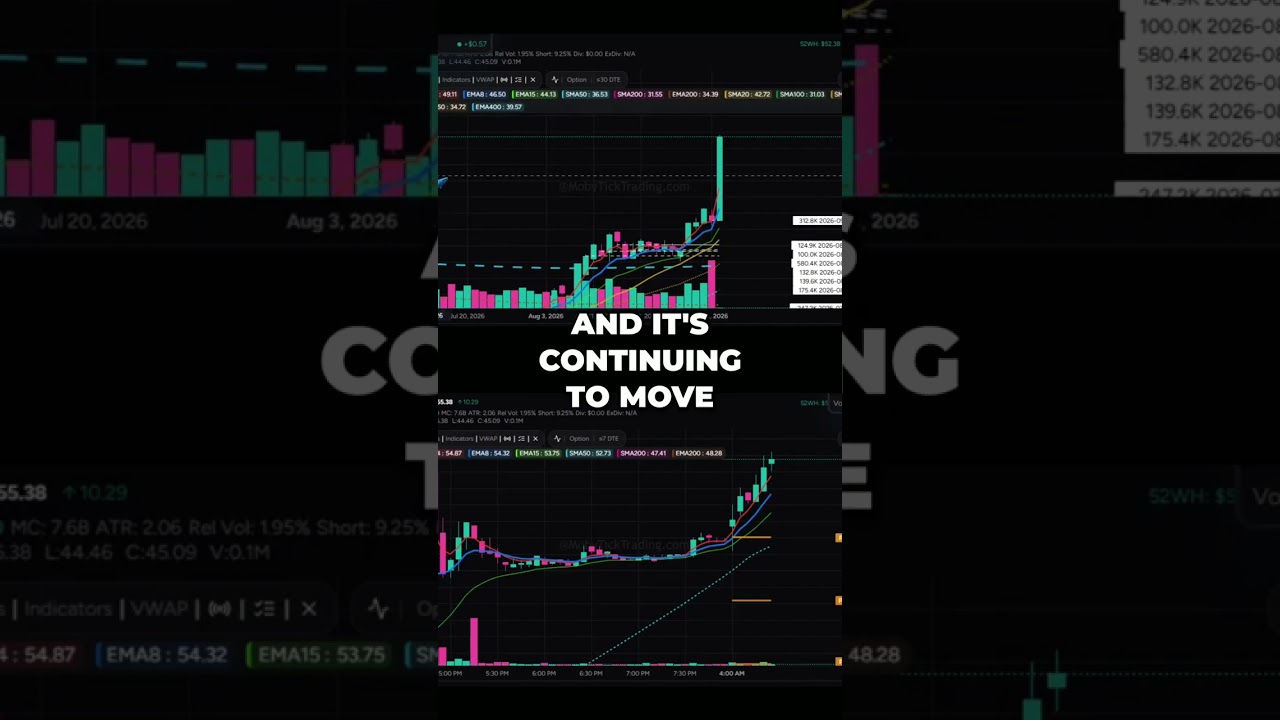
Dave Barnhart explains how to spot institutional money and dark pool activity in markets. He walks through identifying large trades like a 29.2M share order worth $1.3B, tracking smart money flows, and building watchlists based on where institutions actually move. The core idea: retail traders waste time on noise when they should be following where the real money goes.
Chapters
How many hours a week do you spend looking for trades? It's either yes, no, or never thought about it. The currency market is $7.5 trillion. We see trades like that all the time. If someone placed a billion-dollar trade, would you want to know? Now, what I've done with these charts is I have no moving averages, nothing like that. You can see right here, 29.2 million shares, $1.3 billion exchanged in a dark And it was an intermarket sweep, which means that they went out to many exchanges to get this price, and it's only reported to us after the trade is filled. So that's in— that's important. Okay, so in this webinar, what we're going to learn is we're going to figure out what is actually smart money. What does it mean? I just showed you a billion-dollar trade, but we'll, we'll classify that a little bit better. Why institutions use dark pools, which is the exchange we just mentioned. How to spot large trades. Finding trade opportunities. Following these guys, because clearly we saw that IBIT, once that trade came in, it tanked, right? So really, I want to be on that guy's team, but they don't actually broadcast to say, hey, I'm shorting IBIT, so, uh, everybody jump along. That's not how they do it. Trade planning. Following institutional money. That's our edge. Right? We want to be on these guys' teams. Like, like I mentioned, map out trades with targets and profit levels and build and manage smart money watch lists. That's why we're all here. We're going to leave with 3 trade opportunities for today. We can actually map out ourselves and say, look, if this happens, this is my entry, this is my target, this is my stop loss, these are the profit levels. And we're going to learn how to actually do that. And early on in the market, within the first 3 or 4 months, I had a red pill moment because It didn't matter. It's like you have analysts; they're always yapping. They're always wrong. You have a great earnings report, but the stock goes down. You have a terrible earnings report; the stock goes up. You've got Jim Kramer telling you to buy something; it's tanking. And for me, what was interesting is you would have vast sections of the market that would move all at once, the same time. And I was like, now it's not just the Blaming retail traders. Well, retail, you know, they were—they were scared of this and whatever. You can't have all those traders push the button and execute a trade at exactly the same time, right? I just showed you a billion-dollar trade that will move the market. A handful of retail traders will have a much more difficult time doing that. So I figured there's something not right. I couldn't put my finger on it. And so I was like, well, what am I missing? We had great earnings, stock drops, bearish news, the stock rallies, the sky's falling, the market rallies, analysts are wrong, talking heads, it's pump and dump.