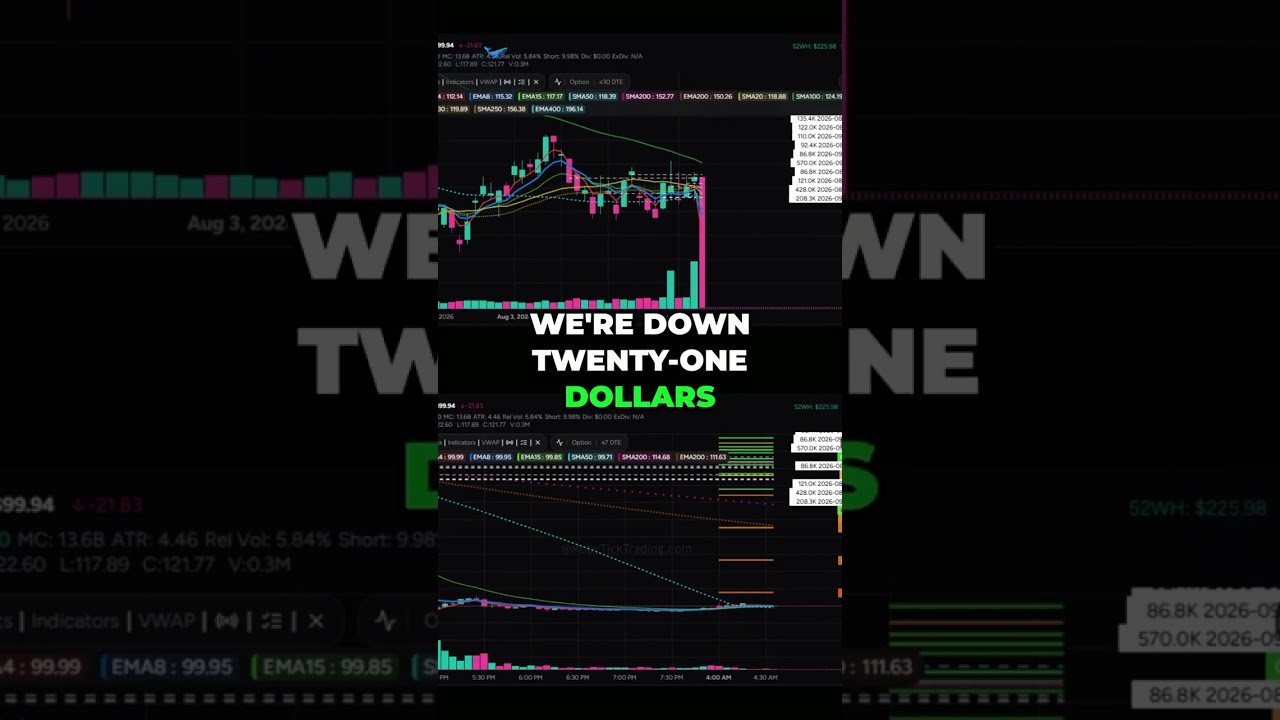
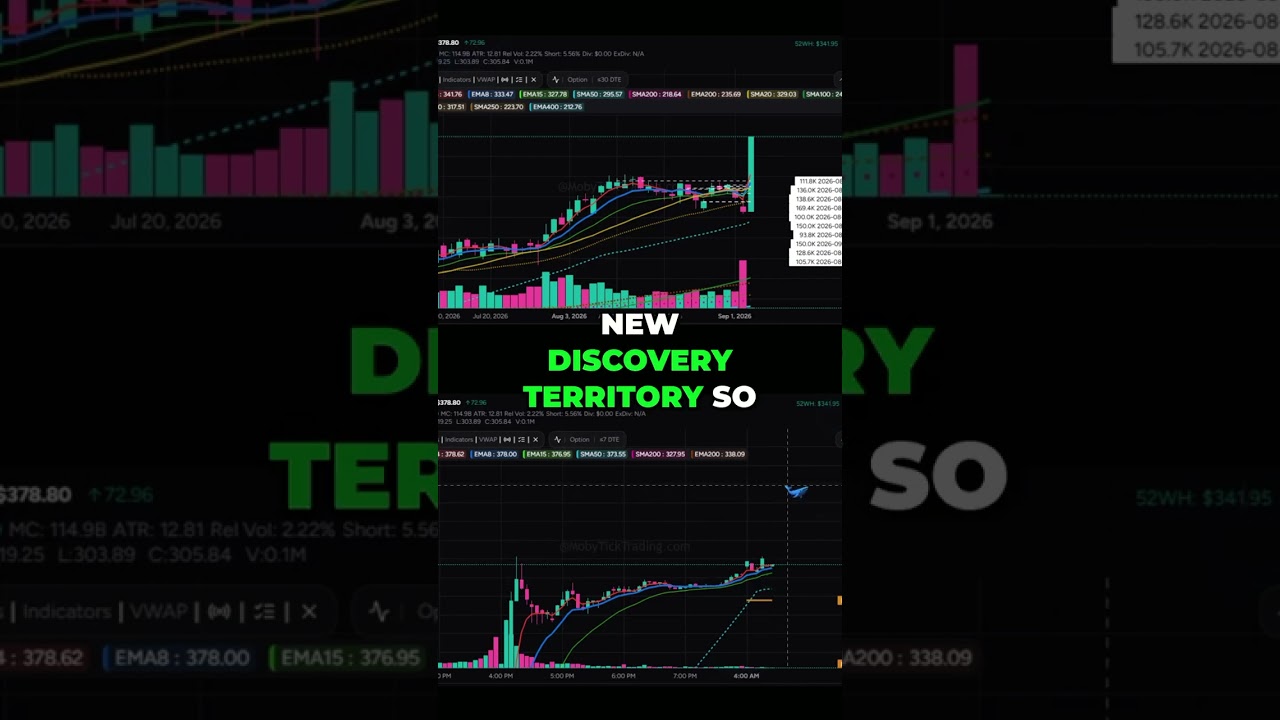
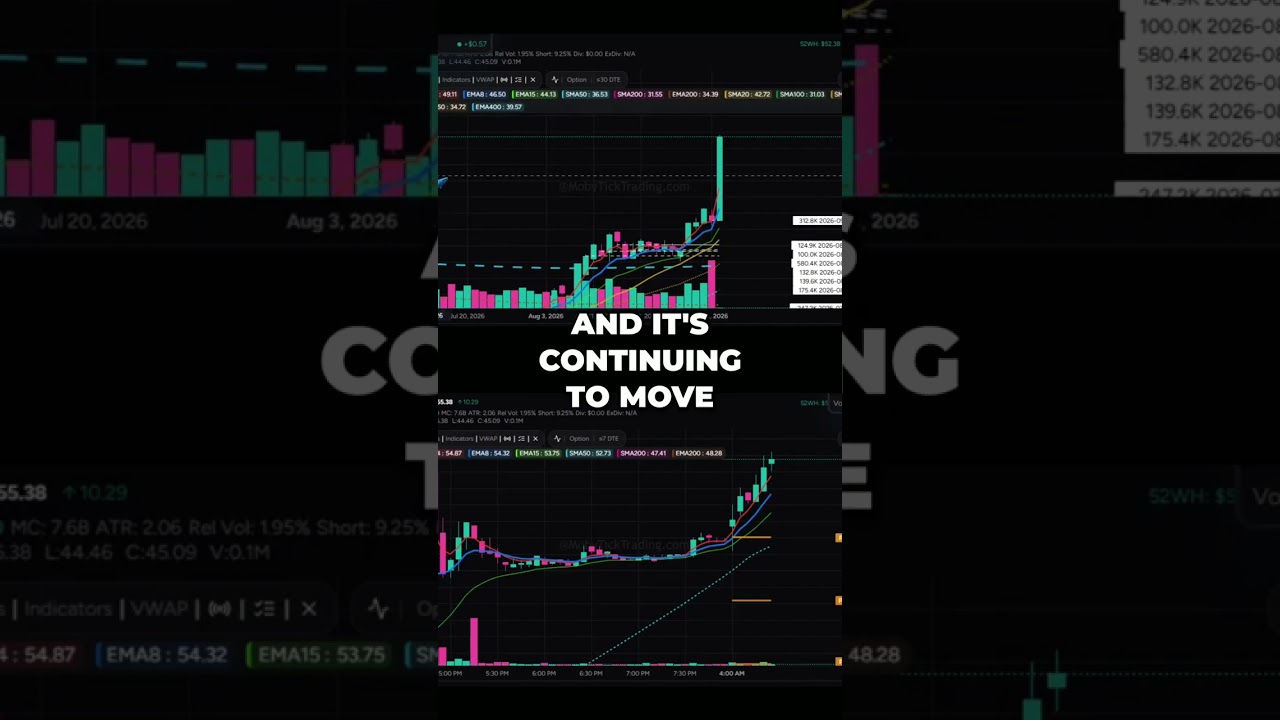
When you buy a call option, a market-making dealer takes the other side and immediately hedges by buying shares. This hedging activity from thousands of contracts concentrates at strike prices with high open interest, creating visible friction zones on charts where rallies stall or sell-offs slow.
Chapters
You hit buy on a call option. The order fills in a fraction of a second. Confirmed. But stop and think about what just happened. An option is a contract. Contracts have 2 sides. So somebody, somewhere, just agreed to take the other side of your bet. Who was it? And more importantly, what did they do next? Because what they did next is one of the most powerful forces moving price in the market every single day. And once you can see it, you stop looking at the chart the same way. Most people picture another trader on the other side, somebody who thinks the stock is going down while you think it's going up. That happens sometimes. But most of the time, the other side of your trade is a market maker, a dealer. And here's the part that surprises people. The dealer has no opinion on the stock. None. They don't think it's going up. They don't think it's going down. They genuinely do not care. A dealer's job is to always be there, always willing to buy, always willing to sell, so that when you want to trade, there's someone to trade with. That's what liquidity means. They make their money on the spread, the tiny gap between the price they'll buy at and the price they'll sell at. Pennies at a time. Millions of times a day. What they do not want is directional risk. They don't want to be sitting there hoping the stock goes their way. That's gambling, and it's not the business they're in. But the moment they sold you that call, they got directional risk whether they wanted it or not. Think about it. You own a call. If the stock rises, you win. And whatever you win, the dealer loses. They are now short that call. They are accidentally betting against the stock going up. That's exactly the position they were trying to avoid. So they fix it immediately. If they're short a call and a rising stock hurts them, then they go buy shares of the stock. Now, if the stock rises, they lose on the option, but they gain on the shares. The two roughly cancel out. They're flat again, neutral, back to collecting the spread and taking no side. That's hedging. It's not clever. It's not predictive. It's just risk management, done mechanically thousands of times a day. And here is the single most important idea in this entire series, so let me say it plainly: that hedge is not a spreadsheet entry. It is a real order, for real shares, hitting the real market. The dealer buying stock to hedge a call is buying pressure, actual demand, the same as anyone else is buying. So when you buy a call, you don't just make a bet on the stock. You quietly cause somebody to go out and buy the stock. One contract doesn't matter. One contract controls 100 shares. Nobody notices. But now multiply that by every trader, every fund, every algorithm, every day. Hundreds of thousands of contracts at a single price level. Millions of contracts across a single stock. Say a single strike has 50,000 contracts open against it. Each one controls 100 shares. That's 5 million shares of exposure sitting at one price, and somebody has to hedge all of it. That hedging is no longer background noise. At that size, it's one of the biggest sources of buying and selling in the stock. Here's why that matters to you. Dealer hedging isn't spread evenly across every price. It piles up at the strikes where the most contracts are open, The round numbers, the popular strikes, the levels everybody trades. So picture a stock at $100 with a huge stack of call contracts sitting at $105. When price approaches that level, dealer hedging activity concentrates right there, and that level starts behaving differently than the empty space around it. Rallies stall there. Sell-offs slow down at the equivalent level below, not because of magic and not because anyone predicted it, but because that's where the mechanical hedging is densest. Now, one honest note, because you'll hear people overstate this: none of this tells you where a stock is going. Dealer hedging is pressure, not prophecy. Strong news, a big buyer, an earnings surprise— any of those can steamroll right through it. What it does tell you is where the friction is, which levels are likely to matter, and which stretches of chart are wide open. That's a map. Not a crystal ball. And a map is worth a lot more than most people realize. So, let's go back to where we started. You hit buy on a call. A dealer took the other side. They didn't want the risk, so they hedged it with real shares. And when enough people do that at the same strike, that hedging shows up on the chart as a level that price respects. That's the whole mechanism. Everything else in options market structure— walls, Max Payne, gamma, the flip— is just a different camera angle on this one idea. Mobitik maps where that positioning is concentrated and plots those levels directly on your chart, so you can see the friction before price gets there. In the next video, we'll look at the number those levels are built from: open interest. What it is, what it isn't, and why it's the single most useful number on an options chain.